AI医疗

Search documents
VIP机会日报AI医疗概念今日拉升 栏目追踪“蚂蚁阿福”相关动态 提及焦点公司涨停
Xin Lang Cai Jing· 2025-12-18 09:59
转自:智通财经 注:智通财经VIP为内容资讯产品,并非投资建议。以下内容仅为资讯价值展示非对相关公 司的推荐建议,非未来走势预测。投资有风险,入市需谨慎。 想要借智通财经VIP前瞻锚定市场热点,12.12大促将是年末屯货 智启2026投研新局的黄金 窗口期。 活动最后1天,栏目限时特惠。多买多省,屯货更"惠"!选订12个月钜惠8折还能叠加满减 券,再享折上折。 贴心提醒,新客有礼!新用户完成注册即可解锁新手专属礼包,助您轻松获取深度财经内 容: 28元单篇解锁券×6张:注册成功立即到账,单篇付费内容随心看; 满318元立减40元:订阅付费资讯直接抵扣,性价比拉满; 满518元立减60元:高端栏目订阅专属福利,省心又省钱! 新客首购再享额外礼赠,订阅 3或6个月加赠对应栏目5天服务期 + 会员专属服务,订阅 12 个月加赠对应栏目30天服务期 + 会员专属服务。 C 厕联社 财经通讯社 | 准确·快速·权威·专业 VIP SHANCE Daily N 机会目报 星期四 18 情绪指数 47 分 | 涨停 71 VS 跌停 8 (含 st) 上证指数 深圳成指 创业板指 3876.37 13053.97 3107 ...



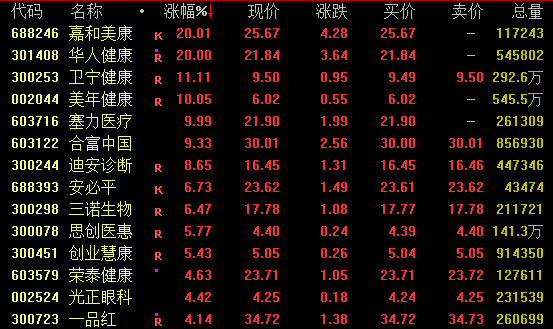
A股走势现明显分化,银行板块上扬,AI医疗概念拉升
Zheng Quan Shi Bao· 2025-12-18 09:47
Market Overview - On December 18, A-shares showed significant divergence, with the Shanghai Composite Index slightly rising by 0.16% to 3876.37 points, while the Shenzhen Component Index fell by 1.29% and the ChiNext Index dropped by 2.17% [1] - The total trading volume in the Shanghai, Shenzhen, and North markets was 16,770 billion yuan, a decrease of 1,575 billion yuan from the previous day [1] Banking Sector - The banking sector saw a notable rise, with Shanghai Bank and Chongqing Rural Commercial Bank increasing by over 3%, and major banks like Ningbo Bank, China Construction Bank, Industrial and Commercial Bank of China, and Agricultural Bank of China rising by more than 2% [3] - The Central Economic Work Conference has set a direction for fiscal and investment support, creating a favorable environment for banks to expand their balance sheets and provide long-term loans to enterprises [3] - Analysts from China International Capital Corporation (CICC) noted that banks have entered a high-quality development phase, with some listed banks experiencing double-digit profit growth year-on-year, making high-dividend investments increasingly attractive [3] AI Healthcare Sector - The AI healthcare concept saw strong gains, with stocks like Jiahe Meikang and Huaren Health hitting the daily limit of 20% increase, and Weining Health rising over 11% [5] - The launch of Ant Group's AI health app "Antifufu" on December 15 led to a surge in downloads, reaching third place on the Apple App Store, with over 15 million monthly active users [7] - The market size of AI in medical institutions in China has grown from 2 billion yuan in 2019 to 6.4 billion yuan in 2023, with a projected compound annual growth rate of 43.1% from 2023 to 2033 [7] Commercial Aerospace Sector - The commercial aerospace concept was active, with stocks like Xice Testing rising over 12%, and companies such as Shunhao Co., Tianjian Technology, and Western Materials hitting the daily limit [9] - The commercial aerospace industry is expected to enter a new era supported by national policies and technological breakthroughs, with a focus on areas such as remote sensing applications and satellite control systems [12]
美股异动丨AI医疗概念股Recursion盘前续涨3.8% 小摩上调评级+木头姐加仓
Ge Long Hui· 2025-12-18 09:27
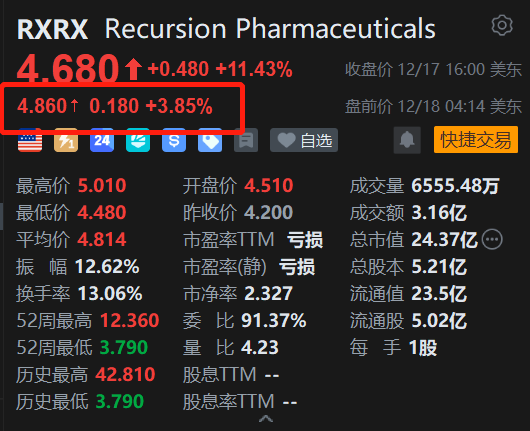
Core Viewpoint - Recursion Pharmaceuticals (RXRX.US) has seen a significant stock increase, with an 11.4% rise followed by a 3.8% pre-market gain, driven by an upgrade from Morgan Stanley from "Neutral" to "Overweight" due to the sales potential of its core asset, REC-4881, which is considered to have blockbuster potential [1] Group 1 - Morgan Stanley raised Recursion's target price from $10 to $11, indicating increased confidence in the company's future performance [1] - Cathie Wood has significantly increased her stake in Recursion Pharmaceuticals, acquiring over 2 million shares, signaling strong belief in the company's attractive valuation amidst market downturns [1] - Recursion Pharmaceuticals utilizes machine learning to decode biology, aiming to accelerate drug discovery processes, which positions the company favorably in the biotech industry [1]

15天8板!002565,再爆发!
Zheng Quan Shi Bao· 2025-12-18 09:15
Market Overview - A-shares showed significant divergence on the 18th, with the Shanghai Composite Index slightly rising by 0.16% to 3876.37 points, while the Shenzhen Component Index fell by 1.29% and the ChiNext Index dropped by 2.17% [1] - The total trading volume in the Shanghai, Shenzhen, and North markets was 16,770 billion yuan, a decrease of 1,575 billion yuan from the previous day [1] Banking Sector - The banking sector saw a notable rise, with Shanghai Bank and Chongqing Rural Commercial Bank increasing by over 3%, while major banks like Ningbo Bank, China Construction Bank, Industrial and Commercial Bank of China, and Agricultural Bank of China rose by more than 2% [2] - The Central Economic Work Conference emphasized fiscal and investment support, creating a favorable environment for banks to expand their balance sheets and provide medium to long-term loans [2] - Analysts from China International Capital Corporation (CICC) noted that banks have entered a high-quality development phase, with some listed banks experiencing double-digit profit growth year-on-year [2] AI Healthcare Sector - The AI healthcare concept saw strong gains, with stocks like Jiahe Meikang and Huaren Health hitting the daily limit of 20% increase, while Weining Health rose over 11% [3][4] - The rapid growth of the "Ant Health" app, which surpassed 15 million monthly active users, indicates a significant market interest in AI healthcare solutions [5] - The AI healthcare market in China is projected to grow from 2 billion yuan in 2019 to 6.4 billion yuan in 2023, with an expected compound annual growth rate of 43.1% from 2023 to 2033 [5] Commercial Aerospace Sector - The commercial aerospace concept became active again, with Xice Testing rising over 12% and several other companies like Shunhao Co., Tianjian Technology, and Western Materials hitting the daily limit [6][7] - Analysts from CITIC Securities highlighted that the commercial aerospace industry is entering a new era supported by national policies and technological breakthroughs [9] - The industry encompasses various segments, including remote sensing applications, satellite control systems, and space computing, indicating a broad scope for investment opportunities [9]


15天8板!002565,再爆发!
证券时报· 2025-12-18 09:09
Market Overview - A-shares showed significant divergence on the 18th, with the Shanghai Composite Index slightly rising by 0.16% to 3876.37 points, while the Shenzhen Component fell by 1.29% and the ChiNext dropped by 2.17% [1] - The total trading volume in the Shanghai and Shenzhen markets was 16,770 billion yuan, a decrease of 1,575 billion yuan from the previous day [1] Banking Sector - The banking sector saw a notable rise, with Shanghai Bank and Chongqing Rural Commercial Bank increasing by over 3%, and major banks like Construction Bank, Industrial and Commercial Bank, and Agricultural Bank rising by more than 2% [3] - Analysts indicated that the central economic work conference has set a favorable environment for banks to expand their balance sheets and provide long-term loans, while emphasizing the need to manage local and real estate risks [3] - The banking sector is entering a high-quality development phase, with some listed banks recording double-digit profit growth year-on-year, making high dividend investments increasingly attractive [3] AI Healthcare Concept - The AI healthcare sector experienced strong gains, with stocks like Jiahe Meikang and Huaren Health hitting the 20% limit up, and Weining Health rising over 11% [5] - The market for AI in healthcare institutions has grown from 2 billion yuan in 2019 to 6.4 billion yuan in 2023, with a projected compound annual growth rate of 43.1% from 2023 to 2033 [9] - Ant Group's AI health app "Antifufu" saw a surge in downloads, reaching over 15 million monthly active users, while Baidu's AI health manager was upgraded to provide comprehensive family health services [7][9] Commercial Aerospace Concept - The commercial aerospace sector was active, with Xice Testing rising over 12% and several other companies like Shunhao Co. and Tianjian Technology hitting the limit up [11] - Analysts noted that the commercial aerospace industry is entering a new era supported by national policies and technological breakthroughs, with a focus on various segments including remote sensing applications and satellite control systems [14] - Shunhao Co. has achieved 8 limit-up boards in the last 15 trading days, although it faces risks related to its collaboration with Beijing Orbit Chen Guang Technology Co. [13]

12月18日主题复盘 | 航天板块再度强势,AI医疗发酵,大消费持续活跃
Xuan Gu Bao· 2025-12-18 09:01
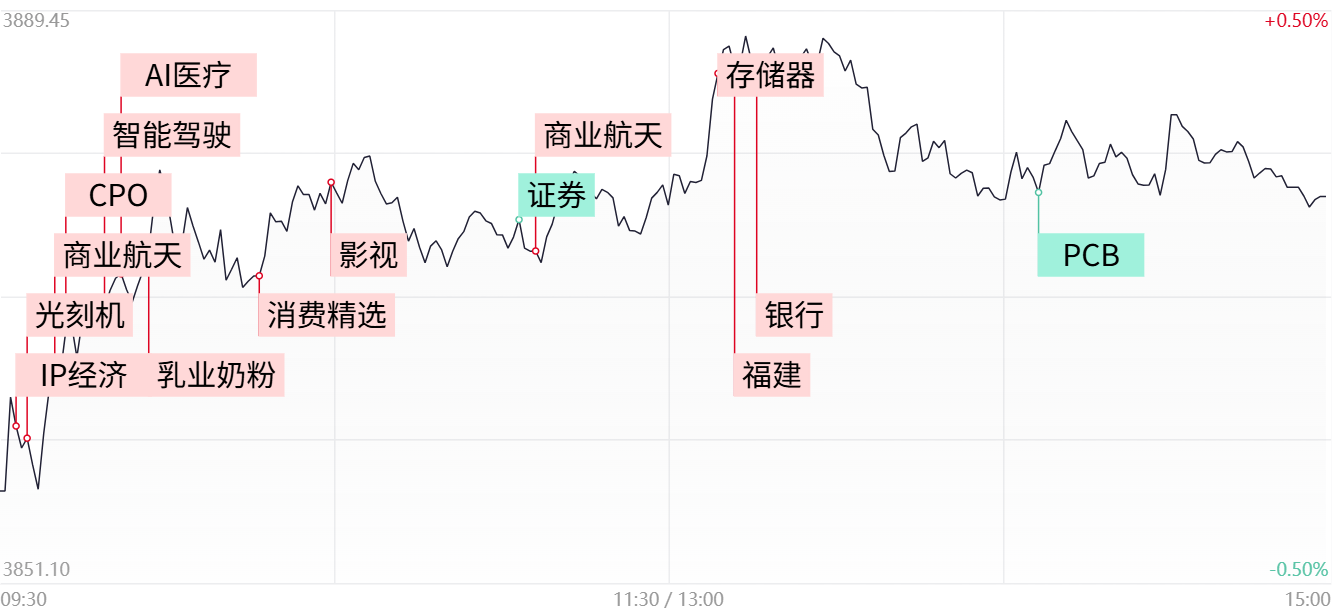
一、行情回顾 市场全天震荡分化,创业板指跌超2%。AI医疗概念集体走强,华人健康、塞力医疗等涨停。商业航天全线爆发,盛洋科技、天箭科技等涨停。零售、IP经 济等消费股拉升,百大集团6连板,上海九百等涨停。下跌方面,算力硬件股下挫,生益科技、景旺电子等跌超5%。个股涨多跌少,沪深京三市近2900股飘 红,今日成交1.67万亿。 二、当日热点 1.航天 航天板块今日继续强势,盛洋股份2连板,顺灏股份反包,西部材料、奥普光电等涨停。 华西证券表示,当前全球商业航天发射领域正在发生深刻的成本重构。成本结构层面,传统火箭以一次性硬件制造为主导,占比约67%,而新兴商业火箭通 过可重复使用设计将硬件成本占比压缩至24%左右,形成"以复用换成本"的可持续模式。 其中火箭层面具体成本拆分,助推器占火箭总成本60%,二级占20%,整流罩占10%,发射操作本身占10%。成本演化趋势来看,国内外商业航天企业正基 于不同的发展路径推进成本优化。以SpaceX为代表的企业通过十余年技术积累,已形成"复用程度提升—发射频次增长—单位成本下降"的持续优化模式。 与此同时,中国商业航天企业正加速实现技术突破与成本收敛,在自主型号研发与规模化 ...


【每日收评】创业板指缩量跌超2%,大消费板块反复活跃,银行股午后逆势拉升
Xin Lang Cai Jing· 2025-12-18 08:45
智通财经12月18日讯,三大指数涨跌不一,沪指低开回升,创业板指低开低走跌超2%。沪深两市成交额1.66万亿,较上一个交易日缩量1557亿。全市场近 2900只个股上涨。从板块来看,银行板块震荡拉升,上海银行涨超3%,零售概念走强,中央商场、上海九百涨停。商业航天概念走势活跃,盛洋科技2连 板,顺灏股份涨停。医药商业延续强势,鹭燕医药2连板,重药控股7天4板。IP经济概念表现活跃,广博股份、三湘印象涨停。下跌方面,锂电池板块回 落,海科新源、华盛锂电大跌。截至收盘,沪指涨0.16%,深成指跌1.29%,创业板指跌2.17%。 个股方面 板块方面 商业航天概念股再度走强,顺灏股份、天箭科技、西部材料、北摩高科、盛洋科技等个股涨停,天银机电、中国卫星、上海沪工、上海瀚讯等个股涨幅居 前。消息面上,由中国航天科技集团八院抓总研制的长征十二号甲可重复使用运载火箭,计划于2025年12月中下旬在酒泉卫星发射中心执行历史性的首次发 射任务。 东吴证券表示,近期,中国在可回收火箭领域取得了技术突破与试验进展,我国航天产业距离"低成本、高复用"越来越近。中国可回收火箭技术突破,不仅 是航天产业内部的成本革命与技术升级,更是国 ...

炒疯了!最高溢价超40%,连发八道风险提示!网友:一旦放开限购,先砸三个跌停再说...
雪球· 2025-12-18 08:27
Market Overview - The three major indices showed mixed performance, with the Shanghai Composite Index rising by 0.16%, while the Shenzhen Component Index fell by 1.29% and the ChiNext Index dropped by 2.17% [1] - The total trading volume in the Shanghai and Shenzhen markets was 1.66 trillion, a decrease of 155.7 billion compared to the previous trading day [1] - Nearly 2,900 stocks in the market experienced gains, with sectors such as pharmaceuticals, banking, and retail leading the rise, while battery and power grid equipment sectors faced declines [1] Investment Opportunities - The banking sector saw a rebound, with Shanghai Bank rising over 3% [1] - The retail sector performed strongly, with Central Plaza and Shanghai Jiubai hitting the daily limit [1] - The commercial aerospace sector was active, with Shengyang Technology achieving consecutive gains and Shunhao shares hitting the daily limit [1] - The pharmaceutical commercial sector continued its strong performance, with Luyan Pharmaceutical achieving consecutive gains and Zhongyao Holdings hitting the limit four times in seven days [1] Fund Performance - The Guotou Silver LOF fund has seen a significant surge in its secondary market price, with a peak premium exceeding 40% and a closing premium of 35.9% [2][3] - The fund has experienced a cumulative increase of over 70% in 17 trading days since November 24, with an annual increase exceeding 173% [7] - The fund has issued eight risk warning announcements regarding its premium, indicating potential risks for investors [8] AI Healthcare Sector - The AI healthcare sector has been active, with multiple stocks hitting the daily limit, including Huaren Health and Shuyupingmin [11] - Ant Group announced an upgrade of its AI health application, now named "Ant Ai Fu," focusing on health management [11] - Baidu's Wenxin Health Manager was also upgraded, positioning itself as a comprehensive family doctor [11] - The Chinese pharmaceutical industry is witnessing significant international collaborations, such as the partnership between Yaoyou Pharmaceutical and Pfizer, involving over 2 billion USD [15] Commercial Aerospace and Satellite Navigation - The commercial aerospace and satellite navigation sectors are experiencing heightened activity, with stocks like Xingchen Technology and Tianyin Machinery seeing significant gains [16][19] - The Ministry of Industry and Information Technology has proposed optimizing business access to promote the satellite communication industry, aiming for over 10 million users by 2030 [22] - The GW satellite constellation plan has launched 116 satellites, with a target of deploying 10% of the planned satellites by 2026 [23]

收评:创业板指低开低走 AI医疗、商业航天概念逆势大涨
Xin Hua Cai Jing· 2025-12-18 07:37
新华财经北京12月18日电 (胡晨曦)A股三大指数12月18日涨跌不一,沪指早间低开,随后震荡回升; 创业板指全天低位调整。沪深两市成交额1.66万亿,较上一个交易日缩量1557亿。盘面上,AI医疗概念 集体走强,华人健康、塞力医疗等涨停;银行板块震荡拉升,上海银行涨超3%;零售概念走强,中央 商场、上海九百涨停;商业航天全线爆发,盛洋科技、天箭科技等涨停。下跌方面,锂电池板块回落, 海科新源、华盛锂电大跌;算力硬件股下挫,生益科技、景旺电子等跌超5%。 截至收盘,沪指报3876.37点,涨幅0.16%,成交7049亿元;深证成指报13053.97点,跌幅1.29%,成交 9506亿元;创业板指报3107.06点,跌幅2.17%,成交4499亿元。 中指研究院:预计未来5年全国城镇住房需求总量约为49.8亿平方米 热点板块 盘面上,医药商业、银行、军工电子、无人零售、IP经济、啤酒等板块和概念股涨幅居前;元件、电 池、汽车整车、海南自贸区、可控核聚变、PCB等板块和概念股跌幅居前。 机构观点 巨丰投顾:周四市场震荡运行,医药商业板块涨幅居前。"十五五"的开局之年经济环境整体良好,预计 2026年国内经济"三驾 ...
今日涨跌停股分析:73只涨停股、8只跌停股,医药商业概念活跃,重药控股7天4板
Xin Lang Cai Jing· 2025-12-18 07:25
连板股方面,百大集团、*ST宁科6连板,胜通能源5连板,皮阿诺4连板,钧达股份、九牧王等5天3 板,皇氏集团4天3板,浙江世宝、利群股份等3连板,ST中迪4天2板,中央商场、威帝股份3天2板,长 飞光纤、立达信等2连板,西部材料、博纳影业等涨停。 *ST奥维连续7日跌停,*ST华嵘、*ST返利等跌停。 12月18日,A股全天下来共有73只涨停股、8只跌停股。医药商业概念活跃,重药控股7天4板,鹭燕医 药2连板,华人健康、一心堂等涨停;卫星互联网概念走强,*ST铖昌10天9板,盛洋科技2连板,顺灏 股份、北摩高科等涨停;AI医疗概念上涨,美年健康2连板,嘉和美康涨停。 ...