
脑机接口

Search documents
焦点访谈|加快场景培育 打通前沿科技落地应用“最后一公里”
Yang Shi Wang· 2026-02-02 14:12
央视网消息(焦点访谈):现实中,有些新技术、新产品刚刚出现的时候,由于缺少"第一个吃螃蟹的人",应用案例少,应用效果也缺少验证支撑,导致它 们不太容易进入市场,出现"英雄无用武之地"的现象,有些"新技术"硬被拖成了"老技术"。去年11月7日,《关于加快场景培育和开放推动新场景大规模应 用的实施意见》发布,一个重要目的就是要解决类似这样一些问题。而场景就是把新技术、新产品、新业态放在一个具体情境中来应用、来验证,为新兴事 物提供展示应用的舞台,加快其产业化进程。那么,经过两个多月的加快实践,新场景大规模应用如何才能实现呢? 舞台上整齐划一,跳出优雅舞姿;手术台上精准操作,完成精密骨科手术……这是被大家称赞的典型机器人,在公众眼里,它们聪明、灵活、敏捷。这些较 为成熟的机器人在不同领域大放光彩。不过,很多机器人在初生时,是这样的:翻跟头时零件掉落,踉踉跄跄;马拉松赛场上跌跌撞撞,摔跤不断。从踉踉 跄跄到优雅舞姿的过程,是机器人不断学习进步的过程。 工作人员戴上VR头显,手握动作控制器,做出示范动作,机器人则跟着重复动作,在真实场景中完成搬箱子、分拣零件、做饭等工作。每一次训练都会产 生一条宝贵的训练数据,为算法迭 ...


上海38个部门两会现场"摆摊" 政协委员点题求解
Xin Lang Cai Jing· 2026-02-02 12:51
Group 1 - The Shanghai Municipal Political Consultative Conference held a consultation event focusing on new productive forces, with a particular emphasis on embodied intelligent robots and the establishment of a verification center to avoid redundant investments [1] - The Shanghai Municipal Economic and Information Commission aims to promote the development of low-altitude economy, artificial intelligence industry, and integrated circuit industry, fostering government-enterprise interaction to enhance industrial clusters [1] - Key future industries highlighted in the "14th Five-Year Plan" include quantum technology, biomanufacturing, and brain-computer interfaces, which are areas of active discussion among committee members [1] Group 2 - The number of electric bicycles in Shanghai has reached 12 million, prompting committee members to focus on optimizing road design and improving traffic regulations for this large commuting group [2] - The Shanghai Municipal Transportation Commission is conducting ongoing research to address the changing traffic challenges posed by existing road facilities, with new standards for the construction of the Jiangsu-Yuejiang Tunnel expected to consider the characteristics of electric bicycle usage [2] - The rise of medical tourism has led to the establishment of regulatory standards by the Shanghai Municipal Bureau of Culture and Tourism, in collaboration with 12 departments, to promote the standardized development of the industry [2] Group 3 - A total of 38 government units participated in the consultation event, providing detailed responses to various suggestions from committee members, thereby facilitating communication between government, enterprises, and the public [3]
【太平洋科技-每日观点&资讯】(2026-02-03)
远峰电子· 2026-02-02 12:37
Market Overview - Major indices experienced declines: North Stock 50 (-2.03%), ChiNext Index (-2.46%), Shanghai Composite Index (-2.48%), Shenzhen Component Index (-2.69%), and Sci-Tech Innovation 50 (-3.88%) [1] - TMT sector showed mixed performance with SW Communication Application Value-Added Services increasing by 0.42% while SW Integrated Circuit Packaging and Testing decreased by 6.52% [1] Domestic News - Chenxian Optoelectronics plans to expand its new factory with an investment of 3 billion yuan, adding a glass-based Micro LED display production line with an annual capacity of 22,000 square meters, increasing total capacity to 40,000 square meters [1] - SMIC established an Advanced Packaging Research Institute focusing on cutting-edge packaging technologies and industry challenges, aiming to create a leading domestic and internationally advanced R&D and collaborative innovation alliance [1] - Xi'an Yicai reported that it remains a leader in the 12-inch silicon wafer sector, achieving a monthly capacity of approximately 850,000 pieces by December 2025, with an overall utilization rate exceeding 90% [1] - China's exports of laptops reached 133 million units, down 7.1% year-on-year, while mobile phone exports totaled 751 million units, down 7.7%. In contrast, integrated circuit exports increased by 17.4% to 3.495 billion units [1] Overseas News - Meta's Ray-Ban Display Glasses received better-than-expected feedback in the market, leading to a significant increase in key component orders, with global AR glasses shipments projected to reach 950,000 units by 2026, a 53% annual growth rate [2] - Global demand for MLCCs is surging due to the rise of electric vehicles and complex automotive electronics, with Samsung Electro-Mechanics reporting a 30% year-on-year increase in orders for its Tianjin factory by Q4 2025 [2] - Seagate announced that its nearline capacity is fully sold out until the end of 2026, with an average capacity increase of 22% for nearline mechanical hard drives in the last quarter [2] - NVIDIA is investing an additional $2 billion in CoreWeave, providing comprehensive support for AI data center construction and promoting CoreWeave's AI software and architecture design solutions [2] AI Insights - NVIDIA launched three open-source AI weather models, including one for 15-day global forecasts and another for precise storm predictions in the U.S. [3] - xAI released the Grok Imagine 1.0 version, which has generated 12.45 billion videos in the past 30 days [3] - The Step 3.5 Flash model, featuring a sparse MoE architecture with 196 billion parameters, has been launched, achieving high inference speeds and efficiency improvements [3] - Kimi reported that overseas revenue has surpassed domestic revenue, with a fourfold increase in global paid users following the release of the new K2.5 model [3] Industry Tracking - Quantum technology firm Zhongweidaxin launched three new products in quantum measurement and control, enhancing its integrated technology system [4] - Global humanoid robot sales are expected to reach 20,000 units by 2025, with a market size exceeding 8 billion yuan, and projections of over 600,000 units and a market size exceeding 100 billion yuan by 2030 [4] - The first implantable brain-computer interface surgery in Anhui has been completed, achieving a 95% accuracy in decoding brain signals and significant recovery in limb function [4] - The domestic production of POE (polyolefin elastomer) is set to reach nearly 60,000 tons by 2025, marking a significant step towards reducing reliance on imported products in strategic emerging industries [4]

开局之年中央政治局首次集体学习聚焦未来产业发展
Xin Hua She· 2026-02-02 11:47
Core Insights - The central theme of the article emphasizes the importance of cultivating and developing future industries in China, driven by cutting-edge technologies, to seize development opportunities and enhance the modern industrial system [1][2]. Group 1: Importance of Future Industries - Developing future industries is crucial for gaining technological and industrial advantages, improving quality of life, and promoting comprehensive social progress [2]. - By 2025, the industrial and information sectors are expected to contribute over 40% to China's economic growth, with significant advancements in artificial intelligence, quantum technology, and biomanufacturing [2]. Group 2: Strategic Planning and Focus Areas - The focus for the "14th Five-Year Plan" period should be on key areas such as quantum technology, biomanufacturing, hydrogen energy, and brain-computer interfaces, ensuring a strategic approach that considers national needs and technological maturity [3]. - There is a need to prevent disconnection between future industries and traditional sectors, emphasizing the importance of industry integration [3]. Group 3: Role of Technology and Innovation - The pace and depth of future industry development are largely determined by technological breakthroughs, necessitating seamless integration between innovation and industry [4]. - The government is encouraged to leverage a new type of national system to enhance key technology breakthroughs and accelerate the application of scientific achievements [4]. Group 4: Empowering Enterprises - Enterprises are identified as the main drivers of innovation in future industries, requiring a collaborative ecosystem that supports the growth of leading technology firms and specialized small and medium enterprises [5]. - The focus should be on gathering various innovation resources around enterprises to foster continuous advancement in high-end sectors [5]. Group 5: Support and Governance - The government is tasked with providing comprehensive support and establishing a governance framework to facilitate the development of future industries [7]. - This includes improving fiscal policies, promoting technology finance, and ensuring effective talent management while exploring regulatory methods to mitigate risks [7].
第一观察 | 开局之年中央政治局首次集体学习聚焦未来产业发展
Xin Hua She· 2026-02-02 11:29
Core Insights - The central message emphasizes the importance of cultivating and developing future industries to seize technological and industrial advantages, enhance productivity, and improve the quality of life for citizens [2][3]. Group 1: Future Industry Development - Future industries are characterized by being driven by cutting-edge technologies and are seen as strategic, forward-looking, and disruptive [1]. - Key areas identified for development include quantum technology, biomanufacturing, hydrogen and nuclear fusion energy, brain-computer interfaces, embodied intelligence, and sixth-generation mobile communications [1]. - The contribution of the industrial and information sectors to China's economic growth is projected to exceed 40% by 2025, with over 6,000 AI companies and biomanufacturing evolving into a trillion-dollar industry [2]. Group 2: Strategic Planning and Coordination - A scientific and comprehensive approach is required for planning future industries, focusing on national strategic needs, technological maturity, and resource support [3]. - Emphasis is placed on avoiding a rush into future industries without proper integration with traditional and emerging sectors, promoting continuous industrial convergence [3]. Group 3: Innovation and Technology Integration - The speed and depth of future industry development are significantly influenced by technological breakthroughs, necessitating seamless integration between innovation and industry [4]. - The government is urged to enhance support for key technological advancements and accelerate the application of scientific achievements [4]. Group 4: Role of Enterprises - Enterprises are recognized as the main drivers of innovation, and there is a call to create an ecosystem centered around businesses to foster collaboration and resource aggregation [5]. - The development of leading technology enterprises and support for specialized small and medium-sized enterprises are crucial for advancing industries towards high-end sectors [5]. Group 5: Support and Governance - The cultivation of future industries involves long cycles and significant market risks, requiring government support and a robust governance framework [6]. - Policies related to finance, talent development, and effective regulatory measures are essential to ensure a balance between flexibility and control in the industry [6].
美好医疗跌1.13%,成交额3.17亿元,近5日主力净流入-5495.78万
Xin Lang Cai Jing· 2026-02-02 07:37
Core Viewpoint - The company, Shenzhen Meihao Chuangyi Medical Technology Co., Ltd., is actively engaged in the medical device sector, focusing on product development and manufacturing, with a significant portion of its revenue derived from overseas markets benefiting from the depreciation of the RMB [3][7]. Group 1: Business Operations - The company is collaborating with downstream brain-computer interface clients to facilitate efficient commercialization from laboratory research to mass production, although current revenue from this segment is minimal due to confidentiality [2]. - The company has signed orders for weight loss pens, with automated production lines expected to be operational next year [2]. - The main business involves the design, development, manufacturing, and sales of precision components and products for medical devices, including home respiratory machine components and cochlear implant components [2][7]. Group 2: Financial Performance - For the period from January to September 2025, the company achieved a revenue of 1.194 billion yuan, representing a year-on-year growth of 3.28%, while the net profit attributable to shareholders was 208 million yuan, a decrease of 19.25% [8]. - The company's overseas revenue accounted for 86.64% of total revenue, benefiting from the depreciation of the RMB [3]. Group 3: Shareholder and Market Activity - As of January 20, the number of shareholders was 29,600, a decrease of 30.08%, while the average number of circulating shares per person increased by 43.02% [7]. - The stock has seen a net outflow of 7.0069 million yuan today, with a total net outflow of 6.99 billion yuan over the past 20 days, indicating a trend of reduced institutional investment [4][5].
指数跌了,个股也跌了!热点切勿追涨,还有哪些投资机会?
Sou Hu Cai Jing· 2026-02-02 07:28
Group 1 - A-share market is expected to see a potential incremental capital scale of around 3 trillion yuan by 2026, with public funds, insurance capital, and bank wealth management as the main contributors [1] - Mixed-asset funds are anticipated to become a substitute for residents' fixed deposits, while ETFs are gaining attractiveness as equity allocation products, potentially becoming a backbone for future stock market incremental funds [1] - Structural opportunities are emerging in the A-share market, particularly in sectors like brain-computer interfaces, commercial aerospace, and embodied intelligence, driven by policy support and technological breakthroughs [3] Group 2 - Real estate policies are showing positive changes, with a stabilization in transaction volumes for both new and second-hand homes since the second half of 2025, and a decrease in new land supply [3] - The demand side of the real estate market remains weak, but there are signs of positive changes on the supply side, suggesting a potential increase in focus on the real estate sector in the short term [3] - The global macroeconomic uncertainty is driving demand for precious metals, with gold prices expected to challenge $5,000 per ounce in the first half of the year, while silver may reach $100 per ounce [5] Group 3 - The semiconductor industry is benefiting from geopolitical tensions, with companies like Huawei and Cambricon rapidly improving their chip performance, indicating a growing domestic semiconductor ecosystem [5] - The storage chip market is in a price uptrend due to AI demand and supply-side contraction, leading to a potential performance explosion for global storage industry companies [5] - The A-share refinancing market is becoming active, with companies raising funds primarily for strengthening core businesses, expanding advanced capacity, and upgrading technology [10]

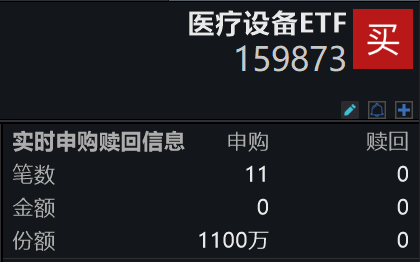
华为云发布“行业AI梦工厂”智慧医疗专区!规模最大的医疗设备ETF(159873)获资金逆势布局,实时净申购1100万份
Sou Hu Cai Jing· 2026-02-02 07:01
Group 1: ETF Performance - As of February 2, 2026, the Medical Equipment ETF (159873) had a turnover of 5.82% with a transaction volume of 14.6087 million yuan, while the tracked index, the CSI All Share Healthcare Equipment and Services Index (H30178), fell by 1.44% [1] - The Medical Equipment ETF (159873) saw a net subscription of 11 million shares during the trading session [2] - The Biopharmaceutical ETF (159859) had a turnover of 3.87% with a transaction volume of 142 million yuan, and the corresponding index, the National Biopharmaceutical Index (399441), decreased by 2.18% [2] Group 2: Fund Flows - The Medical Equipment ETF (159873) experienced a net inflow of 4.2585 million yuan, with a total of 22.8076 million yuan net inflow over the last five trading days [2] - The Biopharmaceutical ETF (159859) achieved a new high in scale at 3.705 billion yuan and a new high in shares at 9.396 billion shares as of January 30 [3] - The Biopharmaceutical ETF (159859) has seen continuous net inflows over the past ten days, totaling 425 million yuan [3] Group 3: Sector Insights - The Medical Equipment ETF (159873) has a high content of brain-computer interface technology, accounting for over 17%, indicating strong technological attributes [3] - The overall industry landscape for medical devices is improving, with leading companies showing performance recovery in Q3, suggesting potential for future capital inflows [6] - The innovative drug sector is expected to see a recovery phase, with a focus on domestic innovation and increased global participation, indicating a positive outlook for investment opportunities [7]
中国手术机器人行业近况更新
2026-02-02 02:22
Summary of Key Points from Conference Call Records Industry Overview - **Surgical Robot Industry**: The Chinese surgical robot industry is experiencing rapid development, supported by national policies and capital investment. Key technological advancements include remote operation, miniaturization, and AI assistance. The market for laparoscopic surgical robots is projected to reach 40.543 billion yuan by 2033, with a CAGR of 28.7% from 2024 to 2033 [doc id='21'][doc id='19']. Core Insights and Arguments - **Investment Opportunities in Innovative Drugs and CRO**: Despite past challenges, investment activity in innovative drugs and Contract Research Organizations (CRO) is expected to rise significantly. Business development (BD) amounts are anticipated to reach new highs, with companies like Rongchuang and Shiyao achieving attractive upfront payment ratios [doc id='3'][doc id='4']. - **Medical Device Sector Recovery**: The medical device sector is nearing the end of its inventory destocking phase, with performance expected to improve gradually in 2026. The resumption of procurement rhythms and an increase in bidding volumes are noted trends [doc id='5']. - **IVD Sector Outlook**: The In Vitro Diagnostics (IVD) sector is expected to face pressure in 2025, but conditions are projected to improve in 2026 as pricing pressures ease and policies are fully implemented [doc id='8'][doc id='9']. - **Traditional Chinese Medicine (TCM) Recovery**: The TCM sector is anticipated to bottom out in Q2 2026, with a potential recovery in 2027 driven by policy support and demand resurgence [doc id='10']. Additional Important Insights - **AI Medical and Brain-Computer Interface Technologies**: AI in healthcare is crucial for enhancing productivity, though its commercialization path remains uncertain. The brain-computer interface sector shows promise but also faces commercialization challenges [doc id='6']. - **CRO Sector Performance**: The CRO sector is showing strong order and operational performance, with companies like Kanglong Huacheng making significant progress in commercial production [doc id='11']. - **Market Dynamics for Surgical Robots**: The market for surgical robots is transitioning from an introduction phase to a growth phase, with increasing sales but slower revenue growth, indicating a structural transformation [doc id='19']. - **Regulatory Developments**: The National Medical Insurance Administration's guidelines are expected to accelerate the clinical application of surgical robots by establishing legitimate billing items [doc id='19']. Company-Specific Highlights - **Shiyao Group and AstraZeneca Collaboration**: The collaboration in the weight loss and metabolism field has set historical highs for upfront payments and total package amounts, although the overall sentiment in the sector remains subdued [doc id='7']. - **Kanglong Huacheng's Growth**: The company is expected to see a significant increase in order retention rates with the launch of its Shaoxing Phase II project, enhancing its competitive position in the CRO market [doc id='12']. - **Emerging Companies**: Companies like Tianyu and Starly are projected to enter performance inflection points this year, with significant growth potential in the raw material pharmaceutical sector [doc id='13'][doc id='14']. This summary encapsulates the key points from the conference call records, highlighting the current state and future outlook of various sectors within the healthcare and pharmaceutical industries in China.

华大智造拟收购三箭齐发及华大序风100%股权 构建“短读长+长读长+空间组学”全覆盖技术生态
Zheng Quan Ri Bao Wang· 2026-02-02 02:07
Core Viewpoint - Shenzhen BGI Genomics Co., Ltd. plans to acquire 100% equity of Shenzhen Hualong Sanjian Qifa Technology Co., Ltd. and Hangzhou Hualong Xufeng Technology Co., Ltd. for a total price of 366 million yuan, aiming to enhance its technological ecosystem in gene sequencing and life science tools [1][2]. Group 1: Acquisition Details - The acquisition will allow the company to gain control over the two target companies and integrate their core technologies, including spatial genomics and nanopore sequencing, into its existing short-read sequencing platform [1]. - The transaction has been approved by the company's board and will be submitted for shareholder approval [1]. Group 2: Technological Integration - The integration of short-read, long-read, and spatial genomics technologies will enhance the company's product matrix and support its transformation from a leading gene sequencing instrument provider to a comprehensive life science tool creator [1][2]. - The spatial genomics technology from Sanjian Qifa is at the international leading level in resolution and field of view, applicable in fields like brain science and regenerative medicine, and is highly compatible with the existing DNBSEQ sequencing platform [2]. Group 3: Financial Impact and Future Growth - Both target companies are currently in the R&D phase and have not yet achieved profitability, which may impact the company's operating profit in the short term; however, they possess strong innovation and commercialization potential, likely becoming new growth engines for the company [2]. - The companies are expected to achieve profitability by 2026 and 2028, respectively, contributing to the company's overall competitiveness and profitability in the long term [2]. Group 4: Strategic Positioning - The acquisition aligns with the company's strategic layout and enhances its independent innovation capabilities, reinforcing its leading position in the gene sequencing field [2]. - The company is also focusing on the "AI + gene sequencing" sector and advancing its laboratory automation and AI-driven software tools, establishing a robust foundation for its intelligent ecosystem [3].
