
价值投资

Search documents
吴清最新发声,完整版来了
Shang Hai Zheng Quan Bao· 2025-12-06 09:24
Core Viewpoint - The speech by Wu Qing emphasizes the need for the securities industry to enhance its service capabilities, focus on high-quality development, and adapt to the evolving financial landscape while ensuring investor protection and market stability [3][4][9]. Group 1: Industry Development and Responsibilities - The industry must prioritize serving the real economy and optimize business structures to support enterprise and industrial development [3]. - There is a call for the securities industry to enhance its governance effectiveness, prevent shareholder interference, and ensure the removal of unsuitable shareholders [7]. - The industry should focus on high-quality development rather than merely competing on scale and speed [9]. Group 2: Financial Innovation and Technology - The industry is encouraged to embrace financial technology innovations such as AI, big data, and blockchain to reshape the market ecosystem [5]. - Regulatory frameworks will be improved to facilitate innovation while ensuring risk management and monitoring [5]. Group 3: Wealth Management and Investor Relations - Investment banks are urged to enhance their wealth management services and establish a return-focused evaluation system [4]. - There is a need for better alignment of interests between investment banks and investors, promoting long-term investment strategies [4]. Group 4: Market Structure and Differentiation - The industry is witnessing a shift towards differentiated development, with smaller firms encouraged to focus on niche markets and unique client segments [12]. - The importance of reputation management and corporate culture is highlighted, with a focus on ethical practices and long-termism [11]. Group 5: Market Size and Growth - The total assets of 107 securities firms have reached 14.5 trillion yuan, with net assets growing by over 60% in the past four years [10]. - The number of clients served by securities firms has increased to over 240 million, reflecting a 26% growth [10]. Group 6: Institutional Strength and Global Positioning - The industry must cultivate top-tier financial talent and enhance its capabilities in global capital allocation and governance [14]. - There is a call for the securities industry to play a crucial role in China's financial strength and to adapt to international market dynamics [14].

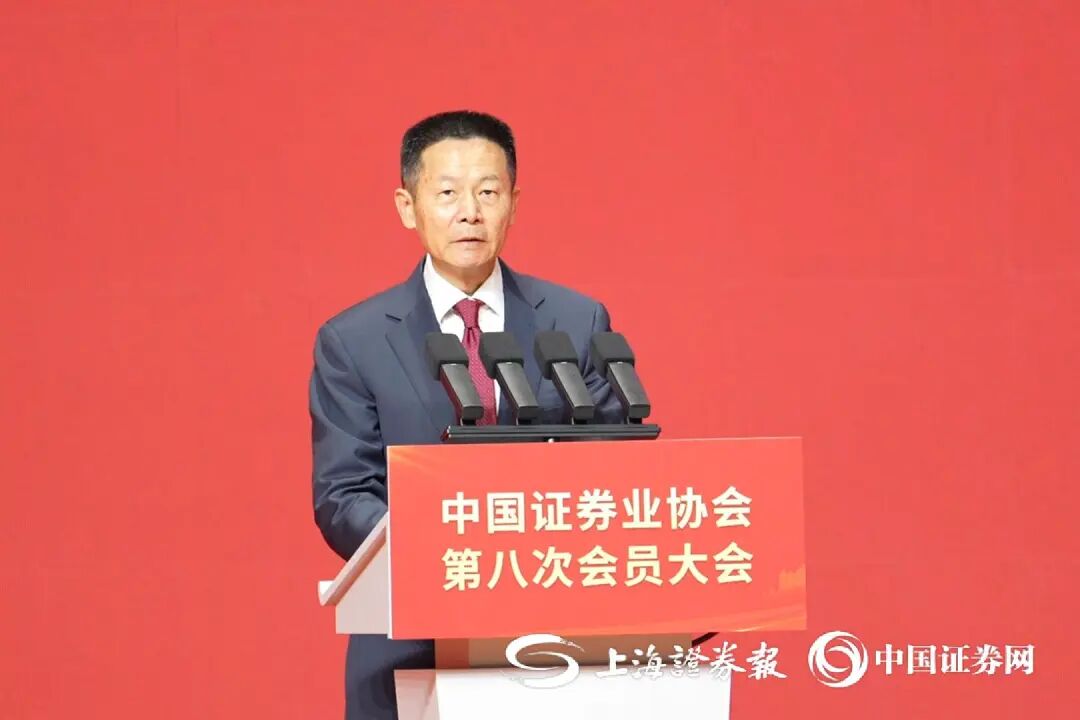
吴清:发挥首席经济学家及行业研究团队作用,讲好中国股市叙事
Sou Hu Cai Jing· 2025-12-06 09:22
Core Viewpoint - The chairman of the China Securities Regulatory Commission, Wu Qing, emphasized the importance of value investment in the securities industry, urging institutions to enhance investment stability and value judgment capabilities [1] Group 1: Value Investment and Market Stability - Securities industry institutions are encouraged to lead in practicing value investment principles [1] - There is a call for strengthening cross-cycle and counter-cyclical layouts to improve investment robustness [1] - The role of chief economists and industry analysts is highlighted in providing rational analysis to counter irrational market sentiments and misinformation [1] Group 2: Communication and Public Perception - Institutions are urged to actively engage in public discourse to guide opinions and resist the spread of irrational rumors [1] - The importance of narrating the story of the Chinese stock market effectively is stressed to create a positive public environment [1] - There is a focus on the need for rational analysis to combat emotional speculation in the market [1]
吴清,最新发声!
证券时报· 2025-12-06 08:38
最新发声。 12月6日,在中国证券业协会第八次会员大会上,证监会主席吴清围绕证券行业高质量发展发表致辞。 吴清:A股实现了量的合理增长和质的有效提升 吴清指出,今年以来,A股市场总体活跃,市值从8月份开始超过100万亿元,实现了量的合理增长和质的有效 提升。 吴清表示,证券机构是资本市场链接投融资各方最重要的桥梁,对市场功能和生态完善发挥至关重要。证券公 司总资产达到14.5万亿元,净资产约3.3万亿元,四年多来,增长分别超过60%和40%,服务1200多家科技创新 企业上市。证券行业结构不断优化,包括国泰海通合并等标志性案例平稳的推动,"1+1>2"的效果初步实现。 中小机构聚焦细分赛道取得突破,向差异化、特色化发展转变。外资机构在境内业务加快布局,对外开放进一 步推进,有11家外资独资或控股的公司在华开展业务,展业兴业。 吴清:证券公司要强化四方面使命担当 吴清指出,要把握"十五五"时期证券行业的使命责任,投资银行、证券公司应该发挥重要作用:一是在服务实 体经济和新质生产力发展方面强化使命担当;二是更好服务投资者,在服务居民资产优化配置方面强化使命担 当;三是在加快建设金融强国方面强化使命担当;四是在促进 ...

事关A股,吴清最新发声
2 1 Shi Ji Jing Ji Bao Dao· 2025-12-06 08:09
吴清指出,今年以来,A股市场总体活跃,市值从8月份开始超过100万亿,实现了量的合理增长和质的 有效提升。 吴清:A股实现了量的合理增长和质的有效提升 12月6日,在中国证券业协会第八次会员大会上,证监会主席吴清围绕证券行业高质量发展发表致辞。 吴清指出,要把握"十五五"时期证券行业的使命责任,投资银行、证券公司应该发挥重要作用:一是服 务实体经济和新质生产力发展方面强化使命担当;二是更好服务投资者,在服务居民资产优化配置方面 强化使命担当;三是在加快建设金融强化方面强化使命担当;四是在促进高水平制度性开放方面强化使 命担当。 吴清:证券行业要更好服务实体经济和新质生产力 吴清指出,以人工智能、生物医药、绿色能源等为代表的新一代科技革命加速突破,在此过程中,企业 创新主体的地位更加突出,证券公司连接资本市场和实体企业,具有扎实完备的研究体系、专业化的价 值评估和风险定价能力,证券公司在发现企业创新潜力、匹配投融资发展需要、支持产业并购整合等方 面发挥着不可替代的作用,构成了资本市场价格发展、资源配置和功能发挥的微观基础,服务实体经济 和新质生产力是时代赋予证券行业的使命。 吴清:证券公司要提供有利于长期投资、 ...
吴清:证券公司和投资机构要与投资者共赢共进
Xin Lang Cai Jing· 2025-12-06 07:53
中国证监会主席吴清12月6日在中国证券业协会第八次会员大会上表示,证券公司和投资机构在权益投 资、风险管理等方面专业优势明显,要对接投资者不同的风险偏好、不同规模、不同期限的需求,提供 更加丰富、更加精准、更有利于长期投资、价值投资的产品,与投资者共进共赢。 责任编辑:凌辰 中国证监会主席吴清12月6日在中国证券业协会第八次会员大会上表示,证券公司和投资机构在权益投 资、风险管理等方面专业优势明显,要对接投资者不同的风险偏好、不同规模、不同期限的需求,提供 更加丰富、更加精准、更有利于长期投资、价值投资的产品,与投资者共进共赢。 责任编辑:凌辰 ...
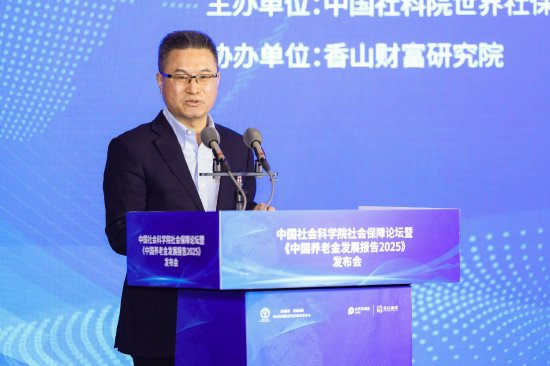
如何重构良好的养老金财富管理生态?曹德云提出从五方面采取综合措施
Xin Lang Cai Jing· 2025-12-06 05:07
Core Viewpoint - The necessity of steadily expanding pension assets and establishing an asset-based pension system is emphasized as a crucial solution to alleviate pension pressure [3][8]. Group 1: Cultural Philosophy - A long-term investment philosophy should be upheld, focusing on value investment goals and sustainable asset arrangements that highlight the unique characteristics of long-term funds [3][9]. - The perspective of pension wealth management should shift from short-term financial returns to maximizing long-term value growth, adopting a vision that is "long, wide, far, stable, and lasting" [3][9]. Group 2: Market Conditions - The construction of a robust capital market and the availability of diverse financial instruments are essential for the growth of pension assets [4][9]. - Supportive policies from the government have been introduced to encourage the development of the capital market and the entry of medium to long-term funds, which are vital for the preservation and appreciation of pension assets [4][9]. Group 3: Allocation Strategies - A diversified regional distribution and flexible investment strategies are necessary, with global allocation being a common strategy in international pension asset management to effectively mitigate risks and seize growth opportunities [5][10]. - Lifecycle asset allocation strategies should be established to cater to different age groups and their respective risk preferences [5][10]. Group 4: Service Quality - The professional level and capabilities of pension wealth management must be highlighted, fostering active participation from pension holders and building a high-trust interactive relationship [6][11]. - Pension management institutions should enhance their professional capabilities and service levels, focusing on market guidance, communication, and education for pension holders [6][11]. Group 5: Mechanism Construction - A scientific and effective operational mechanism should be established, utilizing advanced technologies for efficient management [7][12]. - A long-term assessment mechanism should be created, with regular reviews and dynamic adjustments to investment strategies based on market changes and individual circumstances [7][12]. - Risk management mechanisms must be robust to avoid high-risk speculation and leverage, ensuring the safety and stability of funds [7][12].
市场情绪现关键转折,下周A股或迎来“超级周”
Sou Hu Cai Jing· 2025-12-06 04:35
Market Overview - Global financial markets experienced a broad increase this week, driven by easing expectations and improved risk appetite [1] - The A-share market showed a structural upward trend, with growth style leading significantly [1] - Major indices in the US, including the Nasdaq, rose collectively, with the Nasdaq index leading with a 0.91% increase [1] - The Nikkei 225 index in Japan rose by 0.47%, while the Hang Seng Index and Hang Seng Tech Index in Hong Kong increased by 0.87% and 1.13%, respectively, indicating a strong inflow of capital into core assets [1] A-share Market Performance - The A-share market exhibited a mixed pattern of upward movement and structural differentiation, with all major indices closing higher [1] - As of December 5, the ChiNext Index led with a weekly increase of 1.86%, while the Shenzhen Component Index, Wind All A, and Shanghai Composite Index rose by 1.26%, 0.72%, and 0.37%, respectively [1] - Market sentiment saw a significant turnaround on Friday, with over 4,300 stocks rising and trading volume increasing to 1.74 trillion yuan, marking a recent high [1] - The non-bank financial and non-ferrous metal sectors showed strong performance, helping the Shanghai Composite Index return above 3,900 points [1] Sector Performance - The performance of industry sectors showed a stark contrast, with upstream resources and high-end manufacturing leading the gains [2] - The non-ferrous metals sector surged by 5.35%, while the communication, defense, and machinery equipment sectors also performed well [2] - The non-bank financial sector experienced a significant single-day increase of 3.5%, driven by regulatory changes that lowered investment risk factors for insurance funds [2] - Conversely, some consumer and technology application sectors faced pressure, with the media industry dropping by 3.86% and real estate and beauty care sectors also declining [2] Market Drivers - The logic driving this week's market evolution is clear: policy expectations provide core support, with anticipation for the upcoming Central Economic Work Conference focused on "stabilizing growth" [2] - Industrial and event catalysts, such as the surge in global copper prices, reinforced the logic for resource stocks, while new regulations benefiting the financial sector were also significant [2] - Market sentiment improved significantly on Friday, with major funds reversing four consecutive days of net outflows to net inflows [2] Future Outlook - The market is entering an important policy observation period, with key focus on domestic and international policy signals [3] - The Federal Reserve's meeting on December 10 is expected to influence global liquidity expectations, while the Central Economic Work Conference will set the tone for next year's economic policies [3] - Sectors such as non-ferrous metals, non-bank financials, and communication and military industries, which benefit from policies and prices, remain worthy of attention [3] - The Shanghai Composite Index may face technical pressure above 3,900 points, requiring sustained trading volume to solidify the breakout [3]
Is American Assets Trust (AAT) Stock Undervalued Right Now?
ZACKS· 2025-12-05 15:41
Core Viewpoint - The article highlights American Assets Trust (AAT) as a strong value investment opportunity, showcasing its attractive valuation metrics compared to industry averages [4][5][6][7][8] Valuation Metrics - AAT has a P/E ratio of 10.28, significantly lower than the industry average of 14.42, indicating potential undervaluation [4] - The company’s P/B ratio stands at 1.12, compared to the industry average of 2.25, suggesting that AAT is undervalued relative to its book value [5] - AAT's P/S ratio is 2.63, while the industry average is 6.16, further supporting the notion of undervaluation based on revenue [6] - The P/CF ratio for AAT is 7.07, which is attractive compared to the industry average of 18.25, indicating strong cash flow relative to its valuation [7] Investment Outlook - Given the strength of AAT's earnings outlook and its favorable valuation metrics, it is positioned as one of the strongest value stocks in the market [8]


险资集体大涨:监管下调风险因子,耐心资本获准“降本入市”
Xin Lang Cai Jing· 2025-12-05 12:09
Core Viewpoint - The recent surge in the stock prices of listed insurance companies is attributed to the announcement by the National Financial Regulatory Administration regarding the adjustment of risk factors for insurance companies, effectively "unbinding" capital for insurers [9][11]. Group 1: Policy Adjustments - The core of the policy adjustment is to reduce the capital occupation cost for insurance companies through technical means, guiding funds more precisely [3][11]. - The risk factors for index components held for over three years, such as the CSI 300 and CSI Dividend Index, have been lowered from 0.2 to 0.17, while the risk factor for stocks locked for over five years on the Sci-Tech Innovation Board has been reduced from 0.4 to 0.36 [4][11]. - This adjustment allows insurance companies to release more usable capital without increasing their capital base [5][11]. Group 2: Market Implications - The regulatory intent is clear: to encourage insurers to adhere to "value investing" by lowering the holding costs of blue-chip and dividend stocks, acting as a "ballast" for the market [5][11]. - The adjustment also provides more room for insurers to support "hard technology" and "new economy" sectors, particularly favoring the Sci-Tech Innovation Board [5][11]. - The recent stock price increase reflects a perfect resonance between policy benefits and the transformation needs of insurance companies, especially in a declining interest rate environment [6][11]. Group 3: Future Outlook - The surge on December 5 may be just the beginning of a new round of asset allocation adjustments by insurers, with incremental funds gradually flowing into high-value areas of the A-share market [7][12]. - This situation presents a good opportunity for insurers to optimize their balance sheets and signifies that "patient capital" has better access to the market [7][12]. - However, the effectiveness of this policy relaxation will ultimately depend on the insurers' stock selection capabilities and risk management in a volatile market [7][12].






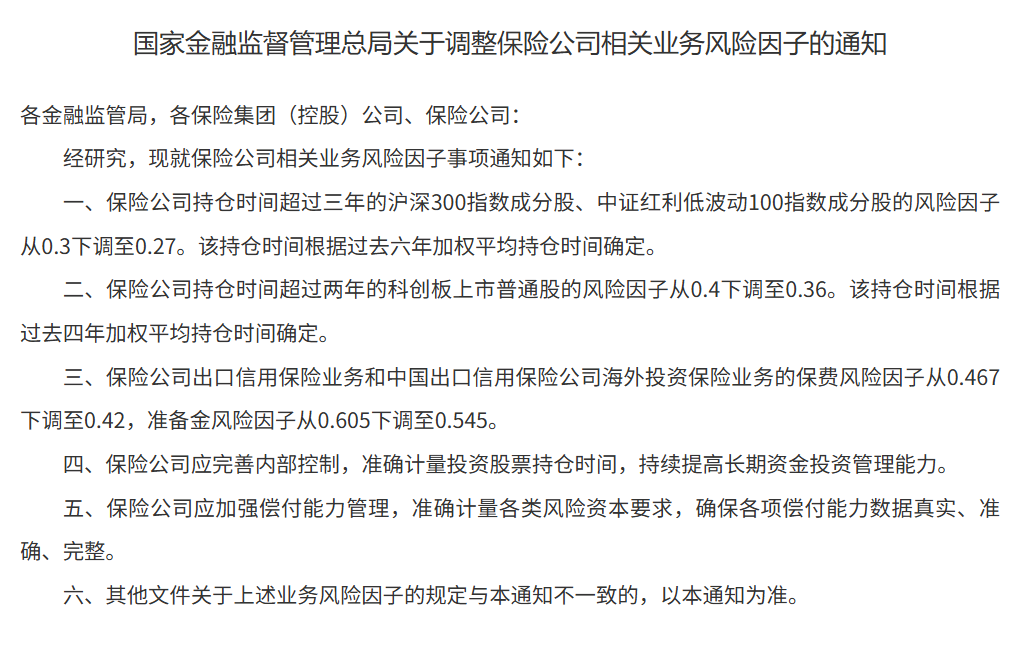
险资入市再获松绑!降低资本占用,精准引流长投蓝筹与科创
2 1 Shi Ji Jing Ji Bao Dao· 2025-12-05 11:40
Core Viewpoint - The National Financial Regulatory Administration has announced a reduction in risk factors for insurance companies' stock investments and export credit insurance, signaling a policy shift towards "capital relaxation" and "long-term investment" [1][2]. Group 1: Adjustments to Risk Factors - The notification differentiates risk factors based on the holding period of stocks, lowering the risk factor for stocks held over three years from 0.3 to 0.27 for certain indices [2][3]. - For stocks listed on the Sci-Tech Innovation Board held for over two years, the risk factor is reduced from 0.4 to 0.36 [2]. - The risk factor for export credit insurance and overseas investment insurance is lowered from 0.467 to 0.42 and from 0.605 to 0.545, respectively [2]. Group 2: Impact on Capital Efficiency - The reduction in risk factors allows insurance companies to reserve less capital for investments, enhancing capital utilization efficiency [3][4]. - For example, a hypothetical investment of 10 billion yuan in the CSI 300 index would see a capital reserve decrease from 3 billion yuan to 2.7 billion yuan due to the risk factor adjustment [3]. - This change is expected to improve liquidity and stability in the capital market, particularly in the stock market [3][4]. Group 3: Encouragement of Long-term Investment - The adjustments aim to guide insurance funds into the equity market as long-term capital, promoting stable funding sources for the economy [5][6]. - The notification encourages insurance companies to adopt a long-term investment strategy, focusing on stocks with stable dividends and strong fundamentals [6]. - The policy is expected to support the development of high-tech and blue-chip stocks, aligning with national innovation strategies [5]. Group 4: Support for Foreign Trade Enterprises - The adjustments to risk factors for export credit insurance are intended to encourage insurance companies to support foreign trade enterprises, which is crucial given the current global economic uncertainties [7]. - The regulatory body emphasizes the importance of these changes in fostering patience capital and supporting technological innovation [7].