
智能制造

Search documents
李乐成:加快建设现代化产业体系
Ren Min Ri Bao· 2026-01-13 03:15
Core Viewpoint - The interview with Li Lecheng, Minister of Industry and Information Technology, emphasizes the importance of implementing the spirit of the Central Economic Work Conference to ensure a strong start for the "14th Five-Year Plan" by focusing on innovation-driven development and building a modern industrial system with international competitiveness [2][3]. Group 1: Industrial Economic Stability - The industrial economy in China is expected to maintain stability and growth, with a focus on four key areas: stabilizing growth in key industries and regions, expanding effective demand, promoting value creation, and enhancing the vitality of business entities [3][4]. - Key industries and regions account for 80% of the total industrial output, necessitating targeted support and policy measures to ensure their growth [3]. Group 2: Modernization of the Industrial System - The "14th Five-Year Plan" aims to accelerate the modernization of the industrial system by promoting intelligent, green, and integrated development in manufacturing [5][6]. - Traditional industries will undergo renewal through the implementation of targeted upgrade plans, while new industries will be developed to create new growth drivers [5][6]. Group 3: Technological Innovation - The Ministry plans to enhance the integration of technological and industrial innovation, focusing on high-quality technological supply and the establishment of national manufacturing innovation centers [8][9]. - There will be an emphasis on increasing the participation of enterprises in major national technology projects and enhancing their innovation capabilities [8]. Group 4: Digital Transformation - The Ministry will promote the digital transformation of manufacturing through the large-scale application of industrial internet and artificial intelligence technologies [10][11]. - Efforts will be made to improve data quality and facilitate the digital transition of enterprises, particularly small and medium-sized enterprises [10][11].
物流机器人市场洞察,全球生产商排名及市场份额
QYResearch· 2026-01-13 02:44
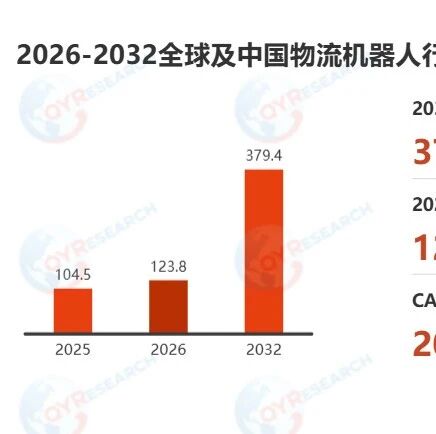
Core Viewpoint - The logistics robot industry is experiencing rapid growth driven by the need for automation and efficiency in supply chains, supported by government policies and structural demand from various sectors such as e-commerce, fast-moving consumer goods, and pharmaceuticals [1][2]. Group 1: Market Dynamics - The logistics robot market is in a high growth phase, with a projected market size of $32.02 billion by 2031 and a compound annual growth rate (CAGR) of 20.1% [3]. - The demand for warehouse automation is structurally expanding, with e-commerce, fast-moving consumer goods, and pharmaceuticals being the core drivers [1][2]. - The market is characterized by a shift from single-point equipment purchases to full-process intelligent deployments, transforming logistics robots into strategic assets for supply chains [2]. Group 2: Product and Application Segmentation - Automated Guided Vehicles (AGVs) and Autonomous Mobile Robots (AMRs) dominate the market, holding approximately 61.8% of the market share [7]. - The primary application area for logistics robots is warehousing and distribution, accounting for about 36.1% of the demand [9]. Group 3: Challenges and Trends - The logistics robot industry faces challenges such as increasing safety and compliance requirements, which necessitate higher investments in algorithms and risk control [2]. - There is a trend towards "deep verticalization" and "scene granularity" in downstream demand, with manufacturing industries pushing for flexible production and logistics upgrades [2]. Group 4: Supply Chain and Component Insights - Key components in the logistics robot supply chain include sensors, controllers, precision reducers, and lightweight structural parts, with a notable shift towards domestic production for stability and cost competitiveness [3]. - The industry is moving towards green manufacturing and low-carbon supply chains, enhancing the energy efficiency and carbon footprint of logistics robots [3].

走在前 勇争先 济宁这一年
Qi Lu Wan Bao· 2026-01-13 02:20
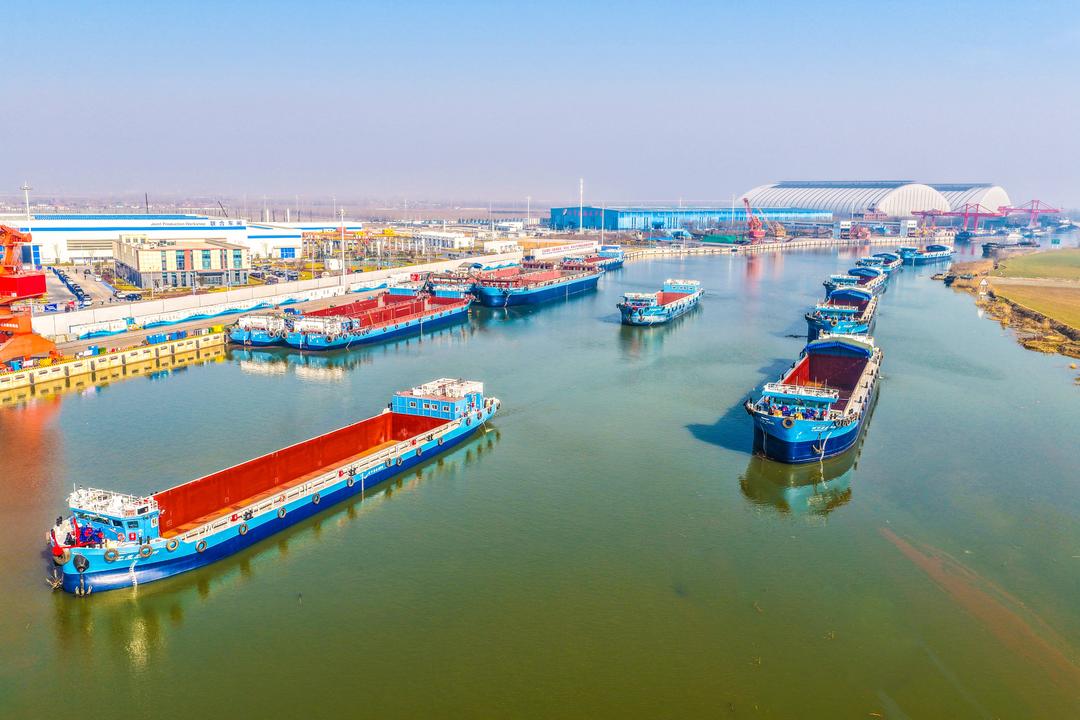
锚定内河船舶"绿色、经济、高效、节能"的发展方向,山东新能船业积极研发并生产适用于不同场景的内河标准化船舶系列产品。凭借过硬的产品品质与 技术优势,企业市场认可度持续攀升。截至目前,已累计签约国内外市场订单180余艘,并与法国达飞等国际企业合作建造的7艘新能源船舶已成功出口至 越南、坦桑尼亚、古巴、赞比亚等国,企业2025年全年开工船舶108艘、交付82艘。 面向未来,新能船业的发展蓝图清晰而坚定。"我们项目二期工程已全面开工建设,计划2026年5月投产。"山东新能船业有限公司党委书记、董事长张强 表示,建成后将具备年产内河新能源运输船舶200艘、游轮游艇40艘、修船50艘的能力。项目将进一步带动动力系统、加工制造、船舶专用设备、涂装防 腐等配套产业集聚发展,有力助推济宁新能源船舶百亿产业园建设。 与此同时,企业正联合中船九院、山东省标准化研究院共同推进15项内河新能源船舶及船厂相关标准的编制工作,致力于在全国新能源船舶领域率先树 立"济宁标准"、打造"济宁样板",以标准化引领产业高质量发展,书写内河绿色航运的新篇章。 齐鲁晚报.齐鲁壹点孔茜 位于济宁白马河畔山东新能船业的现代化车间里,昔日"沙滩造船"时代" ...
加快建设现代化产业体系(权威访谈·开局“十五五”) ——访工业和信息化部党组书记、部长李乐成
Ren Min Ri Bao· 2026-01-12 23:21
Core Viewpoint - The Chinese government emphasizes the integration of technological and industrial innovation to build a modern industrial system with international competitiveness, as highlighted by General Secretary Xi Jinping and the Central Economic Work Conference [1]. Group 1: Industrial Economic Development - The industrial economy in China is expected to maintain stability and growth, with a focus on four key areas: stability, expansion, innovation, and enhancement [2]. - Stability involves ensuring growth in key industries and regions, which account for 80% of the industrial total [2]. - Expansion focuses on increasing effective demand through flexible manufacturing and the application of new technologies [2]. - Innovation aims to enhance value creation by upgrading traditional industries and developing emerging sectors [3]. - Enhancement seeks to boost the vitality of business entities, particularly small and medium-sized enterprises, by improving cash flow and reducing burdens [3]. Group 2: Manufacturing Development Strategies - The Ministry of Industry and Information Technology plans to promote intelligent, green, and integrated development in manufacturing during the 14th Five-Year Plan period [4]. - Traditional industries will undergo renewal through the implementation of targeted improvement plans and the adoption of digital and green technologies [4]. - Emerging industries will be accelerated by creating demonstration bases and promoting large-scale applications of new technologies [5]. - Future industries will be strategically developed, focusing on areas such as quantum technology and 6G [5]. Group 3: Enhancing Technological Innovation - The government aims to increase high-quality technological supply and enhance the innovation capabilities of industries [7]. - Policies will be implemented to strengthen the role of enterprises in technological innovation, including tax incentives for R&D [7]. - Efforts will be made to streamline the conversion of technological achievements into practical applications [8]. - A supportive ecosystem for innovation will be established, focusing on talent development and financial integration [8]. Group 4: Digital Transformation in Manufacturing - The Ministry will promote the digital transformation of manufacturing, leveraging industrial internet applications and artificial intelligence [9]. - A focus will be placed on building high-quality industry data sets and enhancing digital capabilities among enterprises [9]. - Network upgrades will be prioritized to improve connectivity and support the development of industrial internet platforms [9]. - The "Artificial Intelligence + Manufacturing" initiative will be implemented to foster intelligent upgrades in manufacturing [10].
赛场直通生产一线 创新成果即刻转化
Xin Lang Cai Jing· 2026-01-12 20:06
Group 1 - The core event is the second employee technology innovation competition held in Qinhuangdao Economic and Technological Development Zone, focusing on innovations in smart manufacturing [1] - The competition emphasizes the transformation of frontline innovation into practical applications, with a notable example being a carbon fiber wing produced using reverse engineering and 3D printing technology, reducing the customization cycle from 15 days to 3 days [1] - The event is organized by the local labor union and aims to address real production challenges by collaborating with technical experts, universities, and industry associations [1] Group 2 - A total of 26 projects participated in the competition, evaluated by experts from Yanshan University and Hebei University of Building Materials based on practicality, innovation, economic benefits, and social benefits [2] - Awards were given for first, second, and third places based on the evaluation criteria [2]
安徽代表队获多项荣誉
Xin Lang Cai Jing· 2026-01-12 20:06
转自:安徽新闻网 据悉,本届大赛以"匠心逐梦,智造未来"为主题,重点围绕智能制造技术和应用场景,设置机电设备维 修工、仪器仪表维修工、智能制造系统运维员、计算机程序设计员、焊接设备装配调试工、机床装调维 修工等6个赛项,是我国面向智能制造领域举办的级别最高、规模最大、参赛范围最广的国家一类职业 技能竞赛。来自全国27个省级代表队的1000余名选手参加本届大赛。 本网讯(记者 朱卓)日前,由中国机械工业联合会、人力资源和社会保障部、中华全国总工会共同主 办的第六届全国智能制造应用技术技能大赛分别在重庆和山西长治两个赛区成功举办,我省共派出56名 选手参加全部6个赛项角逐,经过激烈比拼,斩获一等奖2个、二等奖5个、三等奖3个,安徽代表队 获"优秀组织单位"称号。 (来源:安徽新闻网) ...
焦点访谈|领航时代 “智造”未来 探秘领航级工厂的跃升密码
Yang Shi Wang· 2026-01-12 13:37
Core Viewpoint - Smart manufacturing is identified as the core engine for high-quality development in the manufacturing industry, marking a significant transition from digitalization and networking to intelligent manufacturing in China [1][15]. Group 1: Overview of Smart Factories - The Ministry of Industry and Information Technology, along with five other departments, announced the first batch of 15 leading smart factories, covering key industries such as equipment manufacturing, raw materials, and electronic information [1][3]. - These leading factories represent the highest level of intelligent manufacturing in China and showcase a broad and deep development of smart manufacturing across various regions [1][3]. - The four-tier system for smart factory cultivation includes foundational, advanced, excellent, and leading levels, with specific requirements for each tier [3]. Group 2: Key Elements of Leading Smart Factories - To qualify as a leading smart factory, six key elements are required: industry leadership, AI technology application, innovative smart manufacturing models, performance leadership, replication leadership, and nurturing plans [3][5]. - Longfei Optical Fiber exemplifies an industry leader by integrating AI throughout its production process, achieving a pulling speed of 3,500 meters per minute with no human intervention [5][6]. - Weichai Power demonstrates performance leadership by reducing maintenance costs by 30% through its engine health management system, showcasing the effectiveness of its smart manufacturing practices [10]. Group 3: Future Manufacturing Models - The exploration of leading smart factories aims to create a flexible and efficient supply network capable of high customization and rapid iteration in production [8][16]. - Baosteel is innovating with AI-driven predictive manufacturing, moving away from traditional order-based production to proactively managing supply chains and production resources [11][13]. - The establishment of at least 1,200 AI scenarios and 25 benchmark production lines by Baosteel by 2027 reflects a commitment to integrating AI into manufacturing processes [13]. Group 4: Systemic Transformation in Manufacturing - The emergence of the first batch of leading smart factories signifies a systemic transformation in China's manufacturing sector, with a focus on technological breakthroughs, efficiency improvements, and green transitions [16]. - The experiences and models developed by these leading factories are expected to be replicable and promote the digital transformation of more manufacturing enterprises [16].


诺力股份:公司与SAP、德勤携手围绕诺力数字化升级转型开展合作
Zheng Quan Ri Bao Wang· 2026-01-12 13:15
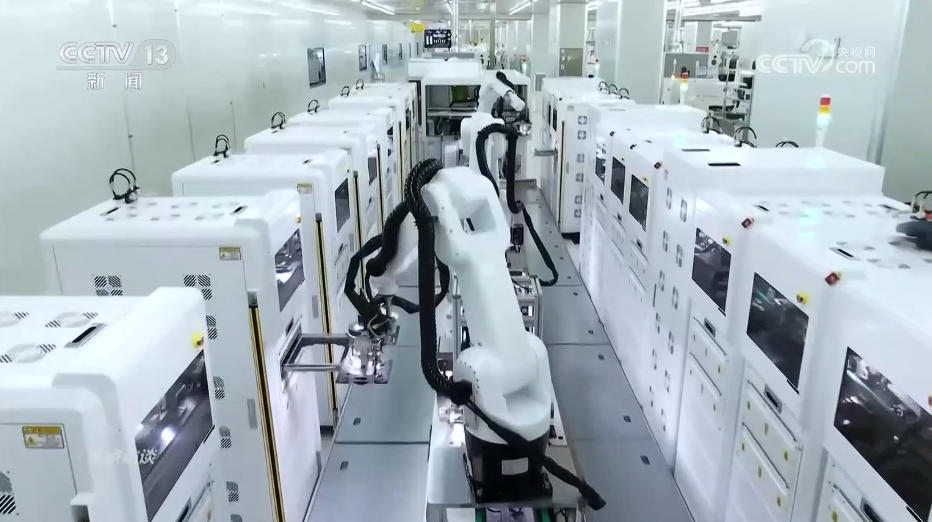
Core Viewpoint - The company, Noli Co., Ltd. (603611), is collaborating with SAP and Deloitte to enhance its digital transformation and smart manufacturing capabilities, marking a significant step in its "Future Factory" strategy [1] Group 1 - The collaboration aims to improve the company's intelligent operational capabilities, supporting decision-making and production processes [1] - This strategic partnership is intended to be long-term and sustainable, indicating a commitment to ongoing development in digital transformation [1] - The company will fulfill its information disclosure obligations in accordance with relevant regulations if any significant matters arise from this collaboration [1]

英威腾:公司不断提升在中山、苏州的产业园智能智造水平
Zheng Quan Ri Bao Zhi Sheng· 2026-01-12 13:12
(编辑 楚丽君) 证券日报网讯 1月12日,英威腾在互动平台回答投资者提问时表示,公司不断提升在中山、苏州的产业 园智能智造水平。公司通过自动化控制、智能传感、智能仓储等智能制造技术和设备,全流程实施精益 生产,提升生产效率和质量。中山工厂从产品设计、生产环境、工业用电、废气排放、回收利用等多个 维度按照国家绿色工厂标准执行建设,目前正在开展中山市绿色工厂认证。 ...

2025年继电器行业词条报告
Tou Bao Yan Jiu Yuan· 2026-01-12 12:20
Investment Rating - The report rates the relay industry with a positive outlook, highlighting significant growth potential driven by various factors [4]. Core Insights - The relay industry is characterized by its cyclical nature, technological intensity, and flexible business models, with a projected market size growth from 361.09 billion to 606.10 billion from 2025 to 2029, reflecting a compound annual growth rate (CAGR) of 13.82% [4][53]. - Key growth drivers include advancements in new energy and grid sectors, policy support, export opportunities, and technological iterations [4][56]. Industry Definition - Relays are electronic control devices that can be categorized into electrical and non-electrical types, serving critical functions in various applications such as power protection and automation [5]. Industry Characteristics - **Cyclical Nature**: The relay industry is closely tied to macroeconomic trends, with demand fluctuations reflecting economic conditions [13]. - **Technological Intensity**: The industry requires high levels of technical integration across multiple disciplines, demanding advanced manufacturing technologies [14]. - **Flexible Business Models**: The prevalent operational model combines order-based production with appropriate inventory management to meet customer demands efficiently [15]. Development History - The relay industry in China has evolved through several phases: a nascent stage (1950-1979), a startup phase (1980-2000), a turbulent period (2001-2015), and a high-growth phase (2016-present), transitioning from a labor-intensive to a technology and capital-intensive industry [16][21]. Industry Chain Analysis - The relay industry chain consists of upstream raw material suppliers, midstream design and manufacturing, and downstream application sectors, with significant reliance on materials like copper and engineering plastics [23][24]. Market Size and Growth - The relay market size grew from 227.60 billion to 317.45 billion from 2019 to 2024, with a CAGR of 6.88%, and is expected to continue expanding significantly through 2029 [53][54]. Downstream Demand - The automotive and home appliance sectors are the largest consumers of relays, accounting for over 50% of total demand, with automotive applications projected to grow significantly due to the rise of electric vehicles [50][51].
