
数智化转型

Search documents
象屿集团携手钉钉 数智化转型提速
Xin Hua Cai Jing· 2025-09-29 07:12
Group 1 - Xiamen Xiangyu Group has officially partnered with Alibaba DingTalk to launch a new digital office platform project, marking the start of its digital transformation phase for over 30,000 employees across all subsidiaries [1][2] - The collaboration aims to create a unified, intelligent, and global collaborative office platform driven by AI, addressing challenges such as resource allocation and organizational capability enhancement due to diversified and global operations [1] - The integration of DingTalk's AI products, including AI forms and AI listening, will enhance operational efficiency and quality in daily office tasks, particularly in supply chain management and financial analysis [2] Group 2 - Established in 1995, Xiamen Xiangyu Group is a state-owned enterprise in Xiamen, consistently ranked among the Fortune Global 500 and China’s Top 500 Enterprises, with over 600 investment companies under its umbrella [2] - The company operates in various sectors, including bulk commodity supply chain, urban development, comprehensive financial services, port shipping, and innovation incubation, aiming to become a globally competitive investment holding group centered on supply chain [2]

象屿集团签约钉钉 迈入数智化转型新阶段
Zhong Guo Jing Ji Wang· 2025-09-29 05:18
Core Insights - Xiamen Xiangyu Group has officially partnered with Alibaba DingTalk to launch a new digital office platform project, marking the start of a significant digital transformation for the company [1] - The collaboration emphasizes the integration of AI technology as a core driver for the development of a unified, intelligent, and global collaborative office platform [1] - The partnership aims to enhance AI capabilities across the entire group and its subsidiaries, which include over 30,000 employees, ensuring effective communication of strategic goals and efficient cross-organizational collaboration [1] Summary by Sections - **Partnership Announcement** - Xiamen Xiangyu Group and Alibaba DingTalk have reached a formal cooperation agreement [1] - The new digital office platform project is officially initiated [1] - **Strategic Focus** - Embracing AI and accelerating intelligent transformation is a core strategic focus for Xiamen Xiangyu Group [1] - The partnership reflects a strong consensus on future development directions between both parties [1] - **Implementation Goals** - The collaboration aims to create an AI-driven integrated digital foundation using DingTalk's "foundation + AI + ecosystem" approach [1] - The goal is to deploy AI capabilities across the group, ensuring effective communication of strategies and enhancing operational innovation and core competitiveness [1]

外资与本土企业“双向奔赴” 西安开放型经济涌动新活力
Sou Hu Cai Jing· 2025-09-29 04:56
Group 1 - The Kazakhstan Xi'an Port has become a crucial node for the China-Europe Railway Express, significantly enhancing cross-border logistics efficiency [2] - In the first half of the year, Xi'an attracted foreign investment of $421 million, achieving 54.7% of its annual target, with 149 new foreign enterprises established, a year-on-year increase of 4.9% [2] - The establishment of the smart factory by COFCO Coca-Cola in Xi'an represents a significant upgrade in foreign investment, showcasing the integration of AI technology in production [3] Group 2 - Eaton Electric Group is investing in a new energy industry base in Xi'an, focusing on energy storage systems and new energy vehicles, which will inject new momentum into the high-tech zone's development [4] - The high-tech zone has implemented a mechanism to address business concerns, achieving a 100% resolution rate for 1,961 enterprise-related issues, creating a stable and predictable development environment [5] - The high-tech zone has gathered over 500 high-level talents and 15,000 hard-tech innovation talents, providing a solid foundation for foreign enterprises' R&D centers and high-end manufacturing projects [5] Group 3 - The export value of the high-tech zone reached 220.29 billion yuan in the first eight months of the year, marking a year-on-year increase of 17.1%, with private enterprises becoming a driving force in overseas expansion [6] - The establishment of the "Technology Enterprises Going Global Alliance" aims to provide a one-stop service system for enterprises venturing abroad, facilitating international cooperation [7] - The synergy between foreign investment and local enterprises' overseas expansion enhances the overall industrial resilience and attractiveness of Xi'an as an investment destination [8]




华为联合中国太保共创金融保险业智能化新范式
Xin Lang Cai Jing· 2025-09-28 10:36
Core Insights - The insurance industry is undergoing a profound transformation through deep integration with cutting-edge technology [1] - The collaboration between Huawei and China Pacific Insurance aims to enhance operational efficiency and decision-making accuracy in key areas such as sales and claims [1] - This partnership represents not only a technological upgrade but also a practical implementation of strategic pathways for digital transformation in the financial insurance sector [1] Group 1 - The "Pacific Insurance Financial Industry Lighthouse" initiative brings multiple positive effects, providing high-performance computing support for China Pacific Insurance's business system [1] - The use of large model technology significantly improves operational efficiency and decision-making accuracy in critical processes [1] - The successful collaboration between Pacific Insurance Technology and Huawei validates the feasible model of "independent innovation + scenario application" [1] Group 2 - The partnership offers advanced concepts and practical frameworks for the digital transformation of the domestic financial insurance industry [1]

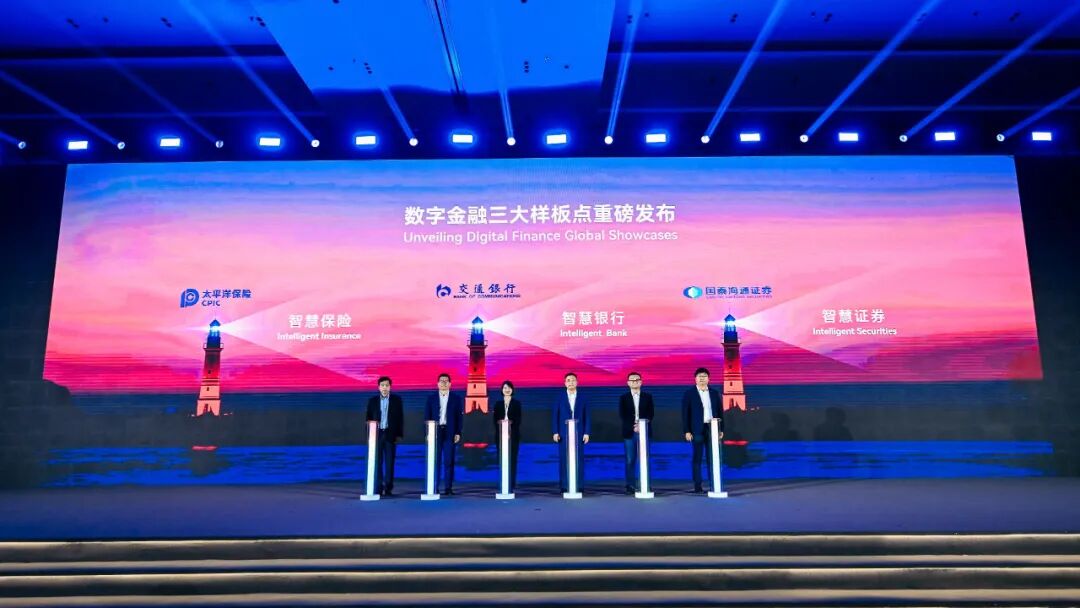
华为联合中国太保点亮“灯塔”,共创金融保险业智能化新范式
Mei Ri Jing Ji Xin Wen· 2025-09-28 03:24
Core Insights - The insurance industry is undergoing a profound transformation through deep integration with cutting-edge technology, highlighted by the launch of the "Pacific Insurance Financial Industry Lighthouse" in collaboration with Huawei [1][3] - This initiative marks a new phase in the digital transformation of the insurance sector, establishing a fully autonomous intelligent computing infrastructure capable of training and inference with models containing hundreds of billions of parameters [1][3] Group 1: Technological Advancements - The establishment of the lighthouse project provides high-performance computing support for China Pacific Insurance, significantly enhancing operational efficiency and decision-making accuracy in key areas such as sales and claims [3] - The collaboration between China Pacific Insurance and Huawei has validated the model of "independent innovation + scenario application," offering a practical example for the digital transformation of the domestic financial insurance industry [3][12] - The AI applications deployed across over 60 core business scenarios have achieved a monthly call volume exceeding 5 million, doubling every two months, thus supporting the implementation of the "Digital Pacific Insurance 2.0" strategy [6] Group 2: Strategic Development - China Pacific Insurance's digital transformation can be summarized in three phases: focusing on usability, enhancing user experience, and moving towards comprehensive AI integration [5] - The first phase involved migrating core systems to a fully autonomous and controllable cloud, achieving a 10% increase in peak processing capacity during high business periods [5] - The second phase aimed at empowering industry partners through SaaS services, establishing a collaborative ecosystem with over 20 small and medium-sized insurance companies [5] Group 3: AI Implementation in Claims Processing - The introduction of large model technology in health insurance claims has automated the review process, reducing processing time to minutes and increasing accuracy to 98%, surpassing the capabilities of junior reviewers [8] - As of June 2025, the monthly review volume for health insurance claims exceeded 100,000 cases, significantly improving customer experience and allowing employees to focus on more complex tasks [8] Group 4: Collaborative Efforts - A joint team was formed between China Pacific Insurance and Huawei to tackle technical and business challenges, optimizing average time between failures and enhancing model inference performance by over 50% [11] - The partnership has led to the establishment of a "Computing Ecology Joint Laboratory" and the unveiling of the lighthouse project, showcasing a series of successful outcomes [11][12] Group 5: Future Outlook - Looking ahead, the collaboration will continue to focus on the dual-engine model of "technology + scenario," aiming to create more AI benchmark applications in sales, claims, and management [13] - Huawei plans to leverage the experience gained from China Pacific Insurance to assist more financial industry clients in accelerating AI application deployment globally [15]
信雅达:公司与包括华为在内的信创厂商携手,共同助力国内金融行业客户加速数智化转型
Zheng Quan Ri Bao Wang· 2025-09-26 12:13
Core Viewpoint - The company Xinyada (600571) is collaborating with domestic financial industry clients and partners, including Huawei, to accelerate the digital transformation in the financial sector [1] Group 1 - The company is actively engaging with various domestic financial industry clients to enhance their digital and intelligent transformation efforts [1] - The partnership with leading technology firms like Huawei signifies a strategic move to leverage advanced technologies for financial services [1]

CFCA整合数字证书应用,助力财务公司信息化转型
Jin Tou Wang· 2025-09-26 10:56
数字经济的蓬勃兴起为金融创新发展构筑广阔舞台,数字技术的飞速发展正在重塑企业财务和公司金 融,机遇与挑战也随之而来。因此,全方位推进数智化、司库化转型已成为行业发展的新热点和新趋 势。 相较于其他金融行业机构,财务公司具有如下特点。 业务范围广:涉及存款、贷款、结算、担保和代理等金融业务。 监管要求严:同时接受企业集团和人民银行的双重监管。 RA系统(数字证书注册审核系统,Register Authority) RA系统是一套为数字证书注册审批机构实现功能需求的软件系统,具有证书申请、证书审批、证书补 发和下载等功能,提供多种部署模式,具有丰富的开发接口,可以与多种用户系统进行无缝集成。 证书工具包产品(电子签名与加解密开发组件) 分为客户端和服务器端两个产品,前者成为签名控件主要用于客户端实现加解密及签名等功能,后者实 现在应用服务器端的加解密及验签等功能。 安全要求高:资金交易流转对网络和数据安全要求严格。 2024年5月,国家金融监督管理总局印发《关于促进企业集团财务公司规范健康发展提升监管质效的指 导意见》,要求财务公司加强信息科技风险管理: "财务公司应当加强信息化建设,推动数字化转型,科学运用数字 ...
涪陵榨菜(002507) - 002507涪陵榨菜投资者关系管理信息20250926
2025-09-26 08:30
Group 1: Financial Performance and Shareholder Returns - The company has maintained a cash flow of approximately 2.8 billion CNY annually, with 4.2 billion CNY allocated for financial management, yielding a return rate of only 2% [2][6]. - The sales net profit margin has consistently exceeded 30% over the past two years, while the net asset return rate has been impacted by a significant increase in net assets due to non-public fundraising in 2021 [19][32]. - The company has been increasing dividend payouts annually to provide stable returns to shareholders, while share buybacks are considered based on various factors [1][6]. Group 2: Market Strategy and Product Development - The company is focusing on expanding its product categories and channels, with a strategy to develop new products that meet consumer demands and to penetrate new markets [7][10]. - Recent innovations include the introduction of snack products like "Little Crunchy" and "Only Wujang," aimed at the snack food segment [2][10]. - The company is actively exploring the customization of products for B2B clients and has established a large customer operations center to facilitate direct service [5][10]. Group 3: Management and Operational Efficiency - The management team is subject to annual performance evaluations, and measures are in place to address underperformance [4][6]. - The company has implemented robotic applications in production processes to enhance efficiency and standardization [8][26]. - The company is committed to maintaining a focus on its core business of pickled vegetables while exploring strategic acquisitions to expand its product matrix [11][30]. Group 4: Market Challenges and Consumer Trends - The company acknowledges the challenges posed by market fluctuations, macroeconomic factors, and competition from alternative products [6][23]. - There is a noted shift in consumer preferences towards a wider variety of snack options, prompting the company to adapt its product offerings accordingly [23][24]. - The company is also exploring overseas markets and has established a dedicated subsidiary for export business, although specific revenue targets for the next three years have not yet been set [20][30].

全球六大出版巨头最新财报陆续公布,透露出什么信息?
Sou Hu Cai Jing· 2025-09-26 08:22
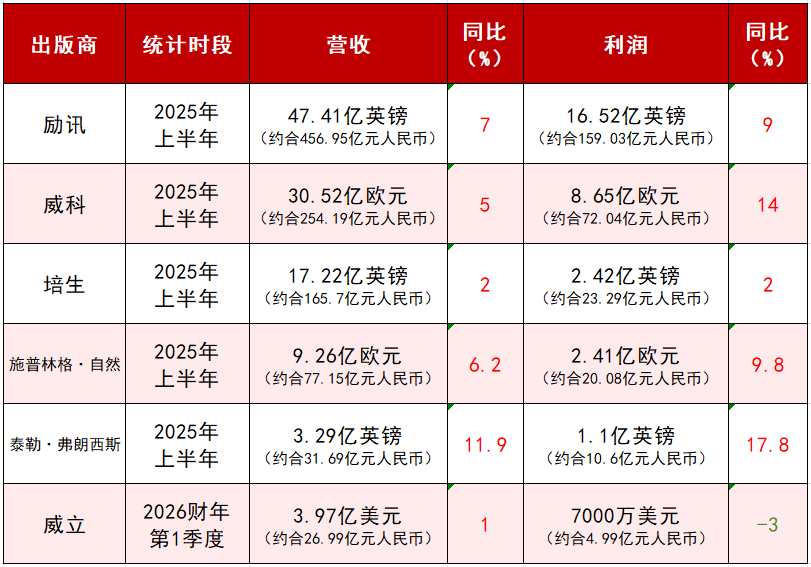
Core Insights - The global publishing giants have transitioned from digital transformation to a new phase centered on artificial intelligence (AI), cloud platforms, and open access, focusing on business intelligence and integrated solutions to reshape the value chain and create new business moats [1] Group 1: Financial Performance - RELX reported a revenue of £4.741 billion (approximately ¥45.695 billion) for the first half of 2025, with a potential year-on-year growth of 7% and an adjusted operating profit of £1.652 billion (approximately ¥15.903 billion), also showing a potential growth of 9% [6][7] - Wolters Kluwer achieved a revenue of €3.052 billion (approximately ¥25.419 billion) for the first half of 2025, with a potential year-on-year growth of 5% and an adjusted operating profit of €865 million (approximately ¥7.204 billion), reflecting a 14% increase [11] - Springer Nature's revenue for the first half of 2025 was €926 million (approximately ¥7.715 billion), with a potential year-on-year growth of 6.2% and an adjusted operating profit of €241 million (approximately ¥2.008 billion), showing a potential growth of 9.8% [16][17] - Taylor & Francis reported a revenue of £3.29 billion (approximately ¥31.69 billion) for the first half of 2025, with a potential year-on-year growth of 11.9% and an adjusted operating profit of £110 million (approximately ¥1.06 billion), reflecting a potential growth of 17.8% [18] - Wiley's revenue for Q1 of FY2026 was $397 million (approximately ¥2.699 billion), a decrease from the previous year, but with an operating profit of $31 million, showing a 7% year-on-year increase [20] Group 2: Strategic Focus and Innovations - RELX has completed its transition from traditional print to digital publishing, with print revenue now accounting for only 4% of total revenue, and is focusing on personalized customer needs [8] - Wolters Kluwer is emphasizing cloud-based expert solutions, with 59% of total revenue coming from expert solutions, and is integrating generative AI technology into its product platforms [12] - Springer Nature is leading in open access business, with a significant increase in the number of articles published in fully open access journals, and has completed nearly all contract renewals for 2025 [17] - Taylor & Francis is accelerating the application of AI technology in publishing, including translating books into English to reduce costs and enhance international dissemination [18] - Wiley is focusing on content licensing and AI model training, with a significant increase in AI-related revenue and partnerships with leading tech companies to enhance its AI capabilities [21][22]
江南化工:江南化工始终致力于通过技术创新推动行业高质量发展
Zheng Quan Ri Bao Wang· 2025-09-26 08:15
Core Viewpoint - Jiangnan Chemical is committed to promoting high-quality development in the industry through technological innovation [1] Group 1: Company Initiatives - The company actively engages in "smart engineering" projects to enhance process technology upgrades and digital transformation [1] - Jiangnan Chemical plans to continue deepening its intelligent layout to consolidate its leading advantage in civil explosive technology [1] Group 2: Industry Impact - The company's efforts aim to provide a benchmark example for high-quality development in the industry [1]
