
生态文明建设

Search documents
深入学习贯彻习近平生态文明思想,以美丽中国建设全面推进人与自然和谐共生的现代化
Ren Min Ri Bao· 2025-07-28 22:30
Core Points - The construction of ecological civilization is a fundamental strategy for the sustainable development of the Chinese nation, emphasized by the central leadership since the 18th National Congress of the Communist Party of China [1][4][22] - The publication of "Selected Works on Ecological Civilization by Xi Jinping" reflects the rich connotation and scientific system of Xi Jinping's ecological civilization thought, which is crucial for promoting harmonious coexistence between humans and nature [1][2][8] Group 1 - Xi Jinping's ecological civilization thought addresses major theoretical and practical issues in the new era, promoting innovation in ecological civilization theory, practice, and systems [2][4] - The thought emphasizes the importance of ecological civilization in the overall layout of socialism with Chinese characteristics, highlighting the need for a beautiful China [4][5] - The thought integrates Marxist principles with traditional Chinese ecological culture, providing a comprehensive understanding of ecological civilization [9][10] Group 2 - The ecological civilization construction has undergone historical, transformative, and comprehensive changes since the 18th National Congress, achieving significant results under Xi Jinping's leadership [7][18] - The thought outlines the core concepts and strategic paths for ecological civilization construction, emphasizing the relationship between economic development and environmental protection [13][19] - It stresses the importance of a systematic approach and institutional guarantees for ecological civilization construction, advocating for strict laws and regulations to protect the environment [14][15] Group 3 - The thought calls for a collective effort in building a beautiful China, promoting global sustainable development, and fostering a shared ecological consciousness among the populace [16][22] - It highlights the need to address five major relationships in ecological civilization construction, including high-quality development versus high-level protection [19][20] - The strategic tasks and major initiatives for advancing the construction of a beautiful China are outlined, focusing on green and low-carbon development [21][22]
生态环境部:命名“两山”基地满六年,复核实行“末位淘汰”
Nan Fang Du Shi Bao· 2025-07-28 10:37
Core Viewpoint - The article highlights the progress and new initiatives in ecological civilization construction in China, emphasizing the importance of the "Green Mountains and Clear Water are Gold and Silver Mountains" concept, which marks its 20th anniversary this year [1]. Group 1: Ecological Civilization Construction - Since 2017, the Ministry of Ecology and Environment has named 572 ecological civilization demonstration zones and 240 "Green Mountains and Clear Water are Gold and Silver Mountains" practice innovation bases [1]. - The ecological environment quality has "significantly improved," with demonstration zones generally ranking among the best in air and water quality within their provinces [1]. - Nearly half of the "Two Mountains" bases have reached an "excellent" ecological status, indicating a strengthening of ecological foundations [2]. Group 2: Green Development and Transformation Paths - Green development is "continuously leading," with regions focusing on dual carbon goals, transitioning from energy consumption control to carbon emission control, and achieving leading levels in energy consumption and carbon emission intensity per unit GDP across provinces [1][2]. - The article outlines three transformation paths for turning ecological advantages into economic benefits: "Protect Green for Gold," "Gather Green into Gold," and "Borrow Green to Generate Gold," along with seven transformation models including ecological compensation, ecological agriculture, ecological tourism, and ecological finance [2]. Group 3: New Selection and Management Procedures - The selection cycle for ecological civilization demonstration projects has been extended from one year to three years, aiming to reduce frequency and control quantity, thereby enhancing the "gold content" of the projects [3]. - New requirements for the selection process include optimizing indicators, with city-level indicators focusing more on comprehensive construction effectiveness and county-level indicators emphasizing task implementation and rural environmental improvement [2][3]. - The management regulations for ecological civilization demonstration projects have been revised to simplify procedures, shifting from "planning-led" to "indicator-oriented," effectively reducing the burden on grassroots levels [2].
山西忻州河长制从“有名有实”到“有能有效”
Zhong Guo Fa Zhan Wang· 2025-07-28 08:31
Core Viewpoint - The article highlights the successful implementation of the river chief system in Xinzhou City, which has significantly improved the ecological environment of local rivers and lakes, showcasing a model for ecological governance in China [1][2][3]. Group 1: Implementation of River Chief System - Xinzhou City initiated the river chief system in late 2016, establishing a comprehensive governance framework that evolved from mere existence to effective management [1][2]. - The "dual chief" system was introduced in 2019, where the top leaders of the party and government oversee river management, transforming it from a departmental responsibility to a political one [2][3]. - A total of 2,734 river chiefs have been appointed at various levels, ensuring thorough coverage and accountability for river management [2][3]. Group 2: Innovative Mechanisms and Practices - The city has developed a "ten-item work system" that includes regular inspections and a clear accountability framework, leading to over 100,000 inspections and a 96.3% rectification rate for identified issues [3][4]. - A collaborative mechanism involving ten departments has been established, enhancing the effectiveness of river management through joint inspections and legal actions against violators [4][5]. - The introduction of "smart river patrols" using remote monitoring and drones has modernized the oversight process, improving the efficiency of ecological governance [4][5]. Group 3: Ecological Restoration and Management - Xinzhou City has delineated management boundaries for 157 rivers and 3 lakes, addressing previous ambiguities in river management [5][6]. - The "one river (lake) one policy" approach has been adopted, focusing on specific restoration strategies for different water bodies, leading to significant improvements in water quality and ecological health [6][7]. - The city has successfully cleaned up over 120,000 cubic meters of waste and restored 774.3 acres of obstructive vegetation, laying a solid foundation for sustainable river management [6][7]. Group 4: Community Involvement and Long-term Sustainability - Community engagement has increased, with local residents actively participating in river protection initiatives, transforming the perception of river management from a government-led effort to a community responsibility [8]. - The city has established a 24-hour reporting hotline for environmental issues, encouraging public involvement in ecological governance [8]. - Ongoing efforts include addressing historical pollution issues and enhancing public awareness of environmental protection, ensuring long-term sustainability of river ecosystems [8].
守护生态底色 让“甜蜜事业”扎根绿色沃土
Yang Shi Wang· 2025-07-28 03:47
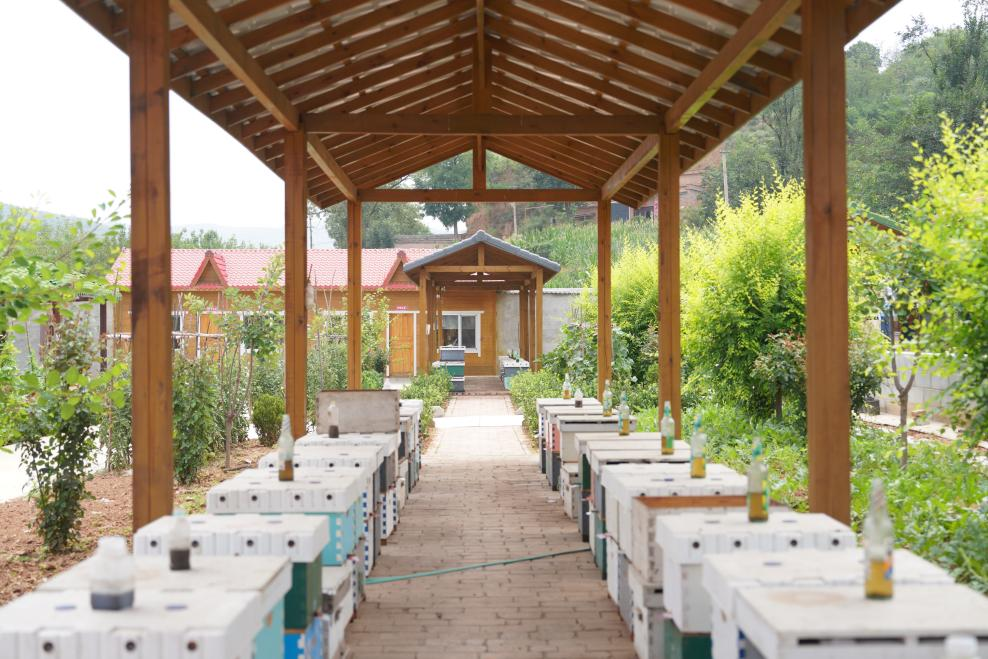
Core Insights - The bee industry in China is a vital link between ecological protection and economic development, with a focus on sustainable practices and high-quality production [1][2][3] Group 1: Industry Overview - China is the world's largest beekeeping country, with a significant focus on ecological protection and sustainable development [1] - Qinshi County in Shanxi Province has been a leader in beekeeping for over 30 years, showcasing a thriving industry that contributes to local ecological civilization [1][2] Group 2: Ecological and Economic Synergy - The practice of forest-based beekeeping in Qinshi County utilizes rich biodiversity and abundant nectar sources, promoting both ecological health and economic benefits for local farmers [2] - Policies supporting the bee industry have been in place since 2011, focusing on standardization, quality improvement, and ecological protection [2][3] Group 3: Technological Innovation - Recent technological advancements in beekeeping, including digital and smart beekeeping techniques, have significantly improved efficiency and product quality while enhancing ecological protection [3] - The establishment of a digitalized service system for bee products has facilitated better management and marketing, contributing to the industry's growth [3] Group 4: Future Prospects - Qinshi County is transitioning from a coal-dominated economy to one focused on ecological sustainability, with over 2 million acres of nectar resources being revitalized [3] - The integration of ecological civilization into all aspects of economic and social development is expected to yield significant benefits for the local community [3]

生态环境部:简化申报流程 今年继续开展两个创建示范项目
news flash· 2025-07-28 02:58
生态环境部:简化申报流程 今年继续开展两个创建示范项目 智通财经7月28日电,生态环境部今天(28日)上午举行例行新闻发布会,生态环境部有关负责人介 绍,落实为基层减负要求,今年将简化申报流程,继续开展"绿水青山就是金山银山"实践创新基地和生 态文明建设示范区两个创建示范项目。 ...
《全生物降解农用地面覆盖薄膜》将有效解决残膜污染土壤问题
Xiao Fei Ri Bao Wang· 2025-07-28 02:24
Core Viewpoint - The implementation of the national standard GB/T 35795 for fully biodegradable agricultural ground cover films is significantly promoting the production, application, and regulation of biodegradable films in China, contributing to agricultural green development and soil environmental protection [3][4]. Group 1: Current Status and Application - The annual coverage area of biodegradable films in China has approached 3 million acres, with applications across more than 20 provinces, covering various crops such as corn, tomatoes, and rice [1]. - The use of biodegradable films has effectively addressed residual film pollution and increased crop yields, particularly benefiting root crops and rice by reducing costs associated with herbicides [1][2]. Group 2: Industry Development and Support - The biodegradable film industry has received strong support from multiple government departments, leading to significant advancements in application experience and pollution management [2]. - The annual usage of agricultural films in China exceeds 1.45 million tons, with a total covered land area of 250 million acres since the promotion of film usage in the 1980s [1]. Group 3: Standard Implementation and Innovation - The implementation of the GB/T 35795 standard has led to rapid growth in the promotion area of biodegradable films, transitioning from pilot projects to large-scale applications, especially in northern arid regions [3]. - The standard has driven continuous innovation in materials and production processes, establishing a comprehensive innovation system from raw material synthesis to end-use applications [3]. Group 4: Challenges and Future Directions - Some challenges have been identified in the standard's implementation, including the need for better alignment with international standards and the establishment of traceability to combat counterfeit products [4]. - A revision plan for the standard has been approved, with discussions ongoing to refine various aspects, including technical indicators and testing methods, aiming for a draft for public consultation by mid-August [4].
新时代生态文明建设的指导性文献
Si Chuan Ri Bao· 2025-07-27 20:43
Core Viewpoint - The publication of "Selected Works on Ecological Civilization" serves as a guiding framework for systematic reforms and provides fundamental guidance for theoretical and practical innovations in ecological civilization construction [1][4][8] Main Content - The "Selected Works" compiles 79 key writings by General Secretary Xi Jinping on ecological civilization from December 2012 to April 2025, forming a comprehensive theoretical system from concept establishment to institutional arrangements and international cooperation [1][5][6] - It emphasizes the importance of ecological civilization in the overall national development strategy, highlighting its role in achieving sustainable development and the rejuvenation of the Chinese nation [5][10] Significant Implications - The thoughts expressed in the "Selected Works" are integral to Xi Jinping's New Era Socialist Thought with Chinese Characteristics and represent significant theoretical advancements in the 21st century regarding the relationship between humans and nature [1][9] - It provides a concrete action guide for achieving ecological goals in the context of Chinese-style modernization, emphasizing the harmonious coexistence of humans and nature [10][11] Learning Methodology - A thorough reading of the "Selected Works" is essential for understanding its core principles, with a focus on key content and timely updates to maintain relevance [1][14][15] - Emphasizing a problem-oriented approach will facilitate deeper learning and practical application of the theories presented in the "Selected Works" [16][17]
探访额尔古纳河右岸的夫妻管护站:极地坚守 同心护绿
Zhong Guo Xin Wen Wang· 2025-07-27 08:45
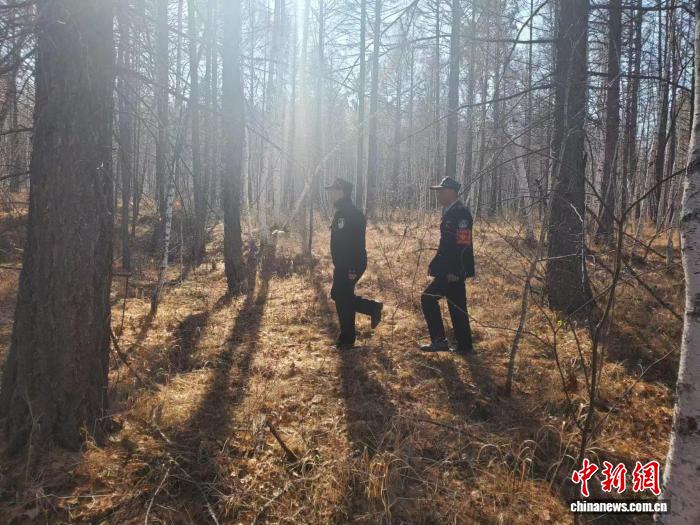
Core Viewpoint - The article highlights the dedication of a couple, Sun Jinhe and Liu Lanxiang, who serve as guardians of the ecological environment and border security in a remote area of Inner Mongolia, showcasing their commitment to protecting the original forest and maintaining the region's ecological balance [1][4]. Group 1: Location and Conditions - Qiqian Village is located in the Daxing'anling region, surrounded by mountains and adjacent to the Eerguna River, characterized by extreme weather conditions with summer temperatures reaching 30°C during the day and dropping below 10°C at night, while winter temperatures can fall below -50°C [2][3]. Group 2: Roles and Responsibilities - Sun Jinhe, born in 1970, has been a forest ranger and border guard for 26 years, responsible for patrolling the largest undeveloped original forest area in China and ensuring border security [3][4]. - The couple's daily tasks include forest patrols, fire prevention checks, and monitoring the border, with Sun Jinhe emphasizing the importance of their roles in maintaining ecological and border security [3][4]. Group 3: Living Conditions and Challenges - Since 2019, Sun Jinhe has been the sole guardian at the management center, leading to a lifestyle of year-round commitment without breaks, prompting the couple to relocate to the center [4]. - The couple faces significant challenges, including unreliable electricity, lack of clean water, and the need to manage limited supplies due to their remote location [4]. Group 4: Adaptation and Technology - Liu Lanxiang has adapted to the harsh living conditions, taking on responsibilities to maintain the center's temperature and manage resources effectively [4]. - The couple combines traditional patrolling methods with modern technologies like drones and infrared monitoring to enhance their conservation efforts [7].
四川的力量
Si Chuan Ri Bao· 2025-07-25 00:18
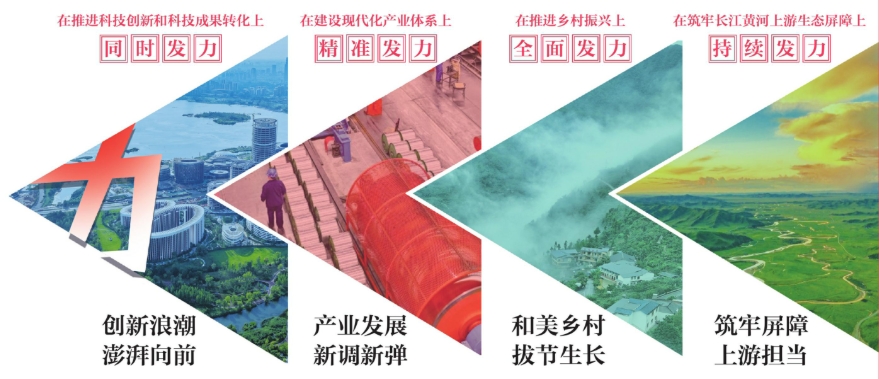
Core Viewpoint - The article emphasizes the strategic importance of Sichuan's development under the guidance of President Xi Jinping, focusing on innovation, industrial modernization, rural revitalization, and ecological protection as key areas for growth and transformation [2][3][4]. Group 1: Strategic Focus Areas - The "Four Forces" proposed by President Xi Jinping guide Sichuan's development strategy, indicating what the province should focus on and how to implement these strategies effectively [3]. - Sichuan is advancing a "1+N" pilot research and development platform to enhance the conversion of scientific achievements into productive forces, thereby supporting technological innovation and industrial development [3][4]. - The province is committed to building a modern industrial system, balancing traditional industry upgrades with the development of strategic emerging industries, such as artificial intelligence [4]. Group 2: Economic Performance - In the first half of 2025, Sichuan's GDP is projected to grow by 5.6% year-on-year, reflecting a stable and resilient economic performance [6]. - Sichuan is enhancing its international competitiveness through initiatives like the "川行天下" campaign, which has secured over 55 billion yuan in orders [6]. - The province is fostering innovation through significant advancements in emerging industries, including artificial intelligence, biotechnology, and aerospace, which are reshaping its economic landscape [6]. Group 3: Cultural and Ecological Development - Sichuan is focusing on the deep integration of culture and tourism to strengthen its cultural tourism sector, which is part of the broader strategy for high-quality development [10]. - The province is committed to ecological civilization, emphasizing the protection and restoration of natural resources, particularly as a key water source for the Yangtze and Yellow Rivers [4][10]. - The transformation of rural areas is a priority, with efforts to enhance infrastructure, agricultural productivity, and overall living conditions, exemplified by the success of villages like 阿布洛哈村 [8][9].
生态环境部:强化生态保护监管 守护好美丽中国自然生态本底
news flash· 2025-07-24 14:27
Core Viewpoint - The article emphasizes the importance of the "Green Mountains and Clear Water are Gold and Silver Mountains" concept, highlighting the need for stronger ecological protection and governance to achieve a harmonious coexistence between humans and nature in China's modernization efforts [1] Group 1: Environmental Governance - The government aims to continuously strengthen environmental governance and resolutely combat pollution [1] - There is a commitment to enhance ecological protection supervision to safeguard China's natural ecological baseline [1] Group 2: Ecological Civilization - The promotion of ecological civilization demonstration projects is essential, with a focus on leveraging exemplary roles [1] - The government plans to enhance international cooperation and communication to collectively address global ecological and environmental challenges [1]