
区块链技术

Search documents
数字人民币智能合约在跨境贸易结算中的应用场景设计及与SWIFT系统的协同机制
Sou Hu Cai Jing· 2025-07-13 11:19
Core Viewpoint - The application of digital currency, particularly the digital yuan (e-CNY), is becoming a significant trend in international payments and cross-border trade settlements, representing China's strategic move to enhance its competitiveness in the global economic system [1] Group 1: Digital Yuan and Smart Contracts - The digital yuan is not just a digital form of the renminbi but a strategic initiative by China to deepen reforms and enhance competitiveness in the global economy [1] - Smart contracts, based on blockchain technology, can automatically execute contract terms without relying on third-party intermediaries, improving efficiency and transparency in cross-border trade settlements [1][3] Group 2: Advantages Over Traditional Payment Systems - Traditional cross-border payment systems rely on intermediaries, making the process cumbersome and time-consuming, while the digital yuan's smart contracts can automatically trigger payments upon consensus between trading parties [3] - The use of digital yuan can effectively reduce risks associated with exchange rate fluctuations by minimizing foreign exchange conversion steps, thus enhancing payment stability and reliability [3] Group 3: Integration with SWIFT System - The SWIFT system remains a crucial infrastructure for cross-border payments, but it has limitations such as long transaction times and high costs, which the digital yuan's smart contracts can help address [5] - Integrating digital yuan smart contracts into the SWIFT system can enhance cross-border payment efficiency, reduce costs, and improve interoperability within the global payment system [5][7] Group 4: Future Implications - The collaboration between digital yuan and the SWIFT system can simplify settlement processes by allowing direct payments between buyers and sellers, reducing operational risks and disputes arising from information asymmetry [7] - The synergy between digital yuan and SWIFT is expected to drive the intelligent transformation of global cross-border payments, ushering in a new era of efficient, secure, and convenient payment solutions [9]



区块链技术在艺术品拍卖中的应用:如何通过NFT实现艺术品溯源与所有权转移自动化?
Sou Hu Cai Jing· 2025-07-13 11:19
Core Insights - Blockchain technology is revolutionizing the art auction market by addressing issues such as authenticity verification and ownership transfer transparency [1][3][12] - The rise of NFTs (Non-Fungible Tokens) is providing a digital proof of ownership and authenticity for artworks, enhancing traceability and trust in the art market [3][7][10] Blockchain Technology Advantages - Blockchain offers a decentralized, immutable, and transparent ledger, making it ideal for verifying the authenticity and ownership of artworks [3][5] - Each artwork's information, including creation date, artist, and transaction history, can be securely recorded on the blockchain, solving the "authenticity dilemma" in traditional art markets [3][9] NFT Emergence and Art Traceability - NFTs serve as unique digital assets representing artworks, ensuring their uniqueness and provenance [3][7] - NFTs contain detailed information about the artwork, including background, ownership records, and transaction history, which are publicly accessible and immutable [3][9] Automated Ownership Transfer - The integration of blockchain and NFTs simplifies the ownership transfer process through smart contracts, automating transactions and reducing reliance on intermediaries [5][11] - Smart contracts enhance transaction efficiency and security, ensuring that every transaction is legitimate and executed seamlessly [5][11] Future of Art Auctions with Blockchain - The art auction market is expected to undergo significant transformation, moving towards decentralized platforms that increase transparency and accessibility for art enthusiasts [7][12] - The combination of blockchain and NFTs is paving the way for a more transparent, secure, and intelligent future in the art market [7][12] Market Transparency - Blockchain technology allows for permanent recording and tracking of every transaction, significantly reducing the potential for fraud and enhancing market health [9][12] - Collectors can verify the authenticity of their purchases and access historical transaction records, improving trust and providing accurate pricing data [9][12] Artist Benefit Protection - NFTs provide artists with new revenue streams and copyright protection, allowing them to earn from secondary market sales through smart contract royalties [10][12] - This mechanism encourages artists to focus on quality and innovation in their work while enhancing their brand recognition [10][12] Impact on Auction Houses - Traditional auction houses can streamline their processes and reduce costs through the adoption of NFTs and blockchain technology [11][12] - Blockchain enables real-time monitoring of auction transactions, ensuring transparency and fairness in the auction process [11][12]

经济学家宋清辉:沪港可在合规框架下,研究数字资产市场互联互通
Sou Hu Cai Jing· 2025-07-12 22:15
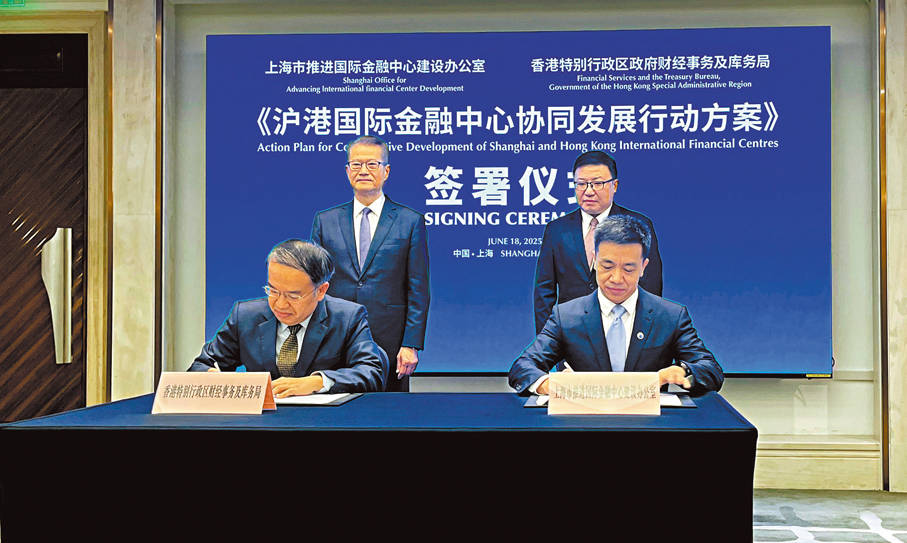
著名经济学家宋清辉说,香港可充分发挥其离岸市场优势,探索发行锚定人民币的离岸稳定币,上海应在跨境贸易、供应链金融等领域,提供技 术研发和应用场景对接方面的支持,共同探索人民币稳定币在内地与香港、内地与国际间的应用。另一方面,沪港可协同探索中国央行数字货币 与各类合规稳定币之间的互操作性,构建高效安全的跨境支付结算网络,并共同推动和采纳一套统一或兼容的区块链技术标准及协议,确保两地 数字金融基础设施的顺畅连接与信息共享,并在合规框架下,探索两地数字资产市场的互联互通模式。 专家指,沪港可在合规框 架下,研究数字资产市场的互联互通。图为两地官员签署《沪港国际金融中心协同发展行动方案》。(资料图片 上海国资委集体学习稳定币 沪港数字资产市场联通引憧憬 (香港文汇报 记者 倪巍晨 上海报道)继中国人民银行行长潘功胜6月18日在「2025陆家嘴论坛」上首次提及「稳定币」话题后,上海市国资委党委近日召 开中心组学习会,主题聚焦「加密货币与稳定币的发展趋势及应对策略」。上海市国资委党委书记、主任贺青要求,加强对数字货币的研究探索,坚持产数 融合,探索区块链技术在跨境贸易、供应链金融、资产数字化等领域的运用。有受访专家指,沪 ...
比特币价格刷新历史新高,触及112000美元
Sou Hu Cai Jing· 2025-07-12 15:48
Group 1 - The significant increase in Bitcoin's price is closely related to the enhancement of market confidence, driven by the development of blockchain technology and the expansion of application scenarios [1] - Traditional financial institutions are increasingly entering the Bitcoin market, providing more opportunities for its development [1] - The fixed total supply of Bitcoin, combined with increasing market demand, creates an imbalance that drives up prices [1] Group 2 - Some countries are clarifying their stance on Bitcoin by introducing supportive policies, creating a favorable environment for its growth [1] - Technological advancements, such as the implementation of the Lightning Network, have significantly improved Bitcoin's transaction speed and efficiency, enhancing its market competitiveness [1] - Despite the strong upward momentum in Bitcoin's price, its future trajectory remains uncertain due to potential market bubbles and regulatory changes from various governments [3] Group 3 - The rise in Bitcoin's price is recognized as a validation of its value, but investors are advised to remain rational and cautious due to the inherent risks and market volatility [3] - Investors should closely monitor market dynamics and policy changes to adjust their investment strategies accordingly [3] - The competition from other cryptocurrencies poses a challenge to Bitcoin, necessitating a strategic approach from investors [3]

学者:稳定币创新急需监管,但面临匿名身份识别、资金流向追踪等难点
Guan Cha Zhe Wang· 2025-07-12 00:10
Core Insights - The roundtable at Fudan University focused on the issue of stablecoins from an interdisciplinary perspective, highlighting their role as digital assets that combine the cross-border efficiency of cryptocurrencies with the value stability of fiat currencies [1][4] - Stablecoins are categorized into three main models: fiat-collateralized (e.g., USDT, USDC), crypto-collateralized (e.g., MakerDAO's DAI), and algorithmic [1][5][6] - Regulatory frameworks for stablecoins are emerging globally, with significant legislation such as the EU's MiCA, the US's GENIUS Act, and Hong Kong's Stablecoin Regulation, marking a shift from unregulated to regulated environments [2][4][9] Summary by Category Stablecoin Characteristics - Stablecoins are digital representations of fiat currencies, managed through blockchain technology, allowing for unlimited issuance unlike Bitcoin's capped supply [1][3] - They serve as mediums of exchange, payment methods, and stores of value, often offering higher interest rates than traditional savings [3] Types of Stablecoins - **Fiat-Collateralized**: Examples include USDT and USDC, which are pegged 1:1 to fiat currencies, with USDT facing transparency issues while USDC adheres to US regulatory frameworks [5] - **Crypto-Collateralized**: Such as MakerDAO's DAI, which uses cryptocurrencies like ETH as collateral, typically requiring a collateralization ratio above 150% [6][7] - **Algorithmic**: These stablecoins adjust supply dynamically through smart contracts, but the 2022 UST de-pegging incident revealed vulnerabilities in purely algorithmic mechanisms [6][8] Regulatory Landscape - The introduction of regulations signifies a transition to a more structured environment for stablecoins, with the MiCA law in the EU set to take effect on December 31, 2024, alongside the US and Hong Kong regulations [2][4][9] - Regulatory challenges include identity verification on blockchain, tracking fund flows, ensuring transaction compliance, and coordinating across different jurisdictions [10][11] Future Trends - The future of stablecoins is expected to see a synergy between regulation and innovation, deeper technological integration, and a reshaping of market dynamics, with leading institutions leveraging their technological and capital advantages [2][13]
唯变是存,以变定向:商业犯罪13%增幅背后的三大发展趋势丨律新调研
Sou Hu Cai Jing· 2025-07-11 11:30
Core Insights - The article discusses the evolving landscape of commercial crime in China, highlighting a paradox where overall criminal cases are declining, yet crimes related to the business sector are on the rise, particularly in the context of new economic forms and digitalization [2][3]. Group 1: Diversification of Commercial Crime - Commercial crime is becoming more diverse, reflecting the complexities of modern economic activities, with trends including dynamic evolution of fraud, intertwining of criminal and civil responsibilities, and cross-border criminal activities [2][3]. - Traditional corporate fraud is evolving from financial data manipulation to more complex methods, such as procurement manipulation and the use of related companies for price manipulation [3][5]. - Intellectual property crimes have surged, with over 31,000 cases prosecuted in the past five years, marking increases of 41.4% in cases and 66.1% in individuals involved [3]. Group 2: Intersection of Criminal and Civil Law - The complexity of commercial crime is increasing, with criminal acts often overlapping with civil liabilities, leading to a more intricate legal landscape [6][7]. - Examples include cases where actions trigger both criminal fraud charges and civil restitution obligations, complicating legal proceedings [6]. - The blurring lines between criminal and civil law necessitate a deeper understanding of emerging business models to effectively navigate legal challenges [7]. Group 3: Technological Advancement in Criminal Methods - The rise of blockchain technology and generative AI is reshaping the methods of commercial crime, making them more sophisticated and harder to detect [10][11]. - Financial crimes related to blockchain have increased, with 25,000 prosecutions for financial fraud and over 3,000 for money laundering linked to virtual currencies in 2024 [11]. - AI technologies are being exploited for various criminal activities, including telecom fraud and online violence, with a notable 53.9% increase in telecom fraud cases in 2024 [13][14]. Group 4: Grouping of Criminal Actors - The organization of commercial crime is shifting from individual acts to more structured group operations, including internal collusion and external partnerships [16][18]. - New criminal models have emerged, such as "professional bankrupts" who exploit legal loopholes to evade debts, indicating a systemic challenge in combating commercial crime [17][18]. - The complexity of these organized crimes necessitates enhanced risk management strategies within companies to address potential collusion among various stakeholders [18].

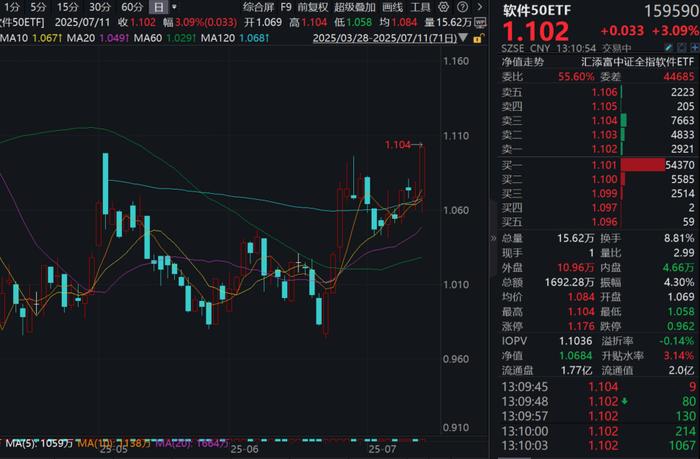
互联网券商、稳定币爆发,指南针涨超15%!软件50ETF(159590)强势涨超3%!金融软件有何催化?机构解读
Xin Lang Cai Jing· 2025-07-11 05:45
Group 1: Market Trends - The internet finance sector is experiencing a strong rally, with stablecoin concepts seeing significant gains, exemplified by the Software 50 ETF (159590) rising over 3% [1] - A meeting in Shanghai focused on the development trends and strategies for cryptocurrencies and stablecoins, emphasizing the need for innovation and research in digital currencies [1] Group 2: Regulatory Developments - The People's Bank of China released a draft for the "Rules for Cross-Border Payment System Business," aimed at managing the expansion of CIPS and enhancing participant management [3] - The new regulations are expected to facilitate the continuous expansion of CIPS and accelerate the internationalization of the Renminbi, indicating a shift towards more flexible regulatory frameworks [3] Group 3: Software Industry Insights - A training program for talent in enterprise basic software and industrial software was launched, highlighting the importance of software development in implementing a strong manufacturing strategy [4] - The Software 50 ETF tracks the CSI Software Index, which includes a diverse range of software companies, with approximately 67% of its weight in application software and over 15% in AI-related fields [5] Group 4: Cloud Infrastructure Spending - Canalys reported that spending on cloud infrastructure services in mainland China reached $11.6 billion in Q1 2025, marking a 16% year-over-year increase [5] - Alibaba Cloud holds a 33% market share in the cloud services market in mainland China, followed by Huawei Cloud at 18% and Tencent Cloud at 10% [5]

摩洛哥加入泛非支付及结算系统
Shang Wu Bu Wang Zhan· 2025-07-11 04:56
Group 1 - The central bank of Morocco has officially joined the Pan-African Payment and Settlement System (PAPSS), becoming the 17th member country, and has simultaneously activated the African Currency Marketplace (PACM) [1] - PAPSS aims to reduce reliance on the US dollar or euro for cross-border payments within Africa, allowing businesses to settle transactions directly in their local currencies, thus saving on currency exchange costs and reducing transaction times [2] - The integration of Morocco into PAPSS enhances the liquidity of the African currency pool, helping to lower exchange rate differences and stabilize secondary market transactions [3] Group 2 - The PAPSS system covers various regions in Africa, including West Africa, East Africa, Southern Africa, North Africa, and Indian Ocean islands, facilitating a more integrated financial framework across the continent [2] - The PACM utilizes blockchain technology from African tech company Interstellar to provide a transparent, efficient, and secure channel for currency exchanges between local currencies [2] - The expected annual savings from this mechanism for Africa is approximately $5 billion in currency exchange costs, which could also release a significant amount of "trapped funds" [2]
港股稳定币股延续涨势 德林控股涨近5%
news flash· 2025-07-11 01:26
Group 1 - The core viewpoint of the article highlights the continued rise of stablecoin-related stocks in the Hong Kong market, with notable increases in share prices for companies like Derlin Holdings, OSL Group, Guotai Junan International, and China Everbright Holdings [1] - Derlin Holdings (01709.HK) saw a price increase of 4.76%, while OSL Group (00863.HK) rose by 2.51%, Guotai Junan International (01788.HK) increased by 2.20%, and China Everbright Holdings (00165.HK) went up by 1.11% [1] - The Shanghai State-owned Assets Supervision and Administration Commission held a meeting on July 10 to discuss the development trends and strategies for cryptocurrencies and stablecoins, emphasizing the integration of production and data [1] Group 2 - He Qing, the Secretary and Director of the Shanghai State-owned Assets Supervision and Administration Commission, pointed out the importance of exploring blockchain technology applications in cross-border trade, supply chain finance, and asset digitization [1]
警惕以稳定币为噱头的新型非法集资诈骗
Zheng Quan Shi Bao· 2025-07-10 18:32
Core Viewpoint - The Beijing Internet Finance Industry Association has issued a risk warning regarding illegal fundraising activities disguised as "stablecoins" and other new concepts, urging society to remain vigilant against such fraudulent schemes [1][2]. Group 1: Nature of Stablecoins - Stablecoins are a special branch of cryptocurrencies designed to mitigate the price volatility of other cryptocurrencies by pegging their value to fiat currencies or physical assets [1]. - Mainstream stablecoins like USDC and USDT serve as "value anchors" in cryptocurrency trading, aimed at reducing price fluctuations rather than being investment vehicles [1]. Group 2: Fraudulent Activities - The surge in interest in stablecoins, particularly following Circle's stock price increase of 168% on its NYSE debut, has led to a rise in fraudulent schemes that misrepresent stablecoins as low-risk, high-return investment products [2]. - Fraudsters confuse the payment attributes of stablecoins with investment attributes, promoting fictitious financial products with promises of guaranteed returns and using multi-level marketing tactics to expand their reach [2]. Group 3: Regulatory Environment - Current regulations in China classify any unapproved token issuance and virtual currency trading as illegal financial activities, with strict prohibitions against illegal fundraising [3]. - Judicial cases show that fraudsters often evade regulation by using offshore servers and virtual currency for fund transfers, leaving investors with little recourse when scams occur [3]. Group 4: Public Awareness and Prevention - The public is advised to strengthen their understanding of stablecoins as payment tools and to be cautious of misleading claims equating stablecoins with guaranteed profits [3]. - Investors should maintain skepticism towards high-return promises and choose licensed financial institutions for investments, avoiding any form of virtual currency speculation or unapproved digital asset projects [3][4]. Group 5: Importance of Compliance and Safety - Financial innovation must operate within compliance boundaries, and technological advancements should prioritize safety to prevent stablecoins from being exploited by fraudsters [4]. - Continuous regulatory efforts, industry self-discipline, and heightened public awareness are essential to curb the spread of illegal activities and foster a healthy environment for genuine financial innovation [4].