智能体

Search documents
华创资本王道平:很多AI产品刚上线就被用户抛弃,非常残酷
3 6 Ke· 2025-06-25 23:17
Core Insights - The article discusses the evolving landscape of AI entrepreneurship, emphasizing the potential for "one-person unicorns" enabled by AI technologies [1][4] - It highlights the rapid changes in AI applications since the launch of ChatGPT, with a focus on AI-native products and new interaction paradigms as the most promising areas for startups [2][3] Group 1: AI Entrepreneurship Trends - AI entrepreneurship is under pressure due to high competition and low user tolerance for subpar products, necessitating a clear problem-solving approach from the outset [3][19] - The investment landscape for AI startups has become more challenging, with a need for differentiation and scalability to avoid being overshadowed by larger companies [3][26] - The emergence of AI-native products and intelligent agents is seen as a significant trend, with startups needing to adapt quickly to market demands [2][8] Group 2: Investment Focus and Challenges - Investors are increasingly focused on the team's ability to understand and commercialize AI products, with a preference for early-stage projects that demonstrate clear market potential [12][28] - The current funding environment is less favorable, with a shift towards government-backed investments and a need for startups to prove their revenue-generating capabilities earlier in their lifecycle [25][27] - The AI sector is still in a formative stage, lacking clear winners or established business models, which presents both opportunities and challenges for entrepreneurs [22][24] Group 3: Market Dynamics and Future Directions - The integration of AI into various industries, particularly in consumer and B2B applications, is viewed as a promising avenue, although sectors like healthcare and education present unique challenges [11][30] - The dynamics of user engagement and resource allocation are expected to change significantly with the rise of intelligent agents, altering traditional flow distribution models [32][33] - Startups must navigate a complex landscape where competition from established players is fierce, and the path to sustainable business models is not straightforward [15][23]


周鸿祎:如果今年人工智能不能进化到智能体,那就是一场泡沫和闹剧
news flash· 2025-06-25 11:52
360公司创始人周鸿祎表示,今年人工智能的发展,特别是大模型的发展,确实给人们带来了惊喜,但 目前还处于初级阶段。如果今年人工智能不能进化到智能体,那就是一场泡沫和闹剧。周鸿祎认为,今 年人工智能的发展,特别是大模型的发展,确实给人们带来了惊喜,但目前还处于初级阶段。周鸿祎认 为,今年人工智能的发展,特别是大模型的发展,确实给人们带来了惊喜,但目前还处于初级阶段。 (证券时报) ...

花大几千请专家填志愿,竟和AI水平相当!
第一财经· 2025-06-25 11:41
Core Viewpoint - The article discusses the increasing reliance on AI tools for college entrance exam (Gaokao) application guidance, highlighting the competition among major internet companies to provide effective AI solutions for students and their families [1][3]. Group 1: Market Trends - The AI college application tool market is thriving, with major companies like Quark, Baidu, and ByteDance launching various AI-driven products to assist students in filling out their applications [3][4]. - Over 10 million users utilized AI application assistants on June 25, 2024, indicating a growing trend in AI adoption among students [3][4]. - The market is particularly appealing for users from lower-tier cities, with over 50% of Quark's users coming from these areas since 2019 [3]. Group 2: Product Development - AI application tools have seen significant upgrades in database capabilities, reasoning skills, and personalized experiences compared to previous years [4][5]. - Quark has enhanced its knowledge base by integrating data from various authoritative sources, improving the accuracy of its AI-generated reports [4][5]. - Companies like Baidu and iFlytek have focused on improving user interaction and decision-making experiences through upgraded conversational AI features [4][5]. Group 3: User Experience and Challenges - The competition among AI application products centers on precision, speed, usability, and personalized experiences, with a focus on meeting user needs efficiently [5][11]. - AI tools are evolving to include more personalized information collection, allowing students to provide detailed preferences that influence their application reports [7][8]. - Despite advancements, there are still challenges regarding the transparency of AI-generated recommendations, with students expressing confusion over certain suggestions [12]. Group 4: Future Innovations - The future of AI college application products is expected to focus on enhancing user interaction and transparency in the recommendation process [12]. - Companies are exploring ways to reduce the complexity of using AI tools, making them more accessible to students who may not be tech-savvy [11][12]. - The ongoing development of AI tools aims to balance the convenience of technology with the necessity of human oversight in the application process [12].



周鸿祎:当大模型进化为智能体 人也将变为超级个体
news flash· 2025-06-25 11:03
金十数据6月25日讯,在夏季达沃斯论坛期间,360集团创始人周鸿祎表示,当前人工智能发展已经进入 下半场,智能体成为主角。"如果只把大模型当作工具来用,或许只能提升30%、50%的效率;但当大 模型进化为智能体,使其像数字助理一样帮人们处理各种复杂工作,人的角色就会转变为领导智能体、 规划人工智能、管理人工智能,人也将变为超级个体。因此近期的全球创业热潮包括中国的创业热潮, 也因为人工智能重新卷起了一个高潮。"周鸿祎成,"如果今年人工智能不能进化到智能体,那这次人工 智能可能又是一场泡沫,就不是工业革命了,而是一场闹剧。所以我们非常幸运地渡过了这一关。" 周鸿祎:当大模型进化为智能体 人也将变为超级个体 ...
行业首发!网易易盾推出国内首个AIGC内容安全插件,已接入Coze、Dify等主流平台
Sou Hu Cai Jing· 2025-06-25 09:05
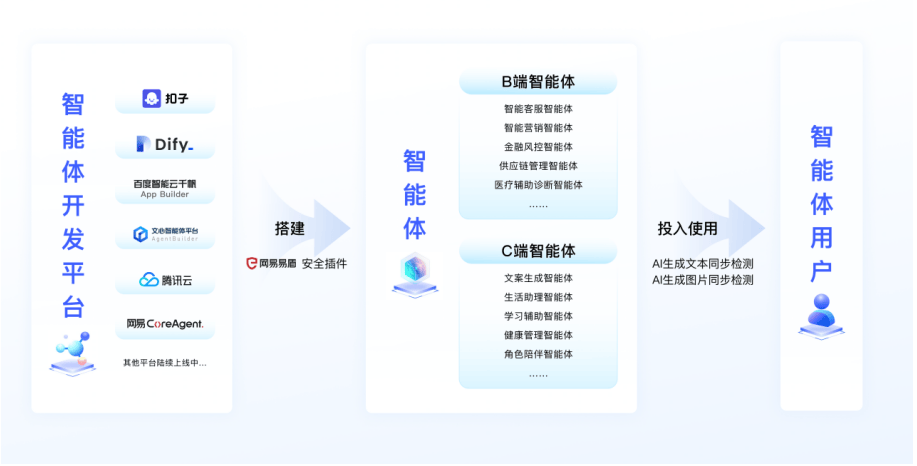
Core Insights - 2025 is anticipated to be a pivotal year for the deployment and explosion of intelligent agents across personal and enterprise applications, including smart assistants and digital employees [1][3] - Content safety remains a significant challenge for both consumer and enterprise-level intelligent agents, raising concerns about compliance and user experience [1][3] Industry Overview - The Chinese market for intelligent agents is projected to exceed $30 billion, with predictions that by 2028, at least 15% of daily work decisions will be made autonomously by AI agents [3] - Regulatory scrutiny on AIGC content safety is intensifying, with over 3,500 AI products disposed of since April 2025 due to violations, highlighting the need for compliance in sensitive sectors like education, finance, and healthcare [3][4] Company Initiatives - NetEase Yidun has launched a content safety plugin for intelligent agents, enabling developers to easily integrate content safety detection capabilities into their applications [1][4] - The plugin offers multi-dimensional detection features, including text and image detection for illegal content, sensitive words, and inappropriate imagery [4][5] - The integration process for developers is simplified, allowing both novice and professional developers to access content safety capabilities without extensive coding [8] Technical Capabilities - NetEase Yidun boasts a robust technical foundation in AIGC content safety, with a knowledge base supporting millions of queries and a dual-layer defense system for content safety [9][11] - The company is actively involved in the development of national standards for AI service safety, which will be implemented in November 2025, providing guidelines for the management of generative AI services [11]

蚂蚁抢滩金融大模型
Hua Er Jie Jian Wen· 2025-06-25 08:01
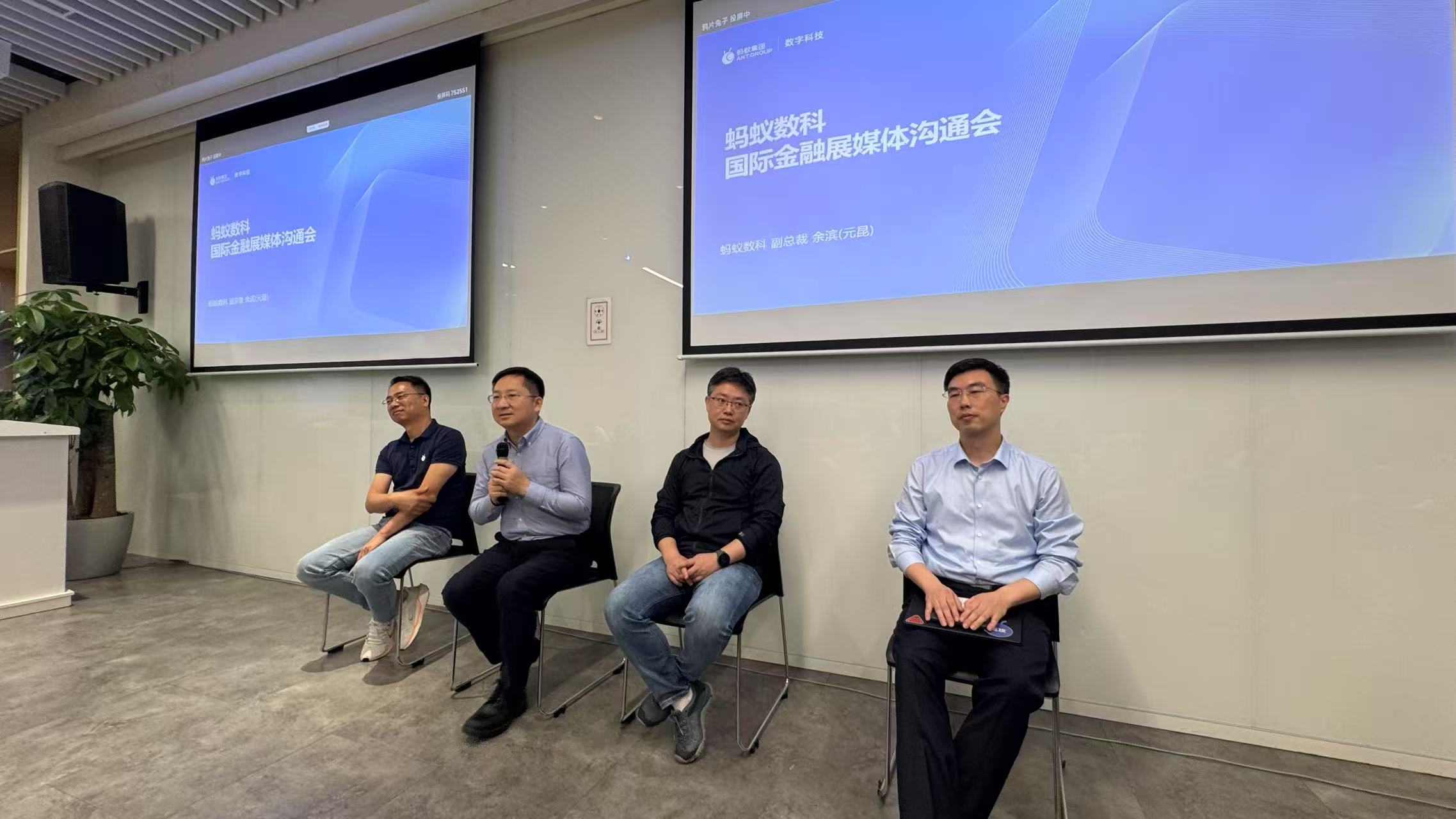
Core Viewpoint - The application of large models in the financial industry is transitioning from an exploratory phase to a practical phase, becoming a necessity rather than an option [2][3]. Group 1: AI Integration in Financial Institutions - Financial institutions are increasingly integrating large models into their core business processes, moving beyond auxiliary tools [2]. - The current trend shows that AI applications in finance are shifting from customer service to core business areas such as wealth management and insurance claims [3]. - The year is being referred to as the "Agent Year," indicating a significant evolution in AI capabilities from digital assistants to digital employees [3]. Group 2: Challenges in AI Implementation - Financial institutions face challenges with large models, including a lack of understanding of financial contexts and concerns about data safety and compliance [3][4]. - There is a need for a specialized financial model rather than generic models, which are often seen as inadequate for the complexities of the financial sector [4]. Group 3: Successful AI Implementation Factors - Successful implementation of financial AI requires a specialized financial model, a responsive knowledge base, and the ability to facilitate business analysis and decision-making [4]. - Ensuring safety, compliance, and professionalism in financial models is crucial for creating effective financial intelligent agents [4]. Group 4: Pathways for AI Deployment - Ant Group has identified four pathways for AI deployment in financial institutions: building a model platform, creating AI-native mobile banking services, applying models in business scenarios, and prioritizing model deployment as a key project [5]. - The company offers flexible service models, including private deployment, SaaS subscriptions, and performance-based billing [5]. Group 5: Collaboration and Innovation - Ant Group plans to launch over a hundred intelligent agent solutions across various financial sectors, including wealth management and risk control [6]. - The integration of AI into business processes is seen as a strategic opportunity for financial institutions to drive organizational upgrades [6]. Group 6: Future of Financial AI - The development of financial AI is viewed as a long-term process requiring continuous iteration and improvement [11]. - Ant Group is working on creating independent financial models to bridge the gap between generic models and the specific needs of financial institutions [19]. Group 7: Data Security and Knowledge Management - Data security concerns are addressed through methods such as data anonymization and hybrid model deployment [17]. - The importance of a unified knowledge base is emphasized, as fragmented knowledge can hinder the effectiveness of AI applications in finance [18]. Group 8: Ecosystem Collaboration - Ant Group is merging its AI and cloud services to enhance product interoperability and address the challenges faced by financial institutions [20]. - The company aims to provide a comprehensive AI product system that considers both technical and business aspects of AI implementation [20].
「AI新世代」DeepSeek风暴下纯技术融资窗口关闭?AI独角兽2025年中场战报:资本实力分野谁能挺进下一轮
Hua Xia Shi Bao· 2025-06-25 06:44
Group 1 - The core viewpoint of the articles highlights a shift in the AI industry from large model development to application-focused strategies, with companies like DeepSeek and Manus leading the way in this transition [1][5][7] - The investment logic in the AI sector has changed, with a focus on application investments rather than foundational model investments, as evidenced by the reduced financing amounts and the cautious approach of investors [6][7][9] - The "AI Six Tigers" have shown varied commercial progress, with companies like Zhipu and Zero One Wanwu making strides in B-end applications, while others like MiniMax and Moon Shadow focus more on C-end applications [9][10][11] Group 2 - DeepSeek has established itself as a dominant player, with significant backing and no immediate need for external financing, while other companies in the "AI Six Tigers" have struggled to secure new funding [6][8] - The emergence of new models from competitors like MiniMax and Moon Shadow indicates a competitive landscape where companies are striving to outperform DeepSeek [2][3] - The trend towards intelligent agents has become a consensus among AI companies, with multiple firms launching their own agent products in response to market demands [4][11] Group 3 - Companies are increasingly focusing on building differentiated competitive barriers in vertical markets to survive the ongoing industry reshuffle [1][12] - The commercial viability of AI applications is being tested, with a notable emphasis on B-end markets as a more sustainable path for revenue generation compared to C-end markets [11][12] - The overall investment landscape is evolving, with a greater emphasis on practical applications of AI technology across various industries, reflecting a broader market demand for AI solutions [7][12]

从智能体到具身智能平台,华为“不造机器人”的AI野望
Bei Ke Cai Jing· 2025-06-24 12:47
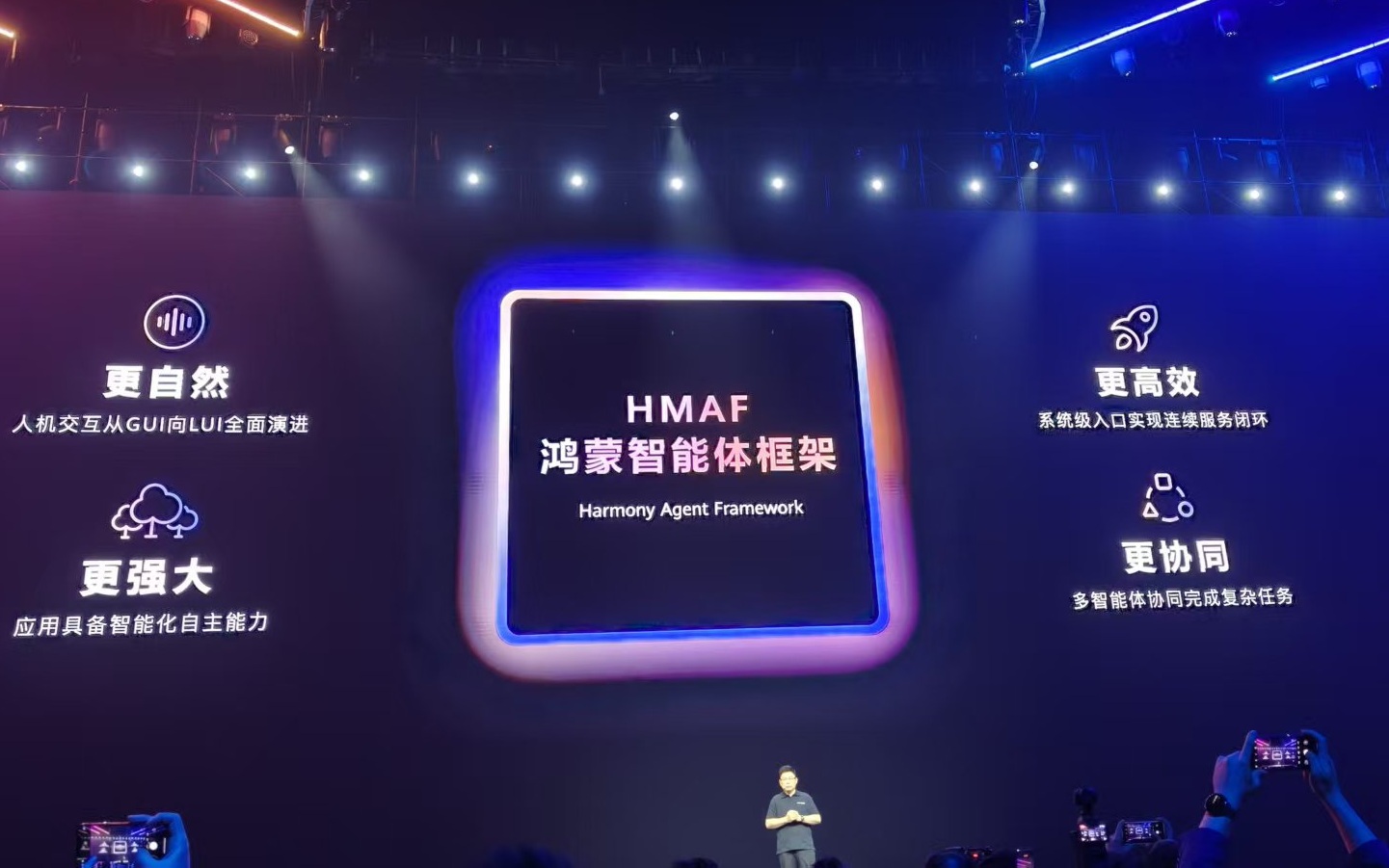
Group 1 - Huawei Developer Conference 2025 showcased several new technologies including HarmonyOS 6.0 developer version, HarmonyOS Intelligent Agent Framework (HMAF), Pangu Model 5.5, and CloudRobo platform, marking an upgrade in AI infrastructure in terms of computing power, algorithms, and application scenarios [1][2] - The development and integration of intelligent agents have become crucial for system and application developers to enhance AI capabilities, seize traffic entry points, and improve user experience [2][4] - The HarmonyOS Intelligent Agent Framework allows for seamless interaction with third-party applications, significantly lowering the technical barriers for AI application development [2][4] Group 2 - Intelligent cockpit is emerging as a new traffic entry point, especially with the increasing popularity of electric vehicles, where users spend more time in cars, creating opportunities for in-car services like food ordering [4][5] - Companies like McDonald's are exploring collaborations with Huawei to optimize in-car interaction experiences, recognizing the need for tailored functionalities for vehicle environments [5] - The integration of auditory interaction technologies is reshaping the in-car educational ecosystem, particularly for children's education, as seen with BabyBus's applications adapting to HarmonyOS [5][7] Group 3 - Huawei Cloud launched the CloudRobo platform, focusing on providing robust computing power and intelligence while leaving the physical robot development to partners [7][8] - The platform aims to address challenges in the industrial application of embodied intelligence, such as data training and task execution, by offering end-to-end capabilities [7][8] - The CloudRobo platform enables a significant increase in data acquisition efficiency, with 80% of training samples generated rather than collected, enhancing the training process for intelligent robots [8][9] Group 4 - Companies like Hualong Xunda and Yijiahe are collaborating with Huawei Cloud to enhance their industrial robotic capabilities, achieving significant improvements in production efficiency [9][11] - The integration of Huawei's Pangu Model with simulation platforms allows for rapid automation training and validation, drastically reducing downtime during product launches [9][11] - The application of intelligent robots in utility maintenance, such as those used by the State Grid, demonstrates the potential for increased safety and efficiency through cloud computing [11]

对话联想刘军:从"九死一生"全球化到押注AI智能体的战略思考
Feng Huang Wang· 2025-06-23 14:25
Core Insights - Lenovo is undergoing a significant transformation from a computing company to an AI company, with its core products potentially evolving into "intelligent agents" [1][6] - The company has defined this year as the "Year of Super Intelligent Agents," outlining a comprehensive AI strategy that spans both personal and enterprise sectors [2][3] Personal Intelligence Strategy - Lenovo's personal intelligence concept is based on a "one body, multiple ends" approach, utilizing the "Tianxi Super Intelligent Agent" which operates on a hybrid cloud architecture [2] - This architecture ensures user data privacy while enabling seamless connectivity across various devices, predicting that operating systems will become less important as user interfaces evolve into personal intelligent agents [2] Enterprise Intelligence Strategy - In the enterprise sector, Lenovo showcases its full-stack capabilities with AI PCs, AIoT devices, and a rapidly growing server business, positioning itself among the top three in the Chinese market [3] - The "Wanquan Heterogeneous Intelligent Computing Platform" serves as the operating system for intelligent computing centers, optimizing heterogeneous computing resources [3] - Lenovo is applying the intelligent agent concept across various industries, having signed contracts for smart city projects and offering comprehensive services for SMEs through its "Baiying" intelligent agent [3] Internal Transformation and AI Integration - Lenovo is leading the internal transformation by integrating AI into its processes, aiming to replace a quarter of its level-four processes with AI this year [4] - The company views AI as a direct value-creating force, akin to R&D and production, rather than a traditional support function [4] - The internal experiences and data gained from this transformation are rapidly applied to external customer solutions, creating a strong positive feedback loop [4] Historical Context and Leadership Insights - The company has a rich history of transformation, with significant milestones including the rise of branded PCs and the challenging global expansion after acquiring IBM's PC business [5] - The leadership emphasizes that the experiences from these transformative periods have shaped Lenovo's resilience and execution capabilities [5] Future Vision - Lenovo is positioning itself as a "smart agent manufacturing company," shifting its focus from hardware and infrastructure to AI-driven intelligent solutions and services [6] - The IT services business has seen rapid growth, outperforming peers and achieving the top position in the Chinese IT services market in the last fiscal year [6] Conclusion - Lenovo's AI strategy is grounded in eight years of intelligent transformation, robust technological infrastructure, and a strategic focus shaped by past market challenges [7] - The leadership's reflections on their global expansion journey provide a foundation for Lenovo's ambitions in the AI sector, emphasizing the courage and resilience developed through these experiences [7]

AI月报:当AI包办一切,未来不是拼效率,而是拼“品味”
3 6 Ke· 2025-06-23 03:47
Industry Overview - The AI industry is transitioning from a phase of model competition to productization and ecosystem integration, focusing on user entry points, agent standards, and terminal capabilities [1][2] - The key terms in AI have shifted from "larger models" and "faster inference" to "agents," "autonomous execution," and "delegated programming" [2] Model Development - New generation foundational models like GPT-4.5 and Gemini 2.5 Pro represent a significant shift in AI's cognitive capabilities, moving from passive responders to models that engage in self-reflection and multi-step reasoning [4][5] - These advanced models can now decompose complex questions, reason through multiple paths, and select optimal solutions, resembling human-like thought processes [4][5] AI Agents - AI agents are evolving from simple tools to autonomous entities capable of executing complex tasks, marking a new stage in AI applications [7][8] - They can perceive their environment, autonomously plan, utilize tools, connect data, and complete multi-step tasks, fundamentally changing human-software interaction [10][12] AI Programming - The programming landscape is shifting from AI as an assistant to AI taking on full task delegation, significantly enhancing developer productivity [14][16] - AI agents can now accept natural language programming tasks, generate code, conduct testing, and manage deployment processes, allowing developers to focus on higher-level design and strategy [15][17] Business Model Evolution - The industry consensus is moving from "Model as a Service" (MaaS) to "Results as a Service" (RaaS), emphasizing the delivery of measurable outcomes rather than just tools [20][21] - This shift requires AI companies to focus on quantifiable business metrics such as GMV growth and customer satisfaction, transforming AI from a cost center into a profit engine [21][22] Workforce Impact - As AI capabilities expand, the unique human skills of taste, judgment, and direction become increasingly valuable, positioning humans as collaborators rather than competitors to AI [24][25] - Future roles will emphasize strategic thinking and problem definition over technical execution, with engineers and product managers acting more as architects and visionaries [26][27]