
普惠金融

Search documents
浦发银行长春分行:落实普惠金融政策 护航科技型小微企业创新发展
Zhong Guo Jin Rong Xin Xi Wang· 2025-12-17 07:27
Core Viewpoint - The article highlights the challenges faced by technology-oriented small and micro enterprises in securing funding due to their asset-light nature, lack of collateral, and long R&D cycles. It emphasizes the role of SPDB Changchun Branch in providing financial support through its "Puxin Loan" product, which facilitates seamless loan renewals to sustain innovation in these companies [1][2]. Group 1: Challenges Faced by Technology Enterprises - Technology-oriented small and micro enterprises often experience funding pressure during loan renewals due to characteristics such as being asset-light, lacking collateral, and having long R&D cycles [1]. - A specific case is presented where a high-tech company in Jilin Province, recognized as a specialized and innovative small and medium-sized enterprise, faced difficulties in repaying a loan while needing funds for R&D and production upgrades [1]. Group 2: SPDB Changchun Branch's Solutions - SPDB Changchun Branch focuses on the full lifecycle needs of technology enterprises, utilizing the "Puxin Loan" product to support these companies through a no-repayment renewal mechanism [1]. - The bank's team assessed the company's patent value, R&D investment, and market orders to facilitate a loan renewal of 10 million yuan within three working days, without requiring additional collateral [1]. Group 3: Future Plans - The bank plans to continue implementing inclusive finance policies and establish clear standards for technology loan renewals, ensuring that technology enterprises can secure financing effectively [2].

金融支持城乡融合应更精准有力
Jin Rong Shi Bao· 2025-12-17 04:40
推进城乡融合,需要金融向薄弱环节配置更精准、服务差异化。金融属性决定了金融资源天然会流向投 入产出比更高的领域和主体,因此,以金融方式引导资金等要素在城乡间合理流动,必然需要加力其对 县域、乡村振兴领域的支持。"发展普惠金融"在2013年被确立为国家战略,至今已超10年时间。"十四 五"期间,金融服务覆盖面进一步扩大,全国普惠型小微企业贷款余额增长1.3倍,利率下降2个百分 点,普惠型涉农贷款余额也已近14万亿元;我国数字普惠金融发展更是全球领先。尽管如此,我国普惠 金融在差异化、可持续方面仍面临考验。部分普惠金融领域存在不讲差异化的过度竞争行为,以降低利 率为主的竞争方式使得实际贷款利率被压低以致难以覆盖部分长尾客群,不利于薄弱环节金融服务的深 耕。此外必须关注到的是,在本轮深化农信社改革中,部分省份选择了省级或地市统一法人的改革方 式。基于"原则上机构不出县(区)、业务不跨县(区)"的县域法人机构监管要求,金融资源能在县级 及以下被较充分地留存和应用,并与其他类型银行形成差异化竞争。统法改革路径能够明显提升机构经 营的规模效益,但也会造成金融资源相对均衡分配的难度加大,对薄弱环节支持造成削弱。 今年6月, ...
精耕细作金融“五篇大文章” 保险业交出高质量答卷
Jin Rong Shi Bao· 2025-12-17 04:27
Core Insights - 2025 is a pivotal year for the implementation of the financial "five major articles," with continuous policy dividends and deep integration of industry innovation practices, enhancing the quality and efficiency of financial services to the real economy [1] - The insurance industry plays a crucial role as an economic stabilizer and social stabilizer, focusing on key areas such as technology finance, inclusive finance, and green finance, thereby achieving dual improvements in scale and quality, as well as service and innovation [1] Policy Support - Multiple favorable policies are being released to facilitate the implementation of financial services, including the issuance of the "Guiding Opinions" by the State Council in March, which emphasizes the need to enrich technology insurance products and provide comprehensive financial services for technology enterprises [4] - In April, the regulatory authorities released an implementation plan for high-quality development of technology finance, encouraging insurance companies to develop insurance products covering the entire process of technological innovation activities [4] - In May, several departments proposed policies to support insurance funds in participating in equity investments and venture capital, promoting long-term investment reforms [4] Technological Innovation in Insurance - The insurance industry is focusing on developing a comprehensive risk protection network for technology innovation, launching innovative products tailored to the needs of high-risk technology sectors such as integrated circuits, biomedicine, and artificial intelligence [5] - By the third quarter of 2025, the premium income from technology insurance in China increased by 30% year-on-year, significantly outpacing the industry average, making it a core growth driver for financial services in technology innovation [5] Inclusive Insurance Development - The insurance industry is enhancing its inclusive insurance offerings to better serve small and micro enterprises, rural revitalization, and vulnerable groups, translating policy dividends into tangible benefits for the public [10] - Specific initiatives include the introduction of tailored insurance products for high-risk occupations and the development of low-threshold, affordable insurance products to meet the needs of the elderly and other vulnerable groups [11][12] Green Insurance Initiatives - The insurance industry is actively promoting green insurance and investment to support the comprehensive green transformation of the economy and society, with a focus on developing targeted risk protection solutions and enhancing the green insurance system [13] - As of mid-2025, insurance funds have invested significantly in green projects, with over 1.38 trillion yuan in debt investments and more than 700 billion yuan in equity investments directed towards green industries [14]

人行自贡市分行:信用“金钥匙”破解中小企业融资难题
Sou Hu Cai Jing· 2025-12-17 04:23
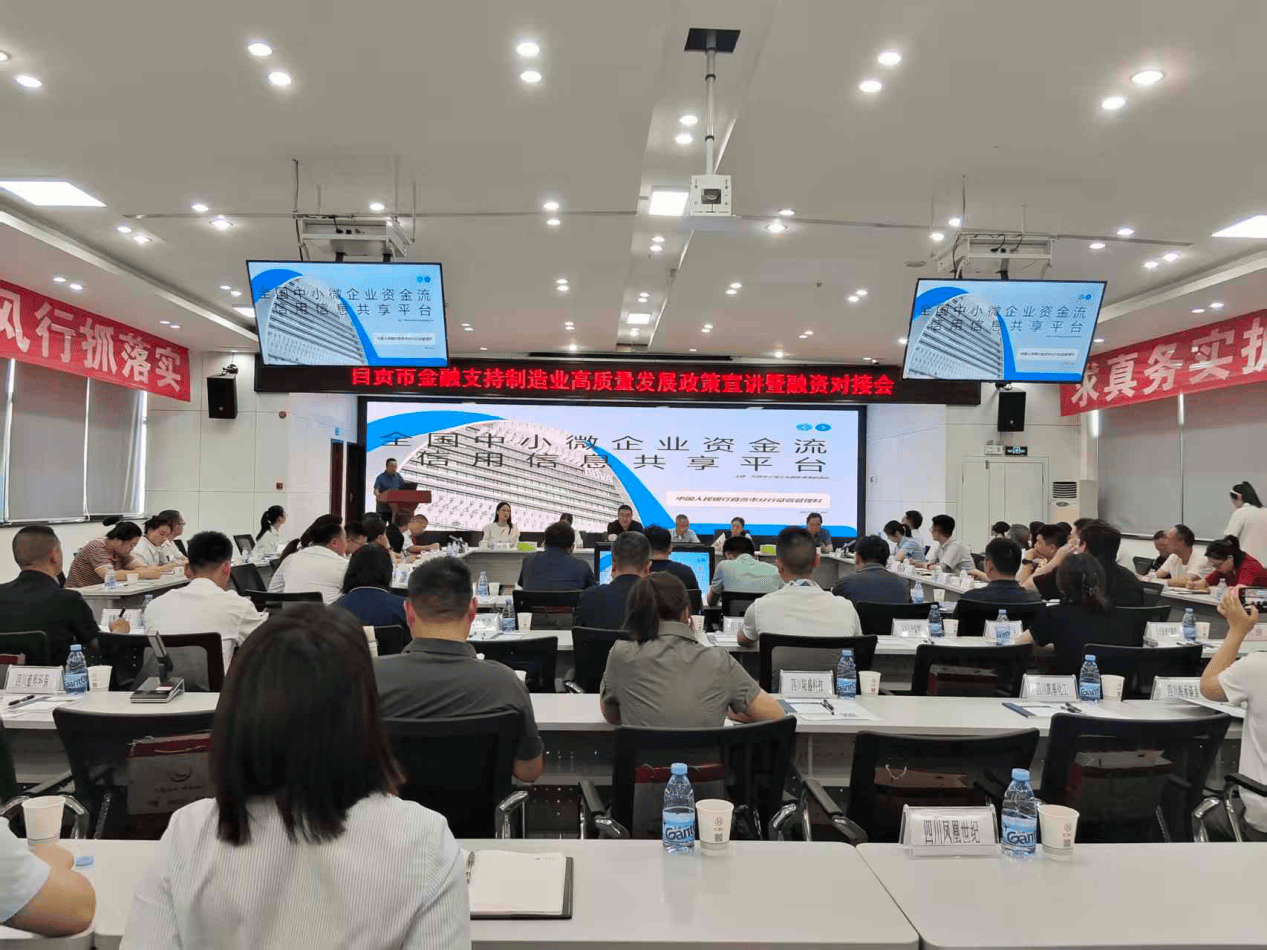
Core Insights - The establishment of the National Small and Micro Enterprises Fund Flow Credit Information Sharing Platform aims to enhance credit information connectivity for small and micro enterprises, facilitating direct access to credit funds [1][2] - The People's Bank of China (PBOC) in Zigong has implemented a dual-driven mechanism of "fiscal rewards + data empowerment" to improve financing accessibility for small enterprises, effectively mobilizing market resources [1][2] Policy Activation - The State Council issued guidelines to strengthen the construction of financial infrastructure for small and micro enterprises, including the establishment of the credit information sharing platform [2] - By the end of November 2025, the platform facilitated financing of 2.153 billion yuan, demonstrating the effectiveness of fiscal incentives [2] Innovation-Driven Financing - The Fund Flow Information Platform has enabled quick loan approvals for new businesses lacking credit history, such as a newly opened hotel that secured a 5 million yuan loan in a short time [3] - A manufacturing company specializing in electrical fittings received a 1 million yuan unsecured loan within two days, overcoming challenges related to collateral [3] Promotion and Collaboration - The PBOC in Zigong has guided financial institutions to utilize diverse data to create "cross-border credit profiles" for local enterprises, successfully providing 16.7 million yuan in financing to seven lantern enterprises [4] - The introduction of the "Salt Capital Quality Loan" has supported 51 out of 116 targeted enterprises with a total of 2.437 billion yuan in credit, achieving a minimum interest rate of 2.11% [4] - Financial support has also been directed towards rural revitalization, with 32 tea enterprises receiving 37.741 million yuan in loans [4] Awareness and Engagement - The PBOC in Zigong is enhancing the platform's visibility through a combination of online and offline promotional strategies, including innovative media content and targeted outreach events [5] - Future efforts will focus on consolidating the financial support framework to ensure sustainable growth for small enterprises and the local economy [5]
时隔8年再进广州!顺德农商银行4家“村改支”,同日开业
Nan Fang Du Shi Bao· 2025-12-17 04:12
记者从顺德农商银行获悉,12月15日,该行番禺支行、东莞常平支行、南海高新支行、新会支行四家由 村镇银行改制而来的支行同日揭牌开业。 顺德农商银行称,这是广东省内首次实现四家"村改支"机构同日开业。 此前,广东金融监管局于7月16日批复,同意顺德农商银行吸收合并佛山南海、东莞常平、广州番禺、 江门新会四家新华村镇银行。 顺德农商银行表示,"村改支"是该行落实《国务院关于推进普惠金融高质量发展的实施意见》中"稳步 推动村镇银行结构性重组"部署的重要举措,旨在通过吸收合并原有村镇银行并改制为支行,实现金融 资源优化整合。 2025年3月,顺德农商银行首家"村改支"银行——高明支行开业,这也是佛山首例通过吸收合并村镇银 行改建设立的分支机构;9月,顺德农商银行三水支行揭牌开业,标志着广东省内首家跨发起行吸收合 并村镇银行并成功改制为支行的改革落地。至12月15日上述四家"村改支"机构开业,顺德农商银行年内 已完成6起"村改支"案例。 值得关注的是,本次改制亦是顺德农商银行时隔8年再次将服务网络拓展至广州。该行上一次在广州设 立网点是2017年3月。其时,顺德农商银行广东自贸试验区南沙分行开业,成为该行首家异地分行。 ...

“上海与纽约的江河对话”举行 推动更多国际组织落“沪”
Jie Fang Ri Bao· 2025-12-17 01:43
Core Insights - The event "Dialogue between Shanghai and New York" aims to foster cooperation between the two cities through international organizations, focusing on urban and organizational collaboration [1] Group 1: Role of International Organizations - New York transformed into a global political and economic center post-1945 due to the establishment of the United Nations, which significantly boosted its economy and diversity [2] - The presence of major UN institutions in New York has solidified its status as a global hub for diplomacy and international relations [2] - The collaboration between international cities and organizations is crucial for achieving the UN's sustainable development goals and requires a "chemical reaction" between urban innovation and global expertise [2] Group 2: Shanghai's Position - Shanghai has become a preferred location for over 200 international organizations, including the New Development Bank and the IMF, due to its conducive environment for international collaboration [3] - The Pudong area is particularly attractive for international tech organizations, hosting significant events like the Shanghai International Semiconductor Equipment and Materials Exhibition [3] - Shanghai is creating a supportive ecosystem for international organizations, enhancing service capabilities and establishing long-term partnerships with leading service providers [3][4] Group 3: Future Directions - The establishment of the UNESCO International STEM Education Research Institute in Shanghai highlights the need for showcasing the value of international organizations through forums and collaborations with local universities [5] - There is a push for more international tech organizations to establish headquarters in Shanghai, leveraging China's strengths in emerging technologies [6] - Continuous dialogue between Shanghai and New York through international platforms is expected to enhance cooperation in areas like climate resilience and AI ethics, contributing to global standards and narratives [6]
多措并举支持国家重大战略、 重点领域和薄弱环节
Jin Rong Shi Bao· 2025-12-17 01:38
会议要求,国家开发银行要着力配合宏观调控,精准有力服务实体经济。全力配合更加积极的财政 政策,多措并举支持国家重大战略、重点领域和薄弱环节。认真落实适度宽松的货币政策,加力支持扩 大内需、科技创新、中小微企业等重点领域。着力服务基础设施,助力扩大内需、做强国内大循环。围 绕五大基础设施领域持续加大支持力度,积极配合优化"两重"项目和"两新"政策实施,大力支持中央预 算内投资项目,做好对地方政府专项债券、超长期特别国债支持重大项目的超长期贷款配套融资,继续 发挥新型政策性金融工具作用,加大服务城市更新工作力度。着力服务创新驱动,助力科技创新、因地 制宜发展新质生产力。 12月12日,国家开发银行党委召开会议,传达学习中央经济工作会议精神,落实全国金融系统工作 会议部署要求,研究贯彻落实工作。受国家开发银行党委书记、董事长赵欢委托,国家开发银行党委副 书记、行长谭炯主持会议。 要做好科技金融大文章,积极助力建设现代化产业体系。加快支持适度超前布局新型基础设施和信 息通信网络、全国一体化算力网、重大科技基础设施等建设,支持传统基础设施更新和数智化改造,加 大对国家战略科技力量、关键核心技术攻关、科技型企业支持力度。 ...
精准施策筑根基 破局提质再出发
Qi Huo Ri Bao Wang· 2025-12-17 00:59
Core Insights - The "insurance + futures" model has shown significant achievements in stabilizing farmers' income and supporting national food security, but there is still room for optimization [1] - The industry needs to explore solutions to development challenges to enhance the effectiveness of the "insurance + futures" model [1] Policy and Regulation - The implementation of the "Business Rules for Futures Companies' Insurance + Futures Business" in December 2024 will clarify the basic principles, definitions, goals, and requirements for the model, emphasizing the need for clear responsibilities among all parties involved [1] - Strengthening policy norms and ensuring accountability among insurance companies, futures companies, farmers, and the government is essential for the model's sustainability [1] Innovation and Ecosystem - Transitioning from single-point protection to an industrial closed-loop is crucial, where banks can offer credit discounts based on insurance policies, and leading enterprises can share part of the premium, creating a stable ecosystem of shared risks and benefits [2] - The establishment of a multi-tiered protection system through regulatory collaboration and innovative fiscal policies, such as the "ladder subsidy" in Heilongjiang, is necessary for a smooth policy exit [2] Technological Integration - The industry is exploring three breakthrough directions: deep integration with digital agriculture using satellite remote sensing and IoT for dynamic crop monitoring, linking "insurance + futures" with green finance scenarios, and creating an inclusive financial ecosystem [3] - The use of AI and big data for precise analysis of historical price fluctuations will enhance risk management and product personalization [3] Future Outlook - Continuous efforts to address development challenges, improve institutional mechanisms, and innovate service models are vital for the "insurance + futures" model to take root in rural areas and provide robust financial support for national food security and agricultural modernization [4]
毛锦凰:拓展数字金融服务实体经济广度深度
Jing Ji Ri Bao· 2025-12-17 00:05
Core Viewpoint - Digital finance is a powerful tool for optimizing financial services and is crucial for advancing technology finance, green finance, inclusive finance, and pension finance [1] Group 1: Integration of Digital Technology in Finance - Digital finance integrates technologies such as big data, cloud computing, blockchain, and artificial intelligence into the financial sector, creating new products, services, and business models [1] - This integration helps break down traditional financial information barriers and expands service boundaries, allowing funds to flow more efficiently to the real economy [1] Group 2: Addressing Information Asymmetry - Traditional financial services face information asymmetry, making it difficult for institutions to accurately assess credit risks, leading to high financing thresholds [2] - Digital finance can build a multidimensional credit assessment system by deeply mining data, providing comprehensive customer information to financial institutions [2] - As of February 2025, banks have issued loans totaling 37.3 trillion yuan through a national integrated financing credit service platform, effectively meeting corporate financing needs [2] Group 3: Avoiding Resource Misallocation - Traditional financial models often concentrate credit resources on large enterprises, neglecting small and micro enterprises due to high risks and costs [3] - Digital finance enhances the precision of products and services, improving the financing environment for small and micro enterprises [3] - For instance, over 70% of enterprises receiving credit from WeBank's "Micro Business Loan" have annual revenues below 10 million yuan [3] Group 4: Reducing Costs and Increasing Efficiency - Digital finance supports the use of digital currencies and mobile payments, enabling financial institutions to shorten business processes and reduce manual intervention [4] - The application of technologies like AI and blockchain allows for real-time risk monitoring and cost reduction [4] - The "14th Five-Year Plan" emphasizes the need for financial institutions to accelerate digital transformation and enhance service quality for the real economy [4] Group 5: Expanding Coverage and Precision - Digital finance should provide flexible credit support to new employment forms and bridge the digital divide for special groups [5] - Financial services should extend to traditional industries and create a comprehensive financial service system covering the entire innovation chain [5] - Enhancing rural digital inclusive finance and optimizing service points in central and western regions is also essential [5] Group 6: Improving Mechanisms for Development Quality - Accelerating the construction of digital financial infrastructure and optimizing computing power layout is crucial for building a secure and reliable technical foundation [6] - Implementing differentiated incentive policies can lower service costs and establish a market-oriented pricing and risk-sharing mechanism [6] - Strengthening data security and establishing a transparent regulatory system are necessary to ensure the safe and controllable expansion of digital financial services [6]
第十九届深圳金博会:擘画产业金融新图景 谱写科创赋能新篇章
Zheng Quan Shi Bao Wang· 2025-12-16 12:17
Core Insights - The 19th Shenzhen International Financial Expo successfully concluded, showcasing Shenzhen's financial strength and exploring new paths for financial services to the real economy [1] - The expo highlighted Shenzhen's ambition to become a globally influential industrial financial center by 2025, focusing on six key areas including financial technology and cross-border RMB services [7][8] Group 1: Scale and Participation - The expo attracted 47,400 attendees from 25 countries and regions, marking a 58% increase year-on-year, demonstrating significant internationalization and professionalism [2] - A record 288 financial institutions and enterprises participated, with a year-on-year growth of 80%, creating a diverse financial ecosystem [2] - Major financial institutions, including the Shenzhen Stock Exchange and various state-owned banks, showcased their latest products and services [2] Group 2: Key Themes and Innovations - The expo focused on five major themes: technology finance, green finance, inclusive finance, pension finance, and digital finance, releasing 18 new policies and innovative products [3] - Notable innovations included the launch of a global risk management feature for SMEs and the establishment of the first digital RMB application lab for agricultural supply chains [4] Group 3: Technology Integration - Over 30 fintech companies showcased advancements in AI risk control, smart investment advisory, and blockchain applications, emphasizing the deep integration of technology and finance [5] - Huawei and 11 partners presented solutions in financial AI models and resilient infrastructure, highlighting successful digital transformation cases [6] Group 4: Future Planning - The expo served as a platform for outlining Shenzhen's future plans, aiming to create a comprehensive financial service system covering all stages of enterprise development [7] - The event underscored the need for a profound transformation in the financial ecosystem to support the shift towards technology-driven economic growth [7]