
个人信用修复

Search documents
新华鲜报丨卸下“包袱”!个人信用修复助力轻装前行
Xin Hua She· 2025-12-22 00:54
中国人民银行12月22日发布一次性信用修复政策,符合相关条件的逾期信息,将不会在个人信用报 告中予以展示,助力个人高效便捷重塑信用,卸下"包袱"轻装前行。 为何要推出一次性信用修复政策? 俗话说"有借有还,再借不难",征信信息可以展现一个人在经济金融活动中的守约情况。 此次修复个人信用的政策,从多个方面展现出"诚意满满"的政策温度。 从便捷性来看,政策突出"免申即享"的特点,个人无需跑网点、填材料,由中国人民银行征信系统 对符合条件的逾期信息进行自动识别和统一处理,让修复更高效。政策不区分信用卡、房贷、消费贷等 业务类型,针对非主观故意导致的小额逾期,只要当事人已全额结清欠款,无需主动申请,系统会自动 调整征信记录展示状态。 从配套性来看,公众查征信状况省心又省钱。此前,个人每年到自助查询机和柜台查询信用报告前 2次免费,第3次起需付费。作为配套措施,中国人民银行明确2026年上半年将额外增加2次线下免费查 询个人信用报告的机会。加之线上查询本就免费,能够满足公众核对逾期记录、确认修复进度的需求。 从灵活性来看,信用修复政策设置了3个月宽限期。个人逾期债务结清时间的最后时限是2026年3月 31日,这一方面有 ...

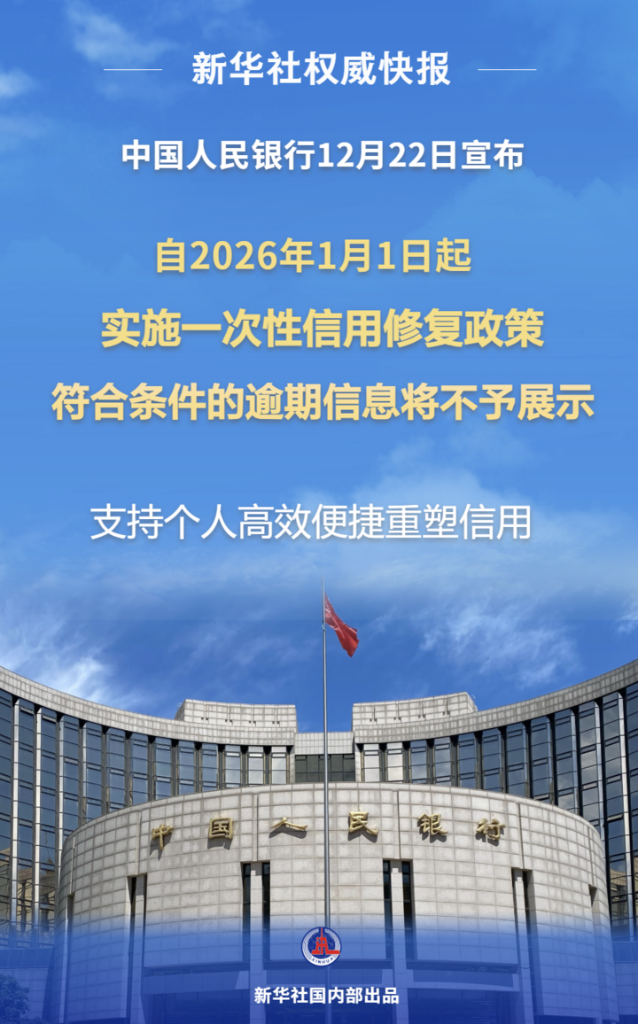
新华社权威快报丨支持个人信用重塑!央行发布一次性信用修复政策
Xin Hua She· 2025-12-22 00:37
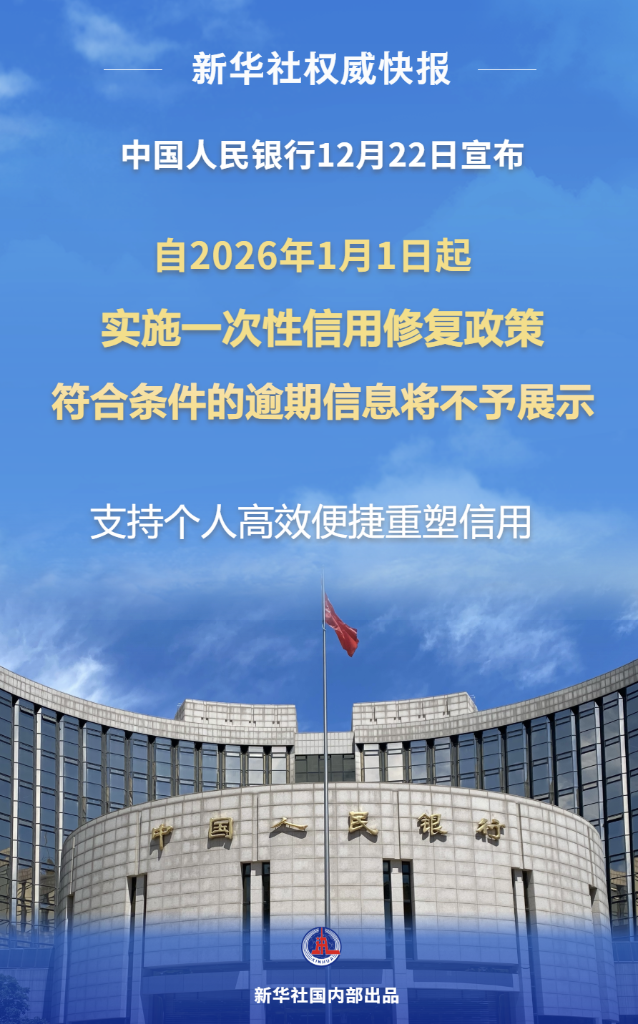
新华社权威快报 中国人民银行12月22日宣布 自2026年1月1日起 实施一次性信用修复政策 符合条件的逾期信息将不予展示 支持个人高效便捷重塑信用 记者:吴雨 海报制作:任军 新华社国内部出品 新华社国内部出品 为支持信用受损但积极还款的个人高效便捷重塑信用,12月22日中国人民银行对外发布一次性信用修复 政策有关安排。 根据相关安排,政策适用对象限定于个人在中国人民银行征信系统中展示的信贷逾期信息;适用时间区 间要求逾期信息产生于2020年1月1日至2025年12月31日期间;适用金额为单笔逾期金额不超过1万元; 适用前提是个人在2026年3月31日(含)前足额偿还逾期债务。符合上述条件的逾期信息,将不会在个 人信用报告中予以展示。 ...
央行:研究实施支持个人修复信用政策措施
Ren Min Wang· 2025-11-11 10:04
Core Viewpoint - The People's Bank of China emphasizes the need to enhance the guiding role of monetary and credit policies to boost and expand consumption in the upcoming phase [1] Group 1 - The report highlights the importance of financial support in stimulating and expanding consumption [1] - It calls for an increase in financial supply in the consumption sector [1] - The implementation of policies to support individuals in repairing their credit is under consideration [1] Group 2 - The report aims to explore and unleash the potential for consumption [1]
政策“搭台”科技“唱戏”,金融暖消费有新招
Bei Jing Shang Bao· 2025-10-28 14:54
Core Insights - The current consumer market in China is experiencing deep empowerment from financial forces, driven by multiple initiatives such as fiscal interest subsidy policies, technological transformation of financial institutions, and innovation in consumer financial products [1][2] - The focus of the consumer finance industry is shifting from "scale expansion" to "quality improvement," with financial health becoming a core keyword [1][3] Policy Impact - The implementation of the personal consumption loan fiscal subsidy policy is seen as a significant boost for the consumer finance industry, recognizing its role in the inclusive financial system [2] - The policy allows consumer loan companies to be designated as key processing institutions, with consumers benefiting from an annualized 1% fiscal subsidy on consumption loans [2] Consumer Segmentation - Consumer finance companies, like Ant Group, are leveraging risk control technology to serve underbanked groups such as "credit white households" and new citizens, who often lack financial information [3] - Ant Group plans to address the issue of "ability to consume" for these groups by offering services like a maximum 41-day interest-free period for urgent expenses [3][4] Consumer Education and Protection - There is a need for financial institutions to help consumers overcome fears related to financial products, emphasizing the importance of consumer rights protection and tools for managing expenses [4][5] - The industry is encouraged to transition from merely providing credit to offering financial health services [5] Technological Advancements - AI technology is being utilized to enhance consumer protection capabilities, with Ant Group developing an AI customer service assistant that improves service efficiency and customer satisfaction [6][8] - AI is also being employed to combat financial fraud, achieving a recognition accuracy rate of over 98% for various types of fraudulent activities [8] ESG Development - The integration of technology and finance is opening new avenues for ESG development, with financial institutions playing a crucial role in promoting sustainable practices [9] - Ant Group's initiatives, such as the "Huabei Little Red Flower" and "bill management" features, are aimed at fostering responsible consumption behaviors and enhancing the sustainability of its operations [9]
2025金融街论坛|政策“搭台”科技“唱戏”,金融暖消费有新招
Bei Jing Shang Bao· 2025-10-28 14:44
Core Viewpoint - The current consumer market in China is experiencing deep empowerment from financial forces, driven by multiple initiatives such as fiscal interest subsidy policies, technological transformation of financial institutions, and innovation in consumer financial products, which promote a healthy cycle of consumption [1][3]. Group 1: Policy Impact - The implementation of the personal consumption loan fiscal subsidy policy is seen as a significant boost for the consumer finance industry, recognizing its role in the inclusive financial system [3]. - The policy allows consumer loan companies to be designated as key processing institutions, with loans benefiting from an annualized 1% fiscal subsidy [3]. Group 2: Consumer Segmentation - The focus is shifting from merely providing financial products to enhancing financial health, addressing the specific needs of different consumer groups such as "credit white households" and new citizens [4]. - Ant Financial aims to help consumers overcome barriers to consumption by offering services like a maximum 41-day interest-free period for urgent expenses [4]. Group 3: Technology and Consumer Protection - AI technology is being utilized to enhance consumer protection capabilities, with the introduction of a multi-dimensional AI customer service assistant that improves service efficiency and customer satisfaction [7]. - The AI technology also aids in fraud prevention, achieving over 98% accuracy in identifying financial fraud [7]. Group 4: ESG Development - The integration of technology and finance is opening new avenues for ESG development, with financial institutions playing a crucial role in promoting sustainable practices [8]. - Ant Financial's initiatives, such as the "Little Red Flower" feature in Huabei, encourage responsible consumption and contribute to the company's sustainable development [8].

央行重磅发声,一项利好政策即将落地
3 6 Ke· 2025-10-28 02:18
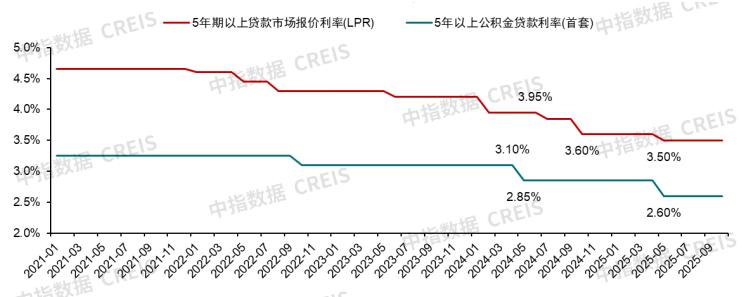
Core Viewpoint - The People's Bank of China (PBOC) is committed to maintaining a supportive monetary policy stance, implementing measures to enhance personal credit repair, and improving macro-prudential management in the real estate sector, which are expected to positively impact market liquidity and consumer purchasing power [1][3][4]. Monetary Policy - The PBOC will continue to adopt a moderately loose monetary policy, utilizing various tools to provide liquidity across short, medium, and long terms, while ensuring relatively loose social financing conditions [2][5]. - Recent monetary policy actions include a 0.5 percentage point reduction in the reserve requirement ratio and a 0.1 percentage point decrease in policy interest rates, leading to a historical low of 3.5% for the 5-year Loan Prime Rate (LPR) [5]. Personal Credit Repair - A new personal credit relief policy is being developed to assist individuals who have defaulted on loans due to COVID-19-related hardships but have since repaid their debts. This policy aims to remove certain negative credit records from the credit system, facilitating access to financing for affected individuals [2][4]. - The implementation of this policy is planned for early next year, which is expected to stabilize market expectations and restore consumer confidence [4]. Real Estate Financial Management - The PBOC is enhancing macro-prudential management tools related to real estate finance, including adjustments to down payment ratios and mortgage interest rates, to better control risks and support housing demand [2][7]. - Recent adjustments have seen the down payment ratio for first and second homes reduced to a minimum of 15%, with the authority to set interest rates now delegated to local governments [7]. Market Impact - The combination of loose monetary policy and credit repair initiatives is anticipated to lower financing costs and improve liquidity for market participants, aiding those affected by credit issues in regaining loan eligibility [9]. - These coordinated policies are expected to help stabilize market expectations and contribute to a recovery in the real estate market [9].
恢复买卖国债、实施个人信用修复……潘功胜“圈出”央行下一步工作重点
Jing Ji Guan Cha Wang· 2025-10-27 21:20
Core Viewpoint - The People's Bank of China (PBOC) is committed to building a comprehensive macro-prudential management system to enhance financial stability and risk prevention measures in the financial sector [2][5]. Group 1: Macro-Prudential Management System - The PBOC aims to strengthen the monitoring and assessment of systemic financial risks [2]. - Key measures include improving risk prevention for important institutions and sectors, enriching the macro-prudential management toolbox, and establishing an efficient governance mechanism [2]. - Specific areas mentioned for tool enhancement include financial institutions, financial markets, real estate finance, and risk disposal resources [2]. Group 2: Monetary Policy - The PBOC will continue to implement a moderately accommodative monetary policy, utilizing various tools to maintain relatively loose social financing conditions [5]. - The central bank plans to resume the buying and selling of government bonds after a pause due to market imbalances earlier in the year [5]. Group 3: Digital Currency and Stablecoins - The PBOC will optimize the management system for digital currency and support more commercial banks to operate digital currency services [5]. - The central bank expresses a cautious stance on stablecoins, highlighting their early development stage and associated financial risks, including issues related to customer identity verification and anti-money laundering [6]. - Ongoing policies to prevent and manage risks associated with domestic virtual currency trading will continue to be enforced [6]. Group 4: Personal Credit Repair Policies - The PBOC is researching a one-time personal credit relief policy to assist individuals who have defaulted on loans due to uncontrollable factors like the COVID-19 pandemic [7]. - This policy aims to help individuals restore their credit records while maintaining the effectiveness of default records as a constraint [7].
重启国债买卖、打击虚拟货币炒作,潘功胜最新发声信息量巨大
Bei Jing Shang Bao· 2025-10-27 14:51
Core Viewpoint - The People's Bank of China (PBOC) is committed to enhancing macro-prudential management and has announced several supportive monetary policies to stabilize the financial market and promote economic recovery [1][2][4]. Monetary Policy and Market Operations - The PBOC will resume open market operations for government bonds, which is a key liquidity management tool, to support the bond market and stabilize interest rates [3][4]. - As of September, major macro-financial indicators reflect a moderately loose monetary policy, with social financing growing by 8.7% year-on-year and M2 increasing by 8.4% [2]. Credit Repair Policies - The PBOC is researching policies to support personal credit repair, particularly for individuals who have defaulted due to the pandemic but have since repaid their debts [5][6]. - A proposed one-time personal credit relief policy aims to exclude certain minor defaults from credit records, which is expected to enhance consumer rights and stimulate economic activity [7][8]. Virtual Currency Regulation - The PBOC reiterated its commitment to combat the operation and speculation of virtual currencies, emphasizing the risks associated with stablecoins and the need for stringent regulation [9][10][11]. - The central bank's stance aims to prevent financial risks and maintain economic order, particularly in light of the increasing prevalence of virtual currencies [12]. Macro-Prudential Management Framework - The PBOC outlined its focus on building a comprehensive macro-prudential management system, which includes monitoring systemic financial risks and enhancing the regulatory framework for financial institutions [13][14]. - Future efforts will include improving risk assessment mechanisms and expanding the toolkit for macro-prudential management to ensure financial stability [15][16].
货币研思录2:央行政策信号的几点理解
CMS· 2025-10-27 14:31
Investment Rating - The report maintains a "Recommended" rating for the industry, indicating a positive outlook for the industry fundamentals and expectations for the industry index to outperform the benchmark index [6]. Core Insights - The People's Bank of China (PBOC) will continue to uphold a supportive monetary policy stance, implementing moderately loose monetary policies and utilizing various tools to provide liquidity arrangements across short, medium, and long terms [2]. - The PBOC plans to resume open market operations for government bonds, with a neutral expectation of around 500 billion yuan, aligning with previous reports on asset scarcity [3]. - The PBOC is optimizing the management system for digital currency, considering a shift in its classification from M0 to M1, which would enhance the operational capacity of commercial banks in digital currency [4]. - The PBOC is exploring mechanisms to provide liquidity to non-bank institutions to stabilize the capital market, reflecting a proactive approach to prevent extreme market adjustments [5]. - The PBOC is researching measures to assist individuals in repairing their credit records post-pandemic, which could enhance social credit activity and alleviate the speed of deleveraging in households [10]. Summary by Sections Monetary Policy - The PBOC's commitment to a supportive monetary policy remains unchanged, with no explicit mention of rate cuts or reserve requirement ratio adjustments, indicating that further actions will depend on economic data [2]. Government Bond Market - The resumption of government bond trading is anticipated, with market reactions indicating lower expectations for this move. The PBOC's previous bond purchases have resulted in a net increase of 1.35 trillion yuan in government debt, with a current expectation of needing to exceed 700 billion yuan in new purchases to maintain net monetary effects [3]. Digital Currency - The PBOC is considering a reclassification of digital currency to allow it to enter commercial bank balance sheets, which would align incentives between the central bank and commercial banks, potentially facilitating the internationalization of the digital yuan [4]. Capital Market Stability - The PBOC is assessing liquidity support mechanisms for non-bank institutions to maintain market stability, reflecting a strategy to act as a lender of last resort in the financial market [5]. Credit Repair Initiatives - The PBOC is developing policies to assist individuals in repairing their credit records, particularly for those affected by the pandemic, which could help restore creditworthiness and stimulate economic activity [10].
事关货币政策、国债买卖、虚拟货币 央行行长潘功胜重磅发声
Sou Hu Cai Jing· 2025-10-27 13:25
Core Viewpoint - The People's Bank of China (PBOC) is committed to maintaining a supportive monetary policy stance to foster economic recovery and stabilize financial markets amid complex domestic and international challenges [2] Monetary Policy - The PBOC has implemented a moderately loose monetary policy, utilizing various tools to ensure ample liquidity, with key indicators reflecting this stance: social financing increased by 8.7% year-on-year, M2 grew by 8.4%, and loans rose by 6.6% [2] - The PBOC plans to continue this supportive monetary policy, providing liquidity arrangements across short, medium, and long terms while enhancing the execution and transmission of monetary policy [2] Government Bond Operations - Starting in 2024, the PBOC will resume operations for buying and selling government bonds in the secondary market, which is expected to enhance the financial functions of government bonds and improve market stability [3] Digital Currency Development - The PBOC is optimizing the management system for the digital yuan, aiming to support more commercial banks in becoming operational entities for digital yuan transactions [4] - The establishment of international and operational management centers for digital yuan in Shanghai and Beijing respectively is part of the effort to promote its development [4] Virtual Currency Regulation - The PBOC is intensifying efforts to combat the operation and speculation of virtual currencies domestically, particularly in light of the risks associated with stablecoins discussed at recent international financial meetings [5] - Existing policies to prevent and address risks related to virtual currency trading remain effective, and the PBOC will continue to collaborate with law enforcement to maintain financial order [5] Credit Repair Policies - The PBOC is researching policies to support individuals in repairing their credit records, particularly for those who have defaulted due to uncontrollable circumstances like the COVID-19 pandemic [6][7] - A proposed one-time credit relief policy aims to exclude certain default records from credit reports for individuals who have repaid loans, with plans for implementation in early next year [7]