光伏产业

Search documents
锡价如虹破云霄,供需裂变定新锚!
Xin Lang Cai Jing· 2025-12-19 07:26
Price Trends - Current tin price is reported at 332,500-334,500 CNY per ton, with an average of 333,500 CNY per ton, reflecting an increase of 8,000 CNY per ton (+2.46%) from the previous day, continuing a strong upward trend [1] - The short-term trend indicates a confirmed upward channel with prices consistently rising, supported by a strong performance in the futures market, where the main contract for tin reached 334,220 CNY per ton, up 2.63% [1] - Global supply is under significant pressure due to geopolitical conflicts in major production areas and tightening policies in resource-rich countries, leading to a high level of uncertainty in over 20% of global supply [1] Supply and Demand Dynamics - The supply side is shifting from "sudden disruptions" to "systemic constraints," with clear limitations on supply growth due to declining ore grades and rising costs in global mining [2] - Demand is experiencing a structural divergence, with traditional consumer electronics facing a cyclical downturn while high-end demands from AI hardware and electric vehicles are on the rise, creating a tug-of-war between declining traditional demand and the long-term potential of emerging sectors [2] Industry Chain Response - The upstream resource sector maintains strong bargaining power, focusing on resource integration and technological innovation to ensure long-term supply stability [3] - The midstream smelting sector is under significant pressure, caught between high raw material costs and the price acceptance of downstream markets, leading to a focus on optimizing capacity and extending into high-value-added products [3] - Major companies are adopting differentiated strategies to solidify their positions, with leading firms leveraging resource reserves and global expansion, while others focus on technological upgrades and high-end product development [3] Short-term Outlook for Tin Prices - Tin prices are currently at historical highs, with market dynamics shifting from a "one-way increase" to a "bull-bear contest," indicating a phase of high volatility and potential price fluctuations [4] - Market participants are advised to monitor inventory levels, actual policy implementations in major producing countries, and marginal changes in downstream purchasing intentions, suggesting a range-based approach to trading [4]


工业硅:逢高做空思路,多晶硅:关注消息面影响
Guo Tai Jun An Qi Huo· 2025-12-18 01:50
张 航 投资咨询从业资格号:Z0018008 zhanghang2@gtht.com 2025 年 12 月 18 日 工业硅:逢高做空思路 多晶硅:关注消息面影响 商 品 研 究 【宏观及行业新闻】 据外媒报道,土耳其太阳能电池板制造商 Alfa Solar 与总部位于德国的 Astronergy Europe(正泰 新能欧洲)合作,在土耳其建立一家综合性太阳能电池和硅片生产工厂。两家公司签署了一项合资协议,其 中规定该项目由 Astronergy Yüksek Teknoloji Enerji Sanayi ve Ticaret A.Ş.规划,该公司由 请务必阅读正文之后的免责条款部分 1 国 泰 君 安 期 货 研 究 所 期货研究 【基本面跟踪】 工业硅、多晶硅基本面数据 | | | 指标名称 | T | T-1 | T-5 | T-22 | | --- | --- | --- | --- | --- | --- | --- | | | | Si2605收盘价(元/吨) | 8,470 | 105 | 220 | -610 | | | | Si2605成交量(手) | 346,284 | 126,61 ...
2025年铝产业链市场回顾与2026年展望:铝产业链:流光载道,盈势昭昭
Fang Zheng Zhong Qi Qi Huo· 2025-12-15 05:48
➢ 摘要: 2025 年沪铝震荡上行,氧化铝则持续一路走弱。铸造铝合金自上市后行情走势基 本与沪铝同频。 2025 年产业链上游紧张态势有所缓解。矿石进口量增加,国内矿山生产扰动相对 有限。氧化铝产能开工率维持高位,且有多项新产能及复产产能陆续投放。然而,随 着氧化铝现货价格大幅下跌、利润显著收缩甚至陷入亏损,部分高成本产能已出现停 产检修。未来,停产产能与新投、复产产能之间的博弈将成为影响氧化铝价格的核心 因素。电解铝环节因成本下降、利润大幅提升,开工率随之上升,在产产能近乎满负 荷运行,预计 2026 年这一态势仍将延续。 下游加工行业开工率呈现明显分化:建筑型材、板带箔等传统领域表现平淡,而 线缆、合金及工业型材等领域则相对亮眼。终端需求中,新能源相关产业及电网建设 领域保持良好增长。预计 2026 年新能源汽车产销量增速可能随补贴退坡而放缓,但电 网建设在"十五五"新规划周期内仍将维持较高增长水平。库存方面则存在一定隐忧: 行业铸锭量持续偏低导致库存重心不断下移,低库存水平削弱了价格缓冲空间,这一 点从每逢交割临近时盘面资金的活跃度即可见一斑。 展望 2026 年,全球宏观环境的复杂性与严峻性仍将显著 ...
——2025年锡市场回顾与2026年展望:锡:灼华未央,价韧其章
Fang Zheng Zhong Qi Qi Huo· 2025-12-15 05:23
1. Report Industry Investment Rating No relevant information provided. 2. Core Viewpoints of the Report - In 2025, the tin price showed an overall upward - trending oscillation. In 2026, the tight supply situation at the mine end is expected to ease, with a likely front - tight and back - loose pattern. The smelting end's operating rate is expected to gradually recover, and processing fees may slightly rebound. The tin solder sector, which performed well in 2025, is expected to continue to grow in 2026, benefiting from the semiconductor industry. The tin price in 2026 is expected to remain strong, showing a trend of rising first and then falling with an overall upward - shifted center. The main operating range of Shanghai Tin is expected to be between 250,000 - 350,000 yuan/ton, and that of LME Tin is expected to be between 30,000 - 48,000 US dollars/ton [2][90][92]. 3. Summary According to the Table of Contents 3.1 2025 Tin Market Review 3.1.1 Long - term Tin Price Trend Review - Since 2011, the tin price has gone through eight stages: a continuous decline from the second half of 2011 to the end of 2015 due to global economic concerns; a sharp rise from the end of 2015 to the end of 2016 due to supply - side structural reforms; an oscillatory trend from early 2017 to April 2019 as supply exceeded demand; a continuous decline from April 2019 to March 2020 due to trade disputes and the COVID - 19 pandemic; a new high from April 2021 to March 2022 due to loose policies and supply - demand imbalance; a sharp fall from March to October 2022 due to Fed rate hikes; an oscillatory trend from November 2022 to March 2024 under the influence of supply - side disturbances and a falling US dollar index; and a strong rise and subsequent high - level oscillation from March 2024 to the present [10][11][13]. 3.1.2 2025 Tin Market Review - **Tin Futures Price Review**: The tin price in 2025 showed a pattern of rising first, then falling, and then rising again. In the first quarter, it rose due to tight mine - end supply. In mid - March, the civil unrest in the Democratic Republic of the Congo pushed up bullish sentiment. After the Tomb - sweeping Festival, there was a systemic risk, followed by a narrow - range oscillation. In September, the price rose again due to supply issues and the Indonesian government's crackdown on illegal tin smuggling [15]. - **Tin Spot and Premium/Discount**: In 2025, the domestic tin spot was at a discount, while the LME tin premium/discount hovered around 0 [19]. 3.2 Macro - analysis - In 2025, the eurozone economy was relatively sluggish, with controllable inflation and a loose European Central Bank. The US economy had some resilience, but its growth momentum weakened, and the risk of recession increased. The Chinese economy showed resilience, but faced deflationary pressure. In 2026, the inflation in Europe and the US is expected to gradually decline, and major central banks are likely to continue the rate - cut cycle. The US economy may see moderate growth, while the eurozone's growth may remain low. China's macro - economic policies are expected to be more proactive, and the inflation environment may gradually improve [20]. 3.3 Tin Market Supply Analysis 3.3.1 Tin Ore Supply May Be Front - tight and Back - loose - In 2025, there were many disruptions in tin ore supply, such as the suspension of mines in the Democratic Republic of the Congo and the slow resumption of production in Myanmar's Wa State. From 2025 - 2026, new projects are few, and the ore increment is limited. In 2026, the global tin ore production is expected to increase slightly by about 4,500 metal tons, reaching about 360,000 tons. China's tin ore production has been gradually decreasing in recent years, but showed a small increase in 2025. China's tin ore imports are expected to gradually increase in 2026. The tin ore price showed an upward - trending oscillation in 2025, and the processing fee was at a low level [24][25][26]. 3.3.2 Refined Tin Production Will Maintain Growth - In 2025, the domestic refined tin production of sample enterprises increased year - on - year. Overseas, there was a supply shortage in the first 9 months of 2025. In general, the tight mine - end supply in the past two years affected the smelting capacity. The smelting operating rate is expected to gradually rebound in 2026, with a slightly higher growth rate than in 2025. In 2025, the refined tin import window was mostly closed, and China became a net exporter of refined tin. The short - term import window is difficult to open [38][42][43]. 3.4 Tin Market Demand Analysis 3.4.1 Tin - plated Sheet Production Declined While Exports Increased - In 2024, China's tin - plated sheet production increased steadily. In 2025, it declined significantly due to the substitution of chrome - plated sheets and weak domestic demand. However, exports increased, mainly due to strong external demand and China's cost - advantage. But the future export situation may be affected by the substitution of new materials and trade - relief investigations [47][48]. 3.4.2 Lead - acid Battery Production Increased Significantly - In recent years, the rapid development of the e - bike, express delivery, and takeout industries supported the consumption of lead - acid batteries. In 2025, the production growth rate accelerated, but exports declined year - on - year [56]. 3.4.3 The Growth Cycle of Electronic Products May Be Near the End - In 2023, the downward cycle of electronic products turned around. In 2024, they showed positive growth. In 2025, the growth rate of computer and smartphone production slowed down. In 2026, the growth rate of production and sales of computers and mobile phones is expected to slow down but remain positive [60]. 3.4.4 Integrated Circuit Production Will Maintain Rapid Growth - Since 2024, China's integrated circuit production has increased significantly. The growth rate accelerated in the second half of the second quarter and then declined in the third - quarter off - season. With the recovery of the global semiconductor industry, the production and sales of integrated circuits are expected to maintain high - speed growth in the medium and long term [63]. 3.4.5 The Photovoltaic Industry Is in a Transition from the High - speed Development Stage - In 2024 and 2025, China's photovoltaic installed capacity increased significantly. However, the industry faces over - capacity. In 2026, the industry will face resource integration, and capacity growth will be more orderly. The global new - installed photovoltaic capacity is expected to reach 665GW, and the new tin demand is expected to reach about 43,000 tons [66]. 3.4.6 The New - energy Vehicle Industry Maintains Growth - In 2025, the production and sales of new - energy vehicles increased significantly. Due to the cost - advantage and policy support, the sales will continue to grow. In the long - term, the growth rate will slow down, but the marginal increment is still significant. In 2026, the production and sales growth rate is expected to be between 15 - 20% [71]. 3.5 Tin Inventory First Rose and Then Fell - In 2024, the inventories of the two major exchanges showed different trends. In 2025, the SHFE inventory first increased, then decreased, and then increased again. The LME inventory decreased first and then increased. As of December 1, the total inventory of the two exchanges was at a medium level. The LME tin premium/discount narrowed in 2025, and the import window was intermittently open [74][77]. 3.6 Global Refined Tin Supply - Demand Balance Sheet Forecast - Since 2018, the global tin market has been in a supply - shortage situation for most months. In 2025, the supply was tight in the first half and loose in the second half, while demand continued to grow. In 2026, the supply is expected to increase slightly, and demand will also grow moderately, maintaining a tight - balance situation [80]. 3.7 Seasonal and Technical Analysis 3.7.1 Seasonal Analysis - Historically, the tin price is weakest in March, and the probability of decline is high in March, August, September, and October. It often performs strongly in January, July, and December. In 2025, the tin price showed a wide - range oscillation, with most months showing a decline except April [83]. 3.7.2 Technical Analysis - From the daily K - line of the Shanghai Tin main contract, in March 2025, the price broke through the 270,000 - yuan mark and then fell back. In August, it accelerated its rise, filled the gap after the Tomb - sweeping Festival, and broke through the previous high of the year. In the short - term, the upward momentum is not exhausted, and it may approach the historical high in 2022 [87]. 3.8 LME Position Analysis - In the past three years, the tin price has maintained a wide - range oscillation. Investment funds generally held a net - long position, which increased significantly in the second half of 2025. Investment companies, credit institutions, and commercial enterprises held different positions. As of November 28, 2025, investment companies and credit institutions had a net - long position of 2,309 lots, investment funds had a net - long position of 5,002 lots, and commercial enterprises had a net - long position of - 6,339 lots [89]. 3.9 Conclusion and Operational Suggestions - In 2025, the tin price showed an upward - trending oscillation. In 2026, the supply at the mine end is expected to ease, the smelting operating rate may recover, and the processing fee may slightly rebound. The tin solder sector is expected to continue to grow. The tin price in 2026 is expected to be strong, showing a trend of rising first and then falling with an overall upward - shifted center. The main operating range of Shanghai Tin is expected to be between 250,000 - 350,000 yuan/ton, and that of LME Tin is expected to be between 30,000 - 48,000 US dollars/ton [90][92]. 3.10 Related Stocks - Stocks such as Yunnan Tin Industry Co., Ltd. (000960.SZ), Xingye Co., Ltd. (603928.SH), Yintai Gold Co., Ltd. (000975.SZ), and others are related to the tin industry. Their stock prices showed different monthly and annual growth rates [93].
估值低位,资金持续布局,光伏ETF华夏(515370)上涨0.22%
Mei Ri Jing Ji Xin Wen· 2025-12-12 02:52
Group 1 - The A-share market showed mixed performance on December 12, 2025, with the photovoltaic ETF Huaxia (515370) rising by 0.22% [1] - The Huaxia photovoltaic ETF has seen a net inflow of over 290 million yuan in the last 10 trading days, indicating strong investor interest [1] - The current price-to-book (PB) ratio of the CSI Photovoltaic Industry Index is 2.46, which is at the 48.53% historical percentile, suggesting a certain level of valuation safety margin [1] Group 2 - As of the end of Q3 2025, the proportion of active equity funds heavily invested in the power equipment sector is 12.3%, which is an increase from previous quarters but still below the peak of 21% [1] - The Huaxia photovoltaic ETF tracks the CSI Photovoltaic Industry Index, encompassing upstream, midstream, and downstream companies in the photovoltaic industry, including silicon wafers, polysilicon, battery cells, cables, photovoltaic glass, battery modules, inverters, photovoltaic brackets, and power plants [1]
华阳股份(600348.SH):公司光伏组件产品主要受售价下行影响降低了收入
Ge Long Hui· 2025-12-11 10:03
Group 1 - The core viewpoint of the article indicates that Huayang Co., Ltd. (600348.SH) has experienced a decline in revenue primarily due to the downward trend in the selling prices of its photovoltaic module products [1] Group 2 - The company has communicated this information through its investor interaction platform, highlighting the impact of market conditions on its financial performance [1]

上海艾录:公司聚氨酯复合材料目前尚仅应用于光伏行业
Mei Ri Jing Ji Xin Wen· 2025-12-08 06:26
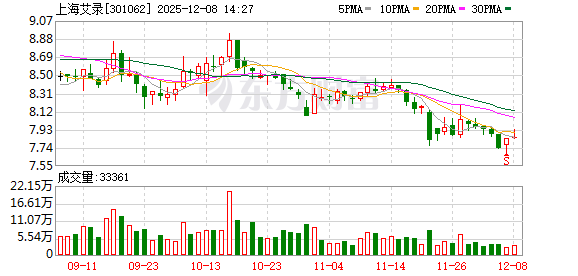
Core Viewpoint - The company, Shanghai Ailu (301062.SZ), has confirmed that its polyurethane composite materials are produced in-house and are primarily used in the photovoltaic industry, specifically for solar panel frames [2]. Group 1: Product and Production - The polyurethane composite materials are fully developed and produced by the company [2]. - The production capacity for these materials is 1.8 GW [2]. - The main raw materials for the frame products, such as polyurethane and fiberglass, are sourced externally [2]. Group 2: Application and Future Plans - Currently, the polyurethane composite materials are exclusively applied in the photovoltaic sector [2]. - The company plans to actively explore additional applications for these materials in other industries [2].
12月光伏产业减产,午后光伏涨幅扩大,光伏ETF华夏(515370)上涨1.69%
Mei Ri Jing Ji Xin Wen· 2025-12-05 06:15
Core Viewpoint - The A-share market saw a collective rise in major indices, with the photovoltaic ETF Huaxia (515370) increasing by 1.69% in the afternoon, following a significant inflow of over 100 million yuan on December 4 [1] Industry Summary - In December, domestic production of polysilicon decreased by 0.96% month-on-month, while silicon wafer production fell by 15.95%, battery cell production by 12.61%, and module production by 13.58%. This decline is attributed to industry self-discipline and other factors affecting multiple segments of the photovoltaic supply chain [1] - CITIC Construction Investment anticipates that the "price control" measures have led to price increases in the main supply chain since July, with the polysilicon segment turning profitable in Q3. The "volume control" measures are also progressing smoothly with the arrival of the dry season [1] - Current inventory levels for polysilicon across the industry are approximately 460,000 tons, indicating significant pressure. If demand remains flat or slightly declines next year, a further reduction of about 30% in polysilicon production will be necessary to normalize inventory levels by 2026 [1] - Overall, it is expected that the "anti-involution" policy will drive profitability across various segments back to reasonable levels [1] Company Summary - The photovoltaic ETF Huaxia (515370) tracks the CSI Photovoltaic Industry Index, which includes companies across the upstream, midstream, and downstream segments of the photovoltaic industry, such as silicon wafers, polysilicon, battery cells, cables, photovoltaic glass, battery modules, inverters, photovoltaic brackets, and solar power stations, providing a comprehensive reflection of the overall performance of the photovoltaic industry [1]
仲钨酸铵、铝棒——大宗商品热点解读
2025-12-04 15:36
Summary of Key Points from Conference Call Records Industry Overview - The conference call discusses the aluminum and tungsten industries, focusing on market trends, pricing, and demand dynamics for 2025 and 2026. Aluminum Industry Insights - **Aluminum Rod Processing Fees**: Processing fees for aluminum rods have generally decreased, with a nearly 20% drop in the Foshan region due to ample supply, weak downstream demand, and high inventory levels, particularly in the construction materials sector [1][3] - **Electrolytic Aluminum Prices**: The price of electrolytic aluminum in East and South China is expected to rise by over 3% year-on-year in 2025, influenced by various factors including overseas policies, tariffs, domestic inventory, and international situations [1][4] - **Market Demand**: The real estate market's downturn has negatively impacted the demand for construction aluminum, but the growth in the new energy vehicle and photovoltaic industries has partially offset this decline, leading to significant increases in production and export volumes in the automotive sector [1][8] - **Export Challenges**: Trade tensions between China, the US, and Europe, along with adjustments to export tax rebate policies, have suppressed Chinese exports, which decreased by about 2% from January to October, particularly affecting construction-related materials [1][9] Price Forecasts - **2026 Price Predictions**: The average spot price for electrolytic aluminum is projected to be around 21,300 yuan, with emerging industries continuing to drive demand despite the traditional real estate sector remaining weak [2][10][11] Metal Magnesium and Silicon Market - **Price Trends**: The price of magnesium is expected to decline by approximately 9% year-on-year in 2025 due to weak demand and ample supply, while silicon prices have dropped by 24%, reaching a historical low [1][6] - **Future Outlook**: Both magnesium and silicon markets are anticipated to remain in a low-level fluctuation in 2026, with magnesium prices expected to range between 15,500 and 18,500 yuan, and silicon averaging around 9,000 yuan per ton [1][6] Capacity and Production Insights - **New Aluminum Rod Capacity**: By the end of 2025, China is expected to add approximately 29 million tons of aluminum rod capacity, primarily in Guangxi and Fujian, aligning with electrolytic aluminum production capacity [1][7] - **Market Dynamics**: The overall growth rate for new capacity is projected to be around 3%, with ongoing construction and commissioning of new facilities in various regions [1][7] Trade and Economic Factors - **Impact of Trade Policies**: The implementation of tariff barriers and the EU's carbon border adjustment mechanism have increased export costs, further complicating the competitive landscape for Chinese products [1][9] - **Supply and Demand Balance**: The domestic market is experiencing a tightening supply situation, with a projected increase in the supply-demand gap from 2,000 tons to around 5,000 tons by 2026, influenced by mining regulations and environmental controls [1][14][15] Conclusion - The aluminum and tungsten industries are facing a complex interplay of supply, demand, and pricing dynamics, with emerging sectors like new energy vehicles and photovoltaics providing some growth amidst challenges in traditional markets like real estate. The outlook for 2026 suggests continued price volatility and a focus on high-quality product demand driven by technological advancements in related industries [1][10][11]
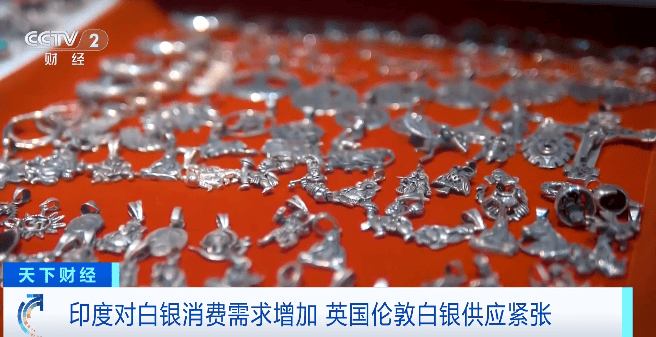
需求强劲、供应紧张,白银价格年内涨幅超90%
Sou Hu Cai Jing· 2025-12-04 12:25
Core Viewpoint - Silver prices have surged significantly this year, with an increase of over 90%, surpassing traditional safe-haven asset gold [1] Group 1: Factors Driving Silver Price Increase - The rise in silver prices is attributed to multiple factors, including cultural and festive consumption, strong industrial demand, and ongoing supply constraints [3] - India, the largest consumer of silver, has seen a dramatic increase in demand, consuming approximately 4,000 tons annually, primarily for jewelry and decorative items [3] - The supply of silver has been under pressure, with London’s silver inventory decreasing from 31,000 tons in 2022 to 22,000 tons in March of this year, leading to a tight market [3] Group 2: Industrial Demand and Supply Dynamics - Silver's unique properties, such as high thermal and electrical conductivity, have made it increasingly important for industrial applications [5] - The shift from surplus to shortage in silver supply is driven by three main factors: the electrification of the automotive industry, advancements in artificial intelligence, and the growth of the photovoltaic industry [7] - The demand for silver in electric vehicles is significant, with an average vehicle requiring about 25 grams, and potentially up to 1 kilogram for solid-state batteries [9] Group 3: Future Outlook - The global silver mining output has been declining over the past decade, with only about 28% of silver production coming from primary silver mines, while the rest is a byproduct of copper or gold mining [11] - Predictions suggest that silver prices could reach $100 per ounce by the end of next year, although analysts caution that silver can experience rapid price declines just as quickly as it rises [13]