地缘政治风险溢价

Search documents
长江有色:宏观共振但高价或遇阻 20日铅价或涨跌不大
Xin Lang Cai Jing· 2026-01-20 03:29
Core Viewpoint - The lead market is experiencing a price increase driven by macroeconomic sentiment and improved fundamental expectations, with geopolitical risks also contributing to market dynamics [1] Supply Side: Constraints from Raw Materials, Environmental Policies, and Seasonality - The lead market faces significant supply constraints, with domestic lead concentrate supply remaining tight and processing fees at low levels, impacting smelter profits and leading to reduced production capacity [2] - Environmental regulations in regions like Henan are tightening, and raw material shortages are limiting the release of recycling capacity, further tightening short-term supply [2] - The upcoming Spring Festival is prompting some smelting enterprises to enter maintenance periods early, constraining supply [2] Demand Side: Seasonal Stockpiling and Structural Highlights - Demand is not experiencing a full-scale explosion but is supported by structural highlights and seasonal impulses, with downstream lead-acid battery dealers increasing purchases ahead of the holiday [3] - The automotive starting battery sector is benefiting from winter replacement demand and stable orders, while the energy storage battery sector is also seeing steady growth [3] - However, demand in consumer sectors like electric bicycle batteries remains weak, limiting overall demand growth [3] Industry Chain Status: Profit Differentiation and Market Dynamics - The current state of the industry chain reflects a "tight balance" market, with social lead ingot inventories at historically low levels, preventing significant inventory pressure [4] - Profit distribution shows clear differentiation: upstream mining maintains stable profits, midstream smelting faces thin margins, and downstream battery companies are struggling to pass on raw material cost increases [4] - Domestic market balance is primarily achieved through internal supply, with limited contributions from imported lead ingots due to overseas supply disruptions [4] Leading Enterprises Dynamics: Steady Operations and Transformation - Leading enterprises like Yuguang Gold Lead are demonstrating strong operational resilience and steady growth in 2025, reflecting industry trends [5] - Their strategies include consolidating core product advantages while actively pursuing high-end and diversified transformations, such as developing high-purity materials and new lead alloys [5] Spot Trading and Price Forecast: High Volatility and Post-Holiday Pressure - The spot market is seeing price increases driven by futures, but downstream acceptance of high prices is limited, leading to cautious trading behavior [6] - Short-term lead prices are expected to remain weakly volatile, supported by macro sentiment and pre-holiday stockpiling, with core trading ranges projected between 17,300 and 17,500 yuan/ton [6] - Long-term, lead prices lack strong upward momentum, with potential inventory accumulation pressures post-holiday and a return to a wide fluctuation pattern as supply gradually recovers [6]


光大证券:地缘政治不确定性为油价提供景气基础 关注26年供需边际变化
智通财经网· 2026-01-19 23:25
Core Viewpoint - The current geopolitical tensions in Iran are driving oil price volatility, with the geopolitical risk premium on oil prices increasing, leading to a rise in oil prices. OPEC+ has decided to pause production increases in Q1 2026, which is expected to alleviate concerns regarding oil supply [1][2][3]. Group 1: Geopolitical Impact on Oil Prices - The escalation of tensions in Iran has resulted in significant fluctuations in oil prices, providing a favorable backdrop for oil price increases due to geopolitical uncertainties [2]. - As of January 16, 2026, Brent and WTI crude oil futures closed at $64.20 and $59.22 per barrel, reflecting increases of 1.9% and 0.7% respectively from the previous week [2]. - The U.S. has opted for economic sanctions against Iranian officials rather than military action, which may lead to a potential end to the current oil price surge, although risks of escalation remain [2]. Group 2: OPEC+ Production Decisions - OPEC+ increased production by 2.21 million barrels per day in 2025, but has decided to adopt a cautious approach to production increases in 2026, which is expected to improve the balance of oil supply and demand [3]. - OPEC forecasts a demand growth of 1.38 million barrels per day for 2026, with a first-time prediction of 1.34 million barrels per day growth for 2027 [3]. Group 3: Demand and Supply Outlook - The IEA has revised its forecast for global oil demand growth in 2026 to 860,000 barrels per day, an increase of 90,000 barrels per day from previous estimates, driven by improvements in macroeconomic and trade conditions [4]. - The IEA expects that the demand for chemical feedstocks will dominate oil demand growth, with its share of the incremental demand rising from 40% in 2025 to 60% in 2026 [4]. - Global oil supply is projected to grow by 2.4 million barrels per day in 2026, with a downward adjustment of 20,000 barrels per day due to OPEC+ production pauses and intensified sanctions on Russian and Venezuelan oil [4]. Group 4: Resilience of Major Oil Companies - The "Big Three" Chinese oil companies have demonstrated resilience during the current oil price volatility, benefiting from increased production and effective cost control, with performance levels surpassing historical oil price periods [5]. - Looking ahead to 2026, these companies are expected to maintain high capital expenditures and continue expanding in the natural gas market, as well as accelerate the transformation of their downstream refining businesses, positioning them for long-term growth through oil price cycles [5].

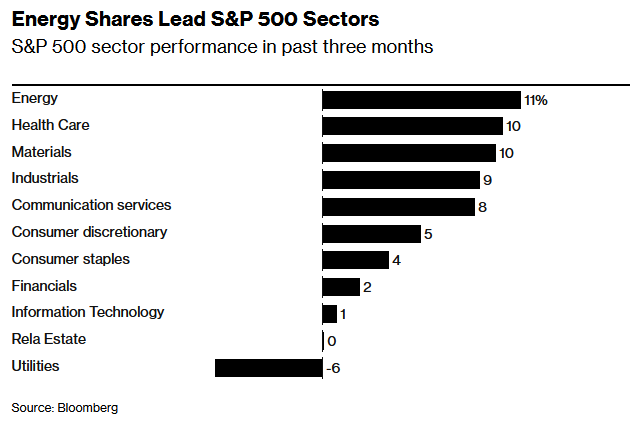
地缘政治风险溢价驱动能源板块领涨标普500 多空分歧中未来走势仍不明朗
智通财经网· 2026-01-16 13:15
Core Viewpoint - The energy sector in the U.S. stock market has experienced a significant rise, surpassing market expectations, driven by geopolitical tensions and rising oil prices, which have increased by nearly 6% over the past three months due to Trump's actions regarding Venezuela and threats against Iran [1]. Group 1: Energy Sector Performance - The energy sector has outperformed other segments of the S&P 500 index over the past three months [1]. - Despite the rise in energy stocks, Deutsche Bank notes that holdings in this sector remain below historical medians, indicating ongoing market uncertainty [4]. - Hedge funds have recently net sold energy stocks at one of the largest scales among S&P 500 sectors, reflecting cautious sentiment [4]. Group 2: Geopolitical Impact on Oil Prices - Geopolitical tensions are expected to potentially sustain the upward trend in the energy sector, with investors optimistic about U.S. oil companies' prospects [5]. - Record trading volumes in bullish oil options indicate market concerns over escalating tensions with Iran disrupting oil supplies from the Middle East [5]. - A recent statement from Trump regarding Iran led to the largest single-day drop in oil prices since June, highlighting the volatility tied to geopolitical developments [5]. Group 3: Future Oil Price Predictions - Major Wall Street firms have adopted a more positive outlook on oil prices, with Citigroup raising its Brent crude forecast to $70 per barrel due to geopolitical risk premiums and ongoing export disruptions from countries like Libya and Algeria [6]. - BloombergNEF suggests a more extreme scenario where a complete halt of Iranian exports could lead to an average Brent crude price of $91 per barrel by the end of 2026, although this outcome is considered unlikely [6].
特朗普暗示暂缓对伊行动,国际油价应声大跌
Xin Lang Cai Jing· 2026-01-15 16:53
在美国总统唐纳德・特朗普暗示,鉴于伊朗承诺不会处决抗议者,美方或暂缓对伊动武后,国际油价迎 来去年 10 月以来的最大单日跌幅。 此前一周累计上涨 10% 的美国西德克萨斯轻质原油价格,当日暴跌逾 4%,跌破每桶 60 美元关口。特 朗普于周三向记者表示,他已得到通报,伊朗境内 "针对民众的杀戮行为已停止",并补充称,若伊朗 当局继续镇压抗议活动,他将会 "极度不满"。此番表态降低了美国立即采取军事行动的可能性,同时 也缓解了市场对伊朗原油生产及关键航运通道受阻的担忧。 伊朗司法部门宣布,已驳回对 26 岁男子埃尔凡・索尔塔尼的死刑判决。此前,活动人士曾警告称,索 尔塔尼面临即刻被处决的风险。与此同时,美国财政部宣布,对伊朗最高国家安全委员会秘书,以及其 认定的某秘密银行网络中的 18 名相关人员和实体实施制裁。这一系列举动进一步强化了市场对于短期 内不会爆发冲突的预期。 经纪公司 PVM 分析师约翰・埃文斯表示:"作为近期油价上涨的核心推手,伊朗局势在一夜之间出现 明显缓和,市场的紧张情绪大幅降温,此前计入油价的风险溢价已被快速消化。" 特朗普向记者透露,他从伊朗的 "重要消息源" 处获悉,目前当地已无抗议 ...
原油油轮年度展望
Zhong Xin Qi Huo· 2026-01-14 23:30
1. Report Industry Investment Rating No relevant information provided. 2. Core Viewpoints - The crude - tanker market in 2025 was strong but recently had a sharp correction. The Middle - East–Far East TD3C route's daily rent averaged $57,500, up 64.7% YoY, and seaborne crude demand grew solidly. The supply of the tanker fleet was tight, and sanctions and floating storage were short - term swing factors. The global crude - tanker capacity rose only 0.7%. Mid - term supply is expected to remain tight, with sanctions and storage adding near - term tension. The Venezuelan affair is a short - term negative, but geopolitical risk premium underpins freight fundamentals [1][3]. - The 2026 outlook for the crude - tanker market is volatile but still tilted to the upside. Although freight rates have corrected sharply, global liftings should rebound after the Middle - East Ramadan, and tonnage scarcity due to sanctions will persist. Geopolitical flare - ups can increase market volatility [2][3]. 3. Summary by Directory 3.1 Market Review - The crude - tanker market soared in 2025H2 and then quickly retreated. The average annual daily hire rate still showed a sharp year - on - year increase. Since September 2025, the market was exceptionally strong, with daily rates peaking at $141,300/day. In 2025, the average VLCC daily charter rate on the Middle East–Far East TD3C route reached $57,491, up 64.7% year - on - year. Since Q4, the market was robust but has fallen rapidly lately. In early January, the VLCC downtrend continued, sliding 36.5% week - on - week, and Suezmax and Aframax rates also turned lower [9][34]. 3.2 Demand - Seaborne crude demand in 2026 is expected to be slightly stronger than in 2025, with global volumes reaching a high - level plateau. In 2025, global crude shipped by sea reached 2.17 billion tonnes, up 4.2% year - on - year. OPEC+ indicated that Q1 2026 output will be flat. The Ukraine conflict has had a limited net impact on Russian crude exports. South American shipments grew 6.1% in 2025, while North America and Africa had modest gains. China's crude - import demand picked up in H2 2025 [12][37]. - Venezuelan exports may face short - term disruptions. In the first eleven months of 2025, Venezuela's crude output stood at 0.93 mb/d, about 0.9% of global supply. Average seaborne exports in 2025 were roughly 0.75 mb/d, equal to 1.7% of world crude trade. China and the US are the main destinations, taking about 50% and 15% respectively. Since Q4 2025, the US has tightened sanctions on Venezuelan oil [13][37]. 3.3 Supply 3.3.1 Fleet Growth and Aging - In 2025, the global crude - tanker fleet grew only 0.7%, and the average age of VLCC reached 13.29 years old. Owners are cautious about ordering new ships due to the net - zero timetable. There are currently 909 VLCCs, totaling 280 million dwt, with 156 on order (17.2% of existing capacity), but near - term deliveries are limited. About one - third of VLCC tonnage is over 15 years old, and the average age will keep rising, reducing fleet productivity [14][38]. 3.3.2 Sanctioned Tanker Fleet and Floating - Storage Tonnage - The share of sanctioned tonnage is approaching 20%. In 2025, the US and EU tightened measures on ships carrying Russian, Venezuelan, or Iranian oil. As of 15 Dec 2025, 1,746 ships were on sanctions lists, with tankers being the dominant segment. The US has shifted from corporate to individual/entity designations, making penalties more precise [18][40]. - Floating storage has fluctuated. A build - up in October lifted spot rates in November, but the total has since fallen back. The global floating - storage count peaked around Week 50, declined into year - end, and edged up again in early January. Far - East floating stocks remain elevated, but the support to freight from stored barrels is waning. Part of Venezuela's output is held afloat, and floating - storage levels should be closely watched in 2026. If crude prices retreat, more tankers could be used for storage, boosting freight rates [19][20][40]. 3.3.3 Ship Speed and Canal Transit - The fleet sailed faster in Q4. The average VLCC speed reached 11.86 kn in December, rising steadily since mid - year, while Aframax speed averaged 10.82 kn, remaining flat. Higher rates encouraged owners to turn ships faster, releasing extra supply, but speeds have edged back recently [23][45]. - Ship volumes passing through the Suez Canal remain low, while Panama Canal traffic is normal. In 2025, the Panama Canal had an average of 85 tanker transits (8.92 million dwt) per month, back to 2023 levels but below 2022. Crude - tanker passages in the Suez Canal totaled 1,950 ships in 2025, down 9.7% vs 2024 and 35.1% vs 2023. If tankers return to the Suez Canal in 2026, it could weigh on freight and cut overall tonne - mile demand [24][45]. 3.4 Venezuela Situation 3.4.1 Shipping Pattern - Venezuelan exports are mainly transported by VLCCs, and 120 tankers regularly call at the country's ports. State - owned PDVSA is the major exporter, shipping from the northern and eastern terminals. These 120 vessels represent 6.3% of the world VLCC fleet, 1.0% of Suezmaxes, 2.0% of Aframaxes, and 2.6% of Panamaxes. Most cargoes go to the Far East, so VLCCs dominate the trade [25][26][46]. 3.4.2 Market Impact - The tanker market will suffer in the short term, but there is uncertainty about the floating capacity and volume. The immediate fall in Venezuelan liftings cuts long - haul VLCC demand, which is a short - term negative. Replacement barrels will come from the Middle East, West Africa, or South America, slightly shortening average hauls. However, the effective shortage of tonnage due to sanctions remains, and the market's risk premium and tight supply fundamentals are intact [30][49]. 3.5 Outlook - Seaborne crude demand is expected to grow steadily. In 2026, global volumes should remain at a high level. OPEC+ output is flat in the near term, and Russian flows are only marginally affected. West - African and North - American liftings have eased seasonally, causing a short lull. The pace of Venezuela's crude/fuel - oil comeback is unclear. High onshore stocks in China and a weaker products crack are slowing import appetite, leading to less spot cargo and downward pressure on freight. Global seaborne - crude growth in 2026 is projected at 1–2%. - Supply is likely to stay tight. The share of sanctioned tonnage is rising, floating storage is increasing, and Ukraine has stepped up strikes on Russian tankers. Fleet growth is minimal, and ageing is reducing operating efficiency. Even if the Russia–Ukraine war ends in 2026, trade - flow shifts will largely persist. A sharper oil - price retreat would increase storage demand and tighten tanker availability further. - In summary, the market will dip in the near term, but 2026 fundamentals remain strong. The Venezuelan affair has reduced long - haul VLCC demand for now, but the timing of volume rebound and its impact on floating storage are uncertain, leaving a geopolitical risk premium. The crude - tanker market is expected to regain strength around March after the current correction [31][32][50].
国际油价连续第五日上涨 市场关注伊朗局势
Xin Lang Cai Jing· 2026-01-14 20:10
Group 1: Geopolitical Tensions and Oil Prices - Tehran warns U.S. allies in the Middle East that if Washington attacks Iran, it will target U.S. military bases in those countries, with personnel advised to evacuate from the U.S. base in Qatar [1][4] - Brent crude futures rose by $1.05, a 1.05% increase, closing at $66.52 per barrel, while WTI futures increased by $0.87, or 1.42%, to $62.02 per barrel [2][5] - Onyx Capital Group's Jorge Montepeque states that the current geopolitical instability and potential supply disruptions are significant, with the possibility of regime change in Iran being a major concern [2][5] Group 2: Market Reactions and Forecasts - Citi analysts suggest that the protests in Iran could tighten global oil supply-demand balance through short-term supply losses, leading to an increase in geopolitical risk premium, adjusting Brent oil price forecast to $70 per barrel for the next three months [2][6] - Despite the protests, analysts note that they have not yet spread to Iran's main oil-producing regions, limiting the actual impact on oil supply [6] - The American Petroleum Institute (API) reported a significant increase in U.S. crude and refined oil inventories, which has constrained further oil price increases [6] Group 3: U.S. Oil Inventory Changes - As of the week ending January 9, U.S. crude oil inventories increased by 5.23 million barrels, gasoline inventories rose by 8.23 million barrels, and distillate inventories increased by 4.34 million barrels [3][6] - The U.S. Energy Information Administration (EIA) is expected to release official inventory data, with analysts anticipating a decrease in crude oil inventories but an increase in gasoline and distillate inventories [6] - Venezuela, a member of OPEC, has begun to reverse previous oil production cuts due to U.S. sanctions and is resuming oil exports, with two supertankers reportedly departing with approximately 1.8 million barrels of crude [3][6]
美国能源股盘前上涨 地缘政治紧张局势推高油价
Xin Lang Cai Jing· 2026-01-14 12:31
盘前上涨的能源相关股票包括:埃克森美孚涨0.1%,康菲石油涨0.6%,哈里伯顿涨0.67%,APA涨 0.66%,DHT Holdings涨1.6%,Frontline涨1%。 美国能源股周三盘前上涨,因伊朗和委内瑞拉持续的地缘政治紧张局势推高了油价和相关板块。 布伦特一度上涨1.5%,至每桶66.46美元,为10月以来最高水平。 花旗分析师Francesco Martoccia在客户报告中写道:"伊朗的抗议活动可能通过短期供应减少导致全球原 油供需平衡趋紧,但主要在于地缘政治风险溢价上升"。 花旗分析师Francesco Martoccia在客户报告中写道:"伊朗的抗议活动可能通过短期供应减少导致全球原 油供需平衡趋紧,但主要在于地缘政治风险溢价上升"。 盘前上涨的能源相关股票包括:埃克森美孚涨0.1%,康菲石油涨0.6%,哈里伯顿涨0.67%,APA涨 0.66%,DHT Holdings涨1.6%,Frontline涨1%。 责任编辑:刘明亮 责任编辑:刘明亮 美国能源股周三盘前上涨,因伊朗和委内瑞拉持续的地缘政治紧张局势推高了油价和相关板块。 布伦特一度上涨1.5%,至每桶66.46美元,为10月以来 ...
伊朗骚乱与美伊对峙推高油价 花旗:布油或冲击70美元
Xin Lang Cai Jing· 2026-01-14 11:25
格隆汇1月14日|周三,由于伊朗国内的骚乱可能扰乱原油供应,美伊双方互相发出威胁,油价连续第 五个交易日上涨。伊朗警告中东的美国盟友,如果美对伊发动攻击,伊朗将对美军基地进行打击。部分 人员已被建议离开位于卡塔尔的美国军事基地。 花旗分析师在报告中指出:"伊朗发生的抗议可能通过造成短期供应损失,尤其是通过抬升地缘政治风 险溢价而导致全球石油供需平衡收紧。"花旗将未来三个月布伦特油价预测上调至每桶70美元。不过, 分析师也指出,迄今为止抗议活动尚未蔓延至伊朗主要产油区,因此对实际供应的影响有限。 Onyx Capital Group董事总经理豪尔赫·蒙特佩克表示:"我们正处于地缘政治不稳定和潜在供应中断时 期。伊朗的抗议活动可能导致政权更迭,这是一个重大事件,美方攻击的可能性正在升高。" ...
地缘风险与供应缓解角力 油价涨势暂歇
Sou Hu Cai Jing· 2026-01-14 02:39
Core Viewpoint - Oil prices experienced a slight decline after four consecutive days of increase, influenced by Venezuela's resumption of crude oil exports and concerns over supply disruptions in Iran due to social unrest [1] Group 1: Supply Dynamics - Venezuela's restoration of crude oil exports has alleviated some supply pressures in the market [1] - Concerns regarding potential supply interruptions from Iran have emerged due to ongoing protests, raising geopolitical risk premiums [1] Group 2: Market Predictions - Citigroup analysts have raised their forecast for Brent crude prices to $70 per barrel over the next three months [1] - The current protests in Iran have not yet spread to major oil-producing regions, limiting the actual impact on supply [1] Group 3: Risk Assessment - The primary risks are associated with political and logistical friction rather than direct supply disruptions, making the impact on Iranian crude oil supply and export flows relatively manageable [1]
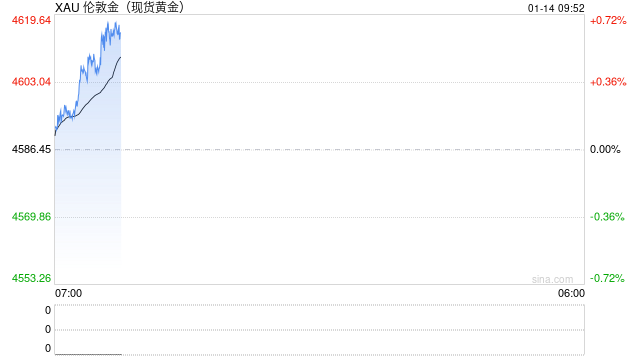
特朗普“购岛梦”碎?格陵兰拒当美国领土,黄金市场紧急避险
Xin Lang Cai Jing· 2026-01-14 01:53
热点栏目 自选股 数据中心 行情中心 资金流向 模拟交易 客户端 文章来源:汇通财经 格陵兰总理周二(1月13日)表示,该国宁愿继续作为丹麦的一部分,也不愿成为美国的领土,此前美国总统唐纳 德·特朗普一直试图控制这片广阔的北极岛屿。 丹麦和格陵兰外交部长将于周三晚些时候会见美国副总统JD·万斯和国务卿马可·卢比奥,此前特朗普最近加大了 威胁要接管格陵兰岛,这是一个属于丹麦王国的自治领土。 格陵兰总理延斯-弗雷德里克·尼尔森在哥本哈根与丹麦总理梅特·弗雷德里克森举行的联合新闻发布会上表示,格 陵兰岛不出售,也不愿加入美国。 尼尔森说:"我们正面临一场地缘政治危机,如果我们现在必须在美国和丹麦之间做出选择,那么我们选择丹麦, 我们在丹麦王国团结一致。" 对我们来说,这里是家 格陵兰内阁部长纳雅·纳塔尼尔森在伦敦对记者说,格陵兰人不想成为美国人,他们对关于自己岛屿的言论感到背 叛和困惑。 纳撒尼尔森说道:"我认为我们应该能够自主决定自己未来的生活。对其他人来说,这可能只是一片土地,但对我 们而言,这就是家。"他的业务范围涵盖商业、能源和矿产。 尽管丹麦统治格陵兰已有数个世纪,但自1979年以来,该地区已逐渐走向独立 ...