
西得州中质原油(WTI)期货

Search documents
周五油价基本持平 特朗普考虑对伊朗进行有限军事打击
Xin Lang Cai Jing· 2026-02-20 20:10
Core Viewpoint - Oil prices remained stable following President Trump's indication of considering limited military action to pressure Iran regarding its nuclear program [1][3]. Group 1: Oil Price Movements - Brent crude futures increased by $0.10, a rise of 0.14%, closing at $71.76 per barrel [2][4]. - West Texas Intermediate (WTI) crude futures for March delivery decreased by $0.04, a decline of 0.06%, closing at $66.39 per barrel [2][4]. - Both major crude contracts reached their highest settlement prices in six months during the previous trading session due to ongoing concerns about supply risks in the oil-rich Middle East [5]. Group 2: U.S.-Iran Relations - The U.S. and Iran held talks in Switzerland this week to address the standoff over Tehran's nuclear program, but initial reports of progress shifted to accusations from Washington that Iran failed to meet core U.S. demands [5]. - President Trump stated that if Tehran does not agree to a deal regarding its nuclear program, "bad things will happen" [5]. - Trump mentioned that the world could know within the next 10 days whether the U.S. will reach an agreement with Iran or take military action, expressing hope to finalize a deal within "10 to 15 days" [5].
2月14日国际油价小幅攀升 通胀放缓与OPEC+增产预期相互制衡
Xin Lang Cai Jing· 2026-02-13 20:10
Group 1 - International oil prices experienced a slight increase due to a slowdown in U.S. inflation, recovering from early losses caused by OPEC+'s inclination to resume production increases [1][3] - Brent crude oil futures for March delivery rose by $0.23, a 0.34% increase, closing at $67.75 per barrel, while WTI crude oil futures increased by $0.05, nearly 0.1%, closing at $62.89 per barrel [4][3] - The U.S. January consumer price increase was below expectations, primarily due to falling gasoline prices and a slowdown in rental inflation, which could lead to lower interest rates, positively impacting the economy [4][5] Group 2 - Early declines in oil prices were attributed to media reports suggesting that rising tensions between the U.S. and Iran could push oil prices higher, alongside OPEC's potential decision to increase production starting in April [4][5] - Negotiations with Iran and Russia are expected to be short-term market drivers, with current global oil supply remaining ample, and futures prices reflecting a geopolitical premium of $5-7 per barrel [5] - The U.S. has eased sanctions on Venezuela's energy sector, allowing energy companies to operate oil and gas projects in OPEC member countries, with expected revenues from Venezuelan oil sales exceeding $10 billion to potentially add another $5 billion in the coming months [5]
国际油价走高 美伊核谈判计划已濒临破裂边缘
Xin Lang Cai Jing· 2026-02-04 20:09
Core Viewpoint - Following President Trump's warning to Iranian Supreme Leader Khamenei, international oil prices surged, indicating market sensitivity to geopolitical tensions in the Middle East [1][5]. Oil Price Movement - Brent crude oil futures for March delivery increased by $2.13, a rise of 3.16%, closing at $69.46 per barrel [2][6]. - West Texas Intermediate (WTI) crude oil futures for March delivery rose by $1.93, a gain of 3.05%, closing at $65.14 per barrel [2][6]. U.S.-Iran Nuclear Negotiations - Reports indicate that U.S.-Iran nuclear negotiations are on the verge of collapse, with Trump threatening military action if Iran does not agree to a nuclear deal [2][7]. - The originally scheduled talks for Friday had raised hopes for easing tensions between the two nations [7]. Negotiation Challenges - U.S. officials noted uncertainty regarding the scheduled talks due to disagreements over the location and format [3][8]. - The U.S. proposed multilateral talks in Istanbul with other Middle Eastern countries as observers, while Iran preferred bilateral talks in Oman, leading to a deadlock [3][8]. Military Tensions - Prior to the news of stalled negotiations, the U.S. military announced the downing of an Iranian drone near the USS Lincoln aircraft carrier, highlighting ongoing military tensions in the region [4][9]. - Iranian media claimed the drone was conducting routine monitoring within international law [4][9].
盘前必读丨“十五五”首个中央一号文件来了;美股收跌贵金属逆势大涨
Di Yi Cai Jing Zi Xun· 2026-02-04 00:01
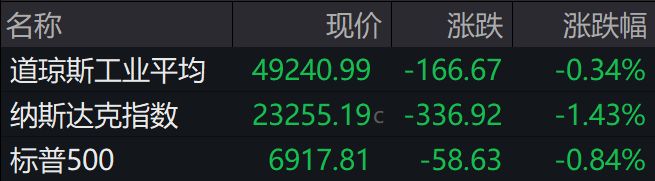
Group 1 - The Chinese central bank announced a reverse repurchase operation of 800 billion yuan to maintain liquidity in the banking system, with a term of 3 months [2] - The Shanghai Stock Exchange reported a significant increase in new A-share accounts, with 4.9158 million new accounts opened in January 2026, a month-on-month increase of approximately 89% and a year-on-year increase of about 213% [2] - The Paris prosecutor's office conducted a search of the office of the social media platform X, owned by Elon Musk, as part of an investigation into cybercrime [3] Group 2 - Major U.S. stock indices experienced declines, with the Dow Jones down 0.34%, S&P 500 down 0.84%, and Nasdaq down 1.43%, nearly erasing gains made since the beginning of the year [3][4] - Large technology stocks faced pressure, with Nvidia down 2.84%, Microsoft down 2.87%, and Amazon down 1.79% [4] - The Nasdaq Golden Dragon China Index fell by 0.94%, with Alibaba down 2.81% and Tencent Holdings ADR down 3.33% [4] Group 3 - Commodity markets saw a rebound in gold and silver prices after two days of significant declines, with spot gold rising 5.2% to $4,906.82 per ounce [5] - Crude oil prices slightly rebounded, with WTI crude oil futures increasing by 1.72% to $63.21 per barrel [5] - Several companies announced significant developments, including a change in controlling shareholder for Jiatang and a fundraising plan for Xuguang Electronics [5]




新浪财经隔夜要闻大事汇总:2026年1月15日
Xin Lang Cai Jing· 2026-01-14 23:21
Market - US stock market experienced a decline for the second consecutive day, with the Dow, Nasdaq, and S&P 500 all falling, primarily driven by poor performance in technology stocks, particularly chip stocks like Nvidia, which dropped due to export restrictions [2] - Bank stocks also struggled, with Wells Fargo's revenue falling short of expectations, while Bank of America and Citigroup exceeded expectations but could not support the high market levels. The banking sector faced additional pressure from Trump's call for credit card interest rate reforms [2] - Despite strong PPI and retail sales data, the market remained low due to concerns over the independence of the Federal Reserve and rising geopolitical risks, particularly related to Iran [2] Company - Tesla announced it will stop selling its Full Self-Driving (FSD) software at a fixed price and will instead offer it as a monthly subscription service starting at $99, leading to a 1.79% drop in its stock price [3][33] - Cerebras secured a significant contract with OpenAI worth over $10 billion, committing to provide 750 MW of computing power by 2028, which will help reduce its reliance on a single customer [32] - Wells Fargo reported profits below expectations, with a significant $612 million spent on severance costs, leading to its stock experiencing the largest intraday drop in six months [40] - Bank of America reported a 23% increase in stock trading revenue to $2.02 billion, exceeding analyst expectations, but concerns over costs led to a 5% drop in its stock price [41] - Boeing announced it received 1,173 net orders in 2025, surpassing Airbus, although its stock fell 1.7% in early trading [42]



国际油价连续第五日上涨 市场关注伊朗局势
Xin Lang Cai Jing· 2026-01-14 20:10
Group 1: Geopolitical Tensions and Oil Prices - Tehran warns U.S. allies in the Middle East that if Washington attacks Iran, it will target U.S. military bases in those countries, with personnel advised to evacuate from the U.S. base in Qatar [1][4] - Brent crude futures rose by $1.05, a 1.05% increase, closing at $66.52 per barrel, while WTI futures increased by $0.87, or 1.42%, to $62.02 per barrel [2][5] - Onyx Capital Group's Jorge Montepeque states that the current geopolitical instability and potential supply disruptions are significant, with the possibility of regime change in Iran being a major concern [2][5] Group 2: Market Reactions and Forecasts - Citi analysts suggest that the protests in Iran could tighten global oil supply-demand balance through short-term supply losses, leading to an increase in geopolitical risk premium, adjusting Brent oil price forecast to $70 per barrel for the next three months [2][6] - Despite the protests, analysts note that they have not yet spread to Iran's main oil-producing regions, limiting the actual impact on oil supply [6] - The American Petroleum Institute (API) reported a significant increase in U.S. crude and refined oil inventories, which has constrained further oil price increases [6] Group 3: U.S. Oil Inventory Changes - As of the week ending January 9, U.S. crude oil inventories increased by 5.23 million barrels, gasoline inventories rose by 8.23 million barrels, and distillate inventories increased by 4.34 million barrels [3][6] - The U.S. Energy Information Administration (EIA) is expected to release official inventory data, with analysts anticipating a decrease in crude oil inventories but an increase in gasoline and distillate inventories [6] - Venezuela, a member of OPEC, has begun to reverse previous oil production cuts due to U.S. sanctions and is resuming oil exports, with two supertankers reportedly departing with approximately 1.8 million barrels of crude [3][6]
油价周五收高 市场评估伊朗抗议与委内瑞拉石油交易
Xin Lang Cai Jing· 2026-01-09 20:12
Core Viewpoint - Oil prices rose on Friday due to market concerns over potential disruptions in Iranian production and uncertainties surrounding Venezuelan supply [1][7]. Group 1: Oil Price Movements - Brent crude futures increased by $1.35, a rise of 2.18%, closing at $63.34 per barrel [2][8]. - West Texas Intermediate (WTI) crude futures rose by $1.36, a gain of 2.35%, closing at $59.12 per barrel [2][8]. - Both benchmark oil prices rebounded over 3% after two consecutive days of decline [3][9]. Group 2: Supply Concerns - Market worries about supply disruptions are heightened due to escalating protests in Iran, a major oil-producing country in the Middle East [3][9]. - The ongoing unrest in Iran and concerns about the potential spread of the Russia-Ukraine war affecting Russian oil exports are contributing to supply anxiety [3][9]. Group 3: Venezuelan Oil Supply - The White House is set to meet with oil companies and traders to discuss Venezuelan export transactions [4][9]. - Following the recent arrest of Venezuelan President Maduro, there are calls for Venezuela to fully open its oil industry to the U.S. [4][10]. - U.S. officials indicated that Washington will indefinitely control the country's oil sales and revenues [4][10]. - Major oil companies, including Chevron and global traders, are bidding for U.S. government contracts to sell up to 50 million barrels of oil accumulated by Venezuela's state oil company during severe sanctions [4][10]. Group 4: Market Monitoring - Market analysts are focusing on the sales and delivery outcomes of Venezuelan oil inventories in the coming days [5][10]. - Internet monitoring organization NetBlocks reported nationwide internet outages in Iran amid ongoing protests due to economic hardships [5][10]. - Global oil inventories are still on the rise, with oversupply potentially suppressing oil price increases [6][10].

油价上涨逾3%,市场关注委内瑞拉及俄罗斯、伊拉克、伊朗的供应担忧
Xin Lang Cai Jing· 2026-01-08 20:21
Group 1: Oil Price Movement - Oil prices increased by over 3% after two days of decline, driven by investor assessments of the situation in Venezuela and concerns over supply from Russia, Iraq, and Iran [1][7] - Brent crude futures rose by $2.03, a 3.39% increase, closing at $61.99 per barrel [8] - West Texas Intermediate (WTI) futures for February delivery increased by $1.77, a 3.16% rise, closing at $57.76 per barrel [8] Group 2: Venezuela Situation - The U.S. seized two oil tankers related to Venezuela, one of which was flying a Russian flag, as part of efforts to control oil flows from the region [8] - Following a military operation in Caracas to capture President Maduro, the U.S. has intensified its blockade on sanctioned vessels [8] - Analysts noted that the significant event had minimal impact on the energy market, as it may take years for Venezuelan oil to reach the U.S. Gulf Coast [8] Group 3: U.S. Policy and Corporate Involvement - President Trump indicated that the U.S. might oversee Venezuela and control its oil revenues in the coming years [9] - The U.S. Senate advanced a resolution to prohibit Trump from taking further military action in Venezuela without congressional approval [10] - U.S. Energy Secretary Chris Wright mentioned that both the U.S. and China have roles in allowing commercial activities in Venezuela, while ensuring no other country gains primary control [10] - Chevron and other U.S. oil giants are expected to expand their activities in Venezuela [10] Group 4: Global Oil Supply Concerns - Iraq's cabinet approved the nationalization of the West Qurna-2 oil field to avoid disruptions due to U.S. sanctions on Russian stakeholders [11] - Iran's oil exports, which account for about 2% of global supply, may face risks amid domestic protests and economic reforms [11][12] - The world's largest refinery operator, Reliance Industries, expressed interest in purchasing Venezuelan oil if allowed to sell to non-U.S. buyers [10]
油价因供应前景及委内瑞拉产量不确定性而下跌
Xin Lang Cai Jing· 2026-01-06 20:30
Core Viewpoint - Oil prices declined as the market weighs the expectations of global supply abundance this year against the uncertainty of Venezuela's oil production following the arrest of President Nicolás Maduro [1][2]. Group 1: Oil Price Movements - Brent crude futures fell by $1.06, a decrease of 1.72%, closing at $60.70 per barrel [2]. - West Texas Intermediate (WTI) crude futures for February delivery dropped by $1.19, a decline of 2.04%, settling at $57.13 per barrel [2]. Group 2: Analyst Insights - Tamas Varga, an analyst at PVM Oil Associates, stated that it is too early to assess the impact of Maduro's arrest on oil supply-demand balance, but it is clear that oil supply will be ample by 2026 regardless of whether the OPEC member increases production [2]. - A Reuters survey conducted in December indicated that market participants expect downward pressure on oil prices in 2026 due to increased supply and weak demand [2].
周二油价小幅下滑 市场关注俄乌和平希望与也门紧张局势
Xin Lang Cai Jing· 2025-12-30 20:13
Core Viewpoint - International oil prices experienced a slight decline as investors assessed the impact of setbacks in the Russia-Ukraine peace talks and escalating geopolitical tensions in the Middle East regarding Yemen [1][4]. Group 1: Oil Price Movements - West Texas Intermediate (WTI) crude oil futures for February delivery fell by $0.13, a decrease of 0.22%, closing at $57.95 per barrel [1][4]. - Brent crude oil futures dropped by $0.02, a decline of 0.03%, settling at $61.92 per barrel [2][5]. Group 2: Geopolitical Influences - The previous trading day saw both Brent and WTI crude prices rise over 2% due to Saudi Arabia's airstrikes in Yemen and Moscow's accusations against Kyiv for attacking a Russian presidential residence, undermining hopes for a peace agreement [2][5]. - Russia indicated a tougher stance in negotiations following the accusations against Kyiv, which Kyiv denied, claiming the allegations were baseless and aimed at sabotaging peace talks [2][5]. Group 3: Market Analysis - UBS analyst Giovanni Staunovo noted that the market has adjusted expectations, with no breakthroughs anticipated in the short term for peace between Ukraine and Russia [2][5]. - Ongoing U.S. sanctions on Venezuelan oil exports and adverse weather conditions leading to the suspension of Caspian Pipeline Consortium (CPC) crude exports also supported oil prices on that day [6]. - Concerns over supply were heightened by Saudi-led coalition strikes against foreign support for Yemeni separatist forces, with Saudi Arabia emphasizing that national security is a "red line" [6]. - Analysts pointed out that despite renewed concerns over potential supply disruptions, the prevailing view of global oversupply may limit upward price movement [6]. - Marex analyst Ed Meir suggested that due to "increasing oil oversupply," oil prices may trend downward in the first quarter of 2026 [6].