
多模态融合

Search documents
一口气发布4个大模型,火山引擎这次真的杀疯了!
Sou Hu Cai Jing· 2025-06-17 09:09
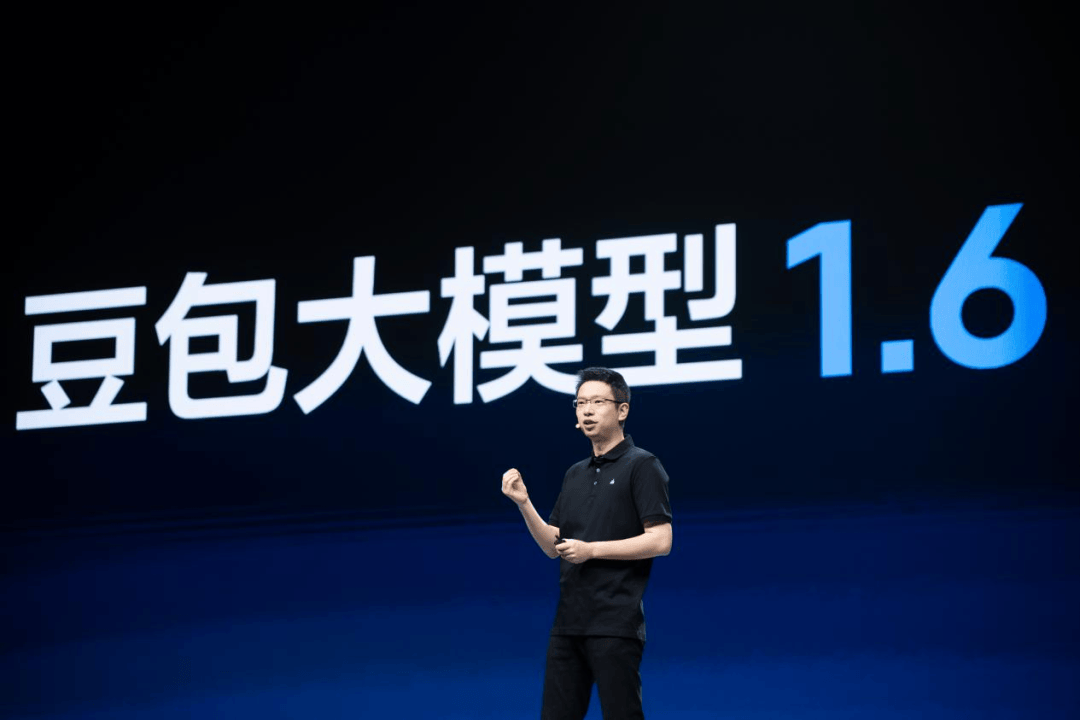
Core Insights - The recent FORCE conference in Beijing showcased the launch of new AI models by Volcano Engine, including the Doubao Model 1.6 and Seedance 1.0 pro, highlighting advancements in multimodal interaction and content generation capabilities [2][3] - The global AI model market is highly competitive, with Volcano Engine's new models standing out due to their comprehensive multimodal capabilities and cost-effective pricing strategies [2][3] Product Launches - Doubao Model 1.6 supports multimodal understanding and graphical interface operations, excelling in complex reasoning and multi-turn dialogue tasks, ranking among the top globally [3] - Seedance 1.0 pro generates high-quality 1080P videos with seamless transitions and has achieved top rankings in international assessments for video generation tasks [4] Industry Applications - In the automotive sector, Mercedes-Benz has partnered with Volcano Engine to enhance its smart cabin information retrieval and system response speed using the Doubao model [8] - In finance, Haier Consumer Finance has implemented a tailored large model to meet over 90% of intelligent scenario needs, significantly improving operational efficiency and reducing risks [8] - In education, collaborations with top universities have led to the development of AI applications that enhance research efficiency and quality [9] Technological Innovations - Volcano Engine has introduced an Agent development suite that innovates the entire lifecycle of AI Agent development, enhancing user intent parsing and instruction optimization [5] - The launch of a multimodal data lake solution addresses challenges in data processing, improving resource efficiency and compatibility with various systems [6] - AICC's secure computing technology enhances AI security and privacy, reducing data leakage risks through hardware-protected environments [7] Future Trends - The development of intelligent Agents is expected to drive digital transformation in enterprises, with trends indicating deeper multimodal integration and enhanced autonomous learning capabilities [12][14] - Gartner predicts that by 2028, at least 15% of daily work decisions will be made using Agentic AI, highlighting the growing importance of intelligent Agents in business [12]

培育大模型产业生态需要制度革新丨法经兵言
Di Yi Cai Jing· 2025-06-16 11:51
Core Viewpoint - Shanghai has established a demonstration effect in building a large model industry ecosystem, focusing on a development model of "policy guidance + ecological collaboration + scenario-driven" [1][7] Group 1: Definition and Importance of Large Model Industry Ecosystem - The large model industry ecosystem is driven by general large models, comprising various elements such as data, algorithms, and computing power, along with multiple stakeholders including government, enterprises, and users [2] - The formation of the large model industry ecosystem is both necessary and inevitable due to the complexity of large model technology and the need for high-quality data and computing resources [3] Group 2: Development Trends and Challenges - The current large model industry ecosystem in China is rapidly developing, focusing on multi-modal integration, human-machine interaction, lightweight technology iteration, and open-source ecosystem construction [4] - Multi-modal integration is a key development direction, enhancing decision-making capabilities in complex scenarios while increasing data security risks [4] - The open-source ecosystem is a powerful driver for development, lowering barriers to application and attracting developers, but it also poses risks of misuse and dependency on computing resources concentrated in certain regions [5] Group 3: Institutional Innovation and Governance - Institutional innovation is essential for supporting technological innovation in the large model industry, requiring a balanced approach to address key risks [7] - The sharing and flow of critical resources like data and computing power are crucial for the development of artificial intelligence large models [7] - A governance framework involving multiple stakeholders is necessary to address liability issues in human-machine interactions and ensure compliance in generated content [9]
海天瑞声20250605
2025-06-06 02:37
Summary of Haitai Ruisheng Conference Call Company Overview - **Company**: Haitai Ruisheng - **Industry**: AI and Data Processing Key Financial Performance - In 2024, Haitai Ruisheng achieved a net profit of 11.34 million yuan, turning around from a loss, with operating cash flow of 28.73 million yuan, driven by increased multimodal data orders and improved gross margins on high-margin products and customized services [2][3][4] - Total revenue for 2024 reached 237 million yuan, a year-on-year increase of 39.45%, with a gross margin of 66.46%, up by 10.45 percentage points [3][4] - The company reported a significant improvement in net profit, up by 41.72 million yuan compared to the previous year [3] Strategic Initiatives - The company is actively expanding its overseas market presence, particularly in the smart driving sector, aligning with automotive companies' international expansion trends [2][5] - Haitai Ruisheng is focusing on R&D investments in smart driving data processing platforms and intelligent data operation platforms, achieving significant advancements in algorithm reserves and inference frameworks [2][6] Technological Innovations - The company has established a technology-led strategy, emphasizing R&D to overcome technical bottlenecks and enhance the production of training data [2][7] - Innovations in smart driving annotation include multi-frame point cloud overlay and object tracking algorithms, which improve annotation efficiency and transition towards 4D annotation [2][8] - The company has developed a self-research SLAM algorithm to optimize parking scene 4D point cloud annotation, addressing complex 3D environments [8][9] Voice Recognition and Natural Language Processing - In collaboration with Tsinghua University, Haitai Ruisheng launched the Dolphin training project to improve ASR accuracy for Eastern languages, processing 212,000 hours of high-quality data covering 40 Eastern languages and 22 Chinese dialects [3][10] - The company has introduced over 150 new training data products, with a total of 1,716 proprietary products, and expanded its offerings to include 11 new languages in the smart voice sector [10] Future Plans - For 2025, the company aims to continue driving growth through technology and product innovation, focusing on building an intelligent data management platform and developing automated data processing algorithms [12] - The company plans to expand its multimodal data product matrix and explore new areas such as embodied intelligence and vertical industry applications [12] Market Positioning - Haitai Ruisheng is positioning itself to support national digital economy strategies by collaborating with local governments and educational institutions to enhance data governance and talent development [13] - The company is also expanding its resource network in finance, healthcare, and manufacturing sectors to improve data service capabilities [12][13] Q1 2025 Financial Performance - In Q1 2025, the company reported revenue of 69.81 million yuan, a 72% year-on-year increase, with a gross margin of 47.41% and a net profit of 370,000 yuan, marking a 101 million yuan increase compared to the previous year [14]

让大模型从实验室走进产业园
2 1 Shi Ji Jing Ji Bao Dao· 2025-06-05 16:43
Core Viewpoint - The Ministry of Industry and Information Technology of China has initiated a push for the deployment of large models in key manufacturing sectors, marking a transition from experimental AI development to industrial application, with manufacturing becoming a core area for technology transformation [1][2]. Group 1: Challenges in Manufacturing - Traditional manufacturing enterprises face three main challenges: data silos, difficulty in knowledge retention, and slow decision-making responses [1]. - The automotive industry has experienced significant losses due to supply chain disruptions, highlighting the limitations of traditional ERP systems in predicting component shortages [1][2]. Group 2: Demand for Intelligent Decision-Making - There is a pressing need for intelligent decision-making capabilities in manufacturing, with large models offering a breakthrough through their integrated cognitive, reasoning, and generative abilities [2]. - A case in the steel industry demonstrated that the deployment of a large model improved scheduling efficiency by 40%, reduced turnaround time by 12%, and generated annual savings exceeding 10 million yuan [2]. Group 3: Technical Implementation Features - The implementation of large models in manufacturing is characterized by data-driven intelligent decision-making, utilizing vast amounts of production data for deep analysis [2][3]. - Multi-modal integration allows large models to process diverse data types, significantly enhancing quality inspection efficiency, as evidenced by a 300% increase in detection efficiency for an electronics company [3]. - A hybrid deployment model combining edge computing and cloud optimization addresses the real-time processing needs of manufacturing [3]. Group 4: Barriers to Adoption - The adoption of large models faces three significant barriers: data fragmentation across various systems, a shortage of skilled professionals who understand both manufacturing processes and AI modeling, and long investment return cycles [3][4]. - Initiatives such as the establishment of industry-level data exchanges and the promotion of federated learning are being explored to overcome data barriers [3]. Group 5: Policy Innovations - Policy innovations should focus on targeted support, such as promoting "AI micro-factory" models for discrete manufacturing to lower transformation costs and creating industry model libraries for shared algorithm resources [4]. - The unique Chinese approach to AI in manufacturing leverages a vast array of industrial scenarios to drive the evolution of large models [4]. Group 6: Future Prospects - The deep integration of large models with manufacturing is expected to facilitate three major transitions: from scale expansion to quality enhancement, from factor-driven to innovation-driven growth, and from following industry standards to leading them [5]. - The penetration of large model technology into every production unit and the application of digital twin technology will enable Chinese manufacturing to transition from a follower to a leader in the global market [5].
AIGC公司融资动态:资本青睐哪些细分领域
Sou Hu Cai Jing· 2025-06-04 11:31
Group 1: Core Insights - The AIGC sector is experiencing significant capital investment, with a focus on foundational model development and virtual human commercialization [1][3][10] - Major players in foundational model research, such as Rongzhi Technology AI and Kimi Project, have attracted top-tier investments from firms like Saudi Aramco and Sequoia China [3] - The Chinese virtual human market is projected to reach a core market size of billions by 2025, driving the overall industry scale to exceed billions [3][5] Group 2: Sector Preferences - The foundational model layer is a high-concentration financing area, with 60% of global AIGC funding directed towards foundational model research, and China holding a similar percentage [3] - The virtual human and multi-modal generation sector is identified as the fastest commercialized track, with applications in virtual idols and digital avatars [3][5] - AIGC applications in education are dominated by U.S. K-12 and vocational training, with platforms like Duolingo and Khan Academy integrating GPT technology [5] Group 3: Industry Applications - In healthcare and manufacturing, intelligent diagnostics and drug development are gaining attention, exemplified by DeepMind's AlphaFold protein prediction model [6] - The entertainment and marketing sectors are also seeing advancements, with companies like Kunlun Wanwei and BlueFocus engaging in NPC generation and automated advertising creativity [7] Group 4: Infrastructure and Innovation - A surge in global AIGC computing power expenditure is expected to exceed 60% by 2025, with domestic companies like Cambrian and Biren Technology receiving government and industry fund investments [7] - The development of open-source ecosystems, such as Rongzhi Technology AI's ChatGLM-B and Meta's Llama series, is promoting technological accessibility [7] Group 5: Policy and Capital Dynamics - Chinese policies, such as the "Virtual Reality and Industry Application Integration Development Action Plan," are facilitating AIGC penetration into cultural tourism and sports sectors [9] - International capital is flowing into the sector, with investments from Saudi Prosperity Fund in Rongzhi Technology AI and Lenovo's collaboration with Saudi PIF to expand overseas markets [10] Group 6: Future Trends - Short-term hotspots include foundational model research, virtual human commercialization, and vertical applications in education and healthcare [10] - Long-term potential lies in multi-modal integration, domestic AI chip production, and global market expansion [10]
2025年中国多模态大模型行业核心技术现状 关键在表征、翻译、对齐、融合、协同技术【组图】
Qian Zhan Wang· 2025-06-03 05:12
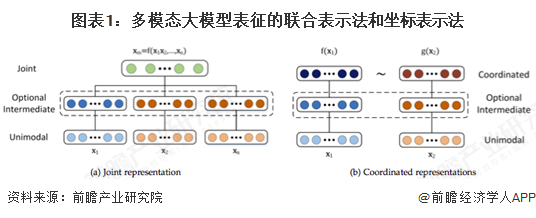
Core Insights - The article discusses the core technologies of multimodal large models, focusing on representation learning, translation, alignment, fusion, and collaborative learning [1][2][7][11][14]. Representation Learning - Representation learning is fundamental for multimodal tasks, addressing challenges such as combining heterogeneous data and handling varying noise levels across different modalities [1]. - Prior to the advent of Transformers, different modalities required distinct representation learning models, such as CNNs for computer vision (CV) and LSTMs for natural language processing (NLP) [1]. - The emergence of Transformers has enabled the unification of multiple modalities and cross-modal tasks, leading to a surge in multimodal pre-training models post-2019 [1]. Translation - Cross-modal translation aims to map source modalities to target modalities, such as generating descriptive sentences from images or vice versa [2]. - The use of syntactic templates allows for structured predictions, where specific words are filled in based on detected attributes [2]. - Encoder-decoder architectures are employed to encode source modality data into latent features, which are then decoded to generate the target modality [2]. Alignment - Alignment is crucial in multimodal learning, focusing on establishing correspondences between different data modalities to enhance understanding of complex scenarios [7]. - Explicit alignment involves categorizing instances with multiple components and measuring similarity, utilizing both unsupervised and supervised methods [7][8]. - Implicit alignment leverages latent representations for tasks without strict alignment, improving performance in applications like visual question answering (VQA) and machine translation [8]. Fusion - Fusion combines multimodal data or features for unified analysis and decision-making, enhancing task performance by integrating information from various modalities [11]. - Early fusion merges features at the feature level, while late fusion combines outputs at the decision level, with hybrid fusion incorporating both approaches [11][12]. - The choice of fusion method depends on the task and data, with neural networks becoming a popular approach for multimodal fusion [12]. Collaborative Learning - Collaborative learning utilizes data from one modality to enhance the model of another modality, categorized into parallel, non-parallel, and hybrid methods [14][15]. - Parallel learning requires direct associations between observations from different modalities, while non-parallel learning relies on overlapping categories [15]. - Hybrid methods connect modalities through shared datasets, allowing one modality to influence the training of another, applicable across various tasks [15].




AI医疗进入精准化“深水区” :OpenAI医疗评估基准落地、大模型加速变革|AI医疗浪潮㉑
2 1 Shi Ji Jing Ji Bao Dao· 2025-05-17 05:05
Core Insights - OpenAI has launched HealthBench, an open-source benchmark for evaluating the performance and safety of large language models in the healthcare sector, which has sparked widespread discussion in the industry [1][3] - The benchmark was developed with the participation of 262 practicing doctors from 60 countries and integrates 5,000 real medical dialogue data, utilizing 48,562 unique scoring criteria created by doctors for meaningful open assessments [1][3] - The introduction of HealthBench is expected to enhance the scientific and comprehensive evaluation of AI medical models, accelerating the application of AI technology in healthcare and providing new development opportunities for related companies [1][3] Group 1: HealthBench Overview - HealthBench consists of 7 themes and 5 evaluation dimensions, focusing on areas such as emergency referrals and professional communication, with dimensions including accuracy and contextual understanding [3][4] - OpenAI has also introduced two special versions of HealthBench: HealthBench Consensus, which includes 34 critical evaluation dimensions verified by doctors, and HealthBench Hard, which presents more challenging assessment scenarios [4] - The credibility of HealthBench has been supported by a meta-evaluation comparing model scores with human doctor scores, showing high consistency in 6 out of 7 evaluation areas [4] Group 2: Trends in AI Healthcare Applications - The AI healthcare market is projected to grow at an annual rate of 43% from 2024 to 2032, potentially reaching a market size of $491 billion [6] - AI is expected to enhance healthcare accessibility and efficiency, addressing issues like personnel shortages in hospitals and improving diagnostic accuracy [6] - The evolution of AI in healthcare has transitioned from rule-driven to data-driven approaches, now entering a multi-modal integration phase, allowing for better understanding and modeling of diverse medical data [6][7] Group 3: Future Directions in AI Models - The focus of competition among large models has shifted from merely increasing parameter size to optimizing model efficiency and performance under limited computational resources [7] - Key trends in AI applications within the pharmaceutical industry include the emergence of models as products, local and edge deployment, and rapid expansion of AI applications in research and development [7][8] - The pharmaceutical industry is expected to see a rise in specialized models tailored for specific scenarios, enhancing the adaptability and effectiveness of AI solutions [7][8]
行业深度报告:AI+医疗:大模型重塑医疗生态
ZHESHANG SECURITIES· 2025-03-12 01:02
Investment Rating - The report maintains a "Positive" investment rating for the AI+Healthcare industry [6] Core Insights - The reasoning and multimodal capabilities of large models are continuously upgrading, and application costs are decreasing, driving healthcare institutions to accelerate the integration of AI technology. The global generative AI market in healthcare is expected to reach $17.2 billion by 2031, with a compound annual growth rate (CAGR) of 32.60% from 2023 to 2031 [1][18] - The current phase of AI in healthcare has transitioned into a multimodal integration stage, addressing issues such as information silos and data fragmentation that existed in earlier AI applications. Large models utilize a "pre-training + fine-tuning" architecture to process multimodal healthcare data [1][12] - DeepSeek, a domestic open-source large model, is characterized by low cost and high performance, accelerating its penetration into the healthcare industry. It can quickly analyze various types of medical data, aiding doctors in complex case management [2][13] - Major international players like NVIDIA and Microsoft are actively entering the healthcare sector, leveraging their core capabilities through acquisitions and ecosystem empowerment. Companies like Tempus AI and HIMS have successfully commercialized AI solutions, showing significant revenue growth [3][42] Summary by Sections 1. Large Model Technology Upgrade Driving AI in Healthcare - The evolution of AI technology in healthcare has progressed through four key stages: rule-driven systems, traditional machine learning, deep learning with single-modal models, and the current multimodal integration era [11] - The multimodal capabilities of large models enable comprehensive data processing, enhancing clinical decision support, drug development, and telemedicine applications [12][18] 2. International Landscape: Major Players and Innovations - NVIDIA and Microsoft are leading the charge in AI healthcare, with NVIDIA focusing on hardware and ecosystem investments, while Microsoft integrates AI tools into its cloud services [22][28] - Tempus AI has built the largest multimodal database, supporting personalized treatment plans and achieving significant revenue growth [35][37] - HIMS has seen rapid growth in subscription users and revenue, driven by its AI-powered healthcare solutions [42][43] 3. Domestic AI+Healthcare Company Overview - Domestic companies in the AI healthcare sector can be categorized into three types: general large model providers, data service companies, and traditional medical IT companies transitioning to AI [4][47] - iFlytek's Starfire medical model has shown superior performance in diagnostic recommendations and health consultations compared to other models [48][50] - Yunzhisheng is leveraging its self-developed "Shanhai" large model to provide specialized medical information support [54]
从百度的两季创业大赛,看大模型应用风向变化
晚点LatePost· 2024-09-26 09:11
李彦宏认为,智能体相当于 PC 时代的网站和自媒体时代的账号。 ChatGPT 催生大模型热潮将近两年,大模型的能力持续提升,调用价格持续下降,基于大模型开发 应用的探索也进入新阶段。 9 月 25 日,第二季百度 "文心杯" 创业大赛结束,8 个团队被选为优胜者,他们将得到百度的数千万 元和资源投资。百度称,未来还会在技术、产品、发展战略、资本合作等方面长期支持优胜团队。 百度 CEO 李彦宏在颁奖致辞中说,现在大模型最初那种兴奋劲儿逐渐过了,许多创业者可能会失 落、迷茫、甚至怀疑未来。"因为人们总是高估技术的短期价值,却低估技术的长期价值。" 李彦宏认为大模型是一次颠覆式的技术革命,长期前景非常乐观,"悲观者永远正确,而未来却是由 乐观者创造的"。他说,百度欢迎更多的创业者和开发者加入,一起投身到这场 AI 革命中。 在决出优胜者之外,这场举办两年的创业大赛,还提供了一个少见的窗口,可以观察国内大模型应 用探索的风向变化: 基于大模型开发应用的门槛降低。参赛团队从去年近 1000 支增长到 1600 支,30% 的团队没 有专业程序员。 应用场景更多元,但开发模式开始聚焦。去年 约 30% 的项目在通用办 ...