美伊冲突

Search documents
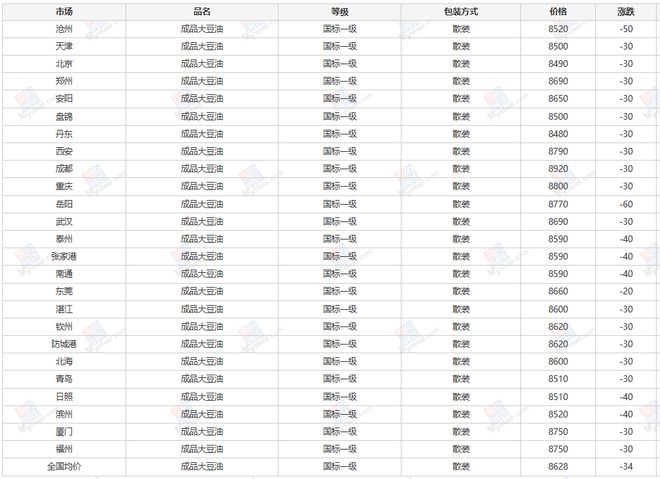
Mhy20260226油脂晚评:05合约Y-P价差进一步修复,逼近-500
Xin Lang Cai Jing· 2026-02-26 11:00
Market Focus - The Southern Peninsula Palm Oil Millers Association (SPPOMA) reported that Malaysia's palm oil yield from February 1-25, 2026, decreased by 16.78% month-on-month, while the extraction rate increased by 0.1%, and production fell by 16.25% compared to the same period last month [1] - According to independent inspection agency AmSpec, Malaysia's palm oil exports from February 1-25 amounted to 922,649 tons, a decrease of 16.05% from 1,099,033 tons in the same period last month [1] - Shipping survey agency ITS reported that Malaysia's palm oil exports for the same period were 1,022,673 tons, down 12.1% from 1,163,634 tons last month [1] - The Malaysian Palm Oil Association (MPOA) estimated a 12.29% decrease in palm oil production from February 1-20, with reductions of 10.74% in Peninsular Malaysia, 15.23% in Sabah, 11.20% in Sarawak, and 14.19% in Borneo [1] - The Malaysian Palm Oil Council (MPOC) noted that despite challenges such as the delay of Indonesia's B50 biodiesel mandate and high Malaysian inventories, palm oil prices remained above 4,000 ringgit per ton throughout January, indicating a potential short-term structural bottom for current prices [1] Daily Oilseed Processing Data - In January 2026, Canada's canola processing volume was 1,053,420 tons, a decrease of 2.17% from the previous month but an increase of 4.24% year-on-year [2] OPEC+ Meeting Insights - OPEC+ representatives indicated that the organization is likely to agree on a slight production increase during the upcoming meeting to review April policies, with a potential increase of 137,000 barrels per day being considered for April [2] Market Review - The strong rise in U.S. soybeans, reaching a three-month high, provided significant support for soybean oil costs, while palm oil showed a weaker trend due to poor export data reflecting seasonal demand decline post-Ramadan [5] - As a result, the price spread between soybean oil and palm oil continued to adjust, with the main May contract spread approaching -500 yuan per ton at the close [5]

建信期货集运指数日报-20260225
Jian Xin Qi Huo· 2026-02-25 01:54
Report Information - Report Name: "集运指数日报" [1] - Date: February 25, 2026 [2] - Research Team: Macro Financial Team [4] - Researchers: He Zhuoqiao, Huang Wenxin, Nie Jiayi [3] 1. Report Industry Investment Rating - No information provided 2. Core Viewpoints - EC futures continued their pre - Spring Festival strength and rose across the board, mainly due to the spill - over effect of the US - Iran conflict boosting oil freight prices. However, from the supply - demand fundamentals, it is still the off - season after the Spring Festival. After the IEEPA tariff was ruled invalid, Trump announced a 10% tariff and a further increase to 15% under Trade Law 122, but according to the Kuala Lumpur Consensus, the tariffs China faces may still decline. So, it's difficult to trigger exporters' rush shipments in the short term. The demand for photovoltaic rush exports is limited, and the shipping capacity supply in March is at a high level in the same period of history. The resumption of navigation in the Red Sea will further increase the shipping capacity supply pressure. Although leading shipping companies announced price increases in early February, the current price increase in the off - season may be more for price stabilization and difficult to be actually implemented. Currently, with strong sentiment, low index levels, and European port congestion, it may continue to show a relatively strong performance in the short term. Wait for opportunities to short - allocate the off - season contracts of 04 and 06 [7]. 3. Summary by Directory 3.1行情回顾与操作建议 - **Market Review**: EC futures continued their pre - Spring Festival strength and rose across the board, affected by the US - Iran conflict's impact on oil freight prices. But the off - season fundamentals, tariff policies, limited export demand, high shipping capacity supply, and the Red Sea resumption all affect the market [7]. - **Operation Suggestion**: Wait for opportunities to short - allocate the off - season contracts of 04 and 06 [7]. 3.2行业要闻 - The US Supreme Court ruled that the tariffs imposed by the US government under the IEEPA are illegal. The Chinese Ministry of Commerce is evaluating the impact and urges the US to cancel the tariffs. The US CBP will stop collecting IEEPA - based tariffs from February 24. The European Parliament's negotiation team suspended the approval work of the EU - US trade agreement and postponed the vote [8]. - Trump warned that countries using the Supreme Court ruling to "play tricks" will face higher tariffs. He also said reports of a possible war with Iran are false [9]. - Israeli officials announced measures to strengthen control over the West Bank, which was strongly condemned by 19 countries and relevant organizations [9]. - The Gemini Alliance announced the resumption of the ME11/IMX route through the Red Sea - Suez Canal in February 2026. Maersk reported that bad weather affected ports and shipping routes in Western and South - Western Europe [9]. 3.3数据概览 3.3.1集运现货价格 - The Shanghai Export Container Settlement Freight Index for the European route decreased from 1607.27 on February 16 to 1573.51 on February 23, a decrease of 2.1%. The index for the US - West route decreased from 1131.74 to 1112.01, a decrease of 1.7% [11]. 3.3.2集运指数(欧线)期货行情 - The trading data of EC2604 - EC2612 contracts on February 24 are provided, including pre - settlement price, opening price, closing price, settlement price, price change, price change rate, trading volume, open interest, and change in open interest [6]. 3.3.3航运相关数据走势图 - Multiple charts show shipping - related data, including European container ship capacity, global container ship orders, Shanghai - Europe basic port freight rates, and Shanghai - Rotterdam spot freight rates [16][18]
黎巴嫩外长:真主党若卷入美伊对抗,黎或面临以军打击
Xin Lang Cai Jing· 2026-02-25 00:30
Core Viewpoint - Lebanon's Foreign Minister, Yusuf al-Laji, announced that Lebanon has received warnings regarding potential Israeli strikes on critical infrastructure if Hezbollah becomes involved in the escalating conflict between the U.S. and Iran [1] Group 1 - The Lebanese government is actively working through diplomatic and political efforts to prevent the country from being drawn into regional warfare [1] - Al-Laji stated that if Hezbollah engages in a broader conflict, Israel may target Lebanon's infrastructure [1]
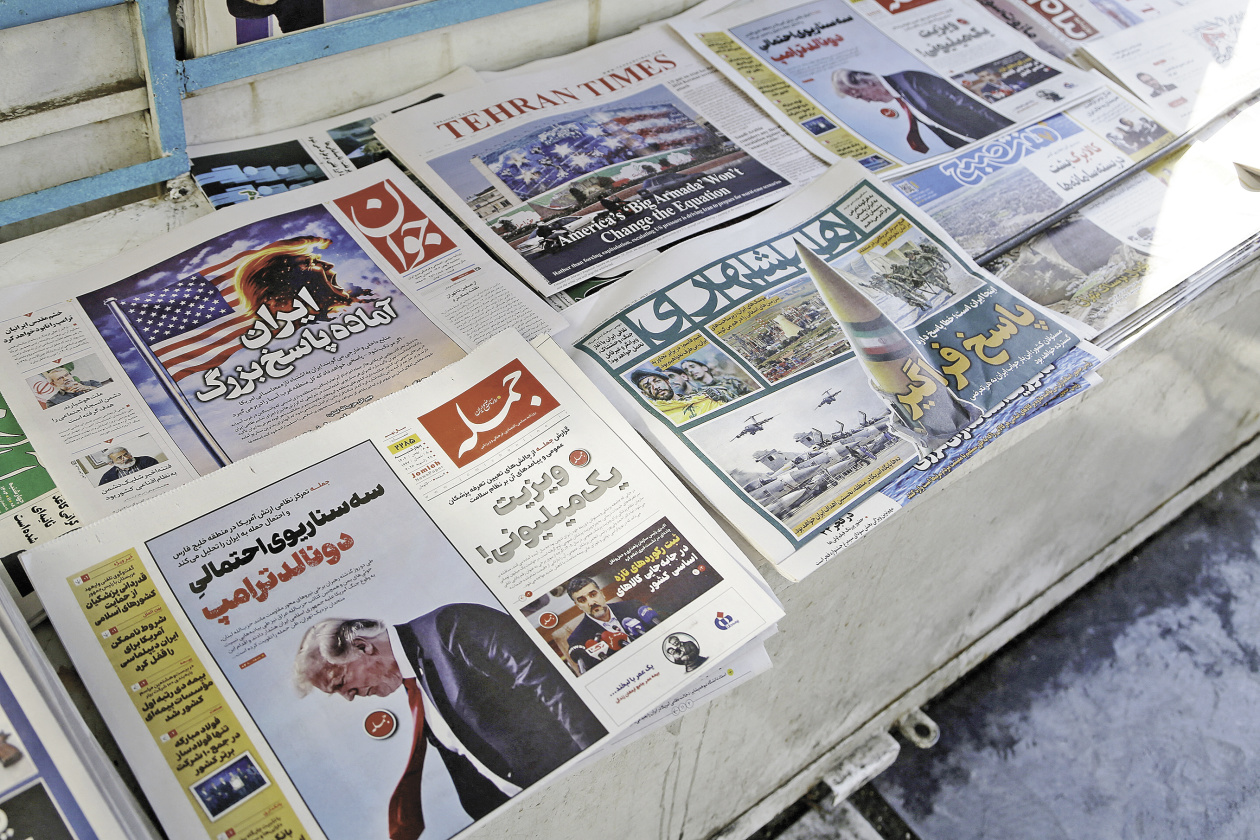
美国若对伊朗动武将招致多重报复
Xin Lang Cai Jing· 2026-02-20 16:32
Core Viewpoint - The article discusses President Trump's ultimatum to Iran, stating that Iran has 10-15 days to reach an agreement with the U.S. It also mentions the possibility of a limited military strike by the U.S. against Iran, which could lead to unpredictable and destructive consequences [1]. Group 1 - President Trump has set a "deadline" for Iran to negotiate with the U.S. within 10-15 days [1] - U.S. media reports suggest that a limited military strike against Iran could occur within days [1] - The potential military action could trigger a series of unpredictable and highly destructive consequences [1]
特朗普称正考虑对伊朗实施有限军事打击
Xin Lang Cai Jing· 2026-02-20 16:20
Group 1 - The U.S. President Donald Trump is considering a limited military strike against Iran to pressure its nuclear program [3][11] - Trump indicated that a decision on whether to strike Iran will be made within the next 10 to 15 days, while still leaving open the possibility of reaching an agreement with Tehran regarding its nuclear program [4][11] - The U.S. is significantly increasing its military presence in the Middle East, with the deployment of the USS Abraham Lincoln aircraft carrier and the USS Gerald R. Ford heading to the region [5][11] Group 2 - Oil prices have risen over 5% this week but stabilized on Friday, as traders have factored in some risk of potential U.S. military action [9][11] - As of 10:39 AM Eastern Time, U.S. crude oil prices fell by 28 cents to $66.15 per barrel, while global benchmark Brent crude prices decreased by 23 cents to $71.43 per barrel [5][11] - The primary concern in the oil market is that conflict between the U.S. and Iran could lead to a prolonged disruption of oil transport through the Strait of Hormuz, a critical chokepoint for global oil trade [6][11] Group 3 - According to consulting firm Kpler, over 14 million barrels of oil and condensate pass through the Strait of Hormuz daily, accounting for one-third of global seaborne oil exports [12] - Approximately three-quarters of the oil transported through the Strait is destined for China, India, Japan, and South Korea [12]
特朗普召集顾问开会,“美伊开战迫在眉睫,最快周六”
Xin Lang Cai Jing· 2026-02-19 04:30
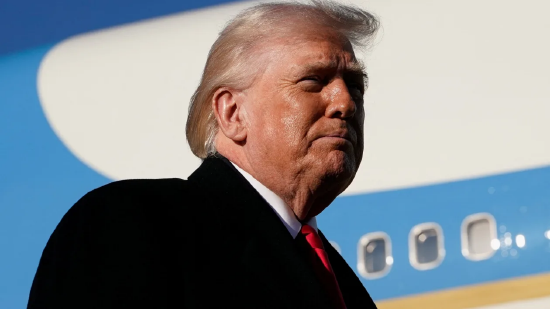
Group 1 - The core viewpoint of the articles indicates that tensions between the U.S. and Iran are escalating, with the potential for a large-scale military conflict becoming increasingly likely [1][2][6] - U.S. military officials have reportedly prepared for possible strikes against Iran, with actions potentially occurring as soon as February 21, although the timeline may be delayed [2][5] - The situation is compounded by Iran's military preparations, including the deployment of forces and fortification of nuclear facilities, reflecting a belief that their regime is under threat [2][11] Group 2 - The U.S. has deployed significant military assets to the region, including two aircraft carriers and hundreds of fighter jets, indicating readiness for potential military action [7][8] - Reports suggest that the conflict, if it occurs, could be more extensive than previous engagements, with implications for both regional stability and U.S. domestic politics [6][7] - Iran's military capabilities include approximately 2,000 medium-range ballistic missiles and various other weapon systems, which could threaten U.S. interests in the region [11][9] Group 3 - Diplomatic efforts are ongoing, with U.S. officials indicating that Iran must present a comprehensive plan to address nuclear concerns by the end of the month [5][13] - The atmosphere of negotiations has reportedly improved, with both sides discussing guiding principles for a potential agreement, although significant differences remain [13][14] - The U.S. is determined to prevent Iran from acquiring nuclear weapons, emphasizing the seriousness of the situation [14]
外媒:美军正做准备,一旦特朗普下令攻击伊朗,行动可能持续数周
Xin Lang Cai Jing· 2026-02-14 03:00
Group 1 - The U.S. military is preparing for potential military actions against Iran, which could lead to unprecedented conflict between the two nations [1][3] - Current military planning is more complex, with potential strikes targeting Iran's nuclear infrastructure, national institutions, and security facilities [3] - Experts warn that attacking Iran poses higher risks for U.S. forces due to Iran's strong missile arsenal, and retaliatory strikes from Iran could escalate regional conflicts [3][4] Group 2 - The U.S. has been increasing pressure on Iran by deploying multiple naval assets, including the USS Abraham Lincoln aircraft carrier, to the Middle East [3] - Iran has stated that it will retaliate against U.S. and Israeli targets in the region if attacked, with approximately 40,000 U.S. troops stationed in the Middle East [4] - Both the U.S. and Iran have expressed a desire to continue negotiations regarding nuclear issues, although the war alert remains active [4]
报道称美军正做准备 一旦特朗普下令攻击伊朗 行动可能持续数周
Xin Lang Cai Jing· 2026-02-14 01:55
Core Viewpoint - The U.S. military is preparing for potential military action against Iran, which could last for several weeks if ordered by President Trump, indicating a risk of unprecedented conflict between the two nations [1] Group 1: Military Preparedness - U.S. officials have disclosed that military planning is more complex this time, with potential strikes not only targeting Iran's nuclear infrastructure but also its national institutions and security facilities [1] - The expectation of Iranian retaliation is acknowledged, suggesting a cycle of strikes and counterstrikes could ensue [1] Group 2: Diplomatic Implications - The information released by U.S. officials poses a higher risk to ongoing diplomatic efforts between the U.S. and Iran [1]
美联储降息预期减弱 市场观望情绪浓厚
Xin Lang Cai Jing· 2026-02-02 14:52
Core Viewpoint - Domestic cotton prices are supported by a warm macro atmosphere and quick spot sales, while international cotton prices are under pressure due to geopolitical tensions and a decline in U.S. cotton export contracts, leading to a continued weak oscillation pattern [1][2]. Price Review - Domestic cotton supply is abundant, with spot sales increasing, resulting in a slight rise in cotton prices. The main contract price for Zhengzhou cotton futures averaged 14,726 CNY/ton, up 130 CNY/ton (0.9%) from the previous week. The national cotton price B index averaged 15,947 CNY/ton, up 121 CNY/ton (0.8%) [2]. - Internationally, geopolitical tensions have led to a decline in market sentiment, with the main contract price for New York cotton futures averaging 63.44 cents/pound, down 0.64 cents/pound (1.0%) from the previous week. The international cotton index (M) averaged 72.36 cents/pound, with an import cost of 12,394 CNY/ton, down 26 CNY/ton (0.2%) [2]. - The price difference between domestic and international cotton has widened to 3,553 CNY/ton, an increase of 147 CNY/ton from the previous week [2]. Textile Market - Yarn prices continue to rise, with domestic yarn prices stronger than imported yarn. The average price for domestic C32S yarn is 21,376 CNY/ton, up 70 CNY/ton (0.3%), while the average price for imported C32S yarn is 20,980 CNY/ton, up 48 CNY/ton (0.2%) [3]. - Polyester staple fiber prices increased by 195 CNY/ton to 6,696 CNY/ton [3]. Market Outlook - The macro market shows weak expectations for short-term interest rate cuts by the Federal Reserve, with ongoing risks of a U.S. government shutdown and escalating U.S.-Iran tensions affecting market sentiment. The Fed has maintained the benchmark interest rate at 3.50%-3.75% since January, reducing expectations for immediate rate cuts [4]. - Domestic policies aimed at boosting service consumption and improving industrial profits are expected to support economic expectations. The State Council has issued a plan to stimulate service consumption, and industrial profits have shown positive growth for the first time in four years [4]. - The cotton market is experiencing tightening international supply and resilient consumption demand. Brazilian cotton exports have significantly slowed, and Australian cotton production is expected to decline due to irrigation water shortages. U.S. cotton contract signings have dropped by 51% week-on-week [5]. - Domestic cotton sales are stable, with a sales rate of 64.5%, up 22.9 percentage points year-on-year. However, as the Spring Festival approaches, market activity is expected to slow down, with companies focusing on recovering payments and clearing inventory [5][6]. Summary - The current cotton market is characterized by domestic fundamentals supporting prices while international macro factors exert pressure. Despite domestic sales and yarn price support, market drivers are expected to weaken as production winds down ahead of the Spring Festival. Short-term cotton prices are anticipated to oscillate within a range, with attention needed on post-holiday textile enterprise resumption, global trade policies, and U.S. planting intentions [6].
武装部队严阵以待,随时准备“扣动扳机”,伊朗强硬回应美“最后通牒”
Huan Qiu Shi Bao· 2026-01-29 23:03
Group 1 - The core message of the articles revolves around escalating tensions between the United States and Iran, with President Trump issuing a "last ultimatum" to Iran, warning of potential military action if negotiations do not occur [1][2] - Trump emphasizes the urgency for Iran to negotiate a mutually beneficial agreement, threatening more severe actions than previous military strikes if Iran does not comply [2] - Iran's Foreign Minister, Zarif, asserts that the Iranian armed forces are prepared to respond forcefully to any aggression, indicating a readiness for both negotiation and conflict [1][2] Group 2 - The deployment of a significant U.S. naval presence in the Middle East, including the USS Lincoln aircraft carrier and at least 10 other ships, underscores the seriousness of the U.S. military posture in the region [2] - Iranian officials, including Speaker Ghalibaf, express skepticism about U.S. intentions, suggesting that while Iran is open to dialogue, past experiences indicate that U.S. actions are more about coercion than diplomacy [2][3] - The potential for U.S. regime change in Iran is discussed, with U.S. officials acknowledging the complexity of such an endeavor compared to previous interventions in Venezuela [4][6]