
被动投资

Search documents
大空头Burry警告美股将重演“2000年”熊市:资本开支逼近顶峰,两年足够AI泡沫破灭!
美股IPO· 2025-12-05 16:03
Group 1 - Michael Burry warns that the U.S. stock market may face a prolonged bear market similar to 2000 due to the dominance of passive investing, which now accounts for over 50% of the market [2][22][23] - Burry believes that the current AI investment craze resembles the "data transmission bubble" of 2000, indicating a disconnect between capital expenditure and stock market peaks [2][7][34] - He has a bearish outlook on Palantir, predicting a significant drop in its stock price over the next two years due to its high valuation and poor financial health, with a current price of $200 per share and an estimated fair value of $30 or lower [5][26][30] Group 2 - Burry identifies a critical threat to Google's core search business from AI, as the costs associated with AI search are significantly higher than traditional search, which has historically been very low-cost [2][38][40] - He argues that the majority of users will access AI services for free, and the willingness to pay for large models will be minimal, leading to a highly commoditized market [40][41] - Burry criticizes the Federal Reserve, stating it has not contributed positively over its century-long existence and suggests that its functions should be transferred to the Treasury [3][44]


种下ETF“第一颗种子” 探索被动投资特色化之路——访兴证全球沪深300质量ETF基金拟任基金经理田大伟
Sou Hu Cai Jing· 2025-12-01 05:00
Core Insights - The article discusses the rapid growth of the ETF market in China, with the total market size exceeding 5 trillion yuan and the number of stock ETFs surpassing 1,000 [1] - The focus of the new ETF launched by Xingzheng Global is on "quality," tracking the CSI 300 Quality Index, which selects 50 stocks based on profitability and stability [1][2] - The fund manager emphasizes the long-term value creation potential of the CSI 300 Quality Index for investors [1] Market Growth and Opportunities - The ETF market has seen rapid growth, with each 1 trillion yuan milestone being reached in increasingly shorter timeframes, indicating significant opportunities for investors [1] - The CSI 300 Total Return Index is expected to yield positive long-term returns, despite common investor behaviors leading to losses [1] Performance Metrics - The CSI 300 Quality Index has outperformed the CSI 300 Index by 40 percentage points over the past decade, with a return of 72.19% and an annualized return of 5.75% [2] - The annualized volatility of the CSI 300 Quality Index is 18.30%, significantly lower than the CSI 300's 24.67%, showcasing its stability [2] Differentiation Strategy - Xingzheng Global aims to differentiate itself in the ETF market by focusing on quality factors and enhancing its passive investment strategies [3] - The choice of quality factors is based on profitability metrics like ROE (Return on Equity), which is considered a key indicator of a company's financial health [3] Composition and Market Position - As of September 30, 2025, the top ten holdings of the CSI 300 Quality Index account for 48.57%, featuring leading companies with strong growth potential [4] - The index is slightly biased towards large-cap stocks, with over 60% of its constituents having a market capitalization exceeding 100 billion yuan [4] Economic Context - The article notes that quality factors tend to outperform during the early stages of economic recovery, suggesting a favorable environment for the new ETF [5] - The fund manager expresses a long-term vision for the ETF, aiming to provide sustainable returns for investors [5]
兴证全球基金田大伟:种下ETF“第一颗种子”探索被动投资特色化之路
Shang Hai Zheng Quan Bao· 2025-11-30 14:10
Core Insights - The article discusses the growth and differentiation strategies in the ETF market, highlighting the launch of the Xingzheng Global CSI 300 Quality ETF, which focuses on quality stocks based on profitability metrics [1][2]. ETF Market Growth - The total market size of ETFs has surpassed 5 trillion yuan, with the number of stock ETFs exceeding 1,000, indicating a thriving market [1]. - The rapid growth of the ETF market is noted, with each trillion yuan milestone being reached in shorter time frames, suggesting ample opportunities for investors [2]. Investment Strategy - The Xingzheng Global CSI 300 Quality ETF aims to provide long-term value by focusing on high-quality stocks selected based on profitability, stability, and quality [1][2]. - The ETF is designed to minimize tracking deviation and error, aligning closely with the CSI 300 Quality Index [2]. Performance Metrics - The CSI 300 Quality Index has shown significant long-term outperformance, with a 72.19% increase over the past decade and an annualized return of 5.75%, compared to the CSI 300 Index's 31.31% increase and 2.84% annualized return [3]. - The annualized volatility of the CSI 300 Quality Index is 18.3%, which is lower than the CSI 300's 24.67%, indicating a more stable investment option [3]. Differentiation Strategy - The ETF represents an extension of the company's "boutique strategy," focusing on differentiation to build competitive advantages in the market [4]. - The company plans to adopt a dual approach in passive investment, combining broad-based products with enhanced index products to leverage its active equity investment strengths [4]. Quality Factor Focus - The choice of the quality factor for the ETF is based on the profitability of constituent stocks, particularly the Return on Equity (ROE) metric, which is emphasized as a key indicator of a company's profitability [4]. - The top ten constituents of the CSI 300 Quality Index account for 48.57% of the index, featuring leading companies with strong growth potential [5]. Market Positioning - There are relatively few ETF products that focus on the CSI 300 Quality factor, providing a unique investment opportunity with long-term value and scarcity [6]. - The current economic recovery phase is seen as a favorable time for quality factors to outperform, as historical data suggests core assets tend to show strength during early recovery periods [6].
“愚蠢资金”减少,主动策略是否还有机会?
雪球· 2025-11-29 04:09
Core Viewpoint - The article discusses the ongoing debate between active and passive investment strategies, highlighting the increasing dominance of passive funds in the market and the challenges faced by active funds in achieving excess returns as market conditions evolve [5][6][30]. Group 1: Market Trends - As of Q3 this year, the scale of passive equity funds reached 4.54 trillion yuan, significantly surpassing active equity funds at 3.86 trillion yuan, with the gap continuing to widen [5]. - The reduction of irrational participants in the market is making it increasingly difficult for active investors to achieve excess returns [7][31]. Group 2: Challenges for Active Investment - The transparency of information has improved, making it easier for investors to access financial data and company dynamics, which reduces the opportunities for unique insights [11]. - The growing proportion of passive funds means that more investors are opting for rule-based index allocations, leading to fewer mispriced opportunities in the market [12]. - The professional level of market participants has increased, making it harder for active funds to rely on others' mistakes for profit [13]. Group 3: Competitive Landscape for Active Funds - Active investment faces intensified competition, with many funds clustering around the same sectors and leading stocks, resulting in a strong herd effect [20]. - The alignment of assessment cycles among institutions leads to a lack of long-term investment practices, causing a homogenization of strategies [18]. - The increasing scale of public funds limits operational flexibility, making it challenging to implement differentiated strategies [19]. Group 4: Opportunities in Active Investment - Despite the challenges, approximately 98% of active equity funds achieved positive returns in Q3, with a median return rate of 22.80%, indicating that opportunities still exist [22]. - Investors considering active funds should focus on managers with stable styles and transparent holdings to avoid excessive volatility [23][24]. - Active funds typically charge management fees of 1%-1.5%, and managers need to generate excess returns that exceed these costs to be worthwhile [25][26]. - Successful active managers often maintain a clear investment philosophy and focus on risk control, which can provide a competitive edge [27]. Group 5: Long-Term Investment Perspective - The trend towards passive investment is expected to continue, but this does not mean that active funds have lost all value; they may still be suitable for investors with a long-term perspective and clear investment frameworks [30][32]. - The core of investing for most ordinary investors should be about managing emotions rather than trying to beat the market, with index funds providing a cost-effective way to achieve average market returns [32].

Charlie Munger had this to say of get-rich gurus. Here's his advice to build wealth
Yahoo Finance· 2025-11-26 10:09
Core Insights - The article discusses the importance of finding trustworthy financial advisors and highlights the prevalence of misleading financial advice in the market, particularly from social media influencers [2][3]. Group 1: Financial Advisory Services - Advisor.com offers a free service to help individuals find a financial advisor tailored to their needs, ensuring they receive trustworthy guidance [1]. - A 2024 survey by the Consumer Finance Institute revealed that 28.5% of individuals seeking financial advice turned to social media, indicating a significant reliance on potentially unreliable sources [2]. Group 2: Investment Strategies - Warren Buffett and Charlie Munger advocate for passive investing strategies, arguing that most investors struggle to outperform the market, making index funds a compelling choice [5][6]. - The S&P 500 has delivered an average annual return of over 10% since its inception, reinforcing the benefits of passive investment strategies [6]. Group 3: Alternative Investment Opportunities - Real estate investing is highlighted as a solid portfolio hedge, with platforms like Arrived allowing individuals to invest in rental properties without the responsibilities of property management [12][13]. - Fine art has been noted as an investment that consistently outperforms the stock market, with some contemporary art delivering an annual return of 11.5% from 1995 to 2023, compared to the S&P 500's 9.6% during the same period [16].
易方达基金陈逸来:破解“资产荒”,被动投资有三大优势
2 1 Shi Ji Jing Ji Bao Dao· 2025-11-21 03:49
陈逸来认为,一是成本优势。ETF等指数产品的运作成本更低,这在低利率环境下至关重要。成本端的节省成为低收益环境中 增厚回报的关键因素。 二是提供相对具有确定性的β机会,目前市场上的ETF覆盖了绝大多数行业及主题赛道,无论是机构投资者还是个人投资者,都 能在丰富的ETF标的中找到适配需求的选择,拓宽资产配置边界。 21世纪经济报道记者 庞成 深圳报道 当前,全球已进入降息大周期,"资产荒"成为资管行业热议的核心问题,不少资管机构正在从被动投资策略中寻找破局之道。 11月20日,以"立足湾区投资全球"为主题的2025湾区财富大会在深圳会展中心举行。在20日下午举行"市场前瞻:量化策略和被 动投资趋势"主题讨论环节上,易方达基金指数高级研究员陈逸来表示,在低利率环境下,优质高收益资产愈发稀缺。而此时, 被动投资的优势愈发凸显,尤其ETF产品,凭借三大核心特质,成为破解"资产荒"的重要配置方案。 三是天然具备分散化特征,ETF通过跟踪一篮子标的实现投资,天生具有分散风险的属性。在市场波动放大的背景下,这种分 散化配置能帮助投资者平滑收益波动,获取更稳健的投资回报。 2025湾区财富大会由21世纪经济报道、深圳金博会运 ...

券商前三季度科创债承销额同比增长近58%;实控人变更!国盛证券划归江西省国资委 | 券商基金早参
Mei Ri Jing Ji Xin Wen· 2025-11-21 01:25
Group 1 - The core viewpoint of the news highlights a significant increase in the underwriting amount of technology innovation bonds by securities firms, which grew nearly 58% year-on-year, surpassing 700 billion yuan, indicating strong support from the capital market for technological innovation [1] - In the first three quarters of 2025, the underwriting amount for technology innovation bonds reached over 700 billion yuan, reflecting a robust response from securities firms to the financing needs of key sectors in the real economy [1] - The underwriting amount for private enterprise bonds also showed impressive growth, reaching 391.36 billion yuan, a year-on-year increase of 43.46%, further emphasizing the strong performance of these two segments [1] Group 2 - The change in the actual controller of Guosheng Securities to the Jiangxi Provincial State-owned Assets Supervision and Administration Commission marks a strengthening of its state-owned background, potentially providing new momentum for resource integration and business expansion [2][3] - Despite the holding ratio of the controlling shareholder remaining unchanged, the elevation of the actual controller level may enhance market expectations for policy support [3] - The simultaneous reduction plans by the three major shareholders may create short-term market sentiment disturbances, necessitating attention to the pace and purpose of these reductions [3] Group 3 - The total scale of bond ETFs has surged to 710 billion yuan, reflecting a sustained preference among investors for stable assets [4] - The significant expansion of leading products like the Hai Fu Tong Short-term Bond ETF and the Bosera Convertible Bond ETF indicates a growing demand for liquidity and diversified allocation [4] - The rapid growth of bond ETFs is expected to enrich investment tools and support the deepening development of the financial market [4] Group 4 - Vanguard's ETF annual fund inflow is approaching 350 billion USD, breaking the previous record set in 2021, showcasing the deepening trend of passive investment [5][6] - The dominance of ETF giants like Vanguard and BlackRock is solidifying, putting greater competitive pressure on smaller asset management firms [6] - The massive inflow of funds into ETFs may exacerbate liquidity differentiation among index constituent stocks, leading to more pronounced structural market characteristics [6]

浑水创始人布洛克:当前不宜做空美国大型科技股
智通财经网· 2025-11-20 13:47
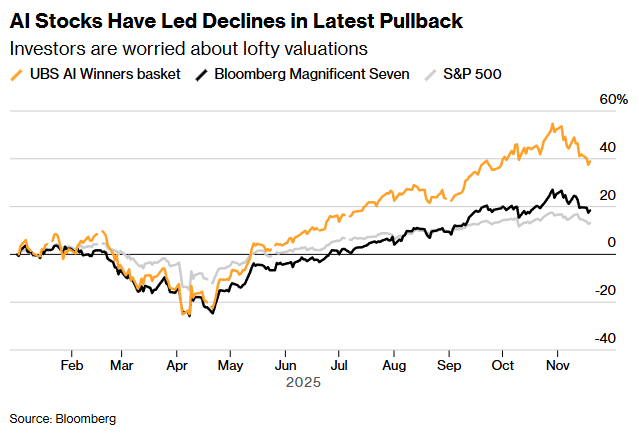
Core Viewpoint - The current market is not suitable for shorting major US tech stocks, despite increasing warnings about a potential AI bubble. The preference is to go long rather than short, especially with leading companies like Nvidia continuing to rise [1][3]. Group 1: Market Sentiment and Performance - Recent fluctuations in the US stock market are attributed to investor concerns over the overheating of tech stocks, with the S&P 500 index down over 3% from its peak in October [3]. - Nvidia's recent earnings report significantly exceeded market expectations, alleviating fears about a potential decline in global AI spending [3]. - Nasdaq 100 index futures rose by 1.5% in pre-market trading following Nvidia's positive earnings announcement [3]. Group 2: Investment Strategies and Opportunities - The founder of Muddy Waters Capital is focusing on smaller companies involved in AI for potential shorting opportunities, particularly those that may be misrepresenting their AI involvement [3]. - The current environment is characterized as a "super cycle" of capital expenditure, with a noted 30% increase in demand for semiconductor ETFs since June [4]. - Major tech companies are expected to generate substantial returns on capital expenditures, with projections of $8 to $10 returns for every $1 invested [4]. Group 3: Analyst Perspectives - Analysts express a bullish outlook on tech stocks, with some predicting that the current market volatility is more about profit-taking rather than fundamental changes in AI or earnings [5]. - Morgan Stanley's chief US equity strategist forecasts a 16% increase in the S&P 500 index over the next year, with a target of 7,800 points by the end of 2026 [5]. - Factors supporting this bullish sentiment include stronger corporate pricing power, efficiency gains from AI, and favorable tax and regulatory conditions [5]. Group 4: Cautionary Views - Some analysts, including those from Goldman Sachs, predict that US stocks will lag behind global markets over the next decade, with an expected annualized return of 6.5% for the S&P 500 [6]. - UBS maintains a bearish stance, citing high valuations and concentration risks in tech stocks, along with concerns about slowing US economic growth impacting the market [6]. - UBS forecasts a significant slowdown in US GDP growth and anticipates a 1% decrease in interest rates by year-end, which could increase market uncertainty [6].

浑水CEO:现在不是做空大型科技股的好时机
Hua Er Jie Jian Wen· 2025-11-20 12:02
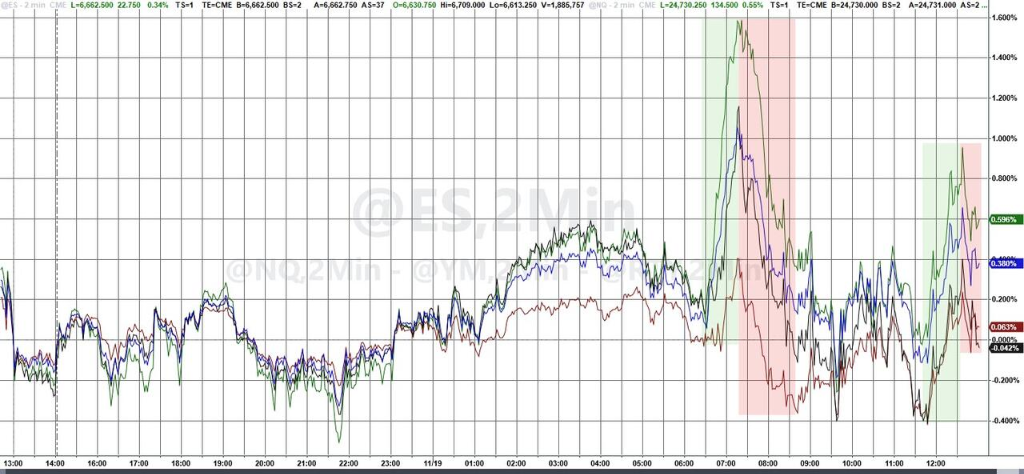
"英伟达变得多昂贵都无关紧要,"Block表示。"所有这些购买标普500指数的基金,只有在出现净资金流出时才会卖出英伟达。只要有资金流入, 无论价格如何他们每天都会买入。" 英伟达三季度业绩大超预期,令虎视眈眈的大空头瞬间噤声。 著名做空机构浑水首席执行官Carson Block表示,尽管市场对人工智能潜在泡沫的警告不断增加,但现在并非做空美国最大科技公司的合适时机。 当地时间周四,他在接受彭博电视采访时明确警告投资者,做空英伟达等大型科技股将面临巨大风险。 Block坦言,在当前市场环境下他"宁愿做多也不愿做空"。这位以激进做空策略闻名的投资者指出,任何试图做空英伟达或其他大型科技股的投资 者"不会在这个行业待太久"。 美股近日因投资者担忧科技股涨势过热而出现动荡,高盛集团和摩根大通的高管均表示市场可能面临进一步下跌。尽管如此,英伟达周三公布的 强劲营收预测和对泡沫论的反驳在一定程度上缓解了市场担忧,英伟达盘后股价应声上涨超6%,科技股代表纳斯达克100期货周四上涨1.5%。 被动投资冲击价格发现机制 Block认为,被动交易的繁荣已经"在很大程度上削弱价格发现功能,破坏了市场机制"。他解释说,购买标普50 ...
322只!ETF发行创新高
Shen Zhen Shang Bao· 2025-11-19 23:24
Group 1 - The ETF market has seen a significant increase in issuance, with a total of 322 ETFs launched this year, representing a 91.83% year-on-year growth and reaching a historical high of 2446.44 billion units issued [1][2] - Stock ETFs dominate the issuance, with 283 stock ETFs accounting for 87.89% of the total, and 1493.95 billion units issued, which is 61.07% of the total issuance [1] - Bond ETFs follow with 32 issued, making up 9.94% of the total, and 914.83 billion units issued, representing 37.39% of the total [1] Group 2 - The "Sci-Tech Innovation" ETFs are particularly popular, with 66 such ETFs issued, comprising 20.5% of the total, and 501.78 billion units issued, also 20.51% of the total [2] - The market is characterized by leading institutions dominating issuance, with 45 public funds involved; E Fund leads with 26 ETFs, followed by China Universal with 25, and Huaxia with 23 [2] - The ETF market has been on a rapid growth trajectory since 2019, with annual issuance exceeding 1000 billion for seven consecutive years, and this year surpassing 2000 billion [2] Group 3 - The central government has shown strong support for ETFs, with a quarterly increase of over 2000 billion in ETF holdings by state-owned entities, reaching approximately 15.5 trillion [3] - ETFs are favored for their risk diversification, low costs, and transparency, leading to better performance in passive index fund issuance compared to active equity funds [3] - Public funds are encouraged to leverage in-depth industry research to create specialized ETFs, blending active management with passive investment strategies [3]