海富通中证短融ETF

Search documents
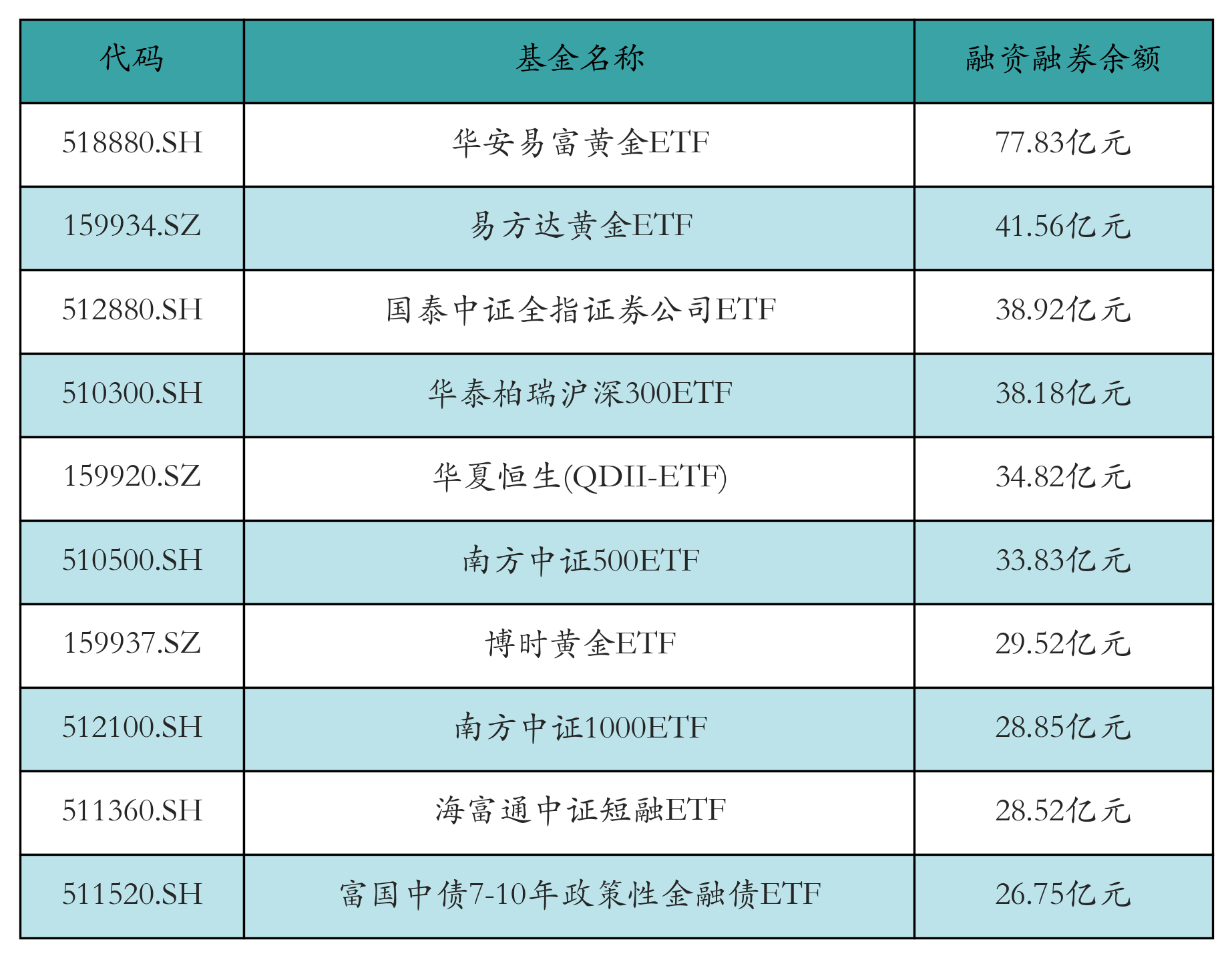
ETF基金资金跟踪:目前周期板块资金热度较高
Dongguan Securities· 2026-03-13 08:52
Market Performance Review - The equity market has shown strong performance this year, with the CSI 2000, CSI 1000, and CSI Dividend indices performing relatively well. The cyclical style leads the market, followed by growth and stability styles. Strong sectors include coal, oil and petrochemicals, non-ferrous metals, building materials, electric equipment, and new energy [3][8] - In the commodity market, the South China crude oil index has performed relatively well this year [11] - The commodity fund index has also shown strong performance, benefiting from the rise in oil and gold prices [11] ETF Fund Capital Tracking - As of now, the cyclical sector (real estate, oil, coal, non-ferrous metals, steel, building materials, chemicals) has a relatively high capital heat. The top 5 ETFs by capital heat are: Huaan Gold ETF, Haifutong CSI Short Bond ETF, Fortune CSI Hong Kong Stock Connect Internet ETF, Huaxia CSI Electric Grid Equipment Theme ETF, and Hang Seng Technology [15][17] - The capital heat is assessed based on net inflows over various time frames, with the cyclical sector showing a capital heat score of 100 [15][16] Future Strategy Outlook - The year 2026 marks the beginning of the "14th Five-Year Plan." Key tasks outlined in the government work report include building a strong domestic market, fostering new growth drivers, and enhancing technological self-reliance [18][19] - The economic recovery transmission chain indicates that in a context of interest rate cuts and weakened dollar credit, financial assets (gold, silver) perform strongly first, followed by industrial metals (copper), and then energy and chemical sectors due to supply constraints and demand recovery [22] - The current market cycle can be compared to the 2014 cycle, which was divided into three phases. The current cycle is characterized by growth leading, followed by a potential catch-up phase for cyclical and consumer styles [24][25]
两市ETF两融余额减少94.83亿元丨ETF融资融券日报
2 1 Shi Ji Jing Ji Bao Dao· 2026-02-24 02:45
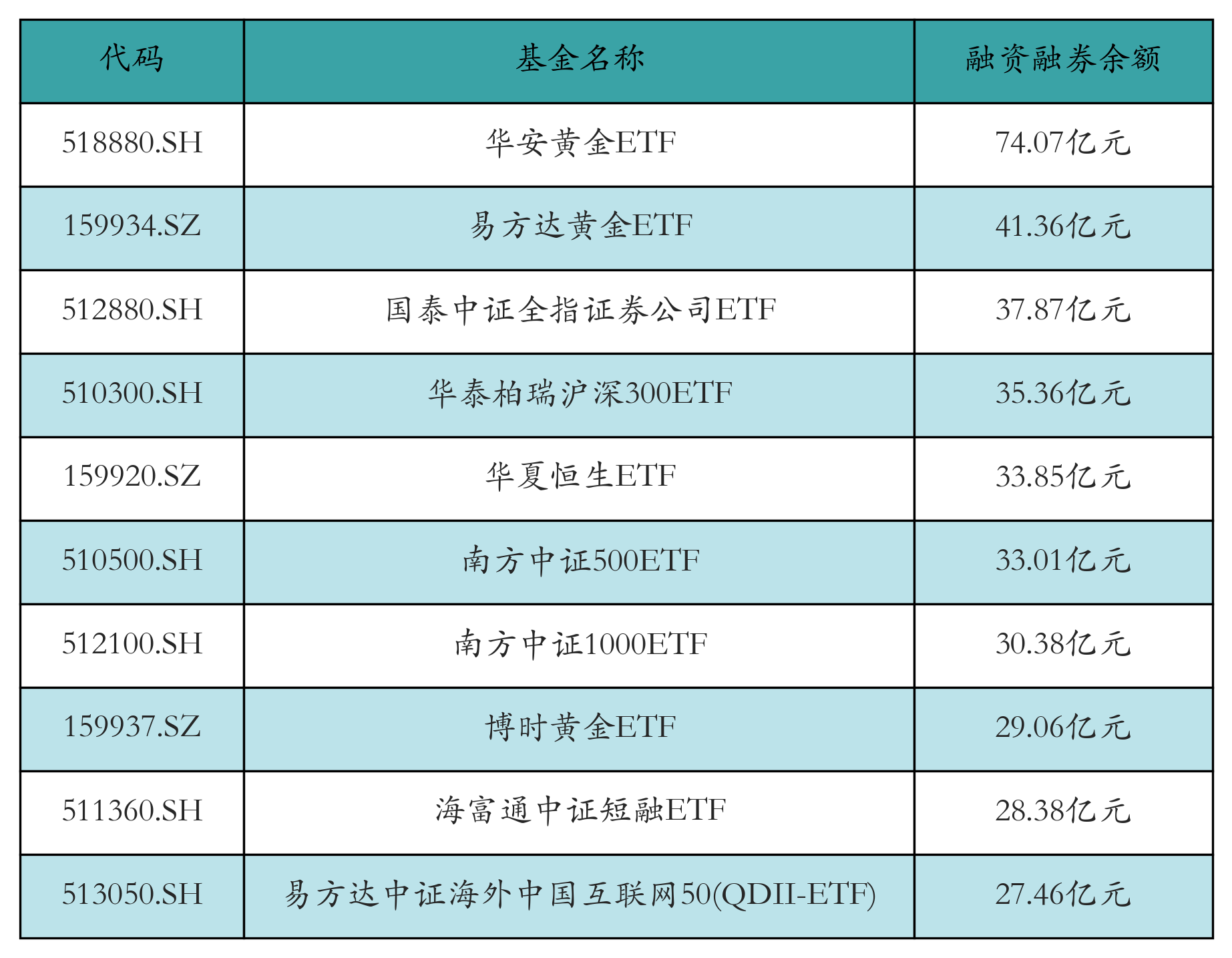
Market Overview - On February 13, the total ETF margin balance in the two markets was 115.864 billion yuan, a decrease of 9.483 billion yuan from the previous trading day [1] - The financing balance was 108.367 billion yuan, down by 9.454 billion yuan, while the securities lending balance was 7.497 billion yuan, a decrease of 29.625 million yuan [1] - In the Shanghai market, the ETF margin balance was 80.922 billion yuan, a decrease of 8.662 billion yuan, with a financing balance of 74.354 billion yuan, down by 8.657 billion yuan [1] - In the Shenzhen market, the ETF margin balance was 34.942 billion yuan, a decrease of 0.822 billion yuan, with a financing balance of 34.013 billion yuan, down by 0.796 billion yuan [1] ETF Margin Financing and Securities Lending - The top three ETF margin balances on February 13 were: Huaan Gold ETF (7.407 billion yuan), E Fund Gold ETF (4.136 billion yuan), and Guotai CSI All-Share Securities Company ETF (3.787 billion yuan) [2] - The top three ETF financing buy amounts were: Hai Futong CSI Short Bond ETF (1.683 billion yuan), Hang Seng Technology ETF (909 million yuan), and Bosera Convertible Bond ETF (874 million yuan) [4] - The top three ETF financing net buy amounts were: Dachen Hang Seng Technology ETF (31.3105 million yuan), Huaan Gold ETF (30.3682 million yuan), and Huatai-PB CSI 300 ETF (27.6497 million yuan) [5] ETF Securities Lending - The top three ETF securities lending sell amounts were: Southern CSI 500 ETF (1.27 billion yuan), Southern CSI 1000 ETF (283.781 million yuan), and Bosera Convertible Bond ETF (229.007 million yuan) [7]

两市ETF两融余额增加45.31亿元丨ETF融资融券日报
2 1 Shi Ji Jing Ji Bao Dao· 2026-02-13 02:55
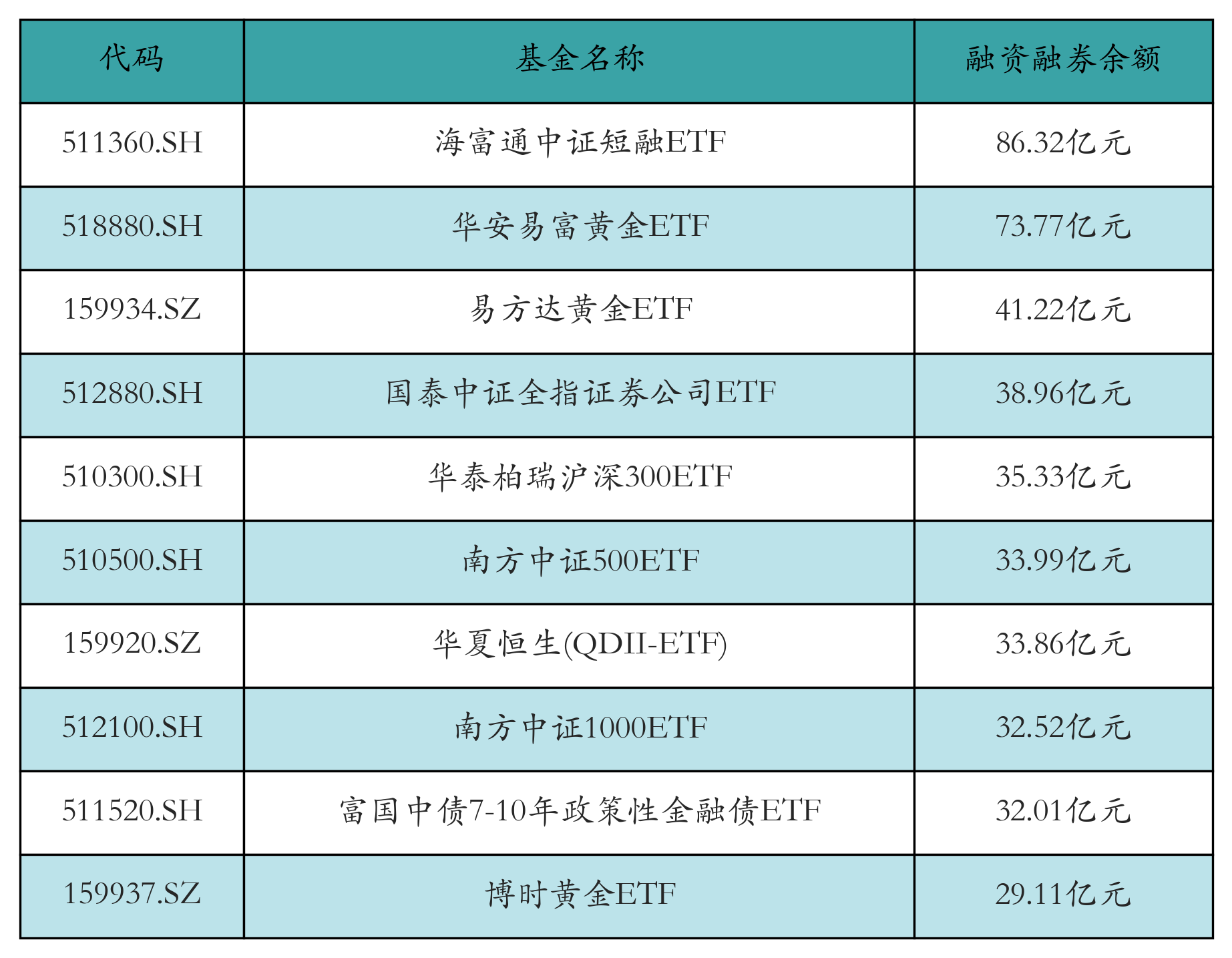
Market Overview - As of February 12, the total ETF margin balance in the two markets reached 125.347 billion yuan, an increase of 4.531 billion yuan from the previous trading day [1] - The financing balance was 117.82 billion yuan, up by 4.536 billion yuan, while the securities lending balance decreased by 4.2073 million yuan to 7.527 billion yuan [1] - In the Shanghai market, the ETF margin balance was 89.583 billion yuan, increasing by 4.501 billion yuan, with a financing balance of 83.011 billion yuan, up by 4.506 billion yuan [1] - The Shenzhen market's ETF margin balance was 35.764 billion yuan, increasing by 30.4641 million yuan, with a financing balance of 34.809 billion yuan, up by 29.959 million yuan [1] ETF Margin Balances - The top three ETFs by margin balance on February 12 were: - Hai Fu Tong Zhong Zheng Short Bond ETF (8.632 billion yuan) - Hua An Yi Fu Gold ETF (7.377 billion yuan) - Yi Fang Da Gold ETF (4.122 billion yuan) [2][3] ETF Financing Buy Amounts - The top three ETFs by financing buy amounts on February 12 were: - Hai Fu Tong Zhong Zheng Short Bond ETF (7.6 billion yuan) - Hua Tai Bai Rui Nan Fang Dong Ying Hang Seng Technology Index (QDII-ETF) (1.012 billion yuan) - Bo Shi Zhong Zheng Convertible Bonds and Exchangeable Bonds ETF (681 million yuan) [4][5] ETF Financing Net Buy Amounts - The top three ETFs by financing net buy amounts on February 12 were: - Hai Fu Tong Zhong Zheng Short Bond ETF (4.49 billion yuan) - Hua Tai Bai Rui Nan Fang Dong Ying Hang Seng Technology Index (QDII-ETF) (271 million yuan) - Hua Xia Hang Seng Technology (QDII-ETF) (144 million yuan) [6][7] ETF Securities Lending Sell Amounts - The top three ETFs by securities lending sell amounts on February 12 were: - Nan Fang Zhong Zheng 1000 ETF (1.02265 million yuan) - Nan Fang Zhong Zheng 500 ETF (537.15 thousand yuan) - Hua Xia Shang Zheng Ke Chuang Ban 50 Component ETF (391.57 thousand yuan) [8][9]
261只ETF获融资净买入 海富通中证短融ETF居首
Zhong Guo Jing Ji Wang· 2026-02-13 02:01
Core Viewpoint - As of February 12, the total margin balance for ETFs in the Shanghai and Shenzhen markets reached 125.347 billion yuan, an increase of 4.531 billion yuan from the previous trading day [1] Group 1: ETF Financing and Margin Balances - The ETF financing balance stood at 117.82 billion yuan, increasing by 4.535 billion yuan compared to the previous trading day [1] - The ETF margin short balance was 7.527 billion yuan, showing a slight decrease of 0.04 billion yuan from the previous trading day [1] Group 2: Net Inflows in ETFs - On February 12, 261 ETFs experienced net financing inflows, with the Hai Fu Tong CSI Short Bond ETF leading with a net inflow of 4.49 billion yuan [1] - Other ETFs with significant net inflows included the Huatai-PB Hang Seng Technology ETF, Huaxia Hang Seng Technology ETF, E Fund CSI Hong Kong Securities Investment Theme ETF, Southern CSI 1000 ETF, and Da Cheng Hang Seng Technology ETF [1]
两市ETF两融余额增加8.15亿元丨ETF融资融券日报
2 1 Shi Ji Jing Ji Bao Dao· 2026-02-12 02:42
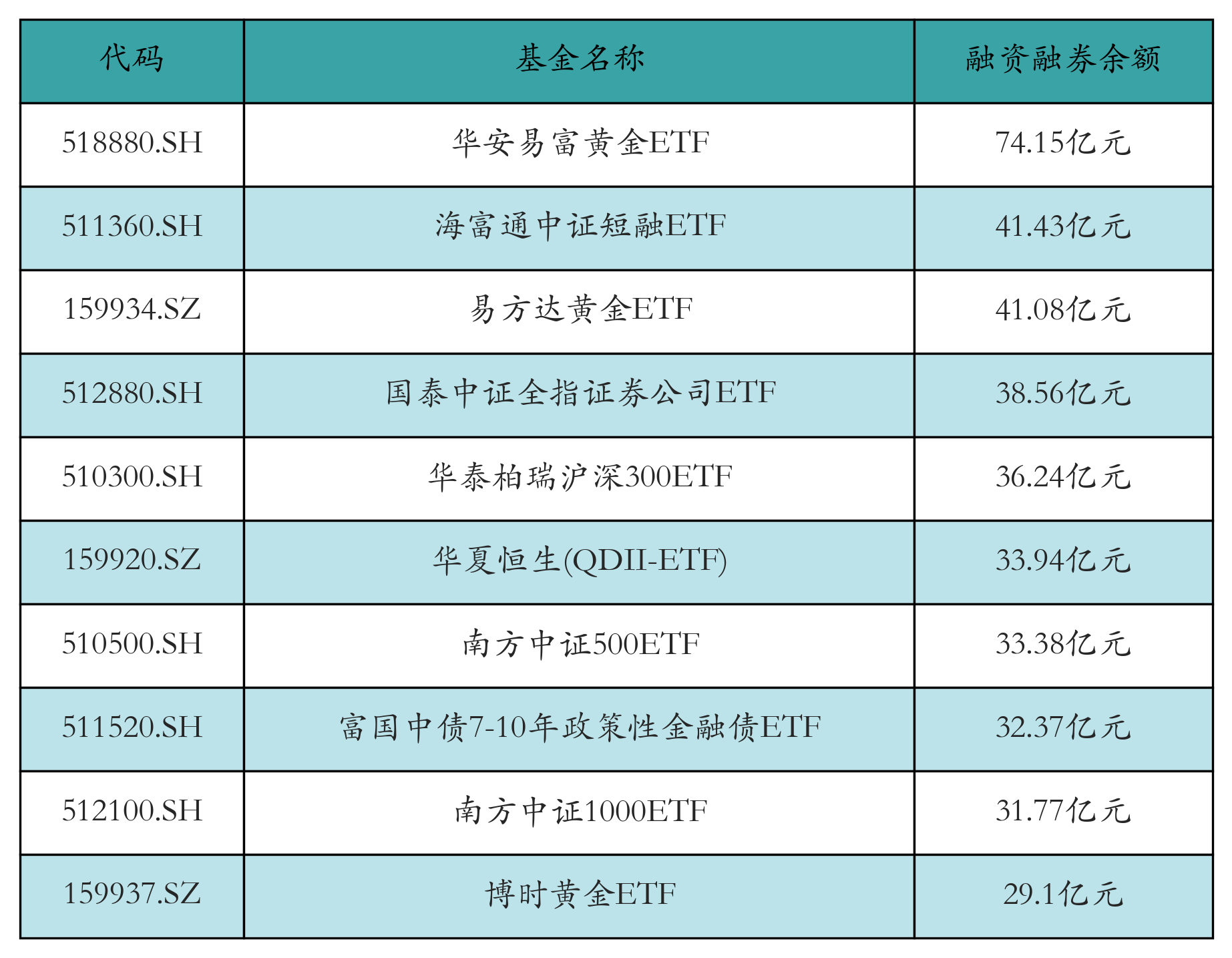
Market Overview - As of February 11, the total ETF margin balance in the two markets reached 120.816 billion yuan, an increase of 0.815 billion yuan from the previous trading day [1] - The financing balance was 113.285 billion yuan, up by 0.829 billion yuan, while the securities lending balance decreased by 14.0281 million yuan to 7.531 billion yuan [1] - In the Shanghai market, the ETF margin balance was 85.082 billion yuan, increasing by 0.754 billion yuan, with a financing balance of 78.506 billion yuan, up by 0.757 billion yuan, and a securities lending balance of 6.577 billion yuan, down by 3.1301 million yuan [1] - In the Shenzhen market, the ETF margin balance was 35.733 billion yuan, increasing by 61.4517 million yuan, with a financing balance of 34.779 billion yuan, up by 72.3496 million yuan, and a securities lending balance of 0.954 billion yuan, down by 1.0898 million yuan [1] ETF Margin Balance - The top three ETFs by margin balance on February 11 were: - Huaan Yifu Gold ETF (7.415 billion yuan) - Haifutong CSI Short Bond ETF (4.143 billion yuan) - E Fund Gold ETF (4.108 billion yuan) [2] ETF Financing Buy Amount - The top three ETFs by financing buy amount on February 11 were: - Haifutong CSI Short Bond ETF (3.131 billion yuan) - Bosera CSI Convertible Bond and Exchangeable Bond ETF (0.869 billion yuan) - Huatai-PB South East Asia Hang Seng Technology Index (QDII-ETF) (0.743 billion yuan) [4] ETF Financing Net Buy Amount - The top three ETFs by financing net buy amount on February 11 were: - Haifutong CSI Short Bond ETF (1.224 billion yuan) - Fuguo 7-10 Year Policy Financial Bond ETF (0.147 billion yuan) - E Fund ChiNext ETF (0.139 billion yuan) [6] ETF Securities Lending Sell Amount - The top three ETFs by securities lending sell amount on February 11 were: - Southern CSI 500 ETF (16.4511 million yuan) - Bosera CSI Convertible Bond and Exchangeable Bond ETF (15.6204 million yuan) - Huatai-PB CSI 300 ETF (13.3722 million yuan) [7]
2025年沪市ETF市场总成交额61万亿元
Zhong Guo Xin Wen Wang· 2026-02-07 13:52
Group 1 - The report indicates that by 2025, the total scale of ETFs in China has surpassed Japan, reaching approximately $860 billion, making it the largest ETF market in Asia [1] - In 2025, the Shanghai Stock Exchange (SSE) ranked first in Asia and third globally in ETF trading volume, with a total trading volume of 61 trillion yuan, reflecting a compound annual growth rate of 42% over the past five years [1] - The daily average trading volume of ETFs in the SSE reached 299.9 billion yuan, with significant increases in trading volumes across various ETF categories, including stock ETFs, bond ETFs, cross-border ETFs, and commodity ETFs [1] Group 2 - The SSE emphasizes the importance of ETFs as a key tool for wealth management and long-term capital allocation, contributing to the high-quality development of the capital market [2] - In 2026, the SSE aims to establish a multi-layered and diversified ETF market system and product service matrix, enhancing the role of ETFs in improving capital market functions and broadening channels for long-term capital inflow [2] - The SSE's initiatives are aligned with the core requirements of the financial development strategy, focusing on enhancing investor experience and increasing the inclusiveness and adaptability of capital market systems [2]
61万亿元!上交所ETF成交额位列亚洲第一、全球第三
Zhong Guo Jing Ying Bao· 2026-02-06 11:08
Core Insights - In 2025, the total scale of ETFs in mainland China surpassed Japan, reaching approximately $860 billion, making it the largest ETF market in Asia [1] - The Shanghai Stock Exchange (SSE) ranked first in Asia and third globally in ETF trading volume, with a total trading volume of 61 trillion yuan, reflecting a compound annual growth rate of 42% over the past five years [1] - Daily average trading volume for ETFs on the SSE was 299.9 billion yuan, indicating increasing market liquidity [1] Trading Volume Breakdown - The total trading volume for stock ETFs, bond ETFs, cross-border ETFs, and commodity ETFs in 2025 was 15.8 trillion yuan, 24.4 trillion yuan, 13.1 trillion yuan, and 1.9 trillion yuan respectively, representing increases of 42%, 275%, 134%, and 217% compared to 2024 [1] - Three products in the domestic ETF market had daily average trading volumes exceeding 10 billion yuan, all listed on the SSE, with the Hai Futong CSI Short Bond ETF achieving a record daily average of 18.47 billion yuan, a 69% increase from 2024 [1] - Among the top 30 ETFs by daily average trading volume on the SSE, 18 had daily volumes exceeding 5 billion yuan, with 82% of these being domestic products, an increase of 13 products from 2024 [1]
ETF日报2026.02.04-20260204
Hongxin Security· 2026-02-04 09:09
Report Industry Investment Rating - Not provided in the content Core View of the Report - On February 4, 2026, the Shanghai Composite Index rose 0.85% to 4102.20 points, the Shenzhen Component Index rose 0.21% to 14156.27 points, and the ChiNext Index fell 0.40% to 3311.51 points. The trading volume of A-shares in the two markets was 2503.5 billion yuan. The top-performing industries were coal (7.58%), building materials (3.48%), and real estate (2.97%), while the worst-performing industries were media (-3.12%), communication (-2.73%), and computer (-1.70%) [2][6] Summary by Relevant Catalogs Market Overview - On February 4, 2026, the Shanghai Composite Index rose 0.85% to 4102.20 points, the Shenzhen Component Index rose 0.21% to 14156.27 points, and the ChiNext Index fell 0.40% to 3311.51 points. The trading volume of A-shares in the two markets was 2503.5 billion yuan. The top-performing industries were coal (7.58%), building materials (3.48%), and real estate (2.97%), while the worst-performing industries were media (-3.12%), communication (-2.73%), and computer (-1.70%) [2][6] Stock ETF - The top-traded stock ETFs on February 4, 2026, were Huaxia CSI A500 ETF, which rose 0.73% with a discount rate of 0.73%; Huatai-PineBridge CSI A500 ETF, which rose 0.69% with a discount rate of 0.65%; and Southern CSI 500 ETF, which rose 0.26% with a discount rate of 0.28% [3][7] Bond ETF - The top-traded bond ETFs on February 4, 2026, were Haifutong CSI Short-term Financing ETF, which rose 0.01% with a discount rate of 0.01%; Bosera CSI Convertible and Exchangeable Bond ETF, which fell 0.12% with a discount rate of -0.20%; and Huaxia Shanghai Stock Exchange Benchmark Market-making Treasury Bond ETF, which fell 0.05% with a discount rate of -0.08% [4][9] Gold ETF - On February 4, 2026, gold AU9999 rose 3.86%, and Shanghai Gold rose 4.40%. The top-traded gold ETFs were Huaan Gold ETF, which rose 4.27% with a discount rate of 3.66%; Bosera Gold ETF, which rose 4.43% with a discount rate of 3.67%; and E Fund Gold ETF, which rose 4.40% with a discount rate of 3.65% [12] Commodity Futures ETF - On February 4, 2026, Dacheng Nonferrous Metals Futures ETF rose 0.85% with a discount rate of 2.42%; Jianxin Yisheng Zhengzhou Commodity Exchange Energy and Chemical Futures ETF rose 1.33% with a discount rate of 1.20%; and Huaxia Feed Soybean Meal Futures ETF rose 0.20% with a discount rate of 4.52% [13] Cross-border ETF - The previous trading day, the Dow Jones Industrial Average fell 0.34%, the Nasdaq Composite fell 1.43%, the S&P 500 fell 0.84%, and the German DAX fell 0.07%. On February 4, 2026, the Hang Seng Index rose 0.05%, and the Hang Seng China Enterprises Index fell 0.05%. The top-traded cross-border ETFs were E Fund CSI Hong Kong Securities Investment Theme ETF, which rose 2.10% with a discount rate of 1.75%; Huatai-PineBridge CSI KRX Korea-China Semiconductor ETF, which fell 1.18% with a discount rate of 13.24%; and Huaxia Hang Seng Tech ETF, which fell 1.39% with a discount rate of -1.20% [16] Money ETF - The top-traded money ETFs on February 4, 2026, were Yin Hua Ri Li ETF, Hua Bao Tian Yi ETF, and Money ETF Jianxin [18]
两市ETF两融余额减少28.96亿元丨ETF融资融券日报
2 1 Shi Ji Jing Ji Bao Dao· 2026-02-02 02:49
Market Overview - As of January 30, the total ETF margin balance in the two markets is 120.251 billion yuan, a decrease of 2.896 billion yuan from the previous trading day [1] - The financing balance is 112.88 billion yuan, down by 2.768 billion yuan, while the securities lending balance is 7.371 billion yuan, a decrease of 129 million yuan [1] - In the Shanghai market, the ETF margin balance is 84.19 billion yuan, a reduction of 1.917 billion yuan, with a financing balance of 77.757 billion yuan, down by 1.8 billion yuan [1] - The Shenzhen market's ETF margin balance is 36.061 billion yuan, decreasing by 979 million yuan, with a financing balance of 35.122 billion yuan, down by 967 million yuan [1] ETF Margin Financing Balances - The top three ETFs by margin balance on January 30 are: 1. Huaan Yifu Gold ETF (7.783 billion yuan) 2. E Fund Gold ETF (4.156 billion yuan) 3. Guotai CSI All-Share Securities Company ETF (3.892 billion yuan) [2] ETF Financing Buy Amounts - The top three ETFs by financing buy amounts on January 30 are: 1. Hai Futong CSI Short Bond ETF (4.538 billion yuan) 2. Bosera CSI Convertible Bonds and Exchangeable Bonds ETF (2.375 billion yuan) 3. Huaan Yifu Gold ETF (1.598 billion yuan) [4] ETF Financing Net Buy Amounts - The top three ETFs by financing net buy amounts on January 30 are: 1. E Fund CSI Hong Kong Securities Investment Theme ETF (84.1736 million yuan) 2. Huaxia Hang Seng Internet Technology Industry (QDII-ETF) (48.62 million yuan) 3. Fuguo Shanghai Composite Index ETF (42.3782 million yuan) [5] ETF Securities Lending Sell Amounts - The top three ETFs by securities lending sell amounts on January 30 are: 1. Southern CSI 1000 ETF (74.7985 million yuan) 2. Huatai-PB Shanghai and Shenzhen 300 ETF (18.0902 million yuan) 3. Southern CSI 500 ETF (11.3948 million yuan) [6]
FOF买手“变心”了!四季度重仓基金“清单”曝光,黄金不在头号,求稳成主旋律?
Sou Hu Cai Jing· 2026-01-29 03:44
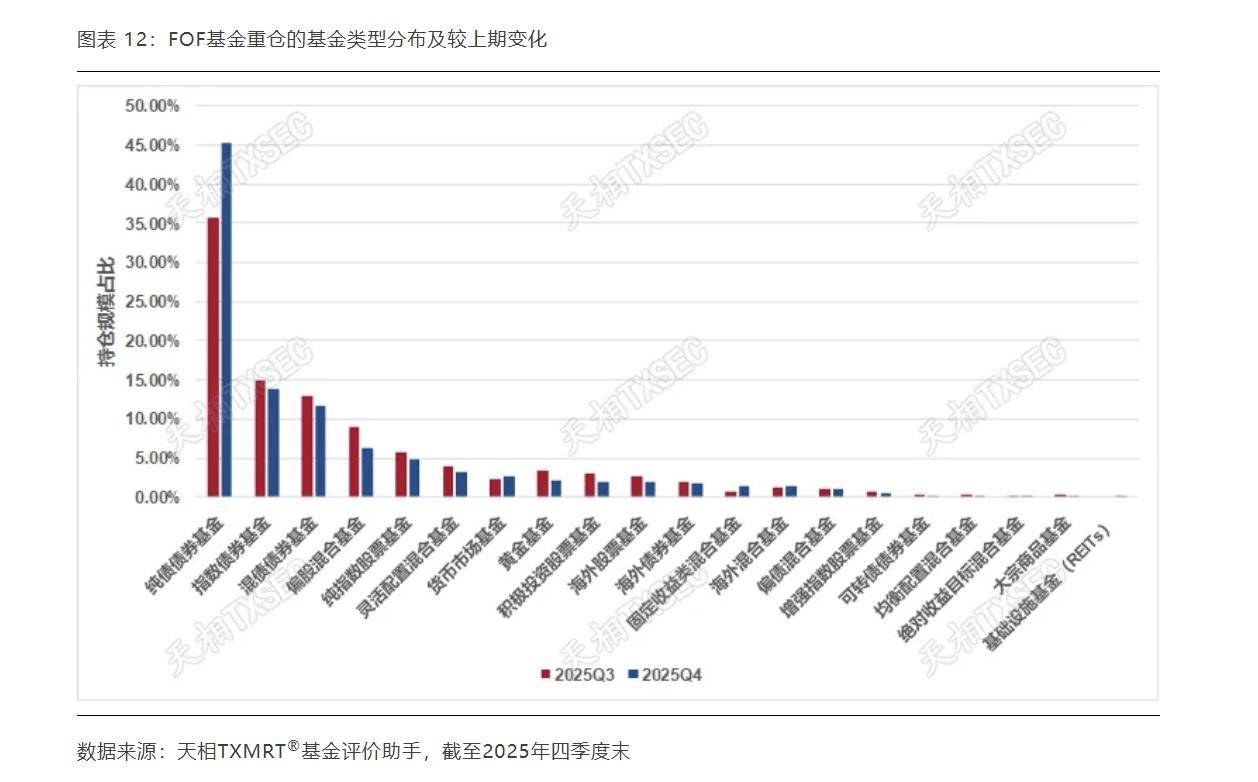
Core Insights - The FOF (Fund of Funds) managers have shown a significant shift in their investment preferences, with a clear trend towards risk aversion and stability for the fourth quarter of 2025 [1] - The total holdings in pure bond funds reached 56.52 billion yuan, accounting for 45.22% of all fund types, a notable increase from 35.64% in the previous quarter [1] - Conversely, the allocation to equity mixed funds decreased from 8.94% to 6.30%, marking the most significant decline among fund categories [1] Investment Preferences - The most favored product among FOF managers is the Hai Fu Tong Zhong Zheng Short Bond ETF, which has been held by 119 FOFs with a total market value of approximately 5.98 billion yuan [3] - Other notable bond ETFs in the top ten holdings include Peng Yang Zhong Dai-30 Year Treasury ETF, Ping An High-Grade Corporate Bond ETF, and Fu Guo Zhong Dai 7-10 Year Policy Financial Bond ETF, indicating a strong preference for bond instruments [3] - There has been a structural adjustment in attitudes towards gold-related assets, with traditional gold ETFs like Hua An Gold ETF seeing a decline in holdings, while ETFs tracking gold industry stocks have been increased [3] Performance Analysis - The average return for bond-type FOFs in the fourth quarter was 0.24%, while equity-type FOFs experienced an average decline of 2.48%, reflecting the performance alignment with their holding structures [4] - Notably, the CITIC Securities Rui Xuan 6-Month Holding Mixed FOF achieved a net value increase of 6.41%, leading the market, with significant allocations to gold ETFs and resource sector funds [5] - Similarly, the Qianhai Kaiyuan Yu Ze FOF also exceeded a 4% increase, with a focus on gold ETFs and sectors like communication equipment and brokerage [5]