
资本市场投融资综合改革

Search documents
11月宏观经济数据出炉,资金面依然宽松,债市延续调整
Dong Fang Jin Cheng· 2025-12-16 23:38
Report Summary 1. Industry Investment Rating - There is no information about the report's industry investment rating. 2. Core Viewpoints - On December 15, the capital market remained loose, the bond market continued to adjust with greater fluctuations in ultra - long bonds, the convertible bond market followed the decline, and most convertible bond issues fell; yields of US Treasury bonds across various maturities generally declined, and yields of 10 - year government bonds in major European economies generally decreased [1]. 3. Summary of Each Section 3.1 Bond Market News - **Domestic News** - The 24th issue of Qiushi magazine published General Secretary Xi Jinping's important article "Expanding Domestic Demand is a Strategic Move", emphasizing that expanding domestic demand is crucial for economic stability and security [3]. - The CSRC will continue to deepen the comprehensive reform of investment and financing in the capital market to contribute to economic development [3]. - In November, the year - on - year actual growth of the added value of industrial enterprises above designated size was 4.8%, and the cumulative year - on - year actual growth in the first 11 months was 6.0%. The year - on - year growth of total retail sales of consumer goods in November was 1.3%, and the cumulative year - on - year growth in the first 11 months was 4.0%. From January to November 2025, the cumulative year - on - year decline of national fixed - asset investment was 2.6% [4]. - Six departments supported eligible service outsourcing enterprises to use multi - level capital markets for financing and development [4]. - The DVP settlement function for open - market repurchase of bonds by the Central Bank's Accounting Data Centralized System was launched [5]. - **International News** - New York state's manufacturing activity unexpectedly contracted, but the outlook for the next six months improved significantly, and inflation pressure eased [6]. - **Commodities** - On December 15, WTI January crude oil futures fell 1.08% to $56.82 per barrel, Brent February crude oil futures fell 0.92% to $60.56 per barrel, COMEX gold futures rose 0.12% to $4333.30 per ounce, and NYMEX natural gas prices fell 1.58% to $4.036 per ounce [7]. 3.2 Capital Market - **Open - Market Operations** - On December 15, the central bank conducted 7 - day reverse repurchase operations of 130.9 billion yuan, with an operating interest rate of 1.40%. After offsetting the 122.3 billion yuan of reverse repurchases due on the same day, the net capital injection was 8.6 billion yuan [9]. - **Capital Interest Rates** - On December 15, the capital market remained loose. DR001 dropped 0.07bp to 1.274%, and DR007 dropped 2.51bp to 1.444% [10]. 3.3 Bond Market Dynamics - **Interest - Rate Bonds** - **Yield Trends of Spot Bonds**: On December 15, the bond market continued to adjust, with greater fluctuations in ultra - long bonds. The yield of the 10 - year Treasury bond active issue 250016 rose 1.65bp to 1.8590%, and the yield of the 10 - year CDB bond active issue 250215 rose 2.25bp to 1.9390% [13]. - **Bond Tendering**: Information on the tendering of three agricultural development bonds, including the term, issuance scale, winning yield, and other indicators, was provided [15]. - **Credit Bonds** - **Secondary - Market Transaction Anomalies**: On December 15, the transaction prices of 4 industrial bonds deviated by more than 10%, including significant declines in "11 Willie MTN1", "21 Vanke 02", and "21 Vanke 04", and a significant increase in "H0 Zhongnan 02" [15]. - **Credit Bond Events**: Multiple companies, such as R&F Properties, Fantasia, and Times China Holdings, announced bond - related events, including resumption of trading, debt restructuring, and cancellation of bond issuance [16][18]. - **Convertible Bonds** - **Equity and Convertible Bond Indices**: On December 15, the three major A - share indices fell, and the main convertible bond indices also declined. The convertible bond market turnover was 59.394 billion yuan, a decrease of 7.972 billion yuan from the previous trading day. Most convertible bond issues fell [18][19]. - **Convertible Bond Tracking**: Information on convertible bond issuance approvals, potential price adjustments, and non - early redemptions was announced [24]. - **Overseas Bond Markets** - **US Bond Market**: On December 15, yields of US Treasury bonds across various maturities generally declined. The 2/10 - year yield spread remained unchanged at 67bp, and the 5/30 - year yield spread widened by 1bp to 111bp. The 10 - year inflation - protected Treasury bond (TIPS) break - even inflation rate dropped 1bp to 2.25% [22][24][26]. - **European Bond Market**: On December 15, the yield of Italy's 10 - year government bond remained unchanged, while yields of 10 - year government bonds in other major European economies generally declined [27]. - **Price Changes of Chinese - Issued US - Dollar Bonds**: The daily price changes of Chinese - issued US - dollar bonds as of the close on December 15 were presented, including the top 10 gainers and losers [29].
资本市场投融资改革深化 券商板块估值修复可期
Zhong Guo Zheng Quan Bao· 2025-12-16 22:09
"券商还要当好社会财富的专业'管理者'。"在郁伟君看来,券商要坚持投资者为本,构建专业化、差异 化的产品服务体系,为不同风险偏好客户提供全谱系资产配置方案,引导短期投机资金转化为长期稳定 资本;强化投研能力建设,健全风险控制体系,引导投资者理性决策,促进社会财富结构优化。 近期召开的中央经济工作会议提出,持续深化资本市场投融资综合改革。对此,业内人士表示,这为券 商发展指明方向,券商要做好直接融资的主要"服务商"、资本市场的重要"看门人"、社会财富的专 业"管理者"。在适度宽松流动性与改革深化驱动下,券商基本面有望继续改善,板块估值修复可期,建 议关注质地优良但估值错配的龙头券商等。 太平洋证券非银金融首席分析师夏芈卬表示,本次会议提出"持续深化资本市场投融资综合改革"和"创 新科技金融服务",这标志着政策重心从短期维稳转向中长期制度完善,全面注册制、退市机制、长线 资金引入等改革有望提速,券商、保险等非银机构需加强投研能力和产品创新,重点服务新质生产力相 关产业。 基本面有望持续提升 券商作用凸显 证券公司是资本市场的重要参与主体和专业服务中介,在这场资本市场投融资综合改革中,将发挥重要 作用。 国泰海通业 ...
资本市场投融资改革深化券商板块估值修复可期
Zhong Guo Zheng Quan Bao· 2025-12-16 20:19
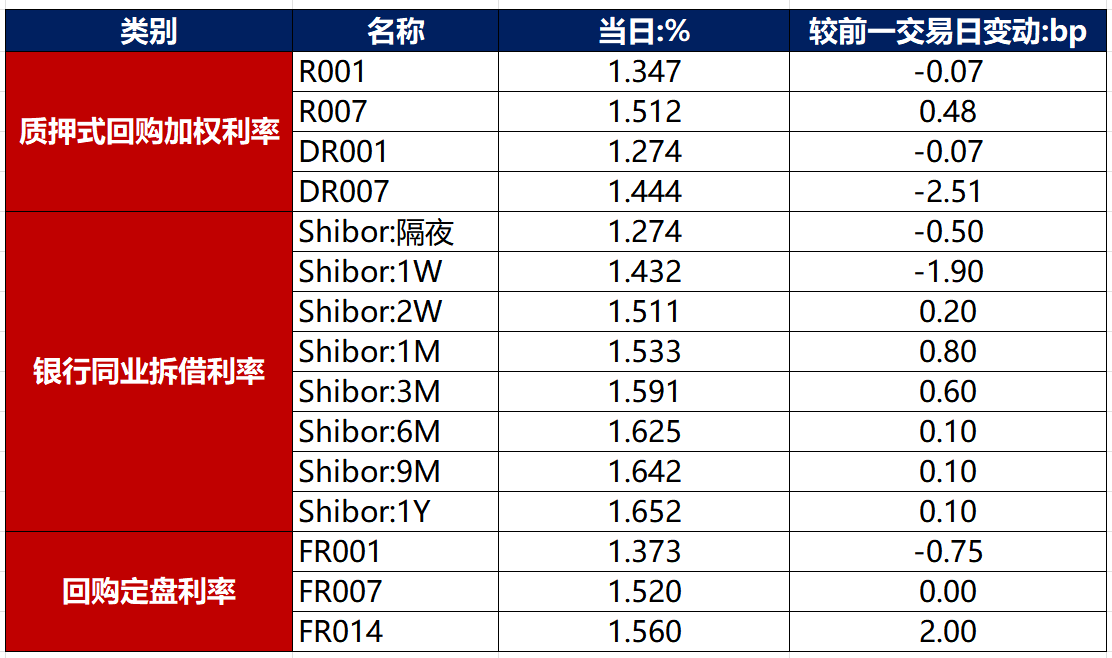
● 本报记者 林倩 近期召开的中央经济工作会议提出,持续深化资本市场投融资综合改革。对此,业内人士表示,这为券 商发展指明方向,券商要做好直接融资的主要"服务商"、资本市场的重要"看门人"、社会财富的专 业"管理者"。在适度宽松流动性与改革深化驱动下,券商基本面有望继续改善,板块估值修复可期,建 议关注质地优良但估值错配的龙头券商等。 券商作用凸显 证券公司是资本市场的重要参与主体和专业服务中介,在这场资本市场投融资综合改革中,将发挥重要 作用。 "适度宽松的流动性环境有助于资本市场保持较高的交投活跃度,增强资本市场韧性,也有利于券商经 纪、两融、投资等多个条线的业务开展。"国金证券非银首席分析师舒思勤表示,当前我国证券公司的 经营环境已显著改善,随着资本市场投融资综合改革持续深化,资本市场韧性增强,券商的业绩韧性也 有望提高。根据历史利润增速及板块涨跌幅、ROE水平及对应PB倍数来看,目前券商板块的股价、估 值表现仍显著落后于业绩表现,看好板块估值修复。 舒思勤进一步补充道,在监管鼓励行业内并购重组的背景下,部分竞争力较弱的中小机构可能会被出 清,结合自身的资源禀赋进行差异化、特色化经营的中小券商通过提高服 ...
债市早报:11月宏观经济数据出炉;资金面依然宽松,债市延续调整
Jin Rong Jie· 2025-12-16 03:23
Group 1: Domestic News - Xi Jinping's article emphasizes that expanding domestic demand is a strategic move essential for economic stability and security, aiming to make it the main driver of economic growth [2] - The China Securities Regulatory Commission (CSRC) is committed to deepening reforms in the capital market to support stable employment and economic development [2] - The November macroeconomic data shows a 4.8% year-on-year increase in industrial added value, while retail sales grew by 1.3%, indicating a slowdown in consumption [3] Group 2: Monetary Policy and Market Operations - The People's Bank of China conducted a 130.9 billion yuan reverse repurchase operation at a fixed rate of 1.40%, resulting in a net cash injection of 8.6 billion yuan for the day [7] - The money market remains loose, with the DR001 and DR007 rates declining to 1.274% and 1.444%, respectively [8] Group 3: Bond Market Dynamics - The bond market continues to adjust, with long-term bonds experiencing greater volatility; the yield on the 10-year government bond rose by 1.65 basis points to 1.8590% [11] - The secondary market for credit bonds showed significant price deviations, with some bonds experiencing drastic declines [13] - Several companies, including R&F Properties and Times China Holdings, announced bondholder meetings to discuss repayment arrangements amid market fluctuations [14][16] Group 4: International Market Insights - The New York Fed reported a significant drop in the manufacturing activity index, indicating a contraction in the sector, although future outlook indicators improved [5] - U.S. Treasury yields generally declined, with the 10-year yield falling to 4.18% [21] - Major European economies saw a decrease in 10-year government bond yields, with Germany's yield down to 2.85% [24]


八大重点任务擘画明年经济发展新蓝图
Jin Rong Shi Bao· 2025-12-16 02:13
12月10日至11日,中央经济工作会议在北京举行,向期待已久的社会各方明确了2026年中国经济工作的重点方向和 任务。 多家券商及研究机构专业人士从核心方向、宏观政策和投资机会等多个维度进行了解读。 "会议部署的八大重点任务构成了2026年经济工作的施工图。其中,'内需主导'与'创新驱动'位居前两位,清晰地指 明了短期稳增长与中长期动能转换的路径。这些任务并非孤立,而是相互关联、协同推进的系统工程。"华福证券总裁助 理兼研究所所长任志强向《金融时报》记者讲述了他的学习体会。 中金公司首席宏观经济分析师张文朗认为,本次会议客观分析了中国经济面临的发展形势,不回避困难挑战,突出 问题导向,目标非常清晰,直接回应了市场和社会对消费、投资、房地产、企业账款、市场竞争秩序等一系列热点问题 的广泛关切。 总基调:稳中求进 会议明确了明年的经济工作政策取向为"稳中求进、提质增效",其中"提质增效"是今年的新要求。 "政策总基调在'稳中求进'的基础上,增加了'提质增效'的政策取向。"在长城证券首席经济学家汪毅看来,对于明年 的经济工作,本次中央经济工作会议仍然以"稳"字当头,但是更加强调"增强政策前瞻性针对性协同性,持续扩大 ...
吴清部署“十五五”资本市场:严监管、强改革,投融资双轨发力
2 1 Shi Ji Jing Ji Bao Dao· 2025-12-15 13:35
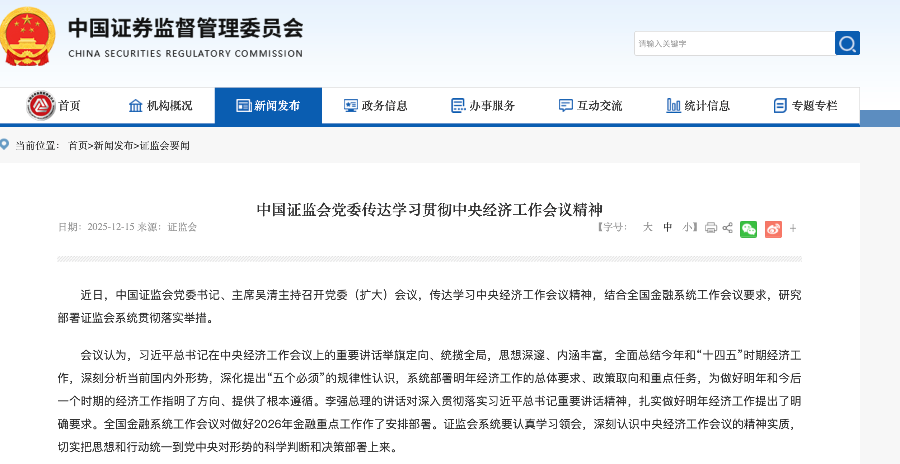
Group 1 - The core viewpoint emphasizes the importance of the capital market in supporting economic stability and high-quality development, as highlighted by the Central Economic Work Conference [2][4] - The China Securities Regulatory Commission (CSRC) will actively cooperate in formulating the national "14th Five-Year" plan, focusing on the systematic design of the capital market's development framework [4][6] - The planning will outline the main goals, tasks, and significant measures for the capital market over the next five years, aligning with national strategic needs [5][6] Group 2 - The CSRC aims to enhance the internal resilience of the capital market by strengthening foundational aspects and improving market stability [7][8] - Key initiatives include fostering high-quality listed companies, promoting long-term investment mechanisms, and enhancing risk monitoring across markets [8][10] - The management of market expectations will be prioritized, with a focus on policy interpretation and reputation management for industry institutions and listed companies [8][10] Group 3 - The CSRC is committed to reforming the capital market to increase its inclusivity and attractiveness, with specific reforms planned for the ChiNext and STAR Market [10][11] - There will be a push for the high-quality development of private equity funds and the introduction of new financial products, such as commercial real estate REITs [11] - Regulatory measures will be strengthened, including the use of technology in supervision and the enforcement of laws against financial misconduct [11][12]
证监会:持续深化资本市场投融资综合改革
Zhong Guo Jing Ying Bao· 2025-12-15 06:12
Group 1 - The China Securities Regulatory Commission (CSRC) emphasizes the importance of stabilizing the economy and enhancing the quality of development through comprehensive reforms in the capital market [1][2] - The CSRC plans to actively participate in the formulation of the national "14th Five-Year Plan" and establish a systematic framework for the capital market's development goals and tasks over the next five years [1] - The meeting highlights the need to strengthen the internal stability of the market by fostering high-quality listed companies and promoting long-term investment mechanisms [1][2] Group 2 - The CSRC aims to enhance the inclusiveness and attractiveness of the capital market by implementing reforms in the ChiNext board and accelerating the rollout of the "1+6" reform measures for the Sci-Tech Innovation Board [2] - There is a focus on strict regulatory enforcement to combat financial fraud, insider trading, and other violations, alongside the development of new regulations for listed companies [2] - The CSRC is committed to strengthening party discipline and governance within its system, ensuring compliance with the central leadership's directives [2]
刚刚,证监会发声,启动实施这项改革!
Xin Lang Cai Jing· 2025-12-15 05:48
Core Viewpoint - The meeting emphasized the importance of implementing the spirit of the Central Economic Work Conference and the need for the China Securities Regulatory Commission (CSRC) to align its actions with the central government's directives for economic stability and development [1][2][7]. Group 1: Economic Development and Policy Direction - The meeting highlighted that under the leadership of the Communist Party of China, the country has made significant progress in economic development, achieving the main goals of the 14th Five-Year Plan [2][7]. - The Central Economic Work Conference provided a comprehensive summary of the current economic situation and outlined the overall requirements, policy orientations, and key tasks for the upcoming year [1][7]. Group 2: Capital Market Focus - The meeting underscored the central government's high regard for the capital market, emphasizing the need for the CSRC to deepen reforms and enhance the quality of capital market operations [2][8]. - The CSRC is tasked with promoting stable employment, supporting enterprises, and maintaining market expectations to contribute to high-quality economic development [9]. Group 3: Strategic Initiatives - The meeting outlined several strategic initiatives, including the preparation and implementation of the 15th Five-Year Plan for the capital market, focusing on setting clear goals and tasks for the next five years [9]. - There is a commitment to enhancing the stability of the market by fostering high-quality listed companies and improving corporate governance [3][9]. Group 4: Regulatory Enhancements - The meeting called for strengthening regulatory enforcement, including the use of technology to combat financial fraud and market manipulation [10]. - It emphasized the need for comprehensive reforms to improve the attractiveness and inclusivity of the capital market, including the implementation of new regulations for private equity and real estate investment trusts (REITs) [10]. Group 5: Internal Governance and Compliance - The meeting stressed the importance of maintaining strict internal governance within the CSRC, ensuring adherence to the central leadership and enhancing accountability in regulatory practices [4][5]. - There is a focus on improving the effectiveness of regulatory oversight and fostering a culture of integrity within the organization [5][10].
刚刚,A股大消息!证监会最新发声
天天基金网· 2025-12-15 05:25
Core Viewpoint - The article emphasizes the importance of the Central Economic Work Conference's directives for the China Securities Regulatory Commission (CSRC) to enhance the capital market's stability and quality, aligning with the broader economic goals set by the central government [2][3]. Group 1: Economic Context and Goals - The meeting highlighted that under the leadership of Xi Jinping, China has made significant progress in economic development, with the main goals of the 14th Five-Year Plan expected to be achieved [3]. - The conference outlined the necessity for the CSRC to align its actions with the central government's scientific judgments and decisions regarding the current economic situation [2][3]. Group 2: Capital Market Development Strategies - The CSRC is tasked with implementing the "15th Five-Year Plan" for capital markets, focusing on strategic planning and execution to achieve key objectives and initiatives [3][4]. - There is a commitment to enhance the internal stability of the market by fostering high-quality listed companies and promoting long-term investment mechanisms [4][5]. Group 3: Regulatory and Reform Initiatives - The article discusses the need for ongoing reforms to improve the inclusivity and attractiveness of the capital market, including the implementation of new measures for the ChiNext board and the development of private equity funds [5]. - Strengthening regulatory enforcement is emphasized, with a focus on combating financial fraud and ensuring compliance within the securities and futures markets [5][6]. Group 4: Year-End and Future Work - The CSRC is urged to prioritize year-end tasks to ensure the successful completion of the 14th Five-Year Plan's objectives while maintaining risk management and stability [6].

持续讲好“股市叙事”,证监会最新发声!
Di Yi Cai Jing Zi Xun· 2025-12-15 04:54
Core Viewpoint - The China Securities Regulatory Commission (CSRC) emphasizes the importance of capital market work as highlighted in the recent Central Economic Work Conference, aiming for high-quality economic development and stability in employment, enterprises, and market expectations [1] Group 1: Strategic Planning - The CSRC will actively participate in the formulation of the national "14th Five-Year" plan and establish a systematic framework for the capital market's development goals and tasks over the next five years [1] Group 2: Market Stability - The focus will be on cultivating a high-quality group of listed companies and enhancing corporate governance, encouraging companies to increase dividend payouts and share buybacks [2] - The CSRC aims to strengthen long-term funding mechanisms and promote the development of equity public funds and index investments [2] - There will be an emphasis on cross-market and cross-border risk monitoring and management, as well as improving the long-term stability mechanisms of the market [2] Group 3: Reform Initiatives - The CSRC plans to implement reforms in the ChiNext board and accelerate the rollout of the "1+6" reform measures for the Sci-Tech Innovation Board [2] - The development of private equity funds will be prioritized, along with the introduction of new key futures products and the pilot of commercial real estate REITs [2] - The CSRC will enhance the attractiveness of the capital market by optimizing the Qualified Foreign Institutional Investor (QFII) system and improving the efficiency of overseas listing filings [2] Group 4: Regulatory Enhancements - The CSRC will leverage technology to enhance regulatory effectiveness and combat financial fraud, insider trading, and market manipulation [2] - New regulations for listed companies will be introduced, and revisions to laws governing securities companies and investment funds will be actively pursued [2] Group 5: Internal Governance - The CSRC is committed to strengthening party discipline and oversight within its system, ensuring the party's leadership in capital market operations [3] - There will be a focus on enhancing the accountability and supervision of public power in key areas [3] - The CSRC aims to build a robust regulatory team that balances strict management with incentives [3] Group 6: Year-End Focus - The CSRC is tasked with ensuring the successful completion of the "14th Five-Year" capital market initiatives while maintaining risk prevention and stability [3]