
高端化

Search documents
重庆啤酒(600132):结构逆势升级,经营显现韧性:重庆啤酒(600132):2025年报点评
Huachuang Securities· 2026-03-11 06:09
Investment Rating - The report maintains a "Strong Buy" rating for the company with a target price of 67 yuan [2][8]. Core Insights - The company demonstrated resilience in its operations despite adverse market conditions, with a revenue increase of 0.5% year-on-year to 14.72 billion yuan in 2025 and a net profit increase of 10.4% to 1.23 billion yuan [2][8]. - The fourth quarter showed a revenue growth of 5.2% year-on-year, with significant improvements in high-end product sales, indicating a successful product mix upgrade [2][8]. - The company plans to leverage new consumption channels and introduce innovative products to drive growth in 2026, with expectations for accelerated performance as dining scenarios recover [2][8]. Financial Summary - **2025 Financial Performance**: - Total revenue: 14.72 billion yuan, up 0.5% year-on-year - Net profit: 1.23 billion yuan, up 10.4% year-on-year - Earnings per share (EPS): 2.54 yuan [4][8]. - **2026-2028 Financial Projections**: - Projected revenue for 2026: 15.20 billion yuan, with a growth rate of 3.2% - Projected net profit for 2026: 1.36 billion yuan, with a growth rate of 10.6% - Projected EPS for 2026: 2.81 yuan [4][8]. - **Valuation Ratios**: - Price-to-earnings (P/E) ratio for 2026: 20 times - Price-to-book (P/B) ratio for 2026: 26.4 times [4][8]. Market Performance - The company’s stock price has shown resilience, with a current price of 57.04 yuan, reflecting a strong market position compared to the broader market index [4][8]. Dividend Policy - The company distributed a cash dividend of 1.21 billion yuan in 2025, with a dividend payout ratio of 98.3%, indicating a strong commitment to returning value to shareholders [2][8].

威高股份20260306
2026-03-09 05:18
Summary of Weigao Group's Conference Call Company Overview - **Company**: Weigao Group - **Date**: March 6, 2023 - **Key Focus**: Major asset restructuring and business integration Key Points Industry and Company Developments - Weigao Group is undergoing significant asset restructuring, with Weigao Blood Purification becoming a subsidiary through a share swap, integrating blood purification and biopharmaceutical upstream purification and filtration businesses [2][5] - The company anticipates a profit bottoming out at approximately 2-2.1 billion CNY in 2023-2024 due to price reductions from centralized procurement, with revenue expected to stabilize in 2025 and enter a growth trajectory in 2026-2027 [2][8] - The domestic market share for drug packaging (pre-filled syringes/auto-injectors) exceeds 60%, benefiting from the growth of GLP-1 and biopharmaceuticals, with an expected growth rate of over 10% [2][9] - The orthopedic business has improved profitability through a distribution model, with the spinal market share being the highest in the country [2][9] Financial Performance and Projections - Revenue is projected to grow from approximately 10.4 billion CNY in 2019 to about 13.1 billion CNY by 2024, despite a slight decline in 2023-2024 due to centralized procurement [8] - Profit peaked in 2022 at around 2.5-2.6 billion CNY, with a forecast of 2-2.1 billion CNY for 2023-2024 due to significant price reductions [8][26] - The company maintains a dividend payout ratio of about 50%, with a corresponding dividend yield of approximately 4%-5% [3][24] Business Structure and Strategy - Weigao's business is divided into five main segments: medical devices, drug packaging, interventional products, orthopedic products, and blood management [9] - The medical device segment accounts for nearly 50% of total revenue, with consumables making up about 60% of this segment [9] - The company is focusing on high-value products, with a shift towards high-cost and high-end products, while maintaining a stable expense ratio [10] Market Trends and Growth Opportunities - The global medical device market is valued at over 600 billion USD, with a compound annual growth rate (CAGR) of about 8%, expected to reach approximately 1.16 trillion USD by 2035 [11] - The Chinese orthopedic market is projected to recover post-centralized procurement, with a market size of over 30 billion CNY before 2022, and expected to stabilize within this range thereafter [12][13] - The blood purification market is expected to grow significantly, with an estimated market size of 12.7 billion CNY by 2030, driven by an increase in end-stage renal disease (ESRD) patients [14] Risks and Challenges - Key risks include macroeconomic uncertainties affecting overseas expansion, potential impacts of U.S.-China relations on the business, and competitive pressures in the consumables sector [28] - The company faces challenges from centralized procurement risks extending to the equipment sector and potential price declines in the consumables market [28] Future Outlook - Weigao expects to maintain a compound growth rate of approximately 9%-10% in the coming years, with specific segments like drug packaging and interventional products projected to grow at higher rates [25] - The company plans to establish a factory in Indonesia by 2025 to enhance its presence in the Southeast Asian market [22][23] Conclusion - Weigao Group is strategically positioned for growth through its restructuring efforts, market expansion, and focus on high-value products, while navigating various industry challenges and risks.
比亚迪的守擂之年
2 1 Shi Ji Jing Ji Bao Dao· 2026-03-06 23:04
Core Insights - BYD is facing increasing competition and challenges in maintaining its market share as competitors like Geely are rapidly closing the technology gap [2][3][10] - The company is undergoing a strategic shift from aggressive market expansion to focusing on product adaptation and customer retention [3][4][12] Sales Performance - In January and February 2026, BYD's sales dropped to 210,000 and 190,200 units, representing year-on-year declines of 30% and 41.1% respectively [2] - Geely's sales during the same period were 270,000 and 206,000 units, indicating a competitive threat to BYD's market position [2] Product Strategy - BYD is focusing on the 100,000 to 200,000 yuan market segment, which is under pressure from competitors like Geely and Wuling [3][14] - The company plans to launch new models to reclaim market share in the budget electric vehicle segment [3][14] Technological Innovation - BYD's internal strategy involves a cycle of mass production, reserve, and pre-research for technological advancements [4][12] - The company aims to introduce significant technological upgrades by 2026, as indicated by its leadership [4][12] Market Dynamics - The competitive landscape is shifting, with traditional Japanese brands losing market share from 20.6% to below 10% between 2021 and 2025 due to slow electrification [7] - BYD's growth has been supported by favorable government policies, including tax exemptions for electric vehicles [9] Pricing and Cost Strategy - BYD has successfully positioned itself in the entry-level market by offering competitive pricing and superior fuel efficiency compared to traditional gasoline vehicles [5][6] - The company has implemented a strategy of price reductions and enhanced configurations to maintain its market position [6][11] High-End Market Strategy - BYD is focusing on high-end market segments, with plans to launch new brands and models to compete with luxury vehicles [18][20] - The company has seen significant growth in its high-end brands, with total sales reaching 396,500 units in 2025, doubling their market share [18][19] International Expansion - BYD's overseas sales surpassed 100,000 units in February 2026, marking a 41.4% increase and accounting for 52.6% of total sales [21] - The company aims to achieve 1.3 million overseas sales in 2026, reflecting a strategic pivot towards international markets [21]


国内首次!万华化学,再突破
DT新材料· 2026-03-05 16:05
Core Viewpoint - Wanhua Chemical has achieved a significant technological breakthrough in high-refractive polycarbonate (PC) materials, marking a milestone in domestic production capabilities and aiming to break foreign monopolies in this sector [3][5]. Group 1: Technological Breakthroughs - The collaboration between Wanhua Chemical, Qingdao University of Science and Technology, and Hikvision has led to the establishment of a national key laboratory for high-performance organic optical polymers, resulting in the development of a complete manufacturing technology for high-refractive PC [3]. - The newly developed high-refractive PC has a refractive index exceeding 1.64, a light transmittance of at least 89%, and a glass transition temperature of at least 145°C, addressing traditional PC's limitations [5]. - This marks the first time in China that a 1500 tons/year industrialization of high-refractive PC technology has been achieved, with initial product indicators reaching international advanced levels [3][5]. Group 2: Market Context and Industry Dynamics - The global high-refractive PC market has been dominated by companies like Mitsubishi and Teijin, prompting Wanhua Chemical to innovate and develop new synthesis processes that do not use phosgene or organic solvents [5]. - The domestic PC industry has seen a compound annual growth rate of 20% over the past five years, with China's PC production capacity now accounting for over 40% of the global total [6]. - Despite the growth, the industry faces structural overcapacity and a significant demand gap for high-end products, with an annual shortfall of over 800,000 tons [7][8]. Group 3: Future Trends and Developments - The industry is shifting towards high-end, differentiated, and green PC materials to meet the evolving demands of downstream industries and sustainability trends [8]. - Recent advancements include the development of high-viscosity PC materials suitable for aerospace applications and the introduction of bio-based PC materials that combine the toughness of PC with the optical properties of PMMA [9][10]. - The ongoing innovation in the PC sector indicates substantial room for growth and improvement, particularly in addressing the imbalance between supply and demand for high-end applications [11].

小米新手机海外定价1.6万元对标苹果
21世纪经济报道· 2026-03-04 12:39
Core Viewpoint - The article highlights Xiaomi's strategic focus on high-end product offerings and the integration of AI technologies across its product lines, aiming to enhance user experience and maintain competitiveness in the global market. Group 1: High-End Product Strategy - Xiaomi's recent product launch, the "Leitz Phone" version of the Xiaomi 17 Ultra, marks its entry into the ultra-high-end market, with prices reaching up to 1.6 million yuan in China and 1999 euros in Europe [3][4] - The company aims to push its pricing strategy beyond 6000 yuan, targeting the 8000 yuan and above segment, indicating confidence in competing directly with Apple and Samsung in the high-end market [3][4] - Xiaomi's internal assessment considers 600 euros as the starting point for high-end products in overseas markets, with a clear strategy to penetrate the 1000 euros and above segment [3][4] Group 2: Impact of Storage Costs - The article discusses the significant rise in storage prices, with predictions of a 12.9% decline in global smartphone shipments by 2026, while average selling prices (ASP) are expected to increase [4][5] - Xiaomi's strategy to focus on high-end products is seen as a buffer against the rising costs of memory, which are projected to continue increasing until the end of 2027 [5][6] - The company maintains a strong position as the third-largest smartphone manufacturer globally, leveraging its relationships with major storage suppliers to navigate price negotiations and supply stability [5][6] Group 3: AI Integration - AI is positioned as a central theme in Xiaomi's product offerings, with demonstrations of enhanced imaging, voice assistance, and smart home integration at the MWC [6][7] - The company emphasizes its unique advantage in having a vast ecosystem of over 1 billion IoT devices, which provides a rich data environment for AI applications [7][8] - Xiaomi's approach to AI is described as moving from a focus on model parameters to embedding AI capabilities into real-world applications, enhancing user interaction with devices [7][8] Group 4: Global Expansion and Future Plans - Xiaomi plans to integrate its chip, operating system, and AI model capabilities into a single product by the end of the year, indicating a move towards a more comprehensive technology stack [10][11] - The company is also investing in robotics, with robots currently being tested in production lines, showcasing a commitment to innovation and efficiency [10][11] - Xiaomi's strategy for global expansion includes a phased approach to entering international markets, particularly Europe, with plans to sell cars by 2027 [11][12]


排队8小时、产品近100款 ,实探喜茶“史上最卷”门店
东京烘焙职业人· 2026-03-04 08:33
Core Viewpoint - The opening of Heytea Lab 2.0 in Shanghai signifies a shift in the tea beverage industry towards experiential and high-end offerings, reflecting a competitive evolution in the market [4][19][32]. Group 1: Store Opening and Consumer Response - Heytea Lab 2.0 opened on February 28, 2023, and attracted massive crowds, with reports of wait times reaching up to 8 hours [5][18]. - The store featured a promotional "buy one get one free" offer for the first week, contributing to its popularity [5][18]. - The store's design emphasizes an experimental and unfinished aesthetic, enhancing the consumer experience [15][16]. Group 2: Unique Offerings and Product Variety - The store combines four experimental sections: Bake Lab, Cake Lab, Tea Lab, and Gelato Lab, offering nearly 100 different products [7][10]. - Exclusive and localized products, such as "岩兰·崇明米酿" and "流心蛋," are designed to attract consumers seeking unique experiences [11][12][14]. - The introduction of high-margin items like cakes and ice creams aims to increase average transaction values [23][24]. Group 3: Industry Trends and Strategic Shifts - The tea beverage industry is transitioning from rapid expansion to a focus on maximizing the value of existing stores, as growth rates have slowed to single digits [20][21]. - Brands are exploring diversified store formats, with Heytea Lab 2.0 exemplifying the "tea + " model to enhance customer engagement and revenue [23][27]. - The success of flagship stores is increasingly tied to brand identity and consumer experience rather than sheer volume of locations [27][28]. Group 4: Market Implications - The overwhelming response to Heytea Lab 2.0 indicates a consumer willingness to invest time and money in premium products and experiences [31]. - This trend suggests a potential pathway for the industry to evolve towards higher-end, experience-driven offerings, moving beyond traditional price-sensitive models [32][33].

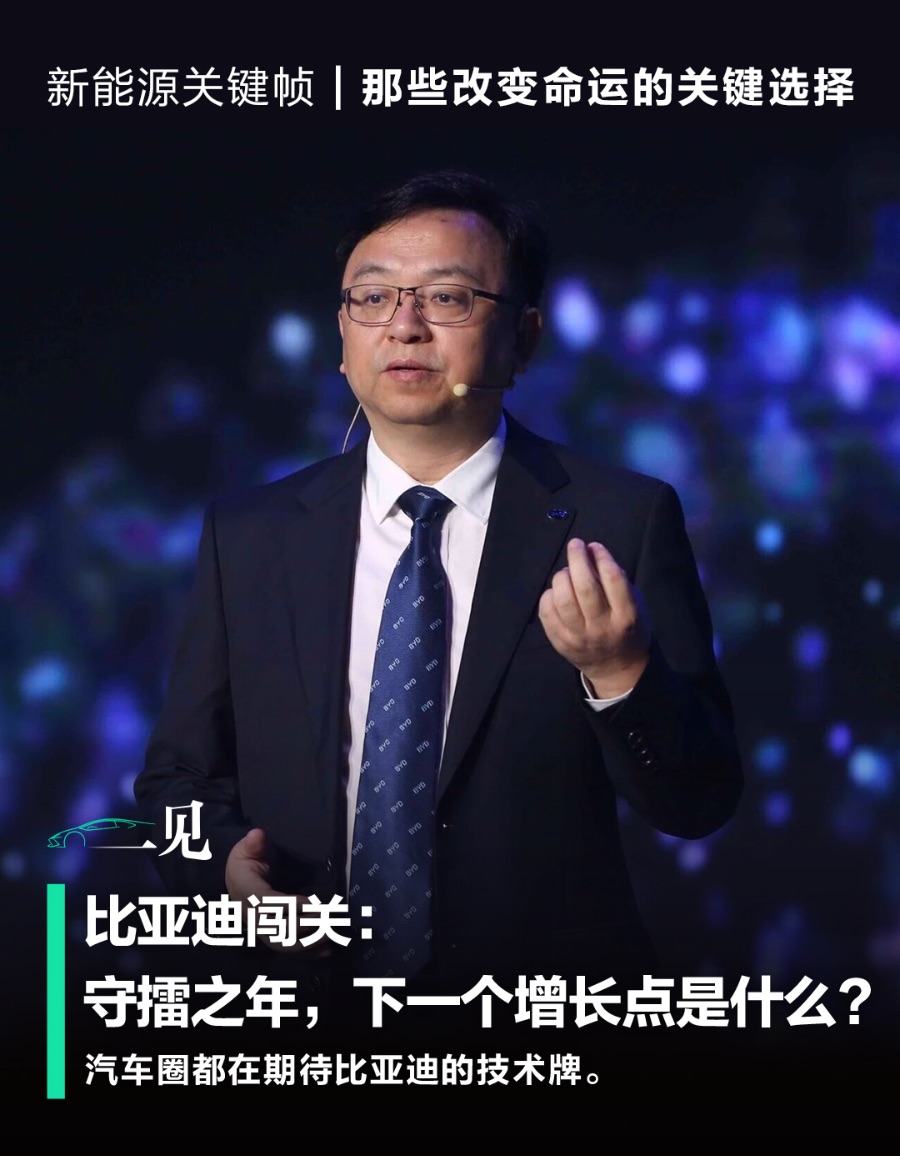
比亚迪闯关:守擂之年,下一个增长点是什么?
2 1 Shi Ji Jing Ji Bao Dao· 2026-03-03 23:31
Core Insights - BYD is facing increasing competition and challenges in maintaining its market share, particularly in the entry-level electric vehicle segment, as competitors like Geely are gaining ground [3][4][18] - The company is undergoing strategic adjustments, focusing on product innovation and marketing to better align with consumer demands and market dynamics [5][22][23] - BYD's historical success has been driven by its pricing strategy and technological advancements, but it now faces diminishing returns on its growth model as competition intensifies [13][14][17] Group 1: Market Performance - In early 2026, BYD's sales dropped significantly, with January and February figures showing a year-on-year decline of 30% and 41.1%, respectively [3] - Geely's sales in the same period surpassed BYD's, indicating a shift in market leadership [12][14] - BYD's Dolphin and Seagull models are under pressure from competitors entering the affordable electric vehicle market [4][18] Group 2: Strategic Adjustments - BYD is focusing on launching new models to reclaim market share in the sub-200,000 yuan electric vehicle segment, which is seen as a critical area for growth [5][21] - The company is also shifting its marketing approach to emphasize emotional value and user experience rather than just technical specifications [23][24] - A hybrid sales model combining direct sales and authorized dealerships is being implemented to enhance market penetration [24] Group 3: Technological Innovation - BYD's technological advancements, such as the DM-i technology and blade battery, have historically provided a competitive edge, but the rapid pace of innovation in the industry poses challenges [9][17] - The company is committed to continuous improvement and innovation, with plans to introduce new technologies by 2026 [5][24] - The competitive landscape is evolving, with rivals quickly replicating successful technologies, necessitating BYD to reassess its technological strategies [14][16] Group 4: Future Growth Opportunities - BYD is targeting international markets for growth, with overseas sales projected to reach 1.3 million units in 2026, representing over 30% of total sales [29][32] - The company is also focusing on high-end market segments, with new brands like Tengshi and Fangchengbao aimed at capturing higher price points [25][26][28] - The overall trend in the automotive industry indicates a shift towards international markets, which is expected to provide significant growth opportunities for BYD [32]
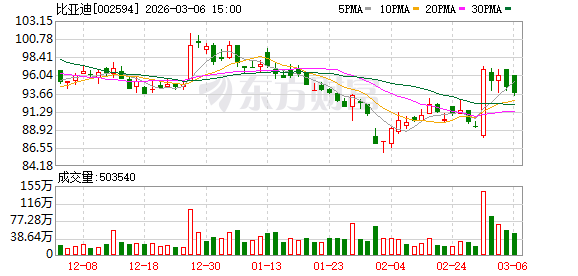
比亚迪(002594):出海销量再超10万辆,3月新技术+产品周期蓄势待发:比亚迪2026年2月销量点评
Changjiang Securities· 2026-03-03 23:30
Investment Rating - The investment rating for BYD is maintained as "Buy" [6] Core Insights - In February, BYD's total sales reached 190,000 vehicles, a year-on-year decrease of 41.1% and a month-on-month decrease of 9.5%. Passenger car sales were 188,000 units, down 41.0% year-on-year and 8.6% month-on-month. The export volume remained strong at 100,000 units, up 41.4% year-on-year and flat month-on-month [2][4][10] - The company is expected to enter a new technology and product cycle in March, with significant advancements in its electric vehicle technology and a focus on high-end market expansion [10] Summary by Relevant Sections Sales Performance - February total sales: 190,000 vehicles, down 41.1% YoY, down 9.5% MoM - Passenger car sales: 188,000 units, down 41.0% YoY, down 8.6% MoM - Brand performance: Ocean series 165,000 units (-45.8% YoY), Fangcheng Leopard 17,000 units (+244.7% YoY), Tengshi 6,000 units (-35.4% YoY) - Export sales: 100,000 units, up 41.4% YoY, flat MoM [2][10] Market Strategy - Continued focus on overseas expansion and high-end product offerings, with new models expected to enhance profitability - The company is enhancing its technological capabilities, particularly in battery technology and smart driving features, to strengthen its competitive position in the global market [10] Financial Projections - Expected net profit for 2025 is projected at 35 billion yuan, corresponding to a PE ratio of 23X, indicating strong future profitability potential [10]
小米集团-W(01810):行业环境波动,持续高端化探索
GOLDEN SUN SECURITIES· 2026-03-03 13:40
Investment Rating - The report maintains a "Buy" rating for Xiaomi Group [3][5] Core Views - The report highlights that Xiaomi's smartphone shipments in Q4 2025 were approximately 37.8 million units, a year-on-year decline of 11.4%, with a market share of 11.2%, placing it among the top three globally [1] - Xiaomi's high-end product strategy is expected to mitigate the pressure from rising storage costs, with the Xiaomi 17 series achieving strong sales [1] - The automotive segment is projected to deliver over 410,000 units in 2025, with a target of 550,000 units for 2026, indicating a positive growth trajectory [2] - The report anticipates Xiaomi's revenue for 2025-2027 to be 457.8 billion, 541.8 billion, and 644.4 billion CNY respectively, with non-GAAP net profits of approximately 38.6 billion, 37 billion, and 45 billion CNY [3][4] Financial Summary - Revenue for 2023 is projected at 270.97 billion CNY, with a year-on-year growth rate of -3%, followed by 365.91 billion CNY in 2024, representing a 35% increase [4][12] - Non-GAAP net profit is expected to rise from 19.27 billion CNY in 2023 to 38.58 billion CNY in 2025, reflecting a growth rate of 42% [4][12] - The report forecasts a decline in smartphone gross margin to over 8% in Q4 2025 due to increased storage costs, despite an overall positive contribution from product structure optimization [1][3] Market Position - Xiaomi's market share in the Chinese smartphone market is reported at 13.2%, ranking it among the top five [1] - The company is recognized as a leader in the industry, with a strong focus on high-end product offerings, which is expected to enhance its competitive position in the long term [3]
吉利汽车(00175.HK)2月销量点评:1+2月出口表现强劲
Ge Long Hui· 2026-03-03 07:10
Core Viewpoint - Geely Auto reported a February sales volume of 206,000 units, showing a year-on-year increase of 0.6% but a month-on-month decrease of 23.7% [1] Group 1: Sales Performance - The sales breakdown includes 73,000 units from the Galaxy brand (down 3.9% year-on-year, down 11.9% month-on-month), 27,000 units from Lynk & Co (up 59% year-on-year, down 5.3% month-on-month), and 24,000 units from Zeekr (up 70% year-on-year, up 0.1% month-on-month) [1] - Domestic sales were 145,000 units (down 19% year-on-year, down 31% month-on-month), while exports reached 61,000 units (up 140% year-on-year, up 0.6% month-on-month) [1] Group 2: Future Product and Growth Strategy - Geely is entering a strong new product cycle in 2026, with the launch of competitive new models including the Boyue REV, Zeekr 8X, Galaxy A7 electric version, Galaxy M8, and Galaxy Warship [1] - The company plans to release three flagship six-seat SUVs in 2025: Galaxy M9, Lynk & Co 900, and Zeekr 9X, with expected monthly sales of 5,000-10,000 units, 2,000-8,000 units, and 5,000-9,000 units respectively [1] - In 2026, Geely aims to launch a large five/six-seat SUV, the Zeekr 8X, priced between 300,000-400,000 yuan, further expanding its high-end product lineup [1] Group 3: Export Growth and Financial Projections - The company targets a 50% increase in export sales for 2026, aiming for 640,000 units, with a steady growth forecast of 274,000 units in 2023, 415,000 units in 2024, and 420,000 units in 2025 [2] - Despite domestic sales pressures, the strong export performance demonstrates resilience, with total sales expected to reach 3.6 million and 4.02 million units in 2026 and 2027, respectively, reflecting year-on-year growth of 19% and 12% [2] - The company anticipates net profit margins of 5.2%, 5.9%, and 5.9% for 2025-2027, with net profits projected at 17.4 billion, 25 billion, and 27.8 billion yuan, respectively [2] Group 4: Valuation and Investment Outlook - Geely is expected to achieve a valuation recovery as the automotive sector rebounds, with a projected PE ratio of only 6.2 for 2026, significantly below historical levels [3] - The company forecasts total sales of 720,000 units in Q1 2026, with net profit expected to exceed 4.5 billion yuan [3] - The net profit estimates for 2025-2027 have been adjusted to 17.4 billion, 25 billion, and 27.8 billion yuan, corresponding to PE ratios of 8.9, 6.2, and 5.6 [3]
