智能体

Search documents
百度发布金融行业大模型,沈抖:产业从提示词优化走向智能体构建
Tai Mei Ti A P P· 2025-06-08 11:23
Core Insights - Baidu's intelligent cloud has seen 65% of central enterprises choose to engage in deep cooperation, indicating strong market acceptance and demand for its services [2] - The launch of the "Qianfan Huijin" financial model marks Baidu's strategic focus on industry-specific large models, particularly in finance, to enhance accuracy and practicality [6][4] Group 1: Industry Model Development - Industry large models are designed to integrate specific industry data and knowledge into general model technology, improving performance in specialized fields [3] - Baidu is leveraging its extensive financial data to explore the feasibility of industry large models, addressing the high accuracy and timeliness requirements of the financial sector [4][6] - The "Qianfan Huijin" model has been developed with hundreds of billions of tokens of high-quality financial data, optimizing for complex financial tasks [6] Group 2: Model Variants and Performance - The "Qianfan Huijin" model offers both 8B and 70B parameter versions, catering to different operational needs, with the larger model designed for complex reasoning tasks [6] - In evaluations, the 100 billion parameter scale of the financial model has outperformed general models with over 1 trillion parameters [6] Group 3: Intelligent Agents and Future Trends - The industry is shifting focus towards intelligent agents, with 2025 anticipated as a pivotal year for their development and application [7] - Intelligent agents are expected to enhance productivity in various sectors, including finance, energy, retail, and manufacturing [7] Group 4: Practical Applications and Collaborations - Baidu has collaborated with State Grid to create an intelligent agent for marketing and power supply, showcasing practical applications in the energy sector [8] - The "Highway Emergency Command Intelligent Agent" has been implemented to improve emergency response times in the transportation sector [8] Group 5: Development and Deployment Considerations - Companies are encouraged to consider three key aspects when developing intelligent agents: development process, model selection, and computing power [9] - Baidu's Qianfan platform supports both public and private cloud deployments, allowing for flexible integration of intelligent agents into business systems [9] Group 6: Computing Power and Infrastructure - Baidu's Kunlun chip P800 is highlighted for its superior performance in running large models, with significant deployments already in place across various sectors [10] - The integration of Baidu's platform with Kunlun chips has shown to enhance throughput performance and resource utilization significantly [10]



2025年,百度智能云打响AI落地升维战
Sou Hu Cai Jing· 2025-06-06 13:25
Core Insights - The article discusses the advancements in AI technology, particularly focusing on the development of "Agent" systems by Baidu Smart Cloud, which aims to enhance AI productivity for businesses [2][18] - It highlights the increasing consensus among companies regarding the importance of implementing intelligent agents in their operations, with a significant rise in pilot projects since early 2025 [4][5] - The article also addresses the challenges faced by companies in deploying AI solutions, particularly in achieving clear ROI and ensuring data quality [4][8] Group 1: AI Development and Implementation - Baidu Smart Cloud has introduced a new end-to-end AI engineering system combining "industry models + industry intelligent agents," aimed at reducing the barriers for AI implementation in various sectors [2][18] - The adoption of intelligent agents has surged, with a report indicating that the percentage of companies piloting such projects increased from 37% to 65% since Q1 2025 [4][5] - Despite the enthusiasm, it is projected that 30% of AI and intelligent agent projects will be abandoned post-POC due to unclear ROI and other challenges [4][5] Group 2: Case Studies and Applications - The article presents the case of Wuhan Union Hospital, which has implemented an AI-guided diagnosis system, showcasing the practical application of Baidu's intelligent agents in healthcare [3][4] - Baidu Smart Cloud has assisted users in fine-tuning 33,000 large models and developing over 1 million enterprise-level applications, demonstrating its extensive impact on AI productivity [5][18] - The introduction of specialized intelligent agents for various industries, such as energy and transportation, reflects Baidu's strategy to collaborate with leading industry players to enhance AI capabilities [13][16] Group 3: Challenges and Future Directions - The article outlines significant challenges in AI deployment, including the need for data security and accuracy, which many current intelligent agent service providers struggle to meet [8][11] - It emphasizes the necessity for companies to build tailored AI environments to maximize the value of intelligent agents, highlighting the gap between general-purpose agents and industry-specific needs [5][11] - Baidu Smart Cloud's approach includes the development of dedicated industry models, such as the "Qianfan Huijin Financial Model," which integrates high-quality financial data to enhance AI performance in specific sectors [17][18]

65%央企AI创新首选,百度智能云如何让智能「涌现」?
雷峰网· 2025-06-06 09:26
Core Insights - The speed and quality of deploying large models are becoming critical competitive factors for companies in the wave of intelligence transformation [2][3] - The overall penetration rate of AI large models is still below 1%, but over half of the companies that have deployed them report significant business value [2] - There exists a cognitive gap and action gap between companies investing in technology and those viewing it as an "industry bubble," reflecting the challenges in transitioning from pilot projects to widespread adoption [2][3] Group 1: Challenges in Large Model Deployment - Companies face dual obstacles in their digital transformation: a lack of technical capabilities and the "barrel effect" caused by single capability shortcomings [2][3] - A large group invested 30 million in developing a corporate large model but ultimately abandoned the project due to difficulties in technical implementation, data privacy risks, and unclear business models [2] Group 2: Importance of Full-Stack Capabilities - Successful deployment of large models requires deep collaboration with industry experts who possess full-stack technical capabilities [3][5] - Baidu Smart Cloud is leading in the number of large model projects, industry coverage, and projects won by state-owned enterprises, positioning itself as an industry expert in large model deployment [3] Group 3: Infrastructure and Performance - Full-stack infrastructure is essential for the deployment of large models, addressing multiple barriers from model availability to business effectiveness [5][9] - Baidu Smart Cloud's Kunlun P800 chip supports efficient model training, significantly reducing costs and enhancing performance [8][9] Group 4: Innovations in Resource Utilization - The Baidu "百舸" platform has improved resource utilization by 50%, enhancing the performance of Kunlun chips and ensuring high stability in large model training [9][10] - The platform supports a mixed cloud approach, optimizing resource allocation and achieving over 95% effective training time for 30,000-card clusters [9][10] Group 5: Industry-Specific Large Models - Baidu has launched the "千帆慧金" financial large model, which is tailored for the financial sector, demonstrating superior performance compared to general models [14][15] - The model supports various financial applications, showcasing deep industry knowledge and reasoning capabilities [15][16] Group 6: Cost-Effectiveness and Accessibility - The pricing of Baidu's large models is significantly lower than competitors, making advanced AI technology more accessible to enterprises [16] - The 千帆 platform has facilitated the development of over 1 million enterprise-level AI applications, enhancing the deployment of intelligent agents across various industries [16][18] Group 7: Future Directions and Strategic Goals - Baidu aims to deepen its integration into industry scenarios, enhancing the development of intelligent agents that can coordinate across organizations [19][30] - The company is committed to continuous investment in advanced AI infrastructure to accelerate the industrialization of large models and unlock more value from various scenarios [31][32]
AI生成快捷指令,苹果AI最有用的一集来了,然并卵?
3 6 Ke· 2025-06-06 04:22
彭博社记者 Mark Gurman 在稍早前的一次报道中就披露,苹果计划在 WWDC 2025 上宣布为「快捷指令(Shortcuts)」引入 Apple Intelligence 实现 AI 生成 快捷指令,用户只需用一句自然语言,就能自动生成包含复杂自动化流程的快捷指令。 图/苹果 这意味着,不再需要拖拉模块、配置变量、苦读社区教程,手机可以直接听懂你的「意图」,并转化为系统级的执行链路和快捷指令。 一年一度的 WWDC 大会,即将拉开序幕。 按照苹果的时间表,WWDC 2025 首场主题演讲将于北京时间 6 月 10 日凌晨 1 点开始。根据多方爆料的信息,今年 WWDC 苹果在系统层面的一大重点是 视觉设计大改,从 iOS 到 watchOS 在向 VisionOS 的风格迭代,同时话题当然也离不开 AI。 没错,尽管 Apple Intelligence 去年发布以来跳票不断,至今都没能完整上线,甚至已经被用户集体上诉,但在 AI 这件事,苹果终究还是要继续踏步向前。 相比 AI 智能体完全替代人类操作手机,这或许不够性感,但在今天的技术条件下更容易落地,也可能与智能体相互配合,实现真正的 AI 工 ...


阿里智能体多轮推理超越GPT-4o,开源模型也能做Deep Research
量子位· 2025-06-06 04:01
Group 1 - The core viewpoint of the article is the introduction of WebDancer, an advanced autonomous information retrieval agent developed by Tongyi Lab, which addresses the growing demand for multi-step information retrieval capabilities in an era of information overload [1][2][3]. Group 2 - Background: The traditional search engines are insufficient for users' needs for deep, multi-step information retrieval across various fields such as medical research, technological innovation, and business decision-making [3]. - Challenges: Building autonomous agents faces significant challenges, particularly in obtaining high-quality training data necessary for complex multi-step reasoning [4]. Group 3 - Innovative Data Synthesis: WebDancer proposes two innovative data synthesis methods, ReAct framework and E2HQA, to address data scarcity [5][6]. - ReAct Framework: This framework involves a cycle of Thought-Action-Observation, enabling the agent to generate thoughts, take structured actions, and receive feedback iteratively [5]. Group 4 - Training Strategies: WebDancer employs a two-phase training strategy, including Supervised Fine-Tuning (SFT) and Reinforcement Learning (RL), to enhance the agent's adaptability and decision-making capabilities in dynamic environments [12][13]. - Data Quality Assurance: A multi-stage data filtering strategy is implemented to ensure high-quality training data, enhancing the agent's learning efficiency [9][10]. Group 5 - Experimental Results: WebDancer has demonstrated outstanding performance in various information retrieval benchmark tests, particularly excelling in the GAIA and WebWalkerQA datasets [17][18][19]. - Performance Metrics: The best-performing models achieved a Pass@3 score of 61.1% on the GAIA benchmark and 54.6% on the WebWalkerQA benchmark, showcasing their robust capabilities [20]. Group 6 - Future Prospects: WebDancer aims to integrate more complex tools and expand its capabilities to handle open-domain long-text writing tasks, enhancing the agent's reasoning and generative abilities [29][30]. - Emphasis on Agentic Models: The focus is on developing foundational models that inherently support reasoning, decision-making, and multi-step tool invocation, reflecting a philosophy of simplicity and universality in engineering [30][31].

突破视频时长限制!Manus上架视频生成功能,网友:比Sora更好
量子位· 2025-06-04 09:14
Core Insights - Manus has introduced a new video generation feature that allows for continuous stitching of shorter videos to create longer narratives, overcoming the typical time limitations of most video generation AIs [1][14][15] - The platform can generate videos based on user prompts, planning each scene and producing visual effects to vividly present the user's vision [5][11] - Currently, this feature is available only to Manus members, with regular users awaiting access [9] Group 1: Video Generation Process - The video generation process involves three main steps: clarifying user needs based on prompts, generating video segments according to a plan, and editing the segments together to create a final product [23] - Users have reported mixed results, with some finding the generated content comparable to other platforms, while others noted that the overall quality still has room for improvement [17][18][32] Group 2: User Experience and Feedback - Initial user tests have shown a variety of outcomes, with some users expressing excitement about the new capabilities, while others feel the results do not significantly stand out from existing products [13][18] - Users have noted that the ability to edit generated videos enhances the creative process, allowing for batch production using natural language [29][32] Group 3: Technological Context - The emergence of new video generation technologies, such as those utilizing neural networks, is lowering the barriers to video production, making it more accessible for users [40][42] - Manus is positioned as a key player in this trend, leveraging advanced technology to generate videos in real-time based on user attention [43][45] Group 4: Recent Developments - Since its launch, Manus has rapidly expanded its features, including free registration for new users and the introduction of various functionalities like image generation and PPT creation [47][49][50] - The company is actively trying to attract attention in the competitive AI landscape by continuously updating and enhancing its offerings [51]
当AI从卖工具,变为卖收益,企业级AI如何落地?丨ToB产业观察
Sou Hu Cai Jing· 2025-06-03 03:54
Core Insights - The next wave of AI is focused on generating revenue rather than just providing tools, which is seen as a trillion-dollar opportunity by industry leaders [2] - The transition from large models to intelligent agents marks a new era in AI, emphasizing automation and cash flow generation [2] - Companies' core competitiveness will depend on customized AI applications and quantifiable business outcomes [2][3] Data and Integration - High-quality data is essential for companies to realize the benefits of AI, with data integration being a critical factor [3] - The integration of AI with traditional automation technologies is a key focus for future AI development, particularly in manufacturing [3][4] Intelligent Agents - The demand for intelligent agents is growing, with various companies launching advanced AI models and solutions [6][7] - IBM has introduced a comprehensive enterprise-ready AI agent solution, emphasizing collaboration and integration with existing IT assets [7][8] Application and Use Cases - Intelligent agents are being applied in specific business scenarios, such as customer service and R&D, to enhance efficiency and reduce operational costs [10][11] - Companies are encouraged to start with small, specific use cases to validate ROI before scaling up [12] Market Trends - The sales of AI agents and related products are projected to significantly increase, with estimates suggesting revenues could reach $125 billion by 2029 and $174 billion by 2030 [6] - The competitive landscape is shifting as companies seek to leverage AI agents for greater returns on investment [12]


“令人敬畏”的粤产AI企业背后 智能体狂飙与“全球化”博弈
Sou Hu Cai Jing· 2025-05-31 22:06
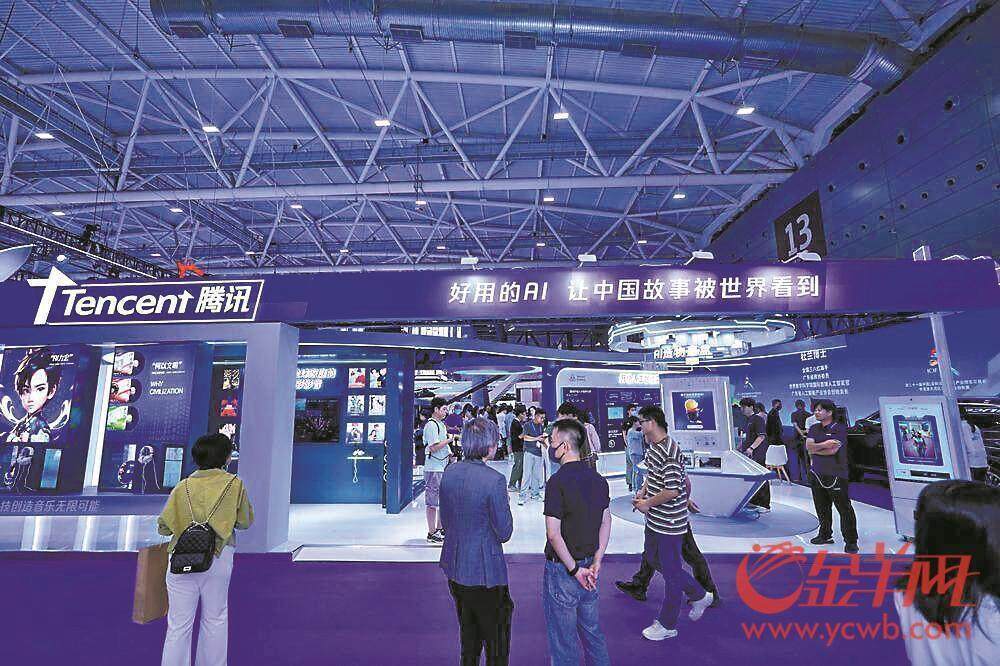
从年初DeepSeek惊艳全球,到如今顶级玩家点名表示"敬畏",中国AI的锋芒为何仅用短短五个月便如此锐利?在"弯道超车"的引擎轰鸣声中, 中国AI产业的下一站——智能体的普惠与全球化的破局——又该如何驶向那片星辰大海? 在中国人工智能行业蓬勃发展,创新一日千里、迎头赶上的路上,腾讯的"落地生根"与阿里的"扬帆出海",从两家头部互联网大厂近期昂扬对 外宣传的"知与行"中可见一斑。 文/图 羊城晚报全媒体记者 王丹阳 5月29日,英伟达公司首席执行官黄仁勋对外表示,中国的人工智能AI竞争对手已变得"相当令人敬畏",技术越来越强大。特别是对来自广东 的人工智能头部企业,这位站在算力金字塔顶端的掌门人直言,腾讯以及其他曾是英伟达产品的大买家转向华为是无可厚非的。 好用AI"落地" "智能体"正火 继业务全面拥抱AI后,腾讯大模型战略第一次全景亮相,亮点在哪儿? "AI持续落地,每个企业正在成为AI公司,每个人也将成为AI加持的'超级个体'。"5月21日,腾讯集团高级执行副总裁、云与智慧产业事业群 CEO汤道生表示。 在当日举行的2025腾讯云AI产业应用峰会上,从自研的混元大模型,到AI云基础设施,再到智能体开发工 ...


下一代入口之战:大厂为何纷纷押注智能体?
3 6 Ke· 2025-05-30 04:09
Core Insights - The article discusses the transformative potential of AI agents, referred to as "智能体" (intelligent agents), in human-computer interaction, allowing users to issue simple commands for complex tasks without needing to operate tools directly [1][6] - Major tech companies, both domestic and international, are heavily investing in the development of intelligent agents, indicating a competitive race to dominate this emerging field [1][6] - The article categorizes the current landscape of intelligent agents into three distinct camps: AI platform providers, enterprise service providers, and hardware manufacturers, each with unique strategies and focuses [7][12] Group 1: Definition and Importance of Intelligent Agents - Intelligent agents are defined as advanced AI applications capable of deep thinking, autonomous planning, decision-making, and execution, distinguishing them from traditional conversational AI [2] - The adoption of intelligent agents is driven by the need for lower application barriers, making advanced technology accessible to non-experts, thus enhancing user experience and productivity [2][3] - Intelligent agents can significantly improve productivity by allowing users to interact with complex systems through natural language, eliminating the need for extensive training and system understanding [3][6] Group 2: Market Dynamics and Competitive Landscape - The article identifies three main camps in the intelligent agent ecosystem: - The first camp consists of AI platform providers like Baidu and OpenAI, focusing on building a robust developer ecosystem for intelligent applications [8] - The second camp includes enterprise service providers like Microsoft and IBM, which aim to integrate intelligent agents into existing business processes for automation and efficiency [9] - The third camp comprises hardware manufacturers such as Huawei and Coolpad, who are embedding intelligent agents directly into consumer devices to enhance user experience [11][12] - The competition among these camps is expected to drive innovation and accelerate the adoption of intelligent agents across various sectors [12] Group 3: Future Trends and Challenges - The article suggests that vertical intelligent agents, which are tailored to specific industries, are likely to achieve market readiness faster than general-purpose agents due to their focused applications [16] - A significant challenge for intelligent agents is the need for collaboration among multiple agents to handle complex tasks, which requires advanced capabilities in intent recognition and task orchestration [17][18] - The impact of intelligent agents on hardware is anticipated to be more significant than on software, as they redefine interaction logic and transform devices into service hubs [19][20] - The article concludes by highlighting the ongoing challenges that intelligent agents face, including the need for sustainable ecosystems, effective application scenarios, and efficient collaboration mechanisms [21][22]



AI浪潮录丨王晟:谋求窗口期,AI初创公司不要跟巨头抢地盘
Bei Ke Cai Jing· 2025-05-30 02:59
Core Insights - Beijing is emerging as a strategic hub in the AI large model sector, driven by technological innovation and a supportive ecosystem for breakthroughs [1] - The role of angel investors is crucial in the AI industry, providing essential support to startups and helping them take their first steps [4] - The AI large model wave has gained momentum globally since 2023, with early investments in generative models proving to be prescient [5][6] Group 1: AI Development and Investment Trends - The AI large model trend is characterized by a shift from previous waves focused on computer vision and autonomous driving to the current emphasis on AI agents and embodied intelligence [5][6] - Investors are increasingly favoring experienced founders with strong academic and research backgrounds, as seen in the case of companies like DeepMind and the Tsinghua NLP team [12][16] - The emergence of open-source models like Llama has accelerated competition among AI companies, allowing them to shorten development timelines [13] Group 2: Investment Strategies and Market Dynamics - Angel investors are focusing on a select number of projects, often operating in a "water under the bridge" manner, avoiding fully marketized projects [14][15] - The investment landscape is divided between long-term oriented funds that prioritize innovation and those focused on immediate revenue generation [21][22] - The success of companies like DeepSeek highlights the challenges faced by startups in competing with established giants, as the consensus around large models has solidified post-ChatGPT [26][27] Group 3: Entrepreneurial Characteristics and Market Challenges - Current AI entrepreneurs are predominantly scientists or technical experts, forming a close-knit community that is easier to identify and engage with [18][19] - The academic foundation of AI startups is critical, as many successful ventures are built on decades of research and development from their respective institutions [16][20] - The market is witnessing a shift where the ability to innovate is becoming more important than merely having financial resources, as the previous model of "buying capability" is no longer sustainable [27][28]