
数字金融

Search documents
精准解题“五篇大文章”,激活区域发展新动能
Mei Ri Jing Ji Xin Wen· 2025-11-09 13:09
Core Insights - The 2025 Financial Development Conference held in Beijing focused on the resilience and transformation paths of China's banking and insurance industry in complex environments [1] - Chengdu Bank received the "Annual Special Award for Characteristic Finance" at the conference, highlighting its innovative practices and recognition for its regional service effectiveness [1][2] - As a key financial institution in the Chengdu-Chongqing economic circle, Chengdu Bank has surpassed 1 trillion yuan in assets, achieving a total asset scale of 1.38 trillion yuan by the end of September this year [1] Group 1: Financial Innovation and Services - Chengdu Bank has developed a unique regional practice by translating the strategic requirements of the financial "Five Major Articles" into distinctive financial services [2] - The bank has established a "Four Special" service system focusing on technology finance, which includes specialized institutions, professional teams, dedicated credit, and exclusive products [3] - By the end of 2024, over 90% of the bank's technology branch clients were technology enterprises, showcasing its commitment to supporting innovation [3] Group 2: Green Finance Initiatives - Chengdu Bank has provided over 8 billion yuan in credit support to the Chengdu Public Transport Group, aiding the transition to a greener public transport system [5] - The bank's green credit balance reached 49.77 billion yuan by the end of 2024, marking a 22.87% increase year-on-year, leading the market share among provincial banks [6] - Chengdu Bank issued 3 billion yuan in green financial bonds, supporting 53 green projects and enhancing regional green transformation [6] Group 3: Inclusive Finance and Support for SMEs - The bank has created a "park + finance + scenario" service ecosystem to enhance financial services for small and micro enterprises [7] - Chengdu Bank has provided over 15 billion yuan in credit to more than 200 core enterprises, supporting over 5,000 small and micro enterprises through its supply chain finance initiatives [8] - The average interest rate for inclusive loans dropped to 3.3%, benefiting private enterprises and reducing their financing burdens [8] Group 4: Elderly Financial Services - Chengdu Bank has established a comprehensive elderly customer service system, providing prioritized and preferential services to senior clients [9] - The bank has completed standardization of service facilities and has launched a senior-friendly version of its mobile banking app to address the needs of elderly customers [10] Group 5: Digital Transformation - Chengdu Bank has built a robust digital infrastructure with a "5+2" middle platform system to support its digital transformation [11] - The bank's electronic banking customer base exceeded 6.34 million by 2024, with mobile banking active users reaching 1.39 million [12] - The bank aims to continue enhancing its financial services by focusing on technology finance, green finance, inclusive finance, elderly finance, and digital finance [12]
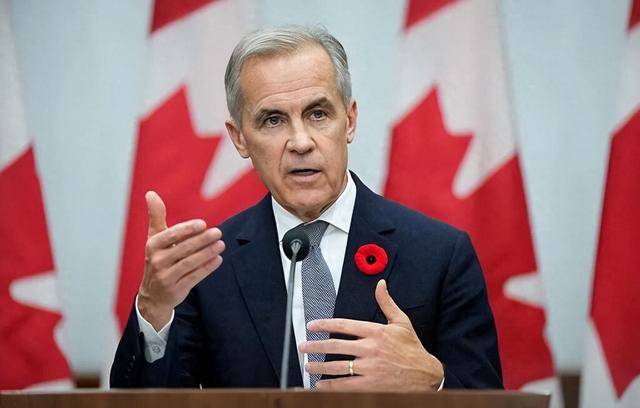
特朗普与加拿大彻底闹翻了?美联储降息大消息,又出现了新论点!
Sou Hu Cai Jing· 2025-11-09 04:25
Core Points - Canada has officially ended its decades-long close economic relationship with the United States, as announced by Prime Minister Carney on November 7 [1] - The economic interdependence between Canada and the U.S. has been significant since the implementation of the Canada-U.S. Free Trade Agreement in 1988, with most Canadian products being exported to the U.S. [3] - Trump's tariff policies have severely impacted Canadian exports, leading to a noticeable decline in export volumes and economic downturns in certain provinces [5] Group 1: Trade Relations - The Ontario province's anti-tariff advertisement sparked significant conflict, leading to a halt in trade negotiations between Canada and the U.S. [7] - The advertisement criticized U.S. tariff policies by quoting former President Reagan, but it backfired, resulting in increased tariffs on Canadian goods by Trump [10] - Ontario's government has since abandoned its apology and is now focused on a ten-year plan to reduce reliance on the U.S. market, aiming to double exports to non-U.S. markets [12] Group 2: Economic Strategies - Canada is actively pursuing new trade agreements, having already signed a free trade agreement with Indonesia and seeking partnerships with the UAE, Germany, and the EU [12] - The expansion of the Port of Montreal is underway to facilitate increased trade, although challenges such as depth limitations and past labor strikes pose risks [14][15] - Despite ambitious plans, the new markets may only partially compensate for the loss of exports to the U.S., as their purchasing power is significantly lower [15] Group 3: Monetary Policy Implications - The ongoing trade tensions have coincided with discussions within the Federal Reserve regarding potential interest rate cuts, influenced by the demand for stablecoins [19][24] - The debate over interest rate adjustments is complicated by political influences, raising concerns about the independence of the Federal Reserve's monetary policy [24] - The situation highlights the interconnectedness of global trade and monetary policies, with implications for countries reliant on single markets [26][28]

“全勤生”渣打银行以“超级连接器”助力企业跨境融通
Zhong Guo Jing Ji Wang· 2025-11-09 02:17
Group 1 - Standard Chartered Bank showcased its innovative achievements in supporting enterprises going global, cross-border trade, sustainable finance, and digital finance at the 8th China International Import Expo [1] - The bank presented upgraded products and services, including the revamped "Standard Chartered SME Outbound Pass" and the one-stop cross-border financial solution "Standard Chartered Global Chain" [1] - The CEO of Standard Chartered Group emphasized the importance of China as a strategic market and the role of the bank as a "super connector" to bring global opportunities to China and vice versa [1] Group 2 - Standard Chartered has been operating in China for over 167 years and has significantly participated in the country's financial market opening milestones [2] - Since 2017, China has been the largest market contributing to Standard Chartered's global network income [2] - The bank opened its third priority private banking center in mainland China in July, which is the 14th globally, indicating its commitment to increasing investments in productivity, digitalization, and financial innovation in China [2]
放弃中国国籍,痛快交上百亿罚款,赵长鹏成全球最相信美国的冤种
Sou Hu Cai Jing· 2025-11-08 15:52
Group 1 - Binance was founded in 2017 and quickly became a leading global cryptocurrency exchange due to its excellent product experience and user service [3] - The founder, Zhao Changpeng, was influenced by Ethereum's founder Vitalik Buterin, which led him to focus on the emerging field of cryptocurrency [8] - Zhao sold his property in Shanghai to invest fully in Bitcoin, capitalizing on the cryptocurrency boom to establish Binance [9] Group 2 - As Binance grew, it faced increasing scrutiny from regulatory bodies worldwide, leading to a compliance struggle [15] - In 2021, Zhao's personal wealth peaked at over $90 billion, making him one of the richest individuals in the world [19] - In March 2023, Zhao was sued by the U.S. Department of Justice for illegal operations, which escalated with further charges from the SEC [20] Group 3 - In November 2023, Zhao accepted some charges and agreed to pay a $4.3 billion fine to settle with the U.S. Department of Justice [23] - The total fines exceeded $7 billion, approximately 500 billion RMB, leading to mixed public perceptions of Zhao's compliance with U.S. judicial systems [25] - Following these events, Zhao stepped back from the public eye but later expressed confidence in the future of digital finance [27] Group 4 - Zhao's journey reflects the broader narrative of the cryptocurrency industry, highlighting the balance between innovation and regulation [29] - For Binance to continue participating in global markets, especially the U.S., it must enhance compliance governance and resource integration [31] - Zhao's case serves as a reminder of the systemic risks associated with the intersection of finance and regulatory power [31]

到安徽去 做合伙人!——上市公司优强企业安徽行
Shang Hai Zheng Quan Bao· 2025-11-07 22:43
Core Insights - Anhui is becoming a new highland for enterprise investment and development, driven by innovation and open collaboration [2][3] - The series of visits organized by Shanghai Securities News has been recognized as a "2.0 version" of investment attraction in Anhui [2] - The provincial government aims to strengthen communication and create a first-class business environment to support enterprises and investors [2][3] Group 1: Investment Opportunities - Companies are exploring deep connections with Anhui's strong industrial base for collaborative development [4][5] - The 2025 World Manufacturing Conference in Hefei highlighted significant investment potential, with 932 projects and a total investment of 424.6 billion yuan [4] - Enterprises like Aolaide and Meier Technology are looking to establish R&D and manufacturing bases in Anhui to leverage local partnerships [4][5] Group 2: Industry Collaboration - Companies are interested in establishing R&D platforms and enhancing capital cooperation to support Anhui's high-quality development [8][9] - The focus is on strategic emerging industries such as artificial intelligence, low-altitude economy, and digital finance [6][7] - Collaboration proposals include integrating chip testing services and developing logistics systems for the semiconductor industry [7] Group 3: Government Support and Infrastructure - Business leaders emphasize the need for improved talent policies and infrastructure development to enhance the investment environment [10] - Suggestions include optimizing market access and supporting private enterprises in major projects [10][9] - The government is encouraged to create a more attractive environment for high-end talent retention and infrastructure upgrades [10]
党建引领促试点提质增效 全市数币钱包开立超3169万个
Su Zhou Ri Bao· 2025-11-07 00:27
市委金融工委成立以来,金融办机关、市属金融国企、市县两级地方金融党建均取得长足进步。此 次启动活动明确,要以高质量党建推动金融高质量发展,数字人民币试点工作要进一步总结成效经验, 前置精准布局,聚焦问题导向,狠抓任务落实。在昨天的活动中,市委金融办、市委金融工委、人民银 行苏州市分行联合工商银行苏州分行等8家运营机构联合发布《"政策赋能 生态协同 推动数字人民币试 点提质增效"党建专项行动方案》,合力探索金融党建和业务深度融合,发挥党建的组织优势、政治优 势,形成数币试点工作攻坚破局的强大合力。活动现场,数字人民币推广党员先锋队举行了授旗仪式。 截至9月末,今年全市数字人民币交易金额3.6万亿元,较去年同期增长77.3%,继续位居全国前 列;发放数币贷款3655.1亿元,较去年同期增长35.2%;数币财政支出1184.7亿元,数币支出占财政支 出比重达46%;月平均活跃钱包数154.7万个,较去年同期增长4.3%。试点以来,累计开立个人钱包 3169.4万个,累计开立对公母钱包107.1万个,受理商户门店数累计达72.9万户,数据稳步增长。 我市作为全国首批数字人民币试点城市,贡献了一系列"首创"经验,形成可 ...
广东华兴银行:多元金融赋能全运保障,实干担当聚力湾区建设
Nan Fang Du Shi Bao· 2025-11-06 12:26
多元协同发力,赋能全运生态全链条 广东华兴银行自成立以来,始终坚守"服务实体经济"的初心,十四年间深耕民营经济、产业升级、区域 协调发展等核心领域,为全运保障筑牢了坚实的金融基础。 作为民营实体经济的坚定同行者,广东华兴银行以《民营经济促进法》为指引,持续优化服务体系,截 至2024年,合作民营实体企业贷款规模超1400亿元,占对公贷款余额的70%。为企业提供灵活的资金调 度支持,帮助企业释放资产价值,提升再投资能力,为企业发展与项目建设等注入持续资金动力。 镇街经济作为粤港澳大湾区经济的"毛细血管",其产业与商业集群已成为全运会消费拉动和服务保障的 重要基层支撑之一。广东华兴银行创新打造"镇街金融2.0"策略,围绕"产业赋能、场景融合、生态共 建",探索出一条以"区域图谱+专属服务+创新模式"相结合的区域化金融新路径,为广东省镇街经济体 量身定制金融服务。以佛山为例,广东华兴银行佛山分行深研镇街经济特点,推出"长期授信+国资增 信"综合金融服务模式。该模式通过中长期限的专项融资与镇街国企强力担保结合,为佛山三水区白坭 镇核心项目注入稳定资金流,有力激活区域发展潜力。通过"一镇一策"精准服务体系,该行深入对接 ...

从一家人的幸福到“亿”家人的守护 中国人寿打造智慧保险生活平台
Sou Hu Cai Jing· 2025-11-06 03:11
Core Insights - The article emphasizes the importance of digital transformation in the insurance industry, as outlined in the "New National Ten Articles" issued by the State Council in September 2024, which aims to enhance the sustainable development capacity and digital intelligence level of the insurance sector [1][2]. Group 1: Digital Transformation Initiatives - China Life Insurance Company is integrating a customer-centric approach into its technological innovations, with its core platform, the "China Life Life Insurance" App, serving as a model for implementing the "New National Ten Articles" and promoting digital finance [3]. - The company has addressed the pain points in insurance service efficiency, particularly in claims processing, by leveraging artificial intelligence to create a fully automated claims process, reducing the time from application to payout to as little as 3 minutes [4]. Group 2: Comprehensive Service Ecosystem - The "China Life Life Insurance" App integrates core business functions to create a closed-loop ecosystem that addresses the full lifecycle needs of users, enhancing convenience and warmth in insurance services [5]. - The app features a "digital steward" for insurance management, allowing users to easily track their insurance products and statuses, thereby ensuring peace of mind [5]. - It also serves as a "wealth management steward," providing users with a comprehensive view of their assets and offering diversified asset allocation solutions [5]. - The app includes a "health management steward," offering customized health plans and resources, thus extending insurance coverage into proactive health management [5]. - Additionally, the app has introduced a "senior mode," which is the first in the industry to receive certification for accessibility, making it easier for elderly users to navigate and utilize the app's features [6]. Group 3: Broader Implications for the Industry - The integration of advanced technology into insurance services not only enhances user experience but also represents a significant step in the financial supply-side reform, breaking down barriers and improving access to high-quality insurance and financial services [7]. - The ongoing evolution of the "China Life Life Insurance" App exemplifies the insurance industry's response to the call for digital finance, showcasing a new model of inclusive finance that is resilient, warm, and accessible [7].


金融与科技双向赋能,中泰证券书写“美美与共”的生动实践
Sou Hu Cai Jing· 2025-11-06 02:56
Core Viewpoint - The article emphasizes the role of the securities industry in supporting national strategies and deepening financial supply-side reforms, particularly through technological and digital finance initiatives [1]. Group 1: Technological and Digital Finance - The Central Financial Work Conference highlights the importance of technological finance and digital finance, reflecting the government's commitment to supporting technological innovation through financial services [1]. - Zhongtai Securities focuses on serving the real economy by enhancing its technological capabilities and supporting technological innovation [1][3]. Group 2: Successful IPOs and Industry Leadership - Zhongtai Securities sponsored the successful IPO of Haibo Sichuang on the Shanghai Stock Exchange, marking it as the first successful listing in China's new energy storage sector [2]. - The company undertook innovative efforts to understand the industry and the company’s technological attributes, which were crucial for the IPO process [2][3]. Group 3: Investment and Financing Support - Zhongtai Securities has provided significant support to over 14 technology companies, achieving equity financing of 6.745 billion yuan, with a strong presence in the IPO market [3][6]. - The company has also issued 58 technology bonds, raising 12.264 billion yuan, showcasing its commitment to innovative financing solutions [3]. Group 4: Digital Transformation and Financial Technology - Zhongtai Securities is committed to digital transformation, investing over 1 billion yuan annually in technology, and has established a professional fintech team of over 650 members [7][8]. - The company has developed a leading digital customer service and marketing system, enhancing its wealth management capabilities [8]. Group 5: Support for Specialized Enterprises - The Qilu Equity Trading Center, a subsidiary of Zhongtai Securities, has launched a specialized board for "specialized, refined, distinctive, and innovative" enterprises, serving over 2,300 companies [5]. - The center aims to provide comprehensive services to specialized enterprises, facilitating their growth and listing processes [5].


新湖期货总经理金玉卫:以体系化创新践行《意见》精神
Qi Huo Ri Bao Wang· 2025-11-06 00:53
Core Viewpoint - The issuance of the "Opinions" marks a critical period for the futures industry, emphasizing enhanced regulation, risk prevention, and service to the real economy, aligning with the transformation direction of Xinhu Futures [1] Group 1: Company Strategy and Development Goals - Xinhu Futures aims to establish a comprehensive research and development system by 2029, catering to all varieties and the entire industrial chain, while building an international business layout and management system [1] - The company is focusing on five key areas: technology finance, green finance, inclusive finance, pension finance, and digital finance, to enhance its service efficiency to the real economy [1][2] Group 2: Service Framework and Business Model - Xinhu Futures has developed a "1+6" service model centered on brokerage services, complemented by risk management, wealth management, institutional operations, technical support, trading skills, and active trading services [2] - The company is transitioning to a four-layer business structure that includes intermediary, tool, trading, and investment services, aiming to improve service quality and drive high-quality development [2] Group 3: Case Study and Practical Implementation - A notable case is the collaboration with small and medium-sized silver plating enterprises in Wenzhou, where Xinhu Futures designed a risk management solution to address high procurement thresholds and price volatility [3] - This solution allows enterprises to purchase silver in smaller quantities, reducing financial pressure and risks associated with price fluctuations, thus providing new growth opportunities [3] Group 4: Compliance and Training Initiatives - Following the "Opinions," Xinhu Futures has revised its internal systems, focusing on compliance management processes that integrate prevention, monitoring, and post-event handling [4] - The company has established an online training platform to ensure all employees can access business training and stay updated on regulatory changes [4][5] - Specialized compliance training is provided for new employees to instill a strong understanding of industry rules and company policies from the outset [5]