硬科技

Search documents
一位女博士又融资了
Sou Hu Cai Jing· 2025-12-07 08:08
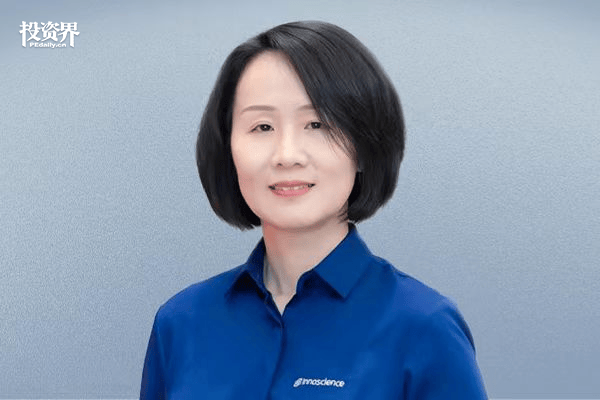
来源:市场资讯 (来源:投资界) 浮出水面。 作者/周佳丽 报道/投资界PEdaily 这要从一起变更说起——近日,星钥半导体新引进了厦门雅恒创业投资基金合伙企业(有限合伙)、 VNTR IX HK Holdings Limited等投资方,穿透下来,分别是红杉中国、高瓴创投旗下基金主体。 换言之,红杉中国、高瓴创投投资了星钥半导体。 乍听"星钥半导体"这个名字稍显陌生,但你一定熟悉其背后掌门人——骆薇薇博士。被称为"氮化镓女 王",她所执掌的英诺赛科最新市值已超730亿港元。 从去年开始,投资人纷纷打听骆薇薇的新项目。原来,她在2022年创办了全力押注硅基Micro LED的星 钥半导体,目前已经集结了华登国际、华业天成、武汉国资、渶策资本、君联资本等知名机构。 红杉高瓴,投了骆薇薇 公开信息显示,星钥半导体(武汉)有限公司(简称:星钥半导体)注册成立于2022年9月,公司掌门 人正是Weiwei Luo(骆薇薇),她同时还拥有一家氮化镓(GaN)功率半导体上市公司"英诺赛科"。 开启新项目,骆薇薇切入了一条极具吸引力的前沿赛道——硅基Micro LED,其所瞄准的正是下一代人 工智能与消费电子应用,产品方 ...

一位女博士又融资了
投资界· 2025-12-07 07:26
Core Viewpoint - The article highlights the emergence of Xingya Semiconductor, founded by Dr. Luo Weiwei, who is recognized for her expertise in GaN technology. The company has attracted significant investment from prominent firms like Sequoia China and Hillhouse Capital, indicating strong market interest in its innovative approach to silicon-based Micro LED technology [2][3][5]. Company Overview - Xingya Semiconductor was established in September 2022 and is led by Dr. Luo Weiwei, who also heads Innoscience Technology, a publicly listed GaN power semiconductor company [3]. - The company focuses on silicon-based Micro LED technology, targeting applications in next-generation AI and consumer electronics, including AR glasses and wearable devices [3][4]. Technology and Production - Xingya Semiconductor has adopted an 8-inch silicon-based GaN LED epitaxy and hybrid bonding technology, creating an IDM model that is highly compatible with mainstream CMOS semiconductor processes. This technology offers rapid response times, excellent contrast and color saturation, high stability, and long lifespan, making it suitable for AR/MR glasses [4]. - The company completed its factory construction and equipment installation in just eight months after establishing its operations in Wuhan's Optics Valley. It has surpassed 100 intellectual property rights and launched its first 8-inch silicon-based GaN Micro LED production line in September 2023, marking a significant milestone as the first of its kind in China [4]. Investment and Growth - Xingya Semiconductor has successfully attracted a diverse group of investors, including Henan State-owned Luoyang Science and Technology Innovation Group, Huaden International, and others. The recent addition of Sequoia China and Hillhouse Capital as investors signals a strong endorsement of the company's potential [5][6]. - The production line is expected to achieve an annual output of 12,000 8-inch Micro LED chips, with a factory area of approximately 1,600 square meters [4]. Leadership and Vision - Dr. Luo Weiwei's entrepreneurial journey is marked by her transition from a successful career at NASA to founding multiple high-tech companies in China. Her commitment to developing "China's chip" has led to significant advancements in the semiconductor industry [6][7]. - The company aims to fill the gap in the domestic market for 8-inch silicon-based GaN technology, which has seen a substantial increase in yield and cost efficiency compared to smaller wafer sizes [7]. Industry Context - The article emphasizes the growing presence of female leaders in the semiconductor and technology sectors, with Dr. Luo Weiwei serving as a prominent example of breaking gender stereotypes in a traditionally male-dominated field [9][10].

复旦科创海外投资基金启动 | 融中投融资周报
Sou Hu Cai Jing· 2025-12-07 03:51
聚焦创投圈投融资最新情报。 12月3日,以"百廿策源汇智全球"为主题的2025年复旦科创大会在复旦大学相辉堂举行,一系列关键举措密集"上新"。其中,复旦科创海外投资基金启 动,复旦科创海外投资基金,首期目标规模为一亿美金。 该基金聚焦天使轮、Pre-A轮、A轮早期项目,致力于"做创业者的首位机构投资人",重点布局生命健康、人工智能、新能源新材料等"3+X"前沿领域,关 注源自复旦核心科研机构与实验室的原创性技术成果,为企业"1-10"产业落地与商业化赋能。基金旨在加快复旦科研成果和本土创新企业的产业化与国际 化进程,将中国的硬科技突破转化为普惠全球的创新成果,提升中国在全球科技格局中的影响力。 近日,天津团泊华海海河创新产业发展股权投资基金合伙企业(有限合伙)顺利完成工商注册,标志着该基金正式迈入运营阶段。 广东粤科风投现场公布了基金设立情况与首期投资计划。基金设有严谨的投资决策与风控流程,并创新设置属地前置审核环节,总投资5亿元,首期出资1 亿元,目前已初步筛选出多个意向落地福州的项目,计划于2026年上半年分批推进投资,与本地产业形成深度协同。 "此次基金的设立为福州低空经济发展奠定了坚实基础,我们将发挥 ...

海通并购资本陈超:并购市场升温,投资聚焦产业赋能与新质生产力
Sou Hu Cai Jing· 2025-12-07 03:51
新质生产力、硬科技将成为核心主线 "春江水暖鸭先知。"陈超用这句话形容投资机构对市场温度的敏锐感知。他表示,并购六条新规发布 后,市场已步入"春天"。除政策的春风外,还有精准施策的春雨,如审核效率提升、融资渠道拓宽(鼓 励并购基金和并购贷款)、估值定价更趋市场化等。2024年9月后,并购活跃度显著提升,交易数量呈 现翻倍式增长,市场在交易方式、领域、规模等方面也呈现"百花齐放"的态势。 陈超认为,与2013至2015年那轮以跨界并购特别是游戏、影视等轻资产领域并购为主,呈现"三高"特征 的浪潮相比,当前市场出现了根本性改善。"当前的并购重组浪潮,主要聚焦在同行业、上下游或者'第 二增长曲线'这三个方面。"在他看来,这与并购六条及后续政策引导的方向高度吻合,使得市场行为更 趋理性和务实。 对于跨界并购,陈超持审慎态度,支持"有逻辑、有协同"的跨界。"并购的难点不在于交易达成,而在 于后续整合。如果仅仅是单纯利润拼凑,很难实现 '1加1大于2'的效果。"他认为,无论跨界幅度大小, 收购方与标的之间需要具备协同基础,如上下游供应商和客户共享、技术和管理效能提升、产业链强链 补链等,才能通过协同赋能实现价值提升。 在 ...
外资牛散陈发树300天坚守冷门股,背后逻辑何在?
Sou Hu Cai Jing· 2025-12-07 01:42
Core Viewpoint - The article discusses the investment strategy of Chen Fashu, a prominent foreign investor, who has maintained a position in lesser-known stocks for over 300 days, diverging from the trend of investing in popular sectors like AI and new energy [1]. Group 1: Holdings Overview - Chen Fashu's significant holdings include three lesser-known stocks: Bichuang Technology, Leidian Weili, and Xinhua Du, with a total holding value of 2.412 billion yuan [3]. - Xinhua Du, a core enterprise under Chen, has seen a 41.15% year-on-year revenue growth in Q3 2024, indicating a clear growth path despite not being in a hot consumer sector [3]. - The average holding period for these stocks is 54 months, reflecting a long-term investment approach that contrasts with the market's short-term trading mentality [3]. Group 2: Core Logic for Holding - Chen's strategy is supported by the 2025 policy direction and technological breakthroughs, aligning with national strategies that encourage foreign investment in high-tech sectors [4]. - The 2025 government report emphasizes quantum technology as a key future industry, with related companies benefiting from a 15% corporate tax rate [4]. - The selected stocks are positioned in high-tech fields with significant barriers to entry, indicating their potential for long-term growth rather than short-term speculation [4]. Group 3: Market Signals - The investment style is shifting towards mid-cap hard technology stocks, which are seen as having greater potential than popular large-cap stocks [5]. - The ongoing policy support for lesser-known sectors is expected to yield higher returns as these areas avoid intense competition [5]. - Chen's average holding period of 54 months aligns with the regulatory encouragement for long-term value investment, suggesting that patience can lead to capturing long-term value [5]. Group 4: Common Misconceptions - The notion that "lesser-known stocks are worthless" is incorrect; the selected stocks have solid fundamentals and are supported by policies, showing stable growth [6]. - The average return of -3.38% and a 50% success rate indicate that not all lesser-known stocks will yield profits, emphasizing the need for careful evaluation [6]. - Chen's strategy of holding stocks despite price stagnation is a proactive choice based on the company's fundamentals rather than a passive loss [6].

投资硬科技 成效很“硬核”
Shen Zhen Shang Bao· 2025-12-06 17:42
Core Insights - Moore Threads, a leading domestic GPU company, officially listed on the STAR Market, becoming one of the fastest semiconductor companies to go public since the implementation of the "registration system" [2] - The Futian Capital Operation Group, a state-owned capital operation platform funded by the Futian District government, has demonstrated its deep expertise in hard technology investment [2] Investment Highlights - Futian Capital has mobilized over 160 billion yuan in social capital since its establishment, managing 53 sub-funds and investing in over 4,000 companies, with over 90% of funds directed towards strategic emerging industries [2] - The group has incubated and supported 231 companies to go public, with a total market value exceeding 2 trillion yuan, and 45 companies have completed the review or submitted application materials [2] Key Companies in Focus - Moore Threads is recognized as China's leading full-function GPU company, with its self-developed MUSA architecture achieving performance close to international mainstream levels [2] - Muxi Technology, a high-performance general-purpose GPU leader, is set to become the second domestic GPU company to list on the STAR Market [3] - Changxin Storage is the only IDM company in mainland China to achieve large-scale production of DRAM chips, targeting a global market share of 8% by 2025 [3] - Chaogufen is a pioneer in global computing infrastructure, currently advancing towards an IPO [3] Strategic Approach - Futian Capital's success in nurturing new industry forces is attributed to its systematic ecological empowerment system, focusing on national strategies and providing comprehensive support throughout the investment lifecycle [3] - The group aims to continue its development logic of "capital serving technology, technology driving industry, and industry benefiting the region," fostering a pathway to national and global markets [3]
吴清讲话重塑价值坐标系:市值管理如何应对“投资者回报”新纪元
Huan Qiu Wang· 2025-12-06 11:07
Core Viewpoint - A profound transformation is occurring in the capital market, shifting from a focus on scale competition to a system centered on long-term value creation and investor returns [1] Group 1: Institutional Inclusiveness - The current capital market is in a critical phase of transitioning to high-quality development, with a focus on enhancing the inclusiveness and adaptability of the capital market system [2] - The relationship between investment and financing is being elevated to a strategic level, marking a shift from merely pursuing financing scale to achieving a dynamic balance between financing efficiency and investor returns [2] - Three dimensions of institutional inclusiveness are highlighted: precise empowerment for technological innovation, diverse responses to investor needs, and upgraded regulatory effectiveness using big data and AI [2] Group 2: Governance Upgrade - Effective corporate governance is now a core foundation for value management, directly impacting the reliability and sustainability of investor returns [3] - Regulatory measures have been taken against over 50 listed companies for governance violations, demonstrating a commitment to enforce governance and equity management [3] - Companies with strong governance that protect minority shareholder rights will benefit from a "governance premium," while those with poor governance will face higher regulatory risks and valuation discounts [3] Group 3: Value Creation - Creating real and sustainable value is essential for companies to fulfill their responsibility to return value to investors [4] - The focus on value creation is shifting towards technological innovation and industrial upgrading, with a dual-driven model of internal growth and external expansion [4] - There has been a notable increase in major asset restructurings in sectors like semiconductors and AI, indicating a trend towards value enhancement [4] Group 4: Market Practice - The actions of listed companies to return value to investors have become widespread, with cash dividends totaling 2.4 trillion yuan in 2024, a 9% increase year-on-year [5][6] - The number of companies implementing continuous cash dividends over three years has also increased, reflecting a shift towards more frequent dividend distributions [6] - Regulatory upgrades have transformed soft constraints into hard indicators, enhancing the accountability of cash dividends [6] Group 5: Intermediary Transformation - Intermediary institutions, particularly investment banks, are transitioning from merely facilitating IPOs to becoming "value partners" throughout the entire lifecycle of listed companies [7] - This transformation includes providing research support, connecting with investors, and enabling capital operations for industrial upgrades [7] - Public fund reforms are also reinforcing investor orientation, with a focus on long-term performance metrics [7] Group 6: Ecological Construction - A collaborative and vibrant capital market ecosystem is essential, with each market participant playing a distinct role [8] - The establishment of robust investor protection mechanisms is crucial for supporting investor rights [8] - Promoting a culture that encourages innovation and tolerates failure will create a conducive environment for value creation and market management [8] Group 7: Long-termism - The capital market is shifting from short-term speculation to long-term value management, emphasizing sustainable investor returns and strategic foresight [9] - Long-term funding is vital for supporting this shift, with mechanisms being established to attract long-term investments [9] - The dual approach of long-term capital and strategic planning provides a stable environment for value management [9] Group 8: Open and Win-Win - Expanding the capital market's openness is a key task, bringing both opportunities and challenges [10] - International investors can provide additional capital and diverse valuation perspectives, while companies must adapt to international regulatory standards [10] - The internationalization of value management standards is being promoted, requiring companies to align their practices with both domestic and international expectations [10]
津荣天宇出资参投产业基金 加快机器人产业链布局
Zheng Quan Shi Bao Wang· 2025-12-06 09:24
Core Viewpoint - The company, Tianrong Tianyu, is investing 6 million RMB to acquire a 5.82% stake in the Jiaxing Shanghe Guzong Equity Investment Partnership, which focuses on equity investment in Benmo Power (Beijing) Technology Co., Ltd, aligning with its strategic direction in precision manufacturing and smart technology [1][2]. Group 1 - The total fundraising scale of the Shanghe Guzong fund is 103.15 million RMB, attracting multiple industry capital and professional investors, including listed company Dayang Electric [1]. - The fund is managed by Beijing Shanghe Dongliang Private Fund Management Co., Ltd, which is registered with the Asset Management Association of China [1]. - Benmo Power specializes in high-performance smart devices, intelligent auxiliary equipment, and robotics, which aligns with Tianrong Tianyu's technological advantages in precision manufacturing [1]. Group 2 - The investment aims to enhance the company's industrial layout in smart devices while leveraging the management and resource advantages of the professional investment fund [2]. - This move is expected to broaden the company's investment channels and promote business synergy, aligning with its long-term strategic needs [2]. - The investment allows the company to access cutting-edge technologies and market trends, enhancing its innovation capabilities in precision components for robotics and smart equipment [2].

2800亿超级IPO的背后,哪些青岛国资赚到了?
Da Zhong Ri Bao· 2025-12-06 08:25
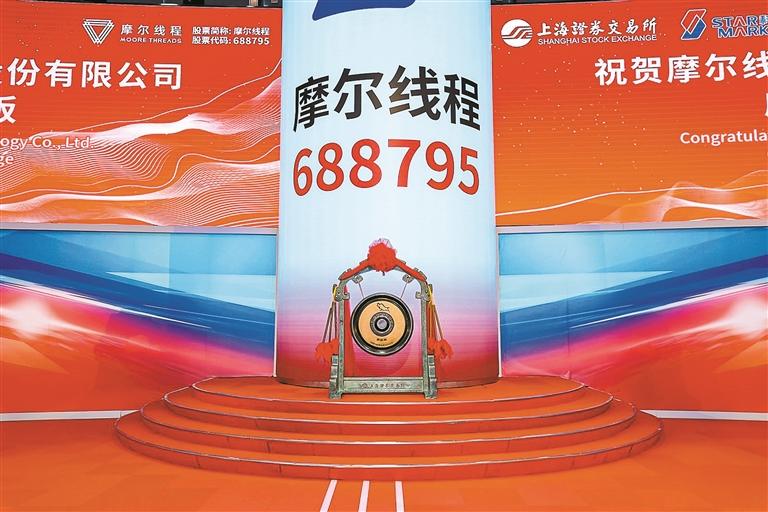
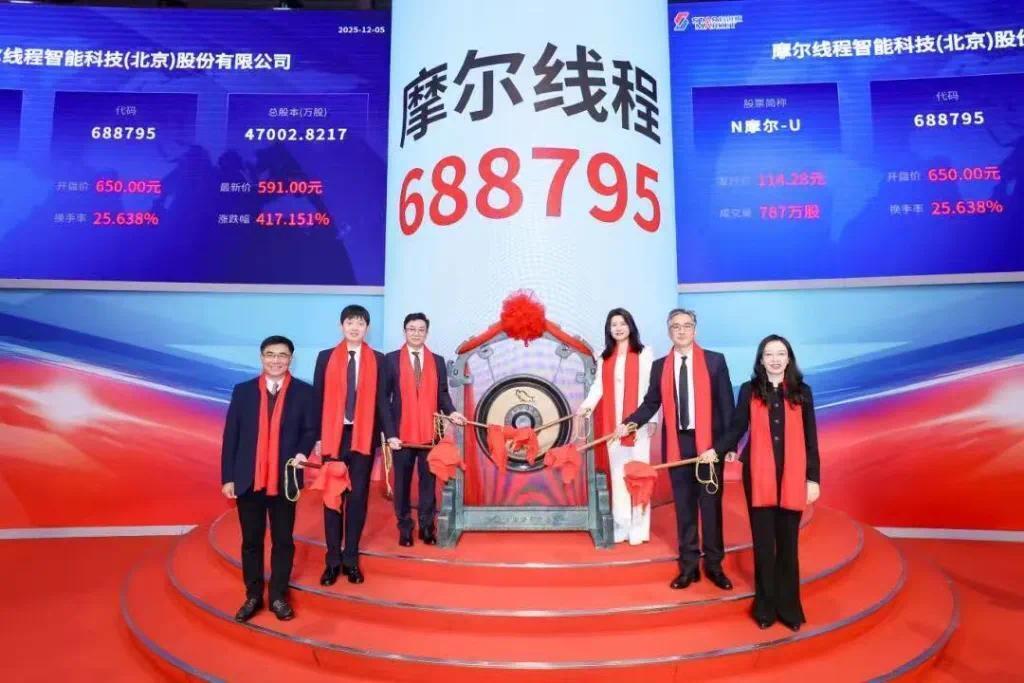
Core Insights - Moore Threads officially listed on the Sci-Tech Innovation Board on December 5, becoming the first domestic GPU stock, with an opening price of 650 CNY per share, a nearly 470% increase from the issue price of 114.28 CNY, and a closing market value exceeding 280 billion CNY [1][3] - The listing raised 8 billion CNY, making it the largest financing project on the Sci-Tech Innovation Board this year [1] Group 1 - Moore Threads achieved a record of only 88 days from application to approval and 122 days from acceptance to listing, setting a new record for the Sci-Tech Innovation Board [3] - The company, founded in 2020, has quickly become a benchmark in the industry with full-function GPU independent research and development capabilities [3] - Investors, particularly state-owned enterprises from Qingdao, have seen significant returns, with one investment group reporting over 7 times returns on their investment in Moore Threads [3][5] Group 2 - The Qingdao Free Trade Zone has established 49 industrial chain projects with a total investment of 187.1 billion CNY, positioning itself as a key area for hard technology development [5] - Qingdao City Investment has invested in Moore Threads through various funds, with costs around 37.5 CNY and 74.6 CNY per share [5] - The investment landscape includes multiple state-owned capital entities collaborating to enhance their positions in the hard technology sector, with significant investments from Shenzhen's state-owned investment platform and local funds from Weifang and Zibo [6] Group 3 - The investments from local state-owned enterprises not only yield financial returns but also provide valuable experience in industrial layout, aiming to seize opportunities in the hard technology sector for local economic transformation [6]
霍瑞戎谈上交所“十五五”科创板重点工作部署
21世纪经济报道· 2025-12-06 08:04
记者丨赵云帆 编辑丨朱益民 由南方财经全媒体集团主办,21世纪经济报道承办,渣打银行战略支持,东方证券等支持的"南方财经论坛2025年会"12月5日-6日在 广州南方财经大厦举办。 上海证券交易所副理事长霍瑞戎就上交所深耕科创板改革试验田,服务科技创新实践基本情况,以及"十五五"期间上交所的重点工 作方向发表了演讲。 三是着力提升上市公司质量。修订完善新的上市规则和规范运作指引,强化独董履职保障的机制,提升了上市公司治理透明度和市 场公信力,发布了可持续发展报告的编制指南,编制操作的实务手册,并通过常态化的专业培训等措施,全方位助力上市公司提升 规范运作的水平和持续发展能力,引导上市公司可持续发展理念深度融入经营管理的实践。 四是推动投融资协调发展。在提升上市公司质量的基础之上,进一步培育壮大耐心资本和长期资本,大力健全指数化投资体系,加 快构建共享共治的良好投资生态。 霍瑞戎还着重介绍了上交所"十五五"科创板重点工作部署,主要内容如下: 一是服务国家战略,培育新质生产力。紧密围绕"十五五 "规划纲要,科创板将牢牢坚守硬科技定位,深入贯彻落实创新推动发展和 科技强国的战略,同时持续引导资本投向关键核心技术的领 ...