
粮食安全

Search documents
农业农村部部长韩俊出席亚太经合组织第十届粮食安全部长级会议
Zheng Quan Shi Bao Wang· 2025-08-11 14:44
在大会闭幕环节,韩俊表示,粮食安全是地区繁荣稳定的基石,面对气候变化、供应链不稳等多重挑 战,持续深化区域粮食安全合作极为重要。本次粮食安全部长级会议坦诚交流,达成了一系列共识,对 推动各经济体秉持命运共同体理念,深化粮食安全合作,筑牢亚太区域粮食安全防线,必将发挥积极作 用。中国将坚持普惠包容的亚太发展理念,筹备好2026年APEC农业领域活动,打造高质高效的农业领 域交流平台,推动构建开放融通的亚太农业合作新格局。 人民财讯8月11日电,据农业农村部网站消息,8月10日,亚太经合组织(APEC)第十届粮食安全部长级 会议在韩国仁川召开,农业农村部部长韩俊率团出席。 ...
农业的“新”周期和“大”趋势
2025-08-11 14:06
Summary of Key Points from the Conference Call Industry Overview - The conference call primarily discusses the **agriculture industry**, focusing on **animal protein sectors** such as **pig farming**, **dairy farming**, and **beef cattle farming** [1][2][34]. Core Insights and Arguments Pig Farming - The **pig farming cycle** is driven by production capacity, with the number of breeding sows being a critical leading indicator. This needs to be cross-verified with data on sow feed sales [1][2]. - The **African swine fever** has normalized, raising the industry's cost base, which affects the peak and elasticity of the cycle [1][4]. - **Scale farming** may extend the pig cycle and amplify price fluctuations. Secondary fattening increases price disturbances, influenced by short-term price expectations [1][5]. - The **反内卷 (anti-involution) policy** aims to reduce the number of breeding sows and lower slaughter weights to support pig prices [1][11]. - The average price of pigs is expected to rise to over **16 RMB per kilogram** by **2026**, with **牧原股份 (Muyuan Food)** potentially achieving a profit of nearly **500 RMB per head** [1][14]. Dairy Farming - The dairy industry faces challenges due to falling milk prices, currently around **3 RMB per kilogram**, down from **4.5 RMB**. However, there is potential for demand improvement due to increased willingness to have children and government subsidies for newborns [1][17]. - The beef cattle sector has a long growth cycle and is heavily reliant on imports, with significant industry clearing observed [1][18][20]. Market Dynamics - The **white chicken farming** sector is significantly impacted by overseas breeding policies, with potential for market share growth for **圣农 (Sannong)** during periods of import disruption [3][25]. - The **seafood feed** segment is expected to improve due to rising prices of common aquatic products, with **海大集团 (Haida Group)** showing strong performance in this area [3][27]. Other Important Insights - The **agricultural new consumption trends** include rapid growth in pet food and pet healthcare sectors, indicating new growth potential beyond traditional areas [6][34]. - The **agricultural input products** like feed and veterinary products serve as lagging indicators in the animal protein supply chain, aiding in capacity data assessment [7][34]. - The **grain security** theme is increasingly important, with policies and market dynamics needing close attention [8][30]. Investment Recommendations - Focus on core assets like **牧原 (Muyuan)** and **温氏 (Wens Food)**, which have strong cost control and are less affected by the anti-involution policy [12][13]. - The **港股 (Hong Kong stock market)** upstream livestock companies are currently in a challenging phase but are expected to improve by **2026** as the new cycle begins [22]. - **海大集团 (Haida Group)** is recommended for its strong market position and growth potential in both domestic and international markets [27]. Future Trends - The pig farming sector is expected to benefit from the anti-involution policy, leading to a new upward price cycle in **2026** [15][34]. - The **meat cattle industry** is facing significant challenges, including price declines and industry losses, with a low degree of scale [20][21]. This summary encapsulates the key points discussed in the conference call, providing insights into the current state and future outlook of the agriculture industry, particularly in the animal protein sectors.


【环球财经】“沙漠之国”的粮食安全之路
Xin Hua She· 2025-08-11 13:53
新华财经多哈8月11日电(记者汪强)盛夏时节,走进位于卡塔尔首都多哈的伊斯兰艺术博物馆,一场 关于饮食文化的展览正在举行。展厅内,来自中东和其他地区、不同时代的饮食器具陈列其间,香料气 息萦绕。 但展览的主题并不止于对饮食历史的回顾,更展示了卡塔尔这个"沙漠之国"的粮食安全之路。正如策展 人塔拉·德雅尔丹所说,展览还聚焦卡塔尔现代农业的可持续发展,特别是2017年断交风波以来,卡塔 尔为发展本国农业所作的努力。 虽然这场断交风波在2021年1月以和解告终,但它带给卡塔尔人的心理冲击至今未完全消散。许多卡塔 尔人还清晰记得当年超市货架商品被抢购一空的情景。这在一定程度上塑造了卡塔尔社会更为强烈的粮 食安全意识。 危机之下,卡塔尔一方面迅速拓展新的进口来源,扩大粮食战略储备,另一方面加快推进本土农业建 设,沙漠农场、奶牛养殖基地等原本看似难以实现的设想,逐步落地成为现实。本次展览中提及的埃纳 特·萨勒玛农场正是这一转型的体现。这处位于多哈郊区的综合农场如今不仅是粮食生产基地,也已成 为教育、体验和社区参与的重要平台。 民以食为天,在自然条件极为严酷的卡塔尔,"吃"从来不是一件轻松的事。卡塔尔地处热带沙漠气候 区, ...
7月三方能繁增幅普遍收窄,关注生猪产能变动
Huafu Securities· 2025-08-11 13:42
Investment Rating - The industry rating is "Outperform the Market" indicating that the overall return of the industry is expected to exceed the market benchmark index by more than 5% in the next 6 months [70]. Core Insights - In July, the growth rate of breeding sows across three parties generally narrowed, indicating a focus on changes in pig production capacity. The average price of live pigs in China on August 8 was 13.67 CNY/kg, down 0.42 CNY/kg week-on-week [2][9]. - The white chicken market is experiencing a phase of reduced supply, leading to continued price increases. The average price of white feathered meat chickens on August 8 was 7.14 CNY/kg, up 0.31 CNY/kg week-on-week [3][33]. - The agricultural sector is focusing on the promotion of high-quality seeds and technology selection to enhance food security, with the Ministry of Agriculture and Rural Affairs initiating a project for the 2025 national crop variety promotion directory [44]. Summary by Sections Pig Farming - The average weight of pigs being sold has continued to decline, with the average weight as of August 7 being 127.80 kg, down 0.18 kg week-on-week. This is attributed to the ongoing high temperatures affecting feed intake and growth rates [21][31]. - The slaughter volume of sample enterprises has remained stable, with an average daily slaughter of 137,100 pigs, reflecting a slight increase of 0.05% week-on-week [12][31]. - The policy focus on capacity regulation is expected to accelerate the elimination of inefficient production capacity, potentially raising the long-term price center for pigs [31][32]. Poultry Sector - The supply of broiler chickens is tightening due to previous breeding losses, resulting in a continued rise in prices. The average price of broiler chicks was 3.13 CNY/chick, up 0.56 CNY/chick week-on-week [3][33]. - The egg market has seen a slight decline in prices, with the average price of eggs at 6.23 CNY/kg, down 0.51 CNY/kg week-on-week, although there is potential for a rebound due to upcoming seasonal demand [3][36]. Agricultural Products - The soybean meal market is showing strength, with the futures price on August 8 reaching 3,094 CNY/ton, up 57 CNY/ton week-on-week, driven by concerns over a soybean supply gap in the fourth quarter [45][48]. - The current domestic demand for soybean meal is supported by strong import needs from Brazil, leading to a bullish outlook for the market [45][48].
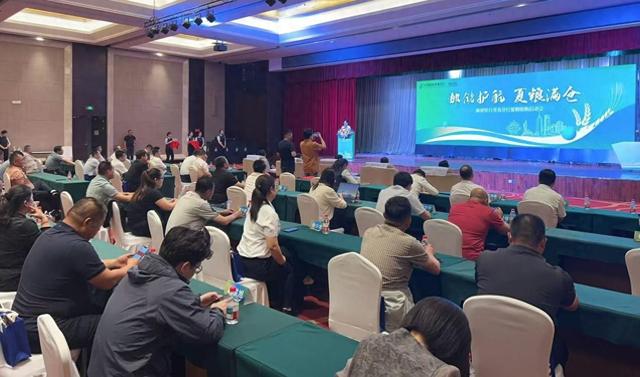
“邮储护航,夏粮满仓”邮储银行青岛分行夏粮收购启动会在平度成功举办
Xin Lang Cai Jing· 2025-08-11 08:20
Core Viewpoint - The summer grain purchase is crucial for national food security and the livelihood of farmers, with Postal Savings Bank of China (PSBC) playing a significant role in supporting this process through financial services [1][10]. Group 1: Event Overview - The summer grain purchase kickoff meeting was held on May 29 in Pingdu City, highlighting the importance of timely grain collection and financial support for farmers [3][6]. - Local government officials emphasized the positive outlook for summer grain production and the urgency of the purchasing process [3]. Group 2: Financial Support from PSBC - PSBC Qingdao Branch has been actively supporting local farmers and grain enterprises with financial assistance, addressing funding challenges and facilitating smooth grain purchases [5][9]. - The bank has introduced various financial products tailored to the grain industry, such as "Farming Loan," "Grain Industry Loan," and "Grain Farmer Treasure," to provide precise support for the local grain industry [5][9]. Group 3: Impact on Local Grain Enterprises - Grain purchasing companies expressed gratitude for PSBC's timely financial support, which has enabled them to expand operations and improve performance [8][9]. - For instance, Qingdao Rongxiang Agricultural Products Co., Ltd. received a credit support of 7.9 million from PSBC, allowing them to increase grain purchases this year [8]. Group 4: Future Commitment - PSBC Qingdao Branch aims to continue innovating financial products and services to enhance support for the grain industry, contributing to rural revitalization and national food security [9][10].


贵州精准监督筑牢粮食安全根基环环相扣 改治发力
Zhong Yang Ji Wei Guo Jia Jian Wei Wang Zhan· 2025-08-11 01:08
Group 1 - The Guizhou Provincial Commission for Discipline Inspection and Supervision emphasizes the importance of ensuring sufficient grain reserves in storage enterprises to address feedback from inspections [1] - The Commission has initiated joint supervision focusing on corruption issues in the grain purchase and sale sector, urging relevant units to rectify problems within a specified timeframe to ensure food security [1][2] - Various local commissions are actively engaging in supervision and coordination to enhance the management of grain production, storage, and sales, aiming to eliminate corruption in the grain purchase and sale sector [2][3] Group 2 - The establishment of 42 new regulations and operational procedures is being promoted to address regulatory gaps and improve governance in grain storage and sales [3] - Continuous monitoring and guidance are being provided to ensure compliance with land protection and food security measures, including the development of implementation plans for addressing prominent issues [4] - Local commissions are conducting thorough inspections and assessments of agricultural infrastructure and practices to strengthen the foundation of food security [4][5]
中国大米超越日本“米王”,释放哪些信号?
Huan Qiu Shi Bao· 2025-08-10 22:56
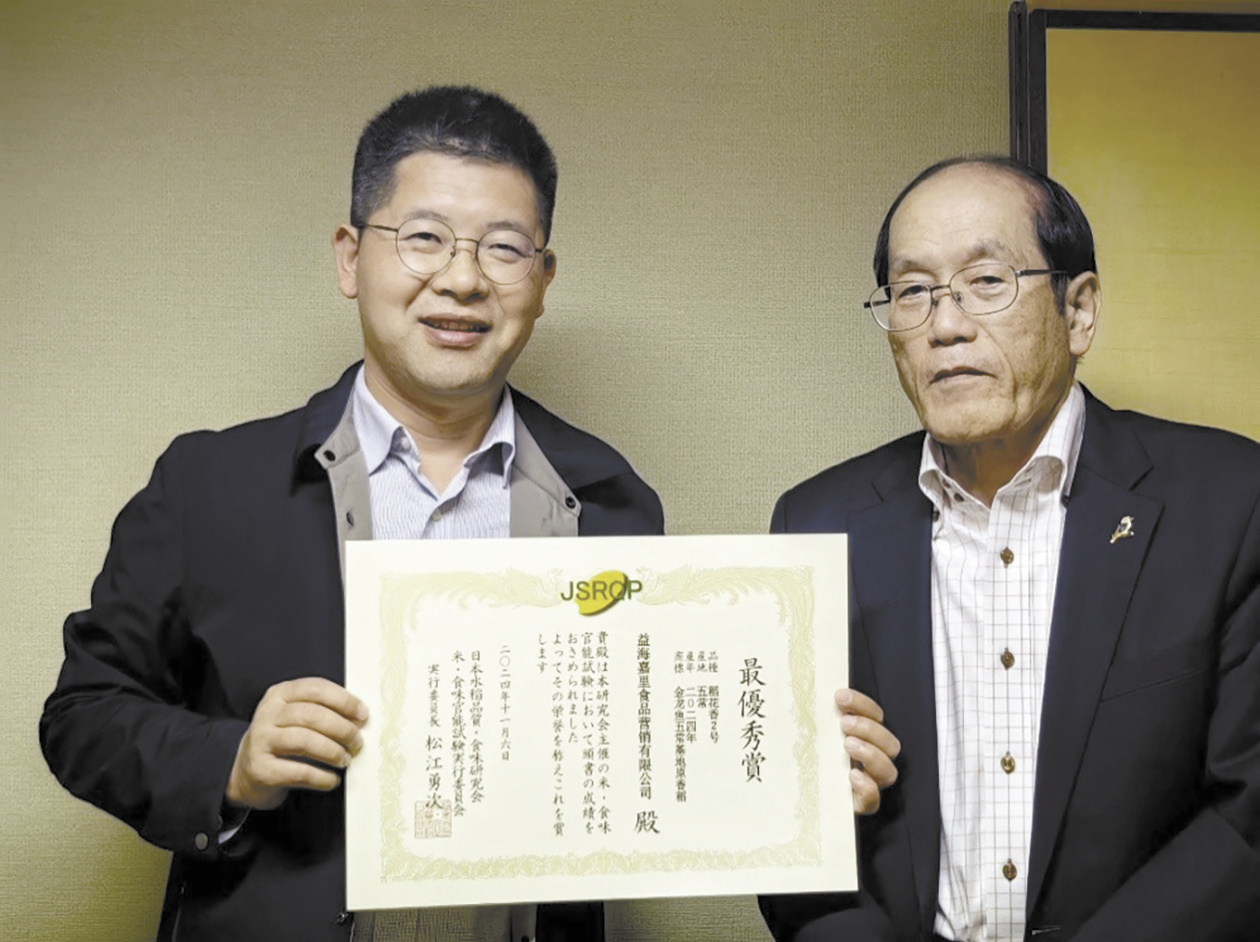
Core Insights - The recent rise in attention towards rice in Japan is driven by a "rice crisis" leading to increased prices and a shift in government policy from price maintenance to production increase [1] - Chinese rice has surpassed Japan's renowned Koshihikari rice in quality, winning awards at international tasting events, indicating a significant shift in the global rice market [2][4] - Technological innovations in rice production, particularly by the Yihai Kerry Group, have contributed to the improved quality of Chinese rice, showcasing advancements in agricultural practices [6] Group 1: Market Dynamics - Japan's rice policy is undergoing a major shift to increase production in response to rising prices and supply issues, marking the end of previous land control measures [7] - The global food crisis is exacerbating the importance of rice security, with Japan facing significant challenges in maintaining stable rice prices amid increasing demand [7] - China's rice production has remained stable, with an annual output exceeding 200 million tons, providing a solid foundation for price stability in the domestic market [7] Group 2: Quality and Innovation - Chinese rice has seen a notable improvement in quality, with average taste scores rising from 74.9 to 80.3 between 2009 and 2023, reflecting advancements in agricultural technology [4] - The "6-step fresh rice precision control technology" developed by Yihai Kerry Group emphasizes freshness and quality, significantly reducing losses during harvesting [6] - The emergence of high-end Chinese rice in the global market is evident, with increasing exports to Japan and a growing reputation for quality [8]
加大信贷投放 增强粮食安全金融保障
Zheng Quan Ri Bao· 2025-08-09 14:42
Core Viewpoint - The People's Bank of China and the Ministry of Agriculture and Rural Affairs emphasize enhancing financial support for food security, proposing specific measures to increase financial investment in food production and optimize food supply systems. Group 1: Financial Support for Agriculture - The recent issuance of a document highlights the need for increased financial input to ensure stable production and supply of food and important agricultural products [1] - The Agricultural Development Bank of China (ADBC) in Heilongjiang has provided significant loans for high-standard farmland construction, totaling 25.82 million yuan to support the "Longjiang Grain Warehouse Demonstration Zone" project [2] - ADBC has adopted innovative financial service models, such as "Agricultural Land + Funding Supply Chain," to support high-standard farmland projects, with a total of 770 million yuan in working capital loans issued [3] Group 2: Customized Financial Services for Enterprises - ADBC has provided tailored financial services to agricultural enterprises, such as the Qiaofu Dayuan Agricultural Co., which has received 250 million yuan in funding to support its operations and expansion [4] - The bank has extended its financial service chain, offering various loan products to support agricultural production, with nearly 4.9 billion yuan allocated to land-scale operations and black soil protection [5] - ADBC has approved loans totaling 200 million yuan for innovative products like "Order Loans" and "Planting Loans," enhancing financial support for major agricultural clients [6] Group 3: Overall Financial Performance - ADBC Heilongjiang has cumulatively issued loans of 45.88 billion yuan, with a loan balance of 530.63 billion yuan, effectively utilizing policy-driven financial resources to support rural revitalization [6]
金融赋能 助力“湘米”更“香”
Jin Rong Shi Bao· 2025-08-08 08:02
Core Viewpoint - Hunan province plays a crucial role in ensuring national food security, with a stable grain planting area and production capacity, as emphasized by President Xi Jinping during his visit in March 2024 [1][2]. Financial Support for Food Security - The Hunan Financial Regulatory Bureau has implemented various measures to enhance financial support for food security, including increasing credit supply and insurance coverage for the entire grain production chain [2][3]. - As of the end of 2024, the loan balance for key grain sectors in Hunan reached 153.53 billion yuan, a year-on-year increase of 20.7% [2]. - The insurance amount for rice in Hunan was 46.01 billion yuan in 2024, ranking first in the country [2]. Focus on Agricultural Infrastructure - The financial support emphasizes the construction of high-standard farmland to strengthen the foundation of grain production, with loans for high-standard farmland construction reaching 41.36 billion yuan, an increase of 9.4 billion yuan year-on-year [3]. - Innovative financing models have been developed to address issues related to insufficient collateral for high-standard farmland projects [3]. Innovation in Financial Services - The Hunan Financial Regulatory Bureau has optimized agricultural insurance services by creating a risk map for major agricultural products and establishing a multi-dimensional information sharing mechanism [4]. - New insurance products have been introduced, including comprehensive cost insurance for rice and corn, as well as index-based insurance for weather-related risks [4]. Support for Seed Industry Development - Hunan is a significant player in the seed industry, and the financial regulatory body has introduced policies to support seed industry innovation, with loans to the seed sector totaling 12.43 billion yuan in 2024 [6]. - Banks are encouraged to prioritize credit resources for leading seed enterprises and provide comprehensive services to the entire supply chain [6]. Future Directions - The Hunan Financial Regulatory Bureau plans to continue enhancing financial services for food security by increasing resource allocation and innovating financial products tailored to agricultural needs [7]. - There will be a focus on collaboration with various departments to implement supportive policies effectively, ensuring that financial services contribute to rural revitalization [7].
外媒称美国欲限制中国人买地:批评人士:此举将进一步阻碍中国对美投资
Huan Qiu Shi Bao· 2025-08-07 22:50
彭博社称,未来20年,受农民退休潮影响,美国约40%的国内农田将易主,这为国内外投资者带来巨大 机遇,确保土地成功转让才是保障美国国家安全和粮食安全的当务之急,而这完全可以在不限制投资者 国籍的前提下实现。彭博社认为,外来者在农业地区寻求经济机会反而有助于增强粮食安全,理应受到 欢迎。 【环球时报特约记者 青桂】路透社6日报道称,美国正以"维护国家安全利益"为由,加大对中国实体及 个人在美土地所有权的限制力度。美国农业部长布鲁克·罗林斯上月宣布,将在全国范围内禁止中国等 外国买家购置美国农田,还暗示可能收回中国投资者已持有的土地。批评人士称,此类举措不仅会加剧 对亚裔的歧视,还将进一步阻碍中国对美投资。 报道称,美国政府呼吁外来投资助力美国工业振兴之际,美联邦及州立法机构针对中国企业的限制性法 令数量却创下新高。今年全美已提出129项联邦或州法案,旨在限制中国等竞争国实体及个人在美拥有 土地或财产,其中11项已正式立法。美方政客纷纷声称中国可能利用这些土地从事间谍活动,但目前尚 无任何相关案例。 俄亥俄州华人协会主席王文奎及其团队正游说该州修改一项法案,该法案拟禁止美国华裔永久居民在该 州军事设施及关键基础设 ...