数字化转型

Search documents
宁波银行业绩快报:2025年净利润稳健增长8.13%,总资产突破3.6万亿元
Jing Ji Guan Cha Wang· 2026-01-21 07:52
Core Viewpoint - Ningbo Bank's 2025 performance report highlights its resilience and sustainable growth amidst a complex economic environment, showcasing a solid operational performance with key financial metrics reflecting both quantity and quality improvements [2][8]. Financial Performance - The bank achieved an operating income of 71.968 billion yuan, a year-on-year increase of 8.01%, and a net profit attributable to shareholders of 29.333 billion yuan, up 8.13% [2]. - Total assets exceeded 3.6 trillion yuan, growing by 16.11% compared to the beginning of the year [2]. - Net interest income, a key revenue driver, rose by 10.77% to 53.161 billion yuan, supported by asset expansion and a significant reduction in funding costs [3]. - Non-interest income, particularly from fees and commissions, reached 6.085 billion yuan, marking a substantial increase of 30.72%, indicating the success of the bank's light-capital transformation strategy [3]. Efficiency and Cost Management - The bank's business and management expenses decreased by 0.51%, with the cost-to-income ratio improving by 2.80 percentage points, reflecting enhanced operational efficiency through digital transformation and refined management practices [4][6]. - Basic earnings per share were 4.29 yuan, up 8.61%, while the return on equity (ROE) stood at 13.11%, slightly down by 0.48 percentage points but still among the top in the industry [6]. Asset and Liability Management - Total loans increased by 17.43%, significantly outpacing total asset growth, with loans comprising 47.77% of total assets, indicating a strategic focus on supporting the real economy [6]. - Total deposits grew by 10.27%, with a notable structural improvement where demand deposits accounted for 70.84% of new deposits, leading to a 33 basis point decline in the average interest rate on deposits [6]. Risk Management - The non-performing loan ratio remained stable at 0.76%, with a high provision coverage ratio of 373.16%, ensuring robust risk mitigation capabilities [7]. - The bank's risk management culture emphasizes integrating risk awareness into all business processes, supported by an independent credit approval system and thorough industry research to enhance asset quality [7]. - This proactive risk management approach is crucial for navigating economic transitions and safeguarding long-term stability [7]. Strategic Outlook - Ningbo Bank's performance illustrates a regional bank's strategic resilience and operational strength, effectively addressing market concerns regarding the sustainability of profitability and growth potential [8]. - The bank has successfully balanced speed and quality in its growth strategy through customer engagement, technological empowerment, and structural optimization [8].



阳光人寿:以“阳掌柜”激活新质生产力 赋能基层管理数智升级
Jin Rong Jie Zi Xun· 2026-01-21 07:36
Core Viewpoint - The integration of technology, particularly artificial intelligence, is transforming the insurance industry by enhancing management efficiency and customer service through the introduction of innovative tools like "Yang Zhanggui" [1][4]. Group 1: Technological Integration - The insurance industry is experiencing a shift towards high-quality development driven by new productive forces, particularly through the deep integration of technology and business [1]. - "Yang Zhanggui," a four-level management robot launched by Sunshine Life, aims to inject digital and intelligent momentum into frontline operations by focusing on customer management and goal planning [1]. Group 2: Customer Engagement - The traditional broad-based customer engagement model is becoming less effective, making precise identification of customer needs and personalized service crucial for success [2]. - "Yang Zhanggui" provides a digital solution to enhance service quality by generating targeted customer service strategies based on comprehensive data analysis [2]. Group 3: Management Process Reconstruction - "Yang Zhanggui" offers more than just a tool for manual replacement; it enables human-machine collaboration that enhances management effectiveness [3]. - The system allows for data-driven management, moving from experience-based to precise goal setting, visual process tracking, and timely feedback adjustments [3]. Group 4: Accelerating Digital Transformation - Digital transformation is essential for the industry, and Sunshine Life is committed to making intelligent tools integral to frontline management and service [4]. - The company plans to deepen the application of "Yang Zhanggui" in various scenarios, including business forecasting and risk prevention, to establish a benchmark for digital transformation in the insurance sector [4].
4.89万亿城商行换帅!关文杰将出任北京银行党委书记、董事长
Huan Qiu Lao Hu Cai Jing· 2026-01-21 07:22
Core Viewpoint - Beijing Bank is set to appoint Guan Wenjie as the new Party Secretary and Chairman, following the retirement of Huo Xuewen due to age, marking a leadership transition after nearly four years [1][2]. Group 1: Leadership Transition - Guan Wenjie, born in October 1970, has over 37 years of experience in the banking industry, with a strong background in financial management and digital transformation [1]. - Huo Xuewen, who has been in leadership since February 2022, oversaw significant growth in the bank's asset scale and profitability during his tenure [2]. Group 2: Financial Performance - Under Huo Xuewen's leadership, Beijing Bank's asset scale grew from CNY 3.39 trillion at the end of 2022 to CNY 4.89 trillion by the third quarter of 2025, an increase of over 44% [2]. - The bank's operating revenue for 2022, 2023, and 2024 was CNY 662.78 billion, CNY 667.11 billion, and CNY 699.2 billion respectively, with net profit figures of CNY 247.6 billion, CNY 256.2 billion, and CNY 258.31 billion, indicating 15 consecutive years of revenue and profit growth [2]. Group 3: Asset Quality - As of the end of 2024, the non-performing loan ratio was 1.31%, slightly down from the beginning of the year, and further decreased to 1.29% by the third quarter of 2025 [3]. - The bank maintained a robust provision coverage ratio of 208.75%, indicating strong risk resistance capabilities [3].

银行信用卡分中心关停潮持续
第一财经· 2026-01-21 07:05
Core Viewpoint - The article highlights a significant trend in the banking industry where credit card centers are being closed, indicating a shift from aggressive expansion to refined management in credit card operations [3][5][11]. Group 1: Closure of Credit Card Centers - The closure of credit card centers continues, with Guangzhou Bank's Zhongshan center being the latest to cease operations, marking the second closure this year [3][5]. - Since 2025, over 60 credit card centers across the country have been shut down, including those of major banks like Postal Savings Bank and China Everbright Bank [6][8]. - The trend is not limited to city commercial banks; state-owned banks like Bank of Communications have also closed over 50 local centers since 2025, indicating a broader industry shift [5][6]. Group 2: Industry Transformation - The contraction of local credit card centers is seen as a necessary outcome of industry transformation, driven by the rise of mobile internet and the saturation of the market [8][9]. - Banks are expected to integrate management functions of closed centers into local branches, focusing on customer service and account management to reduce operational costs [8][9]. - The credit card business is transitioning to a phase centered on refined operations rather than mere expansion, with private domain operations becoming a key strategy for banks to engage existing customers [8][9]. Group 3: Digital and Ecological Development - The future of credit card operations is expected to focus on digital transformation and ecological development, moving away from a model based solely on market size [11][12]. - Digital tools and AI technology are being utilized to enhance customer engagement and operational efficiency, allowing banks to implement personalized marketing and risk management [11][12]. - The integration of credit card services with wealth management and other financial services aims to create a comprehensive service system that enhances customer loyalty and business value [11][12].

增活期、做代发、抓营收 宁波银行2025年活期存款新增占比70.84%
Quan Jing Wang· 2026-01-21 05:42
Core Viewpoint - Ningbo Bank reported a solid performance for 2025, with double-digit growth in core revenue and stable asset quality, indicating a strong risk-bearing capacity [1] Group 1: Financial Performance - In 2025, the company achieved operating revenue of 71.968 billion yuan, a year-on-year increase of 8.01% [1] - The net profit attributable to shareholders reached 29.333 billion yuan, growing by 8.13% year-on-year [1] - Net interest income was 53.161 billion yuan, reflecting a growth of 10.77% [1] - Net fee and commission income amounted to 6.085 billion yuan, with a significant increase of 30.72% [1] Group 2: Loan and Credit Support - By the end of 2025, total loans and advances reached 1,733.313 billion yuan, an increase of 257.250 billion yuan, or 17.43% [2] - The bank served 746,100 corporate clients, an increase of 89,600 clients from the beginning of the year [2] - The international settlement volume was 319.893 billion USD, showing a year-on-year growth of 12.36% [2] Group 3: Business Structure and Cost Management - Total customer deposits reached 2,024.883 billion yuan, with an increase of 188.538 billion yuan [3] - The proportion of demand deposits increased to 70.84%, while the interest rate on deposits decreased by 33 basis points [3] - The bank's total assets under management (AUM) for individual clients grew by 13.07% to 1,275.7 billion yuan [3] - Business and management expenses decreased by 0.51%, and the cost-to-income ratio improved by 2.80 percentage points [3] Group 4: Asset Quality and Risk Management - As of the end of 2025, the non-performing loan balance was 13.147 billion yuan, with a non-performing loan ratio of 0.76%, unchanged from the previous year [4] - The provision coverage ratio stood at 373.16%, indicating a strong provisioning level [4] - The bank's core advantages lie in risk pricing and strong risk control, which are expected to lead to continued superior performance in 2026 [4]
“数字生活伙伴”——南京银行发布手机银行App8.0
Jing Ji Guan Cha Wang· 2026-01-21 04:20
Core Viewpoint - Nanjing Bank has officially launched the upgraded version 8.0 of its mobile banking app, emphasizing the integration of financial technology and retail business, showcasing its capabilities in retail operations, technological application, and digital transformation [1] Digital Strategy: Systematic Breakthrough in Digital Operations - The App 8.0 constructs a retail operation matrix covering wealth management, consumer finance, and lifestyle services through a combination of digital touchpoints, scenario-based services, and precise operations [2] - The app features a restructured asset overview page allowing users to view details of various assets and liabilities, along with timely promotional information, enhancing financial clarity [2] - It supports an extended 8-year transaction history and utilizes AI for monthly balance analysis and smart bookkeeping, catering to personalized needs with dedicated tools for elderly and family users [2] Technological Empowerment: Service Efficiency Revolution Driven by Cutting-edge Technology - The app enhances user decision-making efficiency in investment and financial management through a fully optimized process, including features for tracking investment performance and comparing financial products [3] - It offers a comprehensive loan product line tailored to diverse user needs, enabling online processing from appointment to application, along with personalized financing suggestions [3] - The credit card section introduces features for installment product management and bill analysis, promoting rational consumption [3] Security Assurance: Innovative Features for User Protection - The app introduces an "Emergency Center" for quick responses to risks such as card loss and unauthorized access, ensuring account security [4] - "Safety Tips" provide educational content on fraud prevention, enhancing user awareness [4] Digital Ecosystem: A Benchmark for User Value-oriented Digital Transformation - The upgrade of App 8.0 exemplifies the transformation of digital capabilities into user value, offering comprehensive asset management and daily financial analysis [5] - It integrates various modules for daily consumption, entertainment, and agricultural support, providing high-quality, cost-effective options for users [5] - The app redefines the role of mobile banking as a "digital life partner," highlighting Nanjing Bank's core competitiveness in the retail financial sector [5]

“十四五”以来江西工业技改投资占工业投资比重保持在40%左右
Zhong Guo Xin Wen Wang· 2026-01-21 03:29
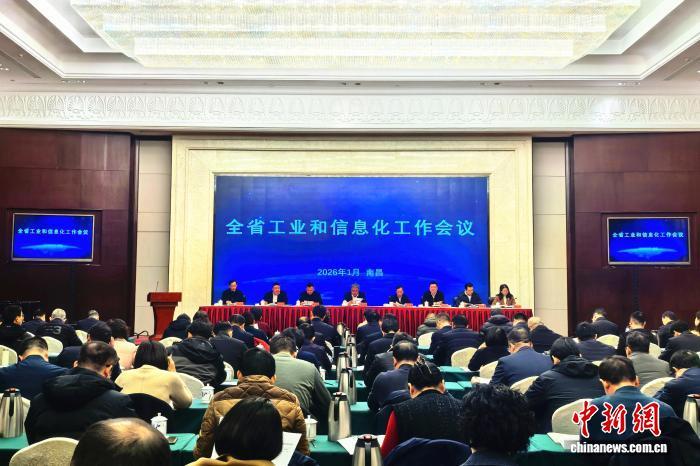
Core Insights - The industrial investment in Jiangxi province has maintained a ratio of approximately 40% for technological transformation since the start of the 14th Five-Year Plan [1][2] Group 1: Industrial Development Initiatives - Jiangxi is actively implementing the "thousand projects, ten thousand enterprises upgrade" initiative to revitalize traditional industries such as non-ferrous metals, petrochemicals, building materials, steel, food, and textiles during the 14th Five-Year Plan [2] - The province is focusing on high-end, intelligent, green, and integrated manufacturing, accelerating the transformation of new and old driving forces, and significantly improving industrial quality, efficiency, and dynamics [2] - Jiangxi has established 9 provincial manufacturing innovation centers and surpassed 1,000 provincial enterprise technology centers, reaching a total of 1,093 [2] Group 2: Future Industrial Strategy - The 15th Five-Year Plan period is seen as a critical phase for Jiangxi to accelerate new industrialization and foster future industrial sectors [2] - The province aims to integrate technological and industrial innovation, focusing on the trends of artificial intelligence and promoting the deep integration of "AI + manufacturing" [2] - Jiangxi plans to support enterprises in accelerating digital transformation, green upgrades, and the iteration of advanced applicable technologies, targeting over 1,000 key technological transformation projects with an investment of around 200 billion yuan [3] Group 3: Digital Transformation and AI Integration - The Jiangxi industrial and information department will deepen chain collaboration and AI applications, promoting leading enterprises to build intelligent supply chains [3] - The province aims to create a pioneering area for industrial digital transformation and innovate shared intelligent manufacturing models [3] - A special initiative for "AI + manufacturing" will be launched to accelerate the research and development of key AI technologies and typical application scenarios [3]
山东移动聊城闸口营业厅:以智慧与温度,重新定义服务体验
Qi Lu Wan Bao· 2026-01-21 03:14
Core Insights - The transformation of the Shandong Mobile Liaocheng Branch's Zhakou Service Hall integrates local culture and advanced technology, creating a new service space characterized by efficiency, immersive experience, and warmth. Group 1: Service Redesign - The service hall has restructured its layout to enhance customer experience, featuring diverse functional areas such as a smart experience zone, self-service area, and a dedicated space for seniors, allowing for both quick service and engagement with cutting-edge technology [2] - Customers can experience seamless gigabit networks in an FTTR all-optical network environment and explore smart city and telemedicine applications through VR devices, providing a tangible sense of the digital future [2] Group 2: Efficiency Improvements - The service hall promotes "paperless processing" and "one certificate for all services," enabling over 80% of routine transactions to be completed within 3 minutes [3] - Smart self-service terminals and an online appointment system effectively manage customer flow, facilitating an "arrive and complete" service model [3] Group 3: Community Engagement - A dedicated "care seat" for the elderly is equipped with reading glasses and first aid kits, along with regular "silver hair classes" to teach smartphone usage and anti-fraud knowledge, helping seniors integrate into the digital world [4] - The management conducts regular "CEO reception days" to address customer concerns directly, while also providing free services like drinking water and charging stations for outdoor workers, fostering a supportive community environment [5] Group 4: Future Commitment - The transformation reflects the company's commitment to deepening its "heart-level service" philosophy, aiming to enhance service content through technological innovation and human insights, positioning itself as a benchmark for smart service experiences [5]

【两会专版】阳光交易赋新能 改革创新践担当——2025年滨州市公共资源交易中心高质量发展纪实
Xin Lang Cai Jing· 2026-01-21 03:07
Core Insights - The article emphasizes the role of the Binzhou Public Resource Trading Center as a key driver for high-quality economic development, aiming for significant achievements by 2025 through the integration of party leadership and business operations [1][8] Group 1: Performance Metrics - In 2025, the public resource trading system in Binzhou completed 3,230 projects with a total transaction amount exceeding 52.448 billion, resulting in savings of 2.894 billion [1] - Specific project categories include 601 engineering projects with a transaction amount of 36.437 billion and savings of 0.974 billion, 1,696 government procurement projects totaling 3.52 billion with savings of 0.133 billion, and 398 land and mining projects with a transaction amount of 12.321 billion and an increase of 1.777 billion [2] Group 2: Innovations and Reforms - The center has successfully implemented a national standardization pilot and multiple provincial reform trials, showcasing innovative practices such as the "credit exemption" model for bid guarantees, which has been recognized as a benchmark in the province [2][4] - The introduction of the "Rong e Ban" financing guarantee service platform has reduced average fees to below 1.5‰, saving over 1.6 billion for enterprises and providing 0.873 billion in credit financing [5] Group 3: Digital Transformation - The center is advancing digital transformation by establishing a "digital transaction" ecosystem, including a significant pilot for electronic archives and a smart regulatory system that utilizes big data and AI for real-time monitoring [7] - In 2025, the center conducted 335 remote evaluations with a transaction amount of 22.368 billion, enhancing transparency and fairness in the evaluation process [7] Group 4: Future Directions - The Binzhou Public Resource Trading Center plans to continue integrating party leadership with business operations, focusing on reform and innovation to enhance service quality and efficiency, contributing to the construction of a high-quality Binzhou [8]
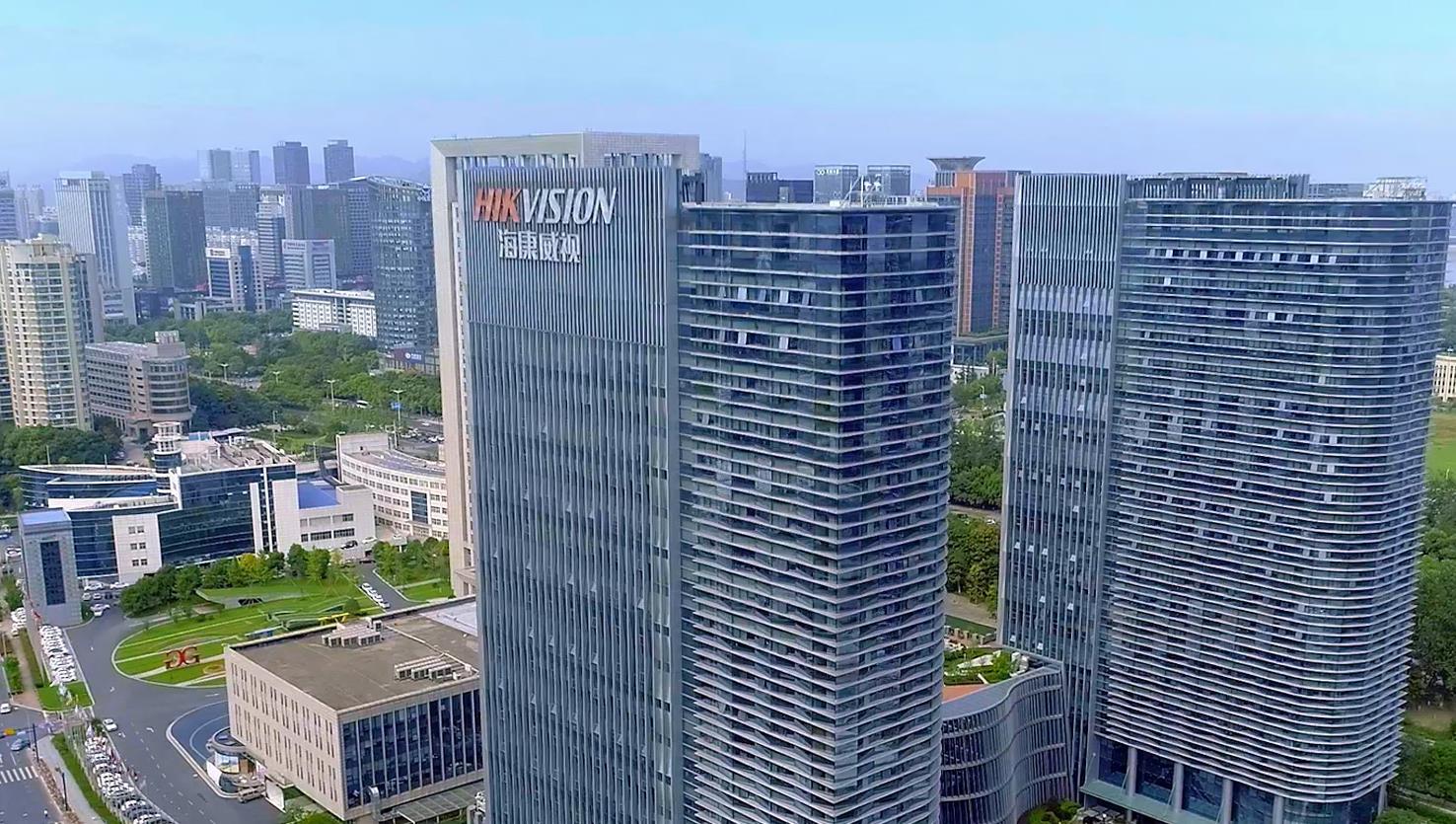
海康威视2025年实现营收924.96亿元,净利同比增长18.46%
Ju Chao Zi Xun· 2026-01-21 02:58
Core Viewpoint - Hikvision reported a stable operating performance for the year 2025, with significant improvements in profitability metrics [2]. Financial Performance - Total operating revenue reached ¥92,517,540,779.05, a slight increase of 0.02% compared to ¥92,495,525,118.30 in the previous year [3]. - Operating profit was ¥16,978,423,252.44, reflecting a year-on-year growth of 18.63% from ¥14,312,246,696.51 [3]. - Total profit amounted to ¥17,028,778,516.34, up 18.72% from ¥14,343,493,640.00 [3]. - Net profit attributable to shareholders was ¥14,188,269,426.14, an increase of 18.46% from ¥11,977,327,023.54 [3]. - Net profit attributable to shareholders after deducting non-recurring gains and losses was ¥13,696,015,459.25, growing by 15.92% from ¥11,814,861,641.16 [3]. - Basic earnings per share were ¥1.545, a rise of 19.12% from ¥1.297 [3]. - The weighted average return on equity was 17.29%, up 1.95 percentage points from 15.34% [3]. Financial Position - As of the end of 2025, total assets were ¥138,149,978,346, an increase of 4.65% from ¥132,016,200,156.14 at the beginning of the period [3]. - Shareholders' equity attributable to the company was ¥83,337,912,557.34, up 3.31% from ¥80,668,661,062.88 [3]. - The number of shares decreased from 9,233,198,326 to 9,164,871,550, a change of -0.74% [3]. - Net asset value per share attributable to shareholders was ¥9.093, reflecting a year-on-year increase of 4.07% from ¥8.737 [3]. Strategic Initiatives - The company actively advanced a comprehensive operational strategy adjustment in 2025, focusing on profit-centered management and promoting organizational transformation and refined management [4]. - Hikvision accelerated its digital transformation efforts to achieve high-quality and sustainable growth [4]. - The company strengthened accounts receivable management, resulting in a significant increase in operating cash flow, which supports stable operations and sustainable development [4].