
万物智联

Search documents
晶晨半导体,拟港股IPO
Zhong Guo Zheng Quan Bao· 2025-09-27 11:01
Core Viewpoint - Company plans to list H-shares on the Hong Kong Stock Exchange to enhance capital strength and competitiveness, following its listing on the Shanghai Stock Exchange in August 2019 [1] Group 1: Fundraising and Business Overview - The funds raised will primarily be used to enhance R&D capabilities, build a global customer service system, and support strategic investments and acquisitions related to the "platform + ecosystem" strategy [3] - Company is a leading global system-level semiconductor design manufacturer, providing smart terminal control and connectivity solutions across various sectors, including smart homes and automotive [2] - As of June 30, the company has shipped over 1 billion chips, with projections indicating that by 2024, one in three smart set-top boxes and one in five smart TVs will use its chips [2] Group 2: Financial Performance - Revenue figures for the company are projected as follows: approximately 5.545 billion yuan in 2022, 5.371 billion yuan in 2023, 5.926 billion yuan in 2024, and 3.33 billion yuan in the first half of 2025, with corresponding net profits of about 732 million yuan, 499 million yuan, 819 million yuan, and 493 million yuan [2] Group 3: Customer and Supplier Dependency - The top five customers contributed approximately 3.21 billion yuan, 3.519 billion yuan, 3.752 billion yuan, and 2.207 billion yuan to total revenue in 2022, 2023, 2024, and the first half of 2025, representing 57.9%, 65.5%, 63.3%, and 66.3% of total revenue respectively [4] - The company has a high dependency on suppliers, with the top five suppliers accounting for 91.2%, 86.6%, 88.0%, and 78.9% of total procurement in the same years [4]
答卷“十四五” 央企惠民生 | 从天地一体到万物智联 央企重塑通信产业新格局
Zhong Guo Zheng Quan Bao· 2025-09-26 00:00
Core Insights - The introduction of satellite communication services by major Chinese telecom operators marks a significant advancement in emergency communication capabilities, particularly during natural disasters [1][3][4] - The integration of 6G technology, eSIM innovations, and IoT applications is driving the development of a more interconnected and intelligent society, enhancing various industries [1][6][7] Group 1: Satellite Communication Services - China Telecom has launched the world's first commercial satellite direct connection service for mobile phones, overcoming significant technical challenges [3] - China Unicom has received a license for satellite mobile communication services and successfully launched four low-orbit satellites, enabling nationwide mobile direct connection services [3][4] - The expansion of satellite communication services is expected to benefit a wider population and empower various industries, particularly in emergency response scenarios [4] Group 2: Technological Innovations - The eSIM technology is revolutionizing device connectivity, enhancing security and user autonomy while facilitating the evolution of device forms [6] - The application of IoT solutions, such as smart water meters and livestock tracking, demonstrates the practical benefits of connected technologies in resource management [6][7] - The ongoing development of 5G-A networks is set to further enhance smart city initiatives and industrial automation, driving digital transformation across sectors [7] Group 3: Infrastructure Development - China has established the world's largest and most advanced information communication network, with over 464 million 5G base stations and 30.53 million gigabit ports [8][9] - Collaborative efforts between major telecom companies have led to the creation of the largest and fastest 5G SA shared network, significantly reducing investment costs and carbon emissions [9] - The focus on domestic CPU development aims to address supply chain challenges and support the growing demand for artificial intelligence applications [10]



新股消息 | 晶晨半导体递表港交所 芯片累计出货量超10亿颗
智通财经网· 2025-09-25 22:45
Core Viewpoint - 晶晨半导体 has submitted its listing application to the Hong Kong Stock Exchange, with CICC and Haitong International as joint sponsors [1] Company Overview - 晶晨半导体 is a leading global system-level semiconductor design company, providing advanced smart terminal control and connectivity solutions across various sectors including smart homes, offices, transportation, entertainment, education, and industrial production [3] - The company ranks fourth globally among manufacturers focused on smart terminal SoC chips and is the top player in mainland China and second globally in the smart home terminal SoC chip market as of 2024 [3] Market Position and Performance - As of June 30, 2025, 晶晨半导体 has shipped over 1 billion chips, with projections indicating that one in three smart set-top boxes and one in five smart TVs globally will use its chips in 2024 [3] - The company serves over 250 global telecom operators and 14 of the top 20 global TV brands, becoming the "brain" behind millions of screens in over 100 countries and regions [3] Financial Performance - 晶晨半导体's revenue for the fiscal years ending June 30 are projected as follows: approximately 5.545 billion RMB for 2022, 5.371 billion RMB for 2023, 5.926 billion RMB for 2024, and 3.33 billion RMB for the first half of 2025 [4][6] - The global smart device SoC market is expected to grow from 41.9 billion USD in 2020 to 65.7 billion USD in 2024, with a compound annual growth rate (CAGR) of 11.9%, and further to 131.4 billion USD by 2029, with a CAGR of 14.9% from 2024 to 2029 [4]

从天地一体到万物智联 央企重塑通信产业新格局
Zhong Guo Zheng Quan Bao· 2025-09-25 22:11
Core Viewpoint - The emergence of satellite mobile communication services in China marks a significant advancement in technology, enhancing connectivity and safety during emergencies, and paving the way for a new era of integrated communication systems [1][2][3] Group 1: Satellite Communication Development - China Telecom has launched the world's first commercial satellite direct connection service for mobile phones, overcoming significant technical challenges [2] - China Unicom has received a license for satellite mobile communication services and successfully launched four low-orbit satellites, expanding the availability of satellite services [2][3] - The integration of satellite communication with terrestrial networks is seen as a key feature of the upcoming 6G era, enhancing disaster response capabilities and everyday connectivity [3][4] Group 2: Technological Innovations - The introduction of eSIM technology is revolutionizing device connectivity, allowing for more secure and flexible communication solutions across various devices [4][5] - The proliferation of IoT applications, such as smart water management and livestock tracking, demonstrates the practical benefits of advanced connectivity solutions [5][6] - The development of 5G-A networks is expected to further empower industries, facilitating digital transformation and enhancing user experiences [5][6] Group 3: Infrastructure and Investment - China has established the largest and most advanced information communication network globally, with over 464 million 5G base stations and significant investments in network infrastructure [6][7] - Collaborative efforts between major telecom companies have led to the creation of the world's largest and fastest 5G SA shared network, resulting in substantial cost savings and environmental benefits [6][7] - The focus on domestic CPU development by companies like China Electronics is addressing supply chain challenges and supporting the growth of AI and other advanced technologies [7]


5G-A商用一年多,这些亮点值得关注
3 6 Ke· 2025-09-25 04:10
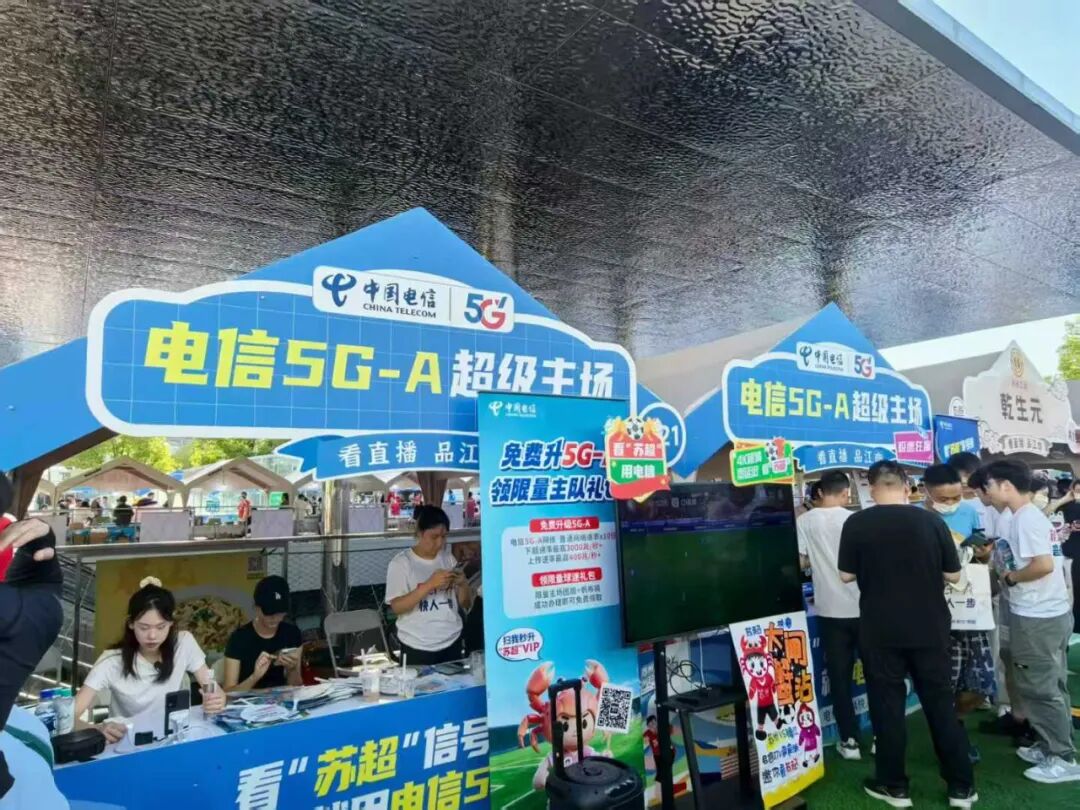
Group 1 - The core viewpoint of the article emphasizes the rapid commercialization and expansion of 5G-A in China, highlighting its significance in the context of AI advancements and digital transformation [1][3][22] - 5G-A is positioned as an evolution of 5G, addressing performance bottlenecks and enhancing functionalities to meet the demands of various industries [4][5][22] - The integration of 5G-A with AI technologies is creating new opportunities and value, transforming traditional business models and enabling innovative applications [7][8][22] Group 2 - As of now, over 300 cities in China have deployed 5G-A networks, with more than 30 million users and over 100 million compatible devices, expected to reach 250 million by the end of the year [9][11] - 5G-A has improved connection speeds and introduced "big uplink" capabilities, enhancing user experiences in high-bandwidth applications such as VR/AR and cloud gaming [11][12] - In the B-end market, 5G-A has successfully implemented over 5,000 private networks across various industries, showcasing its role as a core driver of industrial upgrades [17][20][21]
OpenHarmony(开源鸿蒙)五年,已成为千行万业数字底座
Sou Hu Cai Jing· 2025-09-24 06:53
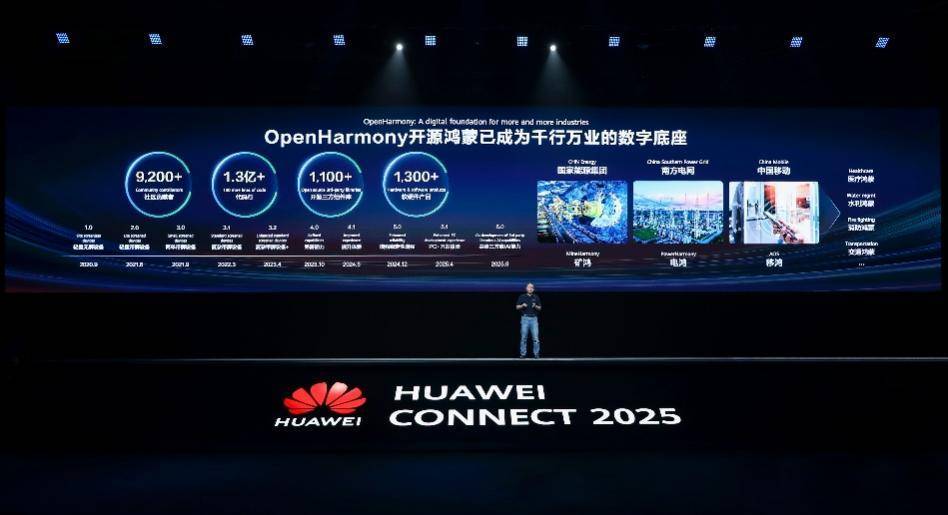
Core Insights - OpenHarmony has achieved significant milestones in its five-year development, including contributions from over 9,200 community contributors and the creation of 130 million lines of code [3][4] - The platform supports a wide range of applications across various industries, including finance, transportation, aerospace, energy, and consumer electronics, establishing itself as a digital foundation for numerous sectors [4][5] Community Development - The OpenHarmony community has rapidly grown, with over 1,100 third-party component libraries developed to support application development for complex devices such as smartphones, tablets, and PCs [3][4] - The community's growth is attributed to collaboration with various developers and organizations, enhancing the ecosystem and driving the advancement of intelligent terminal operating systems [3][4] Industry Applications - More than 1,300 hardware and software products have passed compatibility assessments, demonstrating the platform's versatility in critical fields [4] - Specific applications include smart tunnel systems in transportation, social security terminals in government services, and power grid adaptations in the energy sector [4] Consumer Ecosystem - The HarmonyOS 5, built on OpenHarmony, has been integrated into over 60 models and 17 million Huawei devices, showcasing its multi-terminal and all-scenario capabilities [5] - Over 9,000 applications have been developed using Huawei's innovative system capabilities, resulting in more than 70 unique user experiences [5] Future Outlook - Huawei aims to maintain an "open-source" philosophy, collaborating with partners and developers to expand OpenHarmony's applications across various industries and consumer sectors [6] - The focus will be on enhancing system extensibility, compatibility of development tools, and collaborative AI capabilities to accelerate the digital transformation of industries [6]
必博半导体完成数亿元A轮融资
Ren Min Wang· 2025-09-22 09:11
原标题:必博半导体完成数亿元A轮融资 9月20日,杭州必博半导体在上海举行签约仪式,宣布完成数亿元A轮融资。本轮由欧美中投资促 进会主席张家豪领投,前沿创投等机构及产业资本跟投,重点支持公司在卫星互联网、低空经济、工业 物联、车联网及AI驱动的消费电子领域的战略布局。 张家豪表示,必博团队技术实力雄厚,其研发的底层通信芯片是万物智联关键基础设施。前沿创投 邰国芳称,硬科技赛道前景广阔,看好必博团队的务实与产品落地能力。 据必博半导体介绍,4G+5G RedCap+卫星三模融合芯片已流片成功并完成技术验证,核心优势在 于:采用12纳米RF-SoC工艺,支持全球主流频段;实现北斗定位从"米级"到"亚米级"跨越;成为中国 星网二代S波段手机直连终端芯片合作伙伴。 此前,必博已于2021年获1亿元天使轮投资、2022至2023年获3亿元Pre-A轮融资。(来源:人民日 报海外版客户端) ...
2025全球消费电子十大头部品牌权威榜单:AI与绿色技术重塑格局
Sou Hu Cai Jing· 2025-09-15 11:33
Group 1: Industry Transformation - The global consumer electronics industry is undergoing a profound transformation driven by artificial intelligence (AI) and green technology, with a new landscape dominated by brands from China, the US, and South Korea [1][11] - The IFA 2025 and CES 2025 exhibitions highlighted that AI technology and sustainable development are the core competitive focuses for global consumer electronics brands [1] Group 2: Rise of Chinese Brands - The most significant change in the global consumer electronics landscape by 2025 is the collective rise of Chinese brands, with Huawei and Midea ranking in the top ten of the Brand Finance's global electronics brand value list [3] - Huawei's brand value reached $31.921 billion, growing by 2.7% year-on-year, and it has a 25% market share in the high-end European market [3] Group 3: Display Technology Competition - High-end display technology is becoming the most competitive arena, with various technological routes driving the industry into a critical phase of experience upgrades [4] - Hisense has achieved large-scale production of RGB-Mini LED TVs, setting a benchmark in the high-end display market with its U7S Pro series [4] Group 4: AI Integration - AI has fully integrated into consumer electronics, evolving from an additional feature to the core driving force of products [5] - Xiaomi's strategy covers over 1 billion connected devices globally, with a 52.6% year-on-year increase in Bluetooth earphone shipments in the first half of 2025 [5] Group 5: Green Technology Innovation - Green low-carbon technology has become a new battlefield for consumer electronics brands, with unprecedented emphasis on sustainable development at IFA 2025 [6] - Midea's AI ECO smart energy-saving solution achieves a 30% energy-saving effect, while TCL's ECORA™ technology promotes low-carbonization throughout the product lifecycle [6] Group 6: Global Brand Value Rankings - According to Brand Finance's 2025 global electronics brand value rankings, Apple, Samsung, and Huawei lead the market, with Apple valued at $574.51 billion, growing by 11.2% [7] - Midea's brand value is $8.723 billion, maintaining its position in the global top ten despite a slight decline [7] Group 7: Emerging Product Categories - 2025 is marked as the year of AI smart glasses, with projected sales reaching 55 million units by 2029 [8] - The CES 2025 showcased various AI companion robots, indicating a growing trend in this emerging category [9] Group 8: Technological Innovation Trends - The global consumer electronics industry is forming a tri-polar structure dominated by the US (Apple/NVIDIA), South Korea (Samsung), and China (Huawei/Xiaomi/Lenovo), with seven out of the top ten brands from these regions [10] - Chinese brands are breaking monopolies in fields like chips and robotics, with DJI holding over 70% of the global drone market [10]






大咖分享、行业成果发布……鸿蒙生态大会2025在深圳揭幕
Nan Fang Du Shi Bao· 2025-08-31 12:18
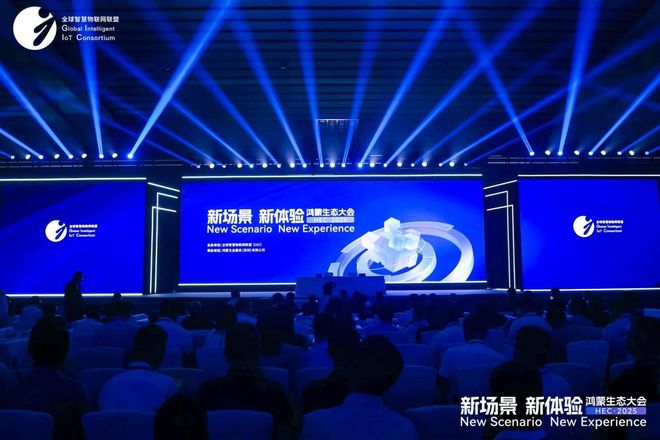
Core Insights - The Harmony Ecosystem Conference 2025 was held on August 30 in Shenzhen, focusing on how the Harmony ecosystem empowers various industries with the theme "New Scenarios, New Experiences" [1][3] - The conference attracted over 3,000 participants, including industry experts, entrepreneurs, developers, and government leaders, showcasing advancements in technology innovation, industry integration, and ecosystem co-construction [1][3] Group 1: Keynotes and Presentations - Wang Jiangping, a member of the National Committee of the Chinese People's Political Consultative Conference, emphasized the importance of the Harmony operating system as a significant advancement in China's foundational software sector, advocating for innovation-driven development and talent cultivation [5] - Huawei's rotating chairman Xu Zhijun highlighted the successful adaptation of major internet applications to the Harmony ecosystem, thanking various partners for their support and noting the global challenge of making Harmony successful [6] - GTI Chairman Gao Tongqing discussed the new opportunities for intelligent industry development in the AI era, stating that Harmony's open-source model will be crucial for driving digital transformation [6][7] Group 2: Industry Applications and Collaborations - Tencent Video's Harmony version has achieved over 6 million downloads, showcasing its robust performance and user experience, with plans for continued collaboration with Huawei [9] - China Mobile's Smart Home division introduced the "Zhi Hong OS," which aims to deploy AI services across multiple scenarios, with a plan to adapt over ten chips and a hundred applications in the next three years [9] - A series of memorandums of understanding were signed to promote collaboration among various organizations, including GSMA and GTI, to enhance the development and application of the Harmony ecosystem [11][13] Group 3: Talent and Standards Development - The "Harmony Talent Navigation Action Initiative" was launched to integrate resources from government, enterprises, and educational institutions to cultivate talent for the ecosystem's sustainable development [15] - The release of the "Harmony Application Experience Blue Book 2025" and "Industry Harmony Terminal Development Blue Book 2025" provides clear development guidance for ecosystem partners, marking a shift from scale expansion to quality improvement [17] - The establishment of specialized committees within GIIC aims to focus on security and industry-specific transformations, alongside the launch of certification standards for developers and devices [21][23]
21现场|走进天津港,看上合绿色航运的“中国方案”
2 1 Shi Ji Jing Ji Bao Dao· 2025-08-31 01:58
Core Insights - The Tianjin Summit of the Shanghai Cooperation Organization (SCO) has positioned Tianjin as a focal point for international shipping in Northern China, highlighting its role as a key hub for the Belt and Road Initiative [1] - In the first seven months of this year, trade between China and other SCO member countries reached $293.18 billion, averaging over $1.3 billion in goods exchanged daily [1] - Tianjin's import and export volume with SCO countries reached 53.37 billion yuan, marking a year-on-year increase of 5.2%, indicating a sustained rise in cooperation [1] Group 1 - Tianjin is the only city in Northern China with a Free Trade Zone, National-level New Area, and Comprehensive Bonded Zone, enhancing its strategic importance [1] - Tianjin Port connects with over 180 countries and regions, maintaining trade relations with more than 500 ports, and has established 40+ sea-rail intermodal transport corridors [2] - By the end of 2024, Tianjin Port is projected to rank eighth globally in container throughput, with a total cargo throughput of 493 million tons, reflecting a year-on-year growth of 3% [2] Group 2 - The port's container throughput is expected to reach 23.28 million standard containers in 2024, with an annual increase of over 1 million standard containers [2] - Tianjin Port has implemented a "smart zero-carbon" terminal design, achieving full automation and intelligent container operations, with a green energy system that operates entirely on self-produced renewable energy [2] - The terminal has installed over 100,000 sensors and integrated various facilities to create a fully connected IoT container terminal, enhancing operational efficiency [2]
