人机交互

Search documents
人形机器人颠覆交互 这游戏社交同样震撼
Sou Hu Cai Jing· 2025-10-22 09:06
Group 1 - The core highlight of the H2 humanoid robot is its redefined "interaction" capability, featuring "autonomous learning" that allows it to accumulate data from daily interactions and understand user habits, providing reminders and recommendations [4] - H2's competitive edge lies in its balance between technology and cost, positioning itself as both practical and affordable, which opens up broad application prospects in industrial, household, and medical fields [6][9] - In industrial scenarios, H2 can perform detection tasks in hazardous environments, while in household settings, it can provide companionship and elder monitoring, and in medical contexts, it can assist healthcare personnel with simple care tasks [9] Group 2 - The game "Three Kingdoms: Strategy to Conquer the World" offers a friendly social system for new players, simplifying operations through features like automatic road paving and pre-grouping for city attacks, allowing quicker integration into alliances [11] - The game encourages natural collaboration among players through mechanisms like resource sharing and common goals, catering to both strategy-focused players and casual gamers [11] - The upcoming launch of the "Beauty Theme Server" on October 25 will enhance social interactions within the game, allowing players to engage with characters and unlock exclusive storylines while participating in alliance activities [8][13]



全球AI眼镜上半年出货量大增,企查查:相关企业集中华东华南两地
Qi Cha Cha· 2025-10-22 06:21
Core Insights - The global smart glasses (AI glasses) market is experiencing significant growth, with shipments expected to reach 4.065 million units in the first half of 2025, representing a year-on-year increase of 64.2%. By 2029, global shipments are projected to exceed 40 million units, with China's market share steadily increasing and a compound annual growth rate (CAGR) of 55.6% from 2024 to 2029, the highest globally [1] Industry Distribution - As of October 21, there are 5,682 existing companies related to smart glasses in China, primarily concentrated in East China and South China, accounting for 36.11% and 32.72% respectively. The North China region has a 13.31% share, while Central, Southwest, Northwest, and Northeast regions each have less than 10% [2][3] Industry Sector Breakdown - The majority of existing smart glasses companies belong to the scientific research and technical services sector, making up 32.85% of the total. This is followed by the information transmission, software, and information technology services sector at 22.14%, and the manufacturing sector at 18.17% [4] Capital Distribution - Nearly 60% of the existing smart glasses companies have registered capital of 10 million yuan or more. Among these, companies with registered capital of 50 million yuan or more constitute the largest group, accounting for 33.04%. Companies with registered capital between 1 million (inclusive) and 5 million yuan account for 24.59% [5]
IDC:预计到2029年全球智能眼镜市场出货量将突破4000万台
智通财经网· 2025-10-20 05:49
Core Insights - The global smart glasses market is projected to reach 4.065 million units shipped in the first half of 2025, representing a year-on-year growth of 64.2%, driven by advancements in AI technology, supply chain optimization, and the entry of major players into the ecosystem [1][3] - By 2029, global shipments of smart glasses are expected to exceed 40 million units, with China's market share steadily increasing and a compound annual growth rate (CAGR) of 55.6% from 2024 to 2029, the highest globally [1] Market Overview - In the first half of 2025, Chinese smart glasses manufacturers shipped over 1 million units, capturing 26.6% of the global market share, with a year-on-year growth of 64.2% [3] - Despite the dominance of international brands in the consumer market, Chinese manufacturers are gaining significant ground through aggressive marketing and channel expansion [3] - The supply chain advantages of Chinese firms in optical modules, sensors, and assembly are facilitating their overseas expansion, particularly in North America, Europe, and Southeast Asia [3] Competitive Landscape - The smart glasses market is entering a phase of restructuring, characterized by intense competition among major players and innovative breakthroughs by tech companies in niche segments [5] - The audio and audio-capturing glasses segment saw shipments surpassing 2.4 million units in the first half of 2025, with audio glasses being the primary growth driver [6] - Meta continues to dominate the global market, while Chinese brands like Xiaomi are enhancing market activity, achieving a 35.5% market share in China, surpassing the U.S. [6] Product Segmentation - The extended reality (ER) glasses market experienced a shipment growth rate of 95.2% in the first half of 2025, with Chinese manufacturers holding over 97% of the market share [7] - Non-binary full-color glasses are being optimized for weight reduction, with Chinese firms like Yiwentech and Yingmu Technology capturing over 65% of the global market [9] - The augmented reality (AR) glasses market saw a 1.3% year-on-year growth, with China holding a 57.3% market share, as domestic companies build competitive advantages through rapid product iterations [10] Future Outlook - The mixed reality (MR) headset market is currently experiencing a decline in shipments, influenced by product updates from Meta, while Chinese firms are exploring commercial applications to drive growth [11] - The virtual reality (VR) headset market is witnessing regional disparities, with Chinese manufacturers expanding their influence, particularly in the B2B sector, which accounts for over 50% of the market [12] - As core component costs decrease and display technologies mature, more manufacturers are expected to diversify their product lines to capture market opportunities [14]



中国经济样本观察·企业样本篇|勇闯智能眼镜“无人区”——透视杭州灵伴科技的科创之道
Xin Hua She· 2025-10-13 07:48
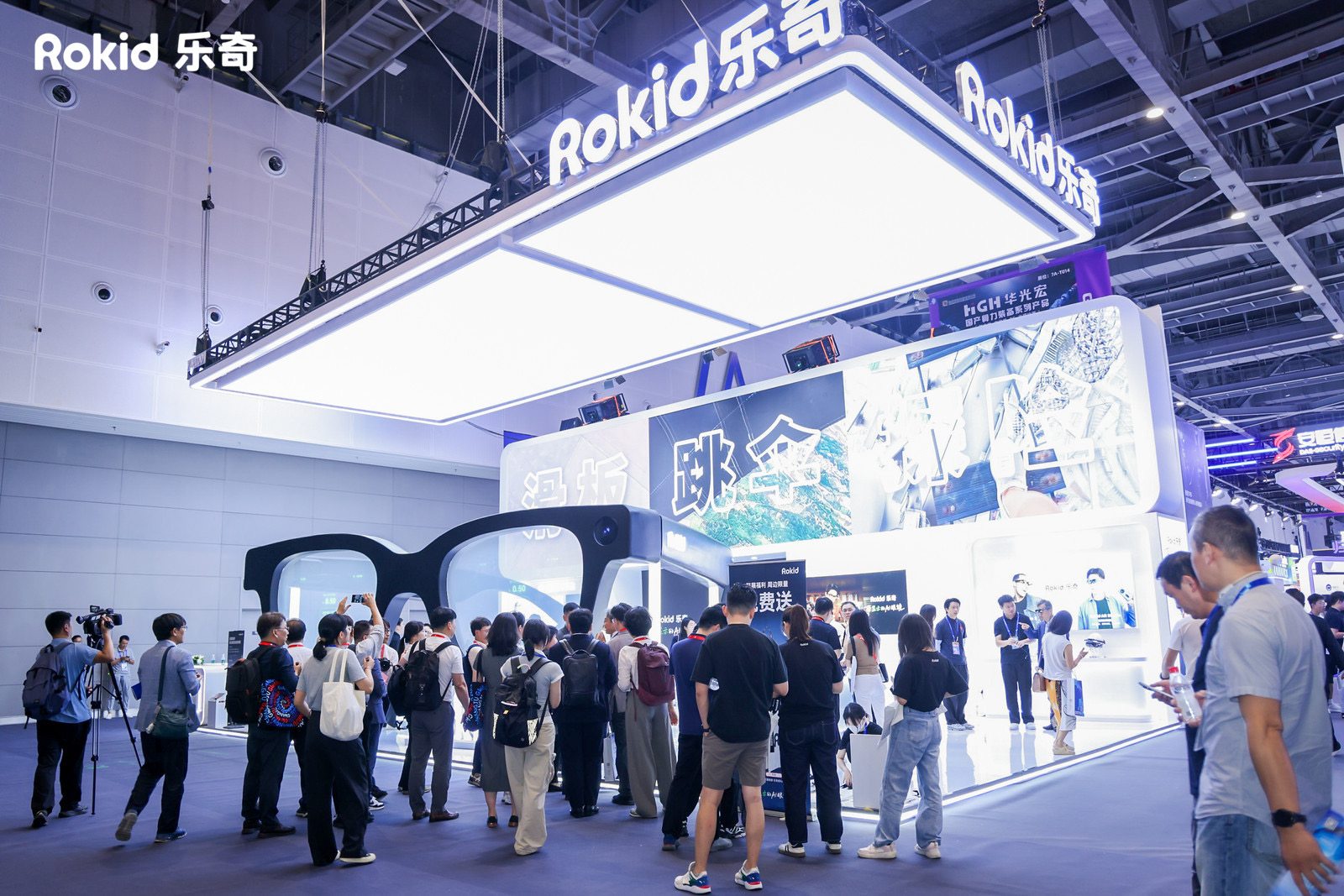
Core Insights - Rokid, a company specializing in smart glasses, has successfully penetrated the market with its AR and AI-integrated products, achieving sales in over 80 countries and a cumulative shipment of over 300,000 units with a 35% repurchase rate [1][2][6] Company Development - Founded in 2014, Rokid was established during a time when AR technology was still in its infancy, and the domestic supply chain was virtually non-existent, leading the company to adopt a "full-stack self-research" approach [2][3] - Over the past decade, Rokid has invested over 2 billion yuan in R&D, with a team comprising 60% researchers, resulting in hundreds of invention patents and significant technological breakthroughs in various fields [3][4] Product Innovation - The company has focused on creating lightweight smart glasses, setting a target weight of 49 grams, and has engaged in extensive discussions to optimize every component's weight [4][5] - Rokid has achieved a significant improvement in product quality, increasing the yield rate from 10% to over 90% through collaboration with suppliers [6] Market Position and Future Outlook - Rokid is positioned as a pioneer in the smart glasses market, with expectations that smart glasses will gradually replace many functions of smartphones, becoming a key human-computer interaction interface within the next 5 to 10 years [7][8] - The company is actively exploring cross-industry applications, integrating AR technology into cultural tourism and production efficiency, indicating a commitment to innovation and market expansion [7][8]
快讯|魔法原子发布四足机器人MagicDog Y1,小鹏汽车公布人形机器人姿势生成专利,立中集团与伟景智能达成合作
机器人大讲堂· 2025-10-11 09:20
Group 1 - Magic Atom Technology Company launched its first industry application quadruped robot, MagicDog Y1, designed for inspection, security, and rescue scenarios, with capabilities such as climbing 45° slopes, crossing 40 cm steps, a maximum load of 150 kg, and a running speed of 6 m/s [2] - The robot has an IP67 protection rating, operates in extreme environments from -20℃ to 55℃, and offers a single charge endurance of over 20 km, supporting rapid battery replacement for 24/7 continuous operation [2] Group 2 - Xiaopeng Motors announced a patent for a humanoid robot posture generation method, which integrates voice data, special action markers, and diffusion model technology to enhance human-robot interaction [3] - This method utilizes a self-supervised speech model to extract deep semantic features and generate diverse action data, applicable in service and companionship scenarios [3] Group 3 - Lichung Group signed a strategic cooperation agreement with Beijing Weijing Intelligent Technology to extend into the humanoid robot industry, leveraging their expertise in aluminum alloy materials and components [5] - The collaboration aims to overcome cost and high-end scenario adaptation challenges, creating a high-end manufacturing application ecosystem [5] Group 4 - Tsinghua University's wheeled humanoid robot has begun trials at Shanghai Sixth People's Hospital, capable of pre-diagnosis, examination, and providing auxiliary diagnostic suggestions [9] - The project is supported by Tsinghua's Zhang Tao professor team and the Tsinghua Star (Shanghai) incubator, which aids in project implementation and offers incubation and financing services [12] Group 5 - The Chinese Academy of Sciences and Beijing Xingchi Power Technology launched the first household application-level embodied robot in Beijing, focusing on home health management, chronic disease management, and Alzheimer's prevention [14] - The robot utilizes AI technologies for multi-modal interaction and aims to expand into community and health care institutions, contributing to a smart health ecosystem [14]



重量仅49克,价格是Meta一半,Rokid Glasses凭何赢得海外极客认可?
3 6 Ke· 2025-10-09 10:53
Core Insights - Rokid's AR glasses have gained significant attention at global tech events, showcasing the company's advancements in human-computer interaction technology and AR hardware [1][3] - The global AR glasses market is experiencing a surge, driven by technological breakthroughs and the commercialization of AI, positioning AR glasses as the next potential mainstream consumer device after smartphones [3][4] Group 1: Product Development and Market Performance - Rokid launched its latest AR glasses, Rokid Glasses, in November 2023, receiving positive market feedback due to enhanced performance and user experience [3][10] - The glasses achieved over $3.4 million in crowdfunding on Kickstarter, setting a record in the XR industry [4][8] - Within five days of domestic sales, Rokid Glasses sold over 40,000 units, indicating strong consumer demand [10][11] Group 2: Technological Advancements - The weight of Rokid Glasses has been reduced to 49 grams, making them comparable to regular eyewear, which enhances their wearability [11][13] - The glasses feature a 210 mAh battery that supports six hours of continuous music playback and can operate in a sleep mode when not in use [13][14] - AI capabilities in the glasses allow for real-time object recognition and translation, significantly enhancing user interaction [13][14] Group 3: Competitive Positioning - Rokid's pricing strategy positions its glasses competitively against other brands, such as Meta, which offers similar products at nearly double the price [15][16] - The self-developed YodaOS-Master operating system provides a unique advantage, supporting localized features and a robust developer ecosystem [16][17] - Over 30,000 users have purchased Rokid's AR glasses, with a growing overseas market and plans to match domestic sales within three years [14][18] Group 4: Industry Trends and Future Outlook - The AR glasses market is expected to grow as AI technology becomes more integrated, with Rokid aiming to define the next generation of human-computer interaction [18][19] - The company has seen a 200% revenue increase in 2023, with industrial applications contributing significantly to growth [18] - Rokid's development strategy focuses on balancing mass production with customization to meet diverse consumer needs [18][19]
商道创投网·会员动态|首形科技·完成过亿元本年度第三轮融资
Sou Hu Cai Jing· 2025-10-08 11:25
Core Insights - Shouxing Technology has completed its third round of financing this year, raising over 100 million yuan, led by Ant Group with participation from various well-known venture capital firms and research institution funds [2] Company Overview - Founded in 2024, Shouxing Technology is a rising player in the embodied intelligence sector, focusing on human-computer interaction technology. The founder, Dr. Hu Yuhang, a Columbia University graduate, developed a model for predicting facial empathy expressions, enabling robots to understand human facial changes [3] Financing Purpose - The funds from this round of financing will primarily be used for iterating the emotional base model and implementing applications in multiple scenarios. The company aims to enhance the emotional expression capabilities of robots and improve interaction experiences, providing users with more natural and intelligent human-computer interactions [4] Investment Rationale - Ant Group's representatives highlighted Shouxing Technology's unique technological advantages, including its multimodal emotional system and high-precision expression control algorithms, which represent breakthroughs in the industry. The company's talent background and market potential are also seen as highly attractive, indicating a promising future in the human-computer interaction field [5] Investment Ecosystem Perspective - The financing round for Shouxing Technology is viewed as a significant move in the embodied intelligence sector. The government has shown strong support for the development of the artificial intelligence industry through relevant policy documents encouraging innovation and entrepreneurship. This financing not only received recognition from professional investment institutions but also support from research institution funds, reflecting the investment ecosystem's confidence in its technological strength and market potential [6]

OpenAI要成为“AI版苹果”:ChatGPT直接装App,变身“操作系统”,Agent Kit几分钟开发复杂应用,多款AI硬件正在研发
Mei Ri Jing Ji Xin Wen· 2025-10-07 07:08
Core Insights - OpenAI's CEO announced that ChatGPT's weekly active users have surpassed 800 million, doubling from 400 million in February, and the developer community has expanded from 2 million to 4 million [6][3] - The company is transitioning from a "model provider" to a "full-stack AI ecosystem builder," aiming to redefine AI interactions for developers, businesses, and users [3] - OpenAI introduced several platform-level tools and product updates, including Apps SDK, Agent Kit, and Codex, which enhance application development and user experience [3][21] Group 1: User Growth and Ecosystem Development - ChatGPT's weekly active users reached 800 million, a significant increase from 400 million earlier this year [6] - The Apps SDK allows developers to build interactive applications within ChatGPT, creating a closed loop for development, distribution, and monetization [7][8] - Major companies like Booking.com, Expedia, and Spotify have already launched interactive applications on ChatGPT [8] Group 2: Tools for Developers - The Agent Kit aims to streamline AI agent development, addressing issues like fragmented tools and lengthy development processes [11] - Key components of the Agent Kit include Agent Builder, ChatKit, and Evals, which simplify the creation and evaluation of AI agents [13][15] - OpenAI's Codex has transitioned to a formal version, focusing on deep support for enterprise and engineering teams [16][21] Group 3: Model and API Enhancements - The GPT-5 Pro model has been officially released via API, offering significant improvements in reasoning and user experience [21] - Sora 2, an upgraded video generation model, is now available for developers, enhancing the ability to create realistic video content [23] - The integration of Slack and new management tools for Codex aims to improve user interaction and administrative control [21] Group 4: Market Impact and Hardware Development - The announcements from OpenAI have led to notable stock price fluctuations for associated companies, with Figma seeing a peak increase of nearly 16% [25][28] - OpenAI is developing multiple hardware products, with a focus on enhancing user experience rather than just efficiency [30][31] - The design philosophy for the new hardware aims to foster a more positive interaction between users and devices, moving beyond traditional efficiency metrics [30]

第六届未来大会:点亮川商未来新起点
Zhong Guo Jing Ying Bao· 2025-09-29 14:43
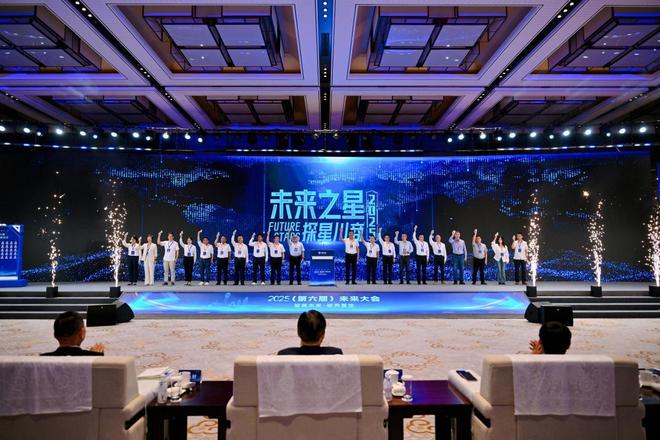
Group 1: Event Overview - The 2025 Future Conference was held in Chengdu with over 700 attendees, including economists, specialized enterprises, listed companies, industry leaders, investment institutions, and media representatives [1] - The conference theme was "Intelligent Computing Future: Breaking Boundaries and Reshaping" [1] Group 2: Technological Innovations - The exhibition showcased 20 high-tech projects, including water patrol robots, cooking robots, welding robots, brain-machine interfaces, and new carbon materials, attracting significant interest from attendees [3] - Chengdu-based Zhongyunhui Technology introduced a new type of public toilet utilizing advanced technologies like 5G, IoT, AI, and big data, addressing traditional public toilet issues and promoting sustainable development [3] - Chengdu Happy Little Clear Intelligent Technology focuses on AI applications in mental health and social psychological services, with its technology widely used in schools and among government employees [4] Group 3: Industry Trends - The "Future Star" initiative aims to discover transformative technologies and build an innovation network connecting industry, academia, and research [7] - The "Future Star" report indicated that 31.4% of participating companies are in the electronic information sector, and 28.09% in equipment manufacturing, highlighting a significant presence of emerging forces [7] - The median revenue of "Future Star" companies doubled compared to the previous year, with 53.71% of companies reporting positive revenue growth [7] Group 4: Challenges and Opportunities - Compliance and talent acquisition are identified as major challenges, while the demand for industry collaboration is rapidly increasing [8] - Companies are focusing on technological breakthroughs, market expansion, and talent recruitment as key investment directions [9] Group 5: Future Outlook - The conference reflects a shift in China's technology landscape from catching up to leading, serving as a window to observe future developments [15]
688627,突然火了,138家机构调研
Zheng Quan Shi Bao· 2025-09-28 00:00
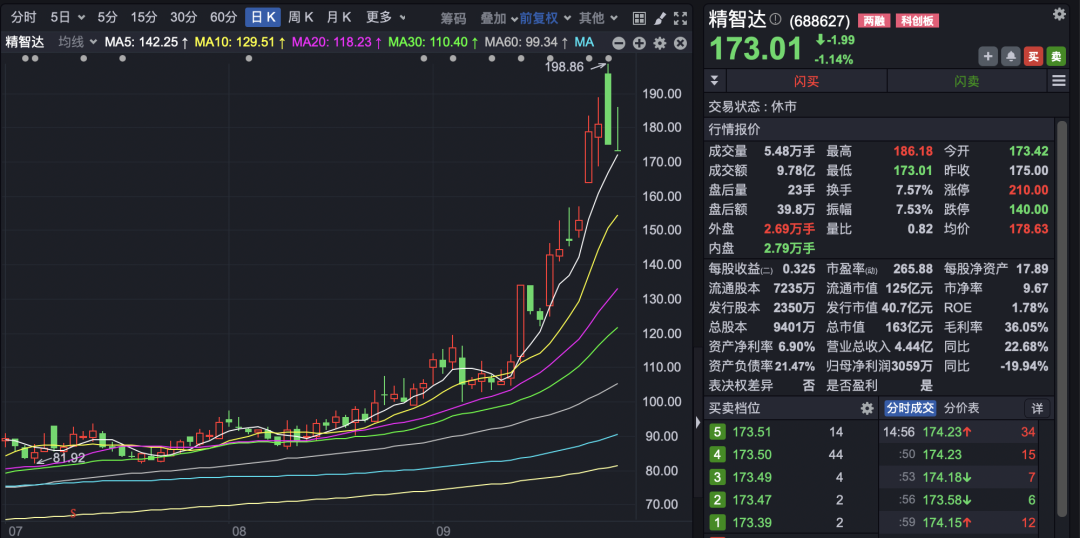
Group 1 - This week, 234 listed companies disclosed institutional research minutes, with nearly 40% of them achieving positive stock returns [1] - Haibo Sichuang's stock price increased by 32.19%, while New Coordinates and World achieved gains of 25.03% and 20.81% respectively [1] - Jingzhida (688627) received 138 institutional inquiries and saw a stock price increase of 17.68%, focusing on storage testing, computing chip testing, and probe card business [1] Group 2 - Jingzhida's management reported that their high-speed FT testing machine met its annual goals ahead of schedule, and demand for aging testing machines is strong [2] - The company is building a complete product line around AI demands, focusing on storage, computing, and human-computer interaction [3] - Xintai held a roadshow in Shenzhen, receiving 77 institutional investors and a stock price increase of 15.81%, with over 80% of its revenue coming from its formulation business [3][5] Group 3 - Mengke Pharmaceutical announced a private placement plan to raise up to 1.033 billion yuan, with Nanjing Haiqing Pharmaceutical becoming the controlling shareholder [7] - Haiqing Pharmaceutical will leverage its experience in raw material drug development to enhance Mengke's profitability [7] - Gaowei Technology received attention from over 40 institutions due to its strategic partnership with Ant Group, focusing on AI and financial technology [9]