合规管理

Search documents
再收大额罚单 重庆三峡银行合规屡屡失守
Bei Jing Shang Bao· 2025-12-14 15:39
Core Viewpoint - Chongqing Sanxia Bank has faced significant regulatory penalties due to compliance failures, highlighting systemic issues in its internal controls and management practices [1][2][3]. Regulatory Penalties - Chongqing Sanxia Bank was fined 8.9 million yuan for eight core business violations, including inadequate internal controls and improper loan issuance, with its chairman receiving a lifetime ban from the banking industry [1][2]. - The bank had previously been fined 5.592 million yuan in July for various regulatory breaches, leading to a total of 14.492 million yuan in penalties within five months, indicating persistent compliance issues [3]. Management Accountability - The bank's former chairman, Ding Shilu, faced severe repercussions for his role in the violations, including a lifetime ban and previous disciplinary actions for serious misconduct [2][3]. IPO Challenges - Chongqing Sanxia Bank has struggled with its IPO process, facing multiple setbacks including changes in sponsorship and regulatory investigations, which have stalled its progress in the capital market [4]. - The bank's IPO application was further complicated by the implementation of a new registration system in March 2023, resulting in it being classified as a "laggard" among banks seeking to go public [4]. Capital Pressure - Despite an increase in revenue and profits, the bank's capital adequacy ratios have declined, with the core Tier 1 capital ratio dropping to 8.46%, indicating weakened risk resilience [5]. Future Development Strategy - The bank aims to focus on serving local economies and small enterprises while aligning with national strategies in technology, green finance, and digital finance, as outlined by its chairman [6]. - Recommendations for the bank include leveraging state-owned resources for financing, exploring strategic partnerships, and preparing for future capital-raising activities [6].
年内超1400万元罚单“落地”,重庆三峡银行合规为何屡屡失守
Bei Jing Shang Bao· 2025-12-14 13:17
Core Viewpoint - Chongqing Sanxia Bank has faced significant regulatory penalties due to compliance failures, highlighting systemic issues in its internal controls and risk management practices [1][3][4]. Regulatory Penalties - On December 12, Chongqing Sanxia Bank was fined 8.9 million yuan for eight violations, including inadequate internal controls and improper loan issuance [1][3]. - The bank's management, including former chairman Ding Shilu, faced severe repercussions, with Ding receiving a lifetime ban from the banking industry [3][4]. - This penalty follows a previous fine of 5.592 million yuan in July for various regulatory breaches, totaling 14.492 million yuan in fines within five months [4][6]. Management Accountability - The bank's senior management has been held accountable, with significant penalties imposed on other executives, including a 10-year disqualification for the former vice president [4][5]. - The ongoing compliance issues reflect a deeper, systemic problem within the bank's operational framework [4][5]. IPO Challenges - Chongqing Sanxia Bank has struggled with its IPO process, facing delays and complications due to regulatory scrutiny and management issues [6][7]. - The bank's IPO application was stalled after the implementation of the A-share registration system in March 2023, resulting in it being classified as a "laggard" among its peers [7][8]. Financial Performance - As of the end of the third quarter of 2025, the bank reported total assets of 365.345 billion yuan, an 8.72% increase from the beginning of the year, and a net profit of 999 million yuan, up 5.43% year-on-year [7][8]. - Despite revenue growth, the bank's capital adequacy ratios have declined, with the core tier one capital ratio dropping to 8.46% [8][9]. Strategic Direction - The bank aims to focus on serving local economies and small enterprises while enhancing its financial services in technology, green finance, and digital banking [9][10]. - Analysts suggest leveraging state-owned shareholder resources to improve financial stability and explore strategic partnerships to enhance operational efficiency [10][11].


先锋期货因多项合规缺陷领监管谈话 法定代表人12月16日需赴深圳证监局
Xin Lang Cai Jing· 2025-12-12 12:40
Core Viewpoint - The Shenzhen Securities Regulatory Bureau has taken administrative regulatory measures against Pioneer Futures Co., Ltd. due to multiple issues including internal control deficiencies, inadequate management of trader suitability, non-compliance in futures trading consulting, and insufficient network and information security management [1][2]. Group 1: Regulatory Violations - The Shenzhen Securities Regulatory Bureau detailed several violations by Pioneer Futures, covering areas such as business operations, compliance risk control, information disclosure, and network security [2]. - Specific issues include insufficient due diligence on third-party internet marketing partners, ineffective control over internet marketing activities, and violations of trader suitability management by guiding clients in risk assessment processes [2][3]. - Misleading promotional content regarding trading strategies on the Pioneer Futures app was identified, which does not comply with the regulations governing futures trading consulting [2]. Group 2: Internal Control Deficiencies - The regulatory body highlighted that the identified issues reflect significant internal control deficiencies at Pioneer Futures, violating multiple regulatory provisions [3]. - Violated regulations include the "Measures for the Supervision and Administration of Futures Companies" and the "Measures for the Management of Futures Trading Consulting Business," among others [3]. Group 3: Required Remediation - The announcement mandates Pioneer Futures to rectify the identified issues, including establishing a comprehensive internal control system, enhancing compliance risk management for internet marketing and futures trading consulting, and improving network and information security measures [4]. - Pioneer Futures has the right to appeal the administrative measures within 60 days or file a lawsuit within six months, but the regulatory measures will remain in effect during this period [4].
重磅规范来了!事关基金销售
Zhong Guo Ji Jin Bao· 2025-12-12 10:52
Core Viewpoint - The recent draft of the "Regulations on the Sales Behavior of Publicly Raised Securities Investment Funds" aims to strengthen investor protection and standardize industry practices, addressing misleading sales activities and ensuring the best interests of investors are prioritized [1][11]. Group 1: Fund Promotion and Marketing - Fund managers and sales institutions must objectively and comprehensively present fund performance, ensuring that performance periods exceed six months and avoiding annualized displays for periods under one year [2][3]. - Fund performance rankings should be based on publicly available data from fund evaluation agencies for periods of three years or more, including necessary details such as agency name and evaluation date [2]. - The use of terms like "positive return" or "probability of positive return" is prohibited to prevent misleading investors about risks [2]. Group 2: Sales Practices and Accountability - Fund managers and sales institutions are required to avoid exaggerated claims and misleading language in their promotions, particularly regarding fund size and growth [3]. - A mechanism for accountability will be established for short-term sales behaviors, such as inducing investors to frequently redeem or subscribe to funds [1][10]. Group 3: Live Streaming Regulations - Fund managers and sales institutions must ensure compliance in live streaming activities, including signing agreements with platforms and ensuring that only qualified personnel conduct fund-related discussions [5][7]. - Live streaming platforms must disable tipping features, and all promotional content must adhere to relevant legal standards [6][7]. Group 4: Disclosure of Fees and Information - Fund managers and sales institutions must provide clear and comprehensive information about various fees associated with fund purchases, ensuring investors have adequate time to review this information [8][9]. - Different share classes must have their fee structures disclosed, and sales service fees must be clearly defined [9]. Group 5: Performance Assessment Optimization - The performance assessment mechanisms for sales activities should align with long-term objectives, focusing on investor outcomes rather than short-term sales metrics [10]. - Key performance indicators should include investor profitability and retention, with a minimum assessment period of one year for sales activities and three years for investor outcomes [10].
倒计时20天!信托机构密集补位首席合规官
Guo Ji Jin Rong Bao· 2025-12-12 05:20
Core Viewpoint - The recent appointment of Chief Compliance Officers (CCOs) in multiple trust companies is driven by regulatory requirements and the need for industry transformation and stable operations [1][3][5]. Group 1: Regulatory Requirements - The establishment of CCOs in trust companies is a response to the revised "Trust Company Management Measures," which mandates that CCOs be appointed by January 1, 2026 [1][5]. - The "Financial Institutions Compliance Management Measures," effective from March 1, 2023, requires financial institutions to have a CCO who reports directly to the board [4][5]. Group 2: Industry Transformation - The appointment of CCOs aims to enhance compliance governance capabilities, prevent systemic risks, and address previous issues of compliance management at the executive level [3][5]. - CCOs will play a crucial role in integrating compliance into strategic decision-making and business processes, shifting compliance from a support function to a decision-making role [5][6]. Group 3: Risk Management - The trust industry has faced numerous compliance violations, with penalties reaching 18.03 million yuan in 2025, highlighting the need for robust risk management frameworks [3][5]. - CCOs are expected to lead the development of comprehensive risk control mechanisms, ensuring compliance checks are integrated into key business stages [3][5]. Group 4: Enhancing Industry Credibility - The establishment of CCOs is also aimed at restoring the credibility of the trust industry, which has suffered from inadequate information disclosure and other issues that have harmed investor interests [3][5]. - By strengthening oversight, CCOs can improve the transparency of trust products and rebuild trust among high-net-worth clients [3][5].
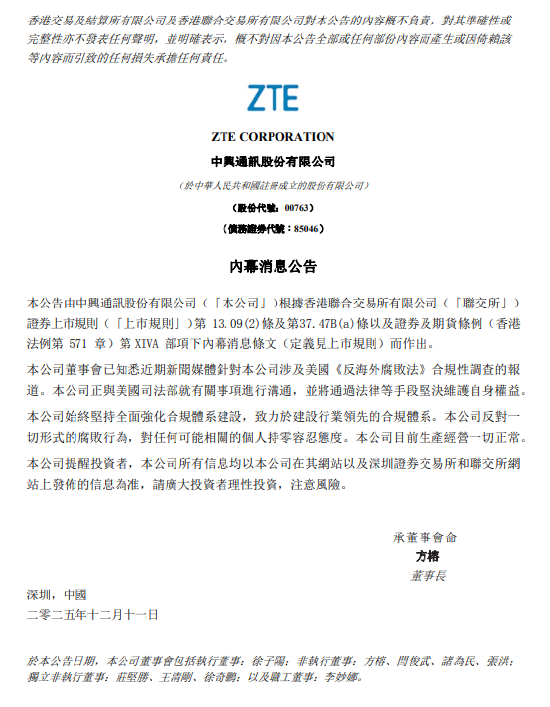
中兴通讯回应涉美合规调查报道 称正与美司法部沟通并通过法律手段捍卫权益
Xin Lang Cai Jing· 2025-12-11 04:50
Core Viewpoint - ZTE Corporation (stock code: 00763.HK) has responded to recent media reports regarding its involvement in a compliance investigation under the U.S. Foreign Corrupt Practices Act (FCPA) [1][4]. Group 1: Company Response - The company has acknowledged the media reports and confirmed that it is currently in communication with the U.S. Department of Justice regarding the FCPA compliance investigation [1][4]. - ZTE emphasizes its commitment to building and maintaining a robust compliance management system and opposes all forms of corruption, maintaining a zero-tolerance policy towards any potentially involved individuals [5]. Group 2: Legal and Operational Status - The company intends to vigorously protect its legal rights through legal means in response to the investigation [5]. - ZTE states that its production and operations are currently normal [5].

驻中国建设银行纪检监察组以强监督促强管理 同向发力促进合规经营
Zhong Yang Ji Wei Guo Jia Jian Wei Wang Zhan· 2025-12-11 00:35
Core Viewpoint - The Central Commission for Discipline Inspection and the National Supervisory Commission has issued a notice to strengthen the supervision of risk management and compliance departments within China Construction Bank, emphasizing accountability for non-compliance and the importance of robust compliance management [1][2]. Group 1: Compliance Management - The notice highlights the close relationship between compliance management and anti-corruption efforts, indicating that enhancing supervision of compliance in banking operations is a key measure to promote integrity [1]. - The supervisory body aims to implement a strong management system for compliance, thereby reinforcing the operational compliance framework of China Construction Bank [1]. Group 2: Accountability and Oversight - An analysis of recent disciplinary cases at China Construction Bank reveals that most corruption cases are linked to serious business violations, indicating a need for stricter adherence to regulations [2]. - The supervisory body is working with internal control and compliance departments to address violations through a comprehensive approach that includes investigation, correction, and treatment [2]. - Serious issues identified during supervision will lead to accountability for both direct and leadership responsibilities, enhancing the ability to prevent severe violations and corruption in key areas [2]. Group 3: Credit Compliance Management - The supervisory body is promoting the establishment of long-term mechanisms for managing major credit violations, including processes for investigation and accountability [3]. - There is a shift from post-incident accountability based on credit losses to real-time accountability based on credit violations, which aims to strengthen the rigidity of credit management systems and reduce opportunities for power abuse [3].

冲刺港股IPO!台铃营收能否扛住“新国标”与“投诉潮”?
Sou Hu Cai Jing· 2025-12-10 10:16
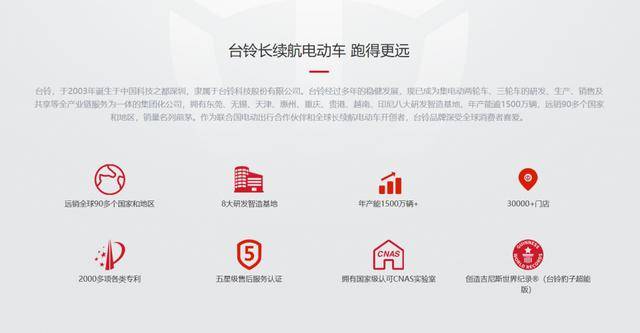
Core Viewpoint - The electric two-wheeler company Tailg has officially initiated its listing guidance, aiming for a Hong Kong IPO in 2026, which would make it the third major player in the industry to go public after Yadea and Aima, marking the complete assembly of the top three in the capital market [1][2]. Group 1: Company Overview - Tailg, founded by the Sun brothers, has transformed from a small repair shop into an industry giant with annual revenue exceeding 12 billion yuan and an annual production capacity of over 15 million units [3][5]. - The company has a global network of over 30,000 stores and exports to more than 90 countries, with estimated annual sales between 5 million and 7 million units, securing its position as the third-largest player in the market [3][5]. Group 2: Market Challenges - The implementation of the new national standard for electric bicycles (GB 17761-2024) starting September 1, 2025, poses significant compliance challenges and market adaptation issues for Tailg [2][10]. - The industry is shifting from a focus on volume expansion to value enhancement centered on smart and high-end products, which presents a challenge for Tailg, as its current offerings may not meet the expectations of younger consumers who prioritize technology and smart features [5][9]. Group 3: User Experience and Brand Reputation - Tailg faces significant user complaints, with over 2,000 valid complaints reported, primarily concerning after-sales service and battery performance, which could impact brand reputation and user loyalty [5][9]. - The company's smart features, while present, have not penetrated the market effectively compared to competitors, raising concerns about its ability to attract tech-savvy consumers [5][9]. Group 4: Regulatory and Compliance Issues - The new national standard introduces stringent safety requirements, and any compliance failures could lead to product recalls, fines, or regional sales bans, directly affecting revenue and the IPO process [10][12]. - Past regulatory cases have highlighted compliance gaps in Tailg's channel management, indicating potential vulnerabilities as the company prepares for its IPO [12]. Group 5: Governance and Ownership Structure - Tailg's ownership is highly concentrated among the founding Sun brothers and their partners, which has facilitated efficient decision-making but may hinder the company's ability to innovate and adapt in a rapidly changing market [13][15]. - The current ownership structure poses challenges for meeting public market requirements, as the company must significantly dilute ownership to comply with public holding regulations, potentially raising concerns about stock liquidity [15].
“超额领取年终奖”?西南证券是怎么做到的。。。
Xin Lang Cai Jing· 2025-12-09 12:51
Core Viewpoint - Southwest Securities has faced regulatory penalties due to compliance failures at its Heilongjiang branch, highlighting issues in management and operational oversight [3][4][5]. Compliance Issues - The Heilongjiang branch of Southwest Securities received two regulatory warnings for inadequate compliance management and failure to enforce employee reporting requirements for mobile phone usage [4][5]. - The branch was also cited for allowing employees to engage in unethical practices, including improper financial gains [5][15]. Regulatory Actions - The Heilongjiang Securities Regulatory Bureau issued a warning letter requiring the branch to enhance compliance education and submit a written rectification report within 30 days [5][15]. - The direct responsible individual, Liu Li, was also warned for not reporting her actual mobile phone number and for receiving excessive performance bonuses [5][15][16]. Management Changes - The Heilongjiang branch has undergone two leadership changes within the year, indicating instability in management [8][18]. - The current head, Liu Wei, has been with Southwest Securities since 2004 and obtained investment advisor qualifications in 2015 [18][19]. Performance Decline - Despite being headquartered in Chongqing, Southwest Securities has seen a decline in performance in the Northeast region, with negative operating profits reported for 2023 and 2024 [9][20]. - In 2021, the Northeast region contributed 6.379 million yuan in revenue, with profits of 632,000 yuan, but profits have since decreased significantly [10][20].


80后李虹檠升任贵阳银行副行长,新班子迎业绩与风控双考题
Nan Fang Du Shi Bao· 2025-12-08 13:32
Core Viewpoint - Guiyang Bank has appointed Li Hongqing as the new vice president, completing its executive structure of "one president and four vice presidents," which aims to address the challenges of performance pressure and weak grassroots risk control [2][11]. Group 1: Executive Changes - The Guizhou Regulatory Bureau has approved Li Hongqing's appointment as vice president of Guiyang Bank, following his previous role as board secretary [2][3]. - Li Hongqing, born in 1982 and the youngest executive at the bank, holds a PhD in management and has extensive experience in various roles within the bank and other financial institutions [3][5]. - The new executive structure includes Chairman Zhang Zhenghai, President Sheng Jun, and four vice presidents: Li Songyun, He Kaqiang, Li Ningbo, and Li Hongqing [3]. Group 2: Financial Performance - As of September 2025, Guiyang Bank's total assets reached 746.589 billion, with total deposits of 435.027 billion and total loans of 345.741 billion [6]. - The bank's operating income for the first three quarters of 2025 was 9.435 billion, a year-on-year decrease of 13.73%, while net profit attributable to shareholders was 3.915 billion, a slight decline of 1.39% [6][7]. - The bank's net interest income decreased by 1.065 billion, a drop of 12.29%, and the net interest margin fell by 0.23 percentage points to 1.57% [7][8]. Group 3: Asset Quality and Risk Management - As of September 2025, the non-performing loan ratio was 1.63%, showing improvement from 1.7% in June, but still high compared to peers [9]. - The bank's provision coverage ratio was 239.59%, above the regulatory requirement, but has decreased since the beginning of the year [9]. - Guiyang Bank has faced multiple regulatory penalties for inadequate credit review and management, raising concerns about its compliance capabilities [10]. Group 4: Challenges Ahead - The new executive team is tasked with improving compliance management and addressing the challenges of performance pressure and weak grassroots risk control [11]. - The bank's operational efficiency has declined, with the cost-to-income ratio rising to 28.09%, indicating increased cost control pressures [8]. - The bank's ability to maintain its capital adequacy ratios and manage credit quality will be critical in navigating potential risks in the future [9].