增强现实(AR)

Search documents
ITIF:2025 AR&VR在医疗领域中的应用潜力研究报告(英文版)
Sou Hu Cai Jing· 2025-08-27 05:54
Core Insights - The ITIF report emphasizes the need for accelerated innovation in AR and VR technologies to meet critical healthcare demands, highlighting their potential for long-term cost savings and improved patient care [5][12][14] - The AR/VR healthcare market is projected to grow from approximately $4 billion in 2024 to over $46 billion by 2032, with 84% of healthcare professionals recognizing its transformative potential [11][15][18] Value of AR/VR in Healthcare - AR/VR technologies enhance traditional healthcare methods and introduce new treatment options, ultimately leading to better patient outcomes and cost savings [8][15] - Immersive technologies are being utilized in medical education, allowing students to learn in risk-free environments, resulting in a knowledge recall rate increase from 78% to 90% compared to traditional methods [17][49] - Patients benefit from AR/VR applications through home-based treatments and health monitoring, reducing the need for travel to medical facilities [18][40] Applications in Healthcare - Doctors are using AR/VR to improve diagnostic accuracy, with AR technology achieving a screw placement accuracy of 98% in spinal surgeries, surpassing the 90% clinical acceptance standard [22][25] - Mental health practitioners are employing AR/VR for exposure therapy, aiding patients with phobias and PTSD, and providing new approaches to addiction treatment [42][44] - AR/VR is being integrated into pharmaceutical and medical device research, accelerating drug development processes [2][12] Barriers to Adoption - High initial costs for AR/VR equipment and financial constraints faced by hospitals, with over half of U.S. hospitals operating at a loss in 2022, hinder widespread adoption [2][19] - A significant burnout rate among healthcare workers, with 46% experiencing burnout in 2022, complicates the training and implementation of new technologies [2][19] - Regulatory challenges, including the lack of clear FDA guidelines for AR/VR devices, create obstacles for timely technology deployment [2][19] Policy Recommendations - The report suggests establishing federal privacy regulations to protect AR/VR healthcare data and promoting public-private partnerships to enhance innovation [3][14] - It advocates for the integration of AR/VR into healthcare education and workforce training programs to improve technical skills among healthcare professionals [3][14] - Recommendations include streamlining the FDA approval process for AR/VR technologies and expanding Medicare and Medicaid coverage for these services [3][14]


2025年中国AI眼镜行业研究报告
艾瑞咨询· 2025-08-27 00:04
Core Viewpoint - The AI glasses industry is on the verge of a significant breakthrough, potentially marking the next "iPhone moment" in technology, where AI glasses could redefine user interaction with the world and enhance daily life experiences [2][5]. AI Glasses Definition and Classification - AI glasses are innovative wearable devices that integrate artificial intelligence with traditional eyewear, enhancing functionality and practicality. They can be categorized into five types based on integrated technologies, each serving different user needs and improving efficiency and experience [6][8][10][12]. Market Growth and Projections - The global shipment of AI glasses is expected to reach 20 million units by 2028, driven by rapid advancements in AI and AR technologies. The market is anticipated to see explosive growth starting in 2025, with significant contributions from various brands entering the AI glasses sector [14][19]. Industry Landscape and Key Players - Major companies are entering the AI glasses market, focusing on integrating AI models with AR technology to create lightweight and versatile products. Notable players include Bose, Huawei, and Meta, each offering distinct AI glasses tailored for different applications [19][20][22][23]. Consumer Awareness and Market Potential - Consumer awareness of AI glasses is growing, with 61% of surveyed individuals either having purchased or planning to purchase smart glasses. The acceptance of AI functionality in glasses is notably high, with a preference for products priced between 2000-3000 RMB [27][30][32]. User Preferences and Purchase Behavior - Users show a strong interest in AI glasses, particularly in mid-range price products. Functionality, comfort, and multi-modal communication are key factors influencing purchasing decisions. Users are also inclined towards products that offer a seamless integration of various features [36][38][40]. Supply Chain and Technological Advancements - The AI glasses market is experiencing a shift towards domestic production and technological innovation, with over 60% of core components being sourced locally. This trend is expected to enhance product availability and affordability, making AI glasses more accessible to consumers [44][45]. Retail and Marketing Strategies - Effective retail strategies, including experiential marketing and online-offline integration, are crucial for driving sales in the AI glasses market. Companies are focusing on creating engaging customer experiences to facilitate product adoption [47][49].

财经观察:从“新物种”到“必备品”,智能眼镜卡在哪?
Huan Qiu Shi Bao· 2025-08-26 23:20
Core Insights - The smart glasses industry is on the verge of a breakthrough, but it still needs advancements in technology, branding, and user experience to achieve global impact similar to the iPhone's effect on smartphones [1][8][9] Industry Trends - The demand for AI-enabled smart glasses is increasing, with a reported 118% year-on-year growth in sales volume for AI smart devices in July [1][3] - Major tech companies like Meta and Google are accelerating the iteration of smart glasses, with Meta planning to launch its first display-equipped smart glasses priced at approximately $800 [2][3] - The global smart glasses market is projected to see a shipment of 1.487 million units in Q1 2025, marking an 82.3% year-on-year increase [3] Market Dynamics - The Chinese smart glasses market is expected to reach nearly 1.4 million units in retail sales for the entire year of 2025, reflecting a 216% increase [3] - Domestic brands are competing aggressively in the market, with over twenty models priced between 1,000 to 4,000 yuan, significantly lower than foreign counterparts [3][4] Product Categories - Smart glasses can be categorized into three main types: AI shooting glasses, AI audio glasses, and AI display glasses, each serving different user needs and scenarios [4][5] Challenges - The industry faces challenges such as high return rates for products, with Xiaomi's AI glasses experiencing a return rate of about 40% due to various issues [5][6] - Key consumer concerns include comfort and battery life, with many users finding current models too heavy and with insufficient battery duration [6][7] Competitive Landscape - Chinese companies are leveraging supply chain advantages for global expansion, with over 60% of key components in some products being self-developed [8][9] - To compete globally, Chinese brands need to focus on technology innovation, brand value, user experience, and ecosystem development [8][9]
苹果、vivo、荣耀接连入局!手机厂商为何看好这一新赛道?
Zheng Quan Shi Bao Wang· 2025-08-26 04:42
Core Insights - The mixed reality (MR) market is still in its early stages, with various companies like vivo, Honor, Xiaomi, Huawei, and OPPO entering the field, but facing challenges in sales and product acceptance [1][4][5] - Vivo has launched its first MR headset, the vivo Vision Exploration Edition, which is the lightest in the market at 398g, but it is currently only available for reservation and has not disclosed a price [2][4] - Apple's Vision Pro headset, launched in 2024, initially saw high demand but has since struggled with sales, leading to its production halt due to high pricing and a lack of ecosystem [3][4] Industry Trends - The consumer-grade XR device market in China saw a retail volume of 307,000 units in the first half of 2025, a 17.6% year-on-year increase, but the VR/MR segment experienced a 25.6% decline [3] - Analysts attribute the decline in VR device sales to a "content drought," with most products focusing on entertainment without compelling applications for broader audiences [3][4] - The MR market is expected to mature over the next 5 to 10 years, requiring advancements in hardware design, display quality, application ecosystems, and pricing [4][5] Company Strategies - Vivo's MR team has grown to 500 members, with a focus on bridging the physical and digital worlds, aiming to integrate MR into future household robotics [2][5] - Companies are leveraging their existing supply chain and technological expertise in smartphones to expand into the MR market, which is seen as a response to the saturation of the smartphone market [6][7] - Xiaomi has adjusted its smartphone sales target to approximately 175 million units, reflecting a broader industry trend of declining growth expectations [7] Technological Challenges - Experts highlight several bottlenecks in the MR and robotics integration, including the need for high-performance sensors, real-time data processing, low-latency communication, and mature AI algorithms [8][9] - The relationship between MR and robotics is emphasized, with MR providing enhanced environmental perception and interaction capabilities for robots, while robots can improve MR's physical interaction [8][9] Market Outlook - Global VR/MR shipments are projected to reach 5.6 million units in 2025, potentially increasing to 14.4 million units by 2030 [6] - The smartphone market in China has seen a decline in shipments, with a 4% year-on-year drop in the second quarter of 2025, indicating a shift in focus towards MR technologies [6]

全国首家沉浸式机器人互动体验馆落户龙华
Nan Fang Du Shi Bao· 2025-08-17 00:36
Core Insights - The first flagship venue focused on diverse robotic interactions, the Yuxin Intelligent Robot Experience Hall, has officially opened in Longhua District, Shenzhen, marking a new phase in consumer-level applications of artificial intelligence in the region [3] Group 1: Venue Features - Visitors can interact with the Yushu biped robot, controlling its movements under professional guidance, showcasing advancements in humanoid robot technology [4] - The venue includes a "four-legged robot dog" competition area where users can command the robot dog to perform various actions, highlighting its superior motion adaptability [4] - An AR mixed-reality combat space allows users to wear lightweight AR headsets to summon virtual robot partners for multiplayer battles, enhancing the interactive experience [4] Group 2: Educational and Social Functions - The venue serves as a science popularization engine and an industry showcase, aiming to educate young people about robotics, AR, and AI through engaging and fun activities [5] - It acts as a new landmark for family entertainment, allowing parents and children to participate in AR adventures and collaborative robot dog operations, blending education with enjoyment [5] - The experience hall displays leading innovations from domestic companies, such as Yushu Technology (humanoid and quadruped robots), Yuanluobo (AI chess robot), and Kengqing Technology (exoskeletons), providing a window into the development of China's robotics industry [5] Group 3: Industry Impact - The launch of the Yuxin Experience Hall offers citizens a gateway to the future, reconstructing the logic of technology dissemination through a "playable, touchable, and perceptible" model [5] - The integration of high-profile robots into everyday commercial spaces and the transition of exoskeletons from laboratories to public experience areas demonstrate Shenzhen's commitment to realizing the era of human-machine collaboration [5]


上海双子塔广告
Sou Hu Cai Jing· 2025-08-11 01:35
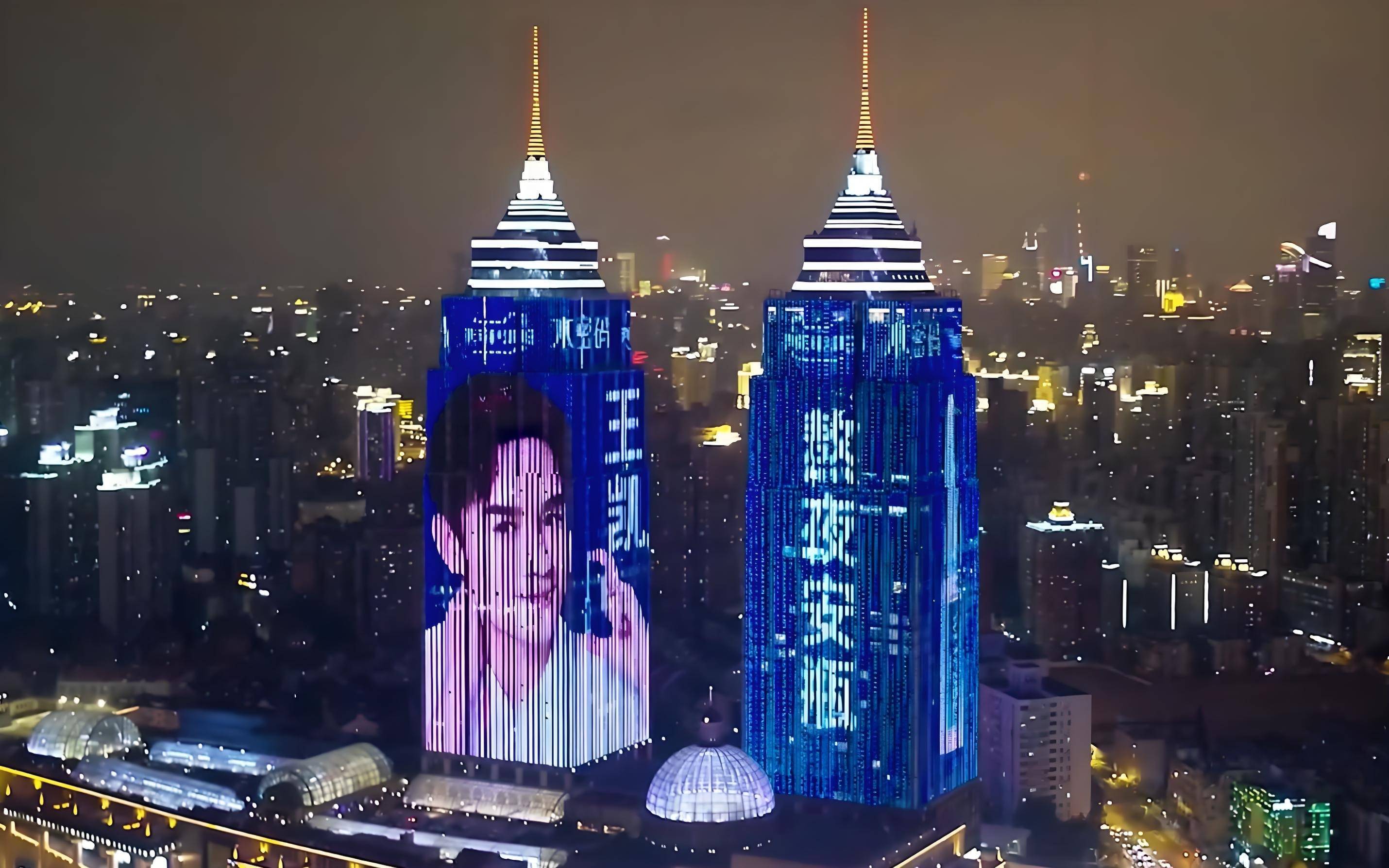
Group 1 - The Shanghai Twin Towers, also known as the Shanghai World Financial Center and Shanghai Tower, serve as a landmark and a significant platform for advertising in the city [4] - The advertising display methods at the Twin Towers include large LED screens, architectural projections, and interactive experiences using augmented reality (AR) technology [7][8][9] Group 2 - The content of advertisements at the Twin Towers is diverse, covering various sectors such as technology, fashion, automotive, and tourism, catering to different target audiences [10] - Compared to other advertising forms in Shanghai, Twin Towers advertising offers superior visual impact, enhances brand image, and covers a broader audience due to its prime location [11][12][13] Group 3 - Advertisers evaluate the effectiveness of Twin Towers advertising through metrics such as exposure rate, click-through rate, and conversion rate, allowing for optimization of content and display methods [14] - The future of advertising at the Twin Towers is expected to evolve with advancements in technology, potentially incorporating personalized advertising based on artificial intelligence and big data [16] Group 4 - The advertising at Shanghai Twin Towers represents a significant part of modern urban advertising, showcasing unique display methods, diverse content, and strong visual impact, making it an important platform for brand communication [17]
XR周报:Meta公布Boba 3和Tiramisu原型机;库克重申对visionOS高度投入
Sou Hu Cai Jing· 2025-08-10 09:53
Core Insights - Meta has unveiled two significant prototype devices, Boba 3 and Tiramisu, aimed at enhancing ultra-wide field of view and ultra-realistic VR experiences [15] - xReality's subsidiary, Operator XR, secured a contract worth 5.71 million AUD (approximately 26.77 million RMB) to provide a VR police training system in Texas [3] - Apple CEO Tim Cook reaffirmed the company's strong commitment to the visionOS platform, with visionOS 26 set to introduce major new features [16] Industry Dynamics - xReality Group's Operator XR has signed a contract with the Texas Department of Public Safety for a VR police training system valued at 5.71 million AUD [3] - A collaborative research team from multiple universities has developed a technology called "You Only Render Once" (YORO), which significantly improves mobile VR performance, increasing frame rates from 62 FPS to 82 FPS, a 32% increase [5] - Google DeepMind launched Genie 3, a generative AI model capable of creating interactive 3D virtual environments from simple text inputs, potentially revolutionizing VR content creation [8] - Red 6 partnered with Northrop Grumman to integrate its advanced tactical augmented reality system into the Beacon platform for military air combat training [9] Company Developments - Meta has integrated an AI assistant called Creator Assistant into its Horizon Worlds desktop editor, streamlining the development process for users [6] - Snap reported a 9% year-over-year revenue growth in Q2 2025, with active users reaching 932 million, an increase of 7 million [11] - Vuzix received a six-figure order for its M400 smart glasses to support warehouse automation for a global top 100 retail client [17] - Meta's CEO Mark Zuckerberg stated that individuals not wearing AI-enabled smart glasses will face significant cognitive disadvantages in the future [19] Gaming News - The first WebXR game, "Elysian," has launched on the Meta Horizon store, providing a new exposure opportunity for WebXR developers [22] - The new VR puzzle game "UnLoop" is set to release on September 5, 2025, compatible with Meta Quest and PICO platforms [23] - The immersive VR sandbox game "Marble Mechanics" will soon be available on the Meta Store, priced at $14.99 [25] - The highly anticipated VR action game "Arken Age" will be released on Meta Quest 3/3S in November, ensuring consistent content and performance across platforms [26]


亮亮视野完成过亿元战略融资,百日后多领域成果斐然
Sou Hu Cai Jing· 2025-08-08 21:11
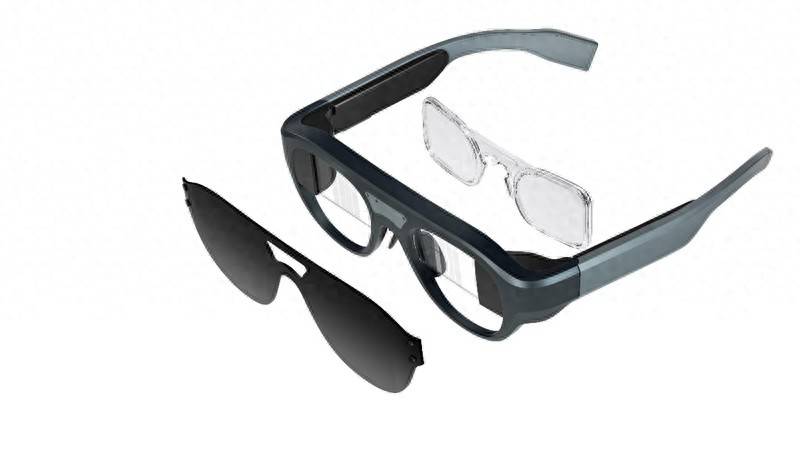
Core Insights - The company, Liangliang Vision, confirmed the completion of over 100 million yuan strategic financing in March 2025, led by Yizhuang Industrial Upgrade Fund, with participation from Kunshan Guotou and Shaanxi Jinzi [2] - The financing was disclosed after achieving significant milestones in three key areas, including passing the Ministry of Science and Technology's key research project acceptance [2][3] Group 1 - The company successfully passed the acceptance of a key national research project focused on developing mixed reality (MR) smart terminals based on two-dimensional diffraction waveguide technology, overcoming challenges in display technology, spatial interaction, latency, and 3D graphics rendering [2] - Multiple clients from industries such as industrial, aviation, energy, and healthcare are currently trialing the MR smart terminals, accelerating industrialization and supporting China's transition from "catching up" to "leading" in the MR field [2] Group 2 - The company is accelerating the layout of the micro-nano optical industry chain by establishing a controlled mass production supply chain system in collaboration with leading enterprises, enhancing the self-controllable capability of core components [3] - The L-PAT series waveguide modules utilize self-developed processes with strict control and testing standards, resulting in high yield, low cost, and reliable quality [3] Group 3 - The company launched the next-generation AR translation glasses, Leion Hey2, which weigh only 49 grams and support real-time translation of over a hundred languages and dialects, with an 8-hour battery life, setting a new industry benchmark [3] - The financing will be used to accelerate the development of the next generation of AR glasses, deepen the micro-nano optical industry chain layout, and expand international markets in North America, Europe, and Southeast Asia [3]
过亿元战略融资首次曝光,亮亮视野100余天连下三城
Sou Hu Wang· 2025-08-05 03:29
Core Insights - The company, Beijing-based AR leader Liangliang Vision, confirmed the completion of over 100 million yuan strategic financing in March 2025, with the funding led by Yizhuang Industrial Upgrade Fund and followed by Kunshan Guotou and Shaanxi Jinzi [1] - The financing will accelerate the development of next-generation AR glasses, enhance the micro-nano optical industry chain, and expand international market presence in North America, Europe, and Southeast Asia [1][2] Group 1 - The company achieved significant breakthroughs in three areas post-financing: passing the Ministry of Science and Technology's key R&D project acceptance, accelerating the micro-nano optical industry chain layout, and launching the new AR translation glasses Leion Hey2, which supports real-time translation of over 100 languages and dialects with an 8-hour battery life [1] - The financing is primarily allocated to three segments: R&D for next-gen AR glasses, deepening the micro-nano optical industry chain, and collaborating with global industry clients to create diverse application scenarios [1] - The Yizhuang Industrial Upgrade Fund highlighted the company's dual-driven development path of "optical waveguide components + AR glasses products," aiming to leverage resources in integrated circuits and smart manufacturing for broader application scenarios [2] Group 2 - Kunshan Guotou emphasized the potential of Liangliang Vision's micro-nano optical projects in synergy with Kunshan's advanced materials and optomechanical industries, enhancing high-value AR product manufacturing [2] - Shaanxi Jinzi Fund noted the coupling effect between Liangliang Vision and the optoelectronic and aerospace industries, with significant potential for AR technology in western regions, particularly in aerospace and emergency rescue [3] - Industry analysis suggests that the combination of state-owned capital and industrial funds strengthens the company's financial and industrial foundation, opening up opportunities for technological innovation and international expansion [3]
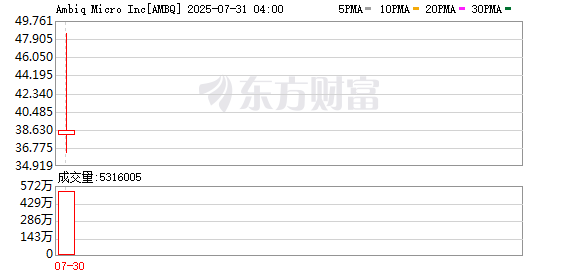
Arm投资的AI芯片公司Ambiq上市首日大涨61% 两度熔断停牌
Hua Er Jie Jian Wen· 2025-07-30 20:53
Core Viewpoint - Ambiq, an AI chip company focused on ultra-low power semiconductor solutions, experienced a significant stock price increase on its first day of trading, with shares rising 61.25% from the IPO price of $24 to close at $38.7, triggering trading halts twice due to volatility [2][3]. Company Overview - Ambiq went public on the New York Stock Exchange, raising $96 million by issuing 4 million shares [3]. - The company has garnered support from notable investors, including Arm, Kleiner Perkins, EDB Investments Pte, VentureTech Alliance, and Conductive Ventures [3]. Technology and Competitive Advantage - Ambiq's core technology focuses on ultra-low power semiconductor platforms designed for edge AI applications, promising energy consumption five times lower than traditional chips [5]. - This technological advancement enables the deployment of more complex AI functionalities in battery-sensitive wearable devices like smartwatches and fitness trackers, which were previously limited by battery life [5]. - Potential applications of Ambiq's technology include embedding large language models in augmented reality (AR) and virtual reality (VR) devices [5]. Financial Performance - Despite a promising technology outlook, Ambiq's customer base is relatively concentrated, with its largest customer contributing 38% of revenue in Q1 [6]. - Major clients contributing over 10% of net sales include Garmin and Google [6]. - The company reported a net loss of $8.3 million and revenue of $15.7 million for the three months ending March 31, compared to a net loss of $9.8 million and revenue of $15.2 million in the same period last year [6]. - Sales from mainland China accounted for 45.5% of revenue last year but dropped to 8% to 9.5% in the first half of this year [6].