多能互补

Search documents
云南能源绿色低碳转型成效显著 国家清洁能源基地基本建成
Zhong Guo Xin Wen Wang· 2025-10-11 14:24
Core Insights - Yunnan Province has achieved significant growth in its power generation capacity, with total installed capacity exceeding 167 million kilowatts, marking a 61.8% increase compared to the end of the 13th Five-Year Plan [1] - The province leads the nation in green power generation, with over 150 million kilowatts of installed green power capacity, and has established a national clean energy base [1] - Yunnan's energy transition has shown remarkable progress, with renewable energy installations surpassing 68 million kilowatts, making it the second-largest power source after hydropower [1] Group 1: Green Energy Development - Yunnan's clean energy resources are estimated to exceed 200 million kilowatts, with strong complementarity among hydropower, wind, and solar energy [1] - The province has six of the top ten hydropower stations in the country, contributing to the world's largest clean energy corridor alongside the Three Gorges and Gezhouba hydropower stations [1] - By 2025, Yunnan's power generation is expected to reach 490 billion kilowatt-hours, with green power accounting for over 85% of the total [1] Group 2: Traditional Energy Supply - From 2021 to 2024, Yunnan's raw coal production is projected to increase from 57.96 million tons to 66.12 million tons, while crude oil processing capacity will rise from 9.76 million tons to 11.56 million tons [2] - The construction of a second cross-province natural gas pipeline is underway, which will diversify the natural gas supply in Yunnan [2] - The establishment of emergency gas supply centers in Yuxi and Qujing marks a significant advancement in the province's oil and gas storage capabilities [2] Group 3: Energy Infrastructure and Trade - Yunnan has transmitted a cumulative 650 billion kilowatt-hours of electricity to eastern regions, supporting their economic development and energy conservation efforts [2] - The province is expected to reach a cross-border electricity trade volume of 4.05 billion kilowatt-hours by 2024, enhancing regional energy cooperation [2] - Future plans include accelerating the construction of a national clean energy base and developing a regional green energy hub by 2030 [2]
大唐发电“追风逐光”向绿焕新
Zheng Quan Ri Bao Zhi Sheng· 2025-09-29 16:40
Core Viewpoint - 大唐国际发电股份有限公司 is transitioning from a traditional large thermal power company to a comprehensive energy company with multiple energy sources, focusing on green transformation and high-quality development during the "14th Five-Year Plan" period [1] Group 1: Business Performance - In 2023, 大唐发电 achieved a turnaround from loss to profit, with historical highs in both revenue and operating profit expected in 2024 [2] - By the first half of 2025, the total profit reached 7.284 billion yuan, a year-on-year increase of 36.14%, with significant contributions from the coal and wind power sectors [3] Group 2: Energy Transition and Development - The company is actively developing wind and solar energy projects, exploring new industries such as pumped storage and hydrogen energy, and optimizing its energy structure [4] - As of mid-2025, clean energy installations accounted for 40.87% of the total capacity, with a total installed capacity of 80,889.68 MW [3] Group 3: Digital Transformation - The company is accelerating its digital transformation, implementing smart management systems in wind farms and utilizing VR training systems for employee skill development [5][6] - The establishment of a centralized control center for renewable energy is underway, enhancing operational efficiency and reducing the need for on-site personnel [6] Group 4: Strategic Projects and Initiatives - During the "14th Five-Year Plan," the company has successfully completed key supply tasks, contributing significantly to the energy supply for the capital [7] - Major projects include the 2 million kW renewable energy delivery project in Inner Mongolia, which is expected to produce over 4.1 billion kWh of green electricity annually [7][8] - The company is also focusing on large-scale wind and solar base development, offshore wind power, and new business models to increase the proportion of clean energy installations [8]
湖北能源(000883.SZ):“十五五”期间,计划将在襄阳市清洁能源及产业链上下游投资267亿元
Ge Long Hui A P P· 2025-09-29 13:58
Core Viewpoint - Hubei Energy (000883.SZ) signed a cooperation agreement with Xiangyang Municipal Government to invest 26.7 billion yuan in clean energy and related projects by September 29, 2025, aiming to enhance energy security and promote mutual development [1] Group 1: Investment Projects - The company plans to invest 10.8 billion yuan in the construction of the Nanzhang Zhangjiaping Pumped Storage Power Station, with a capacity of 1.8 million kilowatts, and aims to complete investment decisions by February 7, 2024 [1] - The second phase of the Yicheng Power Plant will be developed to achieve a capacity of 2 million kilowatts, enhancing energy security for Xiangyang [1] - A new renewable energy base with a capacity of 2 million kilowatts will be established, integrating various energy sources and promoting local industrial development through green electricity [1] Group 2: Zero Carbon Initiatives - The company plans to create zero-carbon logistics parks and communities in Xiangzhou District, Yicheng City, and Nanzhang County, focusing on distributed photovoltaic systems and comprehensive energy projects [2]

"十四五"以来云南绿色能源产业产值突破4000亿元
Zhong Guo Xin Wen Wang· 2025-09-25 07:07
Group 1 - The core viewpoint is that Yunnan Province is leveraging its green energy resources to support high-quality economic development, with significant growth in green energy capacity and industry value since the start of the 14th Five-Year Plan [1][2] - Since the beginning of the 14th Five-Year Plan, Yunnan has added over 60 million kilowatts of green energy capacity, reaching a total scale of 150 million kilowatts, with an industry output value exceeding 400 billion yuan [1] - Yunnan's green electricity generation and installed capacity account for over 90%, while non-fossil energy makes up 46% of primary energy consumption, ranking among the top in the country [1] Group 2 - Yunnan has become an important energy base for the "West-to-East Power Transmission" project, with cumulative electricity delivery exceeding 2 trillion kilowatt-hours, saving 666 million tons of standard coal and reducing carbon dioxide emissions by 1.73 billion tons [2] - The province is accelerating the construction of the "Green Aluminum Valley," with the establishment of 15 provincial-level zero-carbon parks and the creation of 136 national-level green factories [2] - The industrial green transformation in Yunnan is being significantly enhanced, with the development of green supply chain management enterprises and the establishment of 10 green industrial parks [2]
全国最大!全容量并网发电
中国能源报· 2025-09-18 11:33
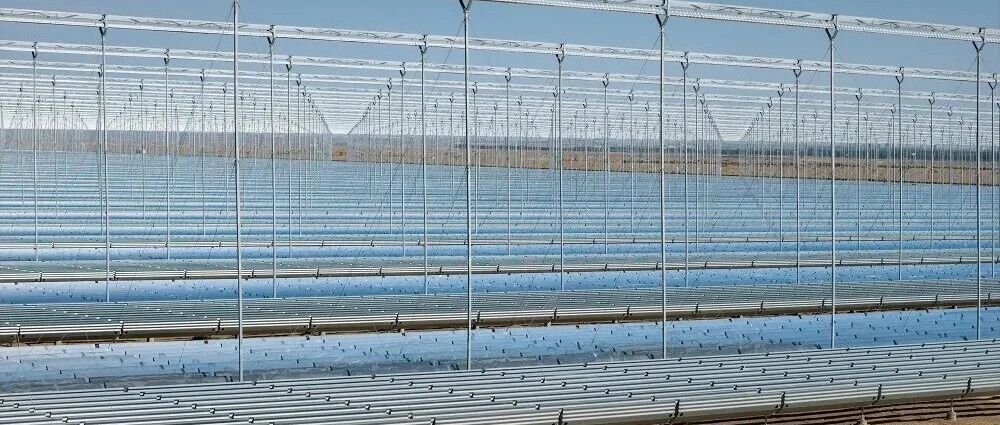
Core Viewpoint - The successful full-capacity grid connection of the Hami 1 million kilowatt "solar thermal + photovoltaic" project marks the official launch of a new collaborative operation model, enhancing the grid's capacity to accept renewable energy [1][5]. Group 1: Project Overview - The project, located in Hami City, Xinjiang, has a total installed capacity of 1 million kilowatts, consisting of a 100,000-kilowatt solar thermal storage power station and a 900,000-kilowatt photovoltaic power station [3]. - The solar thermal component utilizes 26,000 linearly arranged mirrors to concentrate sunlight, heating molten salt for energy storage, capable of storing energy for up to 8 hours [3]. Group 2: Operational Synergy - The project effectively combines the energy storage and peak regulation capabilities of the solar thermal power station with the photovoltaic power station, providing a seamless power supply during the day and at night or during cloudy periods [3][5]. - The collaboration between the solar thermal and photovoltaic systems creates a clean energy base with multi-energy complementarity, ensuring stable output for 24 hours [5]. Group 3: Environmental Impact - The project is expected to generate approximately 2.067 billion kilowatt-hours of clean electricity annually, leading to a reduction of over 1.63 million tons of carbon dioxide emissions [5].


新疆煤矿实现采煤不下井、采煤不见煤的“智”变
Zhong Guo Xin Wen Wang· 2025-09-18 00:47
Core Insights - China Petroleum has produced over 170 million tons of crude oil and over 41 billion cubic meters of natural gas in Xinjiang, highlighting the region's rich energy resources [1] - Since entering Xinjiang in 1978, China Petroleum has discovered and developed 17 oil and gas fields, with proven oil geological reserves of 2.167 billion tons and natural gas geological reserves of 338.703 billion cubic meters [1] - The Xinjiang oil field has transitioned from a single resource development model to a multi-energy complementary and green transformation approach, aiming to establish a modern energy hub [2][3] Group 1: Production and Technological Advancements - Xinjiang oil field has implemented a "digital oilfield" project since 2002, evolving into an "intelligent oilfield" by integrating IoT and big data technologies [2] - The oil field achieved a data assetization milestone, becoming the first in the country to explore data as an asset, with successful transactions on a national data trading platform [2] - The oil and gas wells in Xinjiang have over 86% IoT coverage, leading to a 30% reduction in production emergency incidents [1] Group 2: Coal Mining Innovations - The Udong coal mine has become a national-level intelligent demonstration coal mine, achieving fully automated coal mining processes [3] - Xinjiang's coal mining operations have transformed to allow for coal extraction without personnel entering the mines, showcasing advancements in mining technology [3] Group 3: Energy Infrastructure and Regional Cooperation - Xinjiang is accelerating the construction of energy corridors such as "West-to-East Gas Transmission" and "West-to-East Power Transmission," enhancing the efficiency of energy delivery [3] - The region is strengthening energy cooperation with neighboring countries, particularly in oil, gas, and coal sectors, contributing to the Belt and Road Initiative [3] - In 2024, Xinjiang's oil and gas equivalent production is projected to reach 66.64 million tons, maintaining the top position in the country for four consecutive years [3]

中国能源研究会常务理事李俊峰:储能行业需破内卷 长时储能暂非当前刚需
Mei Ri Jing Ji Xin Wen· 2025-09-17 15:19
Core Viewpoint - The energy storage industry is crucial for the new power system and energy transition, but it faces multiple challenges such as internal competition and safety issues, necessitating a healthy and stable development path [1] Group 1: Industry Challenges - The energy storage sector has significant shortcomings, including risks of safety incidents and environmental pollution, as well as an incomplete global supply chain and raw material recycling system [1] - There is an urgent need to improve technical standards and quality control systems within the industry [1] - The phenomenon of "increased production without increased revenue, and increased revenue without increased profit" must be addressed, with the government showing strong determination to tackle internal competition issues [1] Group 2: Internationalization and Market Dynamics - The concentration of energy storage production in China is too high, accounting for 70% to 80% of global output, indicating a need for accelerated internationalization of the industry [1] - The focus should shift from merely exporting storage solutions to a broader concept of "energy storage internationalization" [1] Group 3: Long-Duration Energy Storage - Currently, long-duration energy storage is not necessary as the power system can still rely on coal, natural gas, hydropower, and nuclear power for supply-demand adjustments [2] - Long-duration energy storage will only be required when the share of renewable energy generation exceeds 60% [2] - The current emphasis should be on enhancing storage duration, reducing costs, and improving reliability [2] Group 4: Regional Energy Development - There is a lack of ready-made templates for energy transition, despite the availability of diverse resources such as wind, solar, nuclear, and fossil fuels across different regions [2] - Local energy development must leverage regional resource endowments to promote the coordinated development of various energy sources, achieving multi-energy complementarity and comprehensive utilization [2]
(砥砺奋进七十载 天山南北谱华章)新疆传统能源产业的“机”与“变”
Zhong Guo Xin Wen Wang· 2025-09-17 11:25
Core Insights - China Petroleum & Chemical Corporation (Sinopec) has produced over 170 million tons of crude oil and over 41 billion cubic meters of natural gas in Xinjiang, highlighting the region's rich energy resources [1] - Since entering Xinjiang in 1978, Sinopec has discovered and developed 17 oil and gas fields, with proven geological reserves of 2.167 billion tons of oil and 338.703 billion cubic meters of natural gas [1] - The Xinjiang oil field has transitioned from a single resource development model to a multi-energy complementary and green transformation approach, aiming to establish a modern energy hub [2][3] Industry Developments - The Xinjiang oil field initiated the "Digital Oilfield" project in 2002, evolving into an "Intelligent Oilfield" by incorporating IoT and big data technologies [2] - In July 2023, Xinjiang oil field's core data products were successfully traded on a national data trading platform, marking a significant step in data assetization [2] - The region's coal mining sector has also embraced automation, with the Udong coal mine becoming a national-level intelligent demonstration coal mine, showcasing advancements in mining technology [3] Future Projections - Xinjiang is projected to produce 66.64 million tons of oil and gas equivalent in 2024, maintaining its position as the top producer in China for four consecutive years [3] - The region's coal production is expected to reach 541 million tons, with growth rates leading among major coal-producing provinces in China for four years [3] - Xinjiang is enhancing energy cooperation with neighboring countries, focusing on oil, gas, coal, and power transmission, contributing to the Belt and Road Initiative [3]
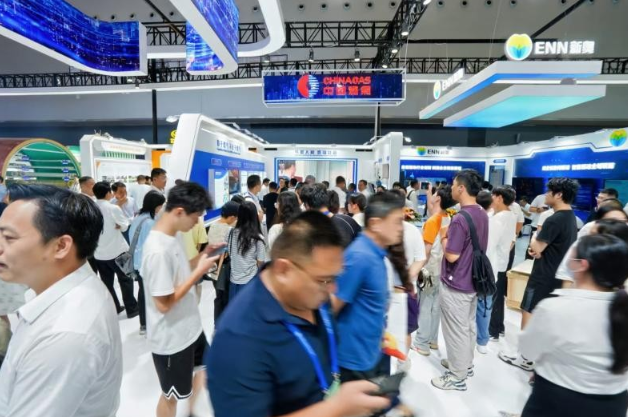
中国燃气亮相中国—东盟建筑科技展
Zhong Guo Jing Ji Wang· 2025-09-17 00:36
Group 1 - The China-ASEAN Construction Ministers' Roundtable Meeting was held in Guilin, Guangxi, on September 15, 2025, alongside the China-ASEAN Building Technology Exhibition, themed "Intelligent Construction for a Shared Future" [1] - China Gas Holdings Limited showcased several cutting-edge technological achievements and innovative service models, focusing on the "Smart Gas City" solution, renewable energy, biomass energy, and intelligent micro-pipe networks [1][2] - The "Smart Gas City" solution includes six core areas: engineering delivery, pipeline operation, customer service, safety supervision, emergency management, and government-enterprise collaboration, utilizing advanced technologies like AI, IoT, and big data for efficient gas lifecycle management [2] Group 2 - China Gas has transitioned from traditional primary energy to green secondary energy, operating over 100 energy storage projects domestically and creating an integrated green energy ecosystem [2] - The company is actively developing biomass energy to provide clean energy solutions such as green steam, green electricity, and zero-carbon gas, aiding users in achieving low-carbon transformation and resource recycling [2] - During the event, China Gas signed six projects with various industry partners, covering comprehensive energy and residential pipeline drinking water sectors [4]

中国燃气亮相中国—东盟建筑科技展 :深耕广西、赋能东南亚能源转型
Zhong Guo Neng Yuan Wang· 2025-09-16 04:24
Group 1 - The China-ASEAN Construction Ministers' Roundtable Conference was held in Guilin, Guangxi, showcasing the theme "Building the Future Together" [1] - China Gas Holdings Limited presented its innovative technologies and service models, highlighting its transformation from a traditional gas supplier to a technology-driven comprehensive energy service provider [1][2] - The company showcased its "Smart Gas City" solution, which integrates AI, IoT, and big data for efficient gas lifecycle management [2] Group 2 - China Gas has transitioned to green secondary energy, with over 100 operational energy storage projects in China, maintaining a leading market share [2] - The company is actively developing biomass energy solutions, providing clean energy options to commercial users, aiding in low-carbon transitions [2] Group 3 - The company launched modern home solutions under its brand Yipinhui, focusing on safety, comfort, and sustainability, aligning with national housing expectations [3][6] - The "Five Constants System" was introduced, ensuring stable indoor conditions and energy efficiency, outperforming traditional systems in both summer and winter [7] Group 4 - Yipinhui set up an outdoor exhibition for its pipeline drinking water technology, aiming to enhance drinking water quality for 20 million users in various cities [8] - The company signed multiple cooperation agreements during the conference, focusing on zero-carbon parks and biomass natural gas projects [9] Group 5 - China Gas has established a strong presence in Guangxi, with nearly 15,000 kilometers of pipeline and over 3 million users, laying a solid foundation for expansion into ASEAN markets [12] - The company aims to leverage its experience in Guangxi to enter emerging markets in Southeast Asia, exploring cross-border energy cooperation [14]