存储超级周期

Search documents
集体大跌!002195,640万手封死跌停
Xin Lang Cai Jing· 2026-01-16 05:04
Market Overview - The A-share market experienced fluctuations with the Shanghai Composite Index down by 0.22%, the Shenzhen Component Index down by 0.1%, and the ChiNext Index down by 0.01% as of the midday close on January 16 [1][19]. - The total trading volume reached 2.01 trillion CNY, with a predicted increase to 3.17 trillion CNY, an increase of 229.2 billion CNY [20]. Semiconductor Sector - The semiconductor sector showed a strong upward trend, with notable stocks such as Tianyue Advanced reaching a 20% limit up, and other companies like Pai Rui Shares and Yubang New Materials also performing well [4][22]. - The semiconductor industry chain continued to rise, with significant gains in stocks like Changdian Technology and Kangqiang Electronics, both hitting the limit up [4][22]. Automotive Parts Sector - The automotive parts sector demonstrated strength, with stocks like Fucai Technology and Ningbo Huaxiang hitting the limit up, alongside other companies such as Hai'an Group and Triangle Tire showing notable increases [9][27]. - The China Association of Automobile Manufacturers reported that by 2025, the production and sales of automobiles in China are expected to exceed 34 million units, maintaining the global lead for 17 consecutive years [11]. AI Application Sector - The AI application sector faced a collective downturn, with significant declines in cultural media, internet, and virtual human stocks, including companies like Xinhua Net and Vision China, which saw a 10% drop [14][15]. - Stocks in the AI sector, such as Yanshan Technology, experienced a significant drop, with a reported limit down due to market sentiment [16][17]. Storage Sector - The storage sector saw a collective surge in the US market, with Bernstein raising the target price for SanDisk from 300 USD to 580 USD, indicating a "unprecedented storage supercycle" driven by AI [25][26]. - Wells Fargo also raised target prices for several storage concept stocks, including Western Digital and Micron Technology, reflecting positive market sentiment [26]. Summary of Key Stocks - Notable stock performances included: - Tianyue Advanced: 20% increase [23] - Fucai Technology: 20% increase [28] - Gold Sun: 20% increase [24] - Baiwei Storage: 10.48% increase [25] - Jiangbolong: 8.57% increase [25]


集体大跌!002195,640万手封死跌停
中国基金报· 2026-01-16 05:01
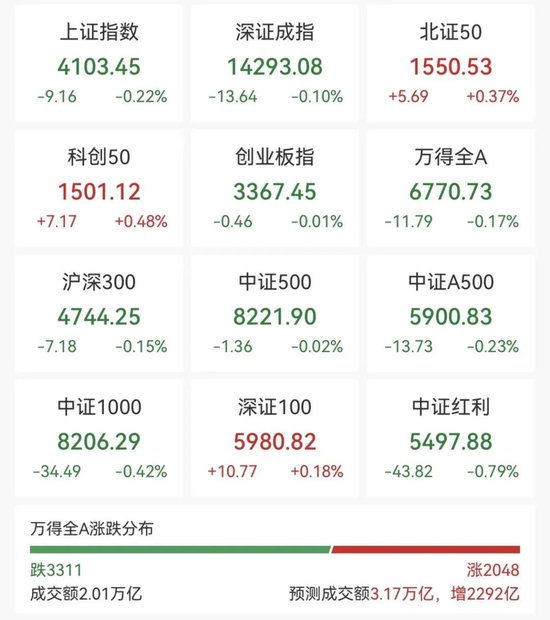
Market Overview - The A-share market experienced fluctuations, with the Shanghai Composite Index down by 0.22% to 4103.45, the Shenzhen Component Index down by 0.1% to 14293.08, and the ChiNext Index down by 0.01% to 3367.45 [2][3] - The total trading volume reached 2.01 trillion CNY, with a predicted increase to 3.17 trillion CNY, an increase of 229.2 billion CNY [3] Semiconductor Sector - The semiconductor sector showed a strong upward trend, with notable stocks such as Tianyue Advanced hitting a 20% limit up, and other companies like Pai Rui Shares and Yubang New Materials also seeing significant gains [8][9] - Storage chip stocks also rallied, with Jin Tai Yang reaching a 20% limit up and Bai Wei Storage increasing over 10% [10][12] Automotive Parts Sector - The automotive parts sector strengthened, with stocks like Fusi Technology hitting a 20% limit up, and other companies such as Ningbo Huaxiang and Hai'an Group also achieving significant gains [15][16] - The China Association of Automobile Manufacturers reported that by 2025, China's automobile production and sales are expected to exceed 34 million units, maintaining its position as the world's largest market for 17 consecutive years [15] AI Application Sector - The AI application sector collectively adjusted downwards, with significant declines in cultural media, internet, and virtual human segments [20][21] - Stocks such as Xinhua Net and Vision China experienced a 10% drop, with several companies hitting the daily limit down [21][22] Notable Stock Movements - N Koma listed on the Beijing Stock Exchange and saw a dramatic increase of over 580%, currently priced at 66.88 CNY per share [17][18] - The stock of Rock Mountain Technology faced a limit down, with a significant drop of 10.03% [23][24]

A股异动丨存储芯片股强势,佰维存储、江波龙等多股创历史新高
Ge Long Hui A P P· 2026-01-16 03:03
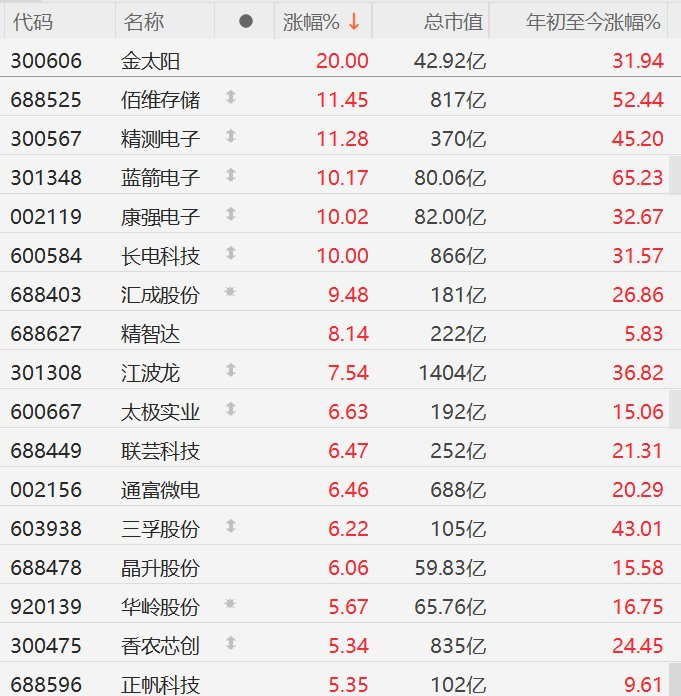
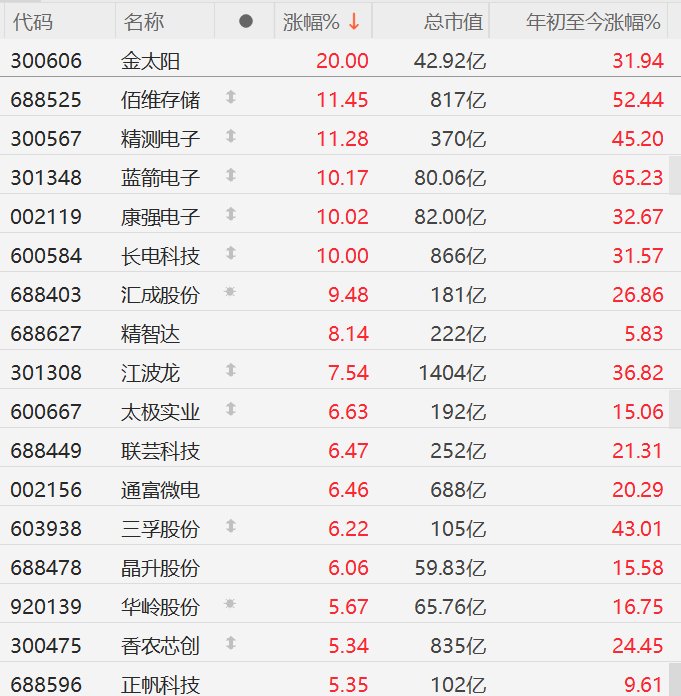
Group 1 - The core viewpoint of the article highlights a significant surge in storage stocks in the US market, which has positively influenced the A-share market, particularly in storage chip stocks [1][2] - Bernstein raised the target price for SanDisk from $300 to $580, citing an unprecedented storage supercycle driven by AI-related data explosion [1] - Wells Fargo also increased target prices for several storage companies, including raising SanDisk's target from $230 to $380, Western Digital's from $180 to $260, and Micron Technology's from $335 to $410 [1] Group 2 - Since September 2025, DDR5 memory prices have increased by over 300%, while DDR4 memory prices have risen by more than 150% [2] - AI servers are consuming 53% of the global monthly memory production capacity, with demand for memory in AI servers being 8-10 times higher than that of regular servers [2] - The storage market is reported to have entered a "super bull market" phase, surpassing historical highs from 2018 [2] Group 3 - Notable stock performances include: - Jintaiyang (金太阳) with a 20% increase and a market cap of 4.292 billion [3] - Baiwei Storage (佰维存储) up 11.45% with a market cap of 81.7 billion [3] - Jingce Electronics (精测电子) rising 11.28% with a market cap of 37 billion [3] - Blue Arrow Electronics (蓝箭电子) increasing by 10.17% with a market cap of 8.006 billion [3] - Other companies like Kangqiang Electronics (康强电子), Changdian Technology (长电科技), and Huicheng Co. (汇成股份) also showed significant gains [3]
存储芯片股强势,佰维存储、江波龙等多股创历史新高
Ge Long Hui· 2026-01-16 02:58
Group 1 - The core viewpoint of the news is that the storage sector is experiencing significant growth, driven by AI-related demand, leading to a "super cycle" in the storage market [2] - U.S. storage stocks surged, positively impacting A-share storage chip stocks, with notable gains in companies like Jin Sun, Baiwei Storage, and Jingce Electronics [1][3] - Bernstein raised SanDisk's target price from $300 to $580, highlighting the unprecedented demand for storage driven by AI [2] Group 2 - Major banks, including Wells Fargo, have also increased target prices for several storage companies, indicating strong market confidence [2] - The price of DDR5 memory has increased by over 300% since September 2025, while DDR4 memory prices have risen by over 150% [2] - AI servers are consuming 53% of global memory production capacity, significantly impacting the allocation of consumer-grade memory [2]
创造一个“前所未有的存储超级周期”,外资大幅上调闪存龙头目标价
Xuan Gu Bao· 2026-01-15 23:13
Group 1 - Bernstein analysts highlight that the AI-driven data explosion is creating an unprecedented "storage supercycle," raising SanDisk's target price from $300 to $580 [1] - The introduction of NVIDIA's Vera Rubin architecture has elevated rack-level SSDs to a critical path for AI inference, transforming SSDs from cold storage to an "active context layer" that enhances GPU utilization [1] - The NAND and DRAM average selling prices (ASP) are experiencing a sharp increase due to a significant supply-demand mismatch, with almost no new NAND capacity added across the industry except for YMTC [1] Group 2 - Dongfang Securities notes that RAG technology and KV caching in AI large model inference processes are driving a demand increase of hundreds of exabytes for storage, with SSDs becoming the core choice for active data storage due to their fast read/write speeds and low power consumption [2] - The NAND industry is expected to face limited capital expenditure over the next two years, with leading manufacturers leaning towards HBM, while AI is driving rapid growth in SSD usage, indicating a prolonged period of high demand for NAND and SSD [2] Group 3 - ZheShang Securities reports that Zhaoyi Innovation is a global leader in NOR Flash, actively expanding into niche DRAM and MCU markets, and accelerating growth in automotive electronics and AI terminal markets [3] - Juchen Technology ranks third globally in EEPROM, with growth prospects driven by the continued penetration of DDR5 SPD, increased market share in automotive-grade EEPROM, and upgrades in closed-loop and optical image stabilization motor sectors [3] - Demingli focuses on self-developed main control chip technology, successfully binding enterprise-level SSDs with major domestic clients [3]
美股异动丨闪迪、西部数据双双创新高,机构指AI正创造“前所未有的存储超级周期”
Ge Long Hui· 2026-01-15 15:37
Core Viewpoint - The storage sector is experiencing a significant surge driven by AI-related data demands, leading to unprecedented growth opportunities for companies like SanDisk, Western Digital, and Micron Technology [1] Group 1: Company Performance - SanDisk shares rose over 9%, reaching a new high, while Western Digital shares increased over 6%, also hitting a record [1] - Micron Technology and Pure Storage saw their stock prices rise by more than 3% [1] Group 2: Analyst Upgrades - Bernstein raised SanDisk's target price from $300 to $580, maintaining an "outperform" rating, citing an AI-driven storage supercycle [1] - Wells Fargo also increased target prices for several storage companies, raising SanDisk's target from $230 to $380, Western Digital's from $180 to $260, and Micron's from $335 to $410 [1]
580美元,闪迪目标价上调93%!伯恩斯坦:AI正创造一个前所未有的存储超级周期
Hua Er Jie Jian Wen· 2026-01-15 11:51
Group 1 - The narrative on AI hardware is shifting from "computing power" to "storage capacity," indicating a significant change in market dynamics [1] - Bernstein analysts highlight an unprecedented storage supercycle driven by AI data explosion, raising SanDisk's target price from $300 to $580 [1][2] - The demand for NAND storage is expected to increase fivefold per GPU due to the evolving requirements of AI models, marking a critical shift in the NAND industry [2] Group 2 - There is a stark supply-demand mismatch in the NAND market, with minimal new production capacity leading to soaring prices for NAND and DRAM [2] - Morgan Stanley's report contrasts Bernstein's optimistic view, labeling SanDisk's current high profits as cyclical rather than structural, with a target price of $235 [3] - The debate centers around whether the current AI-driven demand will lead to a lasting change in storage needs or revert to historical cycles of boom and bust [3]
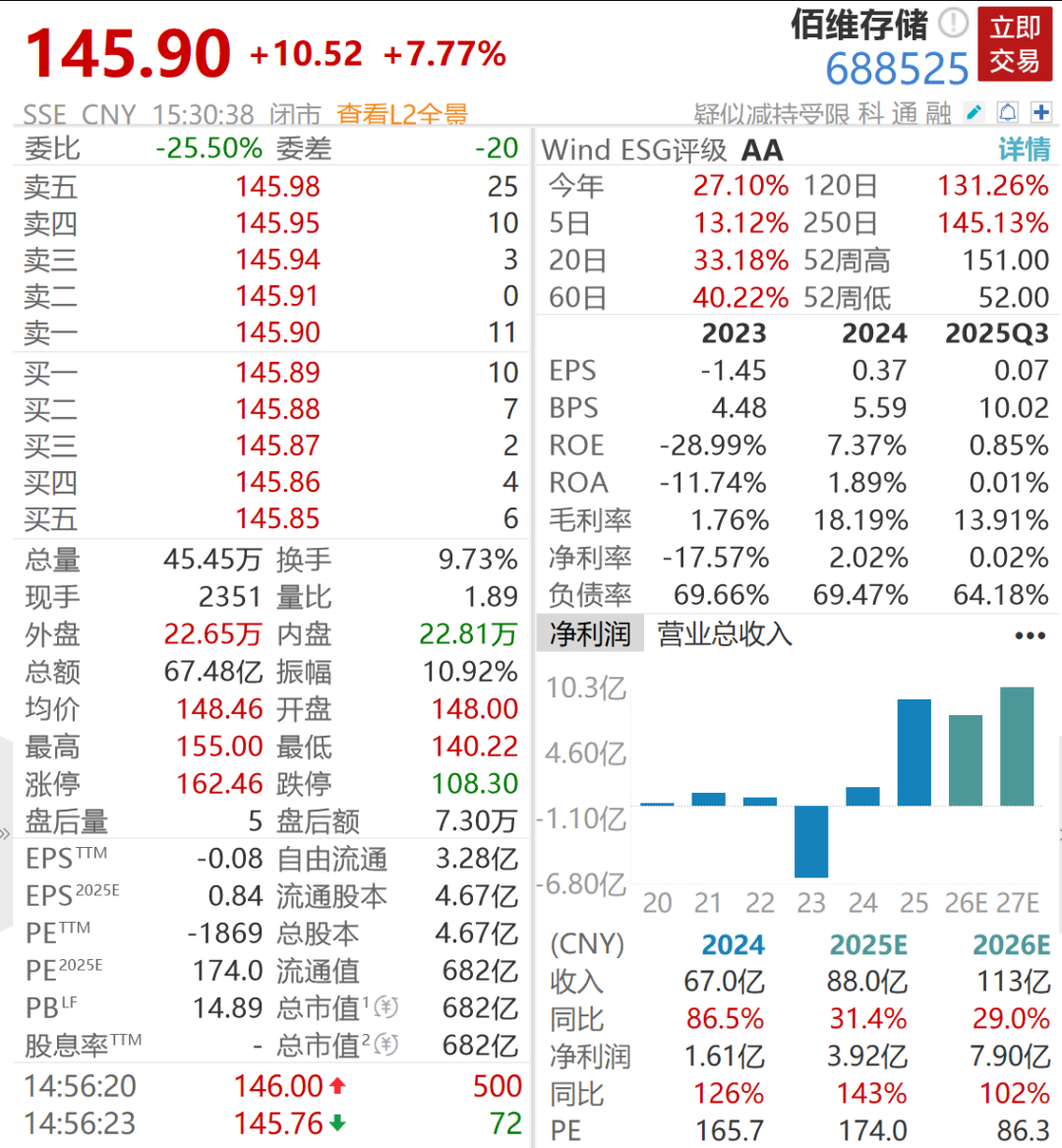
佰维存储预计去年净利润增超427%
Zheng Quan Ri Bao· 2026-01-14 22:46
"佰维存储聚焦人工智能技术催生的产业机遇,不断开拓高毛利的创新业务。该公司在人工智能端侧存 储拥有较强的竞争力,能够通过自研主控芯片、固件算法与先进封测能力实现差异化竞争,并已构建完 整的产品布局,覆盖人工智能手机、人工智能个人电脑、人工智能眼镜、具身智能等多场景。"孙成思 表示。 步入2026年,存储产品涨价潮延续。根据集邦咨询顾问(深圳)有限公司的最新调查,2026年第一季 度,由于DRAM(动态随机存取存储器)原厂大规模转移先进制程、新产能到服务器、高带宽内存应用 领域,预估整体一般型DRAM合约价将较上一季度增长55%至60%。NAND Flash(闪存存储器)预计各 类产品合约价较上一季度增长33%至38%。 本报记者 丁 蓉 2025年第四季度,全球存储市场掀起强劲的涨价潮,被业界誉为"超级周期"。相关企业的业绩受到投资 者高度关注。1月14日,深圳佰维存储科技股份有限公司(以下简称"佰维存储")披露存储行业上市公 司首份2025年业绩预告,交出了一份亮丽的"成绩单"。 营收方面,佰维存储预计,2025年实现营业收入100.00亿元至120.00亿元,同比增长49.36%至79.23%。 其中,去 ...
A股首份存储行业2025年业绩预告出炉 佰维存储预计去年净利润增超427%
Zheng Quan Ri Bao Zhi Sheng· 2026-01-14 15:36
Core Viewpoint - The global storage market is experiencing a significant price surge, referred to as a "super cycle," with companies like Bawei Storage Technology Co., Ltd. reporting impressive earnings forecasts for 2025 [1] Group 1: Financial Performance - Bawei Storage expects to achieve revenue between 10 billion to 12 billion yuan in 2025, representing a year-on-year growth of 49.36% to 79.23% [1] - For the fourth quarter of the previous year, the company anticipates quarterly revenue of 3.425 billion to 5.425 billion yuan, with a year-on-year increase of 105.09% to 224.85% and a quarter-on-quarter growth of 28.62% to 103.73% [1] - The projected net profit attributable to the parent company for 2025 is between 850 million to 1 billion yuan, reflecting a year-on-year growth of 427.19% to 520.22% [1] - The expected net profit for the fourth quarter of the previous year is estimated to be between 820 million to 970 million yuan, with a quarter-on-quarter increase of 219.89% to 278.43% [1] Group 2: Market Trends and Drivers - The storage prices began to decline in Q3 2024, reaching a low point in Q1 2025, but are expected to stabilize and recover starting in Q2 2025, leading to improved sales revenue and gross margins for Bawei Storage [2] - The company is focusing on high-growth areas in artificial intelligence, enhancing its advanced packaging capabilities, and progressing well in wafer-level advanced packaging projects [2] - The chairman of Bawei Storage highlighted the increasing demand for storage products driven by the rapid growth of data in various sectors, including consumer electronics and cloud computing, due to advancements in artificial intelligence [3] Group 3: Future Outlook - The price surge for storage products is expected to continue into 2026, with DRAM contract prices projected to increase by 55% to 60% and NAND Flash prices by 33% to 38% in Q1 2026 [4] - Analysts suggest that Bawei Storage's focus on high-performance, low-latency embedded storage for AI wearable devices positions the company to benefit from the ongoing storage "super cycle" and increasing demand for edge AI storage products [4] - The competitive landscape for China's storage industry is improving, with domestic companies enhancing their capabilities and competitiveness in the global market [4]
600亿存储龙头,净利润预计暴增520%
2 1 Shi Ji Jing Ji Bao Dao· 2026-01-14 08:50
Core Viewpoint - The storage chip sector in A-shares is experiencing significant activity, with Baiwei Storage's stock rising sharply following the release of its 2025 performance forecast, indicating strong growth potential in the industry driven by AI demand [1][5]. Group 1: Company Performance Forecast - Baiwei Storage expects to achieve operating revenue of CNY 10 billion to 12 billion in 2025, representing a year-on-year growth of 49.36% to 79.23% [3][5]. - The company anticipates a net profit attributable to shareholders of CNY 850 million to 1 billion in 2025, reflecting a staggering year-on-year increase of 427.19% to 520.22% [7][9]. - For Q4 2025, Baiwei Storage projects a single-quarter revenue of CNY 3.425 billion to 5.425 billion, with year-on-year growth of 105.09% to 224.85% [5][7]. Group 2: Market Dynamics - The global storage market is entering a "super cycle," with significant price increases expected in Q4 2025, driven by strong demand for memory modules, particularly in AI applications [3][11]. - The demand for high-performance storage products is being fueled by the expansion of global data centers and the increasing need for AI-driven applications [11][12]. - Major storage chip manufacturers are shifting production towards high-end chips suitable for AI and data centers, leading to a tightening supply that is expected to drive prices up [12][13]. Group 3: Strategic Initiatives - Baiwei Storage is focusing on enhancing its chip design, firmware development, and advanced packaging capabilities to improve market competitiveness [7][9]. - The company is actively investing in R&D to provide integrated storage solutions that meet the demands of AI applications, emphasizing low power consumption, high performance, and compact size [13].