房地产市场止跌回稳

Search documents
【财经分析】首提“止跌回稳”满一年 一线城市房地产市场数据见好
Xin Hua Cai Jing· 2025-09-28 13:46
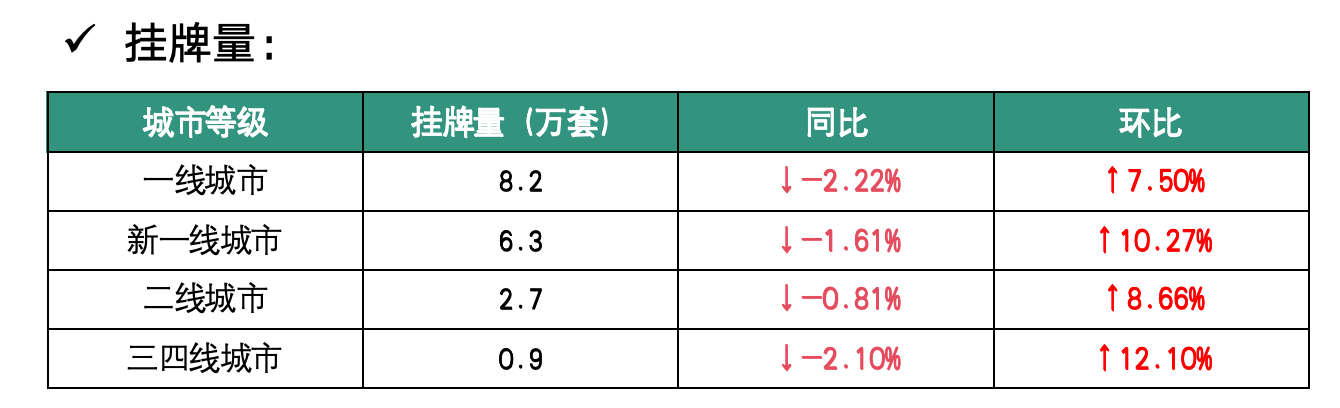
Core Viewpoint - The article discusses the recent policy adjustments in major Chinese cities aimed at stabilizing the real estate market, highlighting the positive effects of these measures on housing demand and market activity [1][10]. Policy Adjustments - Major cities like Guangzhou, Beijing, Shanghai, and Shenzhen have implemented significant policy changes to stimulate the real estate market, including the removal of purchase restrictions and adjustments to loan policies [1][2][8]. - In June, Guangzhou fully lifted purchase restrictions and reduced down payment ratios and interest rates; in August, Beijing and Shanghai followed suit with similar relaxations [1][2]. Market Performance - Following the policy changes, Beijing saw a 37% increase in housing provident fund loan applications in the first month after the new policy, indicating a strong market response [2]. - The real estate market in first-tier cities is showing signs of recovery, with core urban land markets remaining active, which is expected to positively influence second-tier cities [1][12]. Regional Variations - The performance of the housing market is not uniform across regions; for instance, the second-hand housing market within Beijing's Fifth Ring faces significant price pressure due to competition, while new homes in popular areas outside the Fifth Ring are benefiting from policy incentives [2][5]. - In Shanghai, the new policies have led to increased interest in areas like Qingpu and Songjiang, while other districts like Jinshan and Fengxian are still experiencing downward trends [5]. Land Use and Development - Guangzhou has introduced a new land use efficiency reform plan, allowing previously self-held properties to be sold, which may lead to a short-term increase in supply [6][11]. - The recent policies in Shenzhen include differentiated management of purchase qualifications, which aims to balance housing demand across different regions [7][8]. Market Sentiment and Future Outlook - The overall sentiment in the real estate market is improving, with indicators suggesting a potential end to the downward trend observed since June, particularly during the traditional peak season of "Golden September and Silver October" [10][12]. - Analysts predict that the recovery in first-tier cities will have a ripple effect on second-tier cities, enhancing overall market confidence [12].

四季度有哪些增量政策可以期待?
Sou Hu Cai Jing· 2025-09-26 02:22
Economic Overview - The economic growth momentum in China has declined due to extreme weather, policy adjustments, and external factors since Q3 2023 [1] - Fixed asset investment growth for the first eight months of the year is at a record low of 0.5%, while retail sales growth has dropped to 3.4%, indicating a potential further slowdown in Q4 [1] - The impact of high U.S. tariffs on global trade and China's exports may become more pronounced in Q4, increasing the necessity for policies to stabilize growth and employment [1] Policy Measures - Analysts expect a new round of growth-stabilizing policies to be introduced in Q4, focusing on fiscal expansion, monetary easing, and boosting consumption and the real estate market [2][4] - The government has a relatively low debt ratio compared to other major economies, providing ample policy space for intervention [2] Fiscal Policy - Proposed fiscal measures include establishing new policy financial tools estimated at 500 billion yuan to support infrastructure investment, which could leverage around 6 trillion yuan in total investment [4][5] - The issuance of special government bonds and increasing funding for "two new" initiatives (equipment updates and consumption subsidies) are also anticipated to stimulate consumption [5] - Local government land use rights revenue has decreased by 4.7%, necessitating additional special bonds to support infrastructure and affordable housing projects [5][6] Monetary Policy - There is a possibility of new interest rate cuts and reserve requirement ratio reductions by the central bank in Q4 to enhance liquidity and stimulate lending [7] - The current low inflation environment allows for a more accommodative monetary policy without immediate concerns about high inflation [7] Real Estate and Consumption - The real estate sector is expected to see comprehensive support policies in Q4, including expedited loan approvals for key projects and potential tax reductions for transactions [8][9] - Consumption policies may expand to include a wider range of goods and services, with potential increases in "trade-in" subsidies to stabilize consumer spending [9]

全市场唯一地产ETF(159707)飙升4%,创年内新高!上海临港、张江高科涨停!机构:房地产市场或止跌回稳
Xin Lang Ji Jin· 2025-09-24 03:04
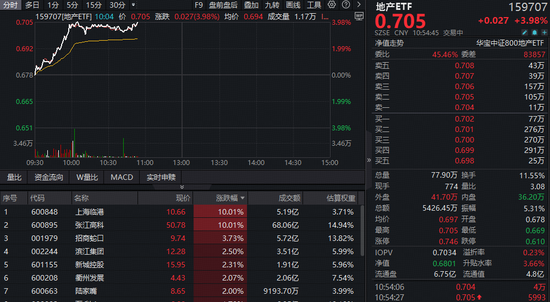
Group 1 - The only ETF tracking the CSI 800 Real Estate Index (159707) surged 4% on September 24, reaching a new high for the year, with a trading volume exceeding 54 million CNY [1] - The ETF's price reached 0.705 CNY, reflecting a 3.98% increase, with a trading volume of 1.17 million shares [2] - Key stocks in the ETF, such as Shanghai Lingang and Zhangjiang Hi-Tech, hit the daily limit, while several others, including China Merchants Shekou and Vanke A, rose over 2% [2] Group 2 - From January to August, national real estate development investment decreased by 12.9%, with residential investment down by 11.9%, but new home transactions in 68 cities showed a year-on-year increase [3] - The total transaction area for real estate is stabilizing at 1.5 billion square meters, despite a decline in new home sales, indicating that overall demand has bottomed out [3] - The contribution of the real estate sector to the economy has decreased from 18% in 2012-2020 to an estimated 11% in 2024, reflecting a significant reduction in the industry's weight in the economy [3]





经济日报:房地产市场去库存成效继续显现
Jing Ji Ri Bao· 2025-09-24 02:17
Core Viewpoint - The real estate market is showing signs of stabilization and recovery, with various regions implementing policies to support housing demand and improve market conditions [1][2][3] Group 1: Market Performance - In the first eight months of the year, the sales area of new commercial housing decreased by 4.7% year-on-year, but the decline has narrowed by 13.3 percentage points compared to the same period last year [1] - The sales revenue of commercial housing fell by 7.3%, with a reduction of 16.3 percentage points compared to the previous year [1] - The year-on-year decline in new residential prices has also narrowed, with first, second, and third-tier cities showing reductions of 0.2, 0.4, and 0.5 percentage points respectively in August [1] Group 2: Financial and Inventory Improvements - From January to August, the funds available to real estate developers decreased by 8%, but this decline is 12.2 percentage points less than the same period last year [2] - The inventory of commercial housing has been reduced for six consecutive months, with a decrease of 3.17 million square meters from July to August [2] - The supply-demand balance in the real estate market is improving, as local governments are reducing new land supply to prevent further imbalance [2] Group 3: Future Potential and Demand - The ongoing urbanization in China and the large stock of existing housing (approximately 35 billion square meters) indicate significant future demand for new construction [2] - There is a continuous increase in demand for "good houses," as urban development shifts from expansion to quality improvement [3] - The risk for real estate companies is gradually decreasing, with progress in debt restructuring and risk management for troubled firms [3]
中经评论:房地产市场去库存成效继续显现
Jing Ji Ri Bao· 2025-09-24 01:03
Group 1 - The real estate market is showing signs of stabilization due to various policies implemented to support housing demand, leading to a narrowing decline in sales prices and inventory reduction [1][2] - From January to August, the sales area of new commercial housing decreased by 4.7% year-on-year, a reduction of 13.3 percentage points compared to the same period last year, while sales revenue fell by 7.3%, narrowing by 16.3 percentage points [1] - In August, the majority of cities saw a reduction in the year-on-year decline of new residential prices, with first, second, and third-tier cities experiencing a decrease of 0.2, 0.4, and 0.5 percentage points respectively [1] Group 2 - Real estate companies are experiencing improvements in funding and inventory, with funding down by 8% year-on-year, but the decline is narrowing compared to previous years [2] - The inventory of unsold commercial housing has decreased for six consecutive months, indicating a significant alleviation of supply-demand imbalance in the market [2] - The total scale of real estate development and market remains substantial, with urbanization continuing and a significant stock of existing housing, leading to an annual demand for approximately 7 million square meters of new construction [2][3] Group 3 - There is a growing demand for "good houses," as urbanization shifts from rapid growth to stable development, focusing on quality improvement of existing housing stock [3] - The risk for real estate companies is gradually decreasing, with progress in debt restructuring for troubled firms and efforts to ensure housing delivery [3] - Continued efforts are needed to promote high-quality urban renewal and develop new models for real estate growth to ensure a stable and healthy market [3]
房地产市场去库存成效继续显现
Jing Ji Ri Bao· 2025-09-23 22:06
Group 1 - The real estate market is showing signs of stabilization, with policies implemented to support housing demand and reduce price declines [1][2] - From January to August, the sales area of new commercial housing decreased by 4.7% year-on-year, a reduction of 13.3 percentage points compared to the same period last year [1] - The sales revenue of commercial housing fell by 7.3%, with a decrease of 16.3 percentage points compared to the previous year [1] Group 2 - Funding for real estate development has improved, with a year-on-year decrease of 8% in funds available to developers, but the decline is narrowing [2] - The inventory of commercial housing has decreased for six consecutive months, indicating a balance between supply and demand is improving [2] - Urbanization in China continues to progress, with a significant stock of existing housing, leading to an annual demand for approximately 7 million square meters of new construction [2] Group 3 - There is a growing demand for "good houses," as urban development shifts from rapid expansion to improving existing stock [3] - The risk for real estate companies is gradually decreasing, with progress in debt restructuring for companies facing financial difficulties [3] - Continued efforts are needed to promote high-quality urban renewal and increase the supply of high-quality housing to ensure stable development in the real estate market [3]
促进房地产止跌回稳还需要继续努力
Zhong Guo Jing Ji Wang· 2025-09-22 06:12
Core Insights - The real estate market in China is showing signs of stabilization due to various policies aimed at promoting housing demand and addressing market fluctuations [1][2][3] Group 1: Market Performance - The sales decline in the real estate market has narrowed, with new residential sales area down by 4.7% year-on-year for the first eight months, a reduction of 13.3 percentage points compared to the same period last year [2] - The sales revenue of new residential properties decreased by 7.3%, which is a narrowing of 16.3 percentage points from the previous year [2] - Some first- and second-tier cities have experienced growth in new residential sales area and revenue [2] Group 2: Price Trends - The year-on-year decline in new residential prices has also narrowed, with first, second, and third-tier cities showing reductions of 0.2, 0.4, and 0.5 percentage points respectively in August [2] - The year-on-year decline in second- and third-tier cities' second-hand residential prices has decreased by 0.4 percentage points [2] Group 3: Financial and Inventory Improvements - The financial situation of real estate companies has improved, with funding for real estate development down by 8% year-on-year, a reduction of 12.2 percentage points compared to last year [3] - The inventory of unsold residential properties has decreased by 3.17 million square meters from July to August, marking six consecutive months of reduction [3] Group 4: Future Outlook - The recovery of the real estate market is expected to take time, and continued efforts are needed to promote stabilization [3] - Future strategies will focus on implementing central government policies, enhancing urban renewal, and increasing the supply of high-quality housing to better meet housing demands [3]
行业周报:新房成交面积同环比增长,1-8月房地产开发投资同比下降-20250921
KAIYUAN SECURITIES· 2025-09-21 09:51
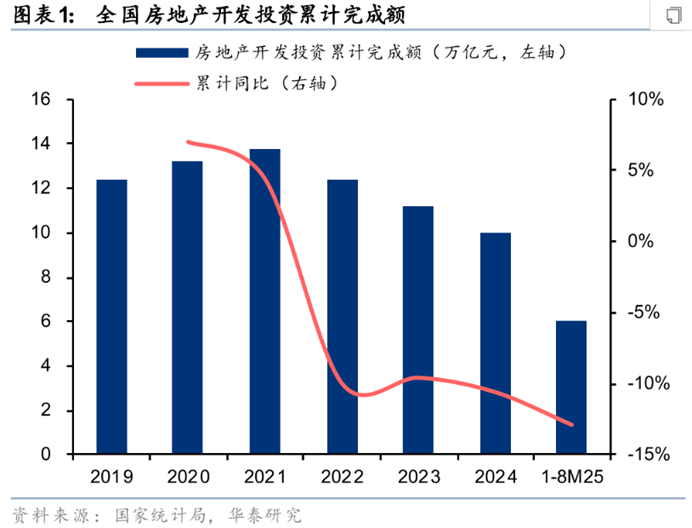
Investment Rating - The investment rating for the real estate industry is "Positive" (maintained) [1] Core Viewpoints - The new housing transaction area has shown a month-on-month increase, while the year-on-year decline in second-hand housing prices has narrowed. The overall real estate market is moving towards stabilization due to various supportive policies [5][61] - In the first eight months of the year, national real estate development investment reached 60,309 billion yuan, a year-on-year decrease of 12.9%, with residential investment at 46,382 billion yuan, down 11.9% [5][61] Summary by Sections 1. Investment Rating - The report maintains a "Positive" rating for the real estate industry [1] 2. Sales Performance - In the 38th week of 2025, the transaction area of residential properties in 68 major cities reached 1.88 million square meters, a year-on-year increase of 12% and a month-on-month increase of 9%. However, the cumulative transaction area from the beginning of the year to date is 85.96 million square meters, showing a year-on-year decline of 10% [19][30] - The transaction area of second-hand houses in 20 cities was 1.81 million square meters, with a year-on-year growth rate of 66% [37] 3. Investment Performance - The land transaction area in 100 major cities decreased by 43% year-on-year, with a transaction premium rate of 2.2% [41][44] - In the 38th week of 2025, the land planning area launched in 100 major cities was 2,361 million square meters, with 1,771 million square meters successfully transacted [41] 4. Financing Conditions - The issuance scale of domestic credit bonds decreased by 54% month-on-month, totaling 3.04 billion yuan, while the cumulative issuance scale was 2,940.7 billion yuan, a year-on-year decrease of 4% [50][54] 5. Market Outlook - The report anticipates that with more proactive fiscal policies and moderately loose monetary policies, the existing housing supply-demand relationship is expected to improve, accelerating the stabilization process of the real estate market [5][61]
房地产处在止跌回稳进程中,券商表态看好核心城市复苏节奏
Huan Qiu Wang· 2025-09-19 01:13
Core Viewpoint - The Chinese real estate market is currently in a difficult process of stabilizing after a decline, with several positive signs emerging, such as the completion of housing delivery tasks and a narrowing decline in new home prices [1] Group 1: Market Conditions - The real estate market is experiencing a gradual recovery, with the waiting inventory of new residential properties decreasing to approximately 760 million square meters by the end of August, a reduction of about 30 million square meters since the beginning of the year [1] - The year-on-year decline in housing prices is continuing to narrow, indicating a potential stabilization in the market [1] - The construction investment has seen an expanded year-on-year decline, while the decline in completed projects is narrowing, suggesting mixed signals in the market recovery [1] Group 2: Investment Recommendations - The company recommends investing in real estate stocks that exhibit "good credit, good cities, and good products," as well as stable dividend and performance head property management companies [4] - There is a focus on Hong Kong high-dividend REITs that may benefit from asset revaluation logic [4]

化工品普跌,玻璃企业库续降,创近1个半月新低
对冲研投· 2025-09-18 08:15
Core Viewpoint - The glass market is experiencing regional differentiation, with varying demand and pricing across different areas, leading to a mixed outlook for the industry [5][11]. Group 1: Market Performance - As of September 18, 2025, the main contract for FG.CZC glass futures had a trading volume of 1,736,649 lots and an open interest of 1,304,305 lots, indicating active market trading but insufficient bullish sentiment, resulting in a price decline [3]. - The overall glass production and sales maintained above 100, with Shihezi at 113 and Hubei at 127, while East and South China were at 108 and 103 respectively, highlighting significant regional demand differences [5]. Group 2: Supply and Production - As of September 11, 2025, the weekly glass production was 112.12 million tons, a slight increase of 0.38% from the previous week, with a capacity utilization rate of 76.01%, up by 0.09 percentage points [6]. - The total inventory of flat glass in sample enterprises was 61.58 million heavy boxes, down 2.33% from the previous week and down 14.94% year-on-year, with an inventory turnover period of 26.3 days, a decrease of 0.6 days [8]. Group 3: Demand and Orders - The demand for float glass showed some improvement, but the supply side remains relatively loose, leading to a cautious market outlook, with the peak season demand yet to be fully realized [7]. - As of September 15, 2025, the average order days for deep processing sample enterprises was 10.5 days, an increase of 1.0% from the previous week and 2.9% year-on-year, indicating a slight uptick in order activity [15]. Group 4: Regional Inventory Trends - By September 18, 2025, the total inventory of flat glass in sample enterprises reached a new low of 60.908 million heavy boxes, down 1.1% from the previous period, with regional variations in inventory levels [11]. - The North China region saw a mixed inventory trend, with initial weak demand followed by a recovery as market sentiment improved, while other regions experienced varying degrees of inventory reduction [11].