
数字人民币

Search documents
管涛:2025中国经济呈现三大亮点,市场普遍预期今年GDP实际增长目标或在4.5%至5%
Xin Lang Cai Jing· 2026-01-19 09:02
Core Viewpoint - The Chinese economy is projected to achieve a real growth rate of 5% in 2025, with three main highlights: meeting economic targets despite pressures, a shift in macroeconomic narrative towards consumption recovery and technological innovation, and resilience in stock and foreign exchange markets against external shocks [1][8]. Economic Outlook - The economic trajectory in 2025 is influenced by two main variables: increasing external uncertainties, particularly extreme tariff pressures, and the transition from old to new economic drivers [2][9]. - The market anticipates a GDP growth target for 2026 in the range of 4.5% to 5%, which is deemed feasible and aligns with the long-term goal of achieving a per capita GDP comparable to that of moderately developed countries by 2035 [3][10]. Monetary Policy - A moderately accommodative monetary policy stance is expected to continue, focusing on promoting reasonable price recovery, with inflation levels currently low [4][11]. - The central bank has identified price recovery as a key consideration in monetary policy, indicating that support will persist even if GDP targets are met but inflation remains below ideal levels [4][11]. Domestic Demand and Global Impact - Strengthening domestic demand is crucial for sustainable economic growth in China and has positive implications for the global economy [5][12]. - Improved domestic demand can help reduce reliance on foreign markets and increase import demand from abroad, benefiting both China's economy and the global economic landscape [5][12]. Currency and Internationalization - Recent appreciation of the Renminbi is attributed to economic fundamentals and market forces rather than policy choices, emphasizing that currency internationalization should not rely solely on currency appreciation [6][12]. - The central bank's recent adjustments to digital currency policies aim to enhance the management and application of digital Renminbi, transitioning it into a new era of digital deposit currency [6][13]. Gold Market Dynamics - The trend towards a multipolar international monetary system continues, with gold emerging as a significant beneficiary as its share in global reserves increases [7][14]. - Private gold purchases have overtaken central bank purchases as the main driver of gold prices in 2025, indicating potential for further price increases despite possible short-term volatility [7][15].
破立并举,为金融科技创新厘清边界
Qi Huo Ri Bao Wang· 2026-01-19 01:07
Core Viewpoint - The recent meeting of the People's Bank of China emphasizes the importance of strengthening virtual currency regulation while steadily developing the digital yuan, signaling a clear regulatory stance on financial technology [1][2]. Group 1: Virtual Currency Regulation - The meeting categorizes virtual currency trading as illegal financial activity, aiming to curb speculation and risk transmission associated with it [2]. - Virtual currencies, such as Bitcoin and Ethereum, lack legal tender status in China and are linked to illegal activities like money laundering and capital flight due to their anonymity and cross-border nature [2]. - Strengthening virtual currency regulation is deemed essential for maintaining financial order and preventing systemic financial risks, with the goal of disrupting speculative capital flows through virtual currency markets [2][4]. Group 2: Development of Digital Yuan - The digital yuan, backed by state credit, is designed to offer unique advantages over traditional currencies, including a "controllable anonymity" mechanism that balances privacy protection with compliance requirements [3]. - The digital yuan's programmable features enable efficient allocation of policy funds, enhancing its role in supporting the real economy [3]. - The central bank's strategy to develop the digital yuan aims to create a secure, efficient, and open financial infrastructure that integrates financial technology innovations with regulatory compliance [3][4]. Group 3: Innovation and Regulation - The approach of strict regulation is intended to guide financial technology innovation back to serving the real economy, rather than stifling it [4]. - The combination of strengthening virtual currency regulation and promoting the digital yuan reflects a dual policy direction of eliminating illegal financial activities while fostering compliant innovation [4]. - The digital yuan is positioned as a legal and secure medium for value circulation, providing a technological tool backed by sovereign credit and facilitating compliance in financial technology [4][5]. Group 4: Application in Real-World Assets and Commodities - The digital yuan is being explored as a core settlement tool for real-world assets (RWA), leveraging blockchain technology for asset verification, transaction tracing, and fund management [5]. - In the commodity trading market, the digital yuan can enhance transaction efficiency and reduce operational risks through automated clearing and directed payments via smart contracts [6]. - The potential for cross-border payments using the digital yuan offers a secure and efficient settlement solution for commodity trade among countries involved in the Belt and Road Initiative [6].
金融科技行业双周报第二十一期:AI应用加速落地,利好金融科技板块-20260118
GUOTAI HAITONG SECURITIES· 2026-01-18 13:43
Investment Rating - The report assigns an "Increase" rating for the financial technology sector, indicating a positive outlook compared to the benchmark index [5][34]. Core Insights - The acceleration of AI applications is driving growth in the financial technology sector, with significant increases in stock prices observed during the reporting period [2][8]. - The financial technology index rose by 7.4% from January 4 to January 16, 2026, outperforming the Shanghai and Shenzhen 300 index, which increased by 2.2% [8][12]. - Key segments within the financial technology sector, such as financial IT and financial information services, have shown remarkable performance due to the positive impact of AI applications [9][12]. Summary by Relevant Sections AI Applications and Financial Technology Growth - The financial technology sector has seen a surge in stock prices, with notable increases in financial IT and financial information services, attributed to the recent advancements in AI applications [9][12]. - The financial IT segment experienced a growth of 10.59%, while financial information services grew by 13.06% during the reporting period [12]. Financial IT Upgrades and Market Stability - Collaborations between financial institutions and technology companies are enhancing operational efficiency and service delivery, such as the partnership between UnionPay and Industrial and Commercial Bank of China to utilize digital RMB for elder care services [13][14]. - The introduction of AI-driven operational frameworks is transforming financial operations, exemplified by the collaboration between Huawei and Bank of Communications [14]. Regulatory Developments in Financial Information Services - Recent regulatory changes, including the adjustment of margin requirements for financing transactions, aim to mitigate leverage risks in the market [15]. - The tightening of regulations in the financial information services sector is expected to enhance market stability and investor confidence [15][17]. Third-Party Payment and Compliance Enhancements - The People's Bank of China has introduced new anti-money laundering regulations that will significantly impact compliance processes within financial institutions [17]. - Adjustments in transaction fees by payment platforms aim to improve user experience while adhering to regulatory requirements [18]. Consumer Finance Sector Developments - A notable case of regulatory action was taken against a bank for imprudent loan practices, marking a significant enforcement action in the consumer finance sector [19]. Individual Company News and Announcements - Key developments include the completion of a cross-border acquisition by Jiufang Zhitu and the implementation of share reduction plans by executives at Dongfang Caifu [20][22]. - Innovations in AI assessment benchmarks and data management platforms have been introduced by companies like Qifu Technology and Changliang Technology, enhancing their competitive positioning in the market [20][21]. Investment Recommendations - The report highlights several companies poised to benefit from the ongoing digital RMB initiatives and AI advancements, including Changliang Technology, Yuxin Technology, and Jiufang Zhitu [26]. - The potential for growth in the consumer finance sector is also noted, with recommendations for companies focusing on intelligent customer service and marketing solutions [26].



前海2025年前11个月外来投资在深圳全市占比过半
Zheng Quan Ri Bao Wang· 2026-01-17 04:15
Group 1 - The contribution of Qianhai to Shenzhen's economy is continuously increasing, with over 50% of the city's foreign investment attracted by Qianhai in the first 11 months of 2025, highlighting its significant role in the Guangdong-Hong Kong-Macao Greater Bay Area economic development layout [1] - Qianhai has achieved a high level of openness in deep cooperation and institutional connectivity between Shenzhen and Hong Kong over 15 years, particularly in the fintech sector [1] - Qianhai is actively promoting the innovative application of digital RMB, supporting the first issuance of the "Qianhai Dream" digital RMB wallet by a national bank, and facilitating cross-border RMB collection innovations [1] Group 2 - As of October 2024, Qianhai has gathered 455 enterprises in the artificial intelligence sector, including 84 Hong Kong-funded enterprises and 102 specialized and innovative enterprises, with total revenue exceeding 300 billion RMB, demonstrating significant industrial clustering effects [2]
数字人民币板块1月16日跌2.18%,神思电子领跌,主力资金净流出60.62亿元
Sou Hu Cai Jing· 2026-01-16 09:24
Group 1 - The digital renminbi sector experienced a decline of 2.18% compared to the previous trading day, with Shen Si Electronics leading the drop [1] - The Shanghai Composite Index closed at 4101.91, down 0.26%, while the Shenzhen Component Index closed at 14281.08, down 0.18% [1] - The net outflow of main funds in the digital renminbi sector was 6.062 billion yuan, while retail investors saw a net inflow of 4.079 billion yuan [1] Group 2 - The net inflow of speculative funds in the digital renminbi sector was 1.983 billion yuan [1] - Detailed fund flow data for individual stocks in the digital renminbi sector is available in the accompanying table [1]


有“老基金”触发比例配售;医疗基金2026年业绩“开门红”
Mei Ri Jing Ji Xin Wen· 2026-01-16 01:37
每经记者丨肖鸿月 每经编辑丨叶峰 |2026年1月16日星期五| NO.1 嘉实基金17只产品同日公告分红 公募排排网最新数据显示,截至1月13日,今年以来已有145家公募机构参与A股上市公司调研活动,覆 盖26个申万一级行业中的154只个股,累计调研次数高达999次。 从年初公募机构的调研来看,计算机、电子、医药生物等行业成为热门调研领域,其中,数字人民币、 人工智能、机器人、脑机接口、商业航天等前沿领域最受关注。 1月14日,嘉实基金一次性发布17份基金收益分配公告,包含主动权益、债券、被动指数等多类产品。 具体来看,主动权益类基金中,嘉实主题精选、嘉实增长混合、嘉实量化阿尔法等多只产品公告分红。 其中,嘉实主题精选在2025年已实施4次分红。自成立以来累计分红总额超100亿元。 NO.2 有"老基金"触发比例配售 1月14日,中欧基金发布公告,截至2026年1月12日,中欧小盘成长混合的基金资产净值已超过规模控制 上限20亿元,根据规模控制公告的规定,管理人将对2026年1月12日当日的有效申购申请采用比例确认 的原则给予部分确认,确认比例为47.843581%。 一般来说,比例配售通常发生在新发基金首 ...
博彦科技:公司积极与国内外主流大模型厂商开展技术与生态合作
Zheng Quan Ri Bao· 2026-01-15 14:12
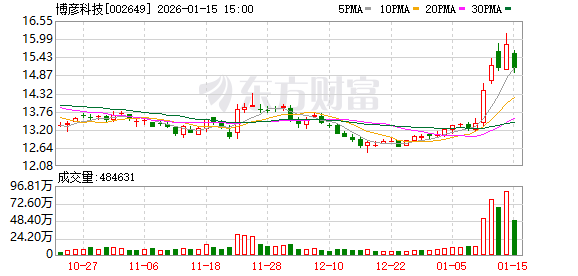
证券日报网讯 1月15日,博彦科技在互动平台回答投资者提问时表示,公司积极与国内外主流大模型厂 商开展技术与生态合作,基于客户场景需求,为行业客户提供一站式AI应用解决方案及服务。目前, 相关AI应用解决方案已在部分金融、化工、制造等多个行业实现业务落地,帮助客户实现业务流程智 能化与效率提升。未来,公司将持续深化行业理解,推动AI技术与产业场景的结合,助力客户实现数 字化与智能化转型。在数字人民币领域,公司是中国区块链技术创新与应用联盟的常务理事单位,并不 断积累相关项目经验及技术、人才储备,已在部分银行客户中实现了数个系统开发项目及应用场景落 地。 (文章来源:证券日报) ...

专家建议按身份证给低收入人群每人发2000元消费券,网友大力赞成
Sou Hu Cai Jing· 2026-01-15 12:12
Core Viewpoint - The proposal by economist Teng Tai emphasizes the need to shift focus from saving money to spending, suggesting the issuance of over one trillion yuan in consumer vouchers to stimulate the economy [1][11]. Group 1: Proposal Details - Teng Tai recommends distributing 1,000 yuan to ordinary residents and 2,000 yuan to low-income individuals, while excluding high-income groups from receiving vouchers [1][5]. - The vouchers should be directly deposited into residents' digital wallets, ensuring ease of access and eliminating intermediaries [5][7]. - The initiative aims to avoid complex restrictions often associated with subsidies, allowing recipients to spend freely on various goods and services [7][9]. Group 2: Economic Impact - The proposed consumer vouchers could potentially generate an additional 4 trillion yuan in GDP, leading to over 500 billion yuan in new tax revenue [13][21]. - By targeting low-income individuals, the policy aims to maximize the marginal effect of the funds, thereby effectively stimulating consumption [15][23]. - The anticipated increase in consumer spending is expected to revitalize multiple sectors, including services, manufacturing, and retail, creating a ripple effect throughout the economy [21][23]. Group 3: Public Reception - The proposal has garnered significant public support, with many expressing that it addresses their immediate financial concerns and reflects a practical approach to economic recovery [19][25]. - The simplicity and directness of the proposed distribution method have been highlighted as key strengths, enhancing transparency and reducing the risk of fraud [23][25].
新开普:目前已为国内50余所院校、企业建设了数字人民币项目
Zheng Quan Ri Bao Wang· 2026-01-15 12:11
Core Viewpoint - The company is innovating a smart campus solution based on digital currency, aiming to implement digital RMB in educational settings and enhance its applications across various industries [1] Group 1: Company Initiatives - The company has developed a digital RMB project for over 50 educational institutions and enterprises in China [1] - It has established long-term stable partnerships with the People's Bank of China Digital Currency Research Institute, six major banks, and three major telecom operators [1] - The company plans to increase its R&D efforts to improve digital RMB applications in education, public transport, enterprises, electricity, gas, and water management sectors [1] Group 2: Future Plans - The company aims to explore new application scenarios and diversify payment methods to accelerate the implementation of digital RMB across various settings [1] - It is committed to supporting the rapid development of China's digital economy through these initiatives [1]

四川雅安: 执金融之笔 绘文旅融合发展新画卷
Jin Rong Shi Bao· 2026-01-15 03:00
Core Viewpoint - The People's Bank of China (PBOC) Yaan Branch is actively promoting the development of the cultural tourism industry in Yaan, Sichuan Province, aiming to establish it as a significant global destination for giant panda culture tourism, with a focus on a "1+5" destination matrix [1] Group 1: Financial Support Mechanisms - The PBOC Yaan Branch has created a five-in-one working mechanism involving government leadership, PBOC promotion, departmental collaboration, regulatory oversight, and financial institution participation to enhance financial support for the cultural tourism sector [2] - A comprehensive financial policy framework has been established, including 76 support policies and 64 cultural tourism credit products, facilitating a "one-stop" product inquiry guide [2] - A financing conference led to the signing of credit agreements totaling 1.553 billion yuan among 12 banks and enterprises [2] Group 2: Innovative Financial Products - The PBOC Yaan Branch has developed a distinctive set of cultural tourism credit products, including the "Panda Loan" with favorable interest rates and a maximum term of 10 years, specifically for panda tourism development [4] - The "Homestay Loan" has been introduced to support the burgeoning homestay economy, with loans amounting to 250 million yuan disbursed to 514 homestay operators [4] - Innovative products like "Scenic Area Revenue Pledge Loans" have been created to finance the expansion of established tourist attractions, with a loan balance of 30.615 million yuan [4] Group 3: Integration of Financial Services - Financial services are being deeply integrated into the cultural tourism industry, transitioning from single-point support to full industry chain empowerment [5] - Specialized teams and green channels have been established in all local banks to prioritize approval for cultural tourism projects [5] - The "Financial + Cultural Tourism" model has emerged, enhancing the integration of finance with various sectors, including green building and health tourism [6] Group 4: Digital Financial Innovations - The PBOC Yaan Branch has launched a digital RMB pilot program, facilitating the establishment of digital payment channels for 29,180 personal wallets and 29,400 merchants, with transaction volumes reaching 2.445 billion yuan [6] - The digital RMB initiative has also been extended to corporate applications, achieving a total of 643 million yuan in tax payments through digital currency [6]