
数字贸易

Search documents
商务部:今年将大力发展服务贸易,出台扩大入境消费政策措施
2 1 Shi Ji Jing Ji Bao Dao· 2026-01-26 12:02
Core Viewpoint - In 2025, China's foreign trade demonstrated resilience, with total goods imports and exports reaching 45.47 trillion yuan, a growth of 3.8%, marking a historical high. The service trade also saw an increase, with imports and exports totaling 7.2 trillion yuan, up by 7.1% [1][2]. Group 1: Trade Performance - In 2025, the number of enterprises engaged in foreign trade exceeded 780,000, with private enterprises accounting for 57.3% of the total foreign trade volume [1]. - The external environment for China is undergoing profound and complex changes, presenting both strategic opportunities and risks, with increasing uncertainties [1]. Group 2: Policy Measures - The Ministry of Commerce aims to stabilize the foreign trade foundation and promote service market openness by implementing a "combination punch" of foreign trade policies to support enterprises in reducing costs and increasing efficiency [2]. - There will be an emphasis on policy promotion and interpretation to stabilize expectations and boost confidence among businesses [2]. Group 3: Market Expansion - Efforts will be made to expand diverse markets by increasing support for enterprises participating in overseas exhibitions and organizing trade promotion activities [2]. - The 139th and 140th Canton Fair will be highlighted as key events to facilitate market connections [2]. Group 4: Innovation and Digital Trade - The focus will be on accelerating innovation by supporting the development of cross-border e-commerce and enhancing the international competitiveness of green low-carbon products [2][4]. - The establishment of a national digital trade demonstration zone will be initiated, along with the development of relevant standards to promote compatibility between domestic and international standards [4]. Group 5: Service Trade Development - The Ministry will work on improving the management system for cross-border service trade and promoting the opening of the service market [2]. - There will be initiatives to expand the export of productive services and encourage the internationalization of professional services such as design, consulting, finance, and legal services [2].


中国将出台扩大入境消费政策措施
Xin Lang Cai Jing· 2026-01-26 11:44
王志华还称,未来商务部将指导跨境电商综试区大力发展跨境电商赋能产业带,支持海外仓企业加快智 能化改造。着力拓展绿色贸易,提升绿色低碳产品国际竞争力。推动人工智能赋能外贸发展,提升贸易 全链条数字化水平。 此外,中国将大力发展服务贸易,完善跨境服务贸易负面清单管理制度,有序推进服务市场开放,建设 国家服务贸易创新发展示范区。扩大优势生产性服务出口,促进知识产权、人力资源等服务贸易集聚发 展,鼓励设计、咨询、金融、会计、法律等专业服务机构提升国际化服务能力,鼓励中文教育、中医 药、中餐等传统优势服务出口。 在创新发展数字贸易方面,王志华表示,中国将启动建设国家数字贸易示范区,制订数字贸易相关标 准,推动国内国际标准相通相容。推动服务外包数字化转型,培育壮大数字贸易经营主体。(完) 中新社北京1月26日电 (记者 尹倩芸)中国商务部对外贸易司司长王志华26日在国新办新闻发布会上透 露,中国将出台扩大入境消费政策措施。 王志华当日在会上提到,今年中国将形成外贸政策"组合拳",服务好外贸企业,助力企业降本增效,适 时研究出台新政策,创新支持举措。同时,拓展多元市场,加大对企业赴境外参展力度,举办系列贸易 促进活动,办好 ...
商务部答一财:六大举措全力稳住外贸基本盘
Di Yi Cai Jing· 2026-01-26 08:24
二是拓展多元市场。加大对企业赴境外参展力度,举办系列贸易促进活动,办好第139届、140届广交会,鼓励企业用好国别贸易指南和外贸促进 信息,帮助企业更好对接市场。 三是加快创新赋能。指导跨境电商综试区大力发展跨境电商赋能产业带,支持海外仓企业加快智能化改造。着力拓展绿色贸易,提升绿色低碳产 品国际竞争力。推动人工智能赋能外贸发展,提升贸易全链条数字化水平。 2026年,外部环境变化影响加深,贸易壁垒增多。如何看待今年的外贸形势,将采取哪些举措推动外贸高质量发展? 1月26日,国务院新闻办举行发布会。商务部对外贸易司司长王志华在回答第一财经记者提问时表示,当前中国面临的外部环境发生深刻复杂的变 化,战略机遇和风险挑战并存,不确定、难预料因素增多。同时我们也要看到,中国经济基础稳、优势多、韧性强、潜能大,外贸发展仍然具备 诸多有利的条件。 王志华表示,今年将强化政策抓手,拓展多元市场,加快创新赋能,推动平衡发展,大力发展服务贸易,创新发展数字贸易,全力稳住外贸基本 盘。 王志华介绍,2026年,商务部将认真贯彻党中央、国务院决策部署,锚定提质增效目标,全力稳住外贸基本盘,有序推进服务市场开放,为"十五 五"开好局 ...

商务部副部长鄢东:有效应对外部冲击挑战,统筹发展货物、服务、数字贸易“三大支柱”
Jin Rong Jie· 2026-01-26 07:37
Core Viewpoint - The Ministry of Commerce emphasizes the resilience of foreign trade, highlighting effective responses to external challenges and the promotion of diversified markets and trade innovation [1] Group 1: Trade Performance - The total import and export value for the year reached 45.47 trillion yuan, marking a growth of 3.8% [1] - In the first 11 months, the service import and export value was 7.2 trillion yuan, with a growth rate of 7.1% [1] Group 2: Business Activity - The number of enterprises engaged in import and export activities exceeded 780,000, with private enterprises accounting for 57.3% of the total foreign trade value [1] Group 3: Trade Balance and Initiatives - There is a stronger focus on balanced development of imports and exports, with significant events like the China International Import Expo being organized to facilitate trade [1] - Initiatives such as "Shared Big Market · Export to China" are being launched to promote the entry and sales of high-quality global products [1]
浙江民营企业发展稳健向好 在册总量超370万户
Xin Lang Cai Jing· 2026-01-25 19:17
Group 1 - The overall development of private enterprises in Zhejiang Province is stable and positive, with a total of 3.7689 million registered private enterprises by the end of 2025, accounting for 91.9% of all enterprises in the province, representing a year-on-year growth of 7.52% [1] - The distribution of private enterprises is concentrated in four cities: Hangzhou, Jinhua, Ningbo, and Wenzhou, which together account for about 70% of the total number of private enterprises in the province [1] - Hangzhou leads with 1.0096 million registered private enterprises, making up 26.8% of the total, followed by Jinhua, Ningbo, and Wenzhou with 623.8 thousand, 569.1 thousand, and 442.1 thousand respectively [1] Group 2 - The industrial structure of private enterprises in Zhejiang shows a significant focus on the tertiary sector, with 74.84% of private enterprises engaged in this sector by the end of 2025 [2] - The top three industries for private enterprises are wholesale and retail, manufacturing, and leasing and business services, with registered numbers of 1.2629 million, 686.4 thousand, and 448.5 thousand respectively [2] - There is notable growth in innovative sectors, with private enterprises in scientific research and technical services reaching 395.7 thousand, a year-on-year increase of 13.51%, and those in information transmission, software, and IT services reaching 261.3 thousand, up by 12.53% [2] Group 3 - Hangzhou maintains its position as the "Digital Economy Capital" of China, with private tech enterprises thriving in AI, big data, and cloud computing, leading to the emergence of internationally influential innovative companies [3] - Jinhua is leveraging the Yiwu International Trade Comprehensive Reform to accelerate the transition from traditional commerce to digital trade, with an expected import and export total exceeding 1 trillion yuan by 2025 [3] - Ningbo is a key production base for small household appliances, with over 2,000 complete appliance enterprises and more than 300 large-scale enterprises in this sector, covering various product categories [3]
下一个投资“风口”在哪里?世界经济论坛总裁给出答案
Yang Shi Xin Wen Ke Hu Duan· 2026-01-25 18:39
Core Insights - The World Economic Forum's annual meeting in Davos opened on January 19, 2026, highlighting the impact of de-globalization on the global economy [1] - The growth rate of global trade has significantly slowed compared to the past, where trade growth used to be double that of global economic growth [1] - There is a notable shift in consumer demand towards digital trade and various services, while traditional manufactured goods trade is experiencing a slowdown [1] - Major investments are increasingly directed towards artificial intelligence and cutting-edge technology sectors, which are seen as the main drivers of current economic growth [1] - Countries that are well-prepared in new technologies are expected to perform better in the future, with China and the United States being leaders in this area and competing against each other [1]
更高水平开放促更高质量发展
Jing Ji Ri Bao· 2026-01-24 22:08
Group 1 - The core viewpoint emphasizes China's achievement in stabilizing foreign trade and investment while making historic breakthroughs in institutional openness during the "14th Five-Year Plan" period [1] - By 2025, China's total import and export value of goods is projected to reach 45.47 trillion yuan, with actual foreign investment showing steady growth [1] - The proactive alignment with high-standard international trade rules, such as CPTPP and DEPA, is driving deep reforms and breaking through institutional barriers [1] Group 2 - The digital economy is becoming a significant driver of foreign trade growth, with cross-border e-commerce expected to exceed 2.75 trillion yuan by 2025, increasing its share of total goods trade [2] - Full-process digitization is transforming traditional trade models, enhancing efficiency and resilience through smart selection, intelligent logistics, and digital customs clearance [2] - China's actual foreign investment increased by 26.1% year-on-year in November 2025, reflecting global capital's long-term confidence in the Chinese market [2] Group 3 - The Belt and Road Initiative is evolving from hard connectivity in infrastructure to soft connectivity in rules and standards, focusing on health, green, digital, and innovation sectors [3] - By 2025, China's imports and exports to Belt and Road countries are expected to reach 23.6 trillion yuan, with numerous practical cooperation projects yielding comprehensive benefits [3] - The "15th Five-Year Plan" suggests expanding institutional openness and optimizing the business environment to enhance the quality of trade and investment cooperation [3]
杭州踩线完成“十四五”2.3万亿GDP目标,未来5年要站上3万亿
Sou Hu Cai Jing· 2026-01-23 09:25
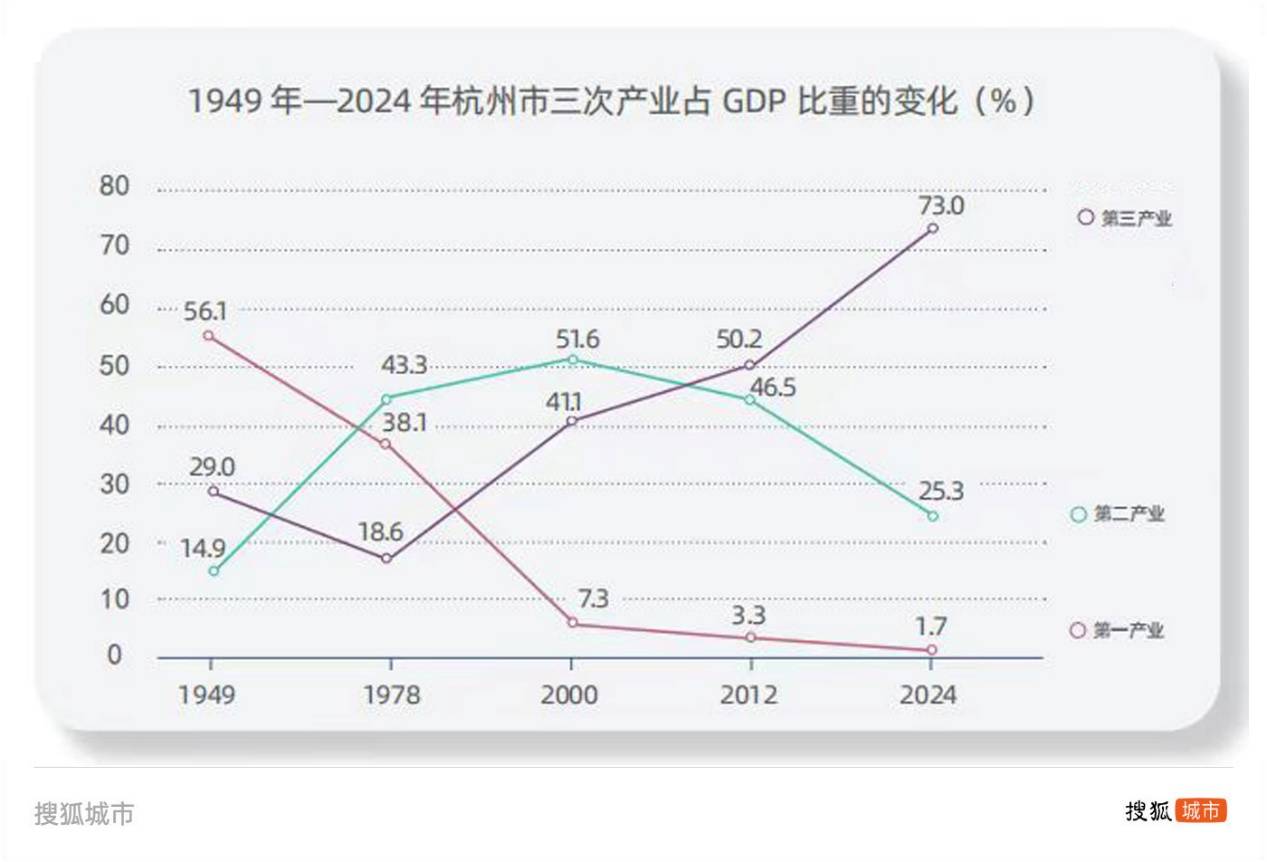
Economic Overview - Hangzhou's GDP is projected to reach 23,011 billion yuan by 2025, aligning with the "14th Five-Year Plan" target of 23,000 billion yuan [1] - The city aims for a GDP of 30,000 billion yuan and a per capita GDP exceeding 30,000 USD by 2030, requiring an average annual growth rate of over 5% in the next five years [1] Economic Structure - The economic growth in Hangzhou is driven by three main sectors: retail, foreign trade, and fixed asset investment, with retail sales expected to reach 9,499 billion yuan, foreign trade at 9,072 billion yuan, and a decline in fixed asset investment growth [1][4] - The service sector contributes significantly to the economy, with a value-added of 16,997 billion yuan and a growth rate of 5.3%, accounting for 73.4% of GDP [4] Sector Performance - The digital economy is a key growth area, with core industries in this sector seeing revenue growth of 13.2% and 12.1% for high-tech services [4] - Industrial output is also on the rise, with a total industrial value added of 4,624 billion yuan, marking a 6% increase, driven by advanced manufacturing clusters [4][10] - The automotive sector, particularly electric vehicles, has shown remarkable growth, with production increasing by 383% [2][4] Investment Trends - Investment in fixed assets is under pressure, with a notable decline in real estate and some infrastructure investments, reflecting a long-term downward trend from 20.3% growth in 2016 to 2.8% in 2023 [5] - Industrial investment has grown by 5.2%, but overall investment growth is expected to be negative in 2024 and 2025 [5] Consumer Market - The retail sales total is projected to reach 10,000 billion yuan by 2026, with a growth rate of around 5% [6] - The retail sales in Hangzhou have been revised upward to 9,151 billion yuan for 2024, reflecting a significant increase from previous estimates [8] - The consumption growth is supported by a stable service economy, with a focus on entertainment and experience-based consumption [10] Challenges and Future Outlook - Hangzhou's service sector, while substantial, still lags behind major cities like Beijing and Shanghai in absolute terms, indicating a need for structural improvements [12] - The manufacturing sector's contribution to GDP has decreased from 47.8% in 2010 to approximately 25% in 2024, highlighting a need for a more robust industrial base [12][14] - The city faces challenges in talent supply and demographic trends, which may impact its ability to achieve its ambitious economic goals [14]
商务部:2025年重点跨境电商进口平台零售额增长5.6%
Ren Min Wang· 2026-01-23 06:13
Group 1 - The core viewpoint of the articles emphasizes the steady growth and development of China's e-commerce sector, projecting it to remain the largest online retail market globally by 2025, contributing to consumption, industrial transformation, international cooperation, and social benefits [1][2][3] Group 2 - In 2025, the online retail sales of physical goods in China are expected to grow by 5.2%, contributing 36.2% to the total retail sales of consumer goods [1] - Digital products are highlighted as a key consumption driver, with online sales of mobile phones and smart robots increasing by 20.5% and 18%, respectively [1] - Online service consumption is projected to grow by 22% in 2025, with significant increases in online ticket purchases for sports events (63.3%), tourism products (40.6%), and in-store dining (23.7%) [1] Group 3 - The "Digital Commerce Promotes Agriculture" initiative is enhancing connections between e-commerce platforms and agricultural enterprises, with nearly 500 events facilitating order matching and digital transformation [2] - Rural and agricultural online retail sales are expected to grow by 6.7% and 9.9%, respectively, while textile and pharmaceutical e-commerce transaction volumes are projected to increase by 6.6% and 3.8% [2] - The logistics and express delivery sectors are also benefiting, with express business volume anticipated to grow by 11.5% in 2025 [2] Group 4 - The "Silk Road E-commerce" initiative is expanding, with new partnerships established with countries like Kenya, Bangladesh, and Egypt, and an upgraded cooperation mechanism with Kazakhstan, increasing partner countries to 36 [3] - The initiative includes 40 global e-commerce events covering over 100 countries, resulting in more than 240 cooperation intentions [3] - The retail sales of key cross-border e-commerce import platforms are projected to grow by 5.6% in 2025 [3]
商务部电子商务司负责人介绍2025年我国电子商务发展情况
Xin Lang Cai Jing· 2026-01-23 02:48
Core Insights - The Ministry of Commerce is implementing policies to ensure stable development of e-commerce in China, maintaining its position as the world's largest online retail market for 13 consecutive years, contributing to consumption, industrial transformation, international cooperation, and social benefits [1] E-commerce Impact on Consumer and Industry - Digital consumption policies have been introduced, with initiatives like online New Year goods festivals and over 80 quality e-commerce cultivation measures implemented by 10 platforms [1] - The online retail sales of physical goods are projected to grow by 5.2% in 2025, contributing 36.2% to the total retail sales of consumer goods [1] - Notable growth in digital products, with online sales of mobile phones and smart robots increasing by 20.5% and 18% respectively [1] - Online service consumption is expected to rise by 22% in 2025, with significant growth in online ticket purchases for sports events (63.3%), tourism products (40.6%), and in-store dining (23.7%) [1] E-commerce Benefits for Enterprises - The "Digital Commerce Promotes Agriculture" initiative is enhancing connections between platforms and agricultural enterprises in regions like Guangxi, Sichuan, Ningxia, and Shandong, facilitating nearly 500 business matching events [1] - Online retail sales in rural areas and agricultural products are projected to grow by 6.7% and 9.9% respectively, with e-commerce transactions in textiles and pharmaceuticals increasing by 6.6% and 3.8% [1] - The e-commerce sector is driving rapid growth in logistics, express delivery, communication software, and artificial intelligence, with express delivery volume expected to increase by 11.5% [1] Global E-commerce Collaboration - China is expanding its "Silk Road E-commerce" cooperation mechanism with countries like Kenya, Bangladesh, and Egypt, increasing partner countries to 36 [1] - The Shanghai "Silk Road E-commerce" cooperation pilot zone has developed 12 innovative institutional results, including cross-border digital identity recognition [1] - Global e-commerce activities have reached over 100 countries, resulting in more than 240 cooperation intentions, with a projected 5.6% growth in retail sales on key cross-border e-commerce import platforms [1] - The fourth Global Digital Trade Expo attracted 1,812 enterprises from 154 countries and regions, showcasing a record number of new products and innovations, contributing to inclusive economic globalization [1]