
文物保护

Search documents
新时代中国调研行之文化中华·文旅新探|三峡石宝寨:“江上明珠”古韵深长
Xin Hua She· 2025-11-27 02:31
Core Viewpoint - The article highlights the historical and architectural significance of Shibaozhai, a unique wooden structure located along the Yangtze River, and discusses recent efforts to enhance its cultural and tourism value. Group 1: Historical and Architectural Significance - Shibaozhai, known as the "Pearl on the River," is a 12-story wooden structure built during the Ming Dynasty and expanded during the Qing Dynasty, showcasing traditional Chinese architectural techniques [2][4] - It is the only and tallest non-independent wooden structure in China, recognized as a key cultural heritage site since 2001 [2][4] - The construction utilized a mortise and tenon joint system without iron nails, reflecting the advanced craftsmanship of ancient builders [4] Group 2: Preservation Efforts - Following the rise in water levels due to the Three Gorges Project, Shibaozhai faced potential submersion, leading to its designation as a key preservation project [4][5] - Significant investments were made to construct protective embankments and ensure the stability of the site, completed in 2009 [4] Group 3: Tourism Development - Recent upgrades have improved the environment around Shibaozhai, enhancing visitor experience and safety while integrating cultural storytelling [5][7] - The completion of the tourism expressway has connected Shibaozhai with surrounding attractions, improving accessibility and promoting tourism [5][7] - In 2023, the site received nearly 30,000 visitors, a 70% increase year-on-year, with total revenue growing by approximately 40% [7]


文化新观察|不止是打卡!从展览读懂故宫博物院百年新篇
Xin Hua She· 2025-11-25 18:41
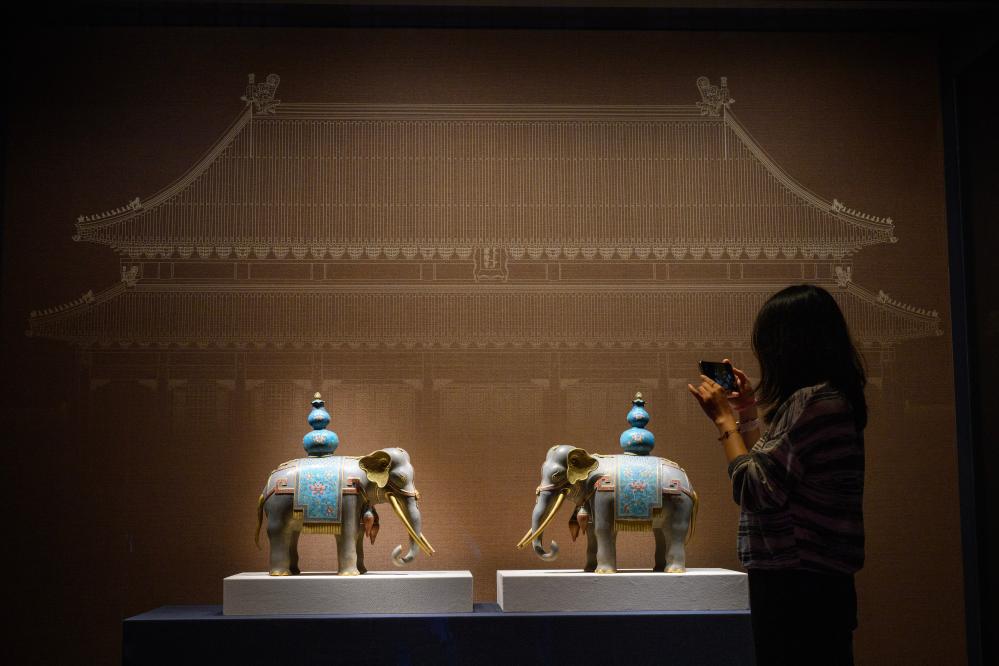
Core Insights - The article highlights the significance of the Palace Museum's centenary exhibition, showcasing the evolution from the Forbidden City to a cultural institution, emphasizing the importance of cultural rights and public access to heritage [1][3][11] Group 1: Historical Significance - The Palace Museum's establishment marked a milestone in China's museum history, with the relocation of artifacts during the Japanese invasion being a remarkable event in global cultural preservation [3][11] - The museum's collection has grown from over 1.17 million items to more than 1.95 million since the founding of New China, reflecting the contributions of numerous donors [6][11] Group 2: Exhibitions and Artifacts - The "Guardianship of a Century" exhibition features over a hundred artifacts, including the "Cloisonné Enamel of Peace," which is one of the first items to receive an identification number [1][3] - The "Memorial Exhibition of the Relocation of Palace Museum Artifacts" illustrates the dramatic journey of nearly 20,000 boxes of artifacts during wartime, highlighting the resilience of cultural preservation efforts [3][6] Group 3: Cultural and Technical Preservation - The "Craftsmanship of the Garden of Ning Shou Palace" exhibition showcases the historical and cultural value of the garden, emphasizing the principles of minimal intervention in artifact restoration [7][11] - The "Archaeological Achievements of the Former Site of the Palace Workshop" exhibition reveals the continuous evolution of the Forbidden City from the Yuan to the Qing dynasties, providing new archaeological evidence of its architectural history [9][11]
最高人民法院、国家文物局联合发布文物保护典型案例 让文物更好地“活起来”
Jin Rong Shi Bao· 2025-11-21 00:40
Group 1 - Since 2015, over 17,000 cases related to cultural heritage protection have been adjudicated by courts, emphasizing the commitment to high-quality development in cultural heritage protection [1] - The Supreme People's Court and the National Cultural Heritage Administration jointly released five typical cases to enhance public awareness of cultural heritage protection [1] - The case involving Wang and others, who illegally excavated ancient tombs and stole valuable cultural relics, resulted in severe penalties and compensation for archaeological expenses [1] Group 2 - A company conducted construction without approval in a nationally protected cultural heritage area, leading to significant damage to historical features, and was held liable for the costs of demolition [2] - The courts facilitated the successful acquisition of the Changleyuan Anti-Japanese Industrial Heritage site for the establishment of a museum, promoting industrial culture and patriotic education [2] - The courts also ensured the return of a former residence of a national hero, allowing it to be preserved and opened to the public as an educational site [2] Group 3 - The release of these cases underscores the strict enforcement of "protection first" policies and the importance of a unified approach to cultural heritage management [3] - The courts are working to improve management systems for cultural heritage protection and enhance collaboration between administrative enforcement and judicial processes [3] - The National Cultural Heritage Administration aims to strengthen judicial protection of anti-Japanese war sites, promoting the legacy of the war and ensuring effective management and utilization of revolutionary heritage [3]
印媒:印度争议该不该在古迹办婚礼
Huan Qiu Shi Bao· 2025-11-20 22:36
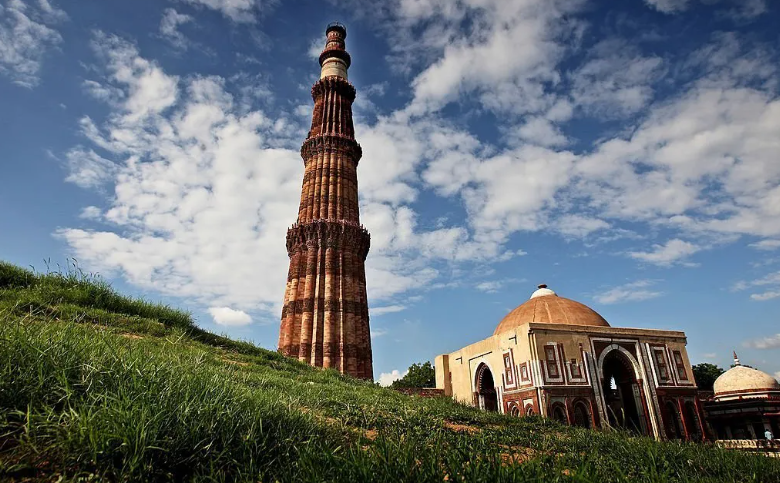
Core Viewpoint - The Delhi government proposes a public-private partnership to allow private events, including weddings, at approximately 80 national protected monument sites to boost tourism and make these sites more accessible to the public [3][4]. Group 1: Proposal and Support - The initiative aims to enhance public engagement with historical sites and bring attention to lesser-known monuments scattered throughout the city [3]. - Similar cultural activities at historical sites are common globally, with examples like the "Eternal Now" festival at the Egyptian pyramids and the Baalbek International Festival in Lebanon, which attract tourists seeking new meanings [3]. Group 2: Concerns and Criticism - There are significant concerns regarding heritage preservation and the transmission of cultural memory, particularly regarding access rights and the potential marginalization of local communities [4]. - Critics argue that high-profile events may alienate nearby residents, raising questions about who controls the cultural narrative of these monuments and whether national heritage will become exclusive to the wealthy [4]. - The importance of ensuring that cultural activities respect the historical significance of the monuments and engage with the surrounding neighborhoods is emphasized [4].
一场科技与文明的双向奔赴(文化中国行·人文观察)
Ren Min Ri Bao· 2025-11-18 23:11
Core Insights - The integration of artificial intelligence (AI) with archaeology is revolutionizing the field, enhancing efficiency and depth of research while enabling new applications and discoveries in cultural heritage protection and utilization [5][6][7][9]. Group 1: AI in Archaeology - AI is being utilized to process and classify archaeological artifacts, such as pottery shards from the Baodun site, showcasing its potential in addressing complex classification issues [7]. - Traditional archaeological methods are evolving as AI enhances research capabilities, allowing for faster and more accurate dating and analysis of artifacts [6][9]. - AI is also being applied in the restoration of ancient texts, such as oracle bone inscriptions, significantly reducing the time and effort required for manual reconstruction [8]. Group 2: AI in Cultural Heritage Protection - The use of AI technologies in cultural heritage protection is expanding, with applications in monitoring and diagnosing the condition of historical sites, such as the Yungang Grottoes [10][13]. - AI-driven tools are being developed for real-time monitoring of environmental conditions and potential threats to cultural relics, enhancing the precision of preservation efforts [13]. - The digital restoration of artifacts, like the 3D printing of the Yungang Grottoes' statues, exemplifies how AI can facilitate the revival of historical artworks [10][12]. Group 3: Educational Initiatives - Universities are introducing interdisciplinary courses, such as "AI Archaeology," to equip students with the necessary skills to integrate AI into archaeological research [9]. - The focus on cultivating cross-disciplinary talent is essential for the future of archaeology, as AI becomes a critical tool in the field [9][16]. Group 4: Cultural Engagement - AI technologies are transforming how cultural heritage is experienced by the public, making historical figures and events more accessible through interactive exhibits [14][15]. - The integration of AI with virtual and augmented reality is creating immersive experiences that bridge the gap between ancient civilizations and contemporary audiences [14][15]. Group 5: Future Directions - There is a call for national standards in the digitization of cultural relics and the training of professionals in technology-driven archaeological methods [16]. - The collaboration between archaeologists and AI technologies is seen as a pathway to enhance the effectiveness of cultural heritage preservation and education [16].

当以人工智能为代表的前沿技术遇上考古—— 一场科技与文明的双向奔赴(文化中国行·人文观察)
Ren Min Ri Bao· 2025-11-18 23:04
Core Viewpoint - The integration of artificial intelligence (AI) with archaeology and cultural heritage preservation is revolutionizing the field, enhancing efficiency, accuracy, and the potential for new discoveries [2][4][11]. Group 1: AI in Archaeology - AI is being utilized to process and classify archaeological artifacts, such as pottery shards from the Baodun site, showcasing its potential in enhancing archaeological research [3][4]. - The application of AI in the reconstruction of oracle bone inscriptions has significantly reduced the time and effort previously required for manual assembly by experts [4][5]. - Educational initiatives, such as the "AI Archaeology" course at Fudan University, are being introduced to cultivate interdisciplinary talents capable of leveraging AI in archaeological contexts [5][6]. Group 2: AI in Cultural Heritage Preservation - AI technologies are increasingly being applied in the preservation and restoration of cultural relics, exemplified by the 3D printing of ancient statues for exhibitions [6][7]. - The use of AI for monitoring and diagnosing the condition of cultural sites, such as the Yungang Grottoes, allows for real-time tracking of deterioration and potential threats [8][9]. - AI is facilitating the creation of immersive cultural experiences, enabling the public to engage with history in innovative ways, such as through interactive exhibits [10][11]. Group 3: Future Directions and Recommendations - There is a call for national standards in digital resource management for cultural heritage to maximize the benefits of AI in preservation efforts [11]. - The development of cross-disciplinary educational programs is essential to equip future professionals with the necessary skills to integrate technology and archaeology effectively [11].
追忆耿宝昌先生:他对中国瓷器倾注毕生至爱
Ren Min Ri Bao· 2025-11-15 02:22
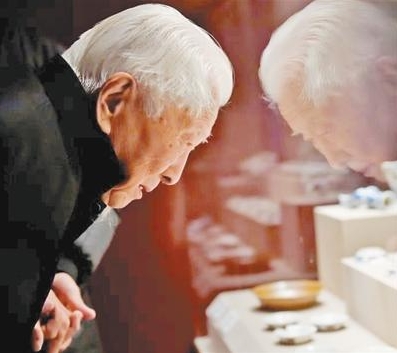
Core Viewpoint - The passing of Mr. Geng Baochang, a prominent figure in ceramic research, represents a significant loss for both Chinese and global ceramic studies, highlighting his lifelong dedication to the field and his contributions to the preservation and understanding of Chinese ceramics [1] Group 1: Contributions to Ceramic Research - Mr. Geng was known for his expertise in ceramic authentication, with his notable work "Identification of Ming and Qing Ceramics" being essential reading for researchers in the field [1] - He emphasized the importance of understanding and promoting the value of Chinese ceramics, advocating for recognition of their contributions to global culture [1] - Throughout his career, he engaged in the identification and collection of first-class cultural relics, and he donated over 20 pieces of ceramics and bronzes to the Palace Museum in 1986 [1] Group 2: Academic Influence and Methodology - Mr. Geng worked at the Palace Museum for nearly 70 years, contributing to its esteemed reputation through his research and mentorship of younger scholars [2] - He believed in the importance of practical experience and broad knowledge, often comparing Chinese ceramics with those from Vietnam, Thailand, Japan, and Europe [2] - His approach to learning involved diligent note-taking and a commitment to firsthand experience, demonstrating his belief that true understanding comes from direct engagement with the subject matter [2] Group 3: Preservation Efforts - Mr. Geng dedicated his life to the protection of cultural relics, conducting research on kiln sites and advocating for the preservation of significant historical sites like the Ming and Qing imperial kilns in Jingdezhen [4] - He played a crucial role in the designation of the Jingdezhen Ming and Qing imperial kiln site as a national key cultural relic protection unit [4] - His efforts included a joint letter to the central government in 2015, urging for increased protection of the imperial kiln site and suggesting its nomination as a World Cultural Heritage site [4]
依法推进文物保护 两部门发布5个典型案例
Yang Shi Xin Wen· 2025-11-07 06:39
在《中华人民共和国文物保护法》修订通过一周年之际,最高人民法院、国家文物局今日联合发布5件 依法推进文物保护典型案例。此次发布的案例有以下几方面特点: 案例三:某公司作为实际建设单位,在未经文物行政部门同意及人民政府批准、未取得《建设工程规划 许可证》情况下,擅自在全国重点文物保护单位大运河浙东运河浙江萧山—绍兴段保护范围内进行建筑 工程,对文物的历史风貌和安全环境造成了严重破坏。人民法院依法认定某公司自行承担因违法建造厂 房被拆除而产生的损失,支持相关政府部门加强对大运河文物保护执法履职。 三是更好地"让文物活起来"。今年是中国人民抗日战争暨世界反法西斯战争胜利80周年。本着对历史负 责、对人民负责的态度,加强抗战遗址司法保护,传承弘扬伟大抗战精神,助力切实把革命文物保护 好、管理好、运用好。 案例四:人民法院经保全、审判、执行各环节协同发力,依法保障全国重点文物保护单位长乐塬抗战工 业遗址顺利征收,为遗址建成宝鸡工业博物馆,成为工业文化研学基地、爱国主义教育基地排除障碍, 司法护航抗战工业遗址有效利用。 案例五:人民法院助力抗日英烈吉鸿昌将军旧居整体保护,依法判令租赁合同到期后仍占用旧居的某公 司返还房屋 ...
最高人民法院、国家文物局联合发布依法推进文物保护典型案例
Yang Shi Wang· 2025-11-07 02:24
Group 1 - The article emphasizes the importance of strict enforcement of laws to protect cultural relics and the need for public awareness in cultural heritage preservation [1][2] - Five typical cases of legal actions taken to promote cultural relic protection are highlighted, showcasing the judiciary's role in safeguarding cultural heritage [1][3] Group 2 - Case one involves the severe punishment of individuals involved in the illegal excavation of ancient tombs, with the court mandating compensation for archaeological excavation costs [7][8] - Case two addresses the intentional damage to cultural relics at Mount Tai, with the court imposing penalties and requiring public apologies from the offenders [10][11] - Case three focuses on a company that unlawfully constructed buildings within the protected area of the Grand Canal, resulting in the court ruling that the company must bear the losses from the demolition of its illegal structures [14][15] Group 3 - Case four discusses the judicial support for the protection and utilization of the Changleyuan Anti-Japanese Industrial Site, which is significant for its historical contributions during the war [18][20] - Case five highlights the protection of the former residence of anti-Japanese hero Ji Hongchang, with the court ensuring the return of the property for public educational use [21][24]
宁夏2处遗址入列国家考古公园立项名单
Zhong Guo Xin Wen Wang· 2025-11-06 06:53
中新网银川11月6日电 (记者 李佩珊)"宁夏全面推进考古遗址公园建设,水洞沟与姚河塬遗址已成功列 入国家考古遗址公园立项名单。"11月6日,宁夏政府新闻办举行高质量完成"十四五"规划系列主题新闻 发布会,宁夏文化和旅游厅党组成员、副厅长武裕国作出如上表述。 宁夏2处遗址入列国家考古公园立项名单 据悉,为加强文物保护,宁夏相继出台《宁夏回族自治区长城保护条例》《关于推动新时代宁夏文物事 业高质量发展的实施意见》等地方法规与政策文件,编制完成《宁夏回族自治区黄河文物保护利用规 划》等15个专项规划。同时,宁夏不断夯实文物资源基础,自治区级以上文物保护单位的"四有"(有保 护范围、有保护标志、有记录档案、有管理机构)工作完成率和保护范围、建设控制地带"两线"纳入省 级国土空间规划达到100%。 在有序通过推进第四次全国文物普查过程中,宁夏已完成3818处第三次普查文物的复查,调查新发现文 物线索1137处,正式认定1041处,石窟寺、黄河文化遗产等专项调查顺利完成。 同时,宁夏投入各类专项资金超7亿元人民币,实施文物保护项目近200个,涵盖古遗址、石窟寺、古建 筑的本体保护、安全防护及展示利用等。 来源:中国新闻 ...