新会计准则

Search documents
非上市寿险公司投资半年收益率:君龙人寿、长城人寿分列两榜第一
Sou Hu Cai Jing· 2025-08-11 11:11
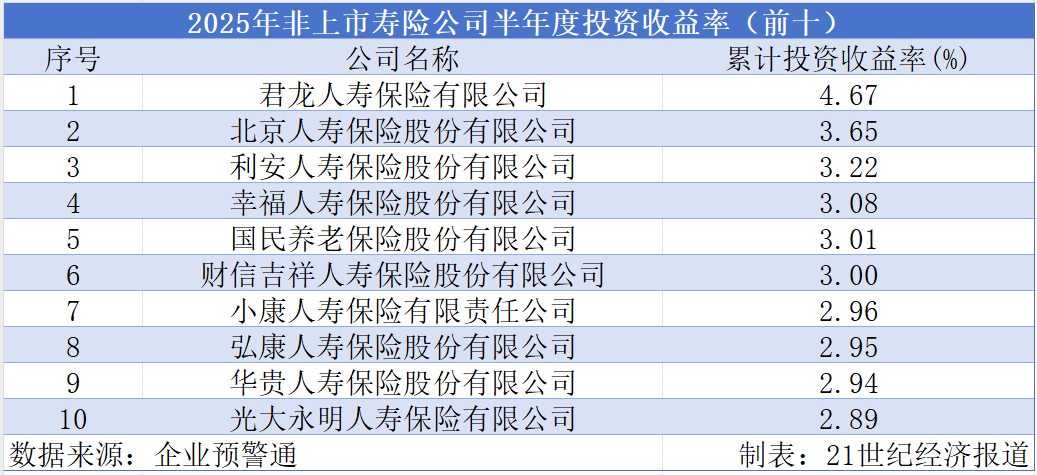
Core Insights - The report highlights the performance of non-listed life insurance companies in terms of investment returns for the first half of 2025, indicating a positive trend in investment yields across the sector [1][6]. Investment Returns - A total of 59 non-listed life insurance companies reported their investment returns, with 6 companies achieving an investment yield exceeding 3% [2][5]. - The top performers in terms of investment yield include: - Junlong Life Insurance Co., Ltd. at 4.67% - Beijing Life Insurance Co., Ltd. at 3.65% - Lian Life Insurance Co., Ltd. at 3.22% [2][3]. - In terms of comprehensive investment returns, 12 companies surpassed a 3% yield, with Changcheng Life Insurance leading at 6.82% [4][5]. Trends in Investment Strategy - The insurance sector is adapting to new accounting standards and regulatory frameworks, which are influencing investment decisions [7][9]. - There is a noticeable shift towards long-term asset allocation, with a preference for high-rated bonds and equity investments, particularly in the banking sector [7][8]. - The number of equity stakes taken by insurance companies has increased significantly, with 22 announcements made by 11 companies by August 8, 2025, surpassing the total for the entire previous year [7][8]. Regulatory Environment - Recent policies aim to support long-term investments, including increasing the proportion of equity investments by insurance companies [9][10]. - The industry has seen a reduction in the preset interest rates for insurance products, which is expected to alleviate pressure on bond allocations [9][10]. Future Outlook - The ability to match assets and liabilities is becoming crucial for insurance companies to navigate interest rate fluctuations and ensure sustainable growth [10].



年内举牌22次!险资最青睐这类上市公司
Guo Ji Jin Rong Bao· 2025-08-08 15:48
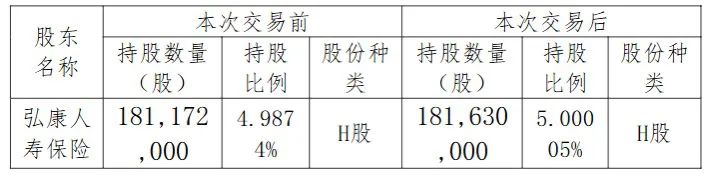
Group 1 - Insurance capital continues to increase holdings in listed companies, with 18 companies being targeted in 2024, surpassing the total from the previous year [1][13] - Hongkang Life Insurance acquired an additional 458,000 shares of Honghua Smart Energy, raising its stake to 5.00005% [3][4] - The total investment in Honghua Smart Energy amounted to approximately HKD 1.816 million, with a per-share price of HKD 3.9659 [4][5] Group 2 - Honghua Smart Energy reported a total revenue of HKD 21.314 billion in 2024, reflecting a year-on-year growth of 7.42%, and a net profit of HKD 1.606 billion, up 2% [5] - The company operates in 27 provinces and has a strong market position in the gas industry, supported by stable gas sources and growing sales [5] - Hongkang Life Insurance's total assets as of Q2 2025 were approximately CNY 6.60 billion, with the investment in Honghua Smart Energy representing 1.31% of its total assets [3][8] Group 3 - The insurance sector has seen a significant increase in shareholding activities, with 22 instances of shareholding changes reported in 2025 alone [1][13] - Major insurance companies, including Ping An Life and China Postal Life, have been actively increasing their stakes in various sectors, particularly in banking and public utilities [14][15] - The trend of insurance companies increasing their equity investments is driven by low interest rates and the need for stable investment returns [13][14]
当前普通型人身保险产品预定利率研究值为1.99%
Jin Rong Shi Bao· 2025-08-08 07:56
Core Insights - The China Insurance Industry Association held a meeting to discuss the evaluation interest rates for life insurance reserves in the second quarter of 2025, focusing on macroeconomic conditions, market interest rate trends, and industry development [1] Group 1: Industry Development - The life insurance industry is expected to implement the decisions of the Central Committee and the State Council, emphasizing the need for high-quality development and risk prevention [1] - There will be a deepening of personal marketing system reforms, regulation of universal and participating insurance, and enhancement of asset-liability linkage [1] - The industry aims to continuously promote product transformation and actively develop commercial health insurance to better serve the economy and improve public welfare [1] Group 2: Financial Reporting and Market Sensitivity - New accounting standards are significantly impacting the financial statements of insurance companies, presenting new challenges for industry development [1] - Life insurance companies are encouraged to enhance market sensitivity and judgment, conduct thorough research on economic conditions and industry trends, and focus on cost reduction and efficiency improvement [1] - The industry is advised to adopt a risk-based and prudent management philosophy, accurately identify market positioning, and comprehensively improve operational capabilities and service levels [1] Group 3: Interest Rate Insights - Experts have provided insights on the predetermined interest rates for life insurance products, indicating that the current research value for ordinary life insurance products is 1.99% [1]
险资年内举牌10家上市公司 偏爱银行H股
Zheng Quan Ri Bao· 2025-08-08 07:27
据《证券日报》记者统计,今年已有长城人寿保险股份有限公司、阳光人寿保险股份有限公司、新华人 寿保险股份有限公司(以下简称"新华保险")等6家保险公司合计举牌上市公司数量达10家。 本报记者 冷翠华 见习记者 杨笑寒 港交所最新信息显示,近日,瑞众人寿保险有限责任公司(以下简称"瑞众人寿")增持中信银行股份有 限公司(以下简称"中信银行")300万股,增持后,瑞众人寿所持中信银行股份约为7.44亿股,占其已 发行有投票权股份的5%,触及举牌线。 同时,通过举牌上市银行,险资也可以与被举牌上市银行形成协同效应,促进银保业务发展。例如,新 华保险在举牌杭州银行股份有限公司(以下简称"杭州银行")后表示,本次权益变动完成后,新华保险 将通过股权纽带加强与杭州银行的深度合作,促进和杭州银行双方的银保业务发展,提升双方的价值。 今年以来,险资举牌上市公司"热情"不减,举牌标的中银行股居多。受访专家表示,险资举牌高股息大 盘股频次增加的原因,一是应对利率中枢下行带来的冲击;二是,在新会计准则实施的背景下平滑报表 波动。展望未来,预计险资举牌时将持续关注现金流稳定、估值合理、处于成长性行业的上市公司。 展望未来,杨帆认为,险 ...



险资新一轮举牌潮涌:权益投资打上“长钱长投”印记
Zhong Guo Zheng Quan Bao· 2025-08-08 07:27
Core Viewpoint - The insurance industry is experiencing a new wave of equity stakes, with a focus on high-dividend assets to enhance long-term stable returns amid low interest rates and asset scarcity [1][4][5] Group 1: Recent Activities - Ruizhong Insurance has recently increased its stake in China Shenhua H-shares to 5%, marking the 11th equity stake disclosed by the China Insurance Industry Association this year [1][2] - The company also increased its holdings in Citic Bank H-shares, reaching a 5% stake, and has previously made similar moves with Longyuan Power H-shares and China Duty Free H-shares [2][3] Group 2: Investment Strategy - The current trend in equity stakes is characterized by a preference for high-dividend stocks, which provide stable cash flow and dividends, aligning with the long-term liability needs of insurance companies [4][5] - The low interest rate environment and the gradual expiration of high-yield assets have led insurers to seek stable, long-term investment opportunities [4][5] Group 3: Regulatory and Accounting Influences - The implementation of new accounting standards is prompting insurers to optimize their asset allocation by increasing long-term equity investments, which can help smooth profit fluctuations [6][7] - Under the new accounting rules, high-dividend stocks can be classified in a way that minimizes the impact of market fluctuations on financial statements, thus enhancing stability [6][7]
72家人身险公司一季度合计净利超860亿元
Zheng Quan Ri Bao· 2025-08-08 07:25
Group 1 - The core viewpoint of the articles highlights the positive performance of the life insurance industry in Q1, with 72 companies reporting a total insurance business income of 1.35 trillion yuan and a net profit of 861.43 billion yuan [1][2][3] - A total of 49 life insurance companies reported profits, with a combined profit of 886.33 billion yuan, while 23 companies reported losses totaling 24.90 billion yuan [3] - Major companies such as China Life, Ping An Life, and China Pacific Life each reported insurance business income exceeding 100 billion yuan, contributing significantly to the overall industry performance [2][3] Group 2 - The improvement in the life insurance sector's performance is attributed to factors such as product structure optimization, the implementation of "reporting and operation in unison," and the release of investment income from the previous year [1][3] - The Financial Regulatory Authority has issued guidelines to deepen the implementation of "reporting and operation in unison," which aims to reduce non-compliant and unreasonable costs in the personal insurance channel [4] - Several insurance companies have switched to new accounting standards, which may impact key operational indicators like net profit and total assets, making profits more sensitive to market fluctuations [5][6] Group 3 - The new accounting standards and solvency regulations are expected to influence the operational metrics of life insurance companies, with potential for divergence between net profit and net assets [6] - The life insurance industry is anticipated to have significant growth potential as consumer demand for health management and elderly care services increases [6]


今日视点:险资频频举牌港股公司有四大逻辑
Zheng Quan Ri Bao· 2025-08-08 07:24
Core Viewpoint - The frequent equity stakes taken by insurance capital in Hong Kong-listed companies reflect a strategic shift towards value investment in a low-interest-rate environment, driven by the search for high dividend yields and quality assets [1][2][5]. Group 1: Investment Trends - Insurance capital has made a total of 17 equity stakes in the first half of the year, with 14 of these in Hong Kong-listed companies [1]. - 63% of insurance institutions plan to increase their investment in Hong Kong stocks by 2025 [1]. Group 2: Valuation and Market Conditions - The low valuation of Hong Kong stocks is a significant factor for insurance capital's interest, with the Hang Seng Index's P/E ratio at 10.7, compared to 13.1 for the CSI 300 [2]. - The AH premium index, despite a 9.13% decline, remains at 129.94, indicating that H-shares are undervalued compared to A-shares [2]. Group 3: Quality of Hong Kong Companies - The influx of high-quality mainland companies to the Hong Kong market, along with the active performance of technology and consumer sectors, enhances the attractiveness of Hong Kong stocks [3]. - Companies like Tencent, Meituan, and Xiaomi are leading in innovation, while brands like Anta and Li Ning are capitalizing on global market opportunities [3]. Group 4: Diversification and Risk Management - The internationalization of the Hong Kong market allows for better asset price diversification, reducing overall portfolio volatility for insurance capital [4]. - Hong Kong's mature financial infrastructure supports the global asset allocation strategies of insurance companies [4]. Group 5: Financial Reporting Standards - The implementation of IFRS 9 and IFRS 17 accounting standards necessitates a strategic approach to asset classification, with high-dividend stocks being favored to stabilize earnings [5]. - By classifying high-dividend Hong Kong stocks under FVOCI, insurance companies can smooth out performance fluctuations while securing stable income [5].






年内险资举牌18次 接近去年全年水平
Zheng Quan Ri Bao· 2025-08-08 07:24
Core Viewpoint - Lian Life Insurance has increased its stake in Jiangnan Water Co., holding 46.995391 million shares, which represents 5.03% of the total shares, triggering the "shareholding increase" threshold [1][2] Group 1: Investment Trends - Insurance companies have engaged in 18 shareholding increases this year, nearing last year's total of 20 [1][2] - The new accounting standards encourage insurance firms to classify investments in listed companies as long-term equity investments, which helps stabilize net asset returns and reduce profit volatility [1][3] Group 2: Financial Impact - Lian Life's investment in Jiangnan Water is valued at 249 million yuan, accounting for 0.2% of Lian Life's total assets as of the last quarter [2] - The investment is part of a broader trend where insurance companies are focusing on high-return and stable growth enterprises [3][6] Group 3: Preferred Investment Targets - Insurance companies favor high-dividend stocks, particularly in sectors like banking, logistics, and energy, with 9 out of 18 recent investments being in high-dividend bank stocks [4] - 14 of the 18 shareholding increases involved Hong Kong-listed companies, which currently offer more attractive dividend yields compared to A-shares [5] Group 4: Future Outlook - Experts predict an increase in shareholding activities as market conditions improve, with a focus on long-term investment value and stable earnings [5][6]

非上市寿险公司今年上半年净利润同比增长200亿元
Qi Lu Wan Bao· 2025-08-07 21:05
Core Insights - A total of 59 non-listed life insurance companies have reported their profit situation for the first half of the year, with a combined net profit of 29.3 billion yuan, representing a significant year-on-year increase of 20.6 billion yuan [1] - Among the companies reporting profits, 38 were profitable while 21 incurred losses, and 14 companies turned losses into profits [1] Profit Distribution - Of the profitable life insurance companies, 11 reported net profits exceeding 500 million yuan, totaling 28.6 billion yuan, which accounts for over 97% of the total profit [1] - Taikang Life ranked first with a net profit of 16 billion yuan, nearly doubling its profit by an increase of approximately 10 billion yuan year-on-year [1] - China Post Life Insurance reported profits exceeding 5 billion yuan, with a premium growth rate exceeding 12% in the first half of the year [1] Loss Distribution - Among the 21 companies that reported losses, 2 companies had losses exceeding 500 million yuan, with Hengqin Life Insurance losing 840 million yuan and Bank of China Samsung Life Insurance losing 540 million yuan [1] - Additionally, 10 companies reported losses between 100 million to 500 million yuan, including Aixin Life Insurance, Beijing University Founder Life Insurance, and Guolian Life Insurance, while 8 companies had losses under 100 million yuan [1]
147家非上市险企期中数据出炉:5家企业“挂科”、财寿险利润双增
经济观察报· 2025-08-07 13:33
Core Viewpoint - The article highlights the current state of solvency reports among non-listed insurance companies, indicating that five companies are underperforming in terms of solvency ratings, while others have shown significant profit growth due to changes in accounting standards and favorable market conditions [1][2][4]. Solvency Reports - As of early August 2025, 147 non-listed insurance companies have disclosed their second-quarter solvency reports, with five companies rated below standard due to their comprehensive risk ratings [2][4]. - The solvency capacity is assessed through three key indicators: core solvency adequacy ratio, comprehensive solvency adequacy ratio, and risk comprehensive rating, with specific thresholds for each [4]. - The five companies failing to meet solvency standards include Huahui Life, Huazhong Property, Anhua Agricultural Insurance, Asia-Pacific Property, and Qianhai Property, primarily due to governance issues and management instability [4][5]. Life Insurance Profitability - The life insurance sector has seen a notable increase in profits, with non-listed life insurance companies achieving over 29 billion yuan in net profits in the first half of 2025, compared to less than 10 billion yuan in the same period of 2024 [7]. - Leading companies such as Taikang Life and Zhongyou Insurance reported net profits of 15.998 billion yuan and 5.177 billion yuan, respectively, with Taikang Life's profit increasing by 164% year-on-year [7][10]. - The implementation of new accounting standards has significantly impacted profit recognition and stability, allowing for a more accurate reflection of the economic value of insurance contracts [9][10]. Property Insurance Performance - The property insurance sector has also performed well, with 76 companies reporting a total insurance business income of approximately 259.49 billion yuan and a net profit of 9.252 billion yuan in the first half of 2025, marking a year-on-year increase of over 90% [14]. - Major players like Guoshou Property, Zhonghua United Property, and Yingda Property accounted for a significant portion of the total net profit, highlighting the industry's concentration [14]. - The improvement in profitability is attributed to optimized product structures, reduced natural disaster losses, and enhanced risk management capabilities [13][15]. Market Trends and Future Outlook - The article emphasizes the importance of adapting to new accounting standards and market conditions, suggesting that insurance companies focus on long-term management and risk control to ensure sustainable growth [11][15]. - Smaller property insurance companies are encouraged to identify niche markets and leverage digital tools to enhance customer service and operational efficiency [15].