
无人驾驶技术

Search documents
涛涛车业(301345)25H1业绩点评:业绩表现亮眼 积极布局机器人等智能化赛道
Xin Lang Cai Jing· 2025-09-03 04:50
Group 1: Financial Performance - In H1 2025, the company achieved revenue of approximately 1.713 billion yuan, a year-on-year increase of about 23.19%, and a net profit attributable to shareholders of approximately 342 million yuan, a year-on-year increase of about 88.04% [1] - In Q2 2025, the company realized revenue of approximately 1.074 billion yuan, a year-on-year increase of about 23.33% and a quarter-on-quarter increase of about 68.01%; the net profit attributable to shareholders was approximately 256 million yuan, a year-on-year increase of about 95.25% and a quarter-on-quarter increase of about 196.96% [1] Group 2: Product and Market Development - The company's self-owned brand sales accounted for approximately 64.77% of total sales, with significant growth in the electric low-speed vehicle segment, achieving revenue of approximately 1.152 billion yuan in H1 2025, a year-on-year increase of about 30.65% [2] - The company has expanded its electric golf cart high-end dealer network to 60, with a total of over 230 dealers, and launched the second brand "TEKO" in North America in July 2025 [2] - In the special vehicle segment, the company achieved revenue of approximately 490 million yuan in H1 2025, a year-on-year increase of about 8.22%, with a focus on all-terrain vehicles [2] Group 3: Global Expansion and Production Capacity - The company is accelerating the construction of a global production capacity layout, focusing on "China + Southeast Asia + North America," with overseas revenue in H1 2025 reaching approximately 1.654 billion yuan, a year-on-year increase of about 20.73% [2] - The U.S. factory is fully engaged in the assembly production of electric golf carts, while the Vietnam base is ramping up production capabilities for electric golf carts and all-terrain vehicles [2] Group 4: Profitability and Cost Management - In Q2 2025, the company's gross margin was approximately 41.64%, a year-on-year increase of about 6.65 percentage points, and a net profit margin of approximately 23.84%, a year-on-year increase of about 8.78 percentage points [3] - The total expense ratio was approximately 12.29%, a year-on-year decrease of about 2.52 percentage points, with reductions in sales, management, R&D, and financial expense ratios [3] Group 5: Strategic Initiatives - The company is expanding its product line from electric scooters and bicycles to electric golf carts and large all-terrain vehicles, creating a comprehensive product ecosystem for various age groups and scenarios [4] - Strategic partnerships have been established in advanced fields such as humanoid robots and autonomous driving technology with companies like K-SCALE and others [4] Group 6: Investment Outlook - The company is expected to upgrade its products towards high-value segments, with projected revenues for 2025 to 2027 of approximately 3.872 billion yuan, 4.911 billion yuan, and 5.894 billion yuan, representing year-on-year growth rates of about 30.1%, 26.9%, and 20.0% respectively [5] - The projected net profits for the same period are approximately 680 million yuan, 873 million yuan, and 1.114 billion yuan, with year-on-year growth rates of about 57.7%, 28.4%, and 27.6% respectively [5]


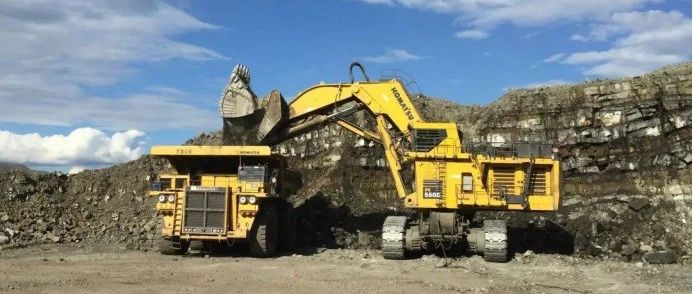
小松在露天矿的无人驾驶技术应用
工程机械杂志· 2025-08-29 09:32
Core Viewpoint - Komatsu Group, a leading global manufacturer of construction and mining machinery, has made significant advancements in autonomous mining truck technology, showcasing its commitment to innovation and efficiency in the mining sector [1][3][17]. Group 1: Company Overview - Komatsu Group was established in 1921 in Tokyo, Japan, and has since expanded globally with 144 subsidiaries and over 40,000 employees, achieving sales of 1 trillion 431.5 billion yen in the fiscal year 2009 [1]. - The company is renowned for its diverse product range, exceptional quality, and comprehensive service offerings [1]. Group 2: Autonomous Mining Technology - In May 2021, Komatsu's 290-ton autonomous mining truck, the 930E, successfully operated alongside manned trucks in a mixed fleet at a coal mine in China, marking a significant milestone in autonomous mining operations [1]. - By 2024, over 750 Komatsu autonomous trucks are expected to be operational across 23 mining sites in five countries, with a cumulative transport volume exceeding 10 billion tons [3]. Group 3: Recent Contracts and Developments - Komatsu has agreed to deliver 22 units of the 930E-5 dump trucks to Cortez Mine in Nevada between 2023 and 2025, along with several auxiliary equipment [4]. - The 980E-5, one of the largest mining trucks globally, will be integrated with Komatsu's FrontRunner autonomous driving system, enhancing operational efficiency and safety [9][11]. Group 4: Technological Innovations - The FrontRunner AHS system is a comprehensive fleet management solution that allows for the safe operation of both autonomous and manned trucks, significantly improving productivity and reducing operational costs [12][14]. - Komatsu is collaborating with Ouster to integrate advanced 3D digital lidar sensors into its autonomous systems, enhancing environmental perception and navigation capabilities [14][15]. Group 5: Future Goals - Komatsu aims to commercialize next-generation zero-emission mining equipment by 2030, focusing on multi-power source vehicles, including hybrid, electric, and hydrogen fuel cell technologies [17].

中国共享电单车行业研究报告
艾瑞咨询· 2025-08-29 00:02
Core Viewpoint - The shared electric bike industry is experiencing upward momentum driven by government support, market demand, and technological advancements [1][2][3] Industry Development - The government is promoting a unified national market, which will provide clearer market access standards for the shared electric bike industry [1] - The industry is witnessing intensified competition, with national brands like Qingju, Meituan, and HelloBike gaining significant advantages in user scale and revenue [2] - Shared electric bikes have become popular among young users aged 16-34, particularly in lower-tier cities, due to their convenience for commuting and leisure [3] Regulatory Environment - The new national standards for electric bicycles are expected to enhance product quality and safety, driving technological innovation and green development [4][16] - Policies are increasingly supportive of shared electric bikes as part of the public transport system, addressing the "last mile" issue in urban transportation [12][21] Economic Context - The national economy is steadily growing, with transportation and communication spending increasing, indicating a robust market for shared electric bikes [7] - The demand for low-carbon and environmentally friendly transportation options is rising, with shared electric bikes playing a crucial role in this transition [10][13] User Insights - Users favor shared electric bikes for their convenience, affordability, and environmental benefits, with a high satisfaction rate reported in key operational aspects [3][49][73] - The average riding distance is approximately 2.91 kilometers, with peak usage times in the evening [60][53] Technological Innovations - Advancements in autonomous driving technology are expected to address operational challenges and reshape the industry landscape [5][89] - The implementation of smart technologies and improved vehicle features is enhancing user experience and operational efficiency [40][87] Market Trends - The industry is moving towards a more regulated and competitive environment, with a focus on product innovation and operational efficiency [80][82] - User preferences are shifting towards comfort and practical features in electric bikes, prompting companies to innovate [85] Competitive Landscape - The shared electric bike market is consolidating around a few national brands, which are focusing on differentiated services and improved user experiences [2][82] - Companies are leveraging technology to enhance their operational capabilities and meet diverse user needs [87][89]

涛涛车业聚焦主业半年盈利3.42亿 外销为主美国营收占比增至78.11%
Chang Jiang Shang Bao· 2025-08-26 23:32
Core Viewpoint - Taotao Industry (301345.SZ), a leading all-terrain vehicle manufacturer, continues to show growth in its performance, with significant increases in revenue and net profit in the first half of 2025 [1][2]. Financial Performance - In the first half of 2025, the company achieved revenue of 1.713 billion yuan, a year-on-year increase of 23.19%, and a net profit of 342 million yuan, up 88.04% [1][2]. - The company's net profit excluding non-recurring items reached 339 million yuan, reflecting a growth of 89.65% [1][2]. - The sales revenue from smart electric low-speed vehicles was 1.152 billion yuan, increasing by 30.65%, while special vehicle sales reached 490 million yuan, up 8.22% [2]. Research and Development - Taotao Industry has consistently increased its R&D investment, with expenditures rising from 62.9 million yuan in 2021 to 125 million yuan in 2024, representing a growing percentage of total revenue [2]. - In the first half of 2025, R&D investment was 54.17 million yuan, with a cumulative total of 394 million yuan over the past four and a half years [2]. - The company holds 506 patents as of the first half of 2025 [2]. Market Expansion - Taotao Industry has focused on expanding its overseas market presence, particularly in the U.S., where sales revenue reached 1.338 billion yuan in the first half of 2025, accounting for 78.11% of total revenue [1][3]. - The company has established stable partnerships with major U.S. retailers such as Amazon, Walmart, and TARGET, enhancing its market position [3]. - The revenue from the U.S. market has shown a consistent upward trend, with figures of 1.082 billion yuan in 2022, 1.529 billion yuan in 2023, and 2.292 billion yuan in 2024, with respective market shares of 61.30%, 71.32%, and 77% [3]. Strategic Initiatives - The company is also pursuing strategic initiatives in advanced fields such as humanoid robots and autonomous driving technology, aiming for smart upgrades across its product lines [5]. - In the first half of 2025, Taotao Industry formed strategic partnerships with companies like K-Scale Labs and Kepler Robotics to enhance sales expansion and product development [5]. - The company is accelerating local manufacturing in North America, with its U.S. factory focusing on the assembly of electric golf carts [4].
【环球财经】韩国首尔新增日间无人驾驶公交车线路
Xin Hua She· 2025-08-26 15:35
Group 1 - The core point of the article is that Seoul, South Korea, is set to officially launch a daytime autonomous bus line in September, which is currently in trial operation [1][3] - The new bus line will cover a total distance of approximately 4.8 kilometers, connecting Cheonggyecheon Plaza and Gwangjang Market, operating on weekdays from 10 AM to 5 PM, and will not run on weekends or public holidays [1][3] - Two autonomous buses will be deployed, each with 11 seats, equipped with display screens and wheelchair lift facilities, and a safety manager will accompany the bus despite the absence of a driver's seat [3] Group 2 - The initial phase of the bus line will be free of charge, with plans to implement a fare system once the service is fully operational [3] - Seoul has been actively exploring the application of autonomous technology in public transportation, including the introduction of unmanned bus lines during early morning hours to address driver shortages [3]
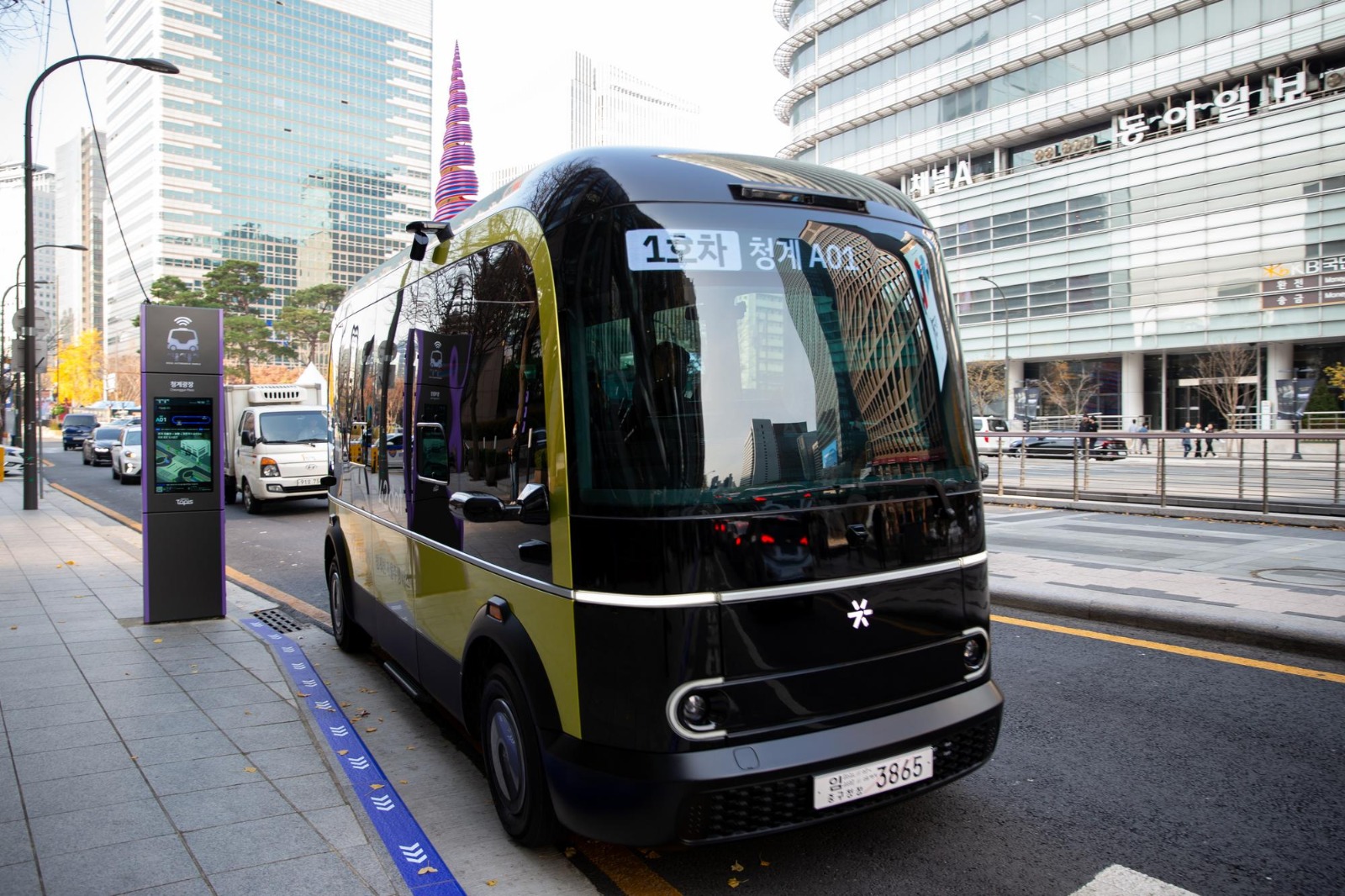
韩国首尔新增日间无人驾驶公交车线路
Xin Hua She· 2025-08-26 06:17
Core Viewpoint - Seoul is set to officially launch a daytime autonomous bus route later in September, marking a significant advancement in public transportation automation [1] Group 1: Autonomous Bus Details - The new bus line will operate on a circular route approximately 4.8 kilometers long, connecting Cheonggyecheon Plaza and Gwangjang Market in downtown Seoul [1] - The service will run on weekdays from 10 AM to 5 PM, with no operations on weekends and public holidays [1] - Two autonomous buses will be deployed, each equipped with 11 seats, a display screen, and facilities for wheelchair access [1] Group 2: Safety and Management - Although there is no driver's seat or steering wheel, a safety manager will accompany the bus to ensure passenger safety [1] - The trial operation began on September 22, focusing on a series of safety tests before the official launch later in the month [1] Group 3: Future Plans and Context - Initially, the bus service will be free, transitioning to a paid service once operations are stable [1] - Seoul has been actively exploring the application of autonomous technology in public transport, including the introduction of autonomous buses during early morning hours to address driver shortages [1]
兰剑智能(688557.SH):公司机器人运用了无人驾驶相关技术
Ge Long Hui· 2025-08-22 07:53
Core Viewpoint - Lanjian Intelligent (688557.SH) utilizes core technologies from autonomous driving in its robots, indicating a strong technological foundation and versatility in applications across various sectors [1] Group 1: Technology and Innovation - The underlying technology of the robots shows compatibility, leveraging autonomous driving technologies such as laser radar, visual recognition, multi-sensor fusion positioning, and path planning and decision control [1] - The robots possess advanced real-time dynamic switching positioning and navigation technology, enhancing operational efficiency [1] Group 2: Application and Market Potential - The robotic technology is applicable in a wide range of fields, including industrial and commercial sectors, suggesting significant market opportunities for the company [1]

中国共享电单车行业研究报告
艾瑞咨询· 2025-08-17 00:04
Core Insights - The shared electric bike industry is experiencing upward momentum driven by government support and market demand, with a focus on establishing a unified national market and breaking down local barriers [1][24][79] - Competition is intensifying, with national brands like Qingju, Meituan, and HelloBike emerging as leaders due to their scale and operational efficiency [2][81] - Young consumers, particularly those aged 16-34 in lower-tier cities, are becoming the backbone of the shared electric bike market, driven by the need for convenient commuting options [3][46] - The implementation of national standards is crucial for industry development, emphasizing product upgrades and technological innovation as key competitive factors [4][16] - Advancements in autonomous driving technology are expected to address operational challenges and reshape the industry landscape [5][88] Market Dynamics - The economic environment is stable, with a significant increase in consumer spending on transportation, indicating a robust growth trajectory for the shared electric bike sector [7][24] - Shared electric bikes are gaining popularity as a sustainable transportation option, contributing to the reduction of carbon emissions and enhancing urban mobility [10][13] Policy Environment - The government is adopting a supportive stance towards shared electric bikes, promoting their integration into urban transportation systems and encouraging the use of new technologies [21][79] - Recent policies aim to address the "last mile" issue in public transport, facilitating the development of green and efficient transportation networks [12][21] Industry Structure - The shared electric bike industry has evolved through various stages, with over 700 cities now participating and a total of approximately 7.13 million bikes deployed [27][30] - The industry value chain includes component manufacturers, assembly firms, and operational companies, with some leading brands establishing their own production capabilities [30] User Insights - The primary user demographic consists of young individuals, with a balanced gender ratio, predominantly located in warmer regions of China [46] - Users value convenience, affordability, and safety, with a significant portion of rides occurring during peak evening hours [49][53] Competitive Landscape - National brands are focusing on operational efficiency and product innovation to enhance user experience and maintain market share [81][84] - The competitive focus is shifting from quantity to quality, with an emphasis on improving hardware and service delivery [82][86] Technological Advancements - The integration of cutting-edge technologies, such as AI and autonomous systems, is expected to enhance operational efficiency and user satisfaction [5][88] - The new national standards for electric bikes will facilitate the adoption of smart technologies, improving safety and user experience [16][17]

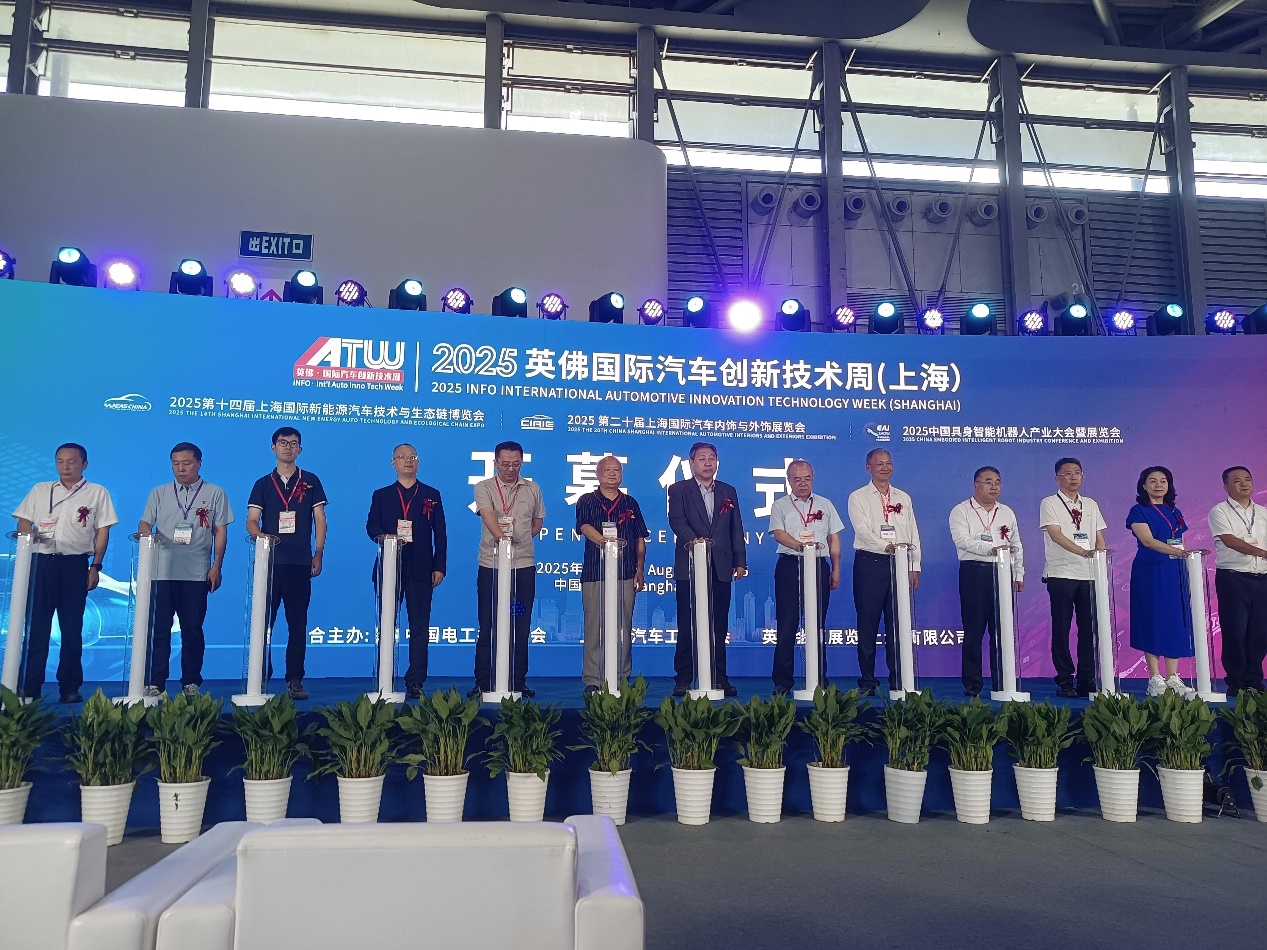
2025 英佛国际汽车创新技术周(上海)在沪开幕
Zhong Guo Qi Che Bao Wang· 2025-08-14 07:02
Core Insights - The IATW 2025 and CIAIE 2025 events in Shanghai attracted over 33,000 attendees, including more than 5,826 international visitors, marking record highs for participation [1] - The Chinese automotive market has shown significant improvement in domestic demand since 2025, with vehicle production and sales reaching 18.24 million and 18.27 million units respectively from January to July, reflecting year-on-year growth of 12.7% and 12% [3] - The market for new energy vehicles (NEVs) is expanding rapidly, with production and sales of 8.23 million and 8.22 million units respectively during the same period, representing year-on-year growth of 39.2% and 38.5% [3] Industry Performance - The automotive industry is facing challenges with profitability despite increased sales, influenced by factors such as trade tensions, safety risks in smart driving technology, and new policies [5] - The Chinese automotive market is expected to continue its stable growth, with predictions of production and sales exceeding 30 million units in 2025, potentially reaching a historical high of 33 million units [5] - The exhibition covered over 70,000 square meters and featured more than 1,200 exhibitors showcasing innovations in key technologies and components for NEVs, as well as advancements in various automotive systems [7] Technological Innovations - Proton Motors unveiled its new concept heavy-duty truck "Yao Ling II," designed for future freight transport with features that maximize the advantages of autonomous driving technology [11] - Proton Motors also shared insights on transitioning from manual dispatch to a platform-based, data-driven approach in fleet management, addressing traditional challenges such as information asymmetry and high communication costs [13] Industry Trends and Networking - The CIAIE 2025 hosted multiple professional forums where global experts discussed industry trends and technological innovations, providing comprehensive insights into the automotive sector [15] - The event introduced a supply chain matching initiative aimed at facilitating collaboration between domestic and international automotive resources, attracting numerous buyers and suppliers from various countries [15][17] - The exhibition successfully drew international interest, with attendees from countries including the USA, UK, Germany, and Brazil, highlighting the global appeal of the showcased products and technologies [17]
陕西造无人货运重卡在上海首发
Shan Xi Ri Bao· 2025-08-13 22:22
Core Viewpoint - Proton Auto Technology Co., Ltd., a subsidiary of Shaanxi Automobile Holding Group, launched its unmanned freight heavy truck "Yaoling II" in Shanghai, emphasizing the advantages of autonomous driving technology in efficiency, cost, and space [1] Group 1: Product Launch and Features - The "Yaoling II" is designed with a forward-looking approach, showcasing the benefits of unmanned driving technology [1] - The truck supports multiple flexible scheduling modes for logistics, allowing for intelligent dispatch based on cargo distribution, road conditions, and task priorities [1] - The vehicle can significantly reduce waiting times for cargo, transforming three empty return trips into one loaded trip with two additional vehicles as "cargo" [1] Group 2: Technological Advancements - Proton Auto has focused on core technology research and development, securing over 260 authorized patents [1] - The company offers more than 200 models of new energy vehicles covering major mainstream scenarios [1] - Proton Auto maintains international leadership in fields such as solid-state chassis, magnesium alloy lightweight trailers, and metamaterials [1]