
穿透式监管

Search documents
曲峰等:期货与风险管理子公司合规要点与实务建议解析
Sou Hu Cai Jing· 2025-12-07 12:46
Core Insights - The article emphasizes the importance of compliance in the operations of futures and risk management companies, highlighting the need for a dynamic compliance mechanism to navigate hidden compliance traps in business processes [3][5]. Compliance Key Points and Practical Recommendations 1. Key Compliance Nodes in Business Processes - Business entry must prevent internal cross-risk, ensuring risk isolation between futures companies and risk management companies as mandated by regulations [4]. - Recent cases reveal significant compliance failures, such as a brokerage firm failing to isolate customer information, leading to regulatory penalties [4][5]. 2. Contract Design: Substance Over Form in Rigid Payment Clauses - The Asset Management New Regulations prohibit any form of rigid payment clauses, with strict penalties for violations [6]. - Institutions must avoid ambiguous terms that imply guaranteed returns, as these may be deemed invalid in disputes [6]. 3. Margin Management: Building a Comprehensive Risk Control Loop - Margin management is critical for risk control, with recommendations for ensuring margin collection meets exchange standards and maintaining thorough records [7][8]. - Institutions should establish robust credit management systems and ensure that margin amounts are reasonable and aligned with contract risks [8][9]. 4. Investor Suitability Management Requirements - A dynamic customer assessment mechanism is essential, requiring ongoing evaluations of investors' risk tolerance [10][11]. - Strict product risk matching is necessary, prohibiting the sale of high-risk products to low-risk tolerance investors [12]. 5. Comprehensive and Intelligent Risk Control System - Institutions should develop a unified compliance data platform to standardize regulatory data collection and enhance real-time monitoring [15]. - Automated monitoring of key parameters and the implementation of algorithmic trading monitoring modules are recommended to improve compliance efficiency [16][17]. 6. Strengthening Data Security and Personal Information Protection - Institutions must classify and manage data according to its sensitivity, ensuring compliance with data protection laws [19][20]. - Long-term retention of business logs is necessary for regulatory audits and compliance verification [21]. 7. Cross-Border Business and Geopolitical Risk Prevention - The article discusses the increasing facilitation of foreign investor participation in China's futures market, while also highlighting the need for geopolitical risk management in cross-border contracts [25][26]. - Institutions are advised to include renegotiation mechanisms in contracts to address unforeseen geopolitical events [26]. Conclusion - The futures market is expected to develop with a focus on both compliance and innovation, necessitating futures companies to strengthen their compliance frameworks while seizing business opportunities [29].


张雪峰复播后依然污言秽语 郭美美二次出狱后仍炒作炫富拜金 “阑夕”发布宣介境外色情影片内容等 被通报!细节披露
Mei Ri Jing Ji Xin Wen· 2025-12-06 15:12
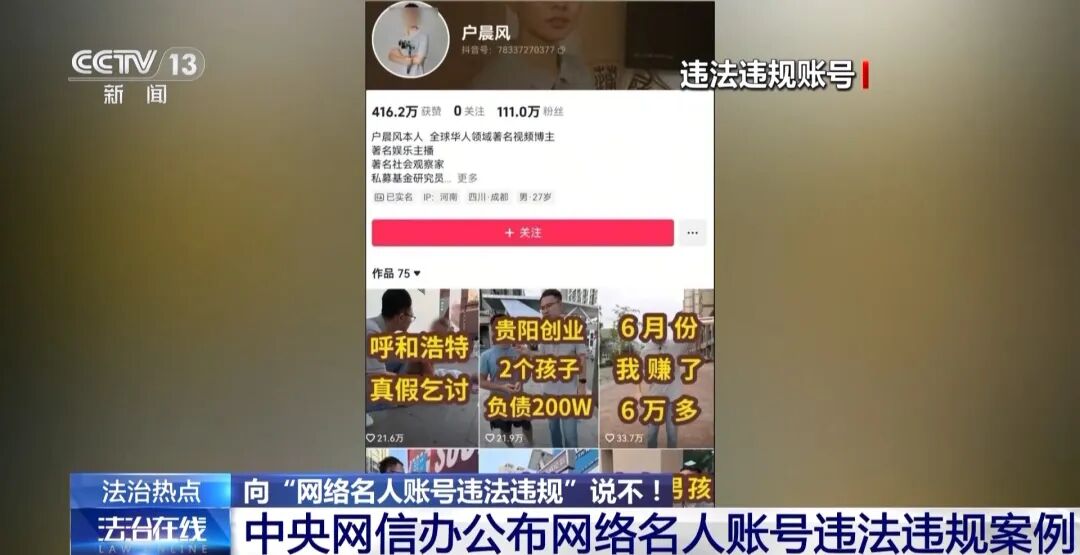
Group 1 - The central theme of the article highlights the crackdown on various internet celebrities and accounts that have engaged in illegal and unethical behaviors, including inciting social division and promoting distorted values [1][12][27] - The account "Huchengfeng" has been identified for creating divisive labels such as "Android people" and "Apple people," which exacerbate social tensions and have led to the closure of related accounts across multiple platforms [4][5][6] - Other accounts, including "Guo Meimei," have been penalized for promoting materialistic and unhealthy values, showcasing luxury items to gain attention and monetize their influence [14][16] Group 2 - The article discusses the broader issue of "polluting the online environment," with specific examples of accounts that have disseminated inappropriate content, including promoting pornography and using vulgar language [19][21] - The regulatory response includes a series of actions aimed at addressing these online issues, with a focus on enhancing the responsibilities of platforms to manage content effectively [31][35] - The new cybersecurity law, set to take effect in January 2026, aims to strengthen oversight and accountability for online platforms, ensuring they take proactive measures against harmful content [32][33]
张雪峰复播后依然污言秽语,郭美美二次出狱后仍炒作炫富拜金,“阑夕”发布宣介境外色情影片内容等,被通报!细节披露
Mei Ri Jing Ji Xin Wen· 2025-12-06 13:04
Core Viewpoint - The central government has taken action against several online influencers for spreading harmful content and creating social divisions, highlighting the need for stricter regulation in the digital space [1][30]. Group 1: Online Influencers and Their Actions - The account "户晨风" has been reported for inciting division between groups labeled as "Android people" and "Apple people," leading to the closure of related accounts across multiple platforms [4][8]. - "户晨风" has constructed an extreme narrative around the use of Apple and Android products, portraying "Apple people" as elites and "Android people" as lower-class individuals, which has been deemed a disruption to the online information ecosystem [10][12]. - Other accounts, including "郭美May努力努力," have been penalized for promoting ostentatious wealth and negative values, with the account holder previously imprisoned for serious crimes [18][22]. Group 2: Regulatory Actions and Responses - The Central Cyberspace Administration of China has initiated a series of "清朗" (Clear) campaigns to address various online issues, including malicious marketing and the spread of harmful information [30][34]. - New regulations, including a revised cybersecurity law set to take effect in January 2026, will enhance the accountability of platforms and strengthen penalties for non-compliance [35][37]. - The shift towards "penetrative regulation" indicates a move from reactive to proactive measures in managing online content, aiming to prevent the spread of harmful information before it proliferates [34][37].

张雪峰复播后依然污言秽语,详情公布
21世纪经济报道· 2025-12-05 14:26
Core Viewpoint - The article highlights the recent crackdown by the Central Cyberspace Administration of China on various online influencers who have engaged in illegal activities, including inciting social division, promoting distorted values, and polluting the online environment. This action has drawn significant attention due to the involvement of several prominent internet personalities [1]. Group 1: Inciting Social Division - The account "Hu Chenfeng" has been reported for creating divisive narratives, labeling groups as "Android people" and "Apple people," which has led to heightened social tensions. This account has been banned across multiple platforms for violating regulations [2][4][7]. - Hu Chenfeng's rhetoric categorizes "Apple people" as the elite, characterized by owning iPhones and Teslas, while "Android people" are depicted as the lower class, using Android devices and shopping at local markets. This binary classification is seen as a deliberate attempt to provoke conflict between these groups [9][11]. Group 2: Promoting Distorted Values - Several accounts, including "Guo Mei May" and "Yi Yan LuLu," have been penalized for continuously promoting materialistic and hedonistic values. These accounts have been closed or suspended for their harmful content [16][18]. - Guo Mei May, after being released from prison, has attempted to regain attention by flaunting luxury items and promoting a lavish lifestyle, which has been deemed detrimental to societal values [20]. Group 3: Polluting the Online Environment - Accounts like "Lanxi" and "Zhang Xuefeng" have been penalized for disseminating inappropriate content, including promoting foreign pornographic films and using vulgar language during live streams. These accounts have faced bans and restrictions [22]. - Experts emphasize that online influencers bear a greater responsibility due to their significant reach and should adhere to societal norms and standards in their content [22]. Group 4: Issues of Account Rebirth - The article discusses the issue of problematic accounts attempting to "rebrand" themselves after being banned. For instance, accounts associated with tax evasion and promoting materialism have been found to re-register on platforms [24][26]. - Regulatory bodies are urging platforms to implement stricter checks to prevent the resurgence of such accounts, indicating a need for improved governance mechanisms [26][28]. Group 5: Ongoing Regulatory Actions - The Central Cyberspace Administration has been actively conducting the "Qinglang" series of operations to address various online misconducts, including malicious marketing and the spread of false information [30][32]. - The governance model is shifting towards a more comprehensive regulatory approach, emphasizing proactive measures and accountability for platforms in managing content [34][39].

金美信消金年内再领120万罚单
Bei Jing Shang Bao· 2025-12-02 16:00
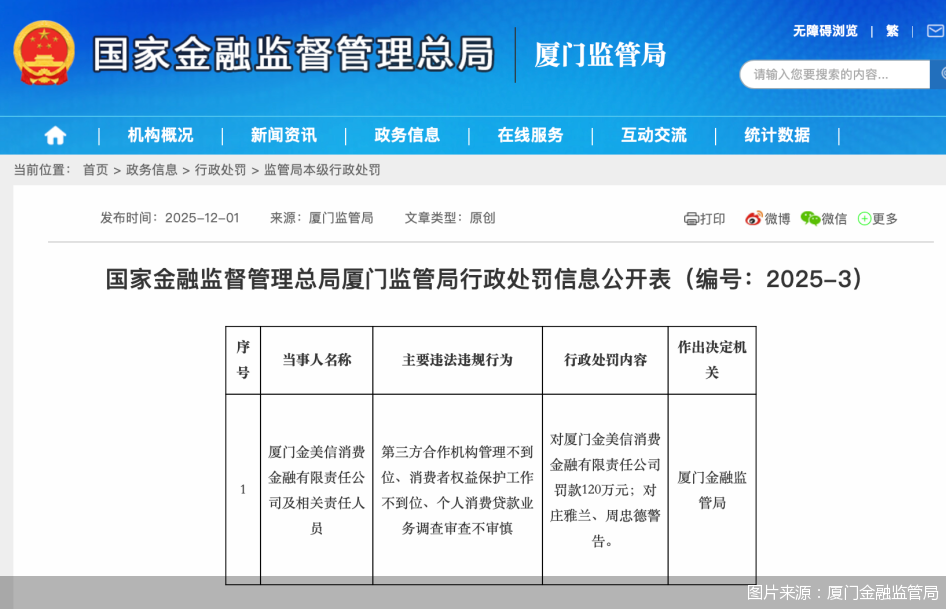
Core Viewpoint - Xiamen Jinmeixin Consumer Finance Co., Ltd. has received a fine of 1.2 million yuan due to inadequate management of third-party partners, insufficient consumer rights protection, and lack of due diligence in personal consumer loan business [1] Group 1: Regulatory Actions - Jinmeixin Consumer Finance has been fined twice in 2023, with the first fine of 820,000 yuan in June for violations related to credit information management [1] - The increase in frequency and amount of penalties indicates a shift towards more stringent regulatory oversight in the consumer finance industry, emphasizing the need for comprehensive management of partnerships and consumer rights protection [1] Group 2: New Regulations - The new lending regulations implemented in October require consumer finance companies to manage partner institutions through a publicized list and disclose all fees and costs to borrowers, with a cap on total financing costs at 24% [2] - Jinmeixin has updated its list of third-party partners, which includes 32 lead generation institutions, 13 guarantee institutions, and 5 outsourced collection agencies [2] Group 3: Internal Control and Compliance - The internal control system of Jinmeixin has been criticized for not effectively integrating risk management throughout its business processes, particularly in partner selection and monitoring [3] - The company needs to establish a dynamic evaluation and exit mechanism for partner institutions and enhance its technology investments to improve customer acquisition and independent risk management [3] Group 4: Corporate Governance - Jinmeixin is one of the few consumer finance companies that do not meet the capital requirement of 1 billion yuan, with a current registered capital of only 500 million yuan [4] - The company has not provided responses regarding its compliance measures and capital increase plans following the penalties [4]
年内两次被罚!金美信消金的合规路怎么走
Bei Jing Shang Bao· 2025-12-02 11:18
Core Viewpoint - Xiamen Jinmeixin Consumer Finance Co., Ltd. has been fined 1.2 million yuan due to inadequate management of third-party partners, insufficient consumer rights protection, and lack of due diligence in personal consumer loan business [1][2] Group 1: Regulatory Actions - This is the second fine for Jinmeixin Consumer Finance in less than six months; the first fine of 820,000 yuan was imposed in June for violations related to credit information management [2][3] - The regulatory environment is tightening, with an increase in the frequency and amount of penalties for consumer finance companies, indicating a shift towards more stringent oversight [3] Group 2: Industry Trends - The issues faced by Jinmeixin are common among consumer finance companies, particularly regarding third-party management, consumer rights protection, and risk control [3] - New regulations effective from October require consumer finance companies to manage third-party platforms and guarantee service providers through a dynamic public list, with a cap on total loan costs not exceeding 24% [3] Group 3: Company Operations - Jinmeixin has updated its list of third-party partners, which includes 32 lead generation firms, 13 guarantee companies, and 5 outsourced collection agencies [4] - The company's app offers loans with a maximum limit of 200,000 yuan and an annual interest rate ranging from 4.88% to 24%, with clear disclosures on application conditions and risks [4] Group 4: Internal Control and Governance - The internal control system of Jinmeixin has significant gaps, particularly in the areas of partner approval, ongoing monitoring, and risk isolation [5] - Jinmeixin's registered capital is currently 500 million yuan, which is below the required 1 billion yuan, making it one of the few non-compliant institutions in the industry [5]
直播电商监管新规出台在即 市场监管总局构建行业全方位制度体系
Chang Jiang Shang Bao· 2025-12-01 00:45
Core Viewpoint - The rapid development of the digital economy has made live e-commerce a significant driver of consumption and economic growth, but it also faces issues such as false advertising, after-sales difficulties, and data fraud. The new regulatory framework aims to establish a comprehensive system for managing responsibilities among all parties involved in live e-commerce [1][2]. Group 1: Regulatory Framework - The State Administration for Market Regulation (SAMR) and the National Internet Information Office have developed the "Live E-commerce Supervision Management Measures," which will soon be officially released [1]. - The new regulations aim to define the responsibilities of all parties involved in live e-commerce, moving the industry towards a more standardized and legally compliant phase of "high-quality development" [1][2]. Group 2: Industry Characteristics and Challenges - Live e-commerce features a distinct separation of "people, goods, and scenes," complicating the resolution of disputes as consumers often struggle to identify responsible parties [2]. - The SAMR plans to enhance the regulatory framework by establishing an integrated supervision mechanism that includes both online detection and offline investigation [2][3]. Group 3: Regulatory Innovations - The SAMR will implement a "layered and graded supervision" approach and a "penetrating supervision" system to improve governance capabilities in the live e-commerce sector [3]. - The focus of competition in live e-commerce is expected to shift from mere traffic and lowest prices to supply chain capabilities, service quality, and brand reputation as the regulatory framework matures [3].
如何创新直播电商领域监管机制?市场监管总局:系统化、跨区域、穿透式
Sou Hu Cai Jing· 2025-11-29 01:46
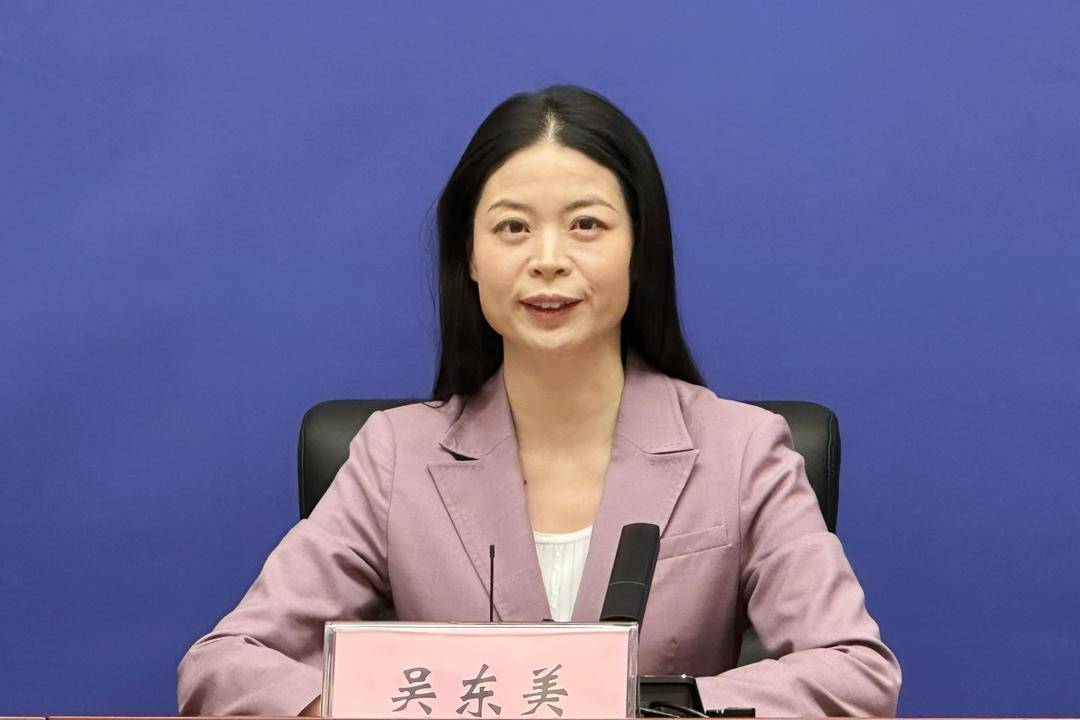
市场监管总局网监司副司长吴东美。封面新闻记者 戴云 摄 一是强化分层分级层级对应监管。针对电商平台跨域跨界经营的特点,市场监管部门将进一步合理划分平台监管职责,统筹运用提级管辖、指定管辖等机 制,进一步加大监管执法力度。总局将坚决依法查处具有全国影响的直播电商重大案件,支持省级市场监管部门特别是直播电商主体较为集中地区监管部 门积极主动作为,形成治理合力,确保直播电商行业整治取得可感可及的标志性成果。 二是强化跨区域指挥调度。针对直播电商行业人、货、场分离的特点,总局将继续加强对跨区域重大案件的指挥调度,强化信息共享和协同配合,建立健 全"线上发现、线下追查,线下发现、线上管控"的直播电商一体化监管机制,推动全链条打击,实现源头治理。 封面新闻记者 戴云 11月28日,市场监管总局召开直播电商监管专题新闻发布会,网监司副司长吴东美在会上表示,直播电商监管涉及直播电商平台、直播间运营者、直播营 销人员及其服务机构等多方主体,人、货、场分离,交易链条长,涉及区域广,参与主体的法律关系复杂,给监管工作带来重大挑战。市场监管部门将进 一步加强系统化监管、跨区域监管、穿透式监管,着力提升直播电商行业治理能力和水平。 三 ...
直播电商监管升级,市场监管总局将强化跨区域、穿透式监管
Xin Jing Bao· 2025-11-28 09:03
Core Viewpoint - The Market Supervision Administration is developing a new regulatory model to address the challenges posed by live-streaming e-commerce, focusing on enhancing governance capabilities through three main measures [1][2]. Group 1: Regulatory Measures - Strengthening tiered and graded regulatory enforcement to address the cross-regional nature of e-commerce platforms, with a focus on delineating regulatory responsibilities and enhancing law enforcement efforts [2]. - Enhancing cross-regional command and coordination to achieve comprehensive chain-wide enforcement, establishing an integrated regulatory mechanism that combines online detection with offline investigation [2]. - Exploring penetrating regulation to innovate regulatory models, conducting pilot programs in active platform economies to analyze complex legal relationships and manage associated risks effectively [2].
【新华解读】银行间经纪业务新规落地 市场监管将迎里程碑式变革
Xin Hua Cai Jing· 2025-11-14 14:28
Core Viewpoint - The People's Bank of China has officially released the "Management Measures for Interbank Market Brokerage Business," which will take effect on January 1, 2026, reflecting a mature and forward-looking approach to financial regulation that balances risk prevention and development [1][4]. Summary by Sections Regulatory Framework - The final version of the "Measures" consists of six chapters and 25 articles, refining the structure from the previous draft of 26 articles, indicating a more precise and streamlined regulatory framework for interbank brokerage business [2][4]. Business Scope - The "Measures" specify that brokerage institutions can provide services in the money market, bill market, gold market, interbank bond market, and related derivatives markets, but are prohibited from providing brokerage services for financial institutions participating in bond issuance [2][3]. Internal Control and Management - Enhanced internal control and process management requirements are outlined, emphasizing the management of communication tools, mandating that mobile phones and other devices used during trading hours be centrally managed [2][3]. Personnel Qualifications - The "Measures" stipulate that heads of brokerage departments must have at least five years of experience in financial markets, while brokerage personnel must have at least one year of experience, providing clear guidelines for personnel configuration [3][4]. Client Responsibilities - For the first time, the "Measures" systematically clarify the responsibilities of clients, requiring them to sign service agreements with brokerage institutions and cooperate in due diligence, thereby establishing a framework of mutual accountability [3][4]. Prohibited Behaviors - The final version of the "Measures" lists thirteen prohibited behaviors, including new additions related to false documentation and improper communication tool usage, reflecting a deeper insight into potential regulatory evasion practices [3][4]. Market Impact - The introduction of the "Measures" is part of a broader trend in financial regulation aimed at enhancing market efficiency and establishing a regulatory environment that discourages violations, marking a significant step towards the standardization of interbank brokerage business [4][5]. Industry Evolution - The "Measures" are expected to shift the industry focus from "scale competition" to "quality competition," with smaller institutions facing transformation pressures while leading firms may strengthen their market positions through compliance and system capabilities [5][6]. Future Outlook - The regulatory framework allows for future innovation, particularly in derivatives and cross-border brokerage, indicating a willingness to adapt and evolve alongside market developments [5][6].