算电协同

Search documents
行业专家探讨新疆算电协同创新发展
Zhong Guo Xin Wen Wang· 2025-09-05 21:32
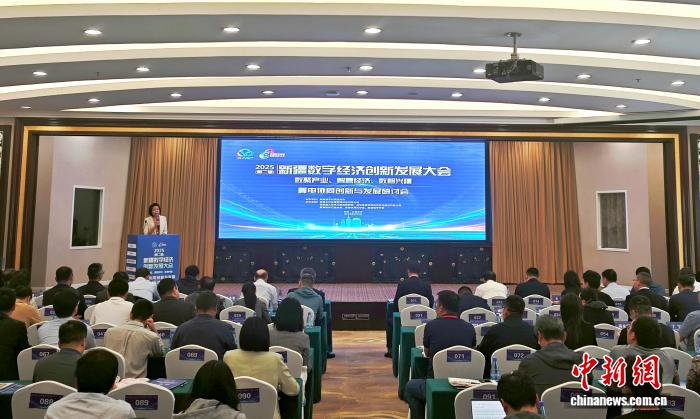
"新疆正积极布局人工智能科技产业,致力于打造辐射中国西北及中亚的人工智能高地。"新疆中科类脑 智算科技有限公司董事长刘海峰表示,该公司已在乌鲁木齐经济技术开发区(头屯河区)投运超1000P算 力,并建设算力调度运营中心、AI应用孵化中心及科研平台,推动AI在能源、电力、政务等领域的深 度融合。 刘海峰还表示,未来该公司将加强本地人才体系建设,推动更多应用场景落地,以促进人工智能技术规 模化应用和产业创新发展。 中新网乌鲁木齐9月5日电(苟继鹏)"新疆依托其独特的绿色能源、气候适宜、近邻中亚等有利于算力集 聚发展的优势,正在逐步激活算电协同发展的商业模式和增长空间。"粤港澳大湾区大数据研究院名誉 理事长杜平5日说。 当日,2025(第二届)新疆数字经济创新发展大会算电协同创新与发展研讨会在乌鲁木齐举行,来自政产 学研各界的嘉宾相聚于此,围绕算电协同创新与发展展开深入研讨。 杜平指出,近些年来,中国陆续规划实施"东数西算"工程和三级算力网体系,是缓解全国算力供需在空 间上不平衡、优化区域布局的重大战略性举措。新疆应充分发挥资源禀赋,建设数据中心,积极参 与"东数西算"工程建设、融入国家算力网络体系。 (文章来源: ...

同力日升20250829
2025-08-31 16:21
Summary of Key Points from Conference Call Company and Industry Overview - The conference call primarily discusses **Tianqi Hongyuan** and its performance in the **renewable energy sector**, particularly focusing on wind and energy storage projects [2][3]. Core Insights and Arguments 1. **Financial Performance**: - Tianqi Hongyuan reported a **net profit of 164 million yuan**, a **42% increase year-on-year** in the first half of 2025 [2][3]. - The company is actively expanding its energy storage business, with projects like the **600 MW independent energy storage project in Zhaoqing** and the **2 GWh energy storage system integration project** [2][6]. 2. **Project Progress**: - The **Tianjin Jinghai 100 MW wind power project** and the **Chengde Aerospace Hongyuan 300 MW wind farm** are expected to complete grid connection and revenue confirmation by the end of the year [2][4]. - The **920 MW shared energy storage project** in Chengde is nearing completion, with rental agreements signed with 12 manufacturers [2][4][5]. 3. **Strategic Collaborations**: - The company has formed strategic partnerships with various entities, including **Gansu Mobile** and **Shell China**, to promote collaborative energy projects [2][7][9]. 4. **Revenue and Profitability**: - New wind power plants have significantly improved overall gross margins, with electricity prices rising to **0.41-0.42 yuan per kWh** due to guaranteed grid access and spot trading [2][10][13]. - The company expects gross profit margins to remain strong, with projections of **5.5 billion to 7.5 billion yuan** in gross profit for 2026 [4][29]. 5. **Market Dynamics**: - The company is adapting to market conditions, including fluctuations in lithium battery prices, by managing inventory and negotiating with customers [4][15]. - The **green electricity direct connection project** in Qingyang aims to reduce electricity costs for China Mobile to approximately **0.10 yuan per kWh** [8][9]. Additional Important Content 1. **Future Outlook**: - The company anticipates a positive performance in 2026, driven by the full confirmation of projects in Tianjin and Chengde, alongside new projects in Suizhou and Huaiqi [21][29]. - The **capacity rental income** from large storage projects is expected to generate around **130 million yuan annually** [29]. 2. **Regulatory Environment**: - The company is navigating regulatory changes, including the impact of anti-money laundering policies on the renewable energy sector, which may influence pricing and market dynamics [27]. 3. **Cash Flow Improvement**: - The improvement in operating cash flow is attributed to the progress of several power station projects and prepayments from contractors, indicating a sustainable trend [28]. 4. **International Expansion**: - The company is exploring opportunities in **Ethiopia** and **Australia**, focusing on microgrid systems and adapting to local climate conditions [22][28]. 5. **Technological Innovations**: - The **920 MW shared energy storage project** utilizes an **immersive liquid cooling system**, enhancing performance and safety [16][18]. This summary encapsulates the key points discussed in the conference call, highlighting the company's performance, project developments, strategic partnerships, and future outlook in the renewable energy sector.

持续发力新能源业务 同力日升上半年实现营收11.22亿元
Zheng Quan Ri Bao Wang· 2025-08-27 13:44
Group 1 - The company achieved operating revenue of 1.122 billion and net profit attributable to shareholders of 116 million during the first half of 2025 [1] - The company has a strong competitive advantage in the elevator accessory industry, supported by comprehensive capabilities, R&D strength, quality customer resources, integrated business model, and nationwide service network [1] - The company actively adjusted production and inventory strategies, optimized product structure, and expanded escalator component customers to mitigate the impact of declining sales in the elevator market due to the real estate downturn [1] Group 2 - The company entered the renewable energy sector through its controlling stake in Beijing Tianqi Hongyuan New Energy Technology Co., Ltd., forming a dual-driven model of "elevator + renewable energy" [2] - Tianqi Hongyuan reported a net profit of 164 million in the first half of 2025, representing a year-on-year growth of 42.36% [2] - The company successfully advanced several projects, including the commissioning of a 100MW wind power project and the operation of a 920MWh shared energy storage station [2] Group 3 - Tianqi Hongyuan is focusing on the "computing power collaboration" industry trend and is actively participating in the construction of national computing power center cities [3] - The company signed a strategic cooperation agreement with the government of Qingyang City to establish a 2GWh energy storage equipment production line and a 1GWh lithium iron phosphate energy storage station [3] - A strategic cooperation agreement was also signed with China Mobile Gansu Co., Ltd. to innovate cooperation models and develop "new energy for communication infrastructure" projects [3]
卡位算电协同机遇 同力日升子公司天启鸿源上半年净利润同比增长42.36%
Zheng Quan Shi Bao Wang· 2025-08-27 12:58
Group 1 - The company reported a revenue of 1.122 billion yuan and a net profit of 116 million yuan for the first half of 2025, with a significant increase in cash flow from operating activities by 169.16% to 198 million yuan [1] - The company is a key player in the elevator components industry, supplying products to well-known elevator manufacturers and has a strong competitive advantage in integrated operations, technical research, and customer resources [1] - The company has actively responded to the downturn in the real estate market by adjusting inventory levels, optimizing product structure, and expanding its customer base in escalator components to mitigate the impact of declining sales in the elevator sector [1] Group 2 - The subsidiary Tianqi Hongyuan achieved a revenue of 342 million yuan in the first half of the year, with several renewable energy projects successfully progressing, including a 100MW wind power project and a 600MWh independent energy storage project [2] - The company is involved in the national "artificial intelligence +" initiative, focusing on optimizing the layout of national computing resources and enhancing the synergy of data, computing, electricity, and networks [2] - Tianqi Hongyuan is actively participating in the construction of national computing power centers and has signed strategic agreements to develop energy storage and renewable energy projects in collaboration with local governments and companies [3] Group 3 - The company has strengthened its storage technology advantages by collaborating with Shell China to promote immersion liquid cooling storage technology, aiming for commercialization and global expansion [3] - The company is exploring intelligent scheduling models for energy storage and has signed agreements to innovate in the "new energy communication infrastructure" sector [3] - The company is gradually evolving into a platform-type enterprise, focusing on high safety and high-density immersion liquid cooling technology [3]
AI定义算力新范式,山高控股(00412.HK)“电算一体”构建数字经济生态圈
Xin Lang Cai Jing· 2025-08-27 09:40
Core Insights - The 2025 China Computing Power Conference highlighted "green low-carbon" and "intelligent agility" as key themes, emphasizing the rapid development of artificial intelligence (AI) reshaping computing infrastructure, which in turn drives AI advancements [1][2] - The conference revealed that China's computing power industry is transitioning from scale competition to a focus on comprehensive strength, with an emphasis on providing high-quality and green computing power [2][9] Industry Developments - The average Power Usage Effectiveness (PUE) of Chinese computing centers has decreased to 1.42, with 246 national green data centers established, contributing positively to industrial upgrades and the "dual carbon" goals [2][3] - The Ministry of Industry and Information Technology stressed the need for diverse, intelligent, secure, and green computing infrastructure to enhance resource efficiency and promote high-quality development [2] Company Strategy - Shandong High Control (山高控股) has strategically positioned itself as a "green computing power infrastructure builder," transitioning from an industry investor to a provider of stable and efficient green computing power [1][3] - The company has made significant investments in renewable energy, controlling over 3.7 GW of wind and solar capacity, and has partnered with Century Internet to secure a foothold in digital infrastructure [3][6] Project Initiatives - The collaboration between Shandong High Control, the Ulanqab Municipal Government, and Century Internet aims to implement an integrated "source-network-load-storage" project, enhancing AI computing demand with stable and low-cost energy [3][4] - The Ulanqab data center is projected to achieve a PUE of 1.15, optimizing 23% compared to the industry average, with an estimated annual economic benefit of 1.3 billion yuan [3][4] Regulatory Compliance - The Ulanqab project has been recognized as a model case in the "Computing Power and Electricity Coordination" by the China Academy of Information and Communications Technology, providing a replicable solution for the industry [4] Financial Innovations - Shandong High Control has successfully issued a $40 million tokenized corporate note in Hong Kong, marking a significant step in integrating financial innovation with its computing power strategy [8][9] - The company launched China's first data center Pre-REITs fund, facilitating low-cost financing and connecting financial capabilities with operational needs [8][9] Future Outlook - The company is positioned as a leader in the computing power industry, leveraging its dual focus on industrial and financial sectors to create a digital economy ecosystem that integrates AI computing, data assets, and application scenarios [9]
算电协同夯实数字经济底座
Jing Ji Ri Bao· 2025-08-23 22:16
Core Insights - The first integrated green electricity supply project for data centers in China has been launched, marking a significant breakthrough in Inner Mongolia's "East Data West Computing" initiative, showcasing the synergy between computing power and electricity in the digital economy era [1][2] Group 1: Project Overview - The Ulanqab Data Center Low-Carbon Computing Power Base integrates wind and solar power generation, smart transmission, grid connection, and energy storage to directly supply clean energy to data centers [1] - The project represents a shift from policy advocacy to industrial practice, highlighting the need for further integration of the value chains of computing power and electricity [1][3] Group 2: Policy and Development - Recent policies from the National Development and Reform Commission and other departments aim to enhance the integration of computing power and green electricity, improving energy efficiency and renewable energy utilization in data centers [2] - The green computing power scale in Qinghai Province has surged from 370P at the beginning of 2024 to 15,000P by June 2024, indicating a growth of approximately 40 times [3] Group 3: Challenges and Solutions - Infrastructure development remains a challenge, with long construction cycles for ultra-high voltage transmission lines and insufficient supporting computing power facilities in western regions [4] - Economic challenges arise from the volatility of renewable energy output conflicting with the stable demand of data centers, leading to increased operational costs due to the need for backup power sources [5] - The lack of adequate price signals and incentive mechanisms for green energy consumption hinders the market competitiveness of renewable energy [6] Group 4: Future Directions - A cross-regional green energy and computing power coordination system is needed, with suggestions to enhance the transmission capacity of green electricity and develop local renewable energy resources [7] - Implementing market-based pricing mechanisms and extending carbon market coverage to high-energy-consuming sectors like AI and data centers can stimulate green electricity consumption [7][8] - The integration of digitalization and green energy is essential, with recommendations for real-time matching of computing tasks and renewable energy supply to optimize energy management [8]
对话居静:算力行业卷「地产」?All in大同做全产业链玩家丨智算想象力十人谈
雷峰网· 2025-08-22 07:20
Core Viewpoint - The article discusses the challenges and opportunities in the computing power infrastructure industry, emphasizing the need for a vertical integration model that connects energy, equipment, data centers, and services to create sustainable competitive advantages [2][4][5]. Group 1: Industry Background - The computing power industry is currently characterized by a misalignment between supply and demand, primarily due to a lack of understanding of user needs [14]. - The industry has seen a proliferation of data centers that prioritize short-term gains over long-term infrastructure development, leading to a saturated and competitive market [13][15]. Group 2: Company Strategy - The company aims to establish a vertically integrated model that encompasses energy, data centers, equipment, and services, which is seen as essential for sustainable growth [5][18]. - The focus is on developing a comprehensive infrastructure that not only meets immediate business needs but also supports long-term sustainability and local community development [20][45]. Group 3: Market Dynamics - The computing power infrastructure market is described as "twisted," indicating confusion and misalignment in priorities among industry players [10]. - The article highlights the importance of understanding user demands, such as total cost of ownership (TCO), agile delivery, and long-term sustainability, which are often overlooked by current infrastructure developers [14][28]. Group 4: Local Development - The company has chosen Datong as its operational base due to its favorable conditions for energy resources, water management, and local support for infrastructure projects [40][42]. - The establishment of local data centers has significantly contributed to job creation and economic development in the region, with over 30,000 jobs created in the data industry [46]. Group 5: Future Outlook - The company is optimistic about the future of its vertical integration model, believing it will lead to lower costs for downstream customers and a more sustainable industry overall [28][49]. - The article concludes with a vision for transforming the computing power industry through long-term investments and community engagement, aiming for a successful integration of infrastructure and local development [45][51].
00后博士休学,首创“算力滴滴”
虎嗅APP· 2025-08-21 10:08
Core Viewpoint - The article discusses the emergence of a new business model in the AI industry, specifically focusing on the success of a startup, Gongji Technology, which has effectively commercialized the concept of shared computing power, addressing the growing demand for AI inference capabilities [4][6]. Group 1: Market Demand and Trends - The year 2025 is anticipated to be a pivotal year for AI Agents, leading to a significant increase in demand for AI inference computing power, with IDC predicting that the workload share of inference servers will rise from 51.5% in 2020 to 62.2% by 2026 [4]. - The demand for AI services has led to the emergence of various AI companies, including those focused on video generation and companion robots, which face challenges related to high long-term server rental costs from cloud providers [5][6]. Group 2: Business Model and Innovation - Gongji Technology offers a flexible computing power service that allows users to pay based on actual usage, addressing the need for stable and elastic computing resources [6][30]. - The company has developed a unique model that treats the city as a large distributed data center, where idle computing resources from individual users can be matched with AI companies needing processing power [7][30]. - The startup has achieved a stability rate of over 99.9% in its service, allowing for seamless transitions between idle computers for task execution [7][23]. Group 3: Company Background and Growth - Gongji Technology was founded by a team of young entrepreneurs, including a dropout from a PhD program, who identified a significant market need for shared computing resources after experiencing challenges in their own research [8][9]. - The company has successfully transitioned from a consumer-focused model to serving B2B clients, generating over 20 million yuan in revenue in the first half of 2023, primarily from business clients [8][70][71]. Group 4: Challenges and Solutions - The company faced skepticism from investors due to the historical challenges of monetizing shared computing power, which had not been successfully achieved in the past [16][18]. - Gongji Technology has navigated technical challenges by iterating its product over 80 times to ensure ease of use for individuals sharing their computing power [7][30]. Group 5: Future Outlook - The company is positioned to participate in national-level infrastructure projects, indicating a growing recognition of the importance of shared computing resources in the AI landscape [22][35]. - The founders believe that the future of computing power will increasingly rely on flexible, on-demand services rather than traditional long-term rentals, which are often inefficient for fluctuating AI workloads [29][30].
同力日升(605286):算电协同,乘势而升
Guotou Securities· 2025-08-13 15:37
Investment Rating - The report assigns a "Buy-A" investment rating with a target price of 45.45 CNY for the next six months [4][6]. Core Insights - The company has successfully transformed its business model, with significant growth in its new energy sector, which now serves as a key growth driver, surpassing traditional elevator business revenue [1][21]. - The implementation of the 136 document is expected to enhance the value of energy storage, with the introduction of a capacity price mechanism in Gansu province, which could be adopted nationwide, providing stable revenue for the energy storage industry [2][54]. - The company is strategically positioned to benefit from the green electricity revolution driven by the surge in AI computing power, with initiatives in data centers and green energy projects [3][55]. Summary by Sections 1. Dual Business Model Driving High-Quality Development - The company has diversified into the new energy sector through the acquisition of Beijing Tianqi Hongyuan, focusing on energy storage system integration and new energy power station development [15][16]. - In 2024, the new energy business revenue grew by 103.61% to 879 million CNY, accounting for 34.76% of total revenue, with a gross profit contribution of 64.75% [21][28]. - The company has successfully balanced the cyclical fluctuations of the elevator industry by expanding its new energy business [21][28]. 2. Policy-Driven Energy Storage Value Recovery - The cancellation of mandatory energy storage requirements is expected to shift the industry from price competition to product quality competition [40][51]. - Gansu province has introduced a capacity price mechanism for independent energy storage, which is anticipated to stabilize investment returns and promote sustainable development in the energy storage sector [54][55]. 3. Integrated Energy Supply Solutions - The increasing energy consumption of data centers, driven by AI, presents a significant opportunity for energy storage solutions [55][56]. - The integration of green electricity supply and independent energy storage is expected to create a synergistic revenue model, enhancing profitability for energy projects [63][64]. 4. Proprietary Technology and Product Barriers - The company has established a strong product barrier through self-developed technologies and a decade of industry experience, focusing on high reliability and energy efficiency in its energy storage products [66][68]. - The company holds 39 patents related to energy storage and has made significant investments in R&D, ensuring a competitive edge in the market [68].
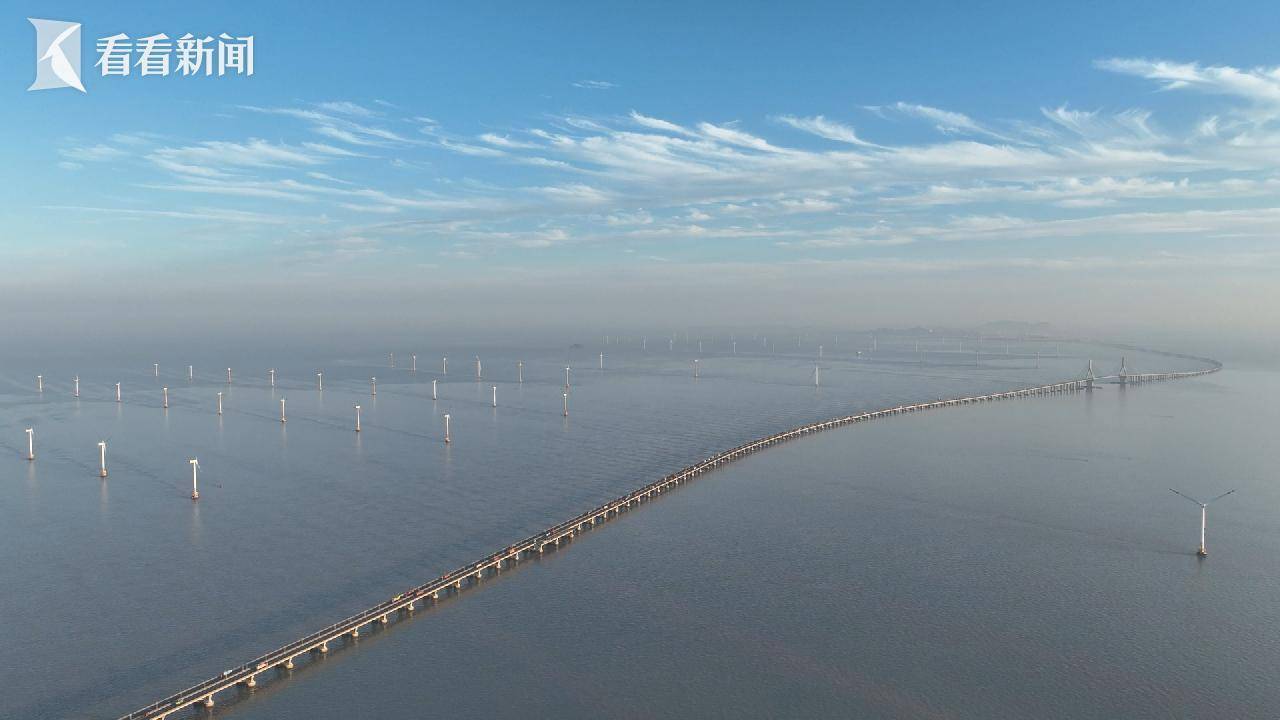
风电助力陆数海算 上海临港探索算电协同新范式
Sou Hu Cai Jing· 2025-08-12 13:47
Core Insights - The article discusses the increasing demand for computing power driven by the AI boom and the corresponding rise in electricity consumption, emphasizing the need for more green energy solutions to reduce costs and improve efficiency [1] Group 1: Project Overview - The world's first "land-sea computing + wind energy integration" project is being deployed at the Shanghai Lingang International Data Port, featuring a unique four-story underwater data center [1][3] - The project, undertaken by Hailan Cloud Technology Co., Ltd., has a total investment of 1.6 billion yuan and a total scale of 24 megawatts, with a green electricity supply rate exceeding 90% [5][6] Group 2: Technological Innovations - The underwater data center will house 192 cabinets, each with a capacity of 12 kilowatts, directly connected to offshore wind power [3] - The project aims to utilize seawater for natural cooling to reduce energy consumption, a technology previously tested only by Microsoft in 2015 [6] Group 3: Power Transfer and Efficiency - On July 8, China Telecom's Lingang computing center successfully transferred AI computing tasks over 1,000 kilometers to a data center in Hubei, demonstrating the feasibility of real-time "East Data West Computing" [7] - This transfer allows for quick switching of computing power to areas with lower electricity prices, maximizing resource efficiency [9] Group 4: Future Developments - The data center is designed to withstand extreme weather conditions, with plans to deploy offshore wind power further into the sea as costs for offshore wind energy have dropped below 0.3 yuan per kilowatt-hour [8] - The industry calls for the establishment of technical standards and a national-level "computing power exchange" to facilitate the development of a collaborative computing and electricity model [11]