经济增长放缓

Search documents
2024年第四季度第二产业拖累喀麦隆GDP增长
Shang Wu Bu Wang Zhan· 2025-07-12 01:53
Economic Growth Overview - Cameroon’s GDP growth for Q4 2024 is projected at 1.6%, a decrease of 0.6 percentage points from 2.2% in the same period of 2023 [1] - The slowdown in economic growth is primarily attributed to the decline in the secondary sector, which shrank from 1.1% to -0.7% during the same period [1] Sector Performance - The mining and extraction sector experienced a significant contraction of 19.2%, contributing to the overall decline in the secondary sector [1] - The extraction industry has been in recession since Q2 2023, facing challenges from aging oil fields and international price fluctuations [1] Revenue Adjustments - The government has revised its expected revenue for 2025 from an initial budget of 734.8 billion CFA francs (approximately $1.225 billion) down to 641.5 billion CFA francs (approximately $1.069 billion), reflecting a reduction of 93.3 billion CFA francs (12.7% decrease) [1] Resilience in Other Sectors - The tertiary sector showed strong performance with a growth rate of 4.4%, while the primary sector grew by 3% [2] - Growth in the tertiary sector is driven by robust development in financial and administrative services, while the primary sector benefits from strong outputs in food crops, export agricultural products, fisheries, and livestock [2] Structural Limitations - The weakness in the secondary sector highlights the structural limitations of Cameroon’s economy, which remains heavily reliant on the export of primary raw materials and lacks local deep processing capabilities [2]
IEA月报:将经济增长放缓与关税的负面影响联系起来可能为时过早。
news flash· 2025-07-11 08:09
Core Viewpoint - The IEA monthly report suggests that linking the slowdown in economic growth to the negative impacts of tariffs may be premature [1] Group 1 - The report indicates that while there are concerns about economic growth, attributing these concerns solely to tariffs may not be justified at this stage [1] - It emphasizes the need for a more comprehensive analysis of various factors affecting economic performance beyond just tariffs [1] - The IEA highlights that the global economic landscape is influenced by multiple variables, and a singular focus on tariffs could lead to misleading conclusions [1]
美联储会议纪要显示,多数与会者认为关税构成持续影响通胀的风险。多数人认为未来经济增长将放缓。
news flash· 2025-07-09 18:08
Group 1 - The Federal Reserve meeting minutes indicate that a majority of participants believe tariffs pose a persistent risk to inflation [1] - Most participants anticipate a slowdown in future economic growth [1]
由于经济增长放缓和其他风险,泰铢可能表现不佳
news flash· 2025-07-02 01:48
Core Viewpoint - The Thai Baht is expected to perform poorly due to potential economic slowdown and other risks [1] Economic Outlook - Thailand's economic growth may slow down, impacting the performance of the Thai Baht [1] - The Constitutional Court's suspension of the Prime Minister could delay the passage of the national budget, potentially leading to reduced fiscal support and further economic slowdown [1] Currency Forecast - Mitsubishi UFJ forecasts the USD/THB exchange rate to be 33.20 in Q3 and 33.50 in Q4 [1]
墨西哥央行连续第四次降息 至三年以来最低水平
Xin Hua Cai Jing· 2025-06-27 00:40
Core Viewpoint - The Bank of Mexico has decided to cut the benchmark interest rate by 50 basis points for the fourth consecutive time, lowering it from 8.5% to 8%, marking the lowest level since 2022. This decision reflects a shift in focus from inflation control to concerns about economic growth slowdown [1][2]. Group 1: Interest Rate Decision - The decision was made amidst internal disagreements within the board, with a 4-1 vote, where Vice Governor Jonathan Heath cast the only dissenting vote advocating for no change in rates [1]. - The current rate cut indicates a preference for a more accommodative policy to stimulate economic activity despite ongoing inflation pressures [1][2]. Group 2: Future Outlook - Unlike previous meetings, the latest statement did not explicitly indicate the possibility of further 50 basis point cuts, suggesting a potential slowdown in future easing measures [1]. - Analysts predict that if inflation continues to decline and economic data remains weak, the benchmark rate could drop to 7.5% or lower by the end of the year, although any rebound in inflation or adverse external conditions could limit further easing [2].
DLSM外汇:通胀升温 增长放缓 美联储会坐视经济走入滞胀局面吗?
Sou Hu Cai Jing· 2025-06-25 09:59
美联储纽约联储主席威廉姆斯近日的讲话,揭示了美国经济当前所面临的微妙转向:一方面是持续的价格压力,另一方面却是增长动能 的显著削弱。在他看来,贸易政策所引发的结构性冲击已开始对经济形成双重压制——既推高了成本,也削弱了劳动力供给和消费支 出。尤其是在特朗普政府维持高关税政策背景下,市场对"滞胀"风险的担忧已不再只是学术层面的猜测。 威廉姆斯预测,今年美国GDP增长将放缓至1%左右,失业率也将从当前的4.2%上升至4.5%。这对一个刚从疫情冲击中走出的经济体而言 无疑是一种警告信号。过去两年,美国经济的复苏更多得益于消费支出的强劲反弹和就业市场的快速修复,而如今这些支撑正在逐步减 弱。他特别提到关税政策对企业成本结构的改变、对移民供给的抑制以及对投资前景不确定性的增加,这些因素都在综合作用于当前的 增长路径。 由于关税带来的成本推动效应,威廉姆斯预计通胀率将在今年上升至3%,远高于美联储2%的政策目标。尽管他表示通胀将在未来两年逐 步回落,但这一判断本身也建立在诸多前提假设之上,例如能源价格稳定、全球供应链修复以及消费预期受控。一旦任何一个变量出现 偏离,通胀回落路径可能变得更长更曲折。 DLSM外汇认为在高利 ...

COMEX黄金维持小涨势 今年美国经济增长预计放缓
Jin Tou Wang· 2025-06-25 02:40
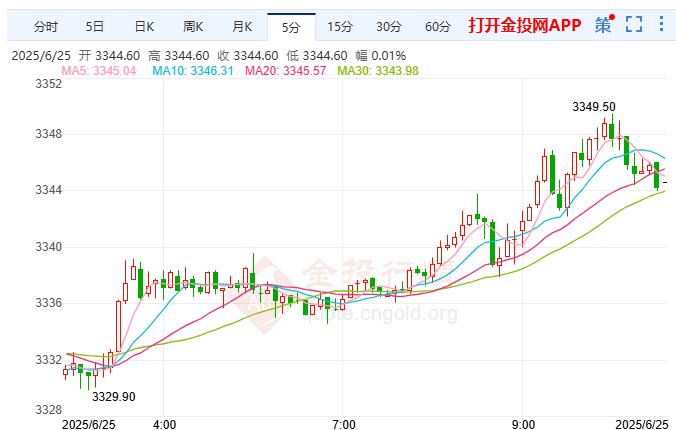
Core Viewpoint - The article discusses the current state of the COMEX gold market and the economic outlook provided by Federal Reserve official John Williams, highlighting the expected slowdown in U.S. economic growth and rising inflation due to trade tariffs [2]. Group 1: COMEX Gold Market Analysis - As of June 25, the COMEX gold price has slightly increased to $3344.50 per ounce, reflecting a 0.18% rise [1]. - The gold price opened at $3338.10 per ounce, reached a high of $3349.50, and a low of $3334.60 during the trading session [1]. - Short-term resistance levels for gold are identified between $3420 and $3430, while support levels are noted between $3290 and $3300 [2]. Group 2: Economic Outlook - John Williams from the Federal Reserve anticipates a significant slowdown in U.S. economic growth to around 1% this year, influenced by uncertainties and trade tariffs [2]. - The unemployment rate is projected to rise from 4.2% to 4.5% by the end of the year [2]. - Inflation is expected to increase to 3% due to Trump's tariff policies, before gradually returning to the 2% target over the next two years [2]. - Williams emphasized the appropriateness of maintaining a moderately restrictive monetary policy stance to achieve maximum employment and price stability [2].
美联储威廉姆斯:关税和不确定性将使美国今年经济增长放缓、通胀上升
news flash· 2025-06-24 16:43
Core Viewpoint - The Federal Reserve's Williams predicts a slowdown in U.S. economic growth and an increase in inflation this year, primarily due to the impact of trade tariffs [1] Economic Growth - U.S. economic growth is expected to slow significantly to around 1% this year [1] - The unemployment rate is projected to rise from the current 4.2% to 4.5% by the end of the year [1] Inflation - Inflation rate is anticipated to rise to 3% as a result of Trump's tariff policies, before gradually easing to the 2% target over the next two years [1] Monetary Policy - Williams emphasizes that maintaining a moderately restrictive monetary policy stance is appropriate for achieving maximum employment and price stability [1] - The current interest rate stance allows the Federal Reserve to closely analyze new data and assess the evolving economic outlook [1]
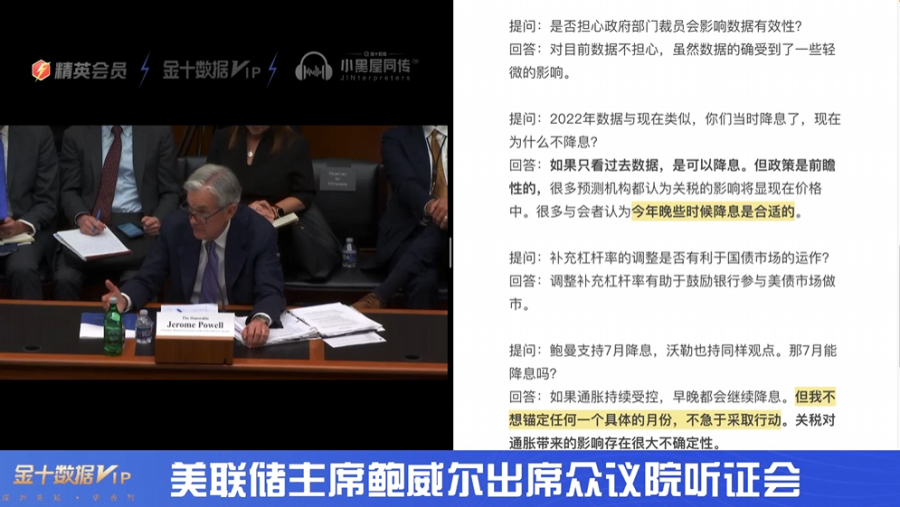
美联储主席鲍威尔:劳动力增长放缓会减缓经济增长,今年经济正在放缓,移民是其中一个原因。
news flash· 2025-06-24 15:25
Core Viewpoint - The slowdown in labor force growth is expected to hinder economic growth, with immigration being a contributing factor to this trend [1] Group 1 - The Federal Reserve Chairman Jerome Powell indicated that the economy is slowing down this year [1] - Labor force growth is experiencing a deceleration, which will impact overall economic performance [1] - Immigration is identified as one of the reasons for the slowdown in labor force growth [1]