超节点

Search documents
A股成交额第一!2000亿市值巨头中兴通讯 为何秒冲板又跳水
2 1 Shi Ji Jing Ji Bao Dao· 2025-08-21 09:17
Core Viewpoint - ZTE Corporation's stock experienced significant volatility, initially surging before retreating, influenced by a recent brokerage report recommending the stock as a major buy due to its advancements in AI and network business [1][2][5]. Group 1: Stock Performance - ZTE's A-shares opened strong, hitting the daily limit within two minutes, while H-shares rose over 14% before both experienced a pullback, closing with a 6.56% increase and a market capitalization of 203.6 billion yuan [1]. - The stock's trading volume exceeded 20 billion yuan, making it the top performer in the A-share market [1]. Group 2: Analyst Recommendations - A report from Zheshang Securities, authored by a senior analyst, rated ZTE with a "major recommendation" and a 3A rating, highlighting the company's undervalued AI computing and network business [2]. - The report noted that ZTE's advancements in AI products and its core offerings in high-speed interconnect chips position it for a potential value reassessment [2]. Group 3: Recent Contracts and Market Position - ZTE secured over 50% of a significant 1.7 billion yuan AI equipment contract from China Mobile, winning the largest share of the project [2]. - The company has been actively expanding its second curve business, focusing on AI and computing, which has started to show positive results [6]. Group 4: Financial Performance and Concerns - ZTE's Q1 2025 report indicated a revenue increase of 7.82% to 32.968 billion yuan, but a net profit decline of 10.50% to 2.453 billion yuan, raising questions about the sustainability of its growth [5][6]. - The company's accounts receivable increased by 25.10%, indicating potential cash flow concerns [5]. - Analysts have expressed skepticism regarding the rapid conversion of ZTE's AI business into actual profit growth, which may affect investor confidence [6]. Group 5: Future Outlook - ZTE is expected to release its mid-year report on August 29, 2025, with analysts predicting a slowdown in revenue growth as the 5G market stabilizes, although the second curve business is expected to maintain high growth [7]. - Forecasts for ZTE's net profit in 2025 and 2026 have been revised downward, reflecting cautious market sentiment [7].


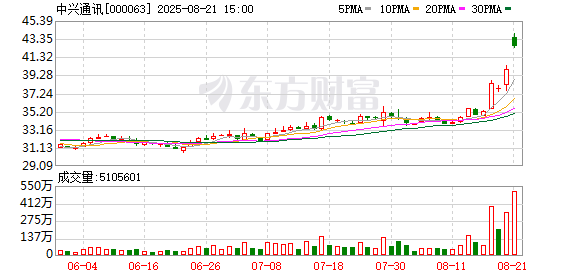
港股异动 | 中兴通讯(00763)A股一度涨停 H股飙升近15% 公司占据国内超节点方案核心位置
智通财经网· 2025-08-21 02:00
Core Viewpoint - ZTE Corporation (00763) continues its strong performance, with A-shares hitting the daily limit and H-shares rising over 14% during trading, reflecting positive market sentiment towards the company and its positioning in the AI sector [1] Company Performance - As of the latest update, H-shares of ZTE are up 7.34%, priced at 31.9 HKD, with a trading volume of 2.041 billion HKD [1] Industry Developments - On July 26, Huawei showcased its Ascend 384 Super Node at the 2025 World Artificial Intelligence Conference, which features a high-bandwidth, low-latency interconnection among 384 NPUs, achieving a single-card inference throughput of 2300 Tokens/s, surpassing NVIDIA's H100/H800 [1] - Other major players like Tencent and Alibaba are promoting their respective ETH-X and ALS solutions, while companies such as Inspur, ZTE, H3C, Huqin, and Super Fusion are also accelerating the deployment of super node solutions [1] Market Insights - Zheshang Securities notes that the progress of domestic super nodes has exceeded expectations, with the core growth area being the switching network [1] - The penetration rate of domestic super nodes is only one year behind that of overseas markets, indicating a strong growth potential [1] - The ScaleUp switching network is identified as a critical growth segment for super node solutions, with expectations for the domestic ScaleUp market size to more than double [1] - ZTE is positioned at the core of the domestic super node solution market, with a significant gap in market perception [1] - The accelerating demand for ScaleUp switching is driving the localization of switching chips [1]
中兴通讯(000063):推荐报告:超节点核心卡位,AI时代再造中兴
ZHESHANG SECURITIES· 2025-08-20 12:18
Investment Rating - The investment rating for the company is "Buy" (maintained) [6] Core Viewpoints - The company is a communication equipment giant, with significant underestimation of its AI computing and network business progress, which is expected to recreate ZTE in the AI era [1] - The company has a complete AI product ecosystem and has successfully expanded its internet customer base, with a projected revenue of 18.6 billion yuan for its government and enterprise business in 2024, representing a year-on-year growth of 37% [3] - The domestic supernode progress is exceeding expectations, with a core increment in the switching network, and the domestic supernode penetration rate is expected to accelerate [4][5] Summary by Sections Company Expectations - The company is expected to occupy a core strategic position in the supernode system, leveraging its core capabilities [2][17] AI Product Ecosystem - The company has made significant breakthroughs in servers, switches, switching chips, and self-developed chips, with products entering the internet customer ecosystem and related business segments experiencing rapid revenue growth [3] Domestic Supernode Progress - The domestic supernode market is expected to see accelerated penetration, with projections indicating a penetration rate of 5% in 2025, 19% in 2026, and 45% in 2027 [4] Scale Up Switching Network - The Scale Up switching network is identified as a core incremental segment of the supernode solution, with a projected market size of 14 billion USD by 2027 [5] Market Position - The company occupies a core position in the domestic supernode solution, with a significant gap in market recognition and expectations [10] Demand for Scale Up Switching Chips - The demand for Scale Up switching is accelerating the localization of switching chips, with domestic manufacturers gradually catching up in technology [11] Profit Forecast and Valuation - The company's net profit is projected to be 8.7 billion yuan in 2025, 9.3 billion yuan in 2026, and 10.1 billion yuan in 2027, with corresponding PE ratios of 22, 21, and 19 times [13][16]
21专访|曦智科技沈亦晨:两年前预见的超节点未来,正在兑现
2 1 Shi Ji Jing Ji Bao Dao· 2025-08-12 06:17
Core Insights - The article discusses the emergence of "supernodes" in the computing industry, particularly focusing on the advancements in optical interconnect technology by Xizhi Technology, which has positioned itself as a leader in this field [1][2][3] - Xizhi's innovative "LightSphere X" solution aims to break traditional limitations of physical cabinets, allowing for larger-scale, cross-cabinet networks, which is a significant shift in the industry [1][9] Company Strategy - Xizhi Technology recognized the potential of the supernode concept as early as 2023, aligning its product line with this emerging trend [2][4] - The company is pursuing an open ecosystem strategy, differentiating itself from competitors like NVIDIA and Huawei by focusing on core technologies related to optical interconnects and chips [2][23] Technological Innovations - Xizhi's "LightSphere X" solution utilizes optical interconnect technology, which allows for faster data transmission and lower costs compared to traditional electrical interconnects [7][8] - The company has developed two supernode solutions: one based on optical interconnect electrical switching and another on optical interconnect optical switching, with the latter being a novel approach [5][6] Market Position - Xizhi has established a favorable position in the optical interconnect market, with a team comprising over 80% researchers, including top scientists from MIT [1][24] - The company aims to deploy a ten-thousand-card cluster by the end of the year, indicating its ambition to scale rapidly in the supernode space [11] Competitive Landscape - The article highlights the competitive dynamics in the GPU market, where various manufacturers are exploring different interconnect technologies, with some opting for electrical interconnects while others are inclined towards innovative solutions like Xizhi's [12][22] - Xizhi's open approach may pose a challenge to established players like NVIDIA and Huawei, as it aims to lower the technical barriers for adoption [22][23]

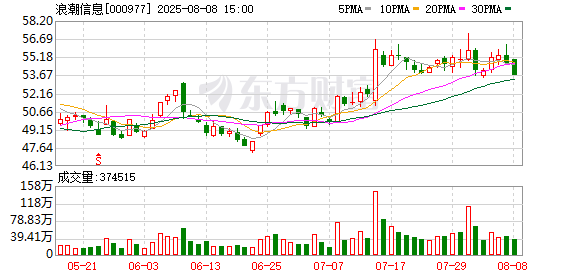
浪潮信息“元脑SD200”超节点实现单机内运行超万亿参数大模型
Ke Ji Ri Bao· 2025-08-09 10:21
Core Viewpoint - Inspur Information has launched the "Yuan Nao SD200," a super-node AI server designed for trillion-parameter large models, addressing the growing computational demands of AI systems [2][3]. Group 1: Product Features - The "Yuan Nao SD200" utilizes a multi-host low-latency memory semantic communication architecture, supporting 64 local GPU chips and enabling the operation of trillion-parameter models on a single machine [2]. - The super-node integrates multiple servers and computing chips into a larger computational unit, enhancing overall efficiency, communication bandwidth, and space utilization through optimized interconnect technology and liquid cooling [2][3]. Group 2: Industry Challenges - The rapid increase in model parameters and sequence lengths necessitates intelligent computing systems with vast memory capacity, as traditional architectures struggle to meet the demands of efficient, low-power, and large-scale AI computations [3]. - The shift towards multi-model collaboration in AI requires systems capable of handling significantly increased data token generation, leading to a surge in computational requirements [3]. Group 3: Technological Innovation - The "Yuan Nao SD200" addresses the core needs for large memory space and low communication latency for trillion-parameter models through an open bus switching technology [3][4]. - The server's performance is enhanced through a software-hardware collaborative system, achieving super-linear performance improvements of 3.7 times for the DeepSeek R1 model and 1.7 times for the Kimi K2 model [4]. Group 4: Ecosystem Development - The advancement of open-source models is accelerating the transition to an intelligent era, necessitating higher demands on computational infrastructure [4]. - Inspur Information aims to foster innovation across the supply chain by utilizing high-speed connectors and cables, thereby enhancing the overall industry ecosystem and competitiveness [4].

超节点火爆 国产AI算力跑出追赶新路线
Zhong Guo Jing Ying Bao· 2025-08-04 07:26
Core Insights - The 2025 World Artificial Intelligence Conference (WAIC) highlighted the significance of "super nodes" in AI computing infrastructure, with Huawei showcasing its Ascend 384 super node, which boasts a computing power of 300 PFLOPs, nearly double that of NVIDIA's GB200 NVL72 system [1][3] - Domestic AI chip manufacturers are increasingly embracing the super node trend, moving beyond mere parameter comparisons to collaborative efforts, as seen in a rare joint appearance of executives from four domestic AI chip companies [2][11] - The demand for AI computing power is rapidly increasing, leading to the emergence of the "super node" concept as a recognized solution to meet the needs of large-scale AI models [3][4] Super Node Development - The super node concept, proposed by NVIDIA, involves connecting multiple high-performance AI servers to form a larger, more powerful computing node, specifically designed for complex AI model calculations [3][4] - Current super node implementations are characterized by high-performance GPUs interconnected within a single node, with a focus on maintaining consistent bandwidth and latency [4][5] - The future of domestic super node solutions will involve maximizing computing power within individual cabinets and connecting multiple cabinets through optical interconnects [6] Industry Collaboration and Innovation - The WAIC showcased various super node products from multiple vendors, including high-density liquid cooling systems and innovative interconnect technologies, indicating a competitive landscape among domestic manufacturers [7][8] - The emergence of the "AI factory" concept by domestic GPU manufacturers aims to address the efficiency bottlenecks in training large models, emphasizing the need for a comprehensive AI training infrastructure [9][10] - The establishment of the "Model-Chip Ecological Innovation Alliance" signifies a deeper integration between domestic AI models and chips, promoting collaboration among various stakeholders in the industry [11][12]
AI周报 | DeepSeek斩获ACL 2025最佳论文;库克称苹果计划“大幅”增加AI投资
Di Yi Cai Jing· 2025-08-03 01:16
Group 1: DeepSeek and ACL Conference - DeepSeek, in collaboration with Peking University, won the Best Paper Award at the 63rd ACL conference, highlighting a significant achievement in natural language processing with the introduction of the Native Sparse Attention (NSA) mechanism [1][2] - The ACL conference saw a record submission of over 8000 papers, with a main conference acceptance rate of 20.3% and a Findings acceptance rate of 16.7% [1] Group 2: Anthropic's Market Position - Anthropic has surpassed OpenAI in popularity among enterprises, capturing 32% of the large language model market, while OpenAI's share has decreased to 25% [3][4] - Two years ago, OpenAI held a dominant 50% market share, with Anthropic at only 12%, indicating a significant shift in the competitive landscape [3] Group 3: AI Model Developments - The AI startup Step 3 has released an open-source foundational model with 321 billion parameters, showcasing advanced capabilities in visual perception and complex reasoning [5] - Multiple companies, including Tencent and Moonlight, have also released open-source models, indicating a trend towards open-source solutions in the AI industry [5] Group 4: Baidu's AI Integration - Baidu is testing an AI application entry point on its search homepage, allowing users to access various AI applications directly [6][7] - This move follows a major redesign of Baidu's search platform and reflects the company's commitment to integrating AI into its services [6] Group 5: Robotics Industry Insights - Tencent's chief scientist, Zhang Zhengyou, stated that the embodied intelligence industry is still in its early stages, comparing it to the mobile phone industry's evolution [8] - He emphasized that current humanoid robots are primarily used for data collection and research, and a significant breakthrough is needed for widespread adoption [8] Group 6: Supernode Solutions - Several companies showcased supernode solutions at the WAIC, addressing the challenges of large-scale computing clusters [9] - Supernodes aim to enhance performance by integrating computing chip resources, which is increasingly necessary as model parameters grow larger [9] Group 7: Financial Performance of Major Tech Companies - Meta reported a 22% year-over-year revenue increase in Q2, reaching $47.5 billion, with a net profit of $18.3 billion, up 36% [10] - Microsoft achieved a revenue of $76.4 billion in Q4, an 18% increase, with its market capitalization reaching $4 trillion, driven by demand for AI services [11]





开盘:沪指跌0.3%、创业板指涨0.65%,CPO、PCB板块走高,军工及贵金属板块普跌
Sou Hu Cai Jing· 2025-07-31 01:45
Market Overview - A-shares opened mixed with the Shanghai Composite Index down 0.3% at 3604.7 points, the Shenzhen Component Index up 0.05% at 11208.46 points, and the ChiNext Index up 0.65% at 2382.97 points [1] - The total trading volume in the Shanghai and Shenzhen markets was 142.66 billion yuan [1] - CPO and PCB sectors saw significant gains, while military and non-ferrous metals sectors experienced declines [1] Company News - **Ningde Times** reported a revenue of 178.886 billion yuan for the first half of the year, a year-on-year increase of 7.27%, and a net profit of 30.512 billion yuan, up 33.02% year-on-year [2] - **Changjiang Power** approved a budget of approximately 26.6 billion yuan for the construction of the Gezhouba shipping capacity expansion project, with a total construction period of 91 months [2] - **Digital Certification** is undergoing a change in its controlling shareholder to Beijing Data Group, following a transfer of state-owned shares [3] - **Wantai Biological Pharmacy** launched a new PCR test kit for detecting Chikungunya virus, which is now widely used in blood supply institutions [3] - **Jia Yuan Technology** is advancing its ultra-thin copper foil project, aiming for an annual production capacity of 700,000 square meters by the end of 2026 [4] Industry Insights - The average interest rate for newly issued commercial personal housing loans in Q2 2025 was reported at 3.09% [5] - Domestic coal prices have been on the rise, with the price of 5500 kcal thermal coal at ports around 650 yuan per ton, an increase of 30 yuan from the end of June [8] - The Guangzhou Futures Exchange announced adjustments to trading limits for certain futures contracts, including industrial silicon and lithium carbonate [9] - The National Immigration Administration reported that over 300 million exit and entry documents were issued to Chinese citizens during the 14th Five-Year Plan period, with the number of valid ordinary passports exceeding 160 million [10]




曦智科技沈亦晨:3D CPO有望在五年内实现
Zhong Guo Jing Ying Bao· 2025-07-30 18:08
Core Insights - NVIDIA has introduced two silicon photonics CPO switches at the GTC conference to enhance the interconnect speed and energy efficiency of GPU clusters, making CPO a focal point in the industry [1] - The evolution of optical interconnect technology is crucial, with a roadmap from pluggable optical modules to 3D CPO, significantly increasing single-chip bandwidth [1][3] - The demand for computing power is growing globally, necessitating advancements in optical interconnect products to address this challenge [1][2] Group 1: Optical Interconnect Technology - The transition from traditional network interconnects to NVIDIA's GB200 NVL72 supernode can increase throughput by over three times compared to conventional methods [2] - Domestic AI chip and server manufacturers are increasingly adopting the supernode concept, indicating a shift in industry trends [2] - The two main paths for expanding supernode scale are using high-density cabinets or multiple cabinets with direct optical interconnect capabilities [2][3] Group 2: Challenges and Solutions - Current solutions face bandwidth and resource wastage issues, leading to network congestion, highlighting the need for revolutionary interconnect systems [3] - The proposed evolution of optical interconnect technology includes a shift towards 3D co-packaged optics, which could enhance interconnect bandwidth by 1-2 orders of magnitude within five years [3] - The complexity of connecting multiple GPUs necessitates advanced scheduling systems for efficient network management [3] Group 3: Innovations and Developments - At the 2025 WAIC, the company launched the LightSphere X distributed OCS all-optical interconnect chip and supernode solution, demonstrating its application with partners [4] - LightSphere X is recognized as the first domestic solution for optical interconnect and GPU supernodes, winning the SAIL Award for its innovation [4][5] - The technology allows for flexible scaling of supernodes, reducing deployment costs and enabling dynamic adjustments based on computing needs [5] - Performance metrics indicate that the unit interconnect cost is only 31% of that of the NVL72, with a significant increase in model computing efficiency [5]
AI算力集群迈进“万卡”时代 超节点为什么火了?
Di Yi Cai Jing· 2025-07-30 10:24
Core Insights - The recent WAIC showcased the rising trend of supernodes, with multiple companies, including Huawei and Shanghai Yidian, presenting their supernode solutions, indicating a growing interest in high-performance computing [1][2][4] Group 1: Supernode Technology - Supernodes are designed to address the challenges of large-scale computing clusters by integrating computing resources to enhance efficiency and support models with trillions of parameters [1][2] - The technology allows for improved performance even when individual chip manufacturing processes are limited, marking a significant trend in the industry [1][5] - Supernodes can be developed through two main approaches: scale-out (horizontal expansion) and scale-up (vertical expansion), optimizing communication bandwidth and latency within the nodes [3][4] Group 2: Market Dynamics - The share of domestic AI chips in AI servers is increasing, with projections indicating a drop in reliance on foreign chips from 63% to 49% this year [6] - Companies like Nvidia are still focusing on the Chinese market, indicating the competitive landscape remains intense [6] - Domestic manufacturers are exploring alternative strategies to compete with established players like Nvidia, including optimizing for specific applications such as AI inference [6][8] Group 3: Innovation in Chip Design - Some domestic chip manufacturers are adopting sparse computing techniques, which require less stringent manufacturing processes, allowing for broader applicability in various scenarios [7] - Companies are focusing on edge computing and AI inference, aiming to reduce costs and improve efficiency in specific applications [8] - The introduction of new chips, such as the Homa M50, highlights the industry's shift towards innovative solutions that leverage emerging technologies like in-memory computing [8]