绿色低碳发展

Search documents
和音:携手推动地球“向绿而行”
Ren Min Ri Bao· 2025-08-27 02:50
Group 1 - China's green low-carbon development has made significant achievements, becoming an important driver of global energy transition, with over 40% of global new energy patents and a cumulative reduction of approximately 4.1 billion tons of carbon emissions from exported wind and solar products [1] - The country has established the world's largest electric vehicle charging network, with a ratio of 2 charging piles for every 5 electric vehicles, and increased the share of renewable energy generation capacity from 40% to around 60% during the 14th Five-Year Plan period [2] - China has maintained the world's largest installed capacity for wind and solar power for 15 and 10 consecutive years, respectively, and became the first country to reach a cumulative solar power installation of 1 terawatt [3] Group 2 - China is the largest exporter of clean technology, with solar and wind products exported to over 200 countries, creating 46% of global renewable energy jobs [4] - The average cost of electricity generation from wind and solar projects has decreased by 60% and 80%, respectively, over the past decade, contributing significantly to global green transition [4] - China is committed to collaborating with other countries to innovate green low-carbon transition solutions and promote international green cooperation [4]
携手推动地球“向绿而行”(和音)
Ren Min Ri Bao· 2025-08-26 22:22
Core Viewpoint - China is committed to collaborating with other countries to innovate green and low-carbon transformation solutions, aiming to create favorable conditions for international green cooperation and promote a cleaner and greener future for humanity [1][4]. Group 1: Achievements in Green Development - China has made significant achievements in green low-carbon development, becoming a major driver of global energy transition, with non-fossil energy accounting for a substantial share of its energy mix [1][2]. - The number of new energy patents accounts for over 40% of the global total, and China's wind and photovoltaic product exports have cumulatively reduced carbon emissions by approximately 4.1 billion tons [1][3]. - During the "14th Five-Year Plan" period, China established the world's largest electric vehicle charging network, with two charging piles for every five vehicles [2]. Group 2: Global Leadership in Renewable Energy - China has maintained the world's largest installed capacity for wind power for 15 consecutive years and for photovoltaic power for 10 consecutive years, achieving a cumulative installed capacity of solar power at the terawatt level [3]. - Chinese inverter technology has contributed to the establishment of a "zero-carbon campus" in Thailand, while the agricultural photovoltaic model in Ghana promotes synergy between the photovoltaic industry and agriculture [3][4]. - China is the largest exporter of clean technology globally, with its photovoltaic and wind power products exported to over 200 countries and regions, creating 46% of global renewable energy jobs [4]. Group 3: Commitment to Global Cooperation - China emphasizes that green transformation is a shared responsibility and should not be viewed through a zero-sum lens, advocating for cooperation over competition in the energy sector [4]. - The country has partnered with over 100 nations on green energy projects, significantly reducing the cost of wind and photovoltaic power generation globally by 60% and 80%, respectively, over the past decade [4].
新华社权威速览·非凡“十四五”|中国 成为世界能源转型重要推动者
Xin Hua She· 2025-08-26 15:03
26日举行的"高质量完成'十四五'规划"新闻发布会上,国家能源局局长王宏志说,"十四五"以来,我国能源事业取得了突破性进 展和历史性成就,"十四五"规划《纲要》提出的能源综合生产能力和非化石能源占比等主要指标将如期完成,14亿多人的能源 安全得到有效保障,绿色低碳发展举世瞩目,我国成为世界能源转型的重要推动者。这组海报,带你了解。 新华社权威速览 ·非凡 · 十 绿色低碳转型最快 新华社权威速览 · 非风 "十四五 能源科技创新取得更大 32 新能源专利数占全球4成以上 新型储能规模跃居世界第一 多个全球最大、全球首座工程建成投运 智能微电网、虚拟电厂等发展进入快车道 车网互动规模化应用试点加快推进 新华社权威速览 · 非风 · " 能源改革持续深化 发展动能持续增强 构建起全球最大、发展最快的可再生能源体; 可再生能源发电装机占比由40%提升至60%左右 全社会用电量中,每3度电就有1度绿电 累计为其他国家减少碳排放约41亿吨。 (文章来源:新华社) 媒电、新能源全面人市 全部工商业用户进入市场 油气"全国一张网"初步建成 电力市场注册经营主体已达97万家,是2020年的5倍 绝大多数的光伏设备制造企业 和 ...

夯实城市发展的绿色底色——深圳践行绿色低碳发展理念观察
Xin Hua Wang· 2025-08-26 13:38
Group 1 - The "Green Car Charging Green Electricity" incentive program was launched in Shenzhen, allowing over 400 car owners who charged 1,000 kilowatt-hours of green electricity to apply for a personal green certificate issued by the National Energy Administration [1] - Shenzhen has integrated green low-carbon concepts into various sectors, establishing a sustainable development path and enhancing the city's green foundation [1] - The Southern Power Grid Shenzhen Supply Bureau reported that 11 charging stations in Shenzhen supply 100% green electricity from regions like Yunnan, Guizhou, and Guangxi, and have facilitated over 680 billion kilowatt-hours of green electricity and certificate transactions for more than 1,200 key enterprises in the Guangdong-Hong Kong-Macao Greater Bay Area [1] Group 2 - Shenzhen's carbon emission trading market has been operational for over 10 years, with cumulative trading volume exceeding 10 million tons and transaction value surpassing 2.3 billion yuan by May 2024 [2] - The city achieved 100% electrification of public buses in 2017, followed by the electrification of taxis and ride-hailing services, resulting in a total of 971,000 new energy vehicles by the end of 2023 [2] Group 3 - In the industrial sector, Shenzhen has created over 120 national-level green factories through energy efficiency diagnostics and energy-saving technology renovations [3] - The city has implemented strict energy-saving measures in construction, monitoring carbon emissions from over 20,000 key buildings in real-time [3] - By 2023, Shenzhen's energy consumption, water consumption, and carbon emission intensity per 10,000 GDP were reduced to one-third, one-eighth, and one-fifth of the national average, respectively [3] - Shenzhen has built 1,320 parks, promoting a lifestyle where residents can easily access green spaces [3] - The Director of the Shenzhen Development and Reform Commission emphasized the city's commitment to green low-carbon development, aiming for carbon peak and neutrality while promoting economic growth [3]

新华社权威速览·非凡“十四五”|中国,成为世界能源转型重要推动者
Xin Hua She· 2025-08-26 11:45
Group 1 - The core viewpoint is that China's energy sector has achieved significant breakthroughs and historical accomplishments since the start of the 14th Five-Year Plan, with key indicators such as comprehensive energy production capacity and the proportion of non-fossil energy expected to be met on schedule [1] - China has constructed the world's largest and fastest-growing renewable energy system, with the share of renewable energy generation capacity increasing from 40% to approximately 60% [3] - The total electricity consumption in China now includes one-third green electricity, contributing to a reduction of carbon emissions by approximately 4.1 billion tons for other countries [3] Group 2 - Energy technology innovation has seen substantial progress, with new energy patents accounting for over 40% of the global total, and new energy storage capacity ranking first in the world [6] - The development of smart microgrids and virtual power plants is accelerating, with pilot projects for vehicle-to-grid interactions being advanced [6] - Energy reform is deepening, with all industrial and commercial users entering the market, and the number of registered electricity market operators reaching 970,000, five times that of 2020 [8] Group 3 - The oil and gas sector is moving towards a "national unified network," indicating a significant step in energy integration [8] - The majority of photovoltaic equipment manufacturing companies and over 60% of wind turbine manufacturers are private enterprises, highlighting the role of private sector participation in the energy market [8]
智库要览丨区域经济高质量发展呈现新态势
Sou Hu Cai Jing· 2025-08-26 08:14
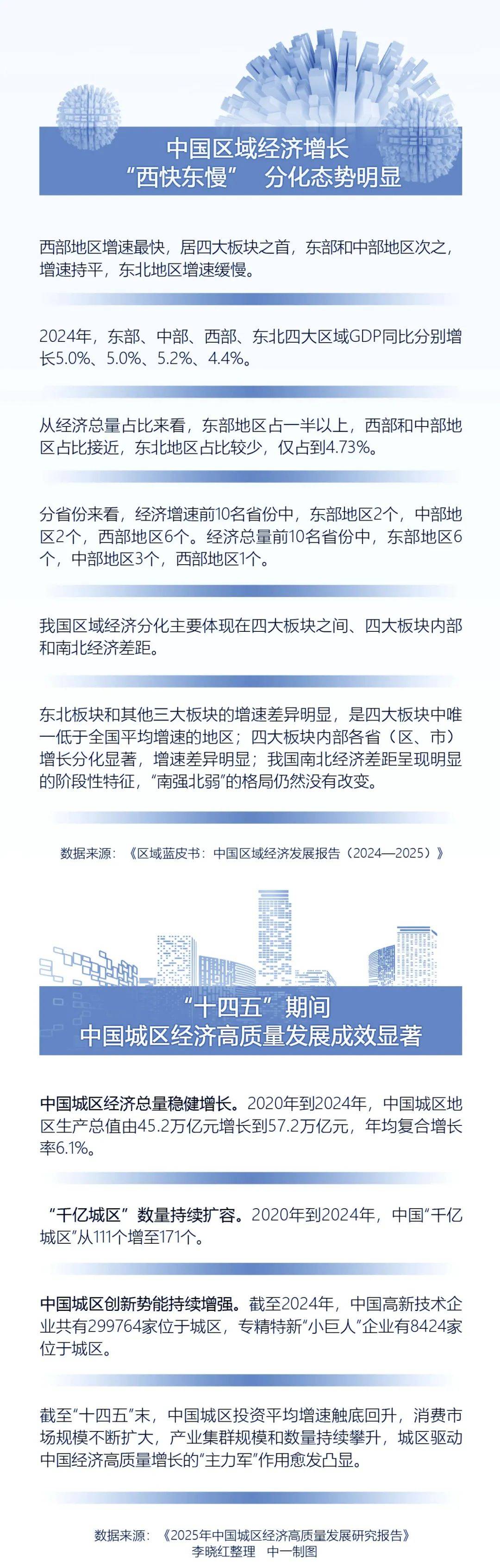
Core Viewpoint - The article emphasizes the significant progress in regional economic development in China, highlighting the coordinated and balanced growth across various regions, which is essential for achieving high-quality economic development and modernization [1][19]. Group 1: High-Quality Development in Regions - The high-quality development of regional economies is a necessary requirement for achieving Chinese-style modernization [2][27]. - The Chengdu-Chongqing economic circle is identified as a dual-core engine for development, with Chengdu and Chongqing as the main urban centers showing strong performance in innovation and ecological sustainability [3][4]. - The evaluation of 17 national urban agglomerations categorizes them into four levels: benchmark, leading, developing, and growing, based on innovation, coordination, green development, openness, and sharing [5][6]. Group 2: Economic Growth and Trends - From 2020 to 2024, China's urban GDP is projected to grow from 45.2 trillion yuan to 57.2 trillion yuan, with an average annual growth rate of 6.1% [8][15]. - The number of "billion-yuan cities" increased from 11 to 171 during the same period, indicating a robust urban economic expansion [16][32]. - Urban areas are becoming the main drivers of China's economic growth, with a focus on innovation and high-tech industries [8][32]. Group 3: Strategic Recommendations - The report suggests enhancing regional cooperation mechanisms, focusing on technological innovation, and building a high-end, green, and intelligent industrial system [4][21]. - It emphasizes the need for a coordinated development strategy that integrates urban and rural areas, promoting a new pattern of urban-rural integration [20][21]. - The report outlines five key paths for high-quality urban economic development during the 14th Five-Year Plan, including deep integration of technology and industry, advanced manufacturing, and green transformation [10][38]. Group 4: Regional Disparities and Challenges - There are notable disparities in economic growth rates among different regions, with the western region showing the fastest growth, while the northeast lags behind [12][30]. - The report highlights the ongoing challenges of unbalanced regional development and the need for effective resource allocation and market mechanisms [25][37]. - The article points out that the southern regions continue to outperform the northern regions, maintaining a "strong south, weak north" economic pattern [12][30].
全球最大、发展最快!国家能源局最新发布
Shang Hai Zheng Quan Bao· 2025-08-26 07:33
Core Insights - During the "14th Five-Year Plan" period, China has achieved significant advancements in its energy sector, including the establishment of the world's largest electric vehicle charging network and the fastest-growing renewable energy system [1][2] - The energy consumption increase has been primarily supported by domestic resources, with over 90% of the growth being self-sustained [2] - The renewable energy generation capacity has seen a substantial rise, with the share of renewable energy in total electricity generation increasing from 40% to approximately 60% [3][4] Energy Supply and Demand - The energy consumption increment in the first four years of the "14th Five-Year Plan" reached 1.5 times that of the entire "13th Five-Year Plan" period, with projected new electricity consumption exceeding the annual consumption of the EU [2] - By 2024, China's total electricity generation is expected to surpass 10 trillion kilowatt-hours, accounting for one-third of global production [2] - The domestic energy production has been accelerated, ensuring that over 90% of the consumption increase is self-sustained [2] Renewable Energy Development - The share of renewable energy in total electricity generation has increased significantly, with wind and solar power installations reaching unprecedented levels [3][4] - Wind and solar power generation now accounts for nearly 25% of total electricity consumption, with annual growth rates of over 2 percentage points [4] - The total installed capacity of wind and solar power has grown from 530 million kilowatts in 2020 to 1.68 billion kilowatts by mid-2023, with an average annual growth rate of 28% [3][4] Investment Trends - Energy industrial investment has shown robust growth, with an average annual increase exceeding 16% during the "14th Five-Year Plan" [5][6] - The total investment in the energy sector has consistently surpassed 4 trillion, 5 trillion, and 6 trillion yuan, representing nearly 10% of total fixed asset investment [6] - Investment in new energy sectors, including new energy storage and hydrogen energy, is projected to reach approximately 200 billion yuan in 2024 [6] Technological Innovations - The scale of new energy storage has surged nearly 30 times over five years, positioning China as the global leader in this sector [8] - By mid-2023, the installed capacity of new energy storage reached approximately 95 million kilowatts [8] - The integration of artificial intelligence in the energy sector is enhancing operational efficiency and innovation, particularly in renewable energy generation and grid management [9]
新闻30分丨多维数据勾勒我国能源体系“成绩单” 增减间大幅提升经济发展“含绿量”
国家能源局· 2025-08-26 07:16
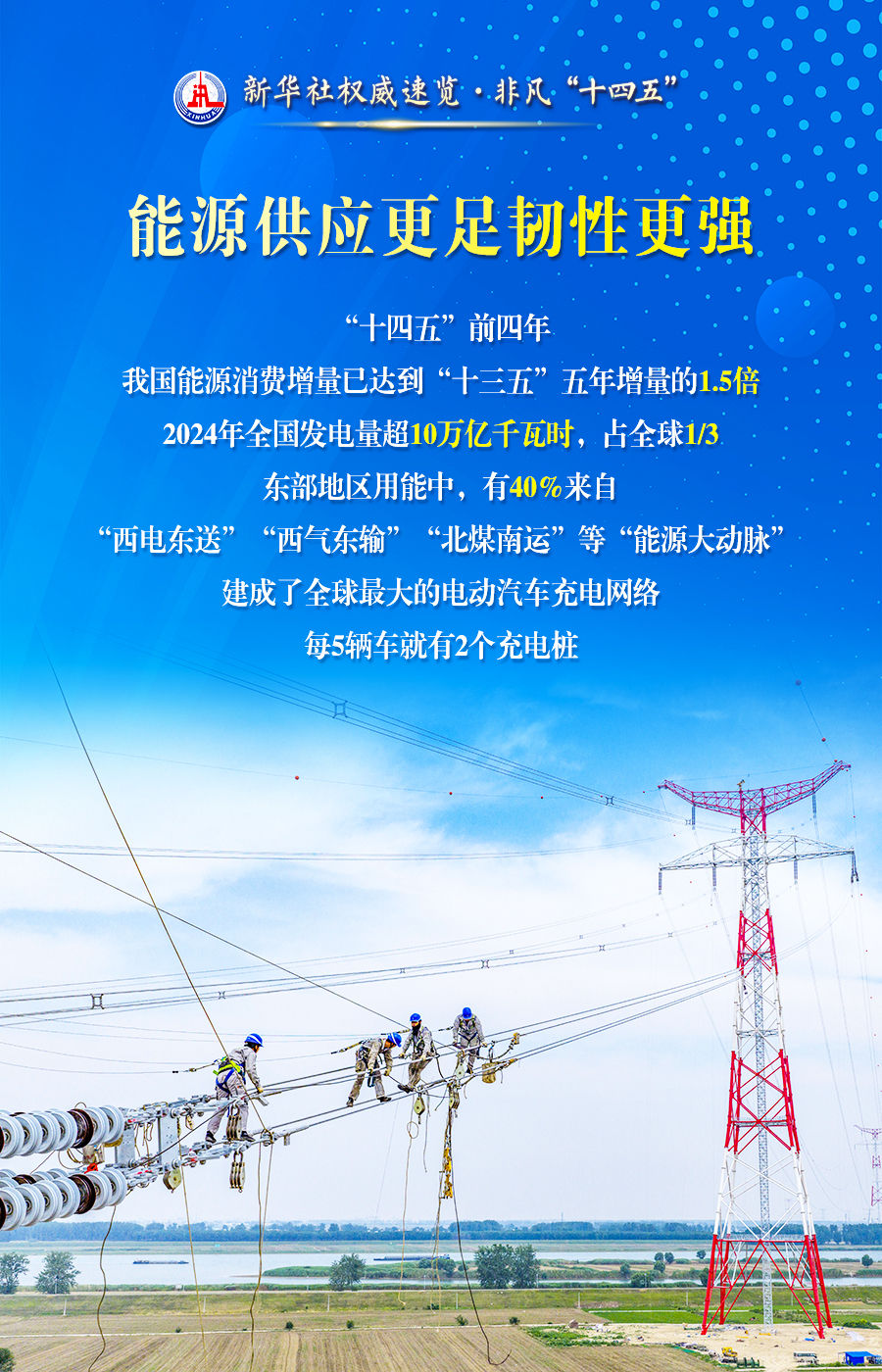
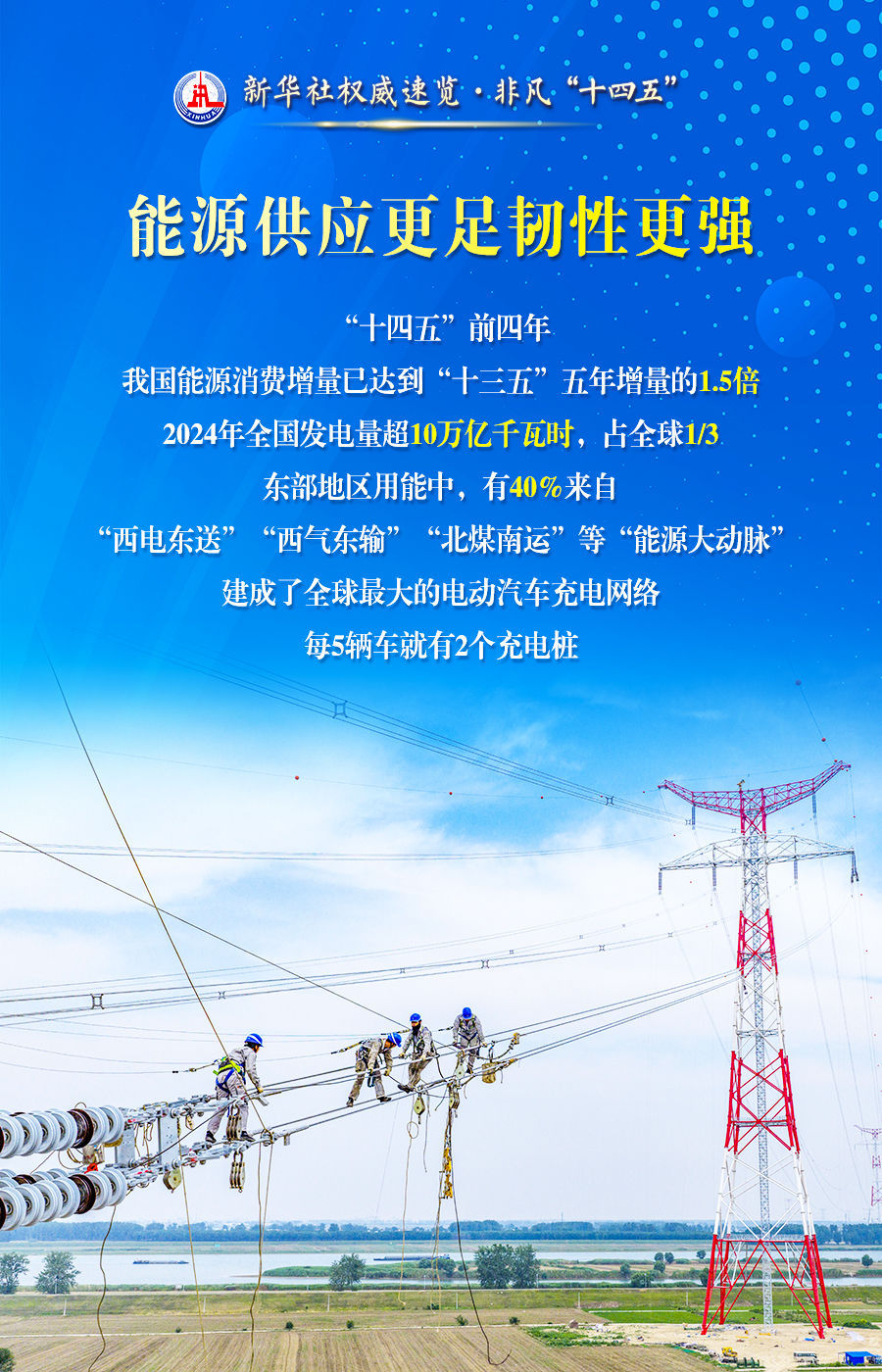
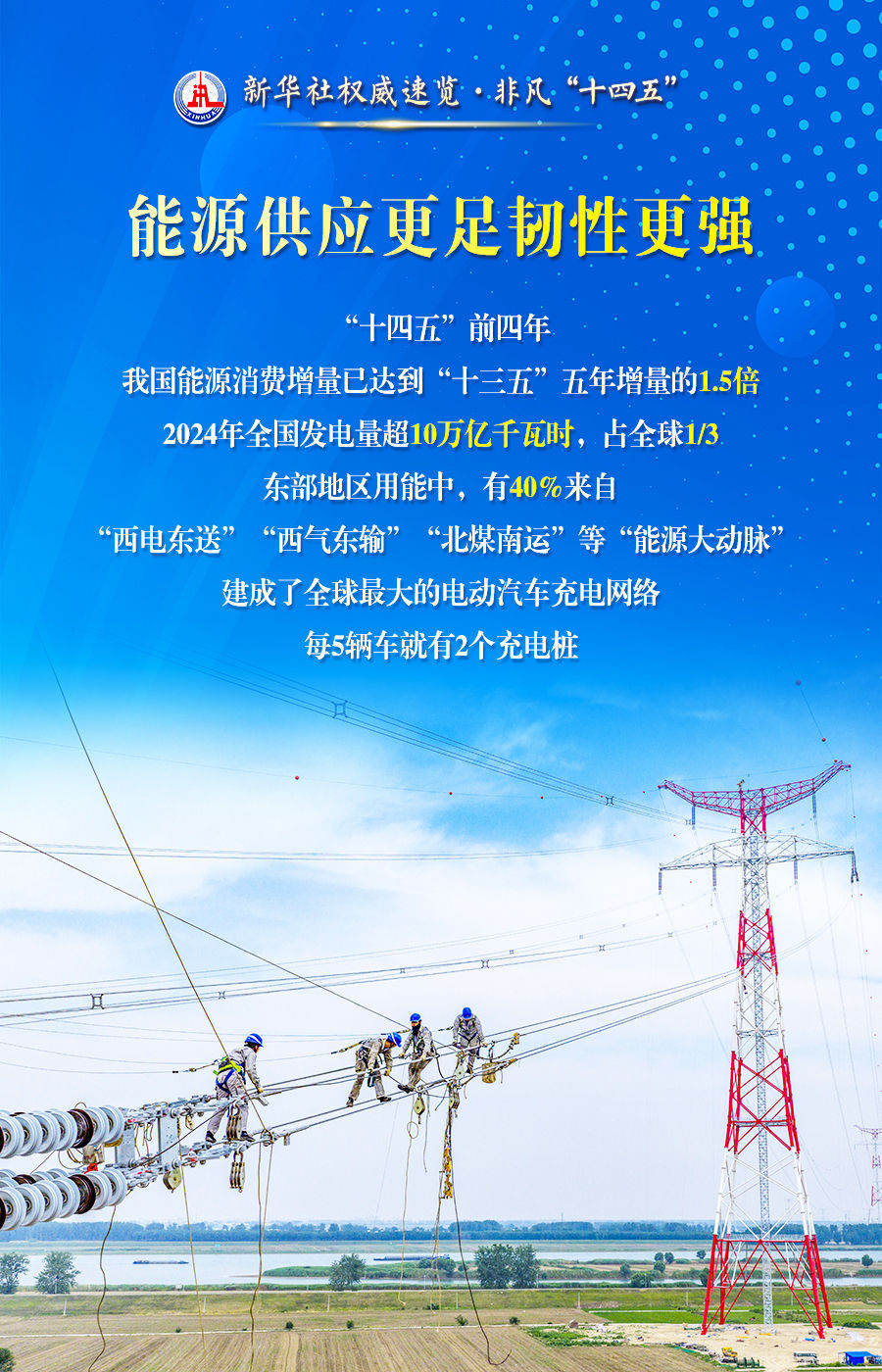
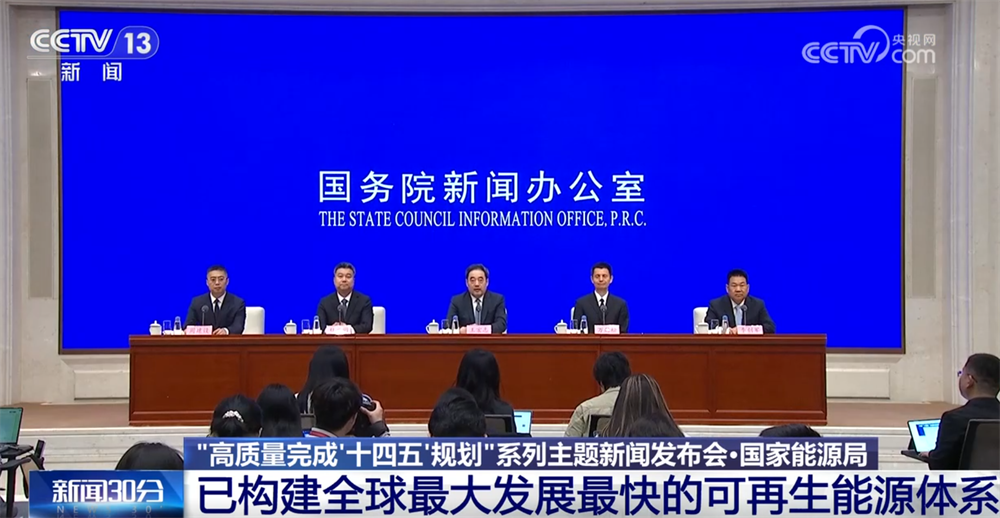
国务院新闻办公室8月26日上午举行"高质量完成'十四五'规划"系列主题新闻发布会,国家能源局介绍"十四五"时期能源高质量发展成 就。目前,我国已构建起全球最大、发展最快的可再生能源体系,能源科技创新取得更大突破。 我国已构建起全球最大发展最快的可再生能源体系 国家能源局局长王宏志介绍,"十四五"是能源供应更足、韧性更强的五年。"十四五"前四年,我国能源消费增量已达到"十三五"五年增 量的1.5倍,预计五年新增用电量将超过欧盟的年度用电量。绿色转型步伐加快,我国构建起全球最大、发展最快的可再生能源体系,可 再生能源发电装机占比由40%提升至60%左右。 国家发展改革委党组成员、国家能源局局长王宏志称:"全国能源消费中,非化石能源占比每年增加1个百分点,预计将超额完成'十四 五'确定的20%目标,煤炭占比每年减少1个百分点,这'一增一减'大大提升了经济发展'含绿量'。" 新能源专利数占全球四成以上 新型储能规模世界第一 能源科技创新取得更大突破。新能源专利数占全球四成以上,光伏转换效率、海上风电单机容量等不断刷新世界纪录,新型储能规模跃 居世界第一。市场活力加快释放,电力市场注册经营主体已达97万家,是2020年 ...
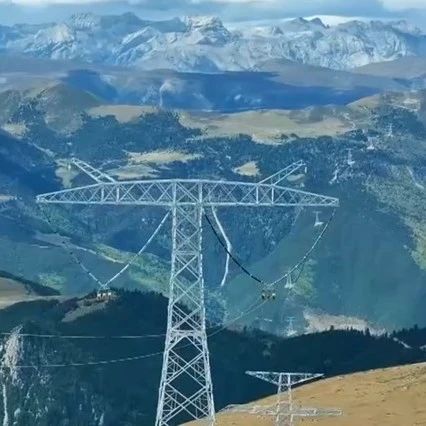
多维数据勾勒我国能源体系“成绩单” 增减间大幅提升经济发展“含绿量”
Yang Shi Wang· 2025-08-26 05:38
Core Viewpoint - The "14th Five-Year Plan" period is marked by significant achievements in high-quality energy development, with China establishing the world's largest and fastest-growing renewable energy system [1][3]. Group 1: Renewable Energy Development - China has built the largest and fastest-growing renewable energy system globally, with the share of renewable energy generation capacity increasing from 40% to approximately 60% [3]. - During the first four years of the "14th Five-Year Plan," China's energy consumption increment reached 1.5 times that of the entire "13th Five-Year Plan" period, with the expected new electricity consumption exceeding the annual consumption of the European Union [3]. Group 2: Non-Fossil Energy and Economic Growth - The proportion of non-fossil energy in national energy consumption increases by 1 percentage point annually, expected to exceed the 20% target set for the "14th Five-Year Plan," while coal's share decreases by 1 percentage point each year [5]. - This shift significantly enhances the "green content" of economic development [5]. Group 3: Innovation and Market Dynamics - China holds over 40% of global new energy patents, with continuous breakthroughs in photovoltaic conversion efficiency and offshore wind turbine capacity [10]. - The scale of new energy storage has become the largest in the world, and the number of registered electricity market entities has reached 970,000, five times that of 2020 [11]. Group 4: Energy Security and Global Leadership - The main indicators outlined in the "14th Five-Year Plan" regarding comprehensive energy production capacity and the proportion of non-fossil energy are expected to be achieved, ensuring energy security for over 1.4 billion people [7]. - China's green and low-carbon development is gaining global attention, positioning the country as a significant driver of energy transition worldwide [7].
非凡“十四五”丨中国,成为世界能源转型重要推动者
Xin Hua She· 2025-08-26 05:26
Group 1 - The core viewpoint is that China's energy sector has achieved significant breakthroughs and historic accomplishments since the start of the 14th Five-Year Plan, with key indicators such as comprehensive energy production capacity and the proportion of non-fossil energy expected to be met on schedule [1] - China has constructed the world's largest and fastest-growing renewable energy system, with the share of renewable energy generation capacity increasing from 40% to approximately 60%, and one-third of the total electricity consumption being green electricity [3] - Cumulatively, China has reduced carbon emissions for other countries by about 4.1 billion tons [3] Group 2 - Energy technology innovation has made greater breakthroughs, with new energy patents accounting for over 40% of the global total, and new energy storage capacity ranking first in the world [6] - The development of smart microgrids and virtual power plants is accelerating, along with the large-scale application of vehicle-to-grid interaction [6] - Energy reform is deepening, with all industrial and commercial users entering the market, and the number of registered electricity market operators reaching 970,000, five times that of 2020 [8]