
物理AI

Search documents
每周股票复盘:索辰科技(688507)拟收购力控科技进展顺利
Sou Hu Cai Jing· 2025-09-13 19:42
Core Viewpoint - The company, Suochen Technology, is advancing its physical AI products and is in the process of acquiring a leading domestic SCD (Software for Control and Data) company, Likong Technology, to enhance its capabilities in the industrial software sector [2][4]. Group 1: Company Performance - As of September 12, 2025, Suochen Technology's stock closed at 96.89 yuan, up 2.28% from the previous week [1]. - The company's total market capitalization is 8.674 billion yuan, ranking 58th out of 133 in the software development sector and 2140th out of 5153 in the A-share market [1]. Group 2: Product Development - The company's physical AI product line includes a comprehensive development and application platform, which allows developers and industrial users to easily create and deploy physical AI applications [2]. - The physical AI platform features various core functionalities such as generative modeling simulation technology, real-time environment rendering, and a physical AI simulation engine [2][4]. Group 3: Market Opportunities - The physical AI platform addresses safety challenges in the low-altitude economy by providing high-fidelity simulations and real-time data integration, which are essential for the safe development of low-altitude operations [3][4]. - The company has identified significant potential in the low-altitude economy, particularly in optimizing flight paths and supporting the development of unmanned traffic management (UTM) systems [3][4]. Group 4: Acquisition of Likong Technology - The acquisition of Likong Technology is progressing smoothly, with the company being a leading player in the domestic SCD industry, focusing on smart manufacturing and data monitoring solutions [3][4]. - Likong Technology has a strong market presence and technical capabilities, having been a pioneer in the SCD software field and achieving significant penetration in various industrial sectors [3][4].

物理AI何时能迎来“ChatGPT时刻”?业内人士:或需5—10年深耕 数据与建模成关键瓶颈
Zheng Quan Shi Bao Wang· 2025-09-13 10:30
Group 1 - The concept of Physical AI was proposed in 2020 and is seen as a parallel to the digital world, with NVIDIA's CEO Jensen Huang defining it as a significant direction for AI development [1] - The industry is eager to create a killer application for Physical AI similar to ChatGPT, with discussions on when this "ChatGPT moment" will occur and the existing bottlenecks [1] - Optimistic predictions suggest that achieving a 90-95% success rate in 100-200 common household tasks could signify the arrival of Physical AI's "ChatGPT moment," potentially within 2-3 years [1] Group 2 - Wang Yequan, head of the FLM team at the Zhiyuan Research Institute, provides a longer-term estimate for reaching a ChatGPT-like level, suggesting it may take 5-10 years due to the current stage of embodied intelligence being around GPT-1.6 or 1.7 [2] - Despite differing timelines, experts agree that Physical AI faces significant challenges, particularly in data collection and modeling [2] - The difficulty in data collection for Physical AI arises from the need for frequent interactions with the physical world, making it harder to gather comprehensive datasets compared to digital models [2] Group 3 - Zhu Zheng believes that world models could address data scarcity by generating synthetic data to match the volume and generalization of internet data in the digital realm [3] - Wang Yequan identifies modeling methods as the primary challenge for Physical AI, emphasizing the need for large-scale self-supervised data to create a foundational model, which requires substantial resources [3] - The proposed approach involves aligning and reinforcing the model's capabilities for real-world applications, but the lack of suitable modeling methods and data organization remains a significant hurdle [3]
瑞声科技亮相德国车展展示车载技术
Huan Qiu Wang· 2025-09-12 09:04
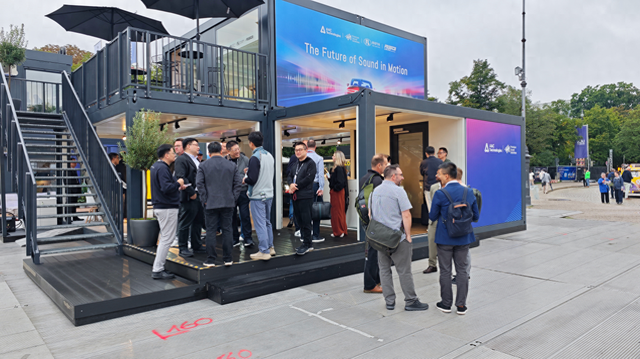
Core Viewpoint - AAC Technologies showcased its advancements in automotive acoustics and related technologies at the Munich International Motor Show, emphasizing its position as a key player in the automotive sound ecosystem [1][3]. Group 1: Company Developments - Since entering the automotive acoustics sector in 2018, AAC Technologies has integrated key technologies through strategic acquisitions, establishing a comprehensive acoustic ecosystem from perception to output [3]. - The company is now recognized as one of the few suppliers capable of providing end-to-end automotive acoustic solutions, including hardware, software, algorithms, and tuning services [3]. - AAC Technologies is ranked among the top ten global passenger car audio system providers and is the only Chinese company in this category [3]. Group 2: Technological Innovations - The company highlighted its collaboration with Zeekr and Naim Audio in developing the Zeekr 9X model, featuring a custom 9.2.4.8 immersive audio system with 32 speakers and 8 seat transducers, achieving a peak power of 3868W [5]. - The audio system utilizes a 3D virtual surround algorithm to enhance standard stereo sources into multi-layered auditory experiences, restoring three-dimensional spatial information [5]. - AAC Technologies presented a full-stack automotive acoustic solution based on "physical AI," demonstrating its technology's application in products like the Zeekr 9X [5]. Group 3: Market Position and Future Plans - The automotive business segment of AAC Technologies reported a year-on-year revenue growth of 13%, reaching 1.74 billion yuan, indicating its importance within the company's overall operations [5]. - The company aims to leverage global resources to assist partners like First Light Auto Parts and PSG in expanding into overseas markets, providing customized full-stack solutions to enhance the smart driving experience [6].

物理AI不只是“机器换人”:亚马逊新增30%高技能岗位
3 6 Ke· 2025-09-12 07:29
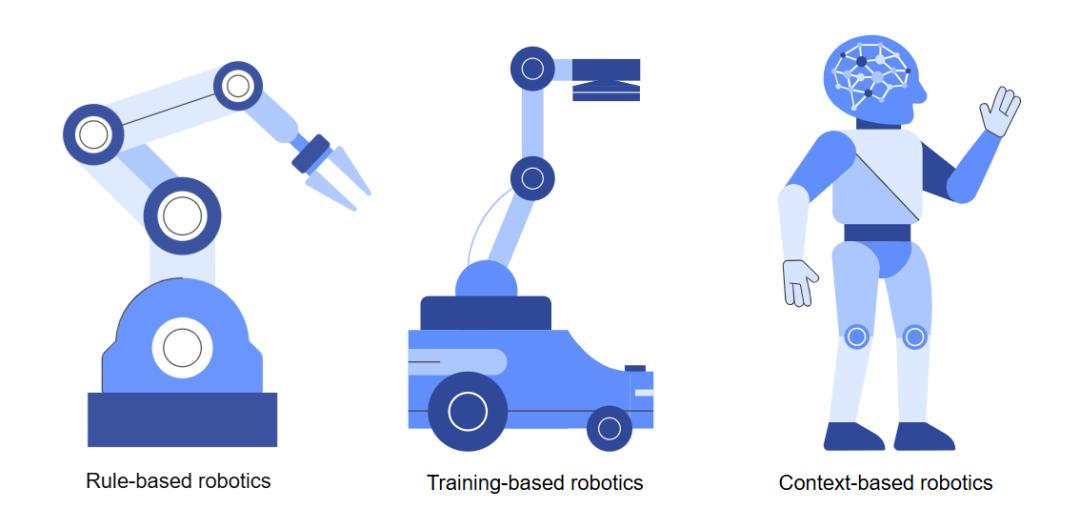
Core Insights - The evolution of automation, particularly through physical AI, is transforming industrial operations, enhancing flexibility and risk resilience in manufacturing environments [1][6][11] - The current challenges faced by manufacturers, including rising costs, labor shortages, and fluctuating customer demands, necessitate the adoption of advanced robotic technologies [6][11] Group 1: Evolution of Industrial Robots - The application of physical AI represents the next step in the long-term evolution of industrial robots, which date back to the 1960s [2] - Early industrial robots were rule-based, designed for high-precision, repetitive tasks, but lacked flexibility [2][3] - Training-based robots are now emerging, capable of learning from experiences and handling variable tasks, making them suitable for medium-volume and non-repetitive production [3][5] Group 2: Importance of Physical AI and Intelligent Robots - The integration of robotic technology is timely for manufacturers, addressing vulnerabilities in supply chains exacerbated by geopolitical tensions and material shortages [6][7] - Intelligent robots enhance operational flexibility, enabling manufacturers to meet evolving customer demands for customization, faster delivery, and sustainability [6][7] Group 3: Workforce Development for Automation - A skilled workforce is essential for the successful integration of intelligent robots, with a focus on reskilling and continuous learning [8] - The transition to automation will not eliminate jobs but will transform them, creating new high-skill positions in robotics and AI [8] Group 4: Real-World Applications of Physical AI - Early adopters like Amazon have demonstrated the value of intelligent robots, achieving a 25% increase in efficiency and a 10% improvement in operational efficiency through the deployment of over 1 million robots [10] - Foxconn is transitioning to an AI-driven robotic workforce, utilizing digital twin technology to automate complex tasks, resulting in a 20-30% reduction in production cycles and a 15% decrease in operational costs [10] Group 5: Leveraging the Value of Physical AI - The momentum of intelligent robots is expected to grow, with manufacturers urged to adopt a layered automation strategy that integrates various robotic technologies [11] - Companies should prioritize a human-centered approach to ensure sustainable and inclusive integration of robotic systems [11]

下一个10万亿级市场呼啸而来,3800点之上,机器人正蓄势待发
Zheng Quan Shi Bao· 2025-09-08 00:10
Core Insights - The era of robotics is emerging, with the Robotics ETF (562500) deeply embedded in this transformation [1] - Tesla's "Master Plan" emphasizes that 80% of its future value will come from the Optimus robot, indicating a significant shift towards automation [1][4] - Nvidia's launch of the Jetson AGX Thor developer kit marks a pivotal moment in the advancement of physical AI and robotics [1][5] - China's robotics industry is transitioning from a follower to a disruptor, showcasing significant advancements and applications in various sectors [1][6] Tesla's Robotics Strategy - Tesla's "Master Plan" highlights a growing focus on AI and robotics, aiming for large-scale production of robots to replace human labor [4] - Elon Musk projects that by 2029, the production of Optimus robots could reach 1 million units annually [4] - The Optimus 3 robot is expected to be officially launched by the end of this year, marking a significant milestone in Tesla's robotics ambitions [4] Nvidia's Role in Robotics - Nvidia's Jetson AGX Thor is described as a comprehensive technology stack for robotics, integrating advanced hardware, software tools, and AI models [5] - The company aims to build a complete ecosystem for robotics, covering all necessary components from foundational models to specialized hardware [5] China's Robotics Industry - China's share of the global robotics market is projected to reach approximately 40% by 2024, with the market size expected to grow from $47 billion in 2024 to $108 billion by 2028 [8][9] - China leads the world in industrial robot installations, accounting for over half of the global total [9] - By 2030, it is estimated that China will have 252,000 humanoid robots, increasing to 302 million by 2050, surpassing the U.S. market significantly [9] Robotics ETF Insights - The Robotics ETF (562500) has seen substantial growth, with a current size of 17.032 billion yuan, reflecting strong market interest in the robotics sector [13] - The ETF includes a significant proportion of humanoid robot stocks, with 63.67% of its components related to humanoid robotics [13] - The index tracks 73 stocks, with the top ten accounting for 48.86%, providing exposure to leading companies in the robotics field [14]


东芯股份分析师会议-20250904
Dong Jian Yan Bao· 2025-09-04 12:58
1. Report Industry Investment Rating - No relevant information provided. 2. Core Viewpoints - The company focuses on the "storage, computing, and connectivity" integrated technology layout, aiming to become a leading domestic memory chip design enterprise, and is committed to providing multi - product line memory chip products. The investment in Shanghai Lisuan is based on its development potential, which may increase short - term profit pressure but is beneficial for long - term strategy. The 7G100 series products of Shanghai Lisuan are self - designed, and the domestic GPU chip market has large development space. [27][34][35] 3. Summary by Directory 3.1. Research Basic Situation - The research object is Dongxin Co., Ltd., belonging to the semiconductor industry. The reception time was on September 4, 2025. The company's reception staff included the chairman, general manager, deputy general manager, board secretary, financial director, and independent director. [16] 3.2. Detailed Research Institutions - The institutions are investors who participated in the company's 2025 semi - annual performance briefing online. [19] 3.3. Research Institution Proportion - No relevant information provided. 3.4. Main Content Data - **Pre - solicited Questions**: Shanghai Lisuan's GPU products are mainly used in scenarios such as personal computers, professional design, AIPC, cloud gaming, cloud rendering, and digital twins, and do not involve chiplet technology for now. The company will consider business and cooperation according to strategic planning and disclose information as required. The management pays attention to Lisuan's development, and the 7G100 series graphics cards can be used in multiple scenarios. [23][25][25] - **Formal Questions**: - **Lisuan's Business Plan**: It is a GPU chip design enterprise focusing on graphic rendering, aiming to meet various graphic rendering and general computing needs. It adheres to self - developed architecture, products are for mainstream graphic rendering and AI acceleration at the edge, cloud, and terminal, and strives to solve the problem of independent and controllable domestic mainstream GPU architecture. [25] - **Information Disclosure**: The company will disclose major impact matters of Lisuan as required, and specific information should be based on official announcements. [26][29][36] - **Dongxin's Work Focus**: It will adhere to the strategy, provide diversified products for key applications and customers, explore new application fields, and promote technology innovation and product process iteration. It also conducts technology layout in the "storage, computing, and connectivity" integrated field. [27] - **Investment in Lisuan**: The investment is based on development potential. Although it may increase short - term profit pressure, it helps the long - term strategy. The impact on performance depends on Lisuan's operation. The company has a low asset - liability ratio and good financial stability. [34] - **Response to Physical AI**: The company will continue to pay attention to the development of cutting - edge technologies and conduct strategic layout according to its actual situation. [29] - **Lisuan's Product Development**: The planning and R & D design of the new product 7G200 are in progress. As of now, Lisuan has sent samples to some customers and is continuously optimizing, and will continue to promote production and sales. [29][31][37] - **Cooperation with Giants**: The company and Lisuan actively seek cooperation with mainstream manufacturers, and will disclose major cooperation matters that meet the disclosure standards. [32] - **Competition and Strategy**: The company will drive through technological innovation, ensure quality systems, collaborate in the supply chain, and support with talent strategies to enhance global market competitiveness. [35] - **Technical Threshold and Commercialization**: Shanghai Lisuan's 7G100 series products have independent GPU architecture, and the domestic GPU chip market has large development space. The profit cycle of large - scale chips is difficult to accurately estimate. [35][36]
索辰科技(688507):“天工+开物”驱动成长,物理AI贡献收入
Huachuang Securities· 2025-09-04 08:43
Investment Rating - The report maintains a "Recommendation" rating for the company, with a target price of 111.65 CNY and a current price of 95.15 CNY [4][8]. Core Views - The company reported a revenue of 57 million CNY for H1 2025, representing a year-on-year increase of 10.82%. The net profit attributable to shareholders was -46 million CNY, with losses narrowing compared to the previous year [2][3]. - The company is focusing on two main product lines: "TianGong" (CAE) and "KaiWu" (Physical AI), with high-margin engineering simulation software contributing significantly to revenue growth [3][8]. - The company is committed to high R&D investment, with R&D expenses amounting to 50.62 million CNY in H1 2025, accounting for 88.27% of revenue [3][8]. - The "KaiWu" platform has shown initial success, generating 3.75 million CNY in revenue in H1 2025, with a target of 30 million CNY for the year [3][8]. - The company is strategically acquiring to enhance its industrial ecosystem, including a merger with a leading real-time industrial database company [3][8]. Financial Summary - Total revenue projections for 2025-2027 are 523 million CNY, 739 million CNY, and 1,071 million CNY, with corresponding growth rates of 38.0%, 41.4%, and 44.8% [4][8]. - The net profit attributable to shareholders is expected to reach 86 million CNY, 125 million CNY, and 169 million CNY for the same period, with growth rates of 107.8%, 45.1%, and 35.4% respectively [4][8]. - The company maintains a high gross margin, with an overall gross margin of 41.89% in H1 2025, driven by the increase in high-margin business [3][8].
宇树IPO提速,资本操碎了心
3 6 Ke· 2025-09-04 08:22
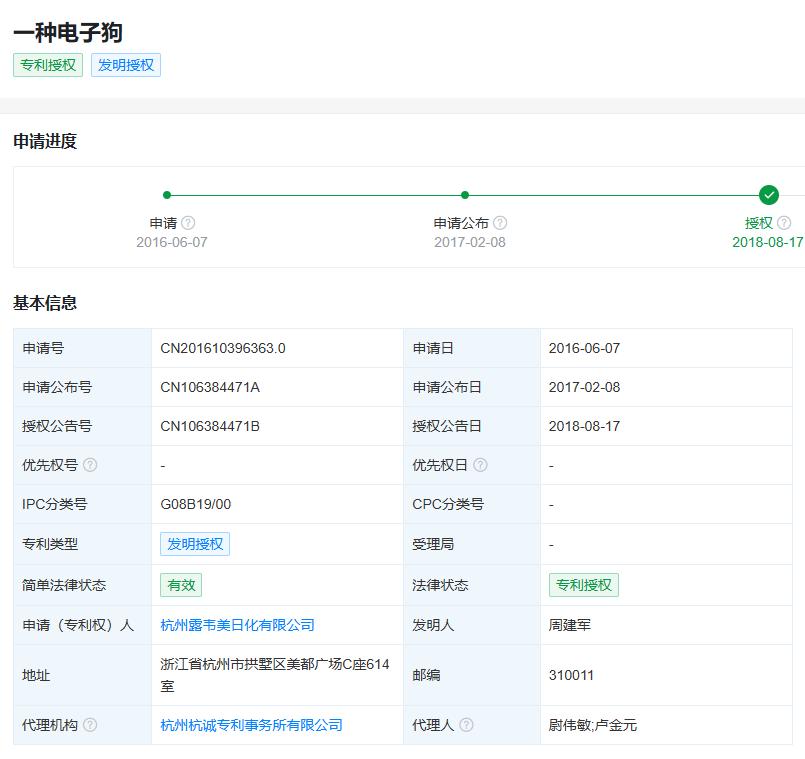
Core Viewpoint - Yushu Technology, a leading player in the quadruped robot market, is expected to submit its IPO application by the end of the year, marking a significant milestone for the company [1][2]. Group 1: Company Overview - Founded by Wang Xingxing, Yushu Technology aims to illuminate the "technology tree" for humanity, reflecting its idealistic vision [2][22]. - The company has achieved nearly monopolistic control over the global quadruped robot market, holding approximately 70% market share and has been profitable for five consecutive years [17][18]. Group 2: Legal Challenges - Yushu Technology is currently facing a lawsuit from Hangzhou Luweimei Daily Chemical Co., which claims patent infringement related to a product known as "electronic dog" [6][10]. - The plaintiff, represented by Zhou Jianjun, has a history of litigation, having been involved in numerous legal disputes, which raises concerns about the legitimacy of the lawsuit [10][11]. - The lawsuit's timing coincides with Yushu's IPO preparations, suggesting a strategic move to challenge the company at a critical moment [16][19]. Group 3: Industry Context - Wang Xingxing has expressed concerns about the inadequacy of AI models in the robotics industry, highlighting a significant gap between hardware capabilities and AI performance [17][28]. - The recent launch of NVIDIA's Jetson Thor, a powerful computing platform for physical AI, could play a crucial role in addressing these AI challenges for Yushu Technology [19][20]. - The relationship between Yushu Technology and NVIDIA is pivotal, as NVIDIA has shown interest in Yushu's robots for research purposes, indicating a strong partnership that could enhance Yushu's technological capabilities [20][21]. Group 4: Strategic Importance - Yushu Technology's success is not only vital for the company itself but also for the broader narrative of domestic hard-tech innovation in China, as it is supported by major investors like Tencent, Alibaba, and Meituan [25][27]. - The outcome of the ongoing legal battle and the company's ability to navigate its dual role as an idealist and a realist will significantly impact its IPO prospects and the perception of the domestic tech ecosystem [29].
卷疯了!字节、阿里等大厂发力AI智能体,全球96%企业正部署AI模型
Tai Mei Ti A P P· 2025-09-03 08:36
Core Insights - Major Chinese tech companies such as Alibaba, ByteDance, Tencent, and Meituan are intensifying their efforts in AI agents, accelerating the commercialization of generative AI applications [2][4] - Alibaba's Tongyi Lab launched AgentScope 1.0, a new framework aimed at simplifying the development, operation, and management of AI agents [2] - Tencent's Youtu-Agent framework has been open-sourced, while ByteDance's Agent platform "Kouzi Space" is now available on major app stores [2] - Meituan released the LongCat-Flash-Chat model with 560 billion parameters, demonstrating superior performance in AI applications [2][4] Investment and Financial Performance - The combined capital expenditure of major Chinese tech firms (BAT) exceeded 615 billion yuan in Q2, marking a 168% increase year-on-year [5] - Alibaba reported cloud revenue of 33.398 billion yuan, a 26% increase, and a capital expenditure of 38.676 billion yuan, up 220% year-on-year [5] - Tencent's CSIG department reported revenue of 55.536 billion yuan, a 10% increase, with capital expenditure of 19.1 billion yuan, up 119% [5] - Baidu's cloud revenue reached 10 billion yuan, with capital expenditure of 3.8 billion yuan, a 79% increase [5] Market Trends and Projections - The AI agent market in China is expected to exceed $27 billion by 2028, driven by increasing enterprise adoption [12] - A report indicated that 96% of global enterprises are deploying AI models, with 91% planning to use Web Application and API Protection (WAAP) for security [8] - The demand for AI computing power is surging, with Chinese cloud service providers' capital expenditures growing rapidly, reaching approximately $45 billion over the past year [6][7] Technological Advancements - The introduction of AI agents is enhancing the capabilities of AI applications, allowing for dynamic decision-making and tool utilization [8] - F5 has launched an AI gateway product to ensure the security of AI applications across various infrastructures [9] - The development of physical AI, including humanoid robots, is gaining momentum, with NVIDIA's new Jetson AGX Thor providing significant computational power for advanced applications [13][14] Industry Challenges - The integration of AI agents into physical robots presents challenges in data collection and processing, particularly in dynamic environments [14] - Security concerns are paramount as the convergence of digital and physical spaces increases the complexity and risks associated with AI applications [15]






索辰科技(688507):“天工:开物”双擎驱动,物理AI打开第二增长曲线
Guotou Securities· 2025-09-03 07:03
Investment Rating - The investment rating for the company is "Buy-A" with a target price of 112.81 CNY for the next six months [8][11]. Core Insights - The company reported a total revenue of 57.35 million CNY for H1 2025, representing a year-on-year growth of 10.82%. The net profit attributable to the parent company was -45.70 million CNY, showing a 31.21% improvement compared to the previous year [3]. - The company is transitioning from traditional CAE to physical AI, with a focus on engineering simulation software and solutions. The engineering simulation software revenue increased by 88.84% year-on-year to 16.82 million CNY in H1 2025 [4]. - The company is actively expanding its presence in the civil market and has signed strategic cooperation agreements with leading domestic enterprises, aiming for industry integration and resource optimization [6]. Financial Performance - The company expects revenues of 502.2 million CNY, 634.8 million CNY, and 759.1 million CNY for the years 2025, 2026, and 2027 respectively, with net profits projected at 73.8 million CNY, 91.4 million CNY, and 119.8 million CNY for the same years [11][12]. - The company’s gross margin is expected to improve, with a projected gross margin of 71.8% in 2025, increasing to 74.3% by 2027 [12][13]. Strategic Developments - The company is focusing on low-altitude physical AI platforms and has established partnerships to develop intelligent management systems for low-altitude airspace [5]. - The company is pursuing mergers and acquisitions to enhance its industry chain layout and is currently advancing a merger with Likong Technology [6][11].