
科技成果转化

Search documents
进一步突破科技成果转化瓶颈
Xin Hua Ri Bao· 2025-07-21 21:58
Core Viewpoint - The article emphasizes the need to deepen the reform of the technology transfer mechanism and strengthen the national technology transfer system to enhance the conversion of scientific and technological achievements into economic benefits, which is crucial for achieving high-level technological self-reliance and building a new quality of productive forces [1] Group 1: Challenges in Technology Transfer - Jiangsu province, despite being one of the most innovative regions, faces bottlenecks in the ecosystem, services, incentives, and evaluation of technology transfer [1] - Key challenges include insufficient prominence of enterprises as innovation subjects, gaps in professional market service supply, and a lack of standards for evaluating the value of technological achievements [1] Group 2: Strategies for Improvement - The province aims to adopt a problem-oriented approach to enhance technology transfer by implementing targeted policies focusing on the ecosystem, service system, incentive system, and evaluation system [1][2] - A collaborative model involving enterprises, government, and academic institutions is proposed to address critical technology challenges and facilitate the local transaction and application of valuable research projects [2] Group 3: Building a High-Level Service System - The establishment of concept verification and pilot testing platforms is crucial for supporting strategic emerging industries and enhancing the production capacity of laboratory results [3] - There is a focus on developing a specialized team of technical managers who possess both technological and business management knowledge to better identify the market value of technological innovations [3] Group 4: Incentive Mechanisms - The article discusses the need for a comprehensive incentive system, including the separate management of occupational scientific achievements and the empowerment of researchers to encourage innovation [4] - The expansion of the reform scope to include more institutions and the promotion of successful reform cases are also highlighted [4] Group 5: Evaluation of Technological Achievements - The article stresses the importance of improving the evaluation methods for technological achievements, including the establishment of a classification index system and the use of market mechanisms for pricing [5][6] - The integration of advanced technologies such as big data and artificial intelligence in the evaluation process is recommended to enhance the accuracy and effectiveness of assessments [5]
我国研发经费比“十三五”末增长近50%,科技体制改革向纵深推进|“十四五”规划收官
Di Yi Cai Jing· 2025-07-21 11:45
Group 1: Innovation and R&D Investment - China's R&D investment intensity has reached 2.68%, approaching the OECD average of 2.73% [1] - In 2022, China's total R&D expenditure increased by nearly 50% compared to the end of the 13th Five-Year Plan, amounting to an additional 1.2 trillion yuan [1] - China ranks 11th in the 2024 Global Innovation Index, being the only middle-income economy in the top 30 [2] Group 2: Technology and Industry Integration - The integration of technology innovation and industry innovation is emphasized as a key strategy for fostering new growth drivers and advantages [3] - In 2023, the total contract amount for technology transfer from universities and research institutions reached 205.44 billion yuan, a year-on-year increase of over 10% [3] - The government is focusing on breaking down barriers in the technology transfer process to enhance collaboration between enterprises and research institutions [5] Group 3: Corporate R&D Contributions - Enterprises accounted for 77.7% of total R&D expenditure in 2023, reflecting a slight increase from 2022 [6] - The contribution rate of enterprises to the growth of total R&D expenditure reached 79.4%, making them the main driving force behind R&D growth [6] - Despite the increase in corporate R&D investment, there is still a need for improvement in basic research contributions from enterprises [6] Group 4: Science and Technology Management Reform - The Chinese government is advancing reforms in science and technology management to address issues of resource duplication and fragmentation [7] - A new mechanism for central financial technology funding has been established to enhance the organization and layout of innovation resources [8] - Policies have been implemented to grant greater autonomy to research institutions and personnel, aiming to improve research efficiency [9]
通山跨海架金桥 八闽勇毅立潮头 福建走好中国特色金融发展之路调研行(下篇)
Jin Rong Shi Bao· 2025-07-21 02:47
Group 1: Financial Development in Fujian - Fujian's economic and financial development is characterized by a blend of maritime openness and mountainous resilience, reflecting the region's unique geographical and cultural advantages [1] - The establishment of Xiamen International Bank in 1985 marked a significant milestone in China's banking history, being the first Sino-foreign joint venture bank, which has since evolved into a key player in cross-border financial services [2][3] - Xiamen International Bank has expanded its international business, with over 33% of its total business coming from international operations, and has achieved a significant growth in overseas Chinese financial services, surpassing 210 billion yuan in business volume [3] Group 2: Innovation in Financial Services - The Xiamen Free Trade Zone has become a hub for financial innovation, introducing various policies to facilitate cross-border trade and investment, including tax exemptions and macro-prudential management for cross-border financing [5] - The establishment of financing leasing companies in the aviation sector has been a key trend, with Xiamen Airlines Leasing completing financing projects exceeding 5.8 billion yuan since its inception [4] Group 3: Technology and Financial Integration - Fuzhou High-tech Zone has emerged as a center for high-tech industry development, housing around 2,500 national high-tech enterprises, which account for approximately 18% of Fujian's total [6][8] - Financial services in Fuzhou are increasingly tailored to support technology transfer and innovation, with initiatives like credit loans for startups and specialized funds for mature enterprises [8][9] Group 4: Cross-Strait Financial Services - Xiamen Bank has developed specialized services for Taiwanese residents, facilitating easier access to banking services and achieving significant customer engagement with over 8,680 Taiwanese clients [12][13] - The establishment of Jin Yuan Unified Securities as a cross-strait joint venture reflects the growing integration of financial services catering to Taiwanese enterprises seeking to enter the mainland capital market [14] Group 5: Policy Support for Financial Integration - Recent policies from the People's Bank of China and the State Administration of Foreign Exchange aim to enhance financial support for cross-strait integration, focusing on optimizing the financial ecosystem for Taiwanese businesses [15]
从“金点子”到“金钥匙” 科技成果转化全链条攻坚
Zhong Guo Zheng Quan Bao· 2025-07-20 20:17
Core Insights - The third China International Supply Chain Promotion Expo highlighted the importance of transforming scientific research into industrial applications, showcasing a 30-year journey from a doctoral thesis to material samples and products [1] - The event emphasized the need for collaborative support across the entire industrial chain to facilitate the transformation of technological innovations into practical applications [1] Group 1: Innovations in Materials - Dalian KOTAI New Materials Co., Ltd. developed a ceramic aluminum seed engineering preparation technology, which took over 4,000 experiments since 1994 to achieve industrial-scale production [2] - The new aluminum alloys and aluminum-based composite materials produced using this technology exhibit significantly enhanced properties, making them suitable for various industries including automotive, aerospace, and robotics [2] Group 2: Collaborative Innovation - BETTERI introduced a new S+i graphite long-lasting negative electrode material solution, which improves battery lifespan by 20% and enhances storage performance by over 25% [3] - The expo served as a platform for vertical communication between upstream and downstream partners, facilitating efficient collaboration and innovation [3] Group 3: Cross-Border Collaboration - The collaboration between Indonesia's Golden Agri-Resources, BASF, and China’s Doubaicheng resulted in the development of a "zero plastic" water-based barrier food packaging paper, which is eco-friendly and suitable for various food industries [4] Group 4: Comprehensive Support for Innovation - The Ministry of Industry and Information Technology and the State-owned Assets Supervision and Administration Commission are promoting a "one-stop" application plan to support the industrialization of innovative results across 113 key product categories by the end of 2024 [6] - The China Technology Exchange reported a 25-fold increase in business scale compared to ten years ago, indicating a significant acceleration in the transformation of technological innovations [6] Group 5: Ecosystem for Technology Transfer - TUS Holdings has established a "seven-step incubation chain" to nurture university innovations and facilitate their transformation into viable businesses through a combination of incubation and investment [7]

深圳先进院科技成果超市(江门专区)正式启用
Nan Fang Du Shi Bao· 2025-07-19 03:23
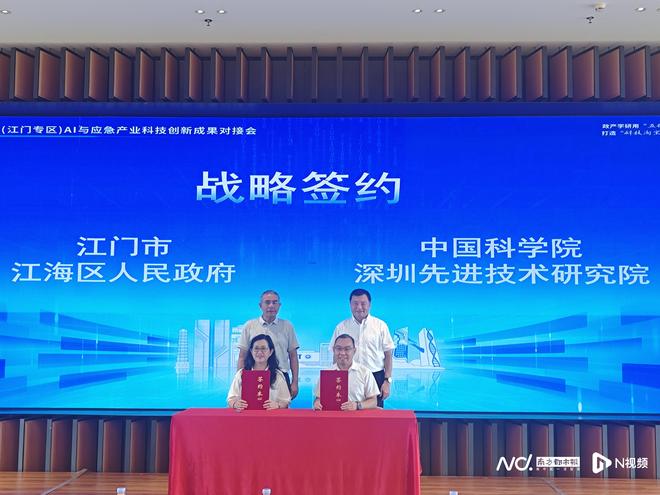
Group 1 - The opening of the "Results Supermarket" in Jiangmen is a significant step for the Jianghai District to integrate into the innovation ecosystem of the Guangdong-Hong Kong-Macao Greater Bay Area [3] - The "Results Supermarket" aims to translate Shenzhen's technological achievements into practical solutions for Jiangmen enterprises, creating a complete innovation chain from R&D to industrial application [3][5] - The "Results Supermarket" features a technology achievement exhibition area and a specialty industry exhibition area, showcasing nearly a hundred scientific discoveries and technological achievements [3] Group 2 - The Chinese Academy of Sciences launched the "Fusion Point" action for technology transfer in November 2024, aiming to accelerate the application of scientific achievements through precise supply-demand matching [5] - The Shenzhen Advanced Institute plans to establish a "Results Supermarket" by February 2025, connecting high-tech achievements with industrial integration [5] - At the AI and emergency industry technology innovation results docking conference, researchers presented advancements in efficient motor technology and AI visual technology for hazardous material monitoring [5] Group 3 - Companies such as Lifu Environmental Protection, Oupede Servo Motor, and Guangdong Sifang Weikai signed cooperation memorandums with the Shenzhen Advanced Institute, covering areas like AI servo motor systems and automation in precious metal production and recycling [5] - The "Results Supermarket" allows traditional chemical enterprises to access cutting-edge technologies and enhance industry chain connectivity [6] Group 4 - The event included a ceremony for awarding member schools of the Guangdong-Hong Kong-Macao Greater Bay Area Youth Innovation Science Education Base, promoting deep educational cooperation with local schools [8]

“J-TOP创新挑战季”人工智能专场常熟举行
Su Zhou Ri Bao· 2025-07-18 23:58
Core Insights - The "J-TOP Innovation Challenge Season" focuses on promoting technology transfer driven by demand, particularly in the field of artificial intelligence [1][2] - The event in Changshu has identified over 60 technology challenges from enterprises, aiming to facilitate solutions from universities and research institutions [1] Group 1: Event Overview - The "J-TOP Innovation Challenge Season" is a technology transfer initiative in Jiangsu Province that encourages collaboration between enterprises and research institutions [1] - The event held in Changshu included over 10 supply-demand matching sessions, addressing specific technological challenges faced by companies [1] Group 2: Technology Demand and Collaboration - A total of 217 technology demands have been collected from enterprises in the Suzhou area, resulting in over 30 facilitated technology transaction projects [1] - Suzhou Institute of Technology has engaged with six companies on AI research projects, signing a "pay after use" technology licensing agreement to alleviate financial concerns for small and medium enterprises [2] Group 3: Future Initiatives - Changshu plans to continue various promotional activities, including expert visits to enterprises and project roadshows, to enhance collaboration between technology achievements and projects [2] - A project database will be established for collaborations formed during the "J-TOP Innovation Challenge Season," ensuring ongoing support and tracking of project effectiveness [2]
让实验室“金点子”加速变成产业发展“金钥匙”
Zhong Guo Qing Nian Bao· 2025-07-18 12:59
Group 1 - The core advantage of Dalian KOTIAN New Materials Co., Ltd. lies in its proprietary technology for the engineering preparation of ceramic aluminum crystal seeds, which has been developed over 30 years since its inception in a doctoral thesis in 1994 [1] - The company successfully showcased its products at the third China International Supply Chain Promotion Expo, highlighting its journey from a doctoral thesis to industrial application [1][2] - The innovation chain area at the expo was established to facilitate seamless integration between the innovation chain and the industrial chain, featuring 14 participating organizations and companies [2][3] Group 2 - The "One-Stop" application plan initiated by the Ministry of Industry and Information Technology focuses on the engineering, commercialization, and industrialization of innovative achievements in the foundational industry, involving over 1,600 upstream and downstream enterprises [4] - The collaboration between Zhongchu Guoneng and Wolong Electric resulted in the launch of the world's largest 105 MW two-pole high-speed motor, showcasing the importance of cooperative innovation in overcoming technical challenges [4] - The establishment of a reasonable pricing mechanism for intellectual property transactions is crucial for effective technology transfer, as demonstrated by the Shanghai Technology Exchange's approach [5][6]
推动顶尖科技成果落地转化,山东产研院举办院士座谈交流会
Qi Lu Wan Bao· 2025-07-17 05:59
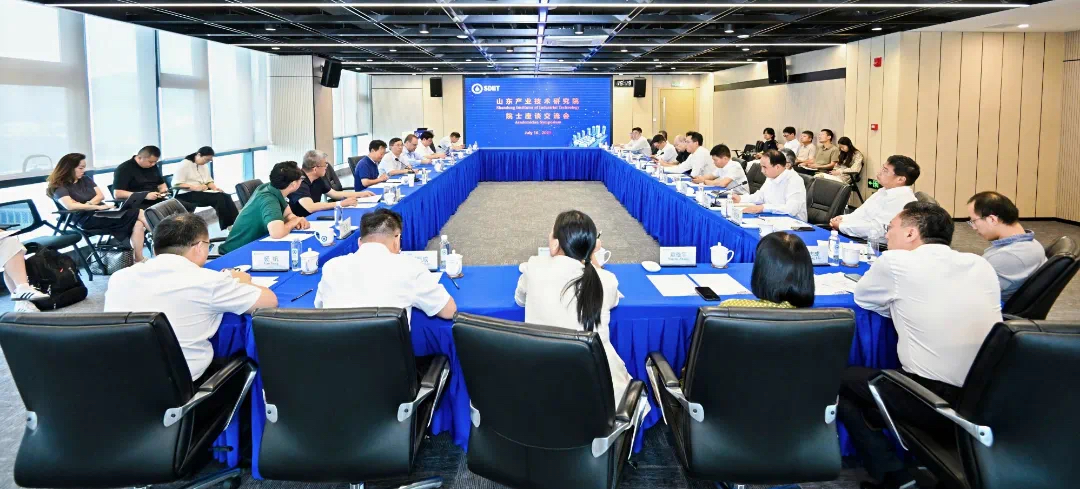
Core Insights - The Shandong Academy of Industrial Technology (Shandong产研院) hosted a symposium with top scientists to discuss the transformation of cutting-edge technology and regional innovation development [1][3][4] - The event aimed to invite international experts to collaborate on upgrading Shandong's industries and to promote the integration of technology and industry for high-quality development in Jinan and Shandong Province [3][6] Group 1: Event Overview - The symposium featured prominent scientists, including foreign academicians and professors from various prestigious institutions, focusing on advanced technology and its application in industry [1][3] - Discussions included the latest breakthroughs in materials science and their potential for industrial application in Shandong [3][4] Group 2: Research and Collaboration - Experts shared their core research findings, emphasizing the feasibility of translating these results into practical applications within Shandong's industrial landscape [3][4] - Notable topics included advancements in biomedical materials, nanomedicine, and smart biomaterials, aligning with Shandong's industrial development needs [3][4] Group 3: Future Directions - The symposium served as a platform for discussing the creation of a more attractive innovation ecosystem and efficient mechanisms for technology transfer [4][6] - Shandong产研院 plans to leverage this event to deepen strategic collaborations with international scientists and accelerate the integration of global innovation resources with local industrial demands [6]
聚焦Micro LED,厦门光电显示转移转化中心成立
WitsView睿智显示· 2025-07-17 05:43
Core Viewpoint - The establishment of the Optoelectronic Display Technology Transfer and Transformation Center in Xiamen aims to enhance the efficiency of technology transfer in the optoelectronic display industry, focusing on new display technologies, functional materials, and third-generation semiconductors [1][2]. Group 1: Center Establishment and Objectives - The center is initiated by Xiamen Torch Group and is part of a national effort to create regional technology transfer centers, aiming to build a comprehensive service system for technology achievement transformation [1][2]. - The center will promote the integration of industry needs and technology innovation, facilitating the deep integration of technological and industrial innovation [1][2]. Group 2: Industry Context and Importance - Xiamen is the only pilot city for the optoelectronic display industry cluster in China, housing over 2,000 related enterprises, including major Taiwanese companies [2]. - Enhancing the transfer and transformation of university technology is crucial for Xiamen to develop a globally competitive new display industry [2]. Group 3: Service and Support Mechanisms - The center will establish a professional team that understands technology, industry, and capital, creating a comprehensive public technology platform and one-stop service platform [3][6]. - A dual-track service system will be implemented, combining teams and experts to ensure effective technology transfer from research to industry [6]. Group 4: Infrastructure and Funding - The center plans to leverage existing resources and establish 17 public technology platforms to support the entire chain of service from research to small-scale production [7]. - A technology achievement transformation fund will be created to provide stable long-term funding, with a total scale of 5 billion yuan for supporting seed and early-stage projects [8].

临沂(京津冀)招商引资推介会签约22个项目
Xin Jing Bao· 2025-07-16 14:45
Core Insights - The Linyi Investment Promotion Conference was held in Beijing, resulting in the signing of 22 projects focused on emerging industries such as new energy, modern medicine, and high-end equipment [1] Group 1: Project Attraction - Linyi has successfully attracted 485 projects from the Beijing-Tianjin-Hebei region, establishing itself as a regional sub-center in Shandong Province with a GDP of 655.6 billion yuan, ranking 21st among Chinese prefecture-level cities [2] - The city has set up seven talent hubs in the Beijing-Tianjin-Hebei area, recognized as a national innovative city and among the top 100 cities for innovation capabilities [2] Group 2: Logistics and E-commerce - Linyi boasts the largest market cluster in the country with 136 wholesale markets and over 6 million types of goods, achieving the highest annual transaction volume among prefecture-level cities [3] - The logistics costs in Linyi are 30% lower than the national average, with a logistics network that allows for same-day delivery within 600 kilometers and next-day delivery within 1500 kilometers [3] - The city has developed 60 e-commerce parks and has 210,000 online businesses, with a total online retail sales of 82.5 billion yuan last year [3] Group 3: Industrial Development - Linyi is focusing on 13 key industrial chains, including traditional industries like high-end panels and green smart home products, as well as emerging sectors such as new energy commercial vehicles and biomanufacturing [4] - The city aims for a trillion-yuan industrial economy, with 4,907 large-scale industrial enterprises and an industrial output value of 868.8 billion yuan last year [4] Group 4: Business Environment - Linyi has 1.54 million market entities, with the private economy contributing over 90% of the city's revenue, tax, and employment [5] - The city has implemented a series of supportive policies to optimize the business environment, including 28 measures for business facilitation and 10 financial support initiatives [5] - Linyi has been recognized for its strong investment potential and ranked 3rd in the "Top 50 Potential Internet Celebrity Cities" [5]