
双碳目标

Search documents
苏州500千伏车坊变电站顺利送电
Ke Ji Ri Bao· 2026-01-07 07:02
Core Insights - The Jiangsu Suzhou 500 kV Chefang Substation has successfully completed a large-scale expansion project, enhancing its capacity to support the growing electricity demand in the region [1] - The substation plays a crucial role in connecting Wuxi and Shanghai, facilitating the integration of clean hydropower into the Jiangsu power grid [1][2] - The expansion is part of Jiangsu's key projects for the 14th Five-Year Plan and is essential for ensuring power supply during peak winter demand in 2025 [1][2] Group 1 - The Chefang Substation has been operational since April 2001 and supplies approximately 65% of the electricity for the Suzhou Industrial Park, having delivered over 2,000 billion kWh of electricity [1] - The expansion includes the addition of a 1 million kVA main transformer and multiple outgoing lines, which will increase the substation's capacity by 100 million kVA and enhance the annual power supply capability by 8.76 billion kWh, equivalent to the annual electricity consumption of nearly 3 million households [2] - The project is strategically significant for optimizing the energy structure in the Yangtze River Delta and supports the region's green and low-carbon development goals [2] Group 2 - In 2025, Jiangsu plans to undertake 10 major grid projects and 1,007 distribution network projects to ensure power supply during peak winter demand [2] - The completion of the Chefang Substation expansion, along with other major grid projects, will further optimize the integration of renewable energy and enhance overall power supply capabilities in Jiangsu [2]
紧紧把握“三对关系”以扎实有效学习实践为能源保供强基赋能
Xin Lang Cai Jing· 2026-01-07 06:54
Group 1 - The core objective of the theoretical learning center group at Baotou Donghua Thermal Power Co., Ltd. is to enhance theoretical knowledge and apply the Party's innovative theories to address new situations and problems in a systematic manner [1][2] - The company emphasizes the integration of theoretical learning with practical applications in safety production, reform, and development, aiming to empower energy supply through effective learning practices [1][4] - The learning approach includes a combination of individual study, collective discussions, and specialized lectures to ensure that learning is targeted and effective, addressing the specific needs of party members and leaders [3][4] Group 2 - The company prioritizes political construction and aims to deeply understand and implement the Party's innovative theories, ensuring that learning outcomes are translated into actionable strategies for high-quality development [2][4] - The leadership actively engages in research and field studies to address key operational challenges, such as the development of new energy storage and smart heating networks, thereby enhancing the company's operational efficiency [4][5] - Baotou Donghua Thermal Power Co., Ltd. is committed to continuous theoretical reinforcement and innovative learning methods to lead high-quality development while fulfilling its responsibilities in energy security and green transformation [5]
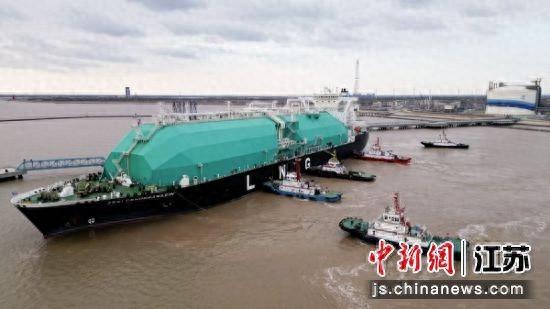
2025年盐城口岸LNG船舶通关数量同比增长10.6%
Zhong Guo Xin Wen Wang· 2026-01-07 05:39
Core Viewpoint - The successful docking of the LNG carrier "Freight" at China National Offshore Oil Corporation's Yancheng "Green Energy Port" marks the commencement of LNG unloading tasks at the Yancheng port, set to continue until 2026 [1]. Group 1: LNG Operations and Statistics - In 2025, the Yancheng border inspection station efficiently facilitated the smooth passage of 52 LNG vessels, representing a year-on-year increase of 10.6% compared to 2024, achieving a new record of 4 vessels in 6 days [3]. - The total LNG unloading volume at China National Offshore Oil Corporation's Yancheng "Green Energy Port" reached 2.646 million tons, significantly contributing to energy supply in the East China region and supporting the national "dual carbon" goals [3]. - The Yancheng "Green Energy Port" has established 4 LNG storage tanks of 220,000 cubic meters and 6 tanks of 270,000 cubic meters, making it the largest LNG energy hub in China, integrating functions of ocean transportation, unloading, storage, gasification, and distribution [3]. Group 2: Efficiency Measures - The Yancheng border inspection station implemented a series of policies focused on "efficient customs clearance and seamless connection," including the "three zero measures" (zero waiting, zero obstacles, zero errors) and "rapid review and direct push" to streamline processes [3]. - These measures reduced nearly 70% of declaration items and shortened the average time vessels spend in port by 2-3 hours, maximizing the efficiency of clean energy operations [3].


港股异动 | 铝业股延续上涨趋势 海外供应扰动背景下 铝价或具备较大补涨空间
智通财经网· 2026-01-07 03:33
Core Viewpoint - The aluminum sector continues its upward trend, with significant stock price increases for companies like Nanshan Aluminum International, China Hongqiao, and China Aluminum, driven by supply constraints and geopolitical factors [1] Group 1: Market Performance - Nanshan Aluminum International's stock rose by 12.13% to HKD 61, China Hongqiao increased by 4.08% to HKD 36.7, and China Aluminum gained 3.32% to HKD 13.71 [1] Group 2: Supply Forecast - CICC forecasts that aluminum supply will initially decline before increasing, with a limited overall increment expected; the net increase in electrolytic aluminum for 2026 is projected to be approximately 1.1 million tons, representing a year-on-year growth of 1.5% [1] - The anticipated rollout of Indonesia's long-term electrolytic aluminum projects may be slower than expected due to power supply constraints, despite the apparent capacity [1] Group 3: Industry Dynamics - Domestic electrolytic aluminum production capacity remains stable, with supply-side structural reforms and dual carbon goals effectively closing the expansion channel, leading to increasing supply rigidity [1] - Although there are some supply disruptions overseas, the overall increase in supply is expected to remain limited through 2026 [1] - Geopolitical factors affecting precious metals and copper prices are likely to support aluminum prices, which are expected to continue fluctuating at a strong level due to low overseas aluminum inventories and supply-side disturbances [1]
【新华社】化“毒”为“宝” 新技术助力破解硫化氢污染难题
Xin Hua She· 2026-01-07 03:09
Core Viewpoint - The research team led by Academician Li Can from the Dalian Institute of Chemical Physics has successfully developed a technology for the complete decomposition of hydrogen sulfide (H2S) into hydrogen and sulfur, addressing a significant environmental challenge posed by H2S emissions in the energy sector [1][2]. Group 1: Technology Development - The newly developed technology utilizes a novel electro-catalytic method to decompose hydrogen sulfide, which has been a long-standing challenge in industries such as natural gas extraction and petrochemicals [2]. - The technology has achieved a decoupling of chemical reactions and charge transfer in the reaction space, allowing for the oxidation of H2S to sulfur and the reduction of protons to hydrogen to occur separately outside the electrode [2]. - This innovation has led to the filing of 26 patents, with 12 already granted, ensuring complete independent intellectual property rights for the technology [2]. Group 2: Environmental Impact - The global annual processing volume of hydrogen sulfide exceeds 70 billion cubic meters, with China alone handling approximately 8 billion cubic meters each year, highlighting the scale of the environmental challenge [2]. - The new technology provides a pathway for the complete elimination and resource utilization of hydrogen sulfide, contributing to cleaner and low-carbon hydrogen production in industrial sectors [2]. - The advancement is significant for industries aiming to achieve carbon neutrality goals, aligning with broader environmental sustainability efforts [2].
【行业深度】一文洞察2026年中国秸秆行业发展前景及投资趋势研究报告
Sou Hu Cai Jing· 2026-01-07 02:34
Core Viewpoint - The straw industry in China is deeply integrated with agriculture, energy, chemicals, and building materials, forming various industrial chains that enhance rural employment and farmers' income while creating indirect economic value through the substitution of petrochemical and wood resources [2][10]. Market Policy - The Chinese government has implemented a series of policies to promote comprehensive utilization of straw, including subsidies, market construction, and incentive measures, providing a favorable policy environment for the development of the straw recycling and processing industry [2][10][12]. - Key policies include the "Air Quality Continuous Improvement Action Plan," which emphasizes the comprehensive utilization of straw and the prohibition of burning, aiming to stabilize the comprehensive utilization rate of straw above 86% [12][10]. Utilization Volume and Rate - The comprehensive utilization of straw in China is projected to increase from 555 million tons in 2024 to 647 million tons, with feed usage accounting for approximately 18.4%, raw material and substrate fields about 1.8%, edible fungus substrate around 2.3%, and fuel fields about 8.2% [2][10]. - The comprehensive utilization rate of straw is expected to rise from 77.7% in 2024 to 88.3%, with the market size growing from 147.63 billion yuan to 205.10 billion yuan [2][10]. Industry Chain - The straw industry chain in China consists of three levels: upstream resource supply and equipment manufacturing, midstream processing and technology conversion, and downstream diversified applications, moving towards scale, high value, and intelligence [13][14]. - The upstream includes straw resource sources, collection, storage, and machinery, while the midstream focuses on processing and technology conversion, leading to applications in agriculture, energy, building materials, and environmental protection [13][14]. Related Companies - Listed companies involved in the straw industry include Sierte (002538), Yili Group (600887), Huarui Agriculture (833462.NQ), Xuerong Biological (300511), Shouxiangu (603896), Disen Co. (300335), Changqing Group (002616), Sun Paper (002078), and Shengquan Group (605589) [2].




央企集体布局!气凝胶产业步入资本快车道
Xin Lang Cai Jing· 2026-01-07 01:29
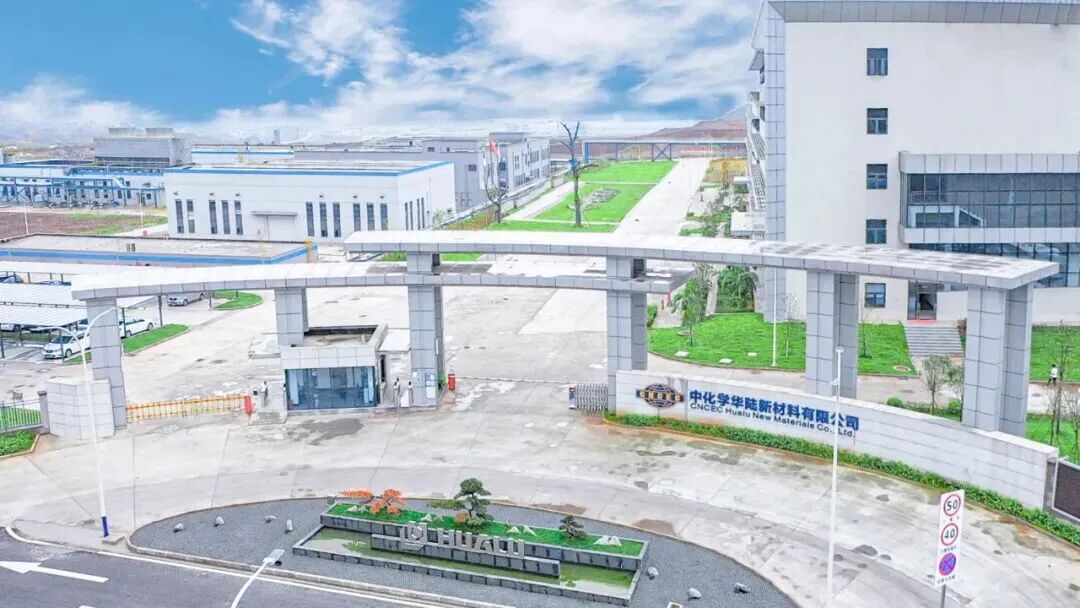
Core Insights - The recent A-round financing by Hualu New Materials, a subsidiary of China Chemical Engineering, marks a significant acceleration in the industrialization of aerogel, attracting investments from major state-owned enterprises [1][4]. Group 1: Capital Influx - The A-round financing attracted investments from prominent state-owned enterprises such as China Chemical New Materials Fund and China Petroleum Group Kunlun Capital, indicating strong industrial backing rather than just financial investment [4][12]. - The Chinese aerogel market has surpassed a critical threshold, with projections indicating it will capture a significant share of the global market by 2029, supported by favorable policies [4][12]. Group 2: Technological Breakthroughs - Historically known as a "noble material" due to high costs, aerogel is undergoing a transformation with advancements in raw material sourcing and drying technology, significantly reducing production costs [5][13]. - The introduction of atmospheric drying technology has led to a 40% reduction in production costs compared to five years ago, lowering the average price of aerogel from 500 RMB per square meter in 2018 to 250 RMB per square meter in 2023 [5][13]. Group 3: Application Scenarios - The demand for aerogel is diversifying across multiple sectors, including: - The electric vehicle industry, where aerogel insulation is becoming standard for battery packs, enhancing thermal resistance to over 800 degrees Celsius [6][14]. - The construction sector, where aerogel composite insulation boards are increasingly replacing traditional materials due to superior fire resistance and reduced thickness [6][14]. - Industrial insulation applications, where companies like Sinopec and PetroChina are utilizing aerogel to significantly reduce energy consumption and CO2 emissions [6][14][15]. Group 4: Challenges and Opportunities - Despite the promising outlook, the aerogel industry faces structural challenges, including high production costs and limited market penetration in construction [8][16]. - Environmental concerns related to solvent use in production processes are also significant, with each cubic meter of aerogel requiring 200 kg of solvents [8][16]. - The industry is exploring sustainable production methods, such as biomass-based aerogels, to address environmental issues and reduce reliance on petrochemical materials [8][16].
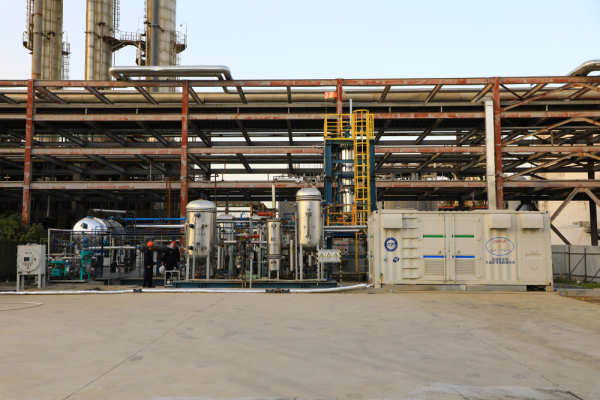
他们将剧毒化合物“变废为宝”
Xin Lang Cai Jing· 2026-01-07 00:40
Core Viewpoint - The "Off-site Electrocatalytic Full Decomposition of Hydrogen Sulfide to Hydrogen and Sulfur Technology" has been recognized as an internationally leading industrial technology, capable of converting toxic hydrogen sulfide into valuable resources, thus addressing environmental pollution and providing a green transition solution for industries such as natural gas and petrochemicals [1][6]. Group 1: Technology Development - The technology was developed by a team led by Academician Li Can from the Dalian Institute of Chemical Physics, Chinese Academy of Sciences, and has been in development since 2003 [1][3]. - The technology features a unique "spatial decoupling" design that separates the chemical reactions into specialized reactors, allowing for the efficient production of high-purity sulfur and clean hydrogen [3][4]. - The team has filed 26 patents related to this technology, with 12 already granted, forming a comprehensive patent portfolio [3]. Group 2: Industrial Application - An industrial demonstration project has been established in the coal chemical industry, integrating four key technological innovations, including high-efficiency electrochemical cells and a high-conversion sulfur oxidation system [4]. - The first pilot plant with a capacity of 100,000 cubic meters per year has been built, utilizing a modular design to produce sulfur and hydrogen [4][5]. - The pilot plant has demonstrated the ability to operate continuously for over 1,000 hours, achieving complete conversion of hydrogen sulfide with sulfur purity exceeding 99.95% and hydrogen purity exceeding 99.999% [5]. Group 3: Environmental and Economic Impact - The technology provides a new pathway for the complete elimination and resource utilization of hydrogen sulfide, significantly benefiting both environmental protection and economic efficiency [6][7]. - By processing approximately 8 billion cubic meters of hydrogen sulfide annually in China, the technology could recover about 730,000 tons of clean low-carbon hydrogen, which is equivalent to 40% of the planned green hydrogen production capacity by 2030 [7]. - This technology supports the green transformation of industrial systems and contributes to achieving carbon neutrality goals in related industries [7].
绿色消费为市场注入增长动力
Xin Lang Cai Jing· 2026-01-06 20:32
Core Viewpoint - The Ministry of Commerce and nine other departments have jointly issued a notice to promote green consumption through 20 specific measures across seven areas, aiming to enhance the supply of green products, improve green service consumption, and innovate green consumption models [1][2][3] Group 1: Green Product Supply - The notice encourages enterprises to expand the procurement of high-quality products such as green food, organic agricultural products, and certified green smart home appliances [1][2] - It supports the promotion of green consumption in the automotive sector, particularly for new energy vehicles, and aims to strengthen the automotive industry chain by exploring the potential of the second-hand car market and related services [1][2] Group 2: Innovative Green Consumption Models - The initiative aims to create a green supply chain and encourages enterprises to conduct carbon footprint evaluations based on relevant standards [1][2] - It promotes the use of green products and packaging, as well as the development of green leasing services and smart products that utilize advanced technology for resource optimization [1][2] Group 3: Recycling and Waste Reduction - The notice emphasizes the reduction of single-use plastic products and promotes the recycling and reuse of waste materials, supporting the development of second-hand goods markets and platforms [2][3] - It encourages innovative business models such as "Internet + second-hand goods" and second-hand product leasing and buy-back schemes [2] Group 4: Policy Support and Financial Incentives - The notice highlights the need for increased policy support, linking green consumption initiatives with modern commercial circulation systems and encouraging financial institutions to provide loans and insurance for green consumption [2][3] - It suggests establishing a project library for green consumption infrastructure to connect quality projects with financial institutions [2] Group 5: Economic and Environmental Impact - Experts believe that expanding the supply of green products will drive industrial upgrades and create new growth points in sectors like new energy vehicles and green appliances [3][4] - The initiative is expected to stimulate domestic demand, reduce carbon emissions, and create a virtuous cycle of consumption driving production and vice versa, contributing to high-quality economic development [3][4]
全国首个“双证齐全”的水上LNG加注站落地广东
Xin Lang Cai Jing· 2026-01-06 19:29
Group 1 - The LNG bunkering station in Guangdong Yunfu has successfully obtained both the "Fuel Retail Business License" and the "Gas Business License," making it the first of its kind in China to achieve complete qualifications for compliant operations [1] - The station's operation is significant as it supports the rapid development of LNG-powered vessels, with approximately 3,800 LNG-powered vessels passing through the Xijiang Yunfu section annually, leading to a demand of about 4,000 tons of LNG, which constitutes over half of the energy consumption of vessels in Yunfu [1] - The lack of a unified licensing system for LNG bunkering stations had previously hindered the station's development and the region's green shipping initiatives since its trial operation began in 2022 [1] Group 2 - The Yunfu Maritime Department has led efforts to optimize the licensing process by collaborating with relevant local units, resulting in the issuance of a comprehensive guideline for the "Gas Business License for Inland Vessel LNG Bunkering Stations," which has significantly improved approval efficiency and transparency [2] - Prior to issuing the license, a verification team conducted on-site inspections of 32 safety indicators across 8 categories, identifying and rectifying 9 safety hazards to ensure compliance with safety production requirements [2] - The Yunfu Maritime Department has implemented a 24-hour real-time monitoring system for LNG bunkering operations, identifying 18 abnormal risks since 2025, with a 100% verification and handling rate, alongside a grid management mechanism for regular inspections [2]