产业升级

Search documents
广东“三农”记者的2025|南岭东风
Nan Fang Nong Cun Bao· 2025-12-30 02:00
Core Viewpoint - The article discusses the significant advancements and achievements in Guangdong's agricultural sector as it approaches 2025, highlighting the importance of agricultural development and rural revitalization in the region [9][10][56]. Group 1: Agricultural Achievements - Guangdong's primary industry value has risen to the second highest in the country, with agricultural product import and export values maintaining the top position nationally [10]. - Agricultural technology contribution rate has reached 74.02%, and grain yield per unit has achieved a record high [10]. - The province has built 4.905 million acres of high-standard farmland during the "14th Five-Year Plan" period [52]. Group 2: Local Agricultural Products - The article emphasizes the success of local products such as the "Yunfu sweet potato," which has a weight of 26.23 pounds, and the "Meizhou golden pomelo," valued at 11.327 billion yuan [29][54]. - The "Ningming star oil vine" industry in Guangxi is highlighted for its annual production value exceeding 20,000 yuan per acre, providing over 60,000 job opportunities [45][56]. Group 3: Market Strategies and Initiatives - The Guangdong government has organized various initiatives to promote local agricultural products, including the "2025 Guangdong Lychee Procurement Map" and the "Southern Rural Report" focusing on agricultural media [79][80]. - The article mentions the successful "Guangdong Rural Singer Competition," which attracted over 50,000 participants and garnered over 1.5 billion views online, showcasing the cultural aspect of agricultural development [125][126]. Group 4: Collaborative Efforts - The collaboration between Guangdong and neighboring provinces like Guangxi and Guizhou is emphasized, with initiatives to introduce advanced agricultural techniques and improve local farming practices [95][98]. - The article notes the efforts to enhance the visibility of local products in major markets, such as the promotion of "Tianyang mango" in Shenzhen and Guangzhou [95][96]. Group 5: Future Outlook - The article concludes with a forward-looking perspective, indicating that the agricultural sector in Guangdong is poised for further growth and innovation as it moves towards 2026, with ongoing efforts in rural revitalization and agricultural modernization [148].


向“新”发力 推动产业升级——重庆江津新兴产业集聚观察
Xin Hua Wang· 2025-12-30 01:53
Core Insights - Chongqing's Jiangjin District has successfully attracted 27 new strategic emerging industry projects from January to November this year, significantly reducing the average project landing cycle by over 70% compared to previous years [1][2] Group 1: Project Implementation and Efficiency - Jiangjin has established a dedicated task force led by district leaders to facilitate the landing of strategic emerging industries, implementing a "one project, one leader, one team, one follow-through" service mechanism [1] - The task force proactively addresses key factors such as land, energy consumption, and environmental assessments, transforming the approach from "projects waiting for elements" to "elements waiting for projects" [1][2] Group 2: Industry Ecosystem and Collaboration - The "Le Xing Tian Xia" new energy power equipment project was able to transition from negotiation to production in just six months, aided by leveraging over 300 surrounding automotive parts enterprises to meet component supply needs [2] - Jiangjin's approach to investment attraction emphasizes the integration of projects with the regional industrial ecosystem, focusing on the weak links and key nodes within targeted industry chains such as intelligent connected new energy vehicles and high-end equipment [2] Group 3: Future Plans and Goals - Jiangjin aims to enhance its strategic emerging industry proportion to over 50% by 2026, aligning with Chongqing's "33618" modern manufacturing cluster system and focusing on cutting-edge fields [2]
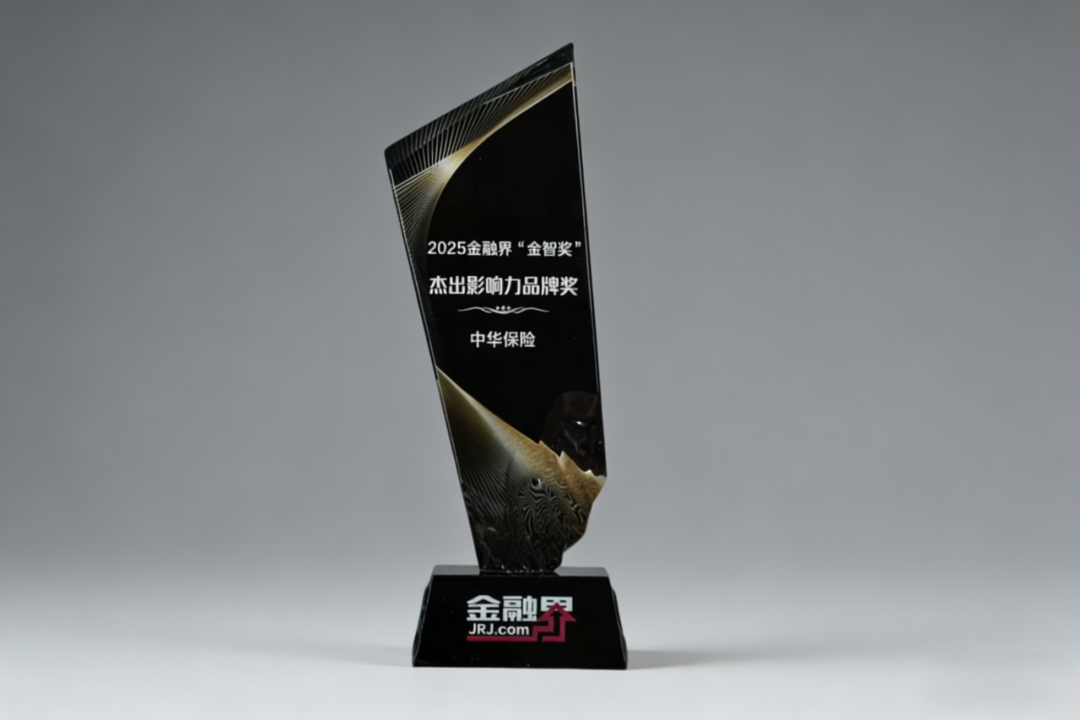
中华保险斩获金融界“金智奖”杰出影响力品牌奖
Jin Rong Jie Zi Xun· 2025-12-30 01:48
Group 1 - The "Jiezhuo Influence Brand Award" was awarded to China Insurance for its outstanding performance in brand building, serving the real economy, and innovation [1][3] - The "Jinzhi Award" has become one of the most influential and credible annual evaluations in the Chinese financial sector, focusing on financial innovation, empowerment of the real economy, and industrial upgrading, with nearly a thousand institutions participating this year [3] - China Insurance integrates brand building into national service strategies and social responsibility, enhancing its ability to serve the real economy through innovative insurance products and digital transformation [3] Group 2 - The company has implemented a "risk reduction" model to protect national grain storage and has focused on inclusive finance to support small and micro enterprises [3] - Initiatives such as the "insurance-traffic linkage" service have expedited traffic accident handling, while the "Digital China" platform has redefined the insurance experience [3] - China Insurance aims to contribute to the construction of a strong financial nation and the modernization of China through responsible service and brand development [3]
数据调查:2026年中国微型传动行业市场规模全景分析与“十五五”投资前景展望报告-中金企信发布
Sou Hu Cai Jing· 2025-12-30 01:32
Group 1: Industry Overview - The micro transmission industry is a crucial component of high-end manufacturing, experiencing rapid growth driven by sectors such as service robots, smart homes, smart cars, and 5G communication [5][6] - Micro transmission systems are categorized into micro and industrial transmission systems, with micro transmission focusing on small gears and integrated electromechanical designs [3][4] - The market for micro transmission systems is projected to expand from 20.3 billion yuan in 2020 to 33.2 billion yuan in 2024, and is expected to reach 44.7 billion yuan by 2026 [7] Group 2: Technological Development - The micro transmission systems are evolving towards high precision and miniaturization, with advancements in materials science and precision manufacturing [6] - Companies like Jinli Transmission have achieved industry-leading precision in metal micro gears, filling gaps in domestic detection technology [6] - The modular design of micro transmission systems allows for cost-effective solutions that meet low-speed, high-torque, and high-precision requirements [4] Group 3: Market Dynamics - The micro transmission industry has transitioned from traditional applications in industries like clockmaking and textiles to emerging fields such as robotics and medical devices [6][7] - The complete supply chain for micro transmission in China includes upstream precision processing, material supply, midstream manufacturing, and downstream sales and service [7] - The demand for micro transmission systems is rapidly increasing in new applications, particularly in service robots and smart automotive technologies [7] Group 4: Future Outlook - The micro transmission industry is expected to play a significant role in the overall trend towards intelligent automation [7] - The market is anticipated to continue growing as new applications emerge and existing technologies are refined [7] - The industry is well-positioned to compete globally, benefiting from the integration of new technologies and manufacturing upgrades [7]
滋养民营经济百花齐放——探寻河南济源承留镇发展密码
Jing Ji Ri Bao· 2025-12-30 00:32
Core Insights - Chengliu Town plays a crucial role in the economic performance of Jiyuan City, ranking first in key indicators such as GDP, fiscal revenue, and industrial added value despite not being the city center [1] Industry Structure - Chengliu Town's leading position is attributed to its unique industrial structure, characterized by over a hundred private enterprises forming an interdependent "forest ecosystem" [2] - The industrial clusters include the non-ferrous metal industry led by Jinli Jinlead Group Co., Ltd. and the equipment manufacturing industry led by Jinli Heavy Industry Technology Co., Ltd., contributing to a modern industrial system [2] - The complete industrial chain from raw material processing to recycling enhances resource utilization efficiency and industry stability, reducing comprehensive costs by 15% compared to external enterprises [2] Economic Growth - During the 14th Five-Year Plan, Chengliu Town's total fiscal revenue increased by 64.41% compared to the 13th Five-Year Plan, with industrial added value reaching 238.25 billion yuan and fixed asset investment totaling 93.27 billion yuan [3] Innovation and Development - Continuous innovation is emphasized, with local enterprises investing in technology upgrades and capacity enhancements to move up the value chain [4] - The local government has implemented a "Chief Service Officer" system to provide dedicated support for key enterprises and projects, fostering collaboration with research institutions [4] Agricultural Sector Growth - The diversity of industries in Chengliu is expanding, with rapid growth in specialty agriculture, including the establishment of the largest vegetable seed breeding base in Henan Province and the largest hybrid onion seed production base in the country [5] - The agricultural model promotes collaboration between leading enterprises and local farmers, creating a complete industry chain from breeding to sales [5] Challenges and Future Directions - Despite its advantages, Chengliu Town faces pressure for transformation, particularly in original innovation and high-end talent acquisition [6] - The local economy must shift from "transforming old momentum" to "cultivating new momentum" in emerging industries, while addressing talent shortages and enhancing urban living quality [7]
山东机制电价探索:如何平衡绿色转型与工业经济
Zhong Guo Dian Li Bao· 2025-12-30 00:19
Core Insights - The implementation of the market-oriented pricing mechanism for renewable energy in Shandong Province marks a significant shift towards market-driven cost transmission in the renewable energy sector [1][3][10] - The new pricing mechanism aims to balance the reasonable returns for renewable energy companies while considering the impact of price fluctuations on consumer electricity costs [1][3] Group 1: Market Mechanism and Pricing - The new pricing mechanism allows for the full integration of wind and solar power into the electricity market, with prices determined through market competition [1][3] - The average price for the new energy mechanism in Shandong is reported to be 5.6 cents per kilowatt-hour, the highest in the country [1] - The mechanism shifts the costs associated with the volatility of renewable energy to consumers, impacting their electricity costs directly [3][5] Group 2: Economic Impact and Industry Transformation - The implementation of the mechanism is expected to create structural cost pressures in the short term, particularly affecting high-energy-consuming industries such as non-ferrous metals, building materials, petrochemicals, and steel [5][6] - The pricing mechanism is anticipated to drive investment in energy-saving technologies and encourage industries to move towards higher value-added sectors [6][9] - The long-term effects of the pricing mechanism may lead to a decrease in energy consumption per unit of GDP, promoting a more efficient economic model [6][11] Group 3: Challenges and Future Considerations - The transition to a market-based pricing mechanism raises concerns about potential systemic risks in the electricity market due to price signal distortions [10] - Balancing the dual goals of achieving carbon neutrality and maintaining industrial competitiveness will be crucial in future energy planning [9][11] - The experience in Shandong could serve as a reference for broader national reforms in energy marketization and system transformation [11]
接续奋斗 实干争先 奋力开创常山高质量跨越式发展新局面
Xin Lang Cai Jing· 2025-12-29 17:12
Core Viewpoint - The article emphasizes the strategic blueprint for economic development in Changshan County, focusing on innovation, industrial strength, investment, and improving living standards to contribute to the high-quality development of Quzhou [1]. Group 1: Industrial Development - The county aims to strengthen the integration of "double innovation" to promote industrial upgrades, focusing on high-quality development in manufacturing and optimizing service systems for industrial chains [1]. - Key industries include high-end equipment components, deep processing of local agricultural products, and new materials, with a goal to cultivate three major industrial clusters worth over 100 billion [1]. - The county will enhance collaborative innovation between enterprises and research institutions, utilizing platforms like Xiuhu Future Science and Technology Valley to accelerate the transformation of scientific achievements [1]. Group 2: Market Activation - The strategy prioritizes domestic demand, emphasizing private investment, industrial projects, and technological innovation to boost project execution [2]. - The county plans to enhance fixed asset investment, particularly in industrial sectors, by leveraging central and provincial funding policies [2]. - Efforts will be made to upgrade consumption structures and develop new economic growth points through cultural and tourism integration, focusing on local attractions [2]. Group 3: Urban-Rural Integration - The county will focus on urban-rural integration to reduce disparities, guided by the "Ten Thousand Projects" initiative [2]. - High-level planning will be implemented to create a modern park city, with significant projects like urban renewal and road expansions [2]. - The aim is to narrow the income gap between urban and rural areas to below 1.63 through comprehensive development strategies [2]. Group 4: Governance and Leadership - The county emphasizes the importance of practical action and strong leadership in driving development, promoting a culture of hard work and commitment [3].
两次“易主”!浙江上市公司“倒手”机器人巨头,控制权交易再现波折
Xin Lang Cai Jing· 2025-12-29 13:45
Core Viewpoint - Fenglong Co., Ltd. is undergoing its second attempt at a change of control, having signed a share transfer agreement with UBTECH Robotics Corp, which will result in a change of control after the transaction is completed [1][3]. Group 1: Control Change Attempts - This is the second attempt at a change of control for Fenglong Co. in over a year, following a failed attempt to transfer control to Zhejiang Dingdu Yungxiang Tourism Co. earlier in 2024 [3][6]. - The share transfer agreement was signed on December 24, 2024, between the controlling shareholder, Zhejiang Chengfeng Investment Co., Ltd., and UBTECH [3][4]. - UBTECH has no immediate plans to change the main business of the listed company within the next 12 months [3][4]. Group 2: Market Reaction - Fenglong's stock experienced a significant increase, with two consecutive days of trading limits reached on December 25 and 26, resulting in a cumulative price increase of over 20% [5][16]. Group 3: Previous Control Change Attempt - The previous control change attempt involved a proposed transfer of 29.99% of shares to Zhejiang Dingdu Yungxiang Tourism Co. but was ultimately terminated due to the expiration of the asset audit report and inability to meet deadlines for shareholder approval [6][17]. Group 4: Shareholder Reduction Plans - During the current control change planning, the actual controller, Dong Jianggang, announced a plan to reduce his holdings, intending to sell up to 2.75 million shares, representing 1.26% of the total share capital [7][19]. - Ningbo Fengchi Investment Co. also plans to reduce its holdings by up to 3.80 million shares, accounting for 1.74% of the total share capital [19]. Group 5: Company Performance - For the first three quarters of 2025, Fenglong reported total revenue of 373 million yuan, a year-on-year increase of 9.47%, and a net profit attributable to shareholders of 21.52 million yuan, reflecting a significant year-on-year growth of 1714.99% [19]. - Despite the substantial increase in net profit, the company's price-to-earnings and price-to-book ratios are significantly higher than the industry average, leading to market valuation disputes [19]. Group 6: Industry Context - The attempts at control change highlight the challenges faced by traditional manufacturing companies in China as they navigate the pressures of industry transformation [10][20].



2025年港股大爆发!IPO募资增224%狂揽近2800亿,400余只股翻倍
Sou Hu Cai Jing· 2025-12-29 12:11
本文来源:时代财经 作者:何秀兰 港股走强的背后,是资金、政策与制度的三重红利共振。南向资金作为 "压舱石",年内净流入超 1.3 万亿元;制度层面,港交所于5月推出 "科企专线",允许硬科技与生物科技企业保密递表,叠加18C章上市通道高效落地,制度红利推动港股IPO市场强势回暖。截至12月29日,港 交所年内IPO合计募资近2800亿港元,同比增长224.38%,助推港交所重回全球交易所募资榜首。 盘古智库高级研究员余丰慧向时代财经表示,2025年港股估值修复的核心驱动力主要来源于资金宽松、国内经济复苏预期增强以及政策支持。 特别是南向资金的持续流入,加上人民币汇率稳定,增强了市场信心。此外,新能源汽车、人工智能等产业的发展也促进了相关板块的业绩和 估值扩张。 图源:图虫创意 核心指数领涨全球,资金面共振推动港股复苏 2025年,港股核心指数集体爆发,全年表现领跑全球主要资本市场。 从具体表现来看,截至12月29日收盘,恒生指数从年初约19600点攀升至25635点,全年涨幅近28%;恒生科技指数同步走高,涨幅近23%;恒 生国企指数全年涨幅近22%,反映出央企国企板块的估值重塑成效。这一表现不仅创下港股五 ...

守望那片湛蓝——连云五年,向海图强
Yang Zi Wan Bao Wang· 2025-12-29 08:45
Core Insights - Lianyungang District has achieved significant progress during the "14th Five-Year Plan" period, focusing on maritime development despite a challenging environment [1] Maritime Economy - The district has successfully implemented innovative aquaculture practices, such as "rotational farming" of various seafood, which has increased production and transformed traditional fishermen into modern aquaculture practitioners [3] - Over 600 million yuan has been invested in marine projects, resulting in an annual production of over 100,000 tons of oysters, enhancing the local seafood supply chain [3] Port and Logistics - The port serves as a vital hub for international logistics, with significant investments in infrastructure and innovative reforms, such as standardized transactions for second-hand containers [6] - More than 80 billion yuan has been invested in the region over the past five years, demonstrating a commitment to creating a favorable business environment [6] Urban Development and Quality of Life - The district has seen the addition of approximately 5,200 new educational slots and the establishment of high-quality medical facilities, improving access to education and healthcare [9] - Urban renewal initiatives have included the creation of pocket parks and the renovation of old neighborhoods, contributing to a more livable city [9] Future Outlook - Lianyungang District aims to continue enhancing its maritime economy, deepen reforms, and improve the quality of life for residents, positioning itself for higher quality development [10]