
区块链

Search documents
金桥信息跌2.01%,成交额8997.95万元,主力资金净流出1023.89万元
Xin Lang Cai Jing· 2025-11-20 02:31
Core Viewpoint - The stock of Jinqiao Information has experienced fluctuations, with a recent decline of 2.01% and a year-to-date increase of 33.96%, indicating volatility in its market performance [1]. Financial Performance - For the period from January to September 2025, Jinqiao Information achieved a revenue of 427 million yuan, representing a year-on-year growth of 19.17%. However, the net profit attributable to shareholders was a loss of 59.63 million yuan, which is an increase in loss of 17.36% compared to the previous year [2]. Stock Market Activity - As of November 20, Jinqiao Information's stock price was 17.04 yuan per share, with a market capitalization of 6.226 billion yuan. The stock has seen a trading volume of approximately 89.98 million yuan and a turnover rate of 1.43% [1]. - The stock has appeared on the "Dragon and Tiger List" seven times this year, with the most recent occurrence on May 15, where it recorded a net buy of -82.28 million yuan [1]. Shareholder Information - As of September 30, 2025, the number of shareholders for Jinqiao Information was 66,200, a decrease of 3.51% from the previous period. The average number of circulating shares per person increased by 3.64% to 5,518 shares [2]. - The top ten circulating shareholders include notable funds, with some new entrants and others reducing their holdings [3].

让数字赋能治理回归本位
Ren Min Ri Bao· 2025-11-19 22:20
Core Viewpoint - The article emphasizes the importance of digital empowerment in governance, highlighting the integration of emerging technologies like big data and artificial intelligence to enhance government efficiency and modernize governance capabilities [1][4]. Group 1: Digital Empowerment in Governance - Digital empowerment in governance is a modern governance model based on data, supported by technology, and oriented towards collaboration [1]. - The Chinese government aims to implement an "AI+" initiative to integrate artificial intelligence with various sectors, including industry, culture, and social governance [1][2]. - Digital governance is expected to accelerate the construction of a digital government, enhancing governance effectiveness through data-driven approaches [1][2]. Group 2: Logic of Digital Empowerment - There are three main logics of digital empowerment in governance: 1. Institutional innovation logic, which promotes interaction between government management, social regulation, and community autonomy [2]. 2. Capability enhancement logic, which shifts from "people running errands" to "data running errands," leading to more scientific decision-making and efficient service delivery [2]. 3. Value-oriented logic, which utilizes intelligent methods to accurately identify public sentiment and create a closed-loop governance system that responds to public needs [2]. Group 3: Challenges and Issues - The article notes the emergence of "digital formalism," where the application of technology does not align with governance logic, leading to inefficiencies and a focus on form over substance [3]. - Issues such as insufficient platform operation, excessive emphasis on process management, and over-reliance on quantitative assessments can obscure real societal needs [3]. - The result of these challenges includes weakened governance effectiveness, increased governance costs, and diminished public trust in policy execution [3]. Group 4: Recommendations for Improvement - The Central Cyberspace Affairs Commission and the National Development and Reform Commission have issued guidelines to prevent "digital formalism" and ensure that digital empowerment serves social governance effectively [4]. - It is crucial to align digital governance with public service improvement and to avoid a purely technology-driven approach [4]. - Strengthening institutional norms and enhancing the digital literacy of governance bodies are essential for effective digital governance [5]. Group 5: Technological Innovation and Governance - The integration of new technologies such as big data, artificial intelligence, and blockchain is vital for transforming governance methods and enhancing collaboration [6]. - Establishing a smart closed-loop system for data collection, analysis, decision-making, and feedback is necessary for effective governance [6]. - Emphasizing algorithm governance and data security management will help ensure privacy protection and ethical oversight in digital governance [6].
重庆汇数医智科技有限责任公司成立 注册资本200万人民币
Sou Hu Cai Jing· 2025-11-19 21:40
Core Insights - Chongqing Huishu Medical Intelligence Technology Co., Ltd. has been established with a registered capital of 2 million RMB, and its legal representative is Huang Chunbo [1] Business Scope - The company is involved in various licensed projects including internet information services for medical devices, leasing of Class III medical devices, production of Class II and III medical devices, and medical services [1] - General projects include technology services, technical development, consulting, data processing services, and artificial intelligence applications among others [1]
中国央行连买12个月!泰达每周扫1吨,黄金成“去美元化”硬通货
Sou Hu Cai Jing· 2025-11-19 21:14
Group 1 - The core viewpoint of the articles highlights the significant surge in gold demand driven by central banks and private entities, particularly Tether, which has emerged as a major player in the gold market [1][9][16] - Tether has accumulated over $12.9 billion in physical gold, surpassing the reserves of several national central banks, and is purchasing more than 1 ton of gold weekly, contributing to 5% of global central bank gold purchases annually [1][4] - The price of gold has seen a substantial increase, with spot gold surpassing $4,010 per ounce, reflecting a year-to-date increase of over 50% [1][9] Group 2 - Tether's gold purchases are strategic, focusing on physical gold bars rather than financial instruments, and it has established secure storage facilities in Switzerland and plans to build another in Singapore [2][4] - The company has integrated itself into the gold industry by hiring top precious metals traders and investing in a Canadian gold royalty company, securing future gold production rights [4][6] - Tether has launched a gold-backed stablecoin, XAU, which is fully backed by physical gold stored in its Swiss vault, allowing users to leverage their gold holdings for further financial transactions [6][8] Group 3 - Global central banks have increased their gold purchases, with a net acquisition of 220 tons in Q3 2025, marking a 30% increase from the previous quarter, indicating a broader trend of diversifying reserves away from the US dollar [9][16] - Retail and institutional investors are also heavily investing in gold, with Indian gold ETFs purchasing nearly $3 billion worth of gold this year, and global gold ETFs experiencing significant inflows [11][15] - Major financial institutions are bullish on gold prices, with forecasts suggesting prices could reach between $3,800 and $5,055 per ounce by the end of 2026, reflecting a strong consensus on gold's upward trajectory [13][15] Group 4 - Tether's actions are seen as a catalyst for a potential shift in the stablecoin market, with the possibility of more gold-backed stablecoins emerging, which could create a new demand pool for gold [15][18] - The global gold production is limited to approximately 3,000 tons annually, leading to an increasing supply-demand gap as new demand continues to rise [15][18] - The overall sentiment in the market indicates that as geopolitical tensions and debt levels rise, gold is being reaffirmed as a safe-haven asset, reinforcing its status as a critical component of financial security [16][18]


外资金融机构掘金海南自贸港开放红利
Zheng Quan Ri Bao· 2025-11-19 16:08
Group 1 - The core viewpoint emphasizes the importance of foreign financial institutions in supporting Hainan's integration into the "Belt and Road" initiative and global supply chains, particularly as the Hainan Free Trade Port approaches its final month before full closure [1] - Foreign financial institutions are seen as crucial bridges connecting China with the global economy, leveraging their global networks and professional advantages to enhance cross-border financial services in Hainan [1][2] - The introduction of foreign financial institutions is expected to provide low-cost financing channels for key industries in Hainan, such as technology, green finance, and healthcare, while also addressing the need for professionals familiar with international financial regulations [1][2] Group 2 - The recent meeting highlighted the need for more financial reform and opening-up measures to be piloted in Hainan, with foreign financial institutions playing a key role in this process [2] - Foreign financial institutions can contribute to Hainan's financial reform by proposing innovative systems for cross-border capital flow and capital account openness, as well as introducing new products and services [2] - The "14th Five-Year Plan" suggests that Hainan Free Trade Port will expand policies facilitating cross-border capital flow, attracting more financial institutions and enhancing the convenience of international trade settlements [3] Group 3 - The application of emerging technologies such as artificial intelligence, blockchain, cloud computing, and big data in the financial sector is encouraged to foster innovation in Hainan's financial landscape [3] - Financial support for Hainan's development should focus on serving the real economy, deepening cross-border financial innovation, and enhancing the financial business environment [3]
比特币和以太坊11月19日行情分析
Sou Hu Cai Jing· 2025-11-19 09:55
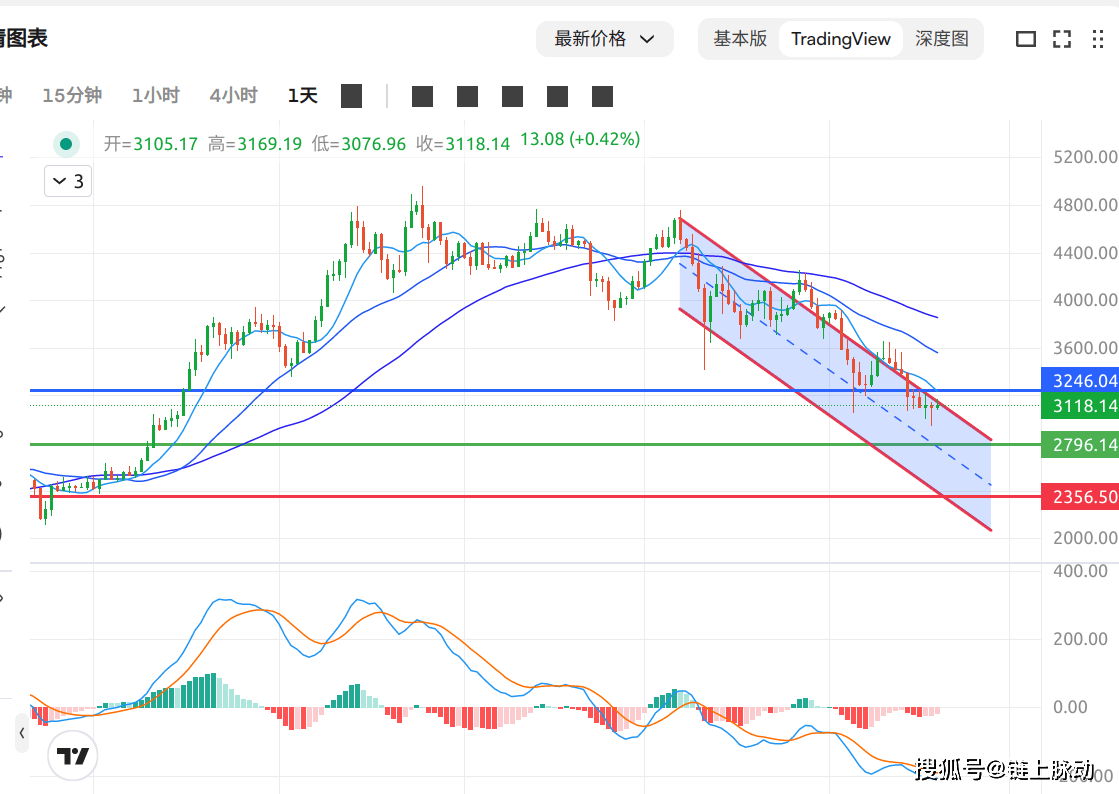
1.比特币 从日线级别看,昨日收出小阳线,呈"连阴后单阳"形态。价格仍在均线下方运行,附图指标维持死叉状态,整体下跌趋势依旧明显。此前已多次强调,当前 价格远离均线系统,有向均值回归的内在需求,本周走势正是这一技术逻辑的体现。投资者需保持清醒,切勿主观臆断"底部已现"或"趋势反转",此类判断 易导致交易失误。 短周期小时图显示,昨日欧盘时段价格小幅上行,美盘延续反弹但未突破前高,凌晨再度承压回落,形成"冲高回落"结构。当前K线呈连阴单阳格局,附图 指标金叉动能逐步萎缩,显示多头动能衰减,空头重新掌控节奏。上方关键压力在94200附近,此位置为短期多空分界,若无法有效突破,下跌概率更大。 当前市场仍处于空头主导的技术修复阶段,比特币与以太坊均未出现趋势反转信号,短期以震荡下行为主,反弹为结构性修正。交易策略应坚持"高空为 主、快进快出",避免逆势抄底。重点关注欧美盘时段价格能否突破关键阻力,同时密切跟踪宏观数据与链上资金流向变化。务必设置止损,保持交易纪 律,理性应对市场不确定性,提升风险控制能力。 综合提醒: 2.以太坊 日线层面,昨日收出小阳线,延续连阴后的反弹修正,K线形态为"连阴单阳"。价格仍在均线压制 ...
生态环境部:已启动化工石化民航造纸等行业碳交易扩围准备工作
Di Yi Cai Jing· 2025-11-19 07:55
Core Viewpoint - The carbon emissions trading market in China is set to expand significantly by 2027, covering major high-emission industries such as chemicals, petrochemicals, civil aviation, and paper manufacturing, with a focus on improving data quality and regulatory capacity [1][2][4]. Group 1: Carbon Emissions Trading Market Expansion - By 2027, the carbon emissions trading market will primarily cover major industrial sectors [2]. - The Ministry of Ecology and Environment has initiated preparations to expand coverage to industries like chemicals, petrochemicals, civil aviation, and paper manufacturing [1][2]. - The carbon emissions reports from relevant industries since 2013 have been collected and verified to address data quality issues [1]. Group 2: Allocation and Management of Emission Quotas - The allocation plan for the steel, cement, and aluminum industries has been published, with a focus on free allocation based on carbon intensity control [4][5]. - The quota distribution will target the highest carbon-emitting enterprises, which account for over 98% of emissions in their respective sectors [5]. - The Ministry will issue pre-allocated quotas for 2025 to the steel, cement, and aluminum industries in the first half of next year [8]. Group 3: Data Quality and Regulatory Measures - The Ministry emphasizes the importance of carbon emissions data quality as foundational for the carbon market, with plans to enhance the monitoring, reporting, and verification (MRV) system [6][9]. - Advanced technologies such as blockchain, big data, and artificial intelligence will be utilized for comprehensive regulatory oversight [9]. - Companies are required to establish robust internal management systems for carbon emissions data to ensure compliance and accuracy [9].

数码视讯跌2.09%,成交额1.94亿元,近5日主力净流入-701.18万
Xin Lang Cai Jing· 2025-11-19 07:20
Core Viewpoint - The company, Digital Vision, is experiencing fluctuations in stock performance and is involved in various technological advancements, particularly in digital copyright protection and AI applications in the broadcasting sector [1][2][3]. Company Overview - Digital Vision Technology Co., Ltd. was established on March 14, 2000, and went public on April 30, 2010. The company is based in Haidian District, Beijing, and specializes in the research, development, production, sales, and technical services of digital television hardware and software products [8]. - The main revenue composition includes: video technology products and services (34.01%), information service terminals (21.46%), other (17.93%), public safety products (8.25%), network transmission systems (7.34%), financial technology products (6.70%), and software technology services (4.30%) [8]. Financial Performance - For the period from January to September 2025, Digital Vision achieved operating revenue of 465 million yuan, representing a year-on-year growth of 24.58%. The net profit attributable to the parent company was 24.62 million yuan, an increase of 10.34% year-on-year [9]. - The company has distributed a total of 370 million yuan in dividends since its A-share listing, with 42.83 million yuan distributed in the last three years [10]. Market Position and Trends - The stock price of Digital Vision decreased by 2.09% on November 19, with a trading volume of 194 million yuan and a turnover rate of 2.68%, leading to a total market capitalization of 8 billion yuan [1]. - The company is positioned within the computer IT services sector and is associated with concepts such as the Metaverse, data rights confirmation, NFT concepts, and virtual digital humans [9]. Technological Developments - Digital Vision has made significant advancements in copyright protection through the integration of new technologies, including blockchain for digital copyright management, which enhances the control authors have over their works [2]. - The company’s AI Agent for the broadcasting sector is designed for application in television stations and data centers, providing capabilities for operational maintenance, fault prediction, and self-optimization [2]. Shareholder Information - As of September 30, 2025, the number of shareholders increased to 81,400, with an average of 15,748 shares held per shareholder, a decrease of 1.68% from the previous period [9].

区块链 Web3 系统开发的流程
Sou Hu Cai Jing· 2025-11-19 04:06
Core Insights - The article provides a detailed guide on the development process of Web3 systems, emphasizing the integration of decentralized applications (dApps) with smart contracts and traditional front-end interfaces [1][3]. Group 1: Development Stages - The development of Web3 systems consists of three main stages: smart contract (back-end) development, front-end (user interface) development, and the interaction between the two [3]. - Smart contracts serve as the "back-end logic" of Web3 systems, being immutable and automatically executed [4]. - The front-end is responsible for the user interface, wallet connection, and invoking smart contracts [5]. Group 2: Key Considerations - Defining the core use cases for Web3 applications is essential, such as DeFi lending, NFT marketplaces, or decentralized identity verification [6]. - Selecting the underlying blockchain platform (e.g., Ethereum, Solana, Polygon, or Binance Smart Chain) will determine the programming languages and tools used [6]. - Recommended development tools include Hardhat or Truffle for smart contract compilation, deployment, and testing, and MetaMask as the most common browser wallet for front-end connections [6]. Group 3: Coding and Security - Smart contracts should be written in Solidity for EVM-compatible chains, with front-end frameworks like React, Vue, or Next.js used alongside UI libraries [6]. - Security best practices must be strictly followed to prevent common vulnerabilities such as reentrancy attacks and integer overflows [6]. - Comprehensive unit testing should be conducted using frameworks provided by Hardhat or Truffle, ensuring high code coverage to minimize post-deployment risks [6]. Group 4: Deployment Process - The deployment process involves selecting a test network (e.g., Sepolia or Mumbai) and using private keys and RPC endpoints to send Bytecode to the test network [6]. - After successful testing, the final version of the smart contract is deployed to the mainnet, and the front-end code is hosted on decentralized storage platforms or traditional cloud services [8]. - Code auditing by a professional third-party security team is crucial to identify potential vulnerabilities before mainnet deployment [8].
海能达跌2.04%,成交额1.40亿元,主力资金净流出1654.78万元
Xin Lang Cai Jing· 2025-11-19 02:15
Core Viewpoint - Hainengda's stock price has experienced a decline of 19.00% year-to-date, with recent trading showing mixed performance, indicating potential challenges in the company's market position and financial health [1][2]. Financial Performance - For the period from January to September 2025, Hainengda reported revenue of 3.746 billion yuan, a year-on-year decrease of 10.26%, and a net profit attributable to shareholders of 186 million yuan, down 26.00% year-on-year [2]. - The company has not distributed any dividends in the past three years, with a total payout of 309 million yuan since its A-share listing [3]. Stock Market Activity - As of November 19, Hainengda's stock was trading at 11.51 yuan per share, with a market capitalization of 20.932 billion yuan. The stock saw a net outflow of 16.5478 million yuan in principal funds [1]. - The company has appeared on the "Dragon and Tiger List" five times this year, with the most recent instance on June 13, where it recorded a net purchase of 324 million yuan [1]. Shareholder Structure - As of September 30, 2025, Hainengda had 257,200 shareholders, a decrease of 11.45% from the previous period. The average number of circulating shares per shareholder increased by 12.94% to 4,987 shares [2]. - The top ten circulating shareholders include significant institutional investors, with Hong Kong Central Clearing Limited holding 13.6172 million shares, a decrease of 350,900 shares from the previous period [3].
