太空光伏

Search documents
开源证券:太空光伏设备开辟新蓝海 关注行业头部设备及电池厂商
智通财经网· 2026-01-26 06:47
Core Viewpoint - The space photovoltaic equipment industry is entering a new phase, with p-type HJT solar cells being identified as the most suitable technology for space applications due to their superior radiation resistance and other advantages [1][2]. Group 1: Technological Advancements - P-type silicon solar cells exhibit significantly better radiation resistance compared to n-type cells, making p-type HJT cells the optimal choice for space scenarios [2]. - HJT cells offer benefits such as thin-film design, low silver consumption, low degradation, and low temperature coefficient, which enhance their suitability for space applications [2]. - The perovskite technology has achieved GW-level production capacity, with a clear industrialization path, positioning it as a potential ultimate solution for space photovoltaics [2]. Group 2: Market Opportunities - The extreme conditions in space, including high-energy cosmic radiation and temperature fluctuations, impose strict requirements on photovoltaic cells, creating a market for advanced solar technologies [1]. - The planned deployment of 100GW solar AI satellites by SpaceX within five years indicates a significant growth opportunity in the space photovoltaic sector, driven by the high value of space solar cells [3]. - The combination of a burgeoning 100GW space computing market and the high unit value of space photovoltaic batteries is expected to open new growth avenues for the photovoltaic industry [3]. Group 3: Beneficiary Companies - Key equipment manufacturers benefiting from advancements in space photovoltaic technology include Maiwei Co., Ltd. (300751.SZ), Jiejia Weichuang (300724.SZ), and Laplace (688726.SH) [4]. - Battery manufacturers with a strong focus on space photovoltaic technology include Dongfang Risen (300118.SZ), Junda Co., Ltd. (002865.SZ), and Trina Solar (688599.SH) [4].
指数震荡贵金属独秀!避险资产正当时,是昙花一现还是长牛起点?
Sou Hu Cai Jing· 2026-01-26 06:37
Market Overview - The market is experiencing a unique trend where indices are rising, but individual stock performance is lackluster, indicating a decline in market enthusiasm [2] - The precious metals sector is seeing significant gains driven by three core factors: enhanced financial attributes, industrial demand, and supportive funding conditions [2] - Gold and silver are experiencing price increases, with gold surpassing $5000 per ounce for the first time [3] Precious Metals Sector - The global central bank gold reserves have increased to 25.94% as of January 2026, with many countries, including China, continuously increasing their gold holdings [2] - The expectation of interest rate cuts by the Federal Reserve is rising, with predictions of 2-4 cuts in 2026, which lowers the cost of holding gold [2][15] - Silver is benefiting from both financial and industrial demand, with a projected supply gap of over 100 million ounces by 2025 due to increasing industrial needs [14] Investment Trends - The A-share market is showing a mixed performance with high trading volumes, and small-cap stocks are gaining attention as the spring market enters a rotation phase [13] - Significant capital inflow into precious metals ETFs has been noted, with over 5.3 billion yuan entering the non-ferrous metal theme ETFs since the beginning of the year [14] - The demand for "safe assets" like gold is increasing due to ongoing geopolitical tensions and economic uncertainties, further driving up prices [13] Future Outlook - The long-term trend of a rate-cutting cycle remains unchanged, with major banks like Morgan Stanley and Goldman Sachs raising their gold price targets for the end of 2026 to $5000 and $4900 per ounce, respectively [15] - The industrial demand for silver, particularly in solar energy and electric vehicles, is expected to grow significantly, enhancing its price elasticity compared to gold [14]


港股异动 | 光伏股跌幅扩大 信义光能(00968)跌超5% 光伏企业年度业绩预告大面积且深度亏损
智通财经网· 2026-01-26 06:00
Core Viewpoint - The solar stock sector is experiencing significant declines, with major companies reporting substantial expected losses for 2025, indicating a challenging market environment for the industry [1] Group 1: Stock Performance - Major solar stocks have seen considerable drops, with KaiSheng New Energy down 7.57% to HKD 4.03, Xinyi Solar down 5.01% to HKD 3.41, Fuyao Glass down 4.03% to HKD 11.42, and New Energy down 2.65% to HKD 7.72 [1] Group 2: Earnings Forecast - Among 32 listed solar companies that have released earnings forecasts for 2025, 23 are expected to incur losses, representing over 70% of the sample [1] - Tongwei Co. anticipates a net profit loss ranging from CNY 9 billion to CNY 10 billion for 2025, compared to a loss of CNY 7.039 billion in the previous year [1] Group 3: Industry Challenges - The solar industry's main supply chain is facing intensified losses due to multiple factors, including weak end-demand, temporary overcapacity, and obstacles to price increases [1] - Industry experts suggest that the development of space-based solar power, supported by Elon Musk, has high uncertainty and is unlikely to provide a solution to the current overcapacity in ground-based solar power in the short to medium term [1] - The key to the industry's recovery lies in effective supply-side adjustments, demand-supply rebalancing, and balance sheet repairs [1]

光伏股跌幅扩大 信义光能跌超5% 光伏企业年度业绩预告大面积且深度亏损
Zhi Tong Cai Jing· 2026-01-26 05:59
Core Viewpoint - The photovoltaic sector is experiencing significant declines, with major companies reporting substantial expected losses for 2025, indicating a challenging market environment driven by weak demand and overcapacity [1] Group 1: Stock Performance - Major photovoltaic stocks have seen considerable declines, with KaiSheng New Energy down 7.57% to HKD 4.03, Xinyi Solar down 5.01% to HKD 3.41, Fuyao Glass down 4.03% to HKD 11.42, and New Special Energy down 2.65% to HKD 7.72 [1] Group 2: Earnings Forecast - Among 32 listed photovoltaic companies that have released earnings forecasts for 2025, 23 are expected to incur losses, representing over 70% of the sample [1] - Tongwei Co., Ltd. anticipates a net profit loss in the range of CNY 9 billion to CNY 10 billion for 2025, compared to a loss of CNY 7.039 billion in the previous year [1] Group 3: Industry Challenges - The photovoltaic industry's main supply chain is facing intensified losses due to multiple factors, including sluggish end-demand, temporary overcapacity, and obstacles to price increases [1] - Industry experts suggest that the development of space-based photovoltaic technology, supported by Elon Musk, has high uncertainty and is unlikely to provide a scalable commercial application in the short to medium term, failing to absorb the current overcapacity in ground-based photovoltaic systems [1] - The key to the industry's recovery lies in effective supply-side adjustments, demand-supply rebalancing, and the restoration of balance sheets [1]
国证国际港股晨报-20260126
国投证券(香港)· 2026-01-26 05:48
Group 1: Market Overview - The Hong Kong stock market continued its recovery trend with all three major indices posting slight gains: Hang Seng Index up 0.45%, Hang Seng China Enterprises Index up 0.51%, and Hang Seng Tech Index up 0.62% [2] - Market hotspots are driven by "frontier technology" and "safe-haven assets," with concentrated buying interest in specific sectors [2] - The total trading volume was approximately HKD 240.9 billion, showing a slight decline compared to the previous week [2] Group 2: Sector Performance - The commercial aerospace and renewable energy sectors gained attention due to the public display of China's first commercial manned spacecraft and support from Elon Musk for "space photovoltaics" [3] - JunDa Co. (2865.HK) surged over 51%, leading the market concept stocks, while the photovoltaic industry chain also saw significant gains with Xinyi Solar (968.HK) and Flat Glass Group (6865.HK) recording notable increases [3] - Geopolitical risks have driven gold prices above the historical threshold of USD 5,000, with continued inflows into precious metals indicating strong demand for safe-haven assets [3] Group 3: Company Analysis - Anta Sports (2020.HK) - Anta's main brand reported a low single-digit decline in retail sales for Q4 2025, consistent with fluctuations in the consumer environment and delayed winter and Spring Festival consumption [7] - The inventory-to-sales ratio slightly exceeded 5, with offline discounts at 71% and online discounts deepening to 50% [7] - Anta plans to increase investment in brand building in anticipation of the upcoming Milan Winter Olympics [7] Group 4: Company Analysis - FILA - FILA recorded a mid-single-digit growth in retail sales for Q4 2025, showing stronger resilience against a backdrop of consumer fatigue [8] - E-commerce maintained steady growth, achieving leading performance on platforms like Tmall and Douyin without significant discounting during major sales events [8] - The inventory-to-sales ratio remained healthy, with offline discounts at 73% and online at 55% [8] Group 5: Other Brands - Other brands reported a year-on-year sales growth of 35-40% for Q4 2025, with an annual growth of 45-50% [8] - Descente became the third brand within the group to surpass a retail scale of HKD 10 billion, achieving 25-30% growth in Q4 [8] - The focus for future growth will shift from rapid expansion to sustainable development, with a strong emphasis on brand strength and product performance [8] Group 6: Investment Recommendations - Given the uncertainties in the consumer environment, the EPS estimates for 2025-2027 have been adjusted to HKD 4.65/5.00/5.45 [8] - Based on industry average valuations and considering the premium for leading brands, a target price of HKD 110 is set for 2026, maintaining a "Buy" rating [8]
覆盖光伏全产业链,把握新能源核心赛道!光伏ETF博时(560310)今日重磅发售
Sou Hu Cai Jing· 2026-01-26 05:46
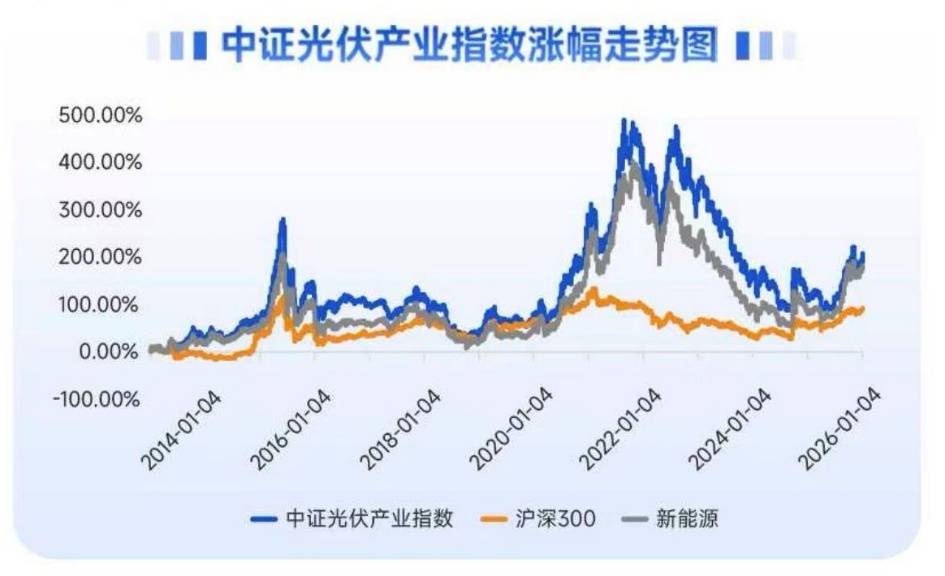
在全球碳中和进程提速、光伏行业政策红利与技术迭代共振的大环境下,兼具长期成长确定性与板块景气度支撑的光伏资产或正成为 布局新能源核心赛道的投资人重要的配置方向。在此背景下,光伏ETF博时(560310)于2026年1月26日正式发售,为场内投资者提供一 键捕捉光伏产业链优质龙头标的的高效工具。 光伏ETF博时(560310)紧密跟踪光伏产业指数,中证光伏产业指数从主营业务涉及光伏产业链上、中、下游的上市公司证券中,选取不 超过50只最具代表性的上市公司证券作为指数样本,以反映光伏产业上市公司证券的整体表现。 值得关注的是,中证光伏产业指数自基日(2012年12月31日)至2026年1月13日期间涨幅为206.55%,同期沪深300指数和新能源指数涨幅 分别为91.97%、179.28%。 政策端,相关政策密集出台,从价格和产能两方面展开治理。价格方面,行业多次研讨标杆价机制,明确要求企业不得低于成本销 售,遏制低价无序竞争;产能方面,聚焦多晶硅环节推进治理,通过产能整合、强化能耗标准等举措,缓解行业供需失衡问题。 需求端,非欧美海外市场成为全球光伏需求主要增量来源,出海业务对行业需求的支撑作用持续凸显。同时, ...
光伏设备行业深度报告:太空光伏深度报告:光伏向空,志在星海
KAIYUAN SECURITIES· 2026-01-26 05:43
Investment Rating - The investment rating for the photovoltaic equipment industry is optimistic (maintained) [1] Core Insights - The photovoltaic sector is entering a silicon era in space applications, driven by the need for cost reduction and efficiency improvement in photovoltaic technology [5][18] - Photovoltaic systems are the most reliable and sustainable power source for spacecraft, providing stable energy supply without the need for fuel resupply [18] - The transition to silicon-based photovoltaic technology in space is being accelerated by the high costs and limitations of III-V multi-junction solar cells, which are currently the most efficient but expensive [64][67] Summary by Sections 1. From Parallel to Convergence: Space Enters the Silicon Era - Photovoltaics are the most important energy supply for spacecraft, providing stable energy without atmospheric interference [18] - Cost reduction and efficiency improvement are the main drivers for the evolution of photovoltaic technology [19] - P-type HJT (Heterojunction Technology) cells show significant advantages in space applications due to their superior radiation resistance [6][69] - Silicon-perovskite tandem cells are expected to become the ultimate solution, breaking the efficiency-cost-radiation resistance triangle [6][68] 2. The Space Race Begins: Photovoltaics Open New Blue Oceans - Low Earth orbit communication satellites are driving the demand for large-scale satellite deployment [7] - The space computing market is expected to release significant potential, with a focus on reliable power supply rather than cost competition [7] 3. Pre-Volume Layout: Equipment Manufacturers Seize Opportunities - Key equipment manufacturers benefiting from the space photovoltaic technology include Maiwei, Jiejia Weichuang, Laplace, and others [8] 4. Competition Among Giants: Leading Manufacturers Tap into Blue Oceans - Major battery manufacturers deeply involved in space photovoltaic technology include Dongfang Risheng, Junda, Trina Solar, and JinkoSolar [8]






马斯克力挺!这一赛道火了
Zheng Quan Ri Bao Zhi Sheng· 2026-01-26 05:26
Group 1 - The core concept of space photovoltaic technology is to deploy large solar power stations in space, converting solar energy into electricity and transmitting it back to Earth or supplying power to satellites and space stations [1][2] - Elon Musk announced a target of achieving 100GW of solar manufacturing capacity annually within three years, which is nearly half of China's annual new photovoltaic installation capacity [1][2] - The rise of AI models is driving exponential growth in computing power demand, making energy-intensive data centers significant energy consumers, thus creating new opportunities for the photovoltaic industry [2] Group 2 - Companies like Trina Solar have established long-term strategies in various solar technologies, including crystalline silicon, perovskite tandem cells, and III-V arsenide multi-junction cells, and are collaborating with domestic and international space agencies [2] - Junda Co. announced a cash investment of 30 million yuan to acquire a 16.67% stake in Shanghai Xingyi Chip Energy Technology Co., marking a strategic shift from ground photovoltaic to space photovoltaic [3] - Securities firms are optimistic about the long-term value of space photovoltaic technology, predicting that early movers with differentiated technology reserves will gain competitive advantages and valuation premiums [3]
今日焦:(2026年第4周)-20260126
新华汇富· 2026-01-26 05:24
Price Trends in the Photovoltaic Industry - In the fourth week of January 2026, polysilicon prices remained stable at RMB 54.00 per kg, with a monthly increase of 4%[1] - Prices for mainstream silicon wafer models (183N, 210RN, and 210N) were approximately RMB 1.40, RMB 1.40, and RMB 1.55 per piece, respectively, reflecting a significant monthly rebound of 12%[1] - Mono cell prices for 183N, 210N, and 210RN models increased by 5% week-on-week and surged 24% month-on-month to RMB 0.42 per watt[1] Market Dynamics and Demand - The market is experiencing a stalemate due to weak domestic demand, despite rising silver prices providing cost support[1] - The overall market sentiment is low, with new orders largely postponed until late January, leading to increased inventory levels[3] - The export demand is currently strong, but domestic demand remains weak, causing a reliance on overseas orders for market stability[6] Policy and Future Outlook - The Ministry of Finance announced the cancellation of export tax rebates for battery cells and modules starting April 1, 2026, aiming to curb low-price competition and promote industry upgrades[7] - The National Development and Reform Commission set a target for renewable energy to account for 30% of total power generation by 2030, indicating potential market growth[7] - Despite short-term price strength driven by export orders, the overall demand outlook remains uncertain, with expectations of continued industry losses due to supply-demand imbalances[7]

净利暴增529%!千亿锂电龙头,业绩彻底反转
Sou Hu Cai Jing· 2026-01-26 05:14
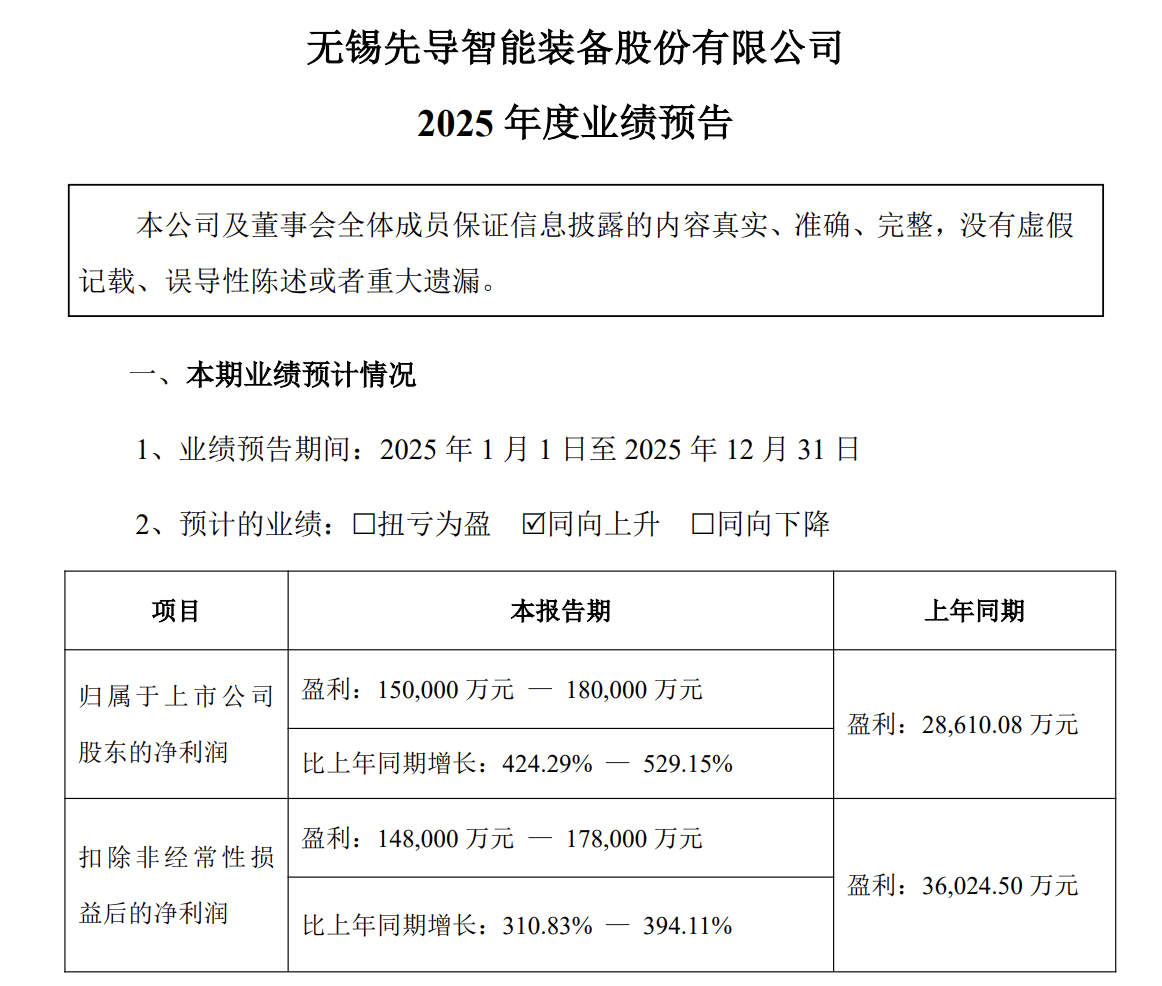
太空光伏的叙事逻辑,正在被市场验证。 随着光伏行业从地面向天空的拓展,市场的想象空间彻底被打开。在此节点,低迷的光伏行业终于迎来了反转的曙光,头部企业也有望率先实现业绩反转。 相比于光伏,锂电储能行业则更早回暖,目前已处于业绩兑现阶段。 1月25日晚,锂电池智能装备及光伏智能装备制造商先导智能发布2025年度业绩预告,预告显示,预计公司2025年实现净利润15亿元至18亿元之间,同比增 长424.29%至529.15%,去年同期盈利2.86亿元;预计实现扣非净利润14.8亿元至17.8亿元之间,同比增长310.83% 至394.11%,去年同期扣非净利润为3.60亿 元。 | 项目 | 本报告期 | 上年同期 | | --- | --- | --- | | 归属于上市公司 | 盈利: 150,000 万元 — 180,000 万元 | 盈利: 28,610.08 万元 | | 股东的净利润 | 比上年同期增长:424.29% -- 529.15% | | | 扣除非经常性损 | 盈利:148,000 万元 — 178,000 万元 | 盈利: 36,024.50 万元 | | 益后的净利润 | 比上年同期增长 ...