
养老金融

Search documents
国民养老开启新一轮股东遴选:一场资源整合阳谋
2 1 Shi Ji Jing Ji Bao Dao· 2025-10-20 08:55
Core Viewpoint - The capital strength and resource integration capability of professional pension insurance institutions are becoming key variables in industry competition, especially in the context of an aging population and the rapid expansion of the pension financial market [1][9]. Company Summary - Guomin Pension Insurance Co., Ltd. was established in March 2022 with an initial registered capital of 11.15 billion yuan. The company plans to raise its registered capital to 11.378 billion yuan through a new share issuance to attract strategic investors, including Allianz Investment [2][3]. - Following the introduction of Allianz Investment as a strategic investor, Guomin Pension is now seeking to raise funds by issuing up to 471 million shares to no more than five investors, aiming to enhance its capital strength and support business development [3][4]. - The company aims to surpass Ping An Pension's registered capital of 11.603 billion yuan, positioning itself as the leader in the industry [3][4]. Industry Summary - The pension insurance industry is experiencing a wave of capital increases, with four out of nine professional pension insurance companies announcing or completing capital increase plans in 2024. This trend reflects the rapid expansion of market demand driven by an aging population [9][10]. - As of the end of 2024, the elderly population aged 60 and above in China is projected to reach 31.031 million, accounting for 22.0% of the total population, which is driving the demand for pension financial planning [9]. - The capital expansion among pension insurance companies is seen as a necessary measure to enhance competitiveness and meet regulatory requirements, particularly regarding capital adequacy ratios [11]. Strategic Choices - Guomin Pension's capital increase strategy reflects a broader trend in the industry, where companies are choosing between "original shareholder injection" and "introducing strategic investors" as paths for capital increase [12][15]. - The company has opted for the strategic investor model, which allows for resource integration and differentiation in development, contrasting with firms like Heng'an Standard Pension and Taikang Pension that have chosen to rely on existing shareholders for capital increases [13][14][15]. - The selection of strategic investors is based on their ability to provide support in market expansion, business cooperation, and operational management, emphasizing the importance of aligning with the company's strategic direction [7][15].
投研为基,产品为翼,天弘基金书写养老金融大文章
Cai Fu Zai Xian· 2025-10-20 03:16
Core Viewpoint - The article emphasizes the importance of pension finance in the context of national efforts to build a pension security system, highlighting Tianhong Fund's commitment to enhancing investment research capabilities and developing a diverse product system to meet pension needs [1][5]. Group 1: Investment Research and Management - Tianhong Fund focuses on building a platform-oriented and intelligent investment research capability to ensure the long-term and stable nature of pension funds, which requires high investment management skills [2]. - The company has developed a large asset allocation system for pension investments, creating a framework for dynamic asset allocation decisions based on risk exposure and return targets [3]. - The integration of a comprehensive research platform (TIRD) allows for efficient decision-making by combining macro research, industry comparisons, and quantitative models, which is crucial for managing long-term pension investments [3][4]. Group 2: Professional Investment Team - Tianhong Fund has established a multidisciplinary pension investment team, ensuring effective collaboration and specialization in areas such as macro research and quantitative analysis [4]. - The team is preparing for potential expansions in pension investment areas, including REITs, commodities, and overseas assets, to diversify risks and enhance portfolio resilience [4]. Group 3: Product Development - The company has created a comprehensive product matrix tailored to various investor needs, offering solutions from the accumulation phase to the withdrawal phase of retirement [5][6]. - Tianhong Fund's early initiatives in pension products, such as the Tianhong Ankang Yiyang Mixed Fund launched in 2012, have gained significant popularity, with over 600,000 holders by June 2025 [5][6]. - As of September 2025, the company has developed 13 Y-share products, including target risk and target date funds, catering to different investor preferences [6]. Group 4: Synergy Between Research and Products - The synergy between investment research and product development is highlighted as essential for effective strategy execution and risk management, with clear product positioning guiding research efforts [8]. - Tianhong Fund actively contributes to industry discussions on pension investment management, aiming to enhance the overall pension investment ecosystem [8].
如何做好金融“五篇大文章”?中信、银河、中信建投等顶级券商“掌舵人”齐聚上海:要打破“单打独斗”模式
Xin Lang Zheng Quan· 2025-10-20 02:12
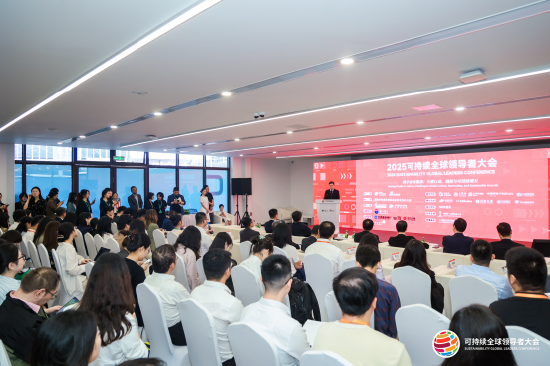
Group 1: Conference Overview - The 2025 Sustainable Global Leaders Conference will be held from October 16 to 18 in Shanghai, focusing on "Facing Challenges Together: Global Action, Innovation, and Sustainable Growth" as its core theme, aiming to explore new paths for sustainable development and inject "Chinese momentum" into global governance [1] - The conference is co-hosted by the World Green Design Organization (WGDO) and Sina Group, with support from the IFRS Foundation and the Shanghai Huangpu District People's Government [1] Group 2: Financial Sector Insights - Discussions at the conference highlighted the importance of the "Five Major Articles" in constructing a new ecosystem for sustainable development in the securities industry, emphasizing collaboration among banks, securities, and insurance institutions to provide comprehensive services [3][7] - China Galaxy Securities' Chairman Wang Sheng noted that innovation is the primary driving force for development, with a focus on technology finance as the first of the "Five Major Articles," indicating that the capital market has formed a multi-level service system for technology finance [5] - CITIC Securities' General Manager Zou Yingguang emphasized the need for continuous investment in technology finance and the exploration of innovative products in green finance to support the "dual carbon" goals [10] - The ESG strategy of China Merchants Securities aims to create a capital cycle that supports low-carbon transformation and enhance social welfare, integrating the "Five Major Articles" with ESG development [12] - Guangda Securities' President Liu Qiuming discussed the importance of integrating the "Five Major Articles" into the company's strategy and achieving positive progress in supporting innovation and financing for high-tech enterprises [15] - Guo Chuanzhou, Chairman of Yuekai Securities, highlighted the company's efforts in promoting inclusive finance and knowledge property transactions to support small and medium-sized enterprises [19] Group 3: Wealth Management Trends - Guo Xiaobo, President of Guolian Minsheng Securities, pointed out that wealth management has a significant impact on the valuation and market value of securities firms, with a notable shift towards wealth management and asset management in the global securities industry [17]






万和证券入围海南跨境资管首批试点;302只!个人养老金基金再扩容 | 券商基金早参
Mei Ri Jing Ji Xin Wen· 2025-10-20 01:24
Group 1 - Hainan Free Trade Port's cross-border asset management pilot program has officially launched, with Wanhe Securities among the first six institutions selected [1] - Wanhe Securities, recently acquired by Guosen Securities, aims to establish itself as a leading regional broker in cross-border business within Hainan [1] - The expansion of the pilot program indicates a speeding up of financial openness, benefiting leading brokers and regional specialty brokers [1] Group 2 - Dongfang Caifu's 1.5% equity stake was transferred to 16 domestic and foreign institutions for approximately 5.8 billion yuan, reflecting institutional recognition of its long-term value [2] - The transfer is expected to provide liquidity support for the company's stock and diversify its investor base [2] - The active participation of domestic and foreign institutions signals optimism about the financial technology sector's prospects [2] Group 3 - New public funds are increasingly setting lower initial fundraising caps, indicating a trend towards prioritizing long-term performance [3] - Notable fund managers have quickly completed fundraising within set limits, enhancing operational efficiency [3] - This trend may lead to a concentration of market funds towards high-quality managers, promoting healthy industry development [3] Group 4 - The number of personal pension funds has expanded to 302, with the addition of index-enhanced and FOF products, enriching investor choices [4][5] - Regulatory support for the pension market is expected to enhance the competitiveness of related fund companies [5] - The expansion of pension funds is likely to increase market stability and inject long-term vitality into the capital market [5]

多元金融公司三季度净利大增70%背后:新能源与投资暗藏玄机?新任总经理“首秀”引爆市场
Hua Xia Shi Bao· 2025-10-19 23:57
Core Viewpoint - Yuexiu Capital expects a significant increase in net profit for the first three quarters of 2025, driven by strong investment returns and growth in its renewable energy business [2][3][4]. Financial Performance - The projected net profit attributable to shareholders for the first three quarters of 2025 is between 29.22 billion to 30.94 billion yuan, representing a year-on-year growth of 70% to 80% [2][3]. - The expected net profit for the third quarter is between 13.64 billion to 15.36 billion yuan, with a year-on-year increase of 94% to 118% [2][4]. - Excluding non-recurring gains, the net profit is projected to be between 14 billion to 15.8 billion yuan, reflecting an 18% to 32% increase year-on-year [3]. Investment and Business Strategy - The company has actively seized opportunities in the capital market, leading to a substantial increase in investment income [4]. - The renewable energy sector has shown significant growth, with total electricity generation reaching 78.1 billion kWh in the first half of 2025, resulting in electricity revenue of 24.2 billion yuan, a 123% increase year-on-year [6]. - The company is focusing on diversifying its renewable energy product offerings, including solar, wind, and energy storage projects [6]. Accounting Changes and Impacts - A change in accounting for long-term equity investments has contributed to non-recurring gains, with an estimated one-time income of approximately 20.22 billion yuan recognized [5]. - The company anticipates asset impairment provisions of 14 billion to 16 billion yuan for the first three quarters of 2025, which may reduce net profit by about 7.20 billion to 8.20 billion yuan [5]. Management and Governance - Wu Yonggao was appointed as the new general manager in August 2025, marking a significant leadership change [9]. - Investors are keenly observing the company's performance under the new management and its strategic direction, particularly in light of recent acquisitions by its parent group [10].


公募基金精准破局多元诉求 生动践行养老金融高质量发展
Zheng Quan Shi Bao· 2025-10-19 22:33
Core Insights - The personal pension fund count in China has surpassed 300 for the first time, indicating significant growth in the third pillar of retirement products [1][2] - The personal pension system is approaching its three-year anniversary, marking a transformative phase in its development [2] - Public funds play a crucial role in the construction and operation of China's pension finance system, contributing to the high-quality development of the public fund industry [1][2] Fund Growth and Performance - As of September 2023, the number of personal pension funds reached 302, with a total market size exceeding 12 billion yuan, reflecting a 35.72% increase from the end of the previous year [2][3] - The average annual return for personal pension funds is 15.13%, with some funds achieving returns over 40% [3] - The rapid growth in fund size and performance indicates increasing market acceptance and the effectiveness of the personal pension system [2][3] Regulatory and Strategic Directions - The "Action Plan for Promoting High-Quality Development of Public Funds" emphasizes enhancing service capabilities for various long-term funds and creating more suitable investment products for personal pensions [4] - Public funds are focusing on developing stable, clear-strategy pension target funds to meet the long-term investment needs of retirees [4] Collaborative Ecosystem Development - China's pension system is evolving into a comprehensive framework, integrating basic pension insurance, enterprise annuities, and personal commercial pensions [5] - Public funds are actively participating in the construction and management of this pension finance system, with a significant number of institutions holding qualifications for managing various pension funds [5][6] Challenges and Innovations - The aging population poses significant challenges to the pension system, including fragmentation between different pension schemes and insufficient product innovation [6] - There is a need for institutional innovation to create a "safe, stable, and adaptable" investment system for pensions [6] - Public funds are urged to deepen their pension finance services and address development bottlenecks by leveraging their unique resources [6] Technological Empowerment - The application of advanced technologies like AI and big data is accelerating the digital transformation of pension financial products and services [9][10] - Fund companies are enhancing their product innovation and service quality through increased technological investment, aiming for a more efficient and responsive service model [10] Investor Education and Engagement - There is a recognized gap in investor education regarding personal pension products, which needs to be addressed through improved product design and educational services [12][13] - Fund companies are implementing various educational initiatives to enhance public understanding of pension finance, aiming to align investor needs with appropriate risk profiles [12][13]
“十五五”规划前瞻:国际篇+金融篇
2025-10-19 15:58
Summary of Key Points from Conference Call Records Industry Overview - The records discuss the Chinese economy and its strategic responses to global geopolitical challenges, particularly in the context of the "14th Five-Year Plan" and the upcoming "15th Five-Year Plan" [1][2][3]. Core Insights and Arguments - **Economic Growth Projections**: China's economic growth is expected to maintain a range of 4.6% to 4.8% during the "15th Five-Year Plan" period, with a focus on energy supply security through strategic partnerships, particularly with Russia [1][3]. - **Foreign Trade Expansion**: By 2024, China's foreign trade is projected to reach $6.16 trillion, marking a 32.4% increase compared to the previous five-year period, maintaining its position as the world's largest trading nation [1][4]. - **Trade Structure Optimization**: The importance of ASEAN and the EU as trading partners is increasing, while the significance of the U.S. is declining. High-tech, green, and electromechanical products are identified as core drivers of exports [4]. - **Financial Policy Focus**: The financial policies during the "14th Five-Year Plan" emphasized service to the real economy, financial security, and supply-side structural reforms, with a new goal of building a financial powerhouse [5]. Important but Overlooked Content - **Challenges for Private and Tech Enterprises**: Private and tech enterprises face high loan interest rates, reliance on collateral for financing, and a low proportion of direct financing (31.6%) compared to developed countries (60%-80%) [6]. - **Strategic Directions for Financial Institutions**: Financial institutions are expected to adjust their strategies to focus on technology finance, green finance, and pension finance, with an emphasis on supporting innovation and sustainable development [7][9][10]. - **Internationalization of the Renminbi**: There is a push for the gradual internationalization of the Renminbi, with current foreign holdings of domestic bonds and stocks at only 3%-4%, indicating significant room for growth [8]. Sector-Specific Developments - **Banking Sector**: The banking industry will prioritize resources towards strategic areas such as technology innovation and green finance, utilizing differentiated products like intellectual property pledge loans [9]. - **Insurance Sector**: The insurance industry aims to enhance health insurance and long-term care systems to address aging population needs while increasing equity asset allocation in tech and green sectors [9]. - **Fund Management**: The fund industry is transitioning from a focus on scale to one on returns, emphasizing investments in pension-targeted funds and ESG products [10]. - **Securities Sector**: The securities industry is expected to evolve towards a more integrated, professional, and digital approach, focusing on investment banking and wealth management [10].
从盈利领跑到增速放缓,偿付能力充足的国民养老保险再度筹划增资
Sou Hu Cai Jing· 2025-10-18 02:49
Core Viewpoint - National Pension Insurance Co., Ltd. plans to raise capital by introducing up to five investors, aiming to raise funds corresponding to no more than 471 million shares to supplement its core capital and support business development [1][2][3] Group 1: Company Overview - National Pension Insurance was established on March 22, 2022, with a registered capital of 11.378 billion yuan. If the capital increase is successful, it may become the largest pension insurance company in terms of registered capital in China [1][2] - The company has a "luxurious" shareholder lineup, including major banks and large securities and insurance institutions, focusing on individual and commercial pension products [2][3] Group 2: Financial Performance - In its first year of operation, the company achieved profitability with insurance revenue of 292 million yuan and a net profit of 49 million yuan. By 2023, it reported insurance revenue of 1.119 billion yuan and a net profit of 315 million yuan [5] - In 2024, the company saw significant growth with insurance revenue of 4.808 billion yuan and a net profit of 430 million yuan, representing year-on-year increases of 329.67% and 36.51%, respectively. However, the fourth quarter of 2024 showed a decline in revenue to 420 million yuan, a 77.51% drop from the previous quarter [5][8] - In the first half of 2025, the company faced further pressure, with insurance revenue of 1.539 billion yuan, down 38.93% year-on-year, and a net profit of 204 million yuan, down 20% [8] Group 3: Capital Increase and Strategic Considerations - The capital increase is intended to enhance the company's core capital and support business development, reflecting a proactive strategy rather than a response to immediate financial pressures [3] - As of the second quarter of 2025, the company's core solvency ratio and comprehensive solvency ratio were 590.78% and 603.72%, respectively, indicating a strong capital position despite a downward trend in these metrics [3] Group 4: Market Context - The aging population in China presents significant growth potential for the pension finance market, prompting various pension insurance companies to increase capital and expand their market presence [4] - Other companies in the sector, such as Taikang Insurance Group and Heng'an Standard Pension Insurance, are also actively pursuing capital increases to strengthen their positions in the growing pension market [4] Group 5: Management Changes - The company has undergone personnel changes, with several board members and supervisors approved by regulatory authorities in September 2025, coinciding with the company's annual shareholder meeting [8][9] - The shareholder meeting also approved the company's development plan for 2025-2027, aiming to inject new energy into the management team during a period of performance fluctuations [9]

潘功胜将出席!人民银行深度参与金融街论坛筹备,还有这些亮点
Bei Jing Shang Bao· 2025-10-17 14:09
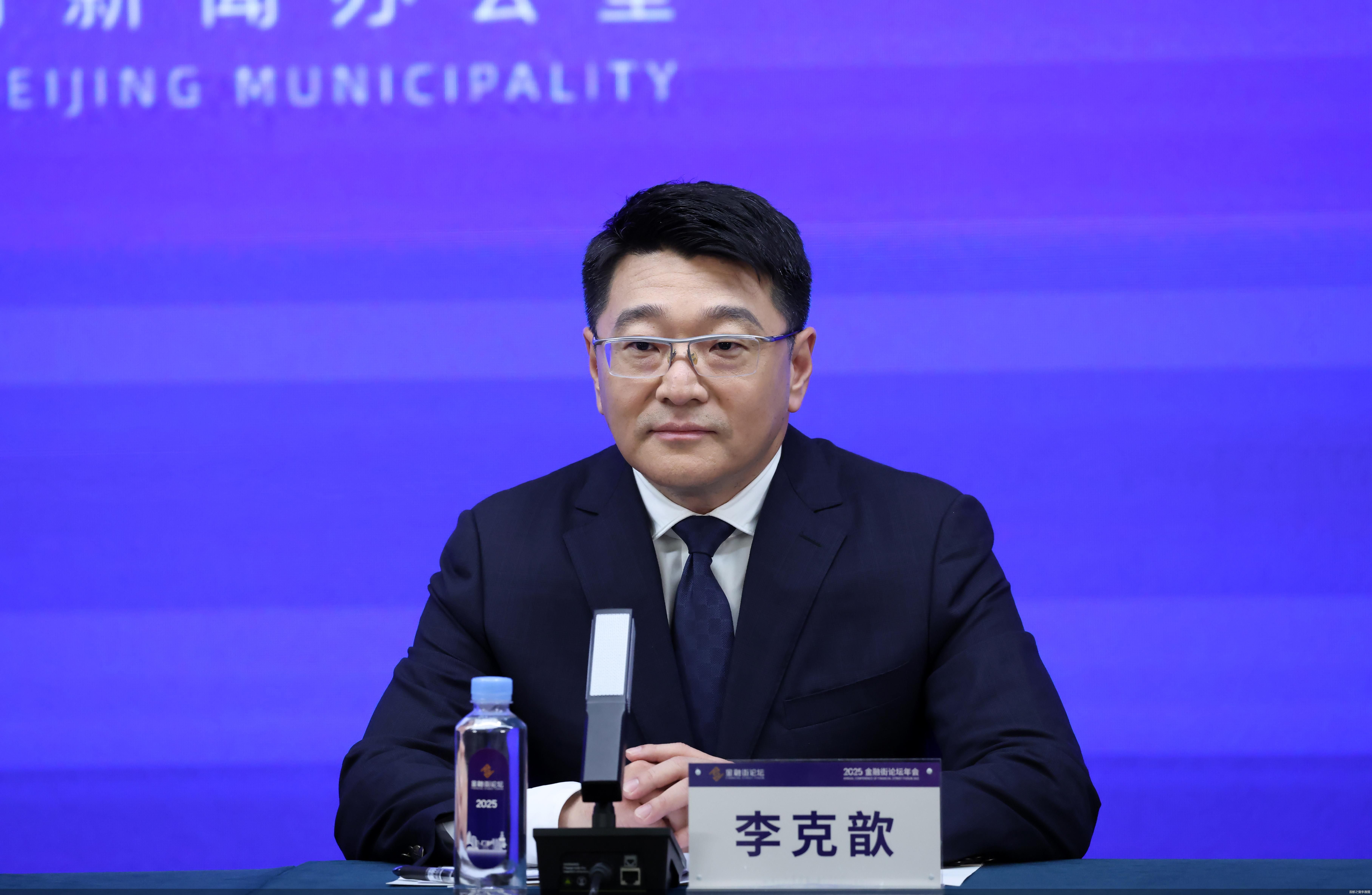
Core Viewpoint - The 2025 Financial Street Forum will be co-hosted by multiple government and financial institutions in Beijing from October 27 to 30, focusing on international financial governance and cooperation, as well as financial technology advancements [1][4]. Group 1: Forum Details - The forum will feature key speakers including the Governor of the People's Bank of China, Pan Gongsheng, who will deliver a keynote speech [4]. - The main forum will address "International Financial Governance and Cooperation under Changing Circumstances," with various activities planned to enhance industry communication and policy interpretation [4]. - The People's Bank of China will also host multiple events, including the "Financial Technology Forum" aimed at promoting digital transformation in finance [4]. Group 2: Financial Innovation and Support - The People's Bank of China has implemented policies to support technology-driven enterprises, including a comprehensive evaluation mechanism for financial institutions serving tech innovation [5]. - During the 14th Five-Year Plan period, the average annual growth rate of loans to technology enterprises in Beijing is approximately 15% [5]. - As of September 2025, over 210 billion yuan in technology innovation bonds have been issued in the interbank market in Beijing, ranking among the top in the country [5]. Group 3: Green and Inclusive Finance - By the end of Q2 2025, the balance of green loans in Beijing reached nearly 2.4 trillion yuan [6]. - As of August 2025, inclusive small and micro loans and agricultural loans in Beijing grew by 13.5% and 8.8% year-on-year, respectively [6]. - The cumulative number of digital yuan personal wallets opened in Beijing reached nearly 20 million, with a total transaction amount close to 300 billion yuan [6]. Group 4: Cross-Border Financial Services - The People's Bank of China supports the establishment of integrated currency pools for multinational companies, with 105 companies participating in the pilot program [6]. - Financial management departments are optimizing services for multinational corporations, enhancing Beijing's role as an international consumption center and global tourism destination [6].

央行:“十四五”期间,北京市科技型企业贷款余额年均增速15%
Zhong Guo Jing Ying Bao· 2025-10-17 14:04
Group 1: Central Bank Initiatives - The People's Bank of China (PBOC) will host a forum titled "International Financial Governance and Cooperation under Changing Circumstances" during the 2025 Financial Street Forum, focusing on global financial governance from a central bank perspective [1][6] - The PBOC has introduced a series of policies to support Beijing in becoming a highland for technology finance, with an average annual growth rate of approximately 15% in loans to technology enterprises during the 14th Five-Year Plan period [1][2] Group 2: Financial Services and Support - The PBOC is enhancing financial services for the real economy, with a focus on green finance, inclusive finance, pension finance, and digital finance, contributing to high-quality economic development in Beijing [3] - As of the end of Q2 2025, the balance of green loans in Beijing reached nearly 2.4 trillion yuan, reflecting the city's commitment to becoming a benchmark for international green economy [3] Group 3: Digital Finance and Innovation - Beijing has promoted the application of digital RMB, with nearly 20 million personal wallets opened and a total transaction amount close to 300 billion yuan as of the end of August 2025 [4] - The PBOC supports the establishment of payment service centers for foreign guests at major airports in Beijing, enhancing the city's position as an international consumption center and global tourism destination [5] Group 4: Financial Standards and Forums - During the Financial Street Forum, the PBOC plans to release a series of financial standards and will host multiple events, including a financial technology forum aimed at promoting digital transformation in the financial sector [6]