产城融合

Search documents
贵阳经开区将奋力打造“一城三区”
Xin Lang Cai Jing· 2025-12-26 19:59
Core Viewpoint - Guiyang Economic Development Zone aims to create a "One City, Three Districts" model to promote high-quality economic and social development [1] Group 1: Economic Development Strategy - The "One City" refers to building a modern industrial city with a scale of 100 billion yuan, focusing on innovation and livability [1] - The "Three Districts" include a model district for high-quality development, a new industrialization demonstration district, and a pioneering district for openness and reform [1] - The strategy emphasizes economic construction, high-quality development, reform and innovation, and meeting the growing needs of the people [1] Group 2: Industrial Development - The plan includes establishing a modern industrial system unique to Guiyang Economic Development Zone, with a focus on industrial targets, projects, and parks [2] - The goal is to create five industrial clusters, strengthen advanced equipment manufacturing, optimize electronic information manufacturing, and expand the new energy vehicle industry [2] - There is a focus on strategic emerging industries and future industries, particularly in the digital economy [2] Group 3: Reform and Innovation - The strategy includes innovation-driven development, fostering innovative enterprises, and enhancing the application of scientific research [2] - It aims to deepen reforms in state-owned enterprises and market-oriented reforms [2] - The plan emphasizes enhancing openness and building strong open platforms [2] Group 4: Urban Development - The development philosophy includes "integration of industry and city, balance of work and residence, and ecological livability" [2] - The strategy aims to enhance urban infrastructure and management, focusing on digital infrastructure and urban resilience [2] - There is a commitment to regional integration and improving urban amenities [2] Group 5: Social Welfare - The plan aims to stabilize employment through various measures, including training and service improvement [3] - It focuses on housing development, combining new construction and renovation efforts [3] - The strategy includes enhancing education and healthcare services, as well as cultural offerings [3] Group 6: Overall Goals - Guiyang Economic Development Zone aims for significant breakthroughs in modern industrial system construction and core competitiveness of industrial parks [3] - The strategy seeks to achieve major breakthroughs in reform, innovation, and high-quality development [3] - The goal is to ensure that the local population shares in the benefits of high-quality living standards [3]
广州资本“入村记”
2 1 Shi Ji Jing Ji Bao Dao· 2025-12-26 12:11
当前,城市旧改正从房地产开发逻辑向产业运营逻辑转型。如何通过旧村改造构建可持续产业生态,带 动就业与经济发展,既是市场主体的思考重点,也是地方政府的探索方向。 多元化资本驱动城市"逆生长" 城市旧改是资金密集型工程,第一道难关就是资金问题。 地方政府披露的城中村更新改造实施方案显示,里仁洞村的城市更新改造成本为209.08亿元,而康鹭片 区更是高达304.65亿元,超出成本均由实施主体自行承担,政府不再追加融资面积。 今年,广州番禺里仁洞村1688套复建房的交付,让村民逐步实现从杂乱城中村到现代化社区的跨越;10 公里外的海珠康鹭片区,过往的散乱小作坊正逐步转向垂直化楼宇经济。这两座城中村的"逆生长",背 后是广州旧改在资本模式、治理结构与产业逻辑上的全面革新。 以里仁洞村、康鹭片区为典型样本,广州旧改已跳出单一空间改造范畴,聚焦资本、产业、民生协同重 构,通过多元化资本破解资金难题,以四方共建理顺治理关系,靠产业运营激活内生动力,走出了一条 不搞"大拆大建"、兼顾民生与发展的城市更新之路。 广东省"三旧"改造协会监事长龚军伟律师表示,"资金来源方面,旧模式项目约90%的资金来自市场; 新模式则主要依靠政府资 ...
重塑城市商旅新地标——常州大酒店焕新启幕
Yang Zi Wan Bao Wang· 2025-12-26 09:40
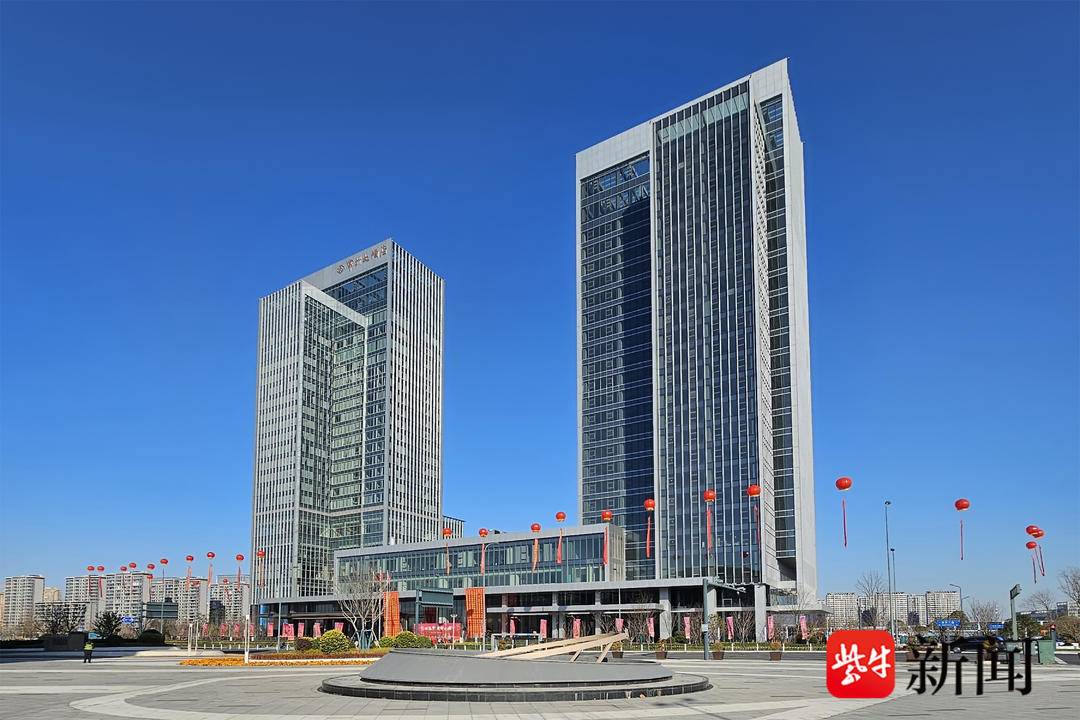
Group 1 - The grand opening of Changzhou Grand Hotel marks a significant milestone for the company in the high-end service industry, showcasing its commitment to local development and employment promotion [2][9] - The hotel, built to five-star standards, features a total construction area of over 43,000 square meters and stands 99.8 meters tall, offering 272 guest rooms and various dining options [3][5] - The strategic location of the hotel near cultural centers and efficient transport links, including proximity to metro, high-speed rail, and the airport, positions it as a key hub for business exchanges and tourism in the Changzhou Economic Development Zone [5][9] Group 2 - The company has evolved from a steel-focused business to a diversified entity, integrating modern agriculture, intelligent manufacturing, high-end hotels, and commercial real estate into its development strategy [7] - The hotel aims to blend historical warmth with modern style, serving as a showcase for the Changzhou Economic Development Zone and enhancing the city's image [7][9] - With the addition of Changzhou Grand Hotel, the company strengthens its hotel service system in the Yangtze River Delta, emphasizing brand, chain, and high-quality service characteristics [9]

[决战决胜“十四五”]酸甜有味一座城
Xin Lang Cai Jing· 2025-12-25 22:30
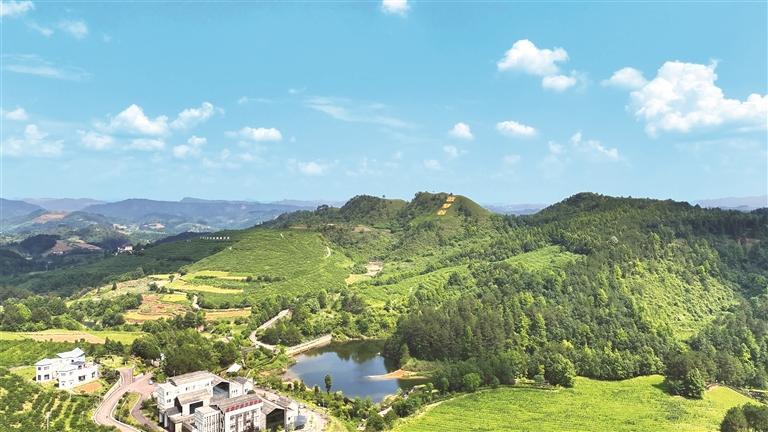
Core Insights - During the "14th Five-Year Plan" period, Majiang County aims for high-quality development by strengthening its特色产业 (characteristic industries) centered around blueberries and sour soup, while promoting new urbanization and coordinated development of industry, towns, and people's livelihoods [8][14]. Blueberry Industry - Majiang County has established a full industrial chain project for blueberries in collaboration with Huiyuan Group, with an annual production of 42,000 tons and a comprehensive output value exceeding 850 million yuan, benefiting over 8,000 farmers [9][10]. - The county has developed over 30 products from blueberries, including juice, wine, and dried fruit, and is set to implement the national standard for geographical indication products for Majiang blueberries by September 2025 [9][10]. Sour Soup Industry - The sour soup production base of Mingyang Food Co., Ltd. has a capacity of 80,000 tons, with products sold in all 31 provinces and exported to Europe, America, and Southeast Asia, achieving an output value exceeding 400 million yuan last year [10]. - The sour soup industry has transitioned from "family workshops" to modern production, creating seasonal employment for over 3,000 people and significantly increasing local incomes [10][12]. Urbanization and Infrastructure - Majiang County has expanded its urban area to 5.57 square kilometers, renovated 83 old residential communities, and improved transportation networks, making it the first county in Qiandongnan to be recognized as a "Four Good Rural Road" national demonstration county [11][12]. - The urbanization rate of the permanent population has reached 53%, an increase of 6.05 percentage points compared to the previous five-year plan [11]. Industrial and Economic Growth - The county's industrial output value is projected to reach 1.6 billion yuan by 2025, reflecting a 65% increase from 2020, driven by the transformation of blueberries and sour soup into high-value industrial products [12][14]. - The county has successfully created two national 4A-level tourist attractions and four 3A-level attractions, enhancing its tourism brand and generating significant revenue from events like the "Farming Fun Sports Meeting" [12][13]. Employment and Cultural Integration - The Guizhou Embroidery Company has employed 3,400 local artisans, blending traditional techniques with modern creativity, resulting in a production value exceeding 9 million yuan in the first three quarters of this year [13]. - The integration of traditional culture into industry has enhanced the brand's influence and expanded its market reach, including international sales [13].
北京昌平产城融合共成长
Jing Ji Ri Bao· 2025-12-25 22:00
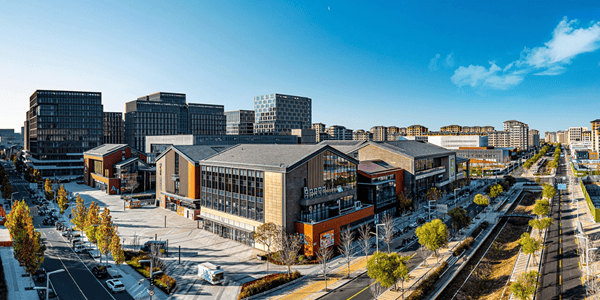
Core Insights - Changping District is rapidly developing as an innovation hub, with a focus on integrating urban living and scientific research, attracting young talent and fostering a vibrant community [1][2] Group 1: Economic Growth and Demographics - Changping District's GDP grew by 7.1% year-on-year in the first three quarters of the year, despite a high baseline [1] - The district has a resident population of over 2.27 million, with more than 40% holding a university degree [1] - Changping is home to approximately one-third of the city's national key laboratories and has a significant number of academicians and research talents [1] Group 2: Industry Development - The district is establishing a clear industrial hierarchy centered around three main sectors: healthcare, advanced manufacturing, and advanced energy [2] - Emerging industries such as synthetic biology, robotics, and 6G are being rapidly developed, with notable projects like the world's first multi-band integrated 6G test network [2] - Changping is positioning itself as a future-oriented industrial base, attracting more researchers and engineers to start their careers there [2] Group 3: Business Environment - The business environment in Changping has improved significantly, with over 30,000 new business entities established annually for the past three years [3] - The transformation cycle from laboratory to company is shortening, making Changping an attractive location for startups [3] - Companies benefit from a supportive ecosystem that allows them to focus on research rather than operational logistics [3] Group 4: Urban Development and Living Conditions - Changping is implementing a "15-minute living circle" concept, integrating work, residence, and commerce to enhance urban living [4] - The district has seen a significant increase in housing projects, with 154 million square meters of commercial housing sold in the first 11 months of the year, ranking first in the city [4] - The focus on urban and industrial integration is fostering a positive cycle of development, attracting more residents and businesses [4]
雄安新区再添商业新地标:雄安奥莱南区元旦开放,超50家国际品牌入驻
Sou Hu Cai Jing· 2025-12-25 03:17
近日,雄安新区商业发展即将迎来新里程碑。由中国电建打造的雄安奥特莱斯项目南区将于元旦开放, 目前已吸引超过50家国际品牌入驻。南区将与已投入运营的北区形成联动,共同构成总经营面积近10万 平方米的大型奥莱商业综合体,这标志着雄安新区在打造高品质城市生活空间、完善商业配套方面迈出 重要一步。 南北协同,构建城市级商业新格局 雄安奥特莱斯项目总建筑面积约13万平方米,规划经营面积约9.6万平方米,分为南北两大功能组团。 北区自2024年1月12日开业以来,已成功引入Gucci、Burberry、Prada、COACH、ARMANI、Lancome 等国际名品集合店及周大生、肯德基、喜茶、九田家、沃美影城、宝贝王等多元业态品牌,商业运营成 效显著。即将开放的南区总面积约6.1万余平方米,将通过50+国际品牌的陆续入驻,与北区形成业态互 补、客流共享的协同发展格局,进一步巩固项目在雄安新区商业核心区的地位。 动能释放,商业活力持续显现 在"一刻钟便民生活圈"建设和"购在雄安"促消费活动的政策支持下,区域商业活力持续释放。数据显 示,截至2025年11月,雄安奥特莱斯已实现销售额约2.3亿元,较2024年同期增长35% ...
陈刚:突出抓好“十个一”具体工作,推动县域与城市双向奔赴相互赋能
Guang Xi Ri Bao· 2025-12-25 01:57
Core Viewpoint - The meeting focused on the high-quality development of county economies and urban work, emphasizing the importance of integrating urban and county economic development as a key support for China's modernization and improving people's living standards [2][3]. Group 1: Economic Development - County economies are fundamental units of the national economy, while cities serve as vital carriers for modernization, both being essential for the realization of China's modernization blueprint [2]. - The region has seen significant improvements in urban quality and sustained vitality in county economies, leading to better living conditions and social stability, although challenges remain [2][3]. Group 2: Strategic Initiatives - The meeting outlined a collaborative approach to advance the development of central cities alongside the rise of county economies, focusing on functional collaboration and the smooth circulation of urban and rural economies [3][4]. - Specific strategies include developing a county-centered industrial integration plan, enhancing local特色产业, and improving public services and infrastructure [4][5]. Group 3: Implementation and Governance - Emphasis was placed on the need for effective governance and the establishment of a smart social governance network, integrating artificial intelligence to enhance social management [4][6]. - The meeting called for a comprehensive approach to financial management, ensuring the quality of fiscal revenue while controlling new hidden debts [4][6].
信宜市委书记龚庆:县城常住人口三年增加4.6万人
Nan Fang Nong Cun Bao· 2025-12-24 03:02
Core Viewpoint - The population of Xinyi County has increased by 46,000 over the past three years, indicating a significant trend of population return, driven by new urbanization initiatives and improved living conditions [1][3][5]. Group 1: Urbanization and Development - Xinyi is implementing a new urbanization model centered around the county, with a focus on high-quality development and regional coordination [4][5]. - The city has developed the first county-level urban design in western Guangdong, which has been legally approved, laying a framework for future development [9][10]. - In 2023, Xinyi completed 32 new projects, achieving 80% completion according to urban design standards, establishing modern infrastructure [11][12]. Group 2: Financial Investment and Infrastructure - Over the past three years, Xinyi has coordinated over 7 billion yuan in various funds, with an annual investment increase of 72.5% compared to 2021, while maintaining a green debt level [15]. - The city has successfully integrated environmental projects with urban development, transforming five landslide dams and four polluted streams into green corridors, achieving dual benefits of environmental improvement and urban quality enhancement [17][18]. Group 3: Public Services and Quality of Life - Xinyi has enhanced public services under the "People's City" concept, significantly improving education and healthcare resources [20][22]. - The education sector has added 11,400 quality school places through partnerships, and a new library has doubled the engagement metrics compared to other county libraries in the Pearl River Delta [23][25]. - In healthcare, the establishment of a new hospital has increased surgical capacity by 185.2%, reducing treatment costs for residents and attracting patients from surrounding areas [28][30][32]. Group 4: Economic Growth and Industry - Xinyi has reformed state-owned enterprises, achieving a fourfold revenue increase within three years and becoming the first county-level state-owned enterprise listed in the region [39]. - Industrial investment has surged by 106.2% from January to November, with significant growth in the manufacturing sector [43]. - The city has also initiated a public-private partnership model to stimulate investment in agricultural and tourism projects, leading to a 45% increase in tourism revenue [42][45]. Group 5: Future Plans and Goals - Xinyi aims to leverage its 500,000 migrant workers for industrial development and plans to establish a modern industrial framework within two years [49]. - The city is exploring land development reforms and community participation mechanisms to enhance urban aesthetics and infrastructure [51][53].

从赛事起点,跃向“视谷”支点
Hang Zhou Ri Bao· 2025-12-24 02:20
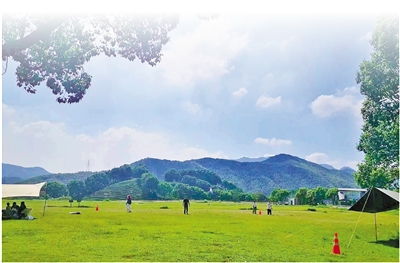
Core Insights - The article highlights the transformation of Dai Village over the past decade, particularly through the establishment of the Sanqingyuan Great Lawn as a hub for various outdoor events, which has significantly boosted local tourism and economic development [3][6]. Group 1: Development of Dai Village - Ten years ago, the Sanqingyuan Great Lawn was merely a local green space, but it has now become a key starting point for major events like the Spartan Race and mountain trail races, showcasing the village's growth trajectory [3][6]. - The local government has strategically positioned the Great Lawn as the origin of cultural and tourism development, aiming to attract visitors and stimulate local industries [3][6]. Group 2: Agricultural and Tea Industry Growth - The establishment of the "Yunyin Mountain House" café and tea space by Ji Qing Agriculture reflects the evolution of the local tea industry, transitioning from unbranded products to a recognized regional brand, "Sanqing," which will be shared among 11 local tea companies by 2024 [4]. - The tea industry is being enhanced through partnerships with agricultural technology firms to improve product quality and sustainability, aiming to convert transient visitors into long-term customers [4]. Group 3: Event-Driven Economic Impact - A diverse array of professional and high-end events has been developed around the Great Lawn, creating a dynamic sports network that connects the natural landscape of Dai Village [6]. - The influx of visitors has led to the growth of local accommodations and businesses, contributing to a vibrant "vertical cultural tourism ecosystem" that has changed perceptions of the region from an industrial focus to one rich in natural beauty [6][7]. Group 4: Strategic Industrial Development - The development of the cultural tourism industry in Dai Village is underpinned by a clear industrial strategy, with initiatives aimed at attracting talent and fostering innovation through events that engage scientists and entrepreneurs [7]. - The completion of the Times Expressway has facilitated access to Dai Village, unlocking its potential for economic growth and urban development, with investments in smart manufacturing and other high-tech industries [7][8]. Group 5: Future Prospects - The ongoing construction of the "China Vision Valley" and related projects is expected to further enhance the local economy, with significant investments aimed at developing the intelligent hardware industry [8]. - The future infrastructure developments, including the Hangzhou Ring Road, will improve accessibility to the Great Lawn, positioning it as a vibrant hub for cultural and technological integration [8].
开辟新赛道 跑出“加速度” 武汉市东西湖区:加快建成产城融合的“中国网谷”
Ren Min Ri Bao· 2025-12-23 22:25
Core Viewpoint - Wuhan's East Lake District is rapidly developing into a vibrant industrial new city, showcasing a blend of ecological sustainability and industrial growth, positioning itself as a key player in China's new industrialization and food industry sectors [1][3]. Group 1: Historical Development - The East Lake area has a rich history dating back 5,000 years, evolving from agricultural roots to a national economic development zone by 2010 [2][3]. - The establishment of the Wujiashan State Farm in 1958 marked the beginning of organized agricultural development, which laid the foundation for the region's economic growth [2]. - The transition from an agricultural to an industrial economy was marked by the introduction of various enterprises, including food and logistics companies, which accelerated regional economic development [2][3]. Group 2: Strategic Initiatives - The establishment of the National Cybersecurity Talent and Innovation Base in 2016 has positioned East Lake as a hub for cybersecurity innovation, attracting over 300 cybersecurity companies [4]. - The Wuhan Land Port National Logistics Hub was approved in 2021, enhancing the region's logistics capabilities and integrating various transportation modes to support economic growth [5]. - The development of a logistics ecosystem that includes rail-water transport and cross-border trade is transforming the region into a logistics hub, contributing to the "port-industry-city" integration [5]. Group 3: Industrial Growth - The East Lake District is focusing on upgrading traditional industries while fostering emerging sectors, creating a modern industrial system characterized by a "343" structure [6]. - Significant advancements in traditional industries, such as food health and equipment manufacturing, are being complemented by the rise of strategic emerging industries like cybersecurity and new energy materials [6][7]. - The region is also investing in future industries, including hydrogen energy and low-altitude economy, with several high-tech enterprises establishing operations [7]. Group 4: Quality of Life and Urban Development - The East Lake District is committed to creating a harmonious living environment, integrating ecological beauty with urban development, and achieving a green coverage rate of 48% [8]. - The development of transportation infrastructure, including six urban metro lines and major highways, enhances connectivity and accessibility within the region [8]. - Cultural and recreational facilities, such as libraries and theaters, are being developed to meet the growing demand for high-quality cultural experiences among residents [9]. Group 5: Demographics and Community - Over the past decade, 470,000 new residents have settled in the East Lake District, contributing to a population nearing one million, which fosters innovation and entrepreneurship [10].