
人工智能治理

Search documents
薛澜:AI治理并非创新对立面,需要回归全球合作
Di Yi Cai Jing· 2025-09-04 03:40
Core Viewpoint - The governance of artificial intelligence (AI) must extend beyond national boundaries due to its cross-border characteristics, impact scope, and systemic risks, making it a significant global challenge [1][6]. Group 1: AI Governance Dimensions - AI governance is a dynamic, multi-dimensional process involving various tools and stakeholders, aimed at preventing potential risks and shaping the development direction and application boundaries of AI [2]. - The governance framework can be categorized into three levels: ethical and value dimensions, policy support and market incentives, and regulation and standards [3][4]. Group 2: Ethical and Value Dimensions - This dimension focuses on fundamental ethical principles that AI systems should adhere to during development and application, including safety, transparency, fairness, and accountability [3]. - Various organizations, including China's AI Governance Expert Committee and the EU, have proposed ethical frameworks to guide responsible AI development [3]. Group 3: Policy Support and Market Incentives - Governance is not only about restrictions but also about shaping and incentivizing AI innovation through government support, including funding, infrastructure, and talent policies [4]. - China's "New Generation AI Development Plan" emphasizes a collaborative innovation path between the state and enterprises, showcasing a policy-driven governance structure [4]. Group 4: Regulation and Standards - Regulation is a crucial component of governance, encompassing laws, technical standards, and compliance assessments [4]. - The EU's AI Act, which categorizes AI systems into different risk levels, serves as a significant example of differentiated regulatory requirements [4]. Group 5: Global Governance Challenges - The differences in technological paths among countries lead to varied governance approaches and challenges in aligning risk perceptions [7]. - The rapid development of AI technology often outpaces the evolution of governance frameworks, resulting in a mismatch between technological advancement and regulatory responses [8]. - The existence of multiple global governance initiatives creates a "mechanism complex" that lacks coordination, leading to inefficiencies and conflicts [9]. - Geopolitical tensions increasingly hinder international cooperation on AI governance, transforming collaborative efforts into competitive projects among a few leading nations [10]. Group 6: Future Directions - Effective AI governance requires cooperation, inclusivity, and legitimacy to address cross-border risks and build public trust [11]. - The governance of AI should be viewed as an integral part of its technological evolution, focusing on risk management, social structure shaping, and market mechanism development [11].
AI治理,需要多元工具协同应用
Jing Ji Wang· 2025-09-01 09:01
Core Viewpoint - The establishment of effective governance mechanisms for artificial intelligence (AI) is crucial for promoting technological innovation while managing potential risks associated with its rapid development [1][6]. Group 1: AI Governance Dimensions - AI governance is a dynamic, multi-dimensional process involving various tools and stakeholders aimed at shaping the direction and boundaries of AI development to align with social values [3][4]. - The ethical and value dimension focuses on fundamental ethical principles that AI systems should adhere to, such as safety, transparency, fairness, and accountability [3][4]. - The policy support and market incentive dimension emphasizes the role of government in fostering AI innovation through financial investment, research funding, and regulatory frameworks [4][5]. - The regulation and standards dimension includes legal frameworks, technical standards, and compliance mechanisms essential for effective governance [5][6]. Group 2: Global AI Governance Challenges - The first challenge is the differentiation in governance due to varying technological paths across countries, leading to discrepancies in risk perception and governance tools [6][8]. - The second challenge is the mismatch between the rapid pace of AI technological advancement and the slower evolution of governance frameworks, resulting in a lag in regulatory responses [7][9]. - The third challenge involves the complexity of global governance mechanisms, which often lack coordination and can lead to inefficiencies and conflicts among different regulatory bodies [8][9]. - The fourth challenge is the impact of geopolitical factors, which can hinder international cooperation on AI governance, making it difficult to address cross-border risks effectively [10][11].


WAIC 2025解码:中国的AI巨头真正释放了什么信号?
Counterpoint Research· 2025-08-14 01:03
Core Insights - The WAIC 2025 highlighted the importance of global cooperation in AI governance, with China proposing the establishment of a global AI governance body and releasing a framework with 13 cooperation points [2][3]. Group 1: AI Safety and Governance - Geoffrey Hinton emphasized the potential risks of AI, suggesting that humans could become akin to "poultry" if AI systems operate independently [3]. - Hinton's visit to China signifies the necessity of China's involvement in addressing AI governance and safety issues, aligning with the multilateral AI governance framework signed with representatives from Europe, Southeast Asia, and parts of Africa [3]. - The conference shifted focus from merely accelerating AI development to emphasizing safety principles and multilateral dialogue [3]. Group 2: Alibaba's AI Innovations - Alibaba launched three high-performance open models and a new AI smart glasses product at WAIC 2025, reinforcing its open-source AI strategy [4][5]. - The smart glasses are lightweight, screenless, and integrated with Alibaba's Qwen model, aiming to embed AI into daily interactions [5]. - This move positions Alibaba's open-source models as competitive against both domestic and international counterparts, transforming open-source competition into a platform battle [5][8]. Group 3: Unitree Technology's Robotics - Unitree Technology introduced the R1 humanoid robot, designed for general tasks with dynamic movement and real-time perception capabilities, priced at approximately $5,600 [6][9]. - The R1 targets a broader audience, including developers and research institutions, rather than just enterprise clients, marking a shift towards accessible robotics [6]. - This pricing strategy poses a competitive threat to Tesla's humanoid robot ambitions, as Unitree's offering is significantly cheaper and aims to democratize access to robotics technology [9].


发展与安全并行 中国为人工智能治理提供方案
Zhong Guo Xin Wen Wang· 2025-08-12 16:01
Group 1 - The core viewpoint emphasizes the rapid development of artificial intelligence (AI) and the associated risks, highlighting the need for effective governance and international cooperation to ensure safety while fostering innovation [4][6][8] - Jeffrey Hinton, recognized as the "Godfather of AI," has consistently warned about the potential dangers of AI, suggesting that it could eventually control humans [2][3] - The Chinese government is advocating for a balanced approach that promotes AI development while ensuring safety and collaboration in the face of global challenges [5][6][7] Group 2 - The first key point is to ensure the healthy and orderly development of AI, with a consensus that innovation should be prioritized within a clear regulatory framework [5][6] - The second key point focuses on establishing a multi-faceted and collaborative governance structure to maximize the value of AI technology while managing risks [6][8] - The third key point stresses the importance of using technology to address its own challenges, advocating for a proactive and integrated approach to digital security [7][8]
为携手共建更加美好的世界贡献中国方案(国际论坛·以史为鉴 共护和平)
Ren Min Ri Bao· 2025-08-11 22:01
Group 1 - The core message emphasizes that when people unite to defend peace and justice, they can overcome severe threats to humanity, as demonstrated by the history of World War II [2][3] - The Chinese people's victory in the Anti-Japanese War is highlighted as a significant contribution to the global anti-fascist struggle, showcasing the importance of collective efforts in achieving success [2] - The collaboration between the United States and China during World War II serves as a historical example of how setting aside differences can lead to substantial achievements, which is relevant in addressing current global challenges [2] Group 2 - The article discusses the importance of international cooperation in addressing global challenges such as economic imbalances, climate change, and artificial intelligence governance, especially in the context of a complex international landscape [3] - China's development model, which focuses on people-centered growth and has lifted millions out of poverty, is presented as a unique approach that emphasizes peace and mutual benefit in international relations [3][4] - The advocacy for a new type of international relationship based on mutual respect, fairness, and cooperation is underscored, rejecting zero-sum game mentalities that lead to mutual losses [3][4]

人工智能治理的未来
KPMG· 2025-08-05 05:50
Investment Rating - The report does not explicitly provide an investment rating for the industry Core Insights - The UAE's AI Charter outlines 12 key principles to ensure the safe, fair, and transparent deployment of artificial intelligence, reflecting a commitment to responsible AI development [6][7] - The report emphasizes the importance of integrating these principles into organizational governance to prepare for future compliance and to manage ethical dilemmas effectively [9][10] Summary by Sections UAE Charter: 12 Principles of AI - Principle 1: Strengthening human-machine relationships to prioritize human welfare and progress [12] - Principle 2: Ensuring safety by adhering to the highest security standards for AI systems [13] - Principle 3: Addressing algorithmic bias to promote fairness and inclusivity [14] - Principle 4: Upholding data privacy while supporting AI innovation [15] - Principle 5: Promoting transparency in AI operations and decision-making [16] - Principle 6: Emphasizing human oversight to align AI with ethical values [17] - Principle 7: Establishing governance and accountability for ethical AI use [18] - Principle 8: Pursuing technological excellence to drive innovation [19] - Principle 9: Committing to human values and public interest in AI development [20] - Principle 10: Ensuring peaceful coexistence with AI technologies [21] - Principle 11: Fostering AI awareness for an inclusive future [22] - Principle 12: Adhering to treaties and applicable laws in AI deployment [23] KPMG Trustworthy AI Framework - The KPMG framework provides a structured approach to ensure ethical, transparent, and human-centered AI systems throughout their lifecycle [25][27] - The alignment between the UAE AI principles and KPMG's framework offers a solid foundation for responsible AI practices [27] Implementation Strategies - Organizations are encouraged to embed the UAE AI principles into their operational realities, evolving governance models to support AI's unique needs [7][9] - Best practices include human-centered design, continuous feedback, and transparent algorithms to enhance human capabilities and ensure ethical outcomes [36][38][40] Global Context - The report highlights a global shift towards mandatory AI ethics in legislation, indicating that AI governance is becoming a core component of digital competitiveness and corporate resilience [10]
专访联合国首席信息技术官:AI时代“独行快,众行远”
2 1 Shi Ji Jing Ji Bao Dao· 2025-08-04 14:17
Core Viewpoint - The importance of collaboration among stakeholders, including governments, academia, research institutions, and the private sector, to ensure that AI technology benefits everyone and is applied where needed [1][2]. Group 1: AI Governance and Challenges - AI governance is crucial, with the principle of "do no harm" being paramount, requiring collective efforts to minimize negative impacts and maximize positive outcomes [3][4]. - There is currently no global framework to regulate AI development, which is primarily concentrated in a few countries and multinational corporations, potentially leaving many without a voice in AI-related risks [4][5]. Group 2: Role of the United Nations - The UN's responsibilities include ensuring that digital technologies support its missions, empowering innovation, and securing data assets against increasing cyber threats [4]. - The global governance of AI has been incorporated into the "Future Pact," emphasizing the need for collaboration among UN member states to advance AI governance [4][5]. Group 3: AI and Development - Developing countries must not overlook the role of AI while addressing challenges like food security and education, and they should engage with the UN framework to ensure their concerns are considered in global AI development [5][6]. - The emergence of tools like DeepSeek represents a significant evolution in AI capabilities, demonstrating that powerful models do not necessarily require the highest processing power to create value [6][7]. Group 4: International Cooperation and Trade - Countries need to reach agreements on technology sharing and trade to mitigate negative impacts and promote re-globalization, with regional organizations like ASEAN and EU playing a role [7][8]. - The UN encourages the use of open-source software and organizes events to foster collaboration among open-source communities [7]. Group 5: AI's Role in UN 2.0 - AI is seen as a key accelerator in the UN's modernization efforts, focusing on data, innovation, and digital transformation to enhance efficiency and service delivery [9][10]. - China is expected to play a significant role in the UN 2.0 process, contributing to technological innovation and governance to benefit global society [10].
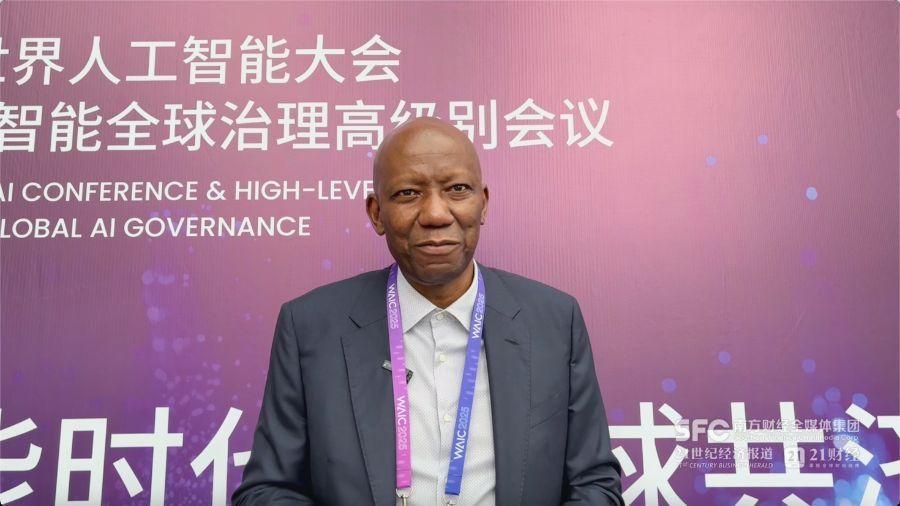
联合国首席信息技术官答21:“不伤害”是AI治理最重要原则
2 1 Shi Ji Jing Ji Bao Dao· 2025-08-04 10:43
Group 1 - The core viewpoint emphasizes the importance of AI governance, with the principle of "do no harm" being paramount, and the need for collective efforts to ensure AI benefits humanity while minimizing negative impacts [1] - Bernardo Mariano Junior highlights the necessity for global collaboration among stakeholders, including governments, academia, research institutions, and the private sector, to effectively apply AI technology for the benefit of all [1] - The role of Bernardo Mariano Junior at the UN focuses on three main areas: ensuring digital technology supports UN missions, empowering innovation to enhance efficiency, and securing data assets against increasing cyber threats [2] Group 2 - The UN's approach to AI governance is driven by the need to address risks associated with AI while maximizing its positive potential [1] - The emphasis on collaboration across various sectors indicates a strategic move towards a more inclusive framework for AI development and implementation [1] - The experience of Bernardo Mariano Junior in digital transformation within international organizations underscores the importance of leadership in navigating the complexities of AI governance [2]
港媒:全球AI治理,不能没有中国
Huan Qiu Wang Zi Xun· 2025-08-01 23:30
Group 1 - The core message of the articles emphasizes China's proactive stance in global AI governance, contrasting with the U.S. approach that focuses on competition and national security [1][2][3] - The 2025 World Artificial Intelligence Conference held in Shanghai showcased significant advancements in AI technology, reflecting public interest and China's commitment to play a constructive role in global AI governance [1][2] - China's Prime Minister highlighted the need for a balance between development and security in AI, calling for international consensus and cooperation rather than exclusion [1][2][3] Group 2 - The articles point out that many AI governance initiatives are built around alliances of "like-minded" Western countries, often excluding China and leading to fragmented trust in global governance [2] - The geopolitical tensions have overshadowed potential areas for cooperation, with AI often viewed through a security lens rather than as a tool for enhancing human welfare [2][3] - The call for a shift from a competitive to a cooperative narrative in AI governance is seen as crucial, with the acknowledgment that AI challenges transcend national borders [3]
全国首个高质量人工智能治理科技语料与首个人工智能多元共治决策支持大模型发布
Zhong Guo Jing Ji Wang· 2025-08-01 06:43
Core Insights - The collaboration between Dongbi Technology Data and Shanghai University of Finance and Economics has led to the establishment of China's first high-quality AI governance technology corpus and a multi-governance decision support model, marking a significant step in exploring efficient and collaborative AI governance models [1][2] Group 1: AI Governance Challenges - The rapid evolution of AI technology has highlighted issues such as data security, algorithmic bias, ethical lapses, employment impacts, and potential governance gaps, making collaborative governance a crucial industry consensus for orderly AI development [1] - The "Global AI Governance Action Plan" emphasizes the need for timely risk assessment and the establishment of a widely accepted safety governance framework [1] Group 2: Development of AI Governance Corpus - Dongbi Technology Data has created a high-quality AI governance technology corpus, focusing on 14 types of governance risks, including backdoor attacks and data poisoning, by collecting over 500 high-quality English journal papers and more than 1,500 core Chinese journal papers [2] - The corpus also integrates over 1,000 high-quality normative texts, including laws, regulations, policy documents, and case studies from 18 ministries and 16 local government departments [2] Group 3: AI Multi-Governance Decision Support Model - The newly developed AI multi-governance decision support model focuses on five core tasks: knowledge Q&A, case inquiry and analysis, technical solution consultation, governance plan generation, and resource search [3] - The model has been fine-tuned using over 2,000 high-quality Q&A pairs, achieving an accuracy rate of 91.4% and a hallucination rate of only 1.5% in a test set of 1,000 governance-related queries [3] - Future plans include continuous updates to the AI governance corpus and gradual opening of the decision support model to enterprises and government departments to enhance AI governance capabilities [3]